

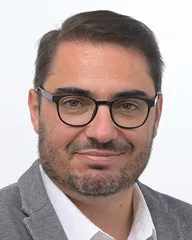
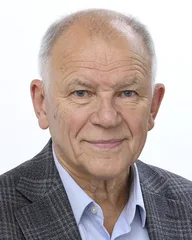
| Rank | Name | Country | Group | Speeches | |
|---|---|---|---|---|---|
| 1 |
|
Lukas Sieper | Germany DEU | Non-attached Members (NI) | 390 |
| 2 |
|
Juan Fernando López Aguilar | Spain ESP | Progressive Alliance of Socialists and Democrats (S&D) | 354 |
| 3 |
|
Sebastian Tynkkynen | Finland FIN | European Conservatives and Reformists (ECR) | 331 |
| 4 |
|
João Oliveira | Portugal PRT | The Left in the European Parliament (GUE/NGL) | 232 |
| 5 |
|
Vytenis Povilas Andriukaitis | Lithuania LTU | Progressive Alliance of Socialists and Democrats (S&D) | 227 |
All Contributions (115)
Deaths at sea: a common EU response to save lives and action to ensure safe and legal pathways (debate)
This is a repetitive debate. The last time we had it in this very Chamber, we were discussing whether rescuing lives at sea encourages people to travel and seek refuge in Europe. Barry Andrews, my colleague from Renew, said that there is evidence that this is not the case. Do you have evidence for your claim that you just made that rescue—at—sea encourages people to travel across the Mediterranean?
Failure of the Silicon Valley Bank and the implications for financial stability in Europe (debate)
Madam President, I would like to thank my colleagues and the Commissioner for a lovely and enlightening debate. Our economic times are changing. Interest rates are at a record high, and that means that there is no more easy money, including for our start—ups. The SVB made some very risky choices during the pandemic and when interest rates were low. They also made a risky choice by concentrating on the tech sector. However, these management choices by the SVB have provided a collapse of the bank because they did not, in the US, have the same financial regulation that we do in the EU. But where does this lead our start—up sector? Because many start—ups in the US sought to get money from the SVB because they were specialised in this. They were willing to lend to the start—ups and they had services that the start—ups needed. How do we make sure that we provide the money for our start—ups that they need in Europe? We have the financial regulation for stability, but we also need the money for start—ups in Europe so that they stay here and that they can scale up.
Data Act (debate)
– Thank you very much, colleague, for accepting the blue—card. It was quite a speech you made, with quite some claims, saying that the Data Act will allow for mass surveillance of citizens. The Data Act will actually allow citizens and businesses to have control over their own data. So how is increased control for citizens of their data, for their use that they choose, a sign of more surveillance, and for allowing your claim of Europe being an open air prison camp?
Data Act (debate)
Madam President, dear Commissioner, dear colleagues, firstly, I’d like to thank the rapporteur and shadows for their diligent work on this complex and multifaceted file. The role of data in our lives is growing, from industrial processes to wearable devices. Data provides us with valuable insights needed to fight climate change, diagnose diseases, as well as to produce food and goods more sustainably. The Data Act is essential in unlocking the potential of data and bringing down the many barriers that we face today. We have succeeded in achieving clearer boundaries between personal and non-personal data; a balanced deal on trade secrets that would enable more data sharing whilst protecting intellectual property rights. I am particularly satisfied that we’ve provided the following solutions to current problems. Today, when we buy and use connected devices, the data generated is often stored in the cloud, and we can only access our data if we’re willing to give away personal information or to pay extra. The Data Act puts citizens and businesses in control of their data, with free and unhindered access for consumers and a guaranteed fair price for companies no matter their size. Today, innovative services are never developed due to barriers in accessing data from other manufacturers. The Data Act ends hoarding of data, enabling developers to build the services that citizens and consumers want. The COVID pandemic revealed that governments struggle to obtain data they need in emergencies. We have ensured that governments can respond quickly without overstepping and putting citizens’ privacy at risk. Also, because manufacturers regularly shut down related services prematurely, rendering smart devices useless before their physical end of life, I do miss one thing from our JURI opinion: where we require transparency on how long a smart device will remain smart or even usable, how long related services and software updates will be provided, and if a connected device can work offline. This information is vital to empower citizens to make sustainable choices when they buy connected devices, and I hope to see it in the final legislation. I wish the rapporteur and her team all the best in the upcoming trilogue negotiations.
Criminalisation of humanitarian assistance, including search and rescue (debate)
Mr President, thank you for giving me the floor again. I would have wished that the Member States and the Council Presidency were here this evening. I would wish that they had listened to Commissioner Johansson in her introduction because there we have all of the solution. But the Member States are not here, and for more than a decade they have not acted. Today, we have listened to colleagues holding up legislation as a shield and defending the criminalisation of humanitarian assistance. We need to save lives at sea. It is an international obligation and it is a tradition for seamen at sea. Barry Andrews underlined that rescue at sea does not pull people out to sea. What pushes people out to sea is a lack of legal pathways. We must act now and agree on this migration package so that we can stop people dying in the Mediterranean. And we must not criminalise the humanitarian organisations that are filling the gaps that the Member States are leaving open.
Criminalisation of humanitarian assistance, including search and rescue (debate)
The dear colleague claimed that the Australian model is functioning and is a success. Could you please provide proof for this? And also, if Sweden had applied the Australian model during the Second World War, my father would probably have been put on an island in Øresund and I would not have been here today. Would that have been a success?
Criminalisation of humanitarian assistance, including search and rescue (debate)
– ... I’m not quite sure if the translation was misconstruing things. The resolution on search and rescue in the Mediterranean that we voted on in 2019 unfortunately failed to be adopted by Parliament, as far as I remember, by only two votes. We’ve seen Member States not acting, and now having colleagues in this Chamber claiming that we must all follow the law seems hypocritical when the same Member States are not acting to actually save lives and create legal pathways. The resolution that you mentioned in your speech was promoting cooperation with the Member States. Was this adopted, or was it unfortunately not adopted by this House?
Revelations of Uber lobbying practices in the EU (debate)
Mr President, Presidency, Commissioner, colleagues, thank you all for being here. This is an extremely important debate about protecting and listening to whistleblowers, as well as the transparency and accountability of this institution and other democratic institutions across Europe. For the European Parliament, we have been under specific scrutiny since the arrests by Belgian authorities before Christmas. The revelations of the Uber files are shocking and completely unacceptable, purposely flouting existing laws and regulation, obstructing police and regulatory investigations. Most appalling were the reports that potential violence against drivers could be exploited. But also remember that the revelations we are discussing here, they document a period before and during 2017. Our work on the proposal of platform workers began in 2020. Any illegal and illicit behaviour should be sanctioned, both at the EU and Member State level. Uber must ensure that such activity can never be allowed to happen again. As legislators, and national as well as local authorities, we also have a responsibility to be critical of the lobbyists and companies we meet. Innovation and disruption should happen with respect for the society we live in, but without excessive protection of vested interests. We must protect the whistle-blowers who so often reveal information crucial to the public interest at a professional and personal cost to themselves. The EU Whistleblower Directive must be implemented by the Member States that have not yet transposed it. I am proud that my political group led the parliamentary work on platforms in the Brunet Report, which gathered a huge majority for a balanced proposal. Because it is important that we do not throw out the baby with the bathwater here. Uber is one platform, and platforms are not homogenous. We need to create laws for all kinds of sizes of platforms. Digital platforms are important for innovation, both for work and for commerce. We must ensure improvement of working conditions of people performing platform work while making sure that flexible working arrangements and genuine self-employment can continue.
The case of human rights defender Abdulhadi Al-Khawaja in Bahrain
Madam President, it is right and it is important that we in the European Parliament today debate the situation of human rights in Bahrain, especially the situation of Danish-Bahraini citizen, Abdulhadi Al-Khawaja, whose health is in danger because of his imprisonment of 11 years, whose family has only once been allowed to visit him in the last 2 years. We will not be silenced. And they have tried. Bahrain actively tried to tarnish the reputation of this internationally respected human rights defender to MEPs to stop this debate. I will never remain silent in the face of repression and I will never remain silent if I suspect corruption or undue influence. We must not accept colleagues being unduly influenced to change the wording of our work, or our votes. Even suspicion must not be allowed. It destroys the reputation of our House. So, colleagues, I will confront you and even your political leadership on this. The Bahraini Government must not be allowed to silence the voices of Bahrain. I condemn the severe continued repression of civic and political space in Bahrain. Bahraini authorities should restore political society to give full civil and political rights to all opposition members. The horrific regime in Iran, close to Bahrain, and Iran’s regional influence must not be an excuse to close down democracy and imprison political opponents for years. Finally, we as the European Union cannot claim to support democracy in the world and export surveillance and repression. Technology from the European Union must never be exported to suppress our core values of human rights and democracy, to silence the voices of human rights. So Member States, you must do more. Every Member State must look critically at the export licenses for European surveillance software under the Dual—use Regulation.
Chinese government crackdown on the peaceful protests across the People's Republic of China
Thank you very much, Mr Glucksmann. You mentioned that we should ban the import of forced labour goods into the European Union. How is the production of forced labour goods in China helping to support the Chinese Government also in its crackdown on protests in China?
Chinese government crackdown on the peaceful protests across the People's Republic of China
Thank you very much. You mentioned that we should not suspend our protection of human rights. How do you see the importance of our urgency resolutions here in the Parliament, in our fight for the human rights across the world?
Prospects for the two-State solution for Israel and Palestine (debate)
Mr President, thank you, Commissioner, for your presence. And thank you to our negotiators for the great work that you’ve done. As a teenager, the news was filled with Hebron and the fighting between Israeli settlers and Palestinian residents. When visiting Israel and Palestine in 2019, the recent history of Hebron stood out because Hebron of the 1990s has become the blueprint for settler organisations to continue illegal settlements that render a two-State solution impossible. I am as a supporter of a safe, secure Israeli state, just as I’m the supporter of a safe, secure Palestinian state, and this resolution supports this. However, for nearly 20 years, successive Israeli governments have allowed and even promoted the undermining of a two-State solution. Netanyahu: previously you internationally confirmed your commitment to a two-State solution. During the Israeli election campaign you said the opposite. So what will be the answer of your new Israeli Government? I call for the Israeli Government to take steps to stop the occupation. Settlements must not be transformed into annexation. They must not hinder a viable Palestinian state. I insist the European Union must uphold the rule of international law, including a distinction between the lands of Israel and the lands of illegally occupied territories.
Prospects for the two-State solution for Israel and Palestine (debate)
Member Bonfrisco, you mentioned the Abraham Accords as part of a solution for finding peace and a two—state solution. The Palestinian representatives were not involved in negotiating these Abraham Accords, which were initiated by President Trump and his son—in—law. How do you see them as part of a two—state solution if the Palestinians were not invited?
Suspicions of corruption from Qatar and the broader need for transparency and accountability in the European institutions (debate) (debate)
Mr President, Commissioner, the extent of the alleged corruption is criminal. It must be prosecuted and we must investigate how we can do better. However, no matter how good the rules are, there will always be criminals who take the risk and the suitcase of euro notes. But we can make stronger rules. We need to clean up our act in the European Parliament. We need to do away with informal friendship groups outside the rules of Parliament and replace them with regulated interpolitical groups. We need to extend our transparency register to representatives of foreign governments and former MEPs. Thank you, colleagues and Commissioner, for your support for an ethics body with investigative powers for all the EU institutions, which Renew Europe has called for since 2019. And rules cannot stand alone. We must not accept colleagues being unduly influenced to change wording, votes and legislation. To help expose criminality, we must make our whistleblower system stronger. And finally, to my colleagues, if you see something that seems odd or out of line with previous opinions or known facts, then do something, confront your colleagues and even your political leadership. It is a joint responsibility to prevent the corruption of the few.
Suspicions of corruption from Qatar and the broader need for transparency and accountability in the European institutions (debate) (debate)
Heidi Hautala, you mentioned that you wrote a letter in 2021 to the President of the Parliament with concrete proposals. Could you elaborate on what the concrete proposals were in that letter?
Eliminating violence against Women (debate)
Madam President, Commissioner, we need a policy based on facts. We need a policy based on science and we need a policy of prevention. The European Council of Fundamental Rights had a survey in 2012 that showed that 33% of European women have experienced violence – 52% of Danish women. Now we are filling the gaps of knowledge, but only with a survey in eight countries. We need more facts on violence against women. We also need prevention. There are seven steps, which can warn us before the murder of women, before the final step of a murder of a woman. We also need to recognise the problem. The Danish general public, in 2014, refused the facts because they didn’t believe that we had such violence against women in Denmark. And we need concrete action from Member States, from our authorities, to protect women so that we can prevent murders. Finally, we need to talk about the violence that we experience. Warriors in the fight against violence against women walk between us. I am one of these warriors. In 2009, I managed to leave an abusive relationship. We must stop romanticising psychological violence. We must stop the killing of women.
Eliminating violence against Women (debate)
Thank you very much for your intervention. I think it’s important that we look at the facts, and the European Agency for Fundamental Rights had a 2012 survey that showed that 33% of all women have experienced violence against them based on their gender. Do you claim that this is only from refugees, or should we look at where the violence against women comes from – that it is an integral part, unfortunately, of all parts of our society?
Gender balance among non-executive directors of companies listed on stock exchanges (debate)
Thank you very much for your intervention. I do not quite understand an element of your speech: That one should be chosen on the basis of quotas and not on the basis of qualifications, when the directive specifically states that it is equally qualified candidates that one should choose between. If you are equally qualified, then you should prefer the one who is of the least represented gender. I agree with the speaker that it is not quotas alone that can do this, but that it is about equality. But how are we going to achieve equality when, for over a hundred years, we have had access for women to universities, we have had access for women to vote, but we still do not see equality? For the speaker does not believe that there is a genetic or biological difference between men and women that makes women less competent?
Gender balance among non-executive directors of companies listed on stock exchanges (debate)
Madam President! We stand on the shoulders of giants. We have not reached this point alone. This is the result of many years of work. The EU has ensured equality in Europe for more than 40 years. We didn't get equal pay. We would not have been granted maternity leave if it had not been because of the EU. Today, we ensure that we get equality on the boards of our companies. Because we get what we measure. That is why, from 2026, we will hold Member States responsible for ensuring gender equality on boards. That is why this directive means so much. We set the direction, we lift the bar for what equality means. We are not going to have a quota for women, but we are going to abolish the quota for incompetent men. We are going to make sure that it is actually people's qualifications and not who you know or what gender you have. That is why I very much welcome the fact that we are getting the directive here today, and I look forward to the Member States doing something for equality, so that we lift from the bottom up and not just raise the bar at the top.
Corporate Sustainability Reporting Directive (debate)
Madam President! Thank you, Commissioner, and in particular thank you to my colleague Pascal Durand for having conducted this debate and achieved the fine result. This legislation is the whole basis of our sustainable transition. Here we are setting a genuinely socially liberal framework for our companies. We use competition and market forces to create a better world for everyone - including the future. Now companies can no longer hide behind sustainability slogans, but literally have to answer for their actions. Whether they produce sustainably and in accordance with human rights and without support for forced labour, so that all our good intentions can become reality. So that we can ensure that our shopping cart and pension investments follow values and make demands. With the new law, we have ensured that the European Parliament has an ongoing say on the right reporting standards that need to be set and that will ensure that the law becomes a reality. This is a liberal, a European fingerprint, not just on the European Union, but on the whole world. We set reasonable demands on smaller companies while creating a level playing field for all companies in the European market.
Fighting sexualised violence - The importance of the Istanbul Convention and a comprehensive proposal for a directive against gender-based violence (debate)
Madam President! At a police station, a woman is trying to get help. Her ex-boyfriend had come to see her. She had fled to another city to get away from him. She had video material with her, and for two years she had reviewed him and now asked frustrated: ‘Can you do nothing here and now?’ The police replied that they could not do so until the man had physically harmed her or violated a law or a restraining order. Partner homicides are the largest single type of homicide in Denmark, and the victims are most often women. But we do not yet have a plan of action to prevent these killings. And this is despite the fact that research shows that seeing the danger signals and reacting in time is the most predictable crime. Therefore, when a woman in an abusive relationship turns to our authorities, she should be received by people who can take the right steps to protect her immediately. Based on research and knowledge, we can ensure that partner killings are prevented. This requires action to disseminate knowledge and tools. Member States must make plans for how they will act. We must ensure that Member States listen to research, talk to each other and learn from each other. Partner killings can be prevented, but we're not doing it yet. Many of the women killed had sought help. In vain. We can and should do better.
Question Time (Commission) - Protecting critical infrastructure in the EU against attacks and countering hybrid attacks
Thank you Commissioner for being here today in this very important debate. As mentioned previously by colleagues, the recent Nord Stream attacks have shown the fragility of our physical critical infrastructure. However, we must not forget the significant increase in cyber attacks since Russia again invaded Ukraine. Also here in particular, it has been on energy infrastructure. We welcome, I welcome, the work done on ensuring security both online and offline. And we must look at Ukraine that has been dealing with such attacks from Russia since 2012. In 2017, a group of Russian hackers managed an attack which took down the IT systems of the Danish shipping company Maersk. The global cost of this attack was to the tune of USD 10 billion. So it is not a question about if we will be hacked; it is a question about when, and how strong our defence will be. When we saw in 2017 that even one of the largest shipping companies was not spared, how can we then make sure that our European companies have the defences that they need? How can we support them? And also, finally, how can we, as Europe, learn from Ukraine’s experience on cybersecurity, and how can we continually exchange with Ukraine also before they become a member of NATO?
Question Time (VPC/HR) Heightening tensions between Armenia and Azerbaijan following the recent military escalation
There is an internet meme which is, ‘is the EU concerned?’ High Representative, you spoke about the EU’s credibility. The EU’s credibility is at stake here. Georgia, Armenia, Ukraine: we’ve seen frozen conflicts and we’ve seen aggression. But what is the European Union actually doing? How are we responding to Azerbaijan’s aggressive invasion of Armenia? On Thursday in Prague, there is a meeting of the European Political Community. There will be a discussion, I think at 2 o’clock, where we will be discussing peace and security. Why is Azerbaijan invited to this meeting?
Digital Services Act - Digital Markets Act (debate)
Mr. President! And thanks to the Commissioners for being here today. This is the culmination of three years of work and 15 years of experience with an ever-increasing digital centralization. And what has it shown us? It has shown us that trust is good, but openness is better, and voluntary action by companies is good, but regulation is better. What brings me great joy about the bill, which we are going to vote on tomorrow, is to see that we have implemented accountability through design, where platforms must have transparency and reporting to a European authority rather than upload filters and darkened decisions. We have the opportunity to appeal the decisions they make, and there is a ban on digital peasantry, the so-called "dark patterns". We now have a base to safeguard our democracy, our businesses and our rights. But what is essential is going to be enforcement, and there is probably a scaremongering in the GDPR, where we need to bring it up to a European level and have a European agency or authority to ensure that the legislation that we will hopefully adopt tomorrow will actually materialise through clarity and enforcement.
US Supreme Court decision to overturn abortion rights in the United States and the need to safeguard abortion rights and Women’s health in the EU (debate)
I was a little bit surprised when I was listening to you speak and comparing women as human beings to gardens and gardeners. My body is what propels me into the world and what is the basis of my actions into the world, and it is crucial that we as human people are able to decide over our own lives and our own bodies. And I would like to hear you explain how you can compare women’s bodies and their possibility to decide over their own lives to a gardener and a garden and a seed in the ground.