
| Rank | Name | Country | Group | Speeches | |
|---|---|---|---|---|---|
| 1 |
|
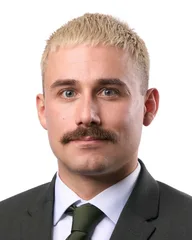
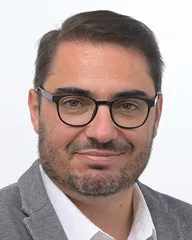
Lukas Sieper | Germany DEU | Non-attached Members (NI) | 390 |
| 2 |
|
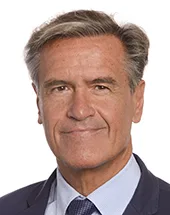
Juan Fernando López Aguilar | Spain ESP | Progressive Alliance of Socialists and Democrats (S&D) | 354 |
| 3 |
|
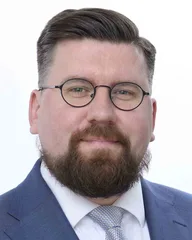
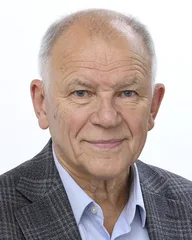
Sebastian Tynkkynen | Finland FIN | European Conservatives and Reformists (ECR) | 331 |
| 4 |
|
João Oliveira | Portugal PRT | The Left in the European Parliament (GUE/NGL) | 232 |
| 5 |
|
Vytenis Povilas Andriukaitis | Lithuania LTU | Progressive Alliance of Socialists and Democrats (S&D) | 227 |
All Contributions (115)
Need for a speedy adoption of the asylum and migration package (debate)
... the efforts of the Danish Government in Rwanda. The efforts of the Danish Government are pies in the sky, castles in the sky. They are not actually coming to anything. Rwanda does not respect human rights. How can you propose that we want to send refugees, asylum seekers to Rwanda and your claims that they are illegal, that they are undocumented refugees, that they do not have rights to seek safety in Europe? Where are your facts on this? And I would wish that you base your statements in this whole plenary on facts and not loose ideas.
Situation in Nagorno-Karabakh after Azerbaijan’s attack and the continuing threats against Armenia (debate)
Madam President! Thank you, Madam President, thank you, Commissioner, to the Secretary of State for European Affairs. In 1902, the Danish teacher Karen Jeppe travelled to Armenia to help the displaced Armenians. It was in the run-up to the Armenian Genocide of 1915. At that time, the international community failed Armenia. Azerbaijan has exceeded what should be Europe's red lines in Nagorno-Karabakh in recent years, but we have not seen any action by the European Union. The latest attacks have so far displaced more than 100,000 people across the border into Armenia. What we are seeing is the expulsion of the last Armenian minority in the area. The geopolitical situation with Russia’s war of aggression in Ukraine seems to have paralysed the EU. It is tragicomic when von der Leyen and Borrell talk about the EU as a global player. We need to be able to respond to more than one thing at a time. Otherwise, it will be all too easy to put the EU on the sidelines. But at the same time Armenia must also help us to help them. We need Armenia to fully engage in close partnership with the EU. We can take the first step in this direction today. The Secretary of State for European Affairs, Charles Michel, and Josep Borrell, should invite the Prime Minister of Armenia, Pashinyan, and President Khachaturyan to the meeting in Granada the day after tomorrow, where EU heads of state gather. In this way, the EU stands with Armenia in the desire for a peaceful future for the South Caucasus, with respect for all minorities.
One-minute speeches on matters of political importance
Madam President! The fish in the Danish waters gasp for the weather and die while we watch these days, and our sailing children do not actually dare to fall into the water because of toxic algae that suffocate the marine environment. Danish seas, fjords and streams have been hit by the worst oxygen depletion since 2002. Despite glazed facts for decades, Danish politicians have not wanted to demand action from our farmers to restore our marine environment. Why has the EU Commission not acted and demanded that Denmark comply with current EU requirements? It is both shameful and deeply problematic, because the cause of the oxygen depletion is simple. Denmark has no order in the pencil house when it comes to discharges to Danish fjords and waters. Agriculture is the culprit. The problem is that the politicians in our national parliament are preparing to solve the massive challenges by voluntary means. That's fucking naive. I do not want the Danish seabed to end up as a barren and wet desert. Therefore, it is crucial that the Commission ensures that EU legislation is complied with - also in Denmark. Otherwise, it may indicate that nitrogen pollution in Denmark continues unchallenged.
Ensuring European transportation works for women (debate)
Madam President! This report highlights the need to remember the whole of society when we think about transport. In 1946 Simone de Beauvoir’s ‘The Other Gender’ was published. In 2019 Caroline Criado Perez “Invisible women”. Both are about how society thinks men first and most often completely forgets women. It is quite explicit in the transport sector, where it was only in these weeks with 55 years of delay that we got the first female crash-test dummy. This is important because women are both smaller, but also differently built than men. We're not just little men. How we organize our transportation is crucial to make our lives cohesive. But also the transport planners forget women. That is why I welcome the Commissioner's commitment to gender-aggregated data here today. We often don't think about the fact that women's transport patterns are different because they pick up and bring children or shop to and from the job. Therefore, we must remember that commuting is more than just from home to office or factory. We are not thinking about the fact that female truck drivers need rest areas to have enclosed toilets and bathing facilities so that they do not have to get undressed with several other colleagues. This will probably benefit the men as well. We do not think that bikes are more than sports racing bikes, but also solid work horses made of steel, where we have shopping bags on the handlebars, luggage racks or cargo bikes, where we manage the week's shopping, flea market finds, and the kids can also be squeezed in. We need to find a place for all these bikes. Good for the climate. And bikes give more freedom, especially for women. A lot of women think about all of this. We must remember to listen to them. Therefore, I am pleased with our report, and it warms my heart that we stressed the importance of ensuring better space for both bikes and cargo bikes on our streets and country roads.
Regulation of prostitution in the EU: its cross-border implications and impact on gender equality and women’s rights (debate)
Mr President! Ladies and gentlemen, the negotiations have been so unnecessarily difficult that I am left with the idea that a balanced report might not have been desired at all. In this report, we should have focused on and listened to those who have voluntarily chosen this work, because it is clear that we must say no to organised crime, trafficking and the exploitation of people in need or under pressure, which the Commissioner also stressed that we are doing. This report should have been about human rights, equal rights and access to sexual health. So why, in fact, have we not listened to those with whom we usually work closely, such as Human Rights Watch, ILGA Europe, Amnesty and the IPPF family planning network? The report deprives adults of the right to say to and from and to decide for themselves over their own bodies. This is a serious breach of the right to take autonomous decisions. We must safeguard the best interests and rights of sex workers. They must have the opportunity to have access to protection, to health, to equal treatment for the society in which they live. This report does not give them that. On the contrary. That is why I recommend voting against the report.
Combating the normalisation of far-right and far-left discourses including antisemitism (debate)
Madam President! Commissioner. For me, fundamental rights and our democracy are not about the right and the left. It is about respect for people. The far right is oppressing LGBTI people, minorities, migrants and women to win votes. For almost a hundred years, we have seen the far right using minorities as a target to gain power and undermine our democracy. We say so often that it must never be repeated. But today, one of the fascist thinkers of the time, Ivan Ilyin, inspires Putin to his war in Ukraine and in recent decades we have seen more and more European middle parties normalise and copy the rhetoric of the far right. We must not accept the black-minded politicians who use minorities as stepping stones to maintain their own power. It is dangerous for our democracy because LGBTI communities, migrants and women's rights are the canaries in the coal mine of democracy, and our democracy is woken in the best sense of the word. When their rights are attacked, it is a signal of danger to the democracy of all of us. We must act immediately to protect our democracies, because they will not stop there. And finally, I will not tolerate the use of anti-Semitism as an excuse to oppress other minorities. We are not free until everyone is free in our society.
Relations with Belarus (debate)
Madam President, this is an important resolution for Belarus. We need to show that we stand truly with Belarus and the democratic opposition’s fight for freedom for all of the population of Belarus, for its political prisoners, for its opposition in exile. We need to show not only in words and in sanctions on letters, but actually proving that we stand with the population of Belarus. We need to stop our sports associations from accepting Belarusian and Russian athletes to compete. And we need to stop the members of the Council asking for exceptions and allowing the import of Belarusian potash. We need to mirror the sanctions against Russia and apply them to Belarus. And we need to make sure that the democratic opposition living in exile have viable lives outside of Belarus. They need to have the residence and also the economic funds to actually live outside of Belarus and fight for the freedom of Belarus. (The speaker used a slogan in a non-EU language)
Global Convergence on Generative AI (debate)
Thank you for accepting this blue card. Artificial intelligence has already trained on works of art. How do you think you can compensate artists whose works have been used to train artificial intelligence, even before it is put on the market?
Global Convergence on Generative AI (debate)
Mr President, I thank the Commissioner for being here. I think we could have had more Commissioners, as regulating AI encompasses many areas and lots of the portfolios of your colleagues. Last year, the use of generative AI spread like wildfire. When we started the work on the AI Act, we couldn’t have imagined such an exponential rise in the use of generative AI. By the commendable efforts of my colleagues negotiating the AI Act, we managed to go a long way to address these issues. We also managed to stop the fearmongering, but we still have gaps that remain. In particular on copyright, where existing rules and the Copyright in the Single Market Directive were not built with AI in mind. But also on other harms, such as disinformation and non-consensual generated nude images. It is vital that we keep in mind that the AI Act will only come into force at the earliest in 2026, and then even when it’s in force most of the challenges, including the ones I mentioned, are cross-border issues. Regulating them here does not shelter us from the impact of their use abroad. The only way to achieve this is an international agreement on AI, whether it will be in the OECD, G7 or G20. The EU is well placed to pioneer such an agreement. However, we do face an uphill battle. Third countries, both rivals and allies, have very different opinions on what to do and what to regulate. To succeed, the EU needs to work as one on the international stage. And that’s why I was kind of concerned when two seemingly competing proposals from Vestager and Breton were proposed: the AI Pact and the AI Code of Conduct, both targeting the G7, seek to achieve many of the same goals. But why are they not being negotiated together? We have one year together, this Parliament and the Commission, to achieve this, to shape AI globally for the better. So let’s work on this together.
2022 Report on Bosnia and Herzegovina (debate)
Madam President, Commissioner, today we commemorate 28 years since the Srebrenica genocide. This was a genocide that marked a European history and our conscience because we had a responsibility that we failed to live up to, to protect the population that had sought refuge in Srebrenica. It also marks all of our European populations because in each of our countries we have families that sought refuge as refugees after the genocide or before the genocide and reside in our countries. So the fate of Bosnia and Herzegovina is not only a fate for that country, but a fate for all of Europe. It is imperative that the killings that occurred in Srebrenica are recognised for what they truly were – a genocide. A genocide of Muslim, Bosniak people, young boys and young men and elderly men. This needs to be recognised also by the politicians of Republika Srpska as part of the way to deal with the past and achieve a peaceful future. We need to stop impunity, to lay the foundation for a more stable and European Bosnia and Herzegovina that we can welcome as part of the European Union.
Question Time (Commission) – EU-Africa Strategy
Thank you Commissioner for your focus on human rights and democracy in Tunisia. Will the Commission and the EEAS then take up the tripartite meetings that used to be held between the Tunisian Government, Tunisian Civil Society and the EEAS? At the moment, human rights defenders and civil society have been arrested following meetings with EU Member State embassies and holding meetings with civil society in an organised way and supporting them is an important signal and support for civil society in Tunisia.
Question Time (Commission) – EU-Africa Strategy
Thank you, Commissioner and Vice-President. Looking at the EU Africa Strategy, I wish to focus on a specific country, Tunisia, which I find is symptomatic for our approach to Africa as a whole. We need strategic and equal partnerships with the countries in Africa. And so that is not just focused on migration, but, as your portfolio says, to promote democracy, rule of law, human rights and good governance. Looking at Tunisia, we need a strategic partnership between the EU and a democratic Tunisia. It was important that we invested in our partnership with Tunisia leading up to our current strategic priorities adopted in 2018, when Tunisia was implementing the democratic reforms following the Arab revolution that had brought Ben Ali down. But why is the EU intensifying a comprehensive partnership with Tunisia and completing a memorandum of understanding with an unelected president which has been undermining parliamentary democracy and rule of law? Furthermore, why has the EU stopped engaging with Tunisia’s civil society in a time when the human rights defenders, lawyers and journalists of Tunisia need our support? How do we stand strong with democratic forces and human-rights defenders when we seem to prefer to form partnership with strongman rulers in the Sahel, in Rwanda, in Uganda, and now in Tunisia?
Surrogacy in the EU - risks of exploitation and commercialisation (topical debate)
Madam President! To found a family and to bear one's own child are two of the things that are most fundamental to us as human beings, as well as to carry on generations and create a future on this earth for children in one's family. What surrogate mothers do is they help people and families to complete this dream. Let women decide their own bodies. We must let women make a choice for themselves whether they want to help families complete this dream. We as politicians should not do that. We cannot achieve equality in Europe by incapacitating women. We need to believe that women who want to be surrogate mothers have made a free choice and that they know what they want to do to their own bodies. There are many medical and other reasons to use surrogate mothers, and we as politicians should not stand in the way of that. All children have the right to their parents and to their families. And we need to make sure that Europeans' dreams of families and children can be lived out and not hindered by political aspirations.
Question Time (VPC/HR) - Relations between Armenia and Azerbaijan and the situation in Nagorno-Karabakh and at the Lachin Corridor
–Mr President! Thank you very much for your reply. I know that we cannot ask for miracles, but at least we cannot have the most fundamental part of international law respected. Access between their prisoners of war and their families? There are 33 Armenian prisoners of war detained in Azerbaijan. They only have very sporadic telephone contact with their families and they have not yet been sent back. What can we do from the European side to unite these prisoners of war with their families?
Question Time (VPC/HR) - Relations between Armenia and Azerbaijan and the situation in Nagorno-Karabakh and at the Lachin Corridor
Mr President! Armenia and Azerbaijan. They have a peace agreement that covers Nagorno-Karabakh. There is no longer a real conflict. There is an agreement reached by both Armenia and Azerbaijan, of which the Lachin corridor is an essential part. The problem is, there's just no access through the Lachin corridor. The Lachin corridor is part of this peace agreement, which requires access to the Nagorno-Karabakh area for food and goods to pass through. But this is not the case at the moment. International observers are needed to monitor access and conditions, but Azerbaijan opposes this. Despite the fact that it is part of the agreement that Azerbaijan has concluded with Armenia. How can we ensure the implementation of this agreement reached by both Armenia and Azerbaijan? We have seen in the past how frozen conflicts can flare up and become very vivid conflicts. Also where we have had Minsk agreements in Ukraine, it suddenly turned into an aggressive invasion of the whole of Ukraine, as we saw. How can we, on the European side, ensure the implementation of the Armenia-Azerbaijan agreement?
Artificial Intelligence Act (debate)
Mr President, dear colleagues, kære Margrethe, we made it: over a year of negotiations, the AI Act has finally reached plenary. The outcome is a careful balance. It is a text that promotes innovation, that protects fundamental rights and fosters trustworthy AI. And these three aims were key to our work in the Legal Affairs Committee. We voted to guarantee that open source developers who are driving the AI revolution would have space to experiment without being buried in paperwork. We ensure that users of AI have the right to an explanation, because for citizens to trust AI, they have to understand the decisions that it makes. And finally, we ensure that citizens have a right to recourse because decisions made by AI should never be final. All of these provisions have found their way into the final text. This is great. But tomorrow, when we vote, we still have some decisions to make. We need to ban biometric mass—surveillance. The police already have efficient tools without infringing on our fundamental rights. We need to prevent intrusive pseudo—scientific behavioural recognition. We need to stop heartless automated migration decision—making. So I urge colleagues: vote to ban these dangerous practices. Vote for trustworthy AI that respects our fundamental rights. Thank you very much to the two rapporteurs, to all of the shadows and to the Commission for the excellent work on this directive.
One-minute speeches on matters of political importance
Madam President and Vice-President. In a year's time, we will be asking European citizens to vote in the European elections. Your voice makes a difference, we say. Men hvis du stemmer på nogen, der stifter familie, så har din stemme mindre værdi, fordi den forælder, som vil tilbringe tid med deres barn i de første dage af deres liv, deres stemme bliver ikke talt. They cannot be replaced by a political colleague. They cannot vote electronically. Other parliaments have found practical solutions. Well, so can we. When we cannot provide the opportunity to start a family and have our political voice heard, we prevent young people – and especially women – from sitting in this Parliament and having their voice heard. Everything to win, vote for a woman! It was the slogan in 2019 to get more people to vote for women. Let's make it a reality by making sure that every vote counts. Even those who start a family while sitting in the European Parliament.
Council of Europe Convention on preventing and combating violence against women and domestic violence – EU accession: institutions and public administration of the Union - Council of Europe Convention on preventing and combating violence against women and domestic violence - EU accession: judicial cooperation in criminal matters, asylum and non-refoulement (debate)
Madam President! No, no, no. No, don't touch me there. No, I don't want that. No, it's a full sentence. It is important that we teach our children that they are allowed to say no if there are others who want to touch them or do things to them that they do not like. We teach our children that they have the right to decide who they are, what they are and what will happen to them. Yeah, I'd like that. Yeah, I like that. Yeah, I think we should do that together. It is important that we teach our young people that we teach our women that sexual relationships are something that requires consent. If there is no consent, it is rape. It may seem very simple that I start by talking about this when we talk about the stamp convention. But that is the essence of the Convention. It is that we teach our children, our young people, our families, that we each have the right to decide over our own body and ours what happens to them. It is in this way that we form the basis for stopping violence against women, domestic violence and violence in close relationships. Today I would like to send a greeting to Mads Geertsen. Mads Geertsen is a Danish actor and performer, who is behind the character Uncle Reje. He has been haunted by a broad group of Danes for his children's plays because it is believed to be pedophilia and grooming. In the same way, several countries have taken the Istanbul Convention hostage and said it is against their national culture. It's not. It's scientific. That is why we need to ratify the Istanbul Convention both for the EU and for each individual Member State. This is how we can stop violence against women and protect our young people and children.
Universal decriminalization of homosexuality, in light of recent developments in Uganda (debate)
Mr President, universal human rights and our democracy are based on us being equal, based on non-discrimination. So when you talk about LGBTI rights, trans rights and transgender rights as being part of a culture war and a wokeism, you are actually fighting against the basis of our democracy. In 2011, David Kato was murdered in his own home. Last year we received Frank Mugisha, who is a lifelong LGBTI activist in Uganda and the head of Sexual Minorities Uganda, an organisation which last year was banned by Uganda. In 2011, the killers entered David Kato’s home and killed him. In 2023, the killers are sitting in the parliament in Kampala calling for the death sentence for people exercising their democratic rights and having their universal human rights. We have a radicalised Ugandan Parliament. So what is this strategy of partnership that we’re talking about from the European Union? Where are our demands for respecting democracy and human rights in Uganda? Where are the sanctions against the individuals that are promoting this discrimination in Kampala? We need a European strategy for universal decriminalisation. I want to see the Amsterdam rainbow dress at the next World Pride to have removed all of the country flags to replace them by pride flags, showing that we have achieved universal decriminalisation of being who you are.
The Rights of children in Rainbow Families and same sex parents in particular in Italy (debate)
Mr President, and thank you very much, Commissioner, for being here. This is a debate around fundamental rights: the rights of children in our Union, if they have the same rights as other children. This is not a question of how they were conceived. This is a question of how their parents have the right to love and protect them, no matter how their family situation is, no matter in which Member State they are. This is a matter of our fundamental right of freedom of movement within the European Union: we should not have to check whether our family, our parenthood, is respected and protected in the countries that we wish to travel to. If we can go to the hospital if we’re on holiday with our children and be allowed to come into the hospital with our child. But this is also a question of protecting the fundamental rights of each of our countries and the children living there. We cannot have Member States, governments and administrations trying to harass families by not recognising the parenthood of children in their country.
The Rights of children in Rainbow Families and same sex parents in particular in Italy (debate)
Thank you for accepting the blue card. You said that this is a national issue. Are fundamental rights not a European issue? The rights of children in the UN Treaty – is this not a universal issue? So how do you claim that this is not something that we should discuss in the European Parliament, where we want to ensure the fundamental rights of all European citizens? We are talking about the rights of children to have their parents recognised. This is something that is not being implemented in Italy in the lack of national legislation. So how do you see that we as a European Parliament can ensure the rights of all children of Europe, their fundamental rights to have their parents recognised and their rights being respected?
European Citizens’ Initiative "Save bees and farmers! Towards a bee-friendly agriculture for a healthy environment" (debate)
Mr President! Many thanks to the citizens who have signed up in more than 11 countries in Europe. We need to talk about what is happening in our nature and what is happening to our insects. Because the bees in our nature are under pressure, swarms of bees die, and we don't know why, but because we don't know exactly why, that doesn't mean we shouldn't act. We need to look at reducing the use of pesticides when we look at our agricultural subsidies and when we look at the new reform of the pesticide legislation. But we also need to look at how we decorate our nature, our farms and our cities, because we can all act to protect wild bees. We need to think insect corridors into the way we decorate our landscape, have hedgerows and changing crops, so that there are flowers that pollinators can live on all year round, and we don't have monoculture. But also in your own garden you can do something. You can leave the pile of leaves so that the wild bees can survive there, so that they can build nests, so that there can be wild bees in your garden. And you can make sure, like the farmers, that there are flowers so that the insects can live and eat throughout the year.
Women activism – human rights defenders related to sexual and reproductive health and rights (SRHR) (debate)
Madam President, today, we have a debate about human rights defenders because this is what we're talking about: we're talking about men and women campaigning for human rights. Abortions are part of health care. Abortions happen. You can only ban safe abortions. We had a discussion earlier about Isabella, who died because she was denied the health care that she needed. This is happening in Poland. And no matter how much certain Polish politicians are trying to deny it, women in Poland are not getting the health care they need because of Polish politicians. There is a dedicated misinformation campaign about gender, women's rights and abortion. It is unacceptable that this misinformation campaign is running without being pushed back. We need to unite and make sure that sexual and reproductive health rights are maintained. The debate about trans rights is part of this. It is a unified campaign across Spain, across Poland, across France, trying to deny fundamental rights for queer people, for women across the world, and we need to step up and push back.
Women activism – human rights defenders related to sexual and reproductive health and rights (SRHR) (debate)
I think your intervention, dear colleague, is a clear example of the pushback against the fundamental ... Votre intervention est un exemple clair de la campagne contre les droits fondamentaux. Oui, nous sommes des femmes. Toutes les femmes sont diverses, comme les femmes trans. Et donc, il n'y a pas seulement la définition des femmes de J.K. Rowling. Au Danemark, il y a un événement dans une bibliothèque cette semaine qui a suscité des menaces de mort pour les drag queens qui vont y participer. C’est une campagne mortelle que vous êtes en train de mener et je vais vous demander d’arrêter d’avoir ce langage haineux.
Deaths at sea: a common EU response to save lives and action to ensure safe and legal pathways (debate)
Mr President, in the recent shipwreck, the Italian authorities refused to help and the responsible Libyan authorities did not help, despite having received both patrol boats and millions of euros from the European community. This is why we need to revoke the Libyan search and rescue area and we need to have EU state-led search and rescue. We cannot delegate the responsibility of refugees at the EU borders to other states. We need to make sure that we have legal pathways both for refugees and for migrants to the EU. This is the only solution to stop people from dying at the European borders. Our Member States need to take the responsibility for helping refugees at the borders of the EU. We need to have proper partnerships with trustworthy countries so that we can receive migrants and refugees properly and dignified and so that we can also send back the migrants who tried to come to Europe under the guise of being refugees.