

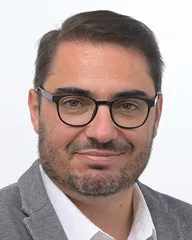
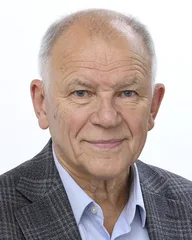
| Rank | Name | Country | Group | Speeches | |
|---|---|---|---|---|---|
| 1 |
|
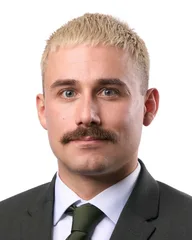
Lukas Sieper | Germany DEU | Non-attached Members (NI) | 390 |
| 2 |
|
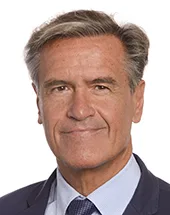
Juan Fernando López Aguilar | Spain ESP | Progressive Alliance of Socialists and Democrats (S&D) | 354 |
| 3 |
|
Sebastian Tynkkynen | Finland FIN | European Conservatives and Reformists (ECR) | 331 |
| 4 |
|
João Oliveira | Portugal PRT | The Left in the European Parliament (GUE/NGL) | 232 |
| 5 |
|
Vytenis Povilas Andriukaitis | Lithuania LTU | Progressive Alliance of Socialists and Democrats (S&D) | 227 |
All Contributions (80)
Building of a wall on the Polish – Belarus border in the Białowieża primeval forest (debate)
Ladies and Gentlemen, Since July 2021, in defence of its own territory and the borders of the European Union, Poland has been facing a migration crisis at the border with Belarus. In response to the EU sanctions imposed on Belarus, President Lukashenko threatened not to stop drug and human traffickers arriving in the European Union, as well as armed immigrants, as confirmed by the deliberate triggering of the crisis. In November 2021, Lithuania and Latvia began building walls and dams to protect their borders with Belarus from the influx of illegal immigrants from Afghanistan and the Middle East. Has the European Parliament held a debate on the environmental impact of such buildings in these countries? The difference is that in the parliaments of Lithuania and Latvia, decisions on state security are taken almost unanimously. In Poland, we are dealing with an opposition that deliberately challenges the decisions of the democratically elected Polish government and, by manipulating the State, exposes Poland to unfounded attacks. As an MEP, I am offended by the fact that Poland's internal affairs have been discussed again in the European forum. In the case of the wall securing the border with Belarus, we are also talking about the borders of the European Union. Should there be a debate on this? Think about it. Are there any arguments that are capable of calling into question any decision taken by the Polish government based on the issue of its own and intra-Community security?
Common rules promoting the repair of goods (debate)
Madam President, I'm sorry. I would like to thank the rapporteur, Mr René Repasi, for the joint work we have done in Parliament, for the successful negotiations during the trilogues. The result of this cooperation is a text that provides optimal benefits for consumers and minimal burdens for traders. The new rules mean easier and more accessible repairs for all consumers, which in turn will extend the life of products such as washing machines, dishwashers, refrigerators, vacuum cleaners or electronic displays. Nowadays, when our home appliances fail, they are often simply thrown away, because the parts are expensive or they do not exist at all. This directive is also a major opportunity for independent repairers by ensuring wide access to spare parts and facilitating the cross-border provision of these services. Our economy will benefit from this. In particular, I see here new opportunities for Polish entrepreneurs, because we have a long-standing culture of repairing devices. It is time to use our strengths and unleash this potential. I would also like to emphasise my satisfaction with the fact that, in its final form, the Directive will indeed be a right to repair and not a coercion, since the Commission's original proposal deprived consumers of the freedom to choose between repair and replacement. We can use different incentives, but the choice must remain with the consumer. Such an incentive will be a solution ensuring that the consumer who decides to repair during the warranty period receives an additional 12 months of legal protection for his repaired product. That's a very good solution.
Promised revision of the EU animal welfare legislation and the animal welfare-related European citizens’ initiatives (debate)
Mr President, thank you very much. Ladies and Gentlemen, Unfortunately, today's debate confirms that some MEPs in this Chamber do not understand the seriousness of the current situation in the agricultural sector. I would like to remind those of you who missed it that for several weeks there have been massive protests on the streets of European cities by farmers against further unrealistic environmental and animal welfare requirements imposed on them. I am no longer appealing to you, the signatories of this question, but I am asking the European Commission to stick to its announcements regarding the abandonment of burdens on farmers. Any further animal welfare projects require more evaluations and dialogue with the agricultural community across the European Union, not just biased non-governmental organisations. Because only dialogue gives you a chance that the changes you propose will be accepted by farmers.
European Media Freedom Act (debate)
Mr President, thank you very much. The aim and objectives of the European Media Freedom Act are unquestionably correct. However, the proposed solutions are not legally sound and do not guarantee media independence. Despite the declaration of full sovereignty of the EU institutions to safeguard media freedom, the European Commission will have a significant influence on the newly established supervisory body, the European Systemic Risk Board (ESRB). the Media Services. Media pluralism should be ensured in the Member States without interference from Brussels. I believe that the Commission has already tried on several occasions to interfere in the electoral process of individual Member States. So what guarantee do we have that she won't do it again using the proceeds that this act will give her? The foundation of our democracy is freedom of speech, which cannot be disrupted by excessive regulation. Otherwise, it will be a ‘European Media Freedom Act’. Commissioner Jourová, I am talking to you, and I do not believe you either. The takeover of the media by the current ruling coalition in Poland, many of which are referred to by the ‘coalition on 13 December’, has taken place unlawfully, which we also know about not only in Poland, but also in Europe and in the world. You and the Commission have done nothing to protect journalists.
Energy performance of buildings (recast) (debate)
Mr President, thank you very much. Ladies and Gentlemen, this directive is another attempt to impose, under the guise of the fight against climate change, legislation that burdens us with enormous costs, which will ultimately be borne by ordinary citizens. This directive is a Brussels dictatorship that does not take into account the real opportunities and needs of citizens. The requirement to renovate buildings with lower energy efficiency will push the poorest into even greater poverty, and imposing obligations on photovoltaic installations is only another link in the chain of bureaucratic madness. Recent scenes from Brussels and other countries show clearly how the attempt to push for unrealistic goals of the Green Deal has led to the collapse of the competitiveness of European agriculture. This is putting ideology above rational resource management based on sound analysis. Stop the ill-considered and irresponsible green policies that lead to the impoverishment of our population. There is still time to stop this madness. Let's show that we can conduct a policy close to... (The President took the floor)
Substantiation and communication of explicit environmental claims (Green Claims Directive) (debate)
Mr President, thank you very much. Ladies and Gentlemen, I welcome the initiative to promote a more circular economy and fight ecumenism. However, there are specific aspects of the proposed directive which, in my view, are not supported by a meaningful analysis. In particular, I would like to highlight my concerns about the lack of clarity in the definitions and rules for environmental claims. Unspecified guidelines can lead to consumer confusion and difficulties for businesses to operate in accordance with the rules. If we want the law we pass to be respected, we must ensure that it is clear and understandable. Moreover, the current rules should be fully applied in order to avoid applying or creating a dead law. For example, restrictions imposed on environmental claims in highly polluting industries for which there is still no clear definition can lead to interpretative chaos and hamper the modernisation of these companies. Therefore, the details of the conditions for the application of penalties need to be considered. Market surveillance authorities in the Member States should be free to do so. Crucially, the cure for ecumenism can not be worse than the disease itself. We cannot allow the certification of sustainable standards to be paralysed by excessive bureaucracy and expensive procedures. Consumers, but also European business, cannot afford the experiments of the Green Deal, which are completely detached from reality. However, I believe that further work on this report during the negotiations with the Council can lead to more life-like solutions. And we should all be concerned about that in this House.
Transparency and targeting of political advertising (debate)
Mr President, thank you very much. Ladies and Gentlemen, The regulation we are talking about introduces significant changes aimed at increasing the level of transparency of political advertising. I am convinced that this initiative has a number of benefits, in particular by providing citizens with access to information on the financing of advertisements and the sponsors behind them. However, I have reservations about the long-term viability of the proposed solutions. In my view, shifting decision-making pressure on sensitive issues such as political advertising to online platforms creates a risk of biased application of regulation. This raises concerns about the abuse of the mechanism for reporting political advertisements, which can lead to disruptions in electoral processes. Under the proposed changes, during the electoral period, platforms will be required to consider applications within just 48 hours of receiving them. There is therefore a risk that this provision could be used by mass reporting of advertisements, which could lead to the system being blocked and make it more difficult to verify advertisements that actually promote disinformation or violate the law. In the context of hybrid warfare, threats from external actors already exist. That is why we must strive for solutions that ensure transparency without jeopardising democratic processes.
The fight against hate speech and disinformation: responsibility of social platforms within the Digital Services Act (topical debate)
Mr President, thank you very much. Ladies and Gentlemen, There is no room for censorship in a free Europe. I am deeply concerned about the tendency to impose restrictions on freedom of expression under the guise of combating illegal content online. The concept of hate speech has its roots in totalitarian regimes, as in the Soviet Union, where it served as a tool for silencing political opposition. Today we see how the same mechanism is used by some political forces to eliminate competition and stifle political discussion. I've personally experienced it. I and my ECR colleagues were stripped of immunity for liking our political group's post on social media, which clearly portrayed the aggression and threats posed by illegal immigrants to residents across the European Union. Can you imagine that someone in this House is stripped of their immunity for juxtaposing an entry that attacks Christian, Conservative or Catholic values? Of course you can't imagine it, because the attack on these values is in fashion for the European left. So let us not allow freedom of speech to be trampled on by European neo-Marxists who want to impose their vision of the world on us.
Empowering consumers for the green transition (debate)
Mr President, thank you very much. In recent years, greenwashing has become a serious problem that may grow in the name of the European Union pushing for the Green Deal. What, in practice, is the empowerment of consumers in this Directive? First of all, providing clear and reliable information about products, and thus the opportunity to make a better choice when shopping for them. This is the end of paying the premium price for products that use labels or claims such as ‘environmentally friendly’, ‘climate neutral’ or ‘green’ in an unauthorised manner. During the negotiations, we insisted on increasing the visibility of the guarantee information, as more than half of European consumers are not aware that all goods are covered by a legal guarantee of at least two years in the European Union. Now that's gonna change. The reminder will be present in every store, and in some cases also on the packaging. We also introduce a voluntary and free product durability guarantee, which in simplified terms will be an extension of the legal guarantee. I believe that our work will end once and for all with greenwashing and create a solid legal framework to protect consumers in the Single Market from it. That's what we're all about.
Implementation of the 2018 Geo-blocking Regulation in the digital single market (A9-0335/2023 - Beata Mazurek) (vote)
Madam President, I'm sorry. Ladies and Gentlemen, During the debates in this room, I often hear statements about building a common market. Today is a chance to see if these words have real meaning. The Geo-blocking Regulation is the essence of removing unfair barriers for consumers and traders in the single market. I would like to thank the IMCO co-rapporteurs for their constructive work. Examples of situations where we need our improvement are obstacles in the case of registration and payment methods online, price discrimination based on the consumer’s nationality and place of residence. We also want to make it easier for consumers to collect or arrange their parcel themselves when shopping online from another country. Those seeking a product or service in the Union must have the full right to access and choose the most attractive offer in terms of price and quality. I cannot overlook the topic of audiovisual content raised in the report. Let's not be fooled by the appeals. The report supports a step-by-step approach, based on data and allowing for an in-depth assessment by creative experts. We are looking for concrete actions, taking into account the views of stakeholders, which will not harm existing business models and project funding and are without prejudice to cultural diversity. Is this a revolutionary approach? Of course, it is also possible to choose passivity and ignore the evolving needs of consumers and reject the technological progress that has been made in recent years. But will it serve everyone? Today we present the well-thought-out solutions developed in the Committee on the Internal Market. The European Commission is required to prepare a regulatory review in 2025, and this opportunity should be seized to see how legal equal access to audiovisual content for residents of all Member States can be improved. I therefore call on you to vote in favour of the report and to reject all amendments.
Packaging and packaging waste (debate)
Thank you, Mr President! Mr. Commissioner, I'm sorry. I see the need to update the current rules in order to be able to fight effectively against excess packaging. The direction that has been taken is the right one, but the proposed pace of legislative change, together with over-ambitious targets, makes it, in my view, simply unfeasible. I would like to draw your attention to the fact that the draft document does not refer to the different circumstances in each Member State. The new objectives should above all be realistic, measurable, technically feasible and sustainable, taking into account not only environmental, but also economic and social aspects. Another issue is the need to leave Member States as much flexibility as possible in terms of extended producer responsibility, auction systems and waste management. I also warn against the introduction of additional administrative burdens, which will have a very detrimental impact on entrepreneurs. We should be aware of that. In fact, many of the burdensome obligations contained in the Regulation are not needed for anything, provided that the packaging is properly collected and recycled.
Common rules promoting the repair of goods
Madam President, I'm sorry. I thank the rapporteur for working together on this very important report, which will have a direct impact on the lives of every citizen of the European Union. Imagine that our mobile phone, without which it is difficult to function today, ceases to work as a result of a minor malfunction. Instead of throwing it away and buying a new one, we should be able to repair it, even outside the two-year warranty period. This will allow savings in citizens' wallets and longer use of expensive devices. I am also pleased that thanks to my amendments we are releasing the potential and energy of independent repairers, which are key to reducing the cost of servicing products outside the authorized point. The rules will facilitate the provision of cross-border repair services, provide access to spare parts and technical documentation. The new law is an opportunity for Polish entrepreneurs, which will increase competition in the repair sector and contribute to better conditions for consumers. Our text also extends the warranty by one year after the first repair of the product and introduces a new, also one-year, warranty for the repair service. I believe that the proposed regulation will contribute to the creation of an effective repair market in the European Union, on which we will all benefit and on which we all care very much.
Children first - strengthening the Child Guarantee, two years on from its adoption - Reducing inequalities and promoting social inclusion in times of crisis for children and their families (joint debate – International Day of the Rights of the Child)
Madam President, I'm sorry. Commissioner, I'm sorry. Ladies and Gentlemen, In accordance with the provisions of the Convention on the Rights of the Child, all actions concerning children should always be guided by their highest interests. In Poland in recent years, social policy has been the area in which the most dynamic changes have taken place, and the family has been at the heart of state policy. You can't talk about a child in isolation from your family. A modern and independent state must be founded on solid foundations. That is the foundation of family. In recent years, my country has shown that investing in a family is not a cost, but the best possible investment. Social programs, such as the revolutionary 500+ program, which significantly reduced child poverty, a good start, family care capital have proven to be essential support for ensuring the development and safety of children. Our children are our future and only through the support of families are we able to provide them with stability. Children must be protected in every way and in times of peace and war, and especially perhaps in times of war in the family and in institutional settings. It is us, adults, who should effectively take care of their safety, happiness and proper development. It is good that we are talking about it, but we should act even faster and more effectively.
The new European strategy for a better internet for kids (BIK+) (debate)
Madam President, I'm sorry. Ladies and Gentlemen, Keeping children safe online is a priority for all of us, or at least it should be. In order to do this, it is necessary to put in place specific educational measures and programmes aimed not only at children, but also at their teachers, parents and carers. Approximately one in three internet users is a child who uses it at a very young age. This often happens without adult supervision. This is why it is so important and urgent to take action to create a safe, secure and trustworthy digital environment for children. Our efforts should focus on developing and implementing prevention techniques and campaigns for digital awareness and skills. We need to protect our children from harmful and illegal online content, behaviour and contact. We need to keep them safe. Therefore, our priority is to raise awareness, invest in education and training so that children acquire the skills and competences necessary to make the right choices in the online environment in a safe and responsible way. And this should be done as soon as possible. It is important that we talk about this, but it should be even more important to act as soon as possible to ensure the safety of the youngest, those whom we should all protect as adults.
Decent Housing for All (topical debate)
Madam President, I'm sorry. Access to decent housing is a fundamental right of every human being. We are aware that the number of housing in Europe is insufficient, that there is a housing crisis and that a significant proportion of existing housing remains unsuited to the needs of an ageing population. Therefore, it is necessary not only to increase the number of premises, but also to modernize them for the elderly and the disabled. Housing needs to remain a national responsibility, but the European Commission should support Member States by mobilising additional EU funds for various programmes. Together, we can create spaces that not only meet standards, but also provide decent living conditions for every citizen. Let us be ready to take effective action for a better standard of housing, for the resolution of the housing crisis across Europe for all our voters, for all Europeans.
Intelligent Road Transport Systems (debate)
Madam President, I'm sorry. I have no doubt that the deployment of intelligent transport systems is a key action to achieve connected and automated multimedia mobility. This will help transform the European transport system to create efficient, safe, sustainable, smart and resilient mobility. It is clear that the use of intelligent transport systems brings many benefits, such as improved safety, reduced travel times and reduced energy consumption. What I would like to warn all of us about here, however, is the danger of imposing too much administrative burden on the Member States. I warn against unfeasible responsibilities and excessive administrative burdens. I therefore fully agree with the need for a gradual implementation of this solution, taking into account the cost-benefit ratio of these obligations and the necessary administrative capacity. It is also of utmost importance that these measures respect the protection of personal data.
Economic coercion by third countries (debate)
Ladies and Gentlemen, with regard to the economic and, consequently, social impact of this Regulation, the optimal scenario is that the measures provided for therein will not have to be applied, as the mere possibility of using them will deter third countries from making any attempt at economic coercion. Under this option, the Regulation would have unequivocal positive economic consequences, and that is what we are all counting on. However, we must keep in mind the scenarios in which a response measure will take place, which may have negative consequences, especially economic ones, for EU actors. I welcome the final shape of this regulation, which has covered the decision-making process at the coercive stage, in particular the role of the Council and national parliaments, which will determine whether the European Union or a Member State is the target of economic coercion.
Protection of workers from asbestos (debate)
Madam President, I'm sorry. I am fully aware that asbestos is still a leading cause of cancer and occupational deaths, and its health effects are evident even years after exposure. I am in favour of improving the standards for the protection of workers from asbestos by improving the notification system, eliminating loopholes and introducing new tools to combat the risks of asbestos. Strengthening the provisions of the Directive will help to better identify asbestos in existing structures and thus prevent serious health problems for European workers. Lowering the occupational exposure limit is one of the most powerful tools in the fight against asbestos. Although implementing it will be a big challenge, you have to decide on this solution, because the health and life of employees is invaluable. Eliminating risk factors, prevention and prevention are more effective than treating severe, potentially fatal asbestos-related diseases. And we should all care about this prevention.
Rising precariousness in Europe including the need for aid to the most deprived (debate)
Ladies and Gentlemen, Nearly a third of Europeans say they are currently in a precarious financial and material situation. This is according to the European Barometer on Poverty and Economic Uncertainty carried out this year. Concerns about the future are enormous. 48% of our citizens, almost half of them, see the risk that they will find themselves in a precarious financial situation in the next few months. This data is not good, which is why I call on the Commission to take increased action to support, among others, Member States and organisations providing assistance and food for the most deprived. It is important that these steps are taken at both European and national level. In Poland, in recent years, my group has pursued a huge and effective support policy, introducing, for example, a zero VAT rate for basic food products, a carbon supplement, a reduction in the income tax rate to 12% and an increase in the tax-free amount. You can learn that from us. Citizens who are worried about tomorrow and are forced to deny themselves meals will not be interested in what we are debating. Dignified living conditions are the first and main goal that we must set ourselves and pursue.
Ukrainian grain exports after Russia’s exit from the Black Sea Grain Initiative (debate)
Mr President, thank you very much. In April this year, Poland unilaterally imposed an embargo on grain from Ukraine to protect our farmers. Then the EU decided to introduce a restriction on the import of grain to Poland. Now we have built a coalition of front-line countries, which is jointly fighting for the extension of the ban after September 15. Today we see that a new friend of Donald Tusk came to Strasbourg, Michał Kołodziejczak, a member of the Civic Coalition, who until recently called for the withdrawal from the European Union, and today is trying to be the main initiator of the uprising and prolongation of the ban on the import of Ukrainian grain. It was the Polish government that from the very beginning declared that no matter what the decision of Brussels officials would be, we would not open the border to imports. When our neighbor gets hurt, we open our hearts and homes. But when we have to fight for the interests of Polish farmers, we will not give up even one step. The Union granted Ukraine a unilaterally and temporarily limited privilege rather than a legally binding permanent access to the agricultural market. The EU regulation on this matter provides for the withdrawal of this privilege in the event of market disturbances. Such a perturbation occurs and we expect an extension of the embargo after September 15.
Single market emergency instrument (debate)
Madam President, I'm sorry. Ladies and Gentlemen, Working in the Committee on the Internal Market and Consumer Protection, I see the need for a robust mechanism for information exchange and coordination between countries in the Single Market in crisis situations. But in the case of this regulation, I get the impression that you are trying to achieve the right goals by the wrong means. As an example, I can mention priority rated orders, which allow the Commission to order the acceptance and prioritisation of certain orders for the production of goods by economic operators without the authorities of the Member States. A reform of the European Union is currently being debated and this draft regulation is being prepared in the spirit of shifting important competences towards the European Commission, giving it even more power. As an ECR group, we strongly oppose this, especially when the rules themselves are challenged as to their proportionality and the correct legal basis. Member States are well placed and should play a key role in crisis management at European level. Ensuring better coordination in times of crisis does not require intervention in sensitive areas of state governance. I therefore strongly oppose this text.
Investigation of the use of Pegasus and equivalent surveillance spyware - Investigation of the use of Pegasus and equivalent surveillance spyware (draft recommendation) (debate)
Mr President, thank you very much. Mr. Commissioner, I'm sorry. Instead of focusing on external threats that put EU countries and officials at risk, the PEGA Committee prefers to attack those that the EU considers to be insufficiently law-abiding, making them beating boys. It is worth emphasizing that the Pegasus software is used by most countries of the European Union, although for the public there is a picture that only Hungary and Poland do it and use it illegally, using it to limit civil liberties and fight the opposition, which is obvious nonsense. In Poland, contrary to the narrative of the authors of the report, there are strong safeguards and, unlike some other countries, there is a judicial control of any wiretaps assumed by the services. There is no question of abuse. States must have modern systems, because in an age of hybrid threats and advanced technologies used by terrorists, not using such devices would be naive and would make us vulnerable. However, perhaps the Union does not care about the security of the Member States, but about expanding its own competences. And we don't agree to that.
Artificial Intelligence Act (debate)
Madam President, I'm sorry. We are witnessing a real revolution. The 21st century is undoubtedly the age of data. Artificial intelligence is already part of our daily lives, but it has much more possibilities than what we have seen so far. In addition to the benefits, technology also carries risks that we should minimise by putting in place an effective legislative framework that guarantees the safety and protection of citizens' fundamental rights, while at the same time not hindering its development. Otherwise, we will be left behind in the global innovation race. Artificial intelligence is also a chance for a developmental leap for Polish companies and the Polish economy, because it is much easier to build your position in a new, newly emerging industry. That is why I believe that we will become a state of creators and creators of new solutions in the field of artificial intelligence. If the European Union is to become a leader in what we are talking about, artificial intelligence, it must build on its strengths and support the development of safe and modern artificial intelligence developed here in Europe.
Large transport infrastructure projects in the EU (debate)
Madam President, I'm sorry. The European Union needs large transport investments. Every effort should therefore be made to bridge the gap between the infrastructures of the old and new Member States. Only in this way will we avoid the concept of building a two-speed Europe, which I categorically oppose. Our common goal should be harmonious development and a well-functioning single market. This cannot be achieved without an effective communication network and I think that it does not take a lot of arguments to convince you to do so. We must also look carefully at the hands of organisations that, for trivial reasons and under the guise of ecological slogans, block strategic infrastructure investments. As an example of such investments hindered by pseudo-ecologists, and much needed, I can give a dig of the Vistula Spit in my country, Poland. The construction of the canal allowed Poland to become independent from Russia in terms of access to the waters of the Vistula Lagoon. The war made us realize how much good transport infrastructure connecting the West with the East is needed, as well as the need to include candidate countries such as Ukraine. Let us ensure that transport infrastructure truly connects Europe as quickly, as best and as safely as possible.
Electronic evidence in criminal proceedings: legal representatives directive - Electronic evidence regulation: European production and preservation orders for electronic evidence in criminal matters (debate)
Mr President, thank you very much. Unfortunately, Parliament has forced the Council to include in the e-evidence package a reference to the Article 7 procedure of the Treaty on European Union. It is a political instrument, because it cannot be called only a legal instrument. It introduces double standards for some Member States and this can be clearly seen in the example of countries such as Poland or Hungary. The right to refuse to cooperate with a Member State subject to Article 7 proceedings introduces a policy into the legal framework. That, in my opinion, is unacceptable. The e-evidence package aims to facilitate cross-border criminal investigations. Meanwhile, the regulation of cooperation in the taking of evidence has been linked to the political procedure. This leaves the Member State fully discretionary, which is dangerous in this case. Under no circumstances may the legislation created be used by some Member States as a tool of manipulation. In the form in which it is proposed, it can undoubtedly lead to this, to which not only I, but also my formation absolutely does not agree.