
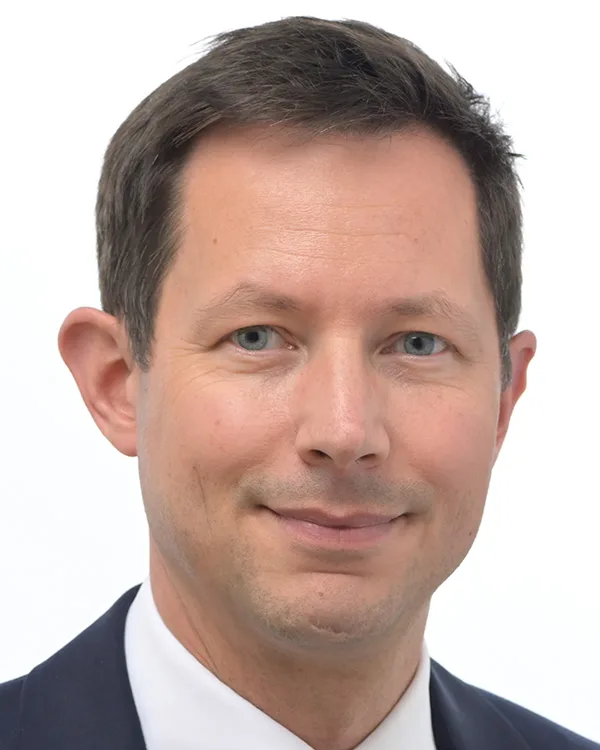

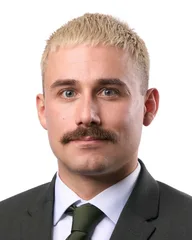
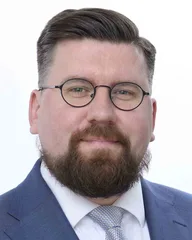
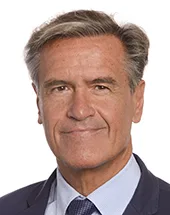
| Rank | Name | Country | Group | Speeches | |
|---|---|---|---|---|---|
| 1 |
|
Lukas Sieper | Germany DEU | Non-attached Members (NI) | 390 |
| 2 |
|
Juan Fernando López Aguilar | Spain ESP | Progressive Alliance of Socialists and Democrats (S&D) | 354 |
| 3 |
|
Sebastian Tynkkynen | Finland FIN | European Conservatives and Reformists (ECR) | 331 |
| 4 |
|
João Oliveira | Portugal PRT | The Left in the European Parliament (GUE/NGL) | 232 |
| 5 |
|
Vytenis Povilas Andriukaitis | Lithuania LTU | Progressive Alliance of Socialists and Democrats (S&D) | 227 |
All Contributions (138)
The despicable terrorist attacks by Hamas against Israel, Israel’s right to defend itself in line with humanitarian and international law and the humanitarian situation in Gaza (debate)
Dear colleague, it is not for me to ask the question. Ask the colleagues in your group why they refuse to say that Hamas is a terrorist organisation, why they refuse to say, again this morning, that on 7 October, what we witnessed, outraged, was a large-scale terrorist attack. Why don't you say that word? Why refuse to say what is obvious, namely that when we see Jews targeted today because they are Jews, we should all together, without nuance, without concessions, denounce it with one voice? Why not do it together today?
The despicable terrorist attacks by Hamas against Israel, Israel’s right to defend itself in line with humanitarian and international law and the humanitarian situation in Gaza (debate)
Mr President, Israel has been touched in the heart. Repeated attacks are bereaving our continent and, again this morning, there are modesty of expression that is cold in the back. This morning again, we heard our colleagues from La France Insoumise speak of Hamas' crimes as "war crimes". But words make sense, colleagues: If we talk about ‘war crimes’, then Hamas is a regular army and its victims are collateral victims. Of course not! The deaths on 7 October were targeted by a terrorist attack, organised by an Islamist terrorist organisation, whose sole purpose was to kill as many civilians as possible and to kill Israelis because they were Israelis, to kill Jews because they were Jews. Is it so hard to say that? Those who want to defend the Palestinians of Gaza here must begin by condemning Hamas, which is projecting innocent civilians into this endless tragedy. Colleagues, what is cold in the back is that it is now clear that political forces on the left have chosen to turn a blind eye to the hatred of everything we should stand up for together. To turn a blind eye, through electoralism, to this hatred that is rising in our countries and striking in our countries. And if we are not able to name it together and fight it together, without "but", without nuance, without concession, then this hatred will take away what makes our historical responsibility. (The speaker agreed to answer a blue card question)
Water scarcity and structural investments in access to water in the EU (debate)
Mr President, Mayotte is thirsty. In one French department, a department in Europe, there are now residents who cannot turn on the tap for several hours a day or several days a week. People who cannot drink tap water without fearing for their health. Today, there is a French department where children need to be treated because they became ill for drinking supposedly drinking water. This is the reality of the situation that our citizens are experiencing today. Ladies and gentlemen, it is not only the Mahorais who are in this situation, but also the inhabitants of Guadeloupe, Martinique and our overseas territories. Today, in many parts of our countries, it is a real challenge to ensure that all citizens have access to what is not one good among others, but the most essential good: water, the most necessary for life. The European Union is providing massive development aid, including in this part of the world. But where did the European funds that were supposed to offer Mayotte the means to desalinate water go? By the end of October, Mayotte’s water supplies could be completely empty, and residents have to pay for overpriced water by simultaneously paying their bills, rather than being able to rely on the water they could produce. Dear colleague Rougé, we have not waited to take up this issue. For several weeks, Parliament has been alerting on this subject, but we are now waiting for action from our governments, the European Union, to get out of this untenable situation.
Order of business
Madam President, three years ago today, Samuel Paty was murdered. Just a few days ago, a teacher was killed in his high school for what he embodied: the work of transmitting a culture, a legacy, which obliges us today. These killings did not take place by accident. They are motivated by an ideology, and this ideology, we have to name it. That is why we have proposed a change to the title of this debate, to make it clear that what we are facing is Islamist ideology. Because Islamism is killing today, in our countries, and killing teachers first, which it wants to silence by instilling fear in them. If we do not know how to name the enemy, then we will not be able to fight it. That is why I would like to thank our colleagues for actually accepting this change in the title of the debate. This fight is ahead of us and it engages us all.
Need for a speedy adoption of the asylum and migration package (debate)
Mr President, Commissioner, on 13 September last 120 boats landed in Lampedusa; within a few hours, thousands of people enter European soil without right. On 21 September, the Court of Justice of the European Union replied to the French Council of State: a Member State shall not have the right to return a person seeking to cross its borders illegally. Before considering a possible expulsion, be sure to allow the person concerned a period of time to voluntarily leave the national territory. The only right that remains for our States is to politely ask people not to violate their borders. And when they cross them by the thousands – 330 000 last year, according to Frontex – we still have the possibility to invite them not to stay. Colleagues, all this is just one more proof that European law has turned against the law. ‘Summum jus, summa injuria’: the maximum of the procedure, the maximum of the complexity, the maximum of the case-law reaches the maximum of the injustice. Injustice against the victims of smuggling networks, who have made European powerlessness the key to their sordid business. Injustice against the citizens of our countries, whose democracies are deprived of any means to decide who they welcome or not and to control their destiny. Injustice against the law itself, because this public powerlessness in migration matters makes the whole world a lawless zone. Colleagues, Commissioner, there is an urgent need to put the right back on track.
Situation in Nagorno-Karabakh after Azerbaijan’s attack and the continuing threats against Armenia (debate)
Mr President, does the European Commission now finally understand why we keep warning about the seriousness of the threat in Nagorno-Karabakh? Do the leaders of our countries realize that inaction, hollow words, the "we call each party," the ever-new pretexts to always turn a blind eye, that all this has allowed a dictator to overthrow international law at the gates of Europe, impose an accomplished fact that will threaten us tomorrow and destroy lives? What will the European Commission say to the parents of Nver and Mikaèl, ten and eight years old, shot dead by Azerbaijan, to the families of the hundreds of Armenians killed in a few days in this anti-terrorist operation? Do you also believe that it is terrorist or separatist to simply want to remain at peace at home? Do you know that the Armenian people are not a minority in Artsakh, where they have lived for more than 2,000 years? Will you allow the borders dictated by Stalin to be re-established everywhere? Why? Why has the slightest beginning of sanctions not yet been applied today, after months of inhuman siege amid this ethnic cleansing assumed by Aliyev? Is buying gas in Baku less guilty than buying it in Moscow? And besides, isn't it the same gas? What do you think of the fact that the first measure of the winners was to name the main street of Stepanakert after Enver Pasha, organizer of the Armenian Genocide in 1915? Is this camp still Europe's reliable partner? Does this Europe still remember that it was born so that genocide would never happen again? These questions require answers.
State of the Union (debate)
Madam President, in referring to the Commission's record, you are talking about the strength of Europe and its effectiveness, but the reality sometimes seems far removed from this Chamber. As we speak, the Secours populaire announces that 20% of French people live in the open. Across Europe, one in three people miss a meal to hold. Millions of households, craftsmen and businesses are no longer able to pay for their energy. Despite this return to poverty, the Commission will have continuously increased the burden on those who work and produce in Europe. The Energy Directive on buildings will exacerbate the housing crisis. The "farm to fork" strategy is driving down food production. Taxonomy further accelerates industrial stalling. You have talked at length about electricity to speed up the installation of wind turbines, but still not a word about nuclear power, which is the first source of decarbonised and accessible energy in Europe. You promise to reduce standards, but they have been piling up in recent years. The multiplication of constraints does not protect the environment. It only makes us dependent on other countries in the world that do not bear the same costs. We will not save the planet by buying electric cars in China. Similarly, we will not relaunch our economy by increasing skilled immigration, as you said, but by qualifying the millions of young people you talked about, who are still so far from employment today. The only answer to the demographic winter in Europe is to support families and not to further destabilise our countries, relying on them, on the talents of our countries, on the knowledge and culture of citizens in Europe. Yes, we can regain the prosperity and momentum of our continent, but that means opening our eyes to reality.
Delivering on the Green Deal: risk of compromising the EU path to the green transition and its international commitments (debate)
Mr President, Commissioner, yes, it must be said clearly, to use the title that the Greens wanted to give to this debate, Europe risks jeopardising environmental protection and failing in its international commitments in this area. But this is not at all because the EPP would oppose the protection of the environment, ladies and gentlemen. This is because today, with 12 votes, this Parliament has chosen to continue in denial of reality. The passing of the so-called "nature restoration" law is very disturbing news, not only for all those who work, produce and live in our countries, but for nature itself that this law promises to restore. The equation is quite simple. By imposing even more constraints, standards and administrative complexity on them, this law will help to reduce the production of what we need in Europe. Contrary to the false information disseminated by many of those who defended it, this text does require – and yes, it is a fact – that 10% of the land cultivated in Europe be set aside, for example. It will therefore lead to a ban on part of agricultural production. It will also lead to the prohibition of maritime spaces for our fishermen and will thus mechanically reduce food production in our countries. And the impact assessment of the European Commission itself confirms this, Commissioner. Has this Parliament learned nothing from the latest events? We experienced the shortage of masks during the COVID-19 crisis, the shortage of energy during the war in Ukraine. Should the citizens of our countries no longer be able to feed themselves in order for our institutions to realise that food decay is a serious mistake? Tensions in agricultural production are already a major factor in food price inflation, which weighs heavily on so many households. But the most aberrant behind this, the most aberrant, is that in reality, when we stop producing in Europe, we will not have done a service to the environment. We have the producers who comply with the most stringent environmental rules and we will do everything we can to reduce production in our countries, we will do it to offer competitive advantages to non-European production that is devastating the environment. Do we have to do better? Yes, yes. Do we have to do less? No, no. And to do less today is to endanger exactly the nature we claim to serve. This challenge is global. We will not only solve it by scuttling our economy.
Surrogacy in the EU - risks of exploitation and commercialisation (topical debate)
Madam President, ladies and gentlemen, thank you for this debate. I believe it will have been essential, not least because it has made it possible to show that voices from all sides are trying to warn about this very serious questioning of human dignity, namely surrogacy. Some colleagues have spoken, I have no doubt about their sincerity, about the possibility of ethical surrogacy. However, the cruel reality of surrogacy today, ladies and gentlemen, is that thousands of women – I think of them – are being exploited today by unscrupulous companies, who come to approach the richest in large hotels in Paris and in all the Western capitals. They are children bought in catalogues, contracted and sometimes even abandoned in the face of a business situation, such as those children from Ukraine who were stranded during the COVID-19 crisis because their sponsors could not pick them up. This is the reality, colleagues, and this reality, regardless of the degree of consent expressed, corresponds to a situation of trafficking in human beings. Yes, in our law, today, a consenting adult can be the victim of a situation of trafficking in human beings, when it is clear that it is first a situation of vulnerability exploited by the strongest that is being played out. We have the possibility to ban surrogacy, and this European Parliament must do so as part of our anti-trafficking directive. I hope that we will be united and I would like to thank all the colleagues on the left and all the fellow environmentalists who, faithful to their struggle, are now able to denounce the false progress that this technique constitutes.
Situation in Lebanon (debate)
Mr President, all colleagues have said this: Lebanon is now in a situation of major collapse. The economy is bankrupt, institutions are paralyzed, Lebanese savings are confiscated by failed banking institutions, health is inaccessible, and the Syrian refugee crisis threatens to destabilise the entire fragile social fabric of the country. However, once we have said that, we must move from the observation to the denunciation of those who organize this situation, because it has a responsible. This leader, ladies and gentlemen, is Hezbollah. Who is now blocking the election of the Lebanese President, preventing the institutions from loyally carrying out their activities in the service of the Lebanese people? Who is preventing justice from finally punishing the criminals responsible for the Beirut port explosion? It is Hezbollah, which is now acting to destroy the sovereignty of the Lebanese people in the service of foreign interests, armed with its militia, a terrorist and criminal organisation that threatens all our countries. Supporting Hezbollah’s candidate today is obviously confusing the solution and the problem. We absolutely must punish those responsible for this situation, so that we can finally liberate the Lebanese people.
Question Time (VPC/HR) - Relations between Armenia and Azerbaijan and the situation in Nagorno-Karabakh and at the Lachin Corridor
Mr High Representative, I mentioned this negotiation, but can we accept that it takes place in the context of a crime, condemned today by the International Court of Justice, without doing anything against this crime? This would indicate that we accept that a situation of fundamental injustice now serves as a context for this discussion between, I repeat, a culprit and a victim. Once again, we do not have the right to accept this because, if we let it happen, then we will let all the situations in the world – we know a lot about them and rightly denounce them – in which violence tries to prevail over the law. I'll say it again: we can only conduct this negotiation with dignity if we first sanction Azerbaijan’s crime; However, no sanctions have yet been put on the table. It is obviously a fault for the European Union, if it is worthy of its role.
Question Time (VPC/HR) - Relations between Armenia and Azerbaijan and the situation in Nagorno-Karabakh and at the Lachin Corridor
Mr President, Mr High Representative, it has now been almost six months since the Lachin corridor was closed and the Armenians of Nagorno-Karabakh have been living in what amounts to a modern siege situation. Now that this seat lasts, everything is missing: electricity and even drinking water. What is Europe doing? She still doesn't do anything. We in this Parliament have clearly determined the position of all our colleagues in condemning this absolutely intolerable situation. Yet the Commission remains silent, and the Council blesses a negotiation that is taking place today between a culprit and his victim. This situation, if we consecrate it, will obviously see violence prevail over law and brutality succeed in triumphing over elementary justice. The International Court of Justice has condemned this situation and the blockade organised by Azerbaijan, but this state terrorism has still not been subject to a single sanction by the Council. The Commission itself still does not seem to condemn what amounts to a very serious violation of the fundamental rights of this Armenian people of Karabakh. Mr High Representative, we finally expect strong words from you today and above all action, the only effective action that will make it possible to roll back Azerbaijan in its criminal project and to save the civilians of Nagorno-Karabakh, who are finally waiting for our action.
Protecting and restoring marine ecosystems for sustainable and resilient fisheries - Agreement of the IGC on Marine Biodiversity of Areas Beyond National Jurisdiction (High Seas Treaty) (debate)
Mr President, Commissioner, since the beginning of this debate I have been struck by colleagues who are constantly opposing biodiversity and fisheries. But, let us remember, European fisheries today represent the most demanding model in the world from an environmental point of view. For more than 40 years now, fishermen, through their efforts, have made it possible to put all, almost all, fisheries stocks at MSY. In other words, European fisheries are sustainable for almost all species. Because of them, not against them, but because of them. And now it is on this fishing model that all constraints and sanctions fall. The closure of the Bay of Biscay in France, the closure of fishing in marine protected areas, or the development of offshore wind in the name of the environment, which will also destroy biodiversity. Colleagues, let us repeat it forcefully: everything we do to weaken European fisheries, we will do against the environment and biodiversity, only to give market share to all the fisheries that we import and which, coming from third countries, do not comply at all with the rules that we set for those who produce at home. Last word to say that I am surprised, and sadly surprised, to see some colleagues passing by here for a minute of speeches, which we have not heard about fishing in four years. For us, we work on it every day, and we will continue to work every day to defend European fishermen because we owe it to them.
This is Europe - Debate with the Chancellor of Germany, Olaf Scholz (debate)
Madam President, Chancellor, let us speak frankly: differences between our countries often become worrying. Mine, France, has its responsibility. But behind the words, your coalition ends up putting Europe at risk. You talk about a united Europe, but after imposing austerity everywhere, you launch the ‘Doppel Wumms’ without warning anyone: a massive support plan for the German economy, and much the worse for the other European countries that will come out of it permanently destabilised. You say we need to speak with one voice, but you go alone to China to keep our positions there at the cost of our dependencies. You speak of solidarity, but when you close your last nuclear power plants in the middle of the energy crisis, the bills get heavier in all our countries. Your elected representatives are doing everything possible to suffocate this sector, apparently in the name of ecology. But your ministers are expanding coal mines in Germany and they are polluting the whole of Europe. You say that Europe needs to control migration flows, but you do everything to increase them in Germany. You said, Chancellor, that none of us want to go back to the time when the law of the strongest reigned in Europe. It can't be just words. Hannah Arendt schrieb: “Eine Krise wird erst dann zu einem Unheil, wenn mit schon Geurteiltem, also mit Vorurteilen darauf geantwortet wird.“ Herr Bundeskanzler, es ist höchste Zeit, uns selbst in Frage zu stellen.
Impact on the 2024 EU budget of increasing European Union Recovery Instrument borrowing costs - Own resources: a new start for EU finances, a new start for Europe (debate)
Mr. Speaker, here we are. Three years ago, everyone was delighted to see magic money raining down on Europe with this loan that was popping up. And today, this loan that no one knew how it would be repaid, we are faced with the cost it represents. This cost was to be 15 billion euros, the equivalent of all our space programmes in Europe over seven years. Well, today it has certainly exploded, even if we do not know it, since the Commission - Commissioner, as our colleagues said earlier - is not today publishing the updated cost of this loan in the context of inflation. Colleagues, we were talking about fresh money a few years ago. Today we are talking about taxes and everyone is talking about new taxes. Because these new own resources are, of course, about taxation. I believe it is time to recall two things that we owe to the citizens of our countries: transparency on the budgetary policy of the European Union, this transparency is crucial, and the fact that we must remember in the end that any tax is always, always, the result of the work of those who trusted us by giving us a mandate to represent them here. There is no tax that can be raised as if it were a magical solution to the problems we have not been able to solve. This is the condition for us to truly live up to the generations that come.
Cohesion dimension of EU state aid and de minimis rules (debate)
Madam President, Commissioner, this subject of State aid may seem technical, but I would just like to tell you a little story. When I visited the fishermen in Mayotte, who go out to sea on out-of-age canoes, they told me that they had not received a single cent of the funding they had been promised for years now to renew their fleet. All the major world powers help their fishermen to finance the renewal of their fleet. For us, the challenges of feeding our outermost regions, our European countries, but also ensuring a presence at sea in those regions of the world where Europe has the chance to rely on them, are major strategic challenges. Well, we haven't unlocked a euro. Why? Because, even though our Parliament voted in favour of this state aid, even though it voted in favour of European funds for fleet renewal in the EMFAF, even though the European Commission has committed to it, today the subject is blocked. The Commission refuses to commit the necessary funding. Yet, at the same time, these fishermen from Mayotte, but also those from French Guiana, those from Réunion, are seeing the arrival of new, brand-new boats, financed by European funds under development aid: vessels from Suriname to Guyana, vessels from Mauritius to Mayotte and Réunion. We see that Europe finances with European funds boats created in third countries, while it refuses to allow our own states to support our fishermen in our own countries. How could this subject not revolt the fishermen of our outermost regions, the fishermen of our overseas territories? It is urgent that this issue be finally unblocked and that we abandon the delaying tactics of constantly refusing to make this support, which has been voted for by our Parliament, a reality.
EU relations with Iraq (debate)
Madam President, we are talking about relations between Europe and Iraq, and there is so much to say, so much to say about the increasing droughts, about these major difficulties for irrigation of Iraqi agriculture, which threaten the food of so many Iraqi citizens. Why? In particular, of course, because of the blockades at the Türkiye level on the Tigris and Euphrates rivers. Turkey, too, is at stake in the incursions – so many colleagues have reminded us – into Iraqi territory, which is now killing Iraqi civilians. And again, Europe could act. The news also reminds us of our responsibility to all those Christian families in Iraq who are still leaving a land that has been theirs for more than 1500 years. A land that they are now forced to abandon in the face of the spectre of violence that continues to threaten them. I was with them for Christmas in Qaraqosh, a city that could be a symbol of hope. They managed to return, to rebuild on those lands that the Islamic State had occupied, and they succeeded in defeating the evil that befell them. And yet, if we are not by their side, they will leave this country, and with them it is this whole country that will be disfigured. With their departure, the Middle East will lose a part of its soul. It is undoubtedly Europe’s responsibility to support these people and to tell them that, through them, it is also a part of us, of our common heritage, which is represented in this distant Middle East, yet so close to us by so many essential issues.
Revision of the EU Emissions Trading System - Monitoring, reporting and verification of greenhouse gas emissions from maritime transport - Carbon border adjustment mechanism - Social Climate Fund - Revision of the EU Emissions Trading System for aviation (debate)
Mr. Speaker, there are times when politics keeps its word and the promise becomes reality. By voting for the creation of the carbon border adjustment mechanism, we will finally see the coming of this long-awaited protection mechanism. Finally, Europe is emerging from naivety and environmental policy is not just about imposing increasingly complicated rules on those who produce in Europe, while opening up our markets to the wider world without restrictions. Finally, we will ensure that those who import into Europe assume the same rules and the same carbon contribution. Obviously, it has taken time and it has taken all the work done since 2019, and I would like to thank all the colleagues who have contributed to it. How much time has been wasted in recent decades, how much time we have seen destroy jobs, destroy value in our own continent. But today, finally, we see this first point taken for granted and this battle won. This was the promise we made during the European campaign, that of an ecological barrier. It becomes reality. Now this vote must not be a point of arrival, it is a starting point. We have to keep working. Tomorrow we will try to complete what is still missing in this mechanism – to make sure that it includes manufactured products so that we cannot see new waves of relocations; to also ensure that we protect our continent against all those who may try to cheat, to circumvent this mechanism; finally impose, tomorrow, a real carbon barrier that will enable all the world’s producers to decarbonise in order to preserve our environment. This is the challenge ahead of us. But this first game won must allow us to continue.
Order of business
Madam President, yes, of course, the French are going through a trying time and, of course, in these moments of tension in particular, any police officer who fails must be punished. However, this does not allow amalgamation or interference. And our Parliament does not have to take the place of justice, which can be freely seized by any citizen in France. But we do not refuse a debate. This afternoon we heard something extraordinary, ladies and gentlemen, we heard the extreme left condemn the violence. But why did you not go all the way, dear colleague, why did you not talk about the rain of stones and fire that fell on the police and gendarmes on Saturday, in a demonstration banned by the courts in which you were participating? Violence is incompatible with democracy and we must never, ever, ever tolerate it. And that is the only thing we should have to say together. All together, around the police and gendarmes who are there to defend the public force that protects us from violence. Over 800 people have been seriously injured in recent weeks and I hope you will be ashamed to have insulted them here. I hope you will be ashamed in front of them, in front of their family, in front of this young gendarme who is now on a hospital bed for being seriously injured a few days ago. I hope we can all say together that we are with law enforcement to defend freedom.
Conclusions of the Special European Council meeting of 9 February and preparation of the European Council meeting of 23-24 March 2023 (debate)
Madam President, Commissioner, Mr President-in-Office of the Council, yesterday we discovered with great relief the plan to reform the European electricity market. Finally, the long term regains its place in the energy strategies we need to be able to invest in our future. Now it's not just about the market. The energy crisis we are going through is not just a trade issue, it is first and foremost an industrial issue. And if we want to overcome it, we must produce, produce more, produce better, produce decarbonized electricity and for that, use all sources of decarbonized energy and in particular, of course, nuclear power. And what a misfortune to see that within the European Commission, a battle of another age continues to disqualify nuclear power. We hope that, in the Net-Zero Industry Act which will be published soon, nuclear power will have its place, not only in the form, Commissioner, of SMRs, but also through large-scale production, because that is what we need. Those who are now fighting against this energy, whether in the Commission or in Parliament, like the colleagues who yesterday voted against the inclusion of nuclear energy in the energy transition of buildings, are also fighting against the environment, against our sovereignty, against our independence, against our democracies. And I believe that today we need to be serious and consistent in these essential fights.
EU-Armenia relations (debate)
Madam President, Commissioner, ladies and gentlemen, today the Armenian people are facing an existential threat. Tonight, it has been 92 days, 92 days that the Armenians of Nagorno-Karabakh must live without being able to leave their enclave, deprived of everything, deprived of food, supplies, gas to heat themselves, deprived of education for their children. 92 days for the world to remain silent. And Europe in particular. Obviously, things have improved thanks to the work that preceded this report. We strongly condemn, as Parliament makes clear, this existential threat organised by Azerbaijan a century after a genocide that the Azeri dictator still denies, a century after a genocide, it is time for Europe to stand by the Armenian people. The European mission, as you said, Commissioner, sent to protect Armenia's borders, to check that they will no longer be the object of these repeated offences, these deadly attacks, this mission is also a sign that Europe is becoming aware of its responsibility. But we have to go further. Not everything has been done. And it is finally time to sanction the Azeri regime that is guilty of these crimes against international law and the essential principles of humanity. Colleagues, when we say this, we are sometimes accused of defending Armenia, of defending one side against another. But we are not defending Armenia, we are defending justice, we are defending the principles of international law, we are defending the security of Europe itself. For if these principles are undermined, then we are all in danger. It is not us who defend Armenia, it is Armenia who defends everything we care about and we owe it the support that it is finally time to give it clearly.
Energy performance of buildings (recast) (debate)
Madam President, ladies and gentlemen, tomorrow we are going to vote on a directive on the energy efficiency of buildings. It is very simple to vote, but what matters is to think about the consequences. It requires major thermal renovation works to be carried out on 40 million buildings in Europe by 2033 – 40% of the total building stock in Europe in less than 10 years. For this, the Commission promises 150 billion European budget. But according to its own calculations, the cost will be 275 billion per year. Every year, ladies and gentlemen. And this cost, whether with public or private money, in the end we know who will pay for it. Ordinary people, those who work, who contribute, who save a lifetime to buy the place where they live and who will be forced to work whose prices will explode because of the brutal demand that these new standards will provoke. And all this why? Why? Yes, ladies and gentlemen, we all want to reduce carbon emissions. But all available data show the aberration of a policy of undifferentiated renovation of buildings. In the United States, feedback from mass campaigns shows that energy savings are three times lower than expected at costs twice as high as expected. The University of Cambridge showed a few weeks ago that, five years after the works, energy consumption was not even falling. In Germany, after EUR 340 billion of investment in thermal renovation, a study shows that the impact is not even measurable. The only undeniable consequence for the environment, ladies and gentlemen, is the explosion in the use of the necessary materials. What an absolute paradox that politicians who want to be environmentalists want to put half of all European buildings under construction within ten years. Behind this is the persistence of an outdated obsession: change everything, redo everything, disqualify the old, the heritage, the inheritance, to start all over again. It is this logic that has created the ecological crisis and we unfortunately understand why major industrial interests are supporting this project, of course. But behind this situation, there is actually a major crisis, a social and political crisis also that this text could lead to. The only real solution to decarbonise is to switch from fuel oil, from the gas that heats our homes to electricity and to use all decarbonised sources to produce much more. But by chance, those who want to regulate the lives of Europeans even in their private space are also generally those who fight, for example, nuclear energy. We have tabled an amendment to ensure that a zero-emission building is also a building that benefits from this and other energy sources. Tomorrow, ladies and gentlemen, when we vote, let us reflect on the consequences.
European Central Bank - annual report 2022 (debate)
Madam President, Commissioner, President of the ECB, I would like to join the thanks of my colleague Sven Simon and all my colleagues in saying that we are very grateful that you stayed so late – despite the difficulties of the day in the European Parliament – for this important discussion. You quoted Thomas Jefferson, who said that ‘the price of freedom is eternal vigilance’. Vigilance must be ensured with regard to the dangers that have not yet passed, but that are before us. And one of them – I believe – is the one to which we are exposed the consequences of the long-term carelessness of many Member States of the European Union, which have lived, for a long time, in an almost fictitious world. ‘Whatever it takes‘whatever it costs’. These well-known words of one of your predecessors represented a kind of authorisation to face all crises with the same maxim: “whatever it costs”. Yesterday it was COVID-19, today it is the rise in energy prices that has caused public debt to rise steadily in many of our countries. However, as we can see, inflation – which you have said is burdensome for many European households – is forcing the European Central Bank to raise its interest rates. For a country like my own, France – a country like ours, even, Madam President – each point of increase in interest rates represents, in the medium term, EUR 20 billion in additional expenditure over five years and EUR 40 billion over ten years. Every point of increase! And you said it: Unfortunately, this may not be enough to bring down inflation. We may find ourselves in a terrible situation: our states would no longer have the means to intervene socially, faced with the asphyxiation that a new debt crisis would create. So, Madam President, I have only one question for you: Are you also afraid of a new debt crisis? And don’t you think it’s time to go back to Thomas Jefferson’s other well-known maxim: ‘Do not spend your money until you have earned it’?
A Green Deal Industrial Plan for the Net-Zero Age (continuation of debate)
Mr President, ladies and gentlemen, since the beginning of this debate, I have heard some colleagues from the Greens or Renew ironize about our concern for the future of our businesses, our industries, our farmers. Well, yes, ladies and gentlemen, we are concerned, because many of the texts voted here will weaken our economy without in any way saving the climate. The European Union wants to achieve zero emissions by 2050. There is a very simple way to do this: zero production, zero creation, zero energy, zero prosperity, zero work, zero food, zero sovereignty too, zero freedom, zero life. And it is this scenario that often prevails here: a maximum of standards and a minimum of strategy. Will we have to import everything we need tomorrow? Then we will not have saved the planet, but we will have offered our market to the modes of production that destroy it. There are as many plans to open coal-fired power plants in China as there are planned shutdowns in the rest of the world. This is the model on which those who voted yesterday to electrify, for example, all cars in Europe depend. The same people who always vote against nuclear energy and make us buy gas by selling us wind turbines. It is time, ladies and gentlemen, to get out of hypocrisy: less standards, more strategy. This is what is needed for the climate and for Europe today.
Preparation of the Special European Council meeting of February, in particular the need to develop sustainable solutions in the area of asylum and migration (debate)
Mr President, finally, the Council will address the migration issue, which is critical for the future of Europe, especially in the coming months – at least 330 000 illegal entries in 2022: a record since 2016! The explosion in comparison with the previous year can also be seen in the fact that almost one million asylum applications have been received in our countries, including 150,000 in France alone. Let's be clear: There is no doubt that none of us here will directly experience the consequences of these massive, long-lasting and growing migratory flows. And when I hear our dear colleague Manon Aubry laughing at the fact that this migration debate would serve to hide the deep social unease in our countries, I am still surprised that the left does not make the connection and that it does not take up the cause for the most modest social circles, those who do not have, unlike the rich, the means to put themselves away from the consequences of this great upheaval in their world. The Commission says it wants to take the scale of this challenge seriously, but in order to achieve results after so long a delay, it is necessary to get out of the ambiguity. We supported the massive increase in Frontex’s budget, but Commissioner Johansson got her director ousted on the grounds that her border guards were preventing migrants from entering Europe illegally. Europe said it wanted to organise a real partnership with the countries of emigration, but Member States such as France and Germany persisted in finding workers at home who compensated for the shortcomings of their economies and demographics. We want to speed up returns, but European case law on asylum contributes every day to the misuse of this right. The President of the Commission says she supports neighbouring countries, but she still denies them any support to build the walls that would protect their borders. What contradictions! Ladies and gentlemen, if we are to achieve results on this very important subject, we must finally get out of the ambiguity.