
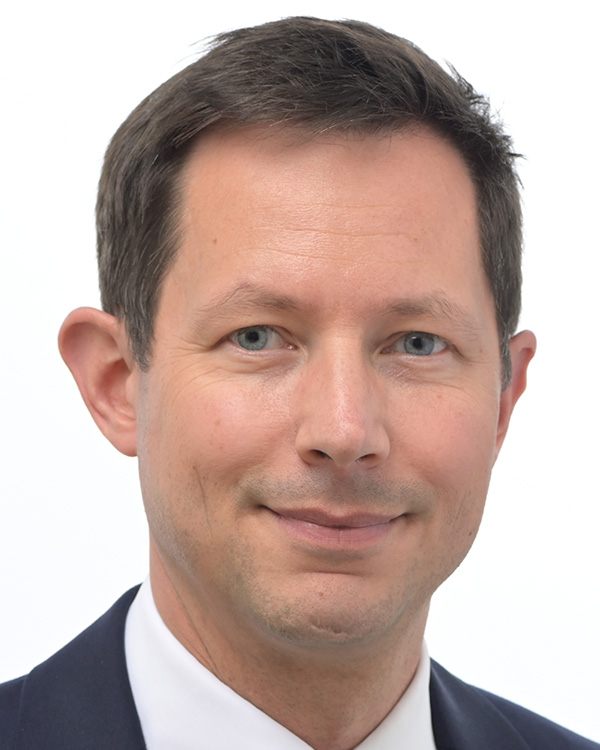





| Rank | Name | Country | Group | Speeches | |
|---|---|---|---|---|---|
| 1 |
|
Lukas Sieper | Germany DEU | Non-attached Members (NI) | 390 |
| 2 |
|
Juan Fernando López Aguilar | Spain ESP | Progressive Alliance of Socialists and Democrats (S&D) | 354 |
| 3 |
|
Sebastian Tynkkynen | Finland FIN | European Conservatives and Reformists (ECR) | 331 |
| 4 |
|
João Oliveira | Portugal PRT | The Left in the European Parliament (GUE/NGL) | 232 |
| 5 |
|
Vytenis Povilas Andriukaitis | Lithuania LTU | Progressive Alliance of Socialists and Democrats (S&D) | 227 |
All Contributions (138)
Solidarity with Poland following the deliberate violation of Polish airspace by Russian drones (debate)
Dear colleague, I think I have already replied: Western Europe has for too long turned a blind eye to the reality of danger. I have no problem saying it in front of you today. But I, in turn, would like to send you an alert, dear colleague: What those who want to attack Europe today – whatever their name is in the world of the return of empires that we have before us – are seeking is to divide us. Now, the spectacle of throwing absurd accusations at each other is precisely what they expect. By entering this game of division, you are playing into the hands of those who want to bring Europe to the ground today.
Solidarity with Poland following the deliberate violation of Polish airspace by Russian drones (debate)
Madam President, Commissioner, when will we open our eyes? The recent attack on Poland, launched by Vladimir Putin's Russia, shows how what is at stake today is the shaking of the foundations of the world in which we thought we could live for the future. We will not have security without assuming the means of our defense. Weakness is today, as yesterday, the safest path to war. It is urgent for Europe to rearm itself today, to rebuild a defence industry that is able to provide autonomously the resources entrusted to our armed forces. It is necessary to accelerate on the SAFE program, on EDIP. We must accelerate the ramp-up of our production capacities. For what is at stake is our ability to guarantee peace for generations to come. Western Europe – and I say this from France – must never again forget that what is at stake is our security at all, not just that of Poland, our security at all. The Second World War, which devastated our countries, began when Western Europe accepted, through the German-Soviet pact, the dismemberment of Poland, with the support of so many communist parties in Europe. We no longer have the right to this abandonment because it will devastate Europe tomorrow, as yesterday, if we do not take care of it.
After 10 years, time to end mass migration now - protect our women and children (topical debate)
Mr President, Commissioner, to try to get back to the point, let us also go back to the facts. Some have been contesting the very title of this debate for some time now. But there is no doubt about the link between immigration and delinquency, if we look at the facts. Take some major cities of France. In Paris, 14% of the population is of foreign origin, 48% of those implicated in crime are of foreign origin. In Marseille, 11% of foreigners, 55% of foreigners among those who are accused of delinquency. And this is especially true when talking about sexual violence: In Île-de-France, 63% of sexual assaults in transport are committed by foreigners. For a while now, I have been hearing from colleagues who say that it is a scandal to make this connection and who have even preferred to explain that, when it comes to sexual violence, all men are guilty, rather than looking reality in the face. I think we need to go back to reason. The subject is not only the observation. The subject is to provide an answer to this situation that citizens in our countries live in their flesh every day. To this end, we have before us the opportunity to review the Returns Regulation, which will finally make it possible to deport illegal aliens outside Europe. I hope that all political groups here will be able to seize this crucial opportunity.
State of the Union (debate)
Dear colleague, I fully share your point of view and I was also impressed to hear this morning in your speech, Madam President, that Europe must defend the freedom to pray. I believe that freedom of conscience is at the heart of the European heritage and that freedom must be defended through the appointment of this representative. We are counting on you to make rapid progress on this essential appointment.
State of the Union (debate)
Madam President, what is the state of the Union? Europe is threatened with going out of history. Fragile, divided. All those who work and who make our countries live the reality of an impoverishment that strikes everywhere, of a stall that already makes us lose control of our destiny. There is an urgent need to react. This morning, in your speech, you announced many new plans, initiatives, texts. But the main thing is undoubtedly to start by correcting the mistakes and denials that have led us so far. You talked about security. First, let us stop massively financing foreign-purchased armaments. No longer depending militarily on the United States will be the condition to no longer suffer the commercial blackmail that they impose on us today. You talk about energy prices, but continuing to massively finance renewables will only increase our dependencies. Finally, let us stop excluding nuclear power from European budgets, which, despite what the Greens have been saying for a long time, is sovereign and decarbonised. The Court of Justice confirmed this very morning the fight we have been fighting for years for this. We don't need a plan to make small cars affordable. We need to first abandon the rule of buying only electric cars. And then let our builders innovate. You want to advertise for European farmers. But let us start by abandoning the massive cuts planned by the Commission in the budgets due to them, and by guaranteeing them that they will not be Mercosur's adjustment variable. You're talking about fighting illegal immigration. We will of course do the work in Parliament to finally facilitate, through the return regulation, evictions. But we'll have to go much further. After years of warning, during the last legislature, about a policy largely dictated by the left, which at the time cared very little about what the central majority thought in this Parliament as in our countries, we have made a clear choice, but now we need results.
Safeguarding the rule of law in Spain, ensuring an independent and autonomous prosecutor's office to fight crime and corruption (debate)
Forgive me dear colleague, my question is not addressed to you, it is addressed to the Socialist Members who, since just now, have been doing everything to escape the questions we want...
Safeguarding the rule of law in Spain, ensuring an independent and autonomous prosecutor's office to fight crime and corruption (debate)
Mr President, a simple reminder to the Rules of Procedure to say that, since just now, our Socialist colleagues - the Socialist voters and the Spanish citizens have the right to know - have been marching in this gallery to defame without any reason...
Combating the sexual abuse and sexual exploitation of children and child sexual abuse material and replacing Council Framework Decision 2004/68/JHA (recast) (debate)
It seems to me that the protection of children from sexual abuse is too important a subject to be transvested in absurd divisions. This is a subject that must bring us all together. And I would just like to say that, on this major issue of children's exposure to pornography, there is no political divide that holds. Today, we have a historic opportunity to finally force pornographic platforms to get out of their denial of reality, to obviously get out of the profits they make so they can continue to thrive on the lives of our children. Our duty is to act together and all those who seek excuses for not committing to it, I believe unfortunately, will weaken this cause that should bring us together.
Combating the sexual abuse and sexual exploitation of children and child sexual abuse material and replacing Council Framework Decision 2004/68/JHA (recast) (debate)
Madam President, Commissioner, today we are going to vote on this essential text for the protection of children against sexual abuse, a cause that transcends all divisions in this Chamber. Our duty is to guarantee their integrity, and there is a threat to that integrity which we propose to add to this text today: It is that of exposure to pornographic content, which today represents a reality for millions of children in our countries. In Europe, the average age of first exposure is between nine and eleven years. Children who are now exposed to these images are injured for their entire lives, traumatized for many, prevented from building their emotional lives and self-image normally. It is indeed an accelerator of all sexual violence against children, all violence sometimes committed by minors against minors. It is also, as such, sexual violence, an attack on the integrity of these children, their psychic, emotional integrity, and all the data of science, medicine, psychology and psychiatry converge today to show it. We must ensure that the platforms that do their business today on the lack of child protection are finally forced to act. Years have been spent negotiating with these platforms on the basis of a commercial law that, in reality, is not relevant to deal with this topic. This is indeed a case of criminal law. We must act together. Let us vote together, ladies and gentlemen, to give back a childhood to children.
The fine against TikTok and the need to strengthen the protection of citizens’ rights on social media platforms (debate)
Madam President, Commissioner, there is a silent epidemic going on across Europe and it is particularly affecting young people in our countries. This epidemic has a name, it's called TikTok. Today we have a duty to call it by that name. You spoke, Commissioner, about the risks to data security. But the risk is even wider. There is in reality today, and all teachers in our countries know it very well, a major fight for the attention of our children, this capacity for attention that is decisive for building one's own life. Our hospitals are full of young people who come marked by practices of self-destruction or scarification, by suicidal risks. Young people who are in a difficult situation, in depression, see, on average, twelve times more videos related to suicide on TikTok today. The truth is that the company is aware of these risks and internal documents have shown that the researchers working there know that the intensive practice of this addictive application - it is made to manufacture addiction - can aggravate nutrition disorders, create sleep-related difficulties, endanger the ability of younger people to move around a room or look someone in the eye, learn, memorize, concentrate. Today we have a duty to act, because it is a vital risk for the younger generation. Beyond the measures that the Commission has taken, and we thank you for that, we must be able to create the framework that will make it possible to give children back a childhood. Today, even if this application is supposed to be prohibited to minors under the age of 13, 87% of children in France already have, at 12 years old, an account on the TikTok application and a third of children from 5 to 7 years old use it without any control. We have a duty to require TikTok to verify that no minor can access it without precise control. This is our fundamental requirement: protect our young people from this epidemic.
Resilience and the need to improve the interconnection of energy grid infrastructure in the EU: the first lessons from the blackout in the Iberian Peninsula (debate)
Mr González Casares, I know that you are interested in industrial matters and I know that you are right to address them. Let's look at it together: tomorrow, if France did as Spain does, as your government proposes, and shut down all its nuclear power plants - because that is your government's plan and that is what Mr Sánchez repeated today - if that happens, then it would be a problem for the whole of Europe, Mr González Casares, it is a problem for the whole of Europe. I remember, you know, the time when the German coalition, socialists and environmentalists, wanted to shut down nuclear power in Germany, the one that still remained, and ask France to keep its power plants running. The situation is a bit the same. It's better to open your eyes.
Resilience and the need to improve the interconnection of energy grid infrastructure in the EU: the first lessons from the blackout in the Iberian Peninsula (debate)
Madam President, together with several colleagues from the EPP, I was in Valencia, Spain, the day this power cut occurred. A very special experience, it must be said. For a day, more grid, more electricity, more contact with what makes our daily lives. The situation could have been absolutely tragic and it has already been catastrophic: in a single day, 450 million euros of economic activities destroyed and situations of paralysis in several whole countries. But to hear Mr. Sánchez this morning, everything is fine, we must not be, I quote, "apocalyptic". Why this denial of reality? Because what has happened is not an accident, it is a European fable. Colleagues, this is the rest of our story if we are not careful. Of course, it is still difficult to know today, and it is also a problem, the exact cause of this generalized cut. But any college student, in front of a simple scheme, could understand that, when you put on the grid more and more intermittent renewable energies, the grid can not manage this intermittency. A power grid requires controllability and controllability. The truth, ladies and gentlemen, is that Mr Sánchez is saying today, and many here have repeated it, that interconnections with France must be increased. Perhaps, but what is the point of multiplying interconnections if we stop together producing the controllable electricity we need? Today, Mr Sánchez decided to attack nuclear energy, which is nevertheless the means of controlling and stabilizing the grid by providing our countries with decarbonized energy at controlled cost, which allows our industries to guarantee our sovereignty. Ladies and gentlemen, this irresponsible situation means that, tomorrow, we will be able to multiply the connections as much as we want, it is nuclear energy that France will send to Spain. If you really want to shut down the nuclear power plants in Spain as well as in France, tomorrow we will all end up with a power cut.
Presentation of the New European Internal Security Strategy (debate)
Mr President, Commissioner, it is not very far from here: In Saint-Ouen, a city in the suburbs of Paris, parents of pupils will have to decide whether or not to move from primary school classes because drug trafficking has made life so impossible and so dangerous for children that their school cannot stay there. Commissioner, you are presenting your new strategy for internal security, and I would like to thank you because you are the voice of a Europe that decides to become lucid – finally! – on these security matters. I would just like to tell you that there is no internal security without a real external strategy. Without protecting our borders against illegal immigration, there will be no security in our countries tomorrow. All our countries, all our countries must cooperate by refusing to issue any visas together to third countries which refuse to take back their nationals who have returned illegally to European soil. The attack in Mulhouse, which bereaved France only a few days ago, was committed by a clandestine man whom Algeria had refused ten times in a row to resume on its soil, even though he had committed crimes on the soil of our country. Europe is clearly powerless, increasing insecurity for our citizens. I am also talking about a strategy to protect borders from drug trafficking, which today threatens public order and the sovereignty of our states, and a strategy to protect our borders from the risk of terrorism. In all these areas, internal security obviously depends on ensuring that we have a real external security strategy together.
Conclusions of the European Council meeting of 20 March 2025 (debate)
Madam President, today is an important day for our Parliament, because here we are: we will vote together to suspend the effect of the Directives on corporate sustainability reporting and sustainability due diligence, which were a major issue for our companies and their competitiveness. This is a key issue, a key geopolitical issue, since our debates this morning, Mr President-in-Office of the Council, will have been very much devoted to this issue of Europe’s security. We talked about what we needed to invest to strengthen the defence of our countries and we talked about the public money that would have to be committed for that, but we know that there is not a single euro of public money that does not come from the efforts of Europeans and the work of our companies. This, ladies and gentlemen, puts us all in front of our responsibilities. I mean, for example, that our Socialist colleagues could refuse to vote to suspend the effect of these directives. Listen to companies, listen to what they tell you about what they know today. Do you want to defend Europe better? Free our companies! Want to preserve our social models for the future? Free our companies! Do you want to protect the environment? Free our companies, which are the ones that respect the most demanding environmental rules in the world! Do you want to ensure Europe's ability to weigh in on the new trade challenges before us today? Free our companies! This is our message to the European Commission. We need to reverse the logic. For too long, Europe has damaged itself, damaged itself, in a logic of systematic mistrust of those who, however, sustain our countries, make them prosper, make them shine, are the only ones capable of ensuring that our continent retains, or regains, control over its destiny. There is no future for Europe if we do not start by giving our companies the capacity to act, work, create value and jobs in our countries. This is our message, this is the message of our entire campaign and this is the message of the action that is taking place today.
European Defence Industry Programme and a framework of measures to ensure the timely availability and supply of defence products (EDIP) (vote)
Mr President, the time for having the floor will be longer than the time for taking the floor. I just wanted to say that with our EPP Group, we are asking our Parliament to go for an urgent procedure on the European Defence Industry Programme. This will allow us to work, of course, in a very inclusive manner. With the rapporteur of the SEDE Committee, we are very much looking forward to working with all of you on the proposals you will make, but it will allow us to deliver fast. In this very important geopolitical moment, our Parliament has to show that we are ready to be efficient, precise and to work fast on this absolutely decisive programme for the defence of our Europe.
Unlawful detention and sham trials of Armenian hostages, including high-ranking political representatives from Nagorno-Karabakh, by Azerbaijan
Mr President, Commissioner, the height of indecency has been reached. Aliev attacks Nagorno-Karabakh. Aliev is attacking a population that was asking for nothing but to live in peace on its land, on the land on which it has been living for millennia now. Aliev deports civilian populations. Aliev uses cluster bombs and jihadist mercenaries. At the end of all this horror, what does he do? He's indicting his victims. Today, 23 Armenian prisoners are subjected to a sham trial, reminiscent of the great hours of Stalinism. What is Europe doing? Europe is silent. We have already said so much. Commissioner, you are responsible for energy. How can we, how can you justify that today Europe imports gas from Azerbaijan with a particular contract with this "reliable partner", in the words of the European Commission? How can we justify that criminals are still running in Europe, and that gas is still flowing to our countries? Is it more indecent today to bring gas from Baku than from Moscow? Isn't it the same gas? Commissioner, we need an answer to this question.
Cutting red tape and simplifying business in the EU: the first Omnibus proposals (debate)
Madam President, the first problem for all businesses in Europe today is not to satisfy their customers or manage their competitors, but to face the burden of regulation. During the last mandate – which is why, together with the EPP Group, we kept warning about this – the European Union adopted 13 000 new acts – between 2019 and 2024, and Eurostat indicates that this administrative burden now costs European businesses EUR 150 billion per year. The Commission is proposing a first omnibus package, which will save, she tells us, 6 billion, or at best 4% of the 150 billion. This is very, very, very far from being up to the challenge. It is good to get 80% of European companies out of the essentials of these rules, but what is the point, given that the remaining 20% of companies represent 80% of the European economy and that their administrative burden will be passed on to all the SMEs and intermediary companies with which they work? Where is the solution for the economies of our countries? It is very nice to want to asphyxiate only large groups with forms, but such an approach makes no sense if it amounts to asking them to disseminate these constraints to all their partner companies. Engineers from an industrial company told me a few days ago that European regulations would require them to check that all the products they use were manufactured according to the best requirements, based on 1 200 criteria. A commendable intention, of course, except that these engineers have, on the front line, 6,000 suppliers, which themselves have 1 million suppliers. How do you want to control? For these engineers today, the alternative is simple: stop producing or go to jail. Now, that's enough! If we want to get out of this major economic crisis that is emerging, we must not simply simplify, we must remove rules. Everywhere in our countries, those who run our economy simply say: Let us work! Let us do, create, develop, innovate and invent! Let us breathe! Let us live!" For this, it will not be enough to move three commas; We're gonna have to flip the table.
Collaboration between conservatives and far right as a threat for competitiveness in the EU (topical debate)
Mr President, ladies and gentlemen, in this surprising debate, some, for their small partisan political interests, have decided to confiscate our European Parliament to accuse us of increasing populism. But who is driving up populism, ladies and gentlemen? It is the leaders who refuse to listen to the concerns that are rising all over Europe. It was the left and the Greens who, for years, considered talking about immigration to be reprehensible. It was the left and the Greens who, for years, considered that insecurity was already in itself a transgressive issue. It is the Left and the Greens who have prevented our countries from reforming themselves and who have created the economic drop-out that affects so many households today and generates precariousness everywhere. Who is allying with extremism, ladies and gentlemen? It is, in my country, the left, and it is the Greens who are allied with Mr Mélenchon and France insoumise. You are not only voting on the same texts, ladies and gentlemen, you are running together in the elections, you are defending the same programme, you are running the same candidates. And what is unsubmissive France? Where is the worst today? Where is anti-Semitism? I met him yesterday, unfortunately, in this minority of Sciences Po Strasbourg students who block their amphis by shouting "Zionists out!" and who attack their own university because it has a partnership today in Israel, which is already, according to them, a scandal and a crime that deserves to be stopped and prevented from studying students who want to work. Antisemitism is there and, antisemitism, it is with it that you are partnering. So, ladies and gentlemen, do not come and teach us a lesson, never a lesson. We will solve the problems of the citizens of our countries that you have refused to look at. We will open our eyes and we will bring democracy back.
The Universal Declaration of Human Rights: the need for the European Union to contribute to resolving the humanitarian crisis of persons missing in wars and conflicts (debate)
Mr President, Commissioner, 50 years after Turkey's invasion of Cyprus, hundreds of Cypriots are still formally missing. Their families have not only lost those they loved, they have been deprived of the truth, and without that truth, they cannot grieve. It's not an abstraction. Our colleague Fidias Panayiotou has just given us a very concrete example of what these missing people can mean in a life, in the life of a family. Colleagues, I was speaking myself with a Cypriot friend a few weeks ago, who said to me: Of course, the war was terrible, but even more terrible, perhaps, will have been, after the war, to be deprived of knowing where are those we have lost. Today, we have a duty, all together, and as Parliament's rapporteur for this mission that brings us together, I want to work with all the political forces in this House, because if there is a question that must cross the divides, it is this one. Our duty is to ensure that Turkey finally cooperates and tells the truth. May we finally be able to offer these bereaved families the truth to which they are entitled, because time passes and time runs out and, this time running out, it is that of the generations who will soon leave us and who have the right to know the fate of those they have loved before leaving. This absolute urgency has been reiterated by the European Court of Human Rights on numerous occasions. It is up to our Parliament today to ensure that Turkey can finally return to this much-needed cooperation, because justice depends on it, the truth depends on it, as well as the salvation of these families we are talking about, which is the cause that unites us.
Presentation of the programme of activities of the Polish Presidency (debate)
Madam President, Prime Minister, a month ago, together with Andrzej Halicki, we were on the border between Poland and Belarus. For years, Poland, like other countries, has been carrying the security of Europe and the protection of the external borders of our entire continent. And for years you have warned, Prime Minister, that the migration crisis, which you have called a "hybrid war", is a security issue, a stability issue, an existential issue for our countries. For too long, our countries, in Western Europe in particular, have responded to this warning with a form of indifference, silence, contempt or moral lessons. But today everything has changed, because our political family – your family, Prime Minister – now has the levers to act, in the Council and, of course, in this Parliament. And we will put an end to the EU’s migratory impotence. We will finally get the Return Directive, which we need and which you have made a priority, so that EU law facilitates the expulsion of illegal migrants instead of facilitating their settlement. We have obtained that European funds can finally support the countries of first entry which, like yours, invest in protecting our borders at all. It is this change that Europeans expect and it is through this change that we will demonstrate that the majority has changed here in this Parliament.
Preparation of the European Council of 19-20 December 2024 (debate)
Madam President, Commissioner, a few days ago, on 6 December, the European Commission signed the agreement with Mercosur. This agreement does not pose a problem, it poses at least two major problems. The first is obviously strategic. Of course, we know that companies and sectors will benefit from this agreement, if it is confirmed tomorrow. But others will lose a lot, and some will even lose everything. I am thinking in particular of the farmers in our countries. I am thinking in particular of breeders. We do not have the right to look at this agreement as an economic equation, with winners and losers. We have a duty to take a strategic look at our production sectors, because, yes, agriculture is a strategic sector. It is not a folkloric issue, it is not a matter of protecting a cultural heritage, not just a matter of protecting our identity. The first is to protect our countries’ resilience to future crises, to ensure food security for our citizens. What will those who applaud the agreement with Mercosur say if, because of a food crisis, Europe is no longer able to feed those living on its soil? They will say that we have been irresponsible, and they will be right. Beyond the economic problem, there is a political problem, because the European Commission has waited for France – which, as you know, was opposed to this agreement and which is still opposed – to see its government fall in order to be able to secretly sign this agreement at the end of the negotiations. We cannot treat a country, a democracy, like that. We cannot treat the citizens of our Member States in this way. The Commission now has a democratic duty to commit itself to submitting this agreement for ratification not only by our Parliament – and we will work to build a majority against it – but also by national parliaments. Europe will not happen without its people.
The situation in Mayotte following the devastating cyclone Chido and the need for solidarity (debate)
Mr President, I would like to take this point of order under Rule 20 of our Rules of Procedure to express my dismay at what has become of this debate. Politics has its rights, especially here in this House. But I was so happy that we were able to ask for this debate in unison with all our political groups, and I regret that it has given rise to challenges that I do not think are relevant to the moment we are going through. Even today, there are dozens, hundreds, perhaps thousands of victims that we do not yet know, and I am sorry that some here are already looking for perpetrators. On the left, those who would account for global warming were questioned, as if there were no cyclones a century ago. Other colleagues have found it good to question the services of the State, but the State, ladies and gentlemen, it is the carers who have been caring for three days without sleeping, it is those who are now working to clear the roads. The truth is, yes, there will be a moment to seek to discuss responsibilities. But I believe that the duty we have today is to act.
The situation in Mayotte following the devastating cyclone Chido and the need for solidarity (debate)
Madam President, as we speak, Mayotte is facing death on a large scale. How many victims did this cyclone leave behind? We do not know it yet, and since the 14th of this month, since the 14th of December, many of us here, on every bench, live hour after hour with the anxiety of discovering the news that will reach us from the Mahorais archipelago. We are thinking today of all the victims, of all the bereaved families. We are thinking of all the Mahorais and all the French people, in Mayotte and in mainland France, who are still without news of their loved ones. We want to tell them that we are with them in this ordeal, with all those who are on the ground today to provide first aid, first aid. We want to express our admiration and gratitude to the carers, the police and gendarmes, the police, the state services mobilised to provide first aid. Our duty now is to do everything we can to support them, both now and in the long term. It is a fight that unites us, a fight against time, to bring the first emergency to those who need it, but it is also a fight that must be sustained over time. Mr Vice-President, thank you for the solidarity you have expressed; Mayotte will need it. Mayotte will need water, Mayotte will need food, Mayotte will need infrastructure, it will need reconstruction. It is a duty for all of us to show that Europe stands with Mayotte, who has already suffered so much, now and for a long time to come. Because Mayotte is France, and Mayotte is Europe. Even if some may have forgotten it, even if it is possible that today many of our fellow citizens are living with too much distance this national tragedy, this European tragedy, it is indeed all of France and all of Europe that are involved in the situation in Mayotte. Tomorrow, it will be necessary to rebuild the archipelago to ensure that it is ready to meet the challenges it has been facing for a long time. Today we have a collective duty to live up to this mission, for all the victims as well as for those who want to rebuild an island that knows, with the memory of this tragedy, how to prepare its future.
Strengthening children’s rights in the EU - 35th anniversary of the adoption of the United Nations Convention on the Rights of the Child (debate)
Madam President, ladies and gentlemen, Europe is today the scene of a silent tragedy that cannot be seen and yet will produce its effects and produce them today. In Europe, 30 per cent of minors under the age of 12 have already been exposed to pornographic content, with 80 per cent under the age of 17. These contents leave today - psychologists say it, they said it here in a colloquium we organised in the European Parliament -, these exhibitions, these images, these contents leave indelible traces in many of them. Today, even states that in our European Union would like to protect children from platforms that do their business on the destruction of their emotional lives are unable to do so, because these platforms defend themselves by sheltering behind European law to be able to continue their criminal activities. We say it can no longer be, and that is why I have proposed, in the forthcoming text on the protection of children from sexual abuse, to include exposure to pornography as sexual abuse, and that the fact that these platforms do not implement the existing locks to protect children should be considered the crime that this is. Ladies and gentlemen, it is our duty to move forward together on this subject so that European law is no longer the shield behind which those who endanger childhood and the spirit of childhood, its innocence, its balance and the preparation of tomorrow's adults are sheltered. Bernanos wrote that everyone must justify himself in the eyes of the child he was. I think our duty, and I hope it will be a common fight, is to defend this childhood spirit together. This is our commitment to the future and future generations.
The arrest of the Franco-Algerian writer Boualem Sansal and the call for his immediate and unconditional release, and the repression of freedom of speech in Algeria (debate)
Mr President, Boualem Sansal was arrested by the Algerian regime for one and only reason: for daring to speak, for daring to write. Ladies and gentlemen, if we are meeting this evening - and I am happy, we are happy, that it is at the request of all the groups in the European Parliament, showing the support of all the countries and all the parties in Europe - it is first of all to express our immense concern, because even today no one really knows what will be the fate of this immense writer and this freedom fighter. If we are meeting this evening, it is to say - Commissioner, thank you for the words you have spoken - that we are now waiting for the action of the whole of Europe to get Boualem Sansal out of this terrible situation. We have levers to act. Algeria receives development aid funds from Europe. Algeria maintains cooperation with many of our countries, and France at the forefront, which is infinitely favorable to it and which is in particular favorable to this failed regime which seeks to export its failures rather than solve them. I am thinking in particular of this Franco-Algerian agreement on migration issues, which it is finally time to denounce, as our political family has been calling for for a long time. What an immense admission of weakness it is for a government to imprison one who has only dared to criticize it! What an immense admission of weakness! And what about those who, from Paris, in the comfort of television sets where they risk nothing, have chosen to relay the charges against a writer who can not even defend himself, who can not even answer them? Colleagues, this case concerns us all. Boualem Sansal is a writer from France. He is a writer from Europe, not only because he applied for and obtained French nationality, but because he defends the freedom that Europe must hold if it is to survive. In one of his novels, he wrote: If one no longer believes in life and freedom, there is simply no longer any reason to live. It is time to show, by freeing Boualem Sansal, by all the means we have in our hands, that we still hold to this idea of Europe.