

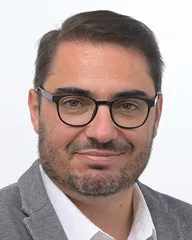
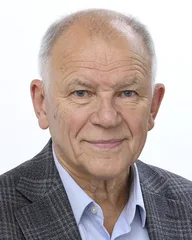
| Rank | Name | Country | Group | Speeches | |
|---|---|---|---|---|---|
| 1 |
|
Lukas Sieper | Germany DEU | Non-attached Members (NI) | 390 |
| 2 |
|
Juan Fernando López Aguilar | Spain ESP | Progressive Alliance of Socialists and Democrats (S&D) | 354 |
| 3 |
|
Sebastian Tynkkynen | Finland FIN | European Conservatives and Reformists (ECR) | 331 |
| 4 |
|
João Oliveira | Portugal PRT | The Left in the European Parliament (GUE/NGL) | 232 |
| 5 |
|
Vytenis Povilas Andriukaitis | Lithuania LTU | Progressive Alliance of Socialists and Democrats (S&D) | 227 |
All Contributions (28)
Substantiation and communication of explicit environmental claims (Green Claims Directive) (debate)
Mr President, Commissioner, we have been fighting here for several months to put an end to the unfair practices of companies that do not care about the environment at all, produce products abroad under terrible conditions and then calmly label them as environmentally friendly. We did that, and I'm proud of it. For several months, we have been fighting for farmers who want to be rewarded for storing carbon in the soil and reducing emissions, just like their colleagues in the industry. And we did that, too. However, to learn in the conclusion itself that our ecological demagogues want to limit farmers in how they can monetize these credits and deprive them again of the billions and billions of crowns they deserve. So that multinational food corporations have cheaper emission allowances on their behalf? Are you serious? Do you really want to vote that out? This is a mockery of European farmers, who are in an increasingly worse situation.
Tackling the inflation in food prices and its social consequences and root causes (debate)
Commissioner, Mr President, every time our people pay outrageous prices for food, you hold a debate here. Everyone talks and nothing happens. No one asks, why is it that when farmers receive raw materials as they did a decade ago, food prices are now doubling? And you know what the worst part is? It's not that we don't know how it is. How many studies have you carried out at the Commission to find out what the distribution of profits between producers and traders is? As far as I can remember over the last twenty years, countless and many have made it clear to us that the oligopolies of merchants are using their power against producers and suppliers and farmers, and that something needs to be done about it. How many proposals have you put forward to address this? It's a zero. Not a single one. You're afraid of them. I think you need a real wake-up call in the next European elections, otherwise nothing will happen again.
Empowering farmers and rural communities - a dialogue towards sustainable and fairly rewarded EU agriculture (debate)
Mr President, Commissioner, colleagues, European politicians have been making useful idiots of our farmers for years. For subsidies that we haven't increased for 15 years, with the cost of energy, seeds, fertilisers, technology rising by tens and hundreds of percent, our farmers continue to sell raw materials at prices similar to those of a decade ago. While traders charge our citizens twice as much for the same period of time. You forbid farmers to use agricultural land, you import cheap raw materials from Ukraine and South America, where they have never heard of your Green Deal. While our farmers have reduced emissions by 22% in 25 years, they have increased by 6% in the US, by 24% in China and India, and by 47% in Brazil. And now you're saying that when farmers are on the street, you finally want to talk to them. Where have you been for the last four years? Shouldn't you be doing something and suggesting something?
Empowering consumers for the green transition (debate)
Mr President, Commissioner, this proposal will hopefully finally ensure that people in Europe are no longer deceived by false information about products and services. Nowadays, almost everything that has a green inscription is wrapped in natural paper, claiming how ecologically it was made. In most cases, the reality is completely different. And when we look at the entire life cycle of products, we find that it is a nice scam, for which our people pay considerable extra money. I have proposed a number of improvements to your proposal with colleagues and I ask you to incorporate them. In particular, to make sure that we do not have the dual quality of food again, multinational companies and supermarkets will offer organically produced products in some states, and other states will become garbage cans for dirty and non-organic ones.
Role of tax policy in times of crisis (debate)
Madam President, the recent crises have shown us that they cannot be faced without tax measures. Almost all governments have adopted such measures. Unfortunately, our Czech government is late and bad, which is why we are falling economically and have one of the highest inflations. The poorest households, sole traders and medium-sized enterprises are the most affected. Each Member State has the right to set its tax mix on its own and according to its needs. It is therefore legitimate that differences still exist and will exist between Member States in their responses to the crisis. Every government must have the right to take the measures that are most helpful to its citizens. Union rules should therefore serve to ensure that Member States are able to implement the necessary measures swiftly and, subsequently, to repeal them swiftly as soon as necessary. We just need clear rules. It is not that we will have to wait in crises and ask the European Commission what we can and cannot do, and that states will be measured by every other standard.
Union certification framework for carbon removals
Mr President, Commissioner, if we were to accept the proposal as you have proposed it, there would be a risk that carbon sequestration would become a business for a few speculators who would buy land, not in order to produce food in a more environmentally friendly way, but in order to stop producing food and devote themselves fully to the profitable trade in allowances. We don't want that. We have, as you know, an unfortunate experience with this, and our companies and citizens are paying billions for this experiment in the prices of energy, goods and services. For food that breaks price records, we really can't afford such an experiment. I am therefore pleased that we have been able to find consensus across this Parliament and convince colleagues that carbon farming should be a sensible complement to current farming and food production. In short, greening costs something, and retail chains certainly do not want to pay farmers for it. It does not happen often here, but tomorrow we will have the opportunity to approve a proposal that is reasonable. Engaging in the carbon economy in food production will be voluntary and incentivising, not mandated and enforced. It's a success!
Establishing the Strategic Technologies for Europe Platform (‘STEP’) (debate)
Madam President, technology is essential to Europe's prosperity. We're finally talking about it. It is a pity that the COVID-19 pandemic, the war and US support had to force us to do so. It is a pity that you were forced to do so by the lack of parts, because of which the factories stopped production, and the lack of medicines, because of which people are afraid. Only the threat of companies placing new factories for batteries, medicines, chemistry, chips outside the EU has awakened everyone. The state of affairs has long been known. In short, we are lagging behind. I welcome the fact that something is going on. I'm just afraid you're not asking the big question: Why don't companies invest in the EU? Instead of trying to eliminate the causes, you have once again devised a typical Brussels solution. When something doesn't work, we create a fund and patch it into what doesn't work. Let us use these funds in a different way, to improve the conditions for companies to want to invest in the European Union. We can start with a plan to cut red tape for businesses.
European green bonds (debate)
Mr President, Commissioner, would you like to take care of other parts of the Green Deal? This would certainly be in favour of the Commission's cooperation with the European Parliament. Maybe it's because we've been so happy to work with you in the past. I don't do it often, but I want to thank you for the victory of reason and logic. I really appreciate that the issuance of ‘green bonds’ is to be on a voluntary basis and that we leave issuers free to choose other market standards. I have only one reservation, which is objectively there and which we should still try to correct. A direct link to the taxonomy creates a form of discrimination in two respects. First, we don't have all the activities covered by the taxonomy yet, so we're giving someone the opportunity and not giving it to someone. When it comes to climate, it's about emissions. Low-emission and zero-emission technologies are also limited to a certain extent by this approach, and I think it is a pity because the market is technology neutral and should be able to appreciate the results actually achieved, not the political views on individual technologies.
Ukrainian grain exports after Russia’s exit from the Black Sea Grain Initiative (debate)
Madam President, Commissioner, let us finally acknowledge that there is nothing left of the European Commission's good intention to help export grain from war-torn Ukraine to countries outside Europe. Not farmers, but crooks in Ukraine and Poland took advantage of the situation and greased their pockets. Grain stays here. Polish, Czech and other farmers have no way to sell our production at a reasonable price, and poor countries cheerfully supply their grain to Russia. You are now proposing to give 30 euros per tonne, which is another 600 million euros to these scumbags. So they can sell grain here at an even greater discount? We know where the grain will end up. We can't control it. You really want to destroy our farmers? Please do something sensible at last. Let transit flow freely and quickly outside Europe, set tariffs on imports into the EU, and forgive those EU countries that are suffering from crop failures and really need grain.
Need to adopt the “Unshell” Directive on rules to prevent the misuse of shell entities for tax purposes (continuation of debate)
Mr President, Commissioner, ensuring fair and effective taxation in the internal market and combating tax evasion are, of course, a priority for all of us, but measures that are meaningful must be promoted. You have such a bad habit in the Commission that when something doesn't work, you suggest something else. Instead of thinking about why it doesn't work and suggesting an adjustment. It happens so often that we have new measures and rules and we don't have results, we don't have the effect. And I therefore doubt whether we should add this additional initiative, which in turn will increase the administrative burden for the decent ones, for those who comply with the rules and properly fulfil their tax obligations. I am of the opinion that we should focus on the effective use of the tools we have today, rather than introducing new ones and thinking that they will be self-sufficient and that they will stop tax evasion by waving a magic wand. Please think about it.
Ensuring food security and the long-term resilience of EU agriculture (debate)
Mr President, Commissioner, we have long taken affordable and safe food for granted. And if we lack something, we will import it and at the same time impose more and more restrictions and regulations on farmers and food producers in the European Union. They wished for it, didn't they? They reduced emissions by 19%, introduced the highest standards for nature conservation, chemistry, animal welfare, and for 10 years supplied us with milk and meat at essentially the same price. While we were transporting food from places where they increased emissions by 50%, they are cutting down rainforests and spraying chemicals that we have long banned. It was a miracle, wasn't it? But every miracle comes to an end. High inflation and food prices have been around for two years. Too bad you didn't listen to the farmers. Did COVID-19 and the war in Ukraine have to open your eyes to the fact that food sovereignty is not self-evident? And now you're making the same mistake. You do not listen to farmers, and then you wonder why this Parliament is blocking some of your proposals. Commissioner, wake up your colleagues in the Commission, otherwise it will not go well.
Ukrainian cereals on the European market (debate)
Madam President, Commissioner, the European Commission's solution for Ukrainian grain is not the best solution. The ban on imports to only five countries is unprecedented. It will not have an effect on the European market, which, as you know, has no borders and goods will thus continue to travel freely within Europe. The purpose was also certainly not to distribute compensation to selected farmers, but to deal satisfactorily and safely with transit through Europe to third countries and not to burden the European market. Therefore, the correct solution should look like this: firstly, ensure proper transit – destination, reporting obligations and punish fraudsters. Secondly, to introduce tariffs, with the exception of those Member States that need Ukrainian grain. Thirdly, extend protection also to animal products, in particular poultry, eggs and others. It's a time bomb. Could you please suggest this in your proposal after June 5th?
Markets in Crypto-assets (MiCa) - Information accompanying transfers of funds and certain crypto-assets (recast) (debate)
Mr President, trading in crypto-assets is experiencing an unprecedented boom. The total number of users has long exceeded hundreds of millions, and the value of the market is estimated at up to two trillion dollars. It continues to grow and grow. What does that mean? That an increasing volume of values and transactions will be realized through these assets. And while traditional assets are properly traded, protected, and taxed, we've had a complete jungle here so far. This is a situation where there are growing holes in the budgets of almost all EU Member States. Without clear rules, today's situation will continue to bring a lot of damage and misfortune, tax evasion, market manipulation, crime, but also the unfortunate fate of those who had faith in crypto-assets and lost their value. I am therefore glad that the main legal holes were covered by this regulation, which was also due to my colleague Ondřej Kovařík. But it's only the beginning. We need to continue and systematically continue with the related regulations, such as the up-to-date exchange of tax information. Without it, the money will continue to flow.
European Citizens’ Initiative "Save bees and farmers! Towards a bee-friendly agriculture for a healthy environment" (debate)
Madam President, the protection of bees and other pollinators is essential and important not only for the environment and biodiversity, but above all for sufficient food production. The solution is undoubtedly to reduce the use of chemicals. Sometimes I hear that farmers may love the use of chemistry. They don't love. Working with her is not a pleasure, and it costs a lot of money. But he has to. Why? So what is the solution? Less harmful alternatives, and you're holding back. Plants that don't need so much chemistry, and we've been waiting for years for new varieties and new genomic techniques to be allowed, and you who yell for bees are holding them back. In short, there is no simple solution to complex problems. Commissioner, please propose a package for bees that includes all these aspects.
Availability of fertilisers in the EU (debate)
Mr President, Commissioner, the prices at which farmers sell commodities today are gradually falling. The input prices with which farmers produce these commodities are still at record levels. But food prices in supermarkets continue to rise and contribute to high inflation, which we then desperately struggle with. This year, we will be happy if Ukraine delivers to the market around half of the production of cereals, oilseeds and other commodities. Our farmers are introducing a new agricultural policy that is certainly more environmentally friendly but will further reduce food production. Commissioner, the problems are not over, the big problems are yet to come, and the promises of cheap food and stabilisation are false political promises. This debate is not about how much money we can find in the budget to help farmers. This debate is about what business model our farmers should choose in the coming years. This is the most important thing, to present a vision, a stable outlook for years to come. Please submit what we have been asking you to do for a long time – a long-term strategy for soil nutrients. Will we continue to import fertilisers from fragile countries like now, or will we effectively support them in the EU and successfully make the transition to more expensive but greener fertilisers and new nutrient sources? How will this strategy fit into the future European agricultural model and the food sector in this decade? With these inputs, how will we contribute to addressing hunger in developing countries so as not to leave it in Russia's hands?
Question Time (Commission) - Food price inflation in Europe
Mr President, Commissioner, inflation is crushing Europe and food prices are making a significant contribution. I suppose we don't want to have the same inflation in food as we did this year, and that's why we need to act. We can't just have plans on paper, we have to turn them into reality. Last week, studies by the University of Edinburgh confirmed that fertiliser prices and energy prices – the two main inputs – are a fundamental problem. I know you've tried a lot, but the strategy you've presented is still weak. I would like to support you and at the same time ask: Could we please really move forward in resolving this issue? Please agree with Commissioner Simson that we have a clear and predictable gas framework for fertiliser production! Arrange with Commissioner Timmermans that we have a clear and rapid transition to green sources of fertiliser production! And get Commissioner Kyriakides to take a look at the margins at last.... (The Chair interrupted the speaker).
REPowerEU chapters in recovery and resilience plans (debate)
Mr President, Commissioner, your proposal is good, it has only two mistakes, which, if removed, will make a great contribution to the current crisis. We are experiencing a period of ever-increasing prices. Inflation in your country and mine is 20%, and for some foods even much more. We are looking for all possible ways to help. And you are proposing that we take additional funds from farmers. This is not good news for our citizens that we are serious about food prices in Brussels. Over the years, we have already reduced support to farmers to 0.35% of GDP, and now that they are supposed to provide affordable food for our citizens, we want more money. And one more thing. Please do not tell the Member States how to spend the funds according to Green Deal. It's not the time, believe me. We do not have a patent on reason in Brussels and they know much better where to invest so that people do not freeze, have a job and money is used efficiently. Please try.
Global food security as follow-up to the G20 Agriculture Ministers meeting (debate)
Mr President. Minister, you are infatuated with the affordability of food here. So I'm asking, why don't you do it? You represent a government that has cut aid to farmers, to those who produce food, and given it to those who produce no food. A government that has not helped with input prices, a government that has the highest VAT on food in Europe – these are the facts – and a government that has caused food inflation to even outpace energy inflation over the course of several months this year. That's a record. And what's the worst? Let the small and medium-sized Czech food producers fall. You are probably the last government in Europe that also loves retail chains more than its own citizens. Fortunately, we don't love them so much. So I would just like to ask that you either start doing what you are saying here in Europe, or that you don't get too involved with the Commissioner when we are dealing with food prices.
Impact of new technologies on taxation: crypto and blockchain (debate)
Madam President, crypto and blockchain, they could serve us for good or they could serve us for the bad. So the question of today is: are we using their potential to help us to fight tax evasion, fraud, to combat all the tactics of those who want to avoid taxation? And the answer is, no. Why? Because villains are always ahead of legislation. And you have been for some time promising us something, and this is the DAC8, and we’ve been waiting, and we keep waiting. And until you move, we won’t move this problem at all. So please, just stick to what we have promised to each other. Please put it in motion. Otherwise, today, it serves for the villains. I want to reverse it. I want crypto and blockchain to serve for us, to have fair standards and fair taxation in the digital space.
Striving for a sustainable and competitive EU aquaculture: the way forward (debate)
Madam President, Commissioner, colleagues, we live in a time of concerns on food security. We want to produce more proteins, more sustainably, and we have climate ambitions. We know that aquaculture is a response to all of that. We’ve known that for many, many years. We had the first attempt when the previous Czech Presidency was in place in 2009. We have not moved enough. Why don't we unleash this potential? I think we should be honest to ourselves. This is about resources and it is about consistency in our policies. And we have been failing for it, up until now. And I hope that this would be an incentive that we won't fail again because the opportunities are enormous. But we should not hide from difficult issues. This is: how do we boost resources for production? How do we sort out placing those products on the market and how do we deal with their labelling? Why, today, can our fish farmers not label those products organic even if they are much cleaner than any other organic product from agriculture? Because we have the wrong approach in legislation. Why are we not sorting out and hiding from the issue of cormorants? Again, if we pretend it does not exist, the problem won't likely disappear. So please let’s act because this has a great potential and we need it as Europe.
Minimum level of taxation for multinational groups (debate)
Madam President, Commissioner, multinational companies will only be taxed fairly if the new rules apply globally. It is crucial that the second pillar also replicates the substantive changes agreed in the OECD and that there are only a few derogations that adapt the functioning of the Directive to the internal market. The same rules should ensure in the future that there is no room for circumvention and that our European businesses are not put at a disadvantage. It is equally important that as many jurisdictions as possible join the agreement. Especially where large multinational digital companies are based. Otherwise agreed rules will be meaningless. And please, let us not forget also the first pillar, i.e. the reallocation of taxing rights. It should be implemented at the same time in order to successfully complete what we are trying to achieve here. Only, please, Commissioner, the proposed transposition deadline is not very realistic, let us not put the Member States under this pressure.
Need for an urgent EU action plan to ensure food security inside and outside the EU in light of the Russian invasion of Ukraine (debate)
Madam President, Commissioner, colleagues, a few minutes ago we were struck by a difficult report. Madeleine Albright, the first Czech, the first woman in the office of the U.S. Secretary of State, who was very committed after the fall of the Iron Curtain to the integration of Central and Eastern Europe into the democratic world of the EU and NATO, has died. I hope that by what we are doing here, we will continue to support her legacy. We are in a situation we haven't faced in decades. Affordable and affordable food, which many have taken for granted, is in real danger for the first time. We must thank all the farmers who produce food for our citizens. Commissioner, steps must be taken to avert the social disintegration of European society. The combination of energy, interest and food inflation is a dangerous cocktail for our unity and cohesion. Thank you for responding so quickly and we will support you in every way possible. In the short term, there is a particular need to help Ukrainians, their agriculture and maximise food production in Europe. In the medium term, please consider using the trade management tools provided by the Treaty. Markets, commodity prices need to be stabilised and a transition needs to be launched to address our dependence on energy, seeds and, above all, proteins in the long term.
Fair and simple taxation supporting the recovery strategy (continuation of debate)
Mr President, Commissioner, rapporteur, a good tax system is the basis for a functioning and trustworthy economy. Simplicity, efficiency and fairness are key elements. This is crucial in the post-COVID-19 recovery, but also in today’s security crisis. Therefore, we should not delay with some questions. The VAT system must be adapted to the 21st century. In the context of the current crisis, Member States should also have the maximum range of tax measures and flexibility to help them effectively. The Commission should present a proposal for a Directive on the exchange of information on crypto-assets (DAC 8). The Commission should also present as soon as possible simplifying and modernising rules, the so-called VAT package for the digital age. Any work on the VAT regime must aim to improve the legal framework and not create new tax complications. We should also address the issue of single tax registration. Member States should be confident that the relevant tax collection rules will work. Therefore, it is fair that their adjustment is a compromise of all. This should not be forgotten. A good solution is one that everyone supports. The call to move away from unanimity is only an alibistic resignation to seek the best solution.
Implementation report on on-farm animal welfare (debate)
Madam President, Commissioner, colleagues, the protection of animal welfare has a long tradition in the European Union and is heavily regulated. It brings a significant ethical dimension to our food production, which we will not find anywhere else in the world to such an extent. I am sorry that we often act as if this were not the case, and that perhaps we are somewhere in the Middle Ages. We are being unfairly attacked by certain activists and are therefore trying to explain to us that these colleagues here in this House support these ideas in a very primitive way. I would like to call on them to focus these efforts primarily on countries and producers who do not comply with these rules. Not a cheap critique of the European institutions. Of course, we must go further in living conditions, but this must be done on the basis of scientific facts, not manipulated emotions, and it is in the very interest of animals to distinguish their needs by species. In short, rabbit and fish need other solutions. Otherwise, we can do more harm than good. Harmonisation is also needed, Commissioner. Harmonisation is needed where a number of Member States have already made progress, such as the ban on animal cages. And the most important thing. We import products from countries where animals are even worse off, where deforestation has taken place, and here it is necessary to proceed uncompromisingly. Absolute rules should be established for: tracking and for tracing from these third countries... (The President took the floor from the speaker)
Common agricultural policy - support for strategic plans to be drawn up by Member States and financed by the EAGF and by the EAFRD - Common agricultural policy: financing, management and monitoring - Common agricultural policy – amendment of the CMO and other regulations (debate)
Madam President, the reform of agricultural policy comes with a two-year delay. This only illustrates the difficulty of our negotiations. The common policy concerns ten million farmers and tens of millions of jobs. It determines the nature and character of the landscape, guarantees the degree of protection of the environment, soil, water, air, pollinators and the future of our ecosystems. I think we should apologize to our farmers. First of all, because we kept them in prolonged uncertainty at a time that was definitely not and is not easy. In a time that is increasingly unpredictable. Farmers have a special position in society, they have to do business in a way that provides many social services. They have to do business in a context of ever-increasing inputs, being oppressed by the power of retail chains. We are always looking for the best and cheapest food in the world. More and more bureaucracy and regulations are needed. Is it sustainable at all? Or are we facing food poverty in the near future, in addition to energy poverty? Because farmers will simply not be able to keep the weight of Europe's social cohesion on their shoulders. It's five past twelve, but we still have a chance. On what assumption? That they will be able to invest. Today's vote is nothing more than giving farmers at least a minimum presumption of stability for the coming years and the possibility to decide on investments in modern technologies, in organic production practices and to strengthen their role vis-à-vis retail chains. Farmers must agree Green Deal invest and we need to help them achieve a fair margin in the market. Only this combination means green prosperity available to all. We can contribute to this with today's vote. Those who vote against do not vote for the environment, they vote for chaos, for food poverty and for high-quality, overpriced food available only to a small handful of society.