

| Rank | Name | Country | Group | Speeches | |
|---|---|---|---|---|---|
| 1 |
|
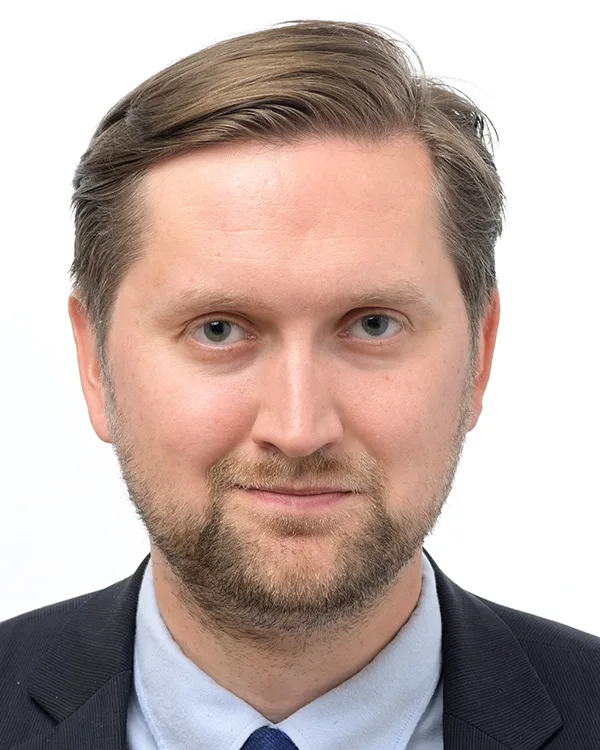
Lukas Sieper | Germany DEU | Non-attached Members (NI) | 390 |
| 2 |
|
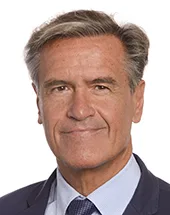
Juan Fernando López Aguilar | Spain ESP | Progressive Alliance of Socialists and Democrats (S&D) | 354 |
| 3 |
|
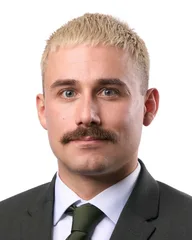
Sebastian Tynkkynen | Finland FIN | European Conservatives and Reformists (ECR) | 331 |
| 4 |
|
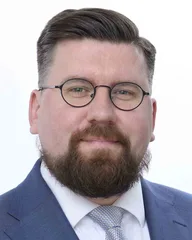
João Oliveira | Portugal PRT | The Left in the European Parliament (GUE/NGL) | 232 |
| 5 |
|
Vytenis Povilas Andriukaitis | Lithuania LTU | Progressive Alliance of Socialists and Democrats (S&D) | 227 |
All Contributions (99)
Reinforcing EU’s unwavering support to Ukraine against Russia’s war of aggression and the increasing military cooperation between North Korea and Russia (debate)
Madam President, dear colleagues, dear representatives of the Commission and Council, in this Parliament, words are always more than deeds. There is much talk about the need to support Ukraine in its war against Russia for as long as it takes. But where are the deeds? The situation in Ukraine is getting worse every day because European aid is too scarce or comes too late. Germany, Europe's largest economy, supports Ukraine in words, but actual military aid has been limited to EUR 5.2 billion. The European Union remains the largest importer of Russian gas, buying almost half of the gas exported from Russia. In October of this year alone, the EU paid Russia EUR 1.8 billion for fossil fuels. If Europe wants to stop Russia, it needs to reduce its dependence on Russian energy and develop our own energy industry, abandoning the economically harmful green revolution. It is also necessary to increase military support for Ukraine many times over, so that negotiations to end the war can take place from a position that suits us and Ukraine, and not on Russia's terms. We need deeds, and now.
Presentation of the programme of activities of the Hungarian Presidency (debate)
Madam President, first of all, Mr Orbán, as conservatives, of course we can agree on many points. We can agree that we need a strong migration policy. We need to turn around the crazy green ideology. We need to protect our heritage, our culture, our Christian values. Definitely. And I also agree that there are so many double standards and hypocrisy in the EU. We talk about the Russia policy, yet we are importing more gas than before the war. So we are financing the Russian war against Ukraine. That's true. But at the same time, it's not a very good excuse to do the same. I remember very well, a few weeks after the war started, there was a question, 'Will Hungary allow the use of at least its territory to move military aid to Ukraine?', Hungary said 'No'. Why? If we talk about diplomacy, every war will end finally with diplomacy. That's true. But the question is what consequences will there be after the war? Because today we see a huge risk for the whole of Europe. Also for Estonia, to my country. And what have you done, really, to stand up against Russia and to protect Ukraine, even if you have a difficult history with Ukraine. But this is the question for the future and our security. What have you done?
The crisis facing the EU’s automotive industry, potential plant closures and the need to enhance competitiveness and maintain jobs in Europe (debate)
Mr President, first of all, as we know from the history from the 18th century, every revolution will divorce its children. And definitely the Green Deal is a revolution, as we have seen. It's very revolutionary to ban all traditional cars by 2035, and now we're going to see the results. It will be chaos for the 14 million people who are working in the sector. The automotive sector is about 8 % of the EU's GDP. It's huge, and now it will be destroyed. But when I was following the debate, I heard very many times from the MEPs from the EPP Group that we have to turn around this terrible law, this ideology. And as we know very well, the new/old President of the Commission, Ms von der Leyen, comes from the EPP. The Vice-President is at least here. So very probably he can ask Ms von der Leyen what her plan is. Is she going to do what the EPP promised before the elections to get all the votes to win the elections? Is she really going to do what they promised before the elections and turn around this terrible law to continue with our strong economy and to use also in the future our normal traditional coal, which you can use also in the winter during the cold period?
Preparation of the European Council of 17-18 October 2024 (debate)
Honourable President, Let's talk in Estonian. First of all, as I am the last speaker, the economy is obviously the most talked about topic. Economy, European competitiveness, European industry, preservation of jobs. However, it quickly marked the issue of Ukraine, which must obviously be one of the most important issues at the European Council, then it is certainly a good opportunity for both the President-in-Office to ask Mr Scholz, for example, when Germany will finally give Ukraine permission to defend itself effectively before the coming winter, so that Russia will not destroy their energy infrastructure, for example, and leave the Ukrainians in the cold. Or does Mr Scholz have some kind of secret agreement with Russia that a cat-and-mouse game is being played, what is the real reason why Germany is squirming? Secondly, when we talk about Mr Draghi's report, it is clear that Europe must invest. No doubt. But investment will be of little use if, at the same time, we continue with green extremism, with bureaucracy growing like a cancer, with businesses closing doors, moving out of Europe and, ultimately, impoverishing us. And then we here in the European Parliament are complaining about why this has happened. In fact, we need to put an end to green extremism – less regulation, less bureaucracy, a third of civil servants being let go and businesses being free to create jobs and pay taxes.
Continued financial and military support to Ukraine by EU Member States (debate)
Madam President, dear colleagues, I think we have been having this kind of debates in the last three years or so many times and the real fact is, of course, that it will not change a lot. But when I'm hearing about the statements about peace, of course we all want to have peace, but the problem with the peace is that it always depends in which terms: the Russian terms or Ukrainian terms for the peace? When I'm looking on the news that the Germans and Americans are still afraid to give the permission to Ukrainians to attack also the military objects and the Russian soil, then we have a problem. The problem is that we are still afraid of the Russian threat and the message that then they will escalate the war. But what will be the escalation? Will it be the escalation of the war that the Baltics will be occupied, or half the Europe? Because they have a nuclear power, of course, but the nuclear power is also part of the military aspect for the British, for the French, for the Americans. The problem in the last three years has been that we are always afraid of the escalation. We need a peace, but we need peace in our terms, not Russian terms. Otherwise, we are just running for the next war in very, very near time.
Continued financial and military support to Ukraine by EU Member States (debate)
Dear Milan, I will speak in English so it's easier for both of us. First of all, of course nobody – on both sides – wants to live in times of war. It's definitely sure. But of course, to end the war there are different scenarios – like how to find peace finally. And if we are all looking for peace, are trying to find peace, what is your view or your solution to find peace finally? Is it like some parts of Ukraine should be part of Russia? If this will happen, that they will be part of Russia, how do you predict the future steps of Russia. Are they still aggressive? Are they aggressive against Eastern Europe, against Baltic states? What do you think about NATO? Is NATO guilty of this war now, today, in Ukraine. What is your solution for peace? Because we are looking for peace, right? So what is your view of peace, finally?
Formal sitting - 20th Anniversary of the 2004 EU Enlargement
Thank you very much, Mr President, Mr President of the Commission, Mr Ojuland, former Minister of Foreign Affairs. It's a pleasure to see you in this room. No one doubts in this Chamber that the enlargement of the European Union was a big step. This was a huge step for the new Member States. This was also important for Estonia, because security has always been and will always be the most important issue for Estonia. How to be protected, how to be safe, how to maintain your independence? And this is what we see today, of course, in Ukraine, that all security is based on whether we can ensure a balance of power so that Russia cannot fulfil its ambitions again with its imperialism. And here, of course, the balance of power is out of place, because Europe itself may have been naively comfortable for thirty years and thought that all new world wars would be impossible, it would never happen again. Russia is our partner, just as Germany, under the chairmanship of the current Commission President for several decades, when he was the Minister of Defence, thought it was good to do business with Russia, but today we see the price. At the same time, perhaps to shake your good colleagues in this hall and bring them back to earth, then the European Union is a very complex thing. We joined the Economic Union. Most people in the new Member States, including Estonia, wanted to join the Union, a union of nation states, free market economy, free movement, study opportunities, freedom to travel. But they did not join the Union, where questions about green extremism, a common migration policy, common taxes come to the agenda at some point. It was not the union that people joined, and just to support their claims with numbers, opinion polls have been carried out in Estonia, my home country. Over seventy-five percent of people support membership of the European Union. However, when people are asked, for example, whether you support joint taxes in order to obtain own resources for the European Union, two thirds of people, regardless of their level of education, their income, whether they are urban or rural, do not support them. Do you support a common immigration policy - do not support it! Do you support giving more power to the European Parliament or the European Commission - do not! Perhaps this shows that we have joined a union of nation states, and the task of the next Parliament, which will be much better, more conservative, is to take us back to our roots towards the union we joined twenty years ago. Thank you and I wish you a great day!
Internal markets for renewable gas, natural gas and hydrogen (recast) - Common rules for the internal markets for renewable gas, natural gas and hydrogen (recast) - Union’s electricity market design: Regulation - Union’s electricity market design: Directive (joint debate – Reform of the energy and electricity markets)
Dear Mr President, First of all, no one doubts that we need a reform of the electricity market, because today's system, which is in the European Union, although we have different price zones, for example, separate Scandinavian countries, then the Baltics, Eastern Europe, Central Europe, Western Europe in different groups, then at the moment this system has been extremely speculative, and this is precisely what we saw in the last winters, where it was possible to completely mess up the market with the last price provider on the previous day and then start looking for excuses with stupid reasons for why the price is four or five times higher than it was on the previous day. Perhaps this has been highly speculative and there is no doubt that reform is needed. It is difficult, of course, to agree with the Green Extremists, who say that this is now part of the great climate protection. Well, I don't know what planet they live on, I live on a planet where Europe's share of CO2 is only 6% globally. And, well, it's not worth telling fairy tales to voters, either, they're not that stupid. However, what is not outlined in this reform plan is that nuclear energy is one of the greenest managed and safest energies. And even today, for example, the average market price in France is often twice as low as the price of electricity in Germany, and France is one of the largest exporters of nuclear energy to Germany. So when we talk about hydrogen and gas energy, which are necessary for development, but we certainly also need the development of nuclear energy, because this is the technology of the future and, of course, a nostril for the green extremists.
New allegations of Russian interference in the European Parliament, in the upcoming EU elections and the impact on the Union (debate)
Dear Mr President, dear few colleagues in this Chamber, Räägime eesti keeles, enamus räägivad oma emakeeles. First of all, I think no one doubts that if you have 705 members in Parliament, then obviously some of them, or even some dozens of them, are either conscious agents who, for a relatively small amount of money, are willing to sell their souls to the devil. And the second batch of people are useful idiots who do it from beliefs, values, ideology or some other reason, and unfortunately these people are, and this cannot be denied. But this problem, I think, is much broader, this influencing people, because the souls of politicians are, unfortunately, very easy to sell. While the President of the Socialists from Spain spoke largely about fear of the far-right and invited people to make an informed choice in two months' time, unfortunately he left this hall and is unlikely to be interested in any other debate. It's just that I would have liked to have told him directly, but surely you can listen to this speech and his officials can also work so that if the Spanish socialist was so keen and wanted to help Ukraine, which is what needs to be done, Spain would have supported Ukraine for a little more than EUR 600 million, which is just as small as the amount of French aid it has provided. Perhaps these mainstream politicians can do everything here, but they can't catch up with real actions. It is then pointed out that Trump has allegedly been supported by Russian agents during the election campaign, which is a direct lie and defamation. It was studied for several years and no facts were found. But what happened was that Trump was what he was, but in those four years, at least Russia did not dare to launch any new attacks. So, in my opinion, let us not mix all these things like porridge and cabbages together, but we will focus on the real facts and, of course, we will deal with those Russian agents who sit here among us and have also sat in the European Commission and in Germany, like Schröder or Merkel and all the others. That's a real problem for us.
This is Europe - Debate with the Prime Minister of Finland, Petteri Orpo (debate)
Mr President, ladies and gentlemen, Prime Minister Orpo, I am very glad that I have the opportunity to speak here as an Estonian, that is, as a representative of a country neighbouring Finland, which is culturally, historically and linguistically close to Finland. Firstly, it cannot be overemphasized how important Finland's accession to NATO has been for Northern and Eastern Europe and how important it is for Estonia. Finland has been building its defence capability for decades and successfully, as Finland's defence capability is one of the best in Europe. As an Estonian, I have a clear understanding that Finland has followed the principle of ‘less words, more deeds’. Other European countries, including Estonia, should follow the same approach. Now that Estonia and Finland are allies in NATO, it will further strengthen cooperation between our countries. We know very well from history that our common neighbour, Russia, is always waiting for the moment when its neighbours are weak and have forgotten the true nature of Russia. But for both Estonia and Finland to be strong, cooperation is needed, including within the European Union, because many European countries may not understand well enough the concerns that are important to us in our countries. For example, the so-called green transition: for example, an adequate supply of energy is vital for both Estonia and Finland, but it cannot be guaranteed by wind or solar power alone, because it is technically impossible, not to mention the huge sums that green-blowers are willing to spend for this purpose, which will weaken the livelihoods of our inhabitants. Europe should move towards a realistic climate and energy policy and forget about green utopias. This also applies to immigration policy. Although Finland's population is almost five times larger than Estonia's, we are still small countries in both European and global terms. Immigration from the Middle East and Africa threatens our national existence. We cannot forget that our neighbour Russia has also used immigration at our borders as a tool for hybrid attacks. There is also the problem of pressure from the European Union to pursue a common immigration policy, which clearly makes it difficult for our countries to manage immigration. Therefore, I hope that cooperation between Finland and Estonia will increase further, because our concerns in a stormy world are very similar. And for the final statement, don’t very much listen about the Socialists and Greens because they haven’t really heard about democracy, that there are elections, and the people are giving the voice which kind of government they would like to have. That’s why good luck and keep on the same track.
Need to address the urgent concerns surrounding Ukrainian children forcibly deported to Russia (debate)
Madam President, dear colleagues, and dear Ukrainian friends in the Chamber who are visiting us here, first of all, we are very, very sorry for all Ukrainian children and families who have lost kids to the Russians and who are kidnapped or forcibly deported to Russia. I would like to mention – because I have few minutes here left – they mentioned some kind of statements of the Russian propaganda, what we have heard for the last two years, and I’m afraid that there are very many people in Europe, and a few people in this Chamber, who also are believing this kind of propaganda. We have heard, probably in the TV channels or in the social media, that the Russians are actually protecting those kids because they are taking them away from the war zone and keeping them alive and safe on the Russian side. And that’s why they are like the real heroes and saviours, and we should be very thankful for the Russians that they are taking those kids from the Ukrainian side to Russian side. But the problem with the Russian propaganda is that normally something like 5% of it is true, and 95% of it is absolutely false, fake news, and this is also fake news. So it means that, for the Russian propaganda, you are attacking the neighbourhood country, you are killing them, you’re trying to occupy them, or you try to force them to do whatever you want they have to do. And then you say, ‘OK, but I will take those kids, thousands of kids on the Russian side, because we are the saviours, so we are the good guys actually here’. There are people who are really believing this kind of things. The second thing about the mentality of Russia, and there’s nothing new that they are deporting the people, so if somebody’s surprised in this House – because we should have one of the highest knowledge of the information above the Europeans – there’s nothing new of the Russians that they are deporting the people on the Russian side. That’s the old tactic. I would like to remind you, in about 10 days, there is an anniversary of the mass deportation from the Baltic countries. It will be 75 years when almost 100 000 people were forcibly deported to Siberia, to Russia, and very many of them died there – and the Russian propaganda, they are still saying today that actually, it didn’t happen, and if it happened, actually, they were the bad people. They were the capitalists who were too rich and they are taking money away from the poor people. But the fact is that 80% of them were kids and women, so I really don’t believe that the kids and women are really the capitalists who are like the labour people are forcing to the job. So it’s an old tactic for the lying and using the propaganda and the problem, of course, here is, now, that we are doing too less and too late. I was listening very carefully also to the representative from the Council, and it’s very beautiful and nice that we are opening all the investigations. Yes, we are putting the legal procedures forward, it’s great. Yesterday – I hope that you have watched this already – yesterday I was watching again the best documentary movie this year, 20 days in Mariupol. I don’t know how many of you have seen this. If you haven’t seen this, you have to watch this, you have to watch this. And the problem is that all the world is seeing: they’re killing the small kids, they’re destroying the city, we are watching on the news, and then we’re saying that, ‘Yes, but we have to open an investigation by the way, we have to take legal steps’. The problem is that we are taking too little steps to give the military aid to win the war, to really push back those Russians who are the real guilty and who are doing this kind of war crimes. That’s the only solution to end this war and help these kids.
Formal sitting - Address by Yulia Navalnaya
Madam President, Ms Navalnaya, first of all, from our political group, all the regrets goes to you and for your children, for your son and daughter, because the biggest loss what you can have is to lose your father as a children. So that’s why it was very emotional to listen to your statement and I agree that most of us will absolutely feel what you feel, even if it’s very hard for us to feel the same as you are doing. You were saying absolutely right things about Russia, the current Russia, what we have today. And the very sad story is that the independent polling stations have shown that too many people are still supporting the regime of Putin. They are supporting the ideas of the old imperialist Russia. There are about 70% of the people who are saying that, yes, we have to restore the great Russia and should have the same kind of borders that they had in history. But the other side of the coin is that almost 30% of the Russian people doesn’t like those ideas. It means that almost 30 million people in Russia would like to have a normal country with stability, with freedom and peace. And as I am from Estonia, of course we feel it like from the bones, like what is it like to live next to the country who would like to occupy you? But it gives hope also for us to have a normal future, normal cooperation, because I am sure that everybody here in this room would like to have a normal cooperation with the biggest country in the world that’s called Russia, to have a normalised relations, to have a normal economy, to have a normal friendship. And that’s also why I’m looking forward for the future, that maybe in the future, one day, it is possible to have normalised relations with our neighbours. And that gives the hope that there are still about 30 million people, including you, who are standing against this regime and hoping for a better Russia and a better future. I think I said enough, I really wish the best for you and for children, and I’m more than sure that one day we will have a great country called Russia who has no kind of imperialist ideas and will have normal relations with all the neighbours in Europe.
Strengthening European Defence in a volatile geopolitical landscape - Implementation of the common foreign and security policy – annual report 2023 - Implementation of the common security and defence policy – annual report 2023 (joint debate - European security and defence)
Madam President, dear colleagues, first of all, unfortunately, Ms von der Leyen has left, but we have to understand, of course, that when we talk about the common security and defence policy in the EU, that there can only be a strong policy if we have strong Member States who are spending enough for defence and who are really realising the world we are living. I was just checking the numbers before this debate. The current situation has been that Mr Macron is very big with the words, very nice words, but the fact is that the French has given to Ukraine only specifically military aid only for about EUR 600 million, from the GDP only 0.067 % has been to aid Ukraine. When our Spanish colleagues were saying also very beautiful words about the common security policy and how to help Ukraine against Russia, Spain has spent only 0.072 % of their GDP to help Ukraine, and all expenses for defence in Spain are only 1.3 % of the GDP, so it’s pretty far away from the target 2 %. So I think we have to finish the stories about the common beautiful policy until we don’t spend enough for our own... (The President cut off the speaker)
Empowering farmers and rural communities - a dialogue towards sustainable and fairly rewarded EU agriculture (debate)
First of all, colleagues: Here, some colleagues say, like in a training group, that we do not blame each other when we are looking for problems concerning agriculture. I immediately have the question that if we don't blame each other, you seem to want to sort of go over the real problems you've created in agriculture, and smoothly talk about your propaganda four months before the election, so that you can tink it up again or lure all those voters and farmers to say that you know best how to protect agriculture. I do not know how many of you were at the demonstrations in the European Parliament in Brussels last week. I was there, and I didn't see almost any liberals or socialists there. There was a communist, but most liberals sat nicely in parliament and I talked to the farmers. And obviously they had the same concerns as the Conservatives have been saying here for years that your completely idiotic green transition is destroying agriculture, because you, with your utopia and fantasies, want to save the planet, when six percent of CO2 is generated in Europe and you want to put more responsibilities on farmers and foresters, and then in this hall you comfortably talk about how you also stand up for farmers. Obviously, these two things don't go together because you're destroying agriculture with your stupid decision.
Norway's recent decision to advance seabed mining in the Arctic (debate)
Mr President, dear few colleagues in the Chamber, dear Commissioner, first of all, I’m really wondering. I’ve seen also the news from Norway, where all the Greens and liberals are protesting against the plan. But, at the same time, the same Greens and leftists don’t have any kind of problem that we are acting as colonisers in Africa and in Congo to have those precious metals for the Green Deal. Because to drive with fancy, nice electric cars, to feel very green, to sleep in a better way, we need those metals. Today, currently, we can get it, especially from Africa and from Asia. You don’t worry about that, that you are using child labour in Congo who are earning less than 2 dollars per day, because you need those metals. At the same time, if there’s alternative for the seabed mining in Norway, then there’s a huge problem again. So what is the alternative? How can we make this, our Green Deal? How can we use those electric cars, if you don’t like the seabed mining? But you don’t worry at all about mining in Africa or in Congo, like in history, on the same way, not better at all. So, that’s the problem. Of course, the only result is that we have to end up with this kind of Green Deal ideology, which is absolutely crazy, because it doesn’t make sense. Like the previous speaker told already, the only future for energy is nuclear power. That’s the only solution.
Conclusions of the European Council meeting of 14-15 December 2023 and preparation of the Special European Council meeting of 1 February 2024 - Situation in Hungary and frozen EU funds (joint debate - European Council meetings)
Dear Mr President, Ladies and gentlemen, as many of you as there are in this room. Firstly, most of you have, of course, complained about Hungary and demanded that the right to vote be withdrawn, that the veto be denied. And here the question always arises that, although I personally do not always agree with what Hungary is doing, especially with regard to Russia and Ukraine, I always have the question, as always, of how it is possible to take away someone's right to vote only because the European Commission or the majority of the federalists in this Chamber do not like what a country is doing. So if Hungary says, hey men, you know, we'd like to get our money, that we gave a mandate to the European Commission to take out the biggest loan in history, almost EUR 800 billion, and we'd like to get our share now, because we gave a mandate and a mandate to you, then the European Commission says, you know, no, I still don't like you. You won't do that, that and the third, and we won't give you that money. And now, as Hungary is going to fight back, say, hey, but I'm not going to play along with other things, that we're going to veto here and there if we don't get our money, then everybody's screaming and screaming like pigs between the fences for the appicans that Hungary is doing. That I always have the question of where is like the next place, some next country, when there is some - I don't know - not a suitable party in power that makes a policy that you don't like, whose voting rights we're depriving, like, you know, a sub-class country in Europe, because no, you're still not equal to the federalists of the European Union here. And finally, second, I want to stress that many are playing on emotions that concern EUR 50 billion for Ukraine. Ukraine must be supported, but military aid must be provided and, fortunately, Hungary cannot and has not prevented the provision of military aid, which Germany and France have not done.
Keeping commitments and delivering military assistance to Ukraine (debate)
Mr President, dear colleagues, it is not a very nice debate, and of course the situation is not even nicer either. First of all, Europe, of course, has supported Ukraine, but as already mentioned, it hasn’t been sufficient, and it has been too little and too late. What was also mentioned before already – and it was absolutely correct – our industries, defence industries, are very slowly increasing, and that’s the huge problem. The European economies are just working and continuing as under normal times. On the Russian economy, they are working 24/7 in their war time zone. The second problem is that we’ve been afraid of the escalation. Of course, all of us have to be afraid of escalation. Nobody wants to see war in the Baltic states or in Poland or in Moldova. But the problem is that the real escalation will be if Ukraine will fall. That will be the real escalation for the future – to have a new war in three, four or five years. The second thing: last week we had the honour to welcome Mr Zelenskyy in Tallinn, and he said very clearly they need men. They need more men, because thousands of men have died, also from the Ukrainian side. But in Europe, we have almost 800 000 Ukrainian men who have illegally broken the Ukrainian laws, escaped from Ukraine, as cowards. We need to help Ukraine with those men, and also with the military aid, that they will not die in Ukraine; that they will fight for Ukraine and they will win this war.
Preparation of the European Council meeting of 14-15 December 2023 (debate)
Thank you very much, Mr President, ladies and gentlemen. Firstly, I often disagree with my colleague Sophia In ́t Veld, but right now I completely agree that it is somehow strange that this debate has not been going on for a very long time, but Commission President Von der Leyen will not find enough time to at least listen to the debate and people's opinions in front of Parliament, although I very much respect the Vice-President of the Commission. Secondly, I also listened carefully in the morning to Von der Leyen's speech, in which she made a very positive attempt to persuade me that everything was going very well in Ukraine, that they were fighting for freedom, for our security, and that everything was in the best shape. But it really isn't. Perhaps we know very well that the war has been going on for almost two years, we know that the Americans are no longer giving enough weapons, we know that Europe has given too little and too late, and we know that the Russians are not in any way weaker, but that their economy works in three shifts with the wartime economy. So all the talk from the European Commission at the same time about how we are dealing with climate agreements here now, trying to solve our social problems, is pointless. Meaningless because I can tell you about the future: somewhere in three to five years we will have a new war somewhere in Europe, for example in Moldova, and in five to seven years in the Baltics. Because what Europe is doing now is too little, too late. And I know very well that the European Parliament does not have, and does not need to have, enough power to send armaments, but that power is vested in European countries, such as Germany and France. And here the biggest concern is that Europe has not helped Ukraine enough, and this is bringing us closer to an ever-increasing war. And in addition to the President: I would point out that if a representative of the EPP could switch 45 seconds from his speaking time, then I have only gone 20 seconds and a hammer is already being knocked. I would therefore expect equal treatment for all political groups, not a preference for the EPP, but also for us to be treated equally. Thank you.
Proposals of the European Parliament for the amendment of the Treaties (debate)
Thank you, Madame, because I heard that you are the last time here because you made a great mistake with your parties, so we will not see you next time here. I think we have a different understanding of ‘useless’. My work here is just – the main thing – to disturb you, because every day you will come here in this Parliament and you do not like me – and that is the greatest thing ever. Because you hate us. We will never, ever leave you here alone to occupy our Member States. And that is why I will stay here, not like you.
Proposals of the European Parliament for the amendment of the Treaties (debate)
Well, for me personally, I have been elected directly to the national parliament twice. And before EU elections last time, I said clearly to my voters – I got the fifth best result in the whole country – the less the European Parliament is doing, the better it is. So my work here is to block as much as possible, because the power has to stay in the national parliaments, because we know better than most of you here, because you have no clue how the world is turning around. So that was my promise, that is why I was voted here and that is why I will be re-elected with three times more votes – because I am just now leading in the polls in Estonia, so congratulations for me, not for you, unfortunately. But anyway, that is why I am here.
Proposals of the European Parliament for the amendment of the Treaties (debate)
Mr President, dear colleagues, first of all, of course, I think you can propose any kind of resolution, whatever you want. But the good thing is that it does not matter we are going to vote tomorrow, it does not cost anything because it will change nothing. So it means that your job is useless and you are paid for useless work. Congratulations for your voters. The second thing, the small, tiny thing that you are forgetting is the still 27 Member States with their national parliaments and constitutions. Just to remind you, small, tiny facts, I do not know all the Member States, but at least I know very well my own country. Eleven years ago, in 2012, when we had a financial crisis and we proposed the financial stability mechanism, it was in the Supreme Court of Estonia, and the Supreme Court declared very clearly and strictly: if there will be one day the opening of the Treaties and a change of Treaties, the result will be more power to the European Union level. There is a new referendum needed because the mandate given by the people in 2003 is not sufficient, because the EU has changed in the last 20 years so much that the people have never, ever voted for this kind of EU what you would like to have because you are crazy federalists. You are living in a bubble here with a great money and salary, and you do not care about those 27 different Member States – the different climate situations that we have different migration problems, defence problems. That is why you are absolutely crazy guys. And this paper tomorrow after voting, you can just go to the bathroom because it is useless. So congratulations – it does not matter how you are going to vote, we will never, ever change the Treaties because you do not fight. You do not want to fight with us on the referendum because this is the rule of law and democracy. (The speaker agreed to take two blue-card questions)
Proposals of the European Parliament for the amendment of the Treaties (debate)
Thanks a lot, Madam, for a very good speech. I enjoyed that. I just have a small, tiny question, because we need more debate here, just not only speeches, because we all like our own voices. You mentioned in your speech that the European Parliament needs more strength and power, and to work together more and more. But of course, in my understanding, if the European Parliament has more strength and more power, it has to come from the national parliaments because if some parts are getting more strength and power, it means it has to come from somewhere. How do you believe those 705 MEPs here can represent 440 million people in a better way than their national parliaments, with the local MPs who are elected directly from their Member States? Can we really represent the people better here in the one House than 27 national parliaments?
Conclusions of the European Council meeting of 26-27 October 2023 - Humanitarian crisis in Gaza and the need for a humanitarian pause (joint debate - Conclusions of the European Council and the humanitarian crisis in Gaza and the need for a humanitarian pause)
Mr President, Mr Michel, ladies and gentlemen, good guests on the balcony! Firstly, we cannot get over or around the fact, of course, that Israel is defending the right to its sovereignty, to the lives of its people, and the clear aggressor here is Hamas, which is unfortunately supported by a very large number of Palestinian Arabs. So they have every right to defend their country and fight the enemy. But of course, the actions of Hamas and the actions of Palestine will also benefit Russia. And if you had Council meetings, I would be interested if you also discussed how cultural relations between the European Union and Russia are progressing. Last year, last autumn, the European Union cancelled its plan to organise a European film festival in Russia, as Russia attacked Ukraine at the same time. But this year, also at this point in time, from 1 to 15 November, the European Film Festival will again take place online, but still in Russia, where the same Russian citizens, the vast majority of whom support Vladimir Putin and Russia’s war of aggression against Ukraine, will be able to enjoy great European films with Russian subtitles, which is very cute. And the Ambassador of the European Union to Moscow stated that culture unites the Russian and European people. But this culture immediately unites so much that at the same time Russian missiles can destroy Ukrainian museums and cinemas and theatres, and at the same time Russian citizens can happily sit at home and watch better European films. So also to Mrs von der Leyen: whether the European Union needs an ambassador in Russia who restores relations as if nothing had happened, even though there is a war, people are dying, some territories have been occupied and the Russians continue to threaten their neighbours. Is this the solidarity of the European Union with Ukraine that we have been talking about here for almost two years?
Preparation of the European Council meeting of 26-27 October 2023 (debate)
Commissioner, ladies and gentlemen, of course there will be a lot of issues in the Council at the end of this month, in about a week's time. But immigration and the need for rapid progress on the immigration pact have received the most attention here, also through the Commissioner's words. It was also good to hear numbers, very few of us sometimes hear numbers and specific data. Last year, 420,000 people received no legal reason to stay in the European Union and only 77,000 people were returned. This is only 18.3% of those who are illegal, returned from the European Union. This means that 343,000 people stayed in the European Union last year and stay freely here and move around thanks to our Schengen visa area. Perhaps you will also discuss at the European Council meetings how many of these 343,000 people, plus all those who have remained here in recent years, including the terrorist who just yesterday killed two Swedish football fans in cold blood and was illegally in Europe for years, how many of them have been in mass demonstrations, protests in Central Europe to support Hamas terrorists and call for Sharia law. Is that security? Does the migration pact really guarantee that we will be able to protect the external borders? Already today, Member States have a duty to protect their external borders, a duty to return illegals and a duty to protect security on our streets. The pact doesn't do that, but it's a detail in the pact that's the devil. The detail is that if we cannot protect the external border, which we cannot do, then it is as if other Member States will have to accept illegals, because some countries will not be able to put their border guards to work, because I was only in Lampedusa a few weeks ago. The Italian coastguard is like a taxi service with taxpayers' money, they go searching the sea to bring migrants who have no right to stay in Europe, bring them here, where they can move freely to Germany, France and Sweden. And now you are saying that we should start accepting them because you have failed in your immigration policy over the last decades. Thank you, but no, and you really need to discuss this at the Council.
The despicable terrorist attacks by Hamas against Israel, Israel’s right to defend itself in line with humanitarian and international law and the humanitarian situation in Gaza (debate)
Mr President, first of all, I think there is no possible way to justify this kind of barbaric terrorist attacks against the State of Israel. And anyone who tries to justify that are not better at all than those terrorists. It is not possible to justify. The second question, also from my side, is in the last four years Mr Borell has been in several states in the neighbourhood in the Middle East, but you have not once been in Israel. While at least 20 % of the Jewish people in Israel has also an EU passport. Why is that? The third question was for Ms von der Leyen, but of course I understand that she has no time to stay here to listen to the debates and also the political members from different countries. But Hamas has officially called for jihad all over the world and in Europe. And the result was also on Monday evening, two days ago, when one illegal terrorist migrant killed two Swedish football fans. And this person was for years illegal in Europe. The Belgian police knew that he is in Belgium. Now is the question how many hundreds or thousands of illegal persons we have in Europe who has no right to stay here, who has no asylum, no legal base? But they are still staying here, travelling around the Europe, and they are potential threat to our security and safety. What is the number? Do you know the number at least? We have to know. And if you don’t know, you have not done your work. And just for the last point, this war is a piece of the huge puzzle where the cruel side is Iran, Hamas, Russia and China, and we have to fight with that. And we have to understand what is the real enemy.