
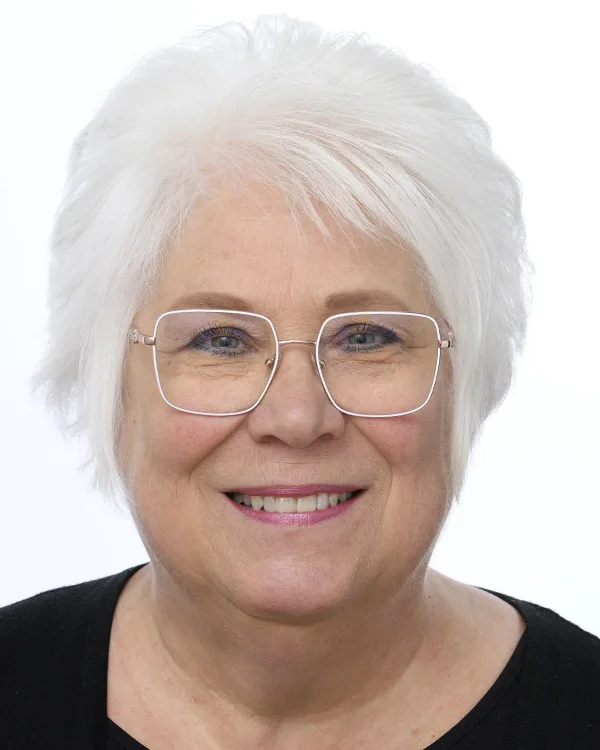

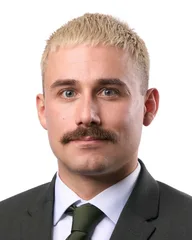
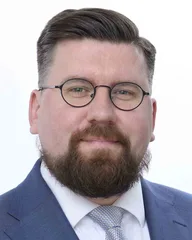
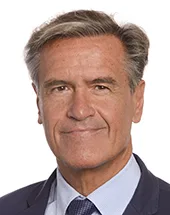
| Rank | Name | Country | Group | Speeches | |
|---|---|---|---|---|---|
| 1 |
|
Lukas Sieper | Germany DEU | Non-attached Members (NI) | 390 |
| 2 |
|
Juan Fernando López Aguilar | Spain ESP | Progressive Alliance of Socialists and Democrats (S&D) | 354 |
| 3 |
|
Sebastian Tynkkynen | Finland FIN | European Conservatives and Reformists (ECR) | 331 |
| 4 |
|
João Oliveira | Portugal PRT | The Left in the European Parliament (GUE/NGL) | 232 |
| 5 |
|
Vytenis Povilas Andriukaitis | Lithuania LTU | Progressive Alliance of Socialists and Democrats (S&D) | 227 |
All Contributions (49)
Four years of Russia's war of aggression against Ukraine and European contributions to a just peace and sustained security for Ukraine (debate)
Mr President, Commissioners, guests, colleagues. Today my country is celebrating the 100th anniversary of Estonia's independence. And yet, four years ago, that day took on a different meaning. I am proud of my country and how much Estonia has helped Ukraine. I am saddened by every victim that Ukraine has suffered. I can only imagine how it is to live under constant bombardment in the cold, dark, unaware of the fate of my loved ones. I am ashamed of politicians like Orbán who defend war criminals and trade the Kremlin's favour at the price of Ukrainian blood. But I am also ashamed of the European Union that in four years we have not been able to destroy the Russian war machine and end the suffering of the Ukrainians. It's in our power. Let's get down to business. Enough with the words. Only then will we be able to look the Ukrainians in the eye in a year's time and say that the war is over. Thank you!
Continuous Belarusian hybrid attacks against Lithuania (debate)
Mr President, Commissioner, colleagues, Belarus has recently intensified hybrid operations against Lithuania. We express solidarity with Lithuania and fully support Lithuania's right to take proportionate measures to protect its sovereignty, public order and safety. But I would like to broaden the picture. Russia and Belarus are two sides of the same coin. Besides hybrid attacks originating from Belarus, we have seen: Russian fighter jets in Estonian airspace; dozens of drones in Poland and Romania; instrumentalisation of migration on the Finnish border; and acts of sabotage in the Baltic Sea. The eastern flank is a strategic area for the EU's overall security and requires strengthening, including the European Drone Defence Initiative and the Eastern Flank Watch. But the eastern flank also needs solidarity‑based financial tools. Therefore, the Council should incorporate eastern border security priorities into the next MFF.
Protection of minors online (debate)
Dear President, Commissioner, ladies and gentlemen, It is our duty to protect children both in the real world and online. Not with speeches and slogans, but with actions, listening to experts and representatives of children's organizations. That is why I do not consider a general age rating and a total ban on social media for minors to be correct. Age recognition leads to discrimination and social media bans do not stop children. If we want to truly protect children, we need to start with the obligations of online platforms under the Digital Services Act. It is time to enforce the regulations. In addition, the digital awareness of minors is crucial, as is the awareness and responsibility of parents. I look forward to the recommendations of the relevant Commission expert group, which do not discriminate against or underestimate children. Only then can both the privacy and online safety of minors be guaranteed.
Gender Equality Strategy 2025 (debate)
Dear President, Commissioner, ladies and gentlemen, As LIBE rapporteur, I am very pleased to see that most of our proposals are reflected in the strategy, including a multidisciplinary approach, legal gender recognition, the involvement of women in crisis resolution. The report also deserves recognition for its clear opposition to violence against women and its support for consent-based rape provision. This is particularly important in today's context, where some Member States have not yet ratified the Istanbul Convention on Violence against Women and some are considering withdrawing from the Convention. At the same time, I would like to emphasise two points, the wording of which leaves a lot of room for interpretation. I don't think it's right to completely eliminate prostitution and surrogacy. Yes, violent and financial surrogacy must be banned, but surrogacy must remain, giving the opportunity to have children in loving families, both traditional and same-sex. Thank you!
The need for a united support to Ukraine and for a just and durable peace concluded on Ukraine's terms, with Europeans and without surrendering to Vladimir Putin's conditions ahead of the foreseen Budapest summit (debate)
Mr President, Commissioner, Council, colleagues, Ukraine is fighting against Russian aggression at the front, and with tens of thousands of civilian casualties, and two kids being killed in Kyiv last night. And Ukraine is under constant pressure to give up land and freedom under the so‑called 'peace treaty' orchestrated in the Kremlin. At the same time, the EU supports the Russian criminal regime by buying Russian energy. War criminal Putin fools around and continues killing. President Trump continues changing his positions. That is reality. We are the last hope of Ukrainians. Together with the 'coalition of the willing' we have to get our act together. We must support Ukraine until full victory over aggressor in order to bring fair and durable peace to Ukraine and Europe. We must give Ukraine much needed military support, fully implement sanctions, stop the Russian shadow fleet, start using Russian frozen assets, stop financing the Russian war economy and bring the aggressor to justice. And we should do it in solidarity. Thank you, Slava Ukraini.
Combating the sexual abuse and sexual exploitation of children and child sexual abuse material and replacing Council Framework Decision 2004/68/JHA (recast) (debate)
Madam President, Commissioner, missing Council, dear colleagues, child sexual abuse is an extremely cruel crime that leaves the victim to deal with decades of trauma. In order to protect our children, we need to make sure that there is no impunity for these crimes, and that victims get maximum help and support. Today, I have three messages. First, to the victims and survivors of child sexual abuse: we met you, we listened to your stories and we heard you. We need to ensure that the victim gets all the support needed as fast and efficiently as possible, even if the crime has not been formally reported. It is during the time of the most intense trauma that victims need most support, and they should not be denied it because they were not ready to go to the police. I would like to underline also the importance of helplines and online chats as anonymous channels, and the reporting obligation that can be a lifeline for victims. Second, to the Council: on average, a victim will report a crime of abuse that happened in childhood when they are over 50 years old. Yes, 50. It can take even longer. To ensure no impunity, we need to abolish statutes of limitations. It is crucial to report and adjudicate these crimes even if time has passed. I urge the Council and Member States to rise above the 27 unique jurisdictions and give our children fair and equal protection across the EU and in all Member States. Finally, to my colleagues in this House: I would like to recognise the work of the rapporteur and shadow rapporteurs. Negotiations were tough, but today I can say that the compromise that we reached is ambitious and strong. So I urge you to vote for the unanimous report. Our negotiators need a strong and ambitious mandate. It's our duty.
Frozen Russian assets (debate)
Mr President, Commissioner, colleagues, I deeply regret that so far there has not been a formal decision on the seizure of Russia's immobilised central bank assets. Repeatedly, we hear from the Council and Commission that they have not found a legally sound way to use the seized assets. My advice is very simple: try harder. Try harder to find a political willingness as well as a solution compatible with the rule of law principles. Russia has to pay for the violation of international law and the UN Charter, for causing immense human sufferings and destruction. Let me reiterate that customary international law, a state responsible for an international wrongful act must provide full reparation. Commissioner, please come up with legally and financially sound proposals in order to use Russian frozen assets to compensate for the damages inflicted by Russia's actions. The sooner, the better. Ukraine is waiting.
Need for targeted support to EU regions bordering Russia, Belarus and Ukraine (debate)
Yesterday, the Speaker of the Verkhovna Rada, Ruslan Stefanchuk, spoke in this hall, welcoming him with a tumultuous applause and a promise to continue supporting Ukraine. I am proud that the European Union is the biggest supporter of Ukraine, but it would be better and fairer. Firstly, it is not fair that Member States contribute to helping Ukraine per capita The calculation is so different. On one side there are countries that contribute 2% of GDP and more, including Estonia, and on the other side there are countries that contribute zero decimals. It's just embarrassing. Secondly, the war in Ukraine is affecting the European Union's economy and, again, some Member States are suffering more than others. Mostly these are the countries on the eastern border of the European Union, whose economies are affected by both sanctions and instability in the region. I repeat, we are prepared to pay a high price for Ukraine's victory, but we must do so in solidarity, as we did in solidarity with the Member States whose economies suffered as a result of Brexit. So I expect concrete proposals from the Commission, from the Council. It's urgent. Thank you!
Need to detect and to counter sabotage by the Russian shadow fleet, damaging critical undersea infrastructure in the Baltic Sea (debate)
Mr President, Commissioner, President-in-Office. Russia’s hybrid attacks on the European Union have steadily increased in recent years. We know it, we repeat it. And yet we cannot prevent, stop or punish attacks. The European Union, the world's largest economic regions, cannot bring Russia's war economy, many times smaller, to its knees. It's embarrassing. Today, coastal states and NATO allies are patrolling the Baltic Sea. At the same time, the European Union is increasingly adopting new packages of sanctions that are swarming with exceptions that are not being met and over which Russia is simply grinning. Today, too, the Commissioner and the President-in-Office have said the right thing. Coordination, exchange of information, cyber solidarity, partnership, but few words. It's time to act, resolutely and effectively. This is the only way to stop the Russian war machine in Ukraine and hybrid attacks in the European Union.
Critical infrastructure vulnerabilities and hybrid threats in the Baltic Sea (debate)
Madam President, Madam Commissioner, colleagues! Russia is attacking the security of Europe, i.e. all of us, more and more brutally and consistently. There are plenty of examples. The war in Ukraine, cyber-attacks, information wars, the use of illegal migrants as hybrid weapons, terrorist attacks on critical infrastructure in the Baltic Sea, etc. The actions of Russia and its criminal allies must not remain unanswered. I look to the new Commission and also to the new High Representative for Foreign Policy, Kaja Kallas. Preventing, deterring and responding to hybrid attacks must become a priority for the European Union. Not only in words, but also in deeds. We must not underestimate the strength of the European Union and NATO. On the contrary, it must be used. And finally. The European Union's support for Ukraine must not only continue, but increase significantly. That Ukraine wins, that Russia loses and is held accountable. This is the only way we can ensure Europe's security and future for our children. Thank you!
Azerbaijan, notably the repression of civil society and the cases of Dr Gubad Ibadoghlu and Ilhamiz Guliyev
Mr President, Commissioner, Council, Zhala, I welcome the release of Dr Ibadoghlu from house arrest, but I also urge to lift a travel ban in order to allow him to travel and receive medical treatment abroad. Unfortunately, the overall situation with human rights in Azerbaijan has significantly worsened in the recent years. Repressions against civil society and activists, judicial harassment, attacks against remaining independent media, almost 300 political prisoners. This is Azerbaijan’s reality. It’s impossible even to consider the deepening of the EU-Azerbaijan relations, including comprehensive and honest dialogue. These relations have to be conditional on Azerbaijan’s rule of law and human rights record. Azerbaijan has to decide whether it chooses to be a truly reliable partner of the European Union, or continues being in the same group with Russian and Belarusian autocracies. And on a personal note, I really regret that my last intervention as the Chair of the Delegation for Relations with South Caucasus is rather pessimistic. But it’s also not hopeless.
Attempts to reintroduce a foreign agent law in Georgia and its restrictions on civil society (debate)
Madam President, Commissioner. Today is my last address to the plenary in my capacity as chair of the South Caucasus Delegation, co-chair of the EU-Georgia Parliamentary Association Committee (PAC) and a friend of Georgia. I have two messages: firstly, to the politicians of Georgia, and in particular to the governing Georgian Dream party. Please stop jeopardising Georgia’s European aspirations. It is not only about this law. Unfortunately, it is a much longer process of undermining democratic EU principles and values. You have a historic opportunity to fulfil your people’s dream of closer integration with the EU. Do not disappoint the people. Secondly, I want to assure Georgian people that you have our unwavering support for your European aspirations, and I am sure that the next European Parliament will continue to support you in your fight for a place in the European family. But you have to do your part. Go to elections in October and elect a truly pro-European and progressive national parliament.
Deepening EU integration in view of future enlargement (debate)
Dear Mr President, There are two processes before the European Union today. Russia’s aggression against Ukraine made possible what we did not even dream of a few years ago: the enlargement of the European Union to the east. This is evidenced by the decision to open accession negotiations with Ukraine and Moldova and to grant candidate status to Georgia. At the same time, discussions have continued on the reforms of the European Union that started at the Conference on the Future of Europe. It is absolutely clear that the European Union needs reform, starting with internal procedures and ending with readiness for enlargement. Both processes are necessary and both processes must be carried out in parallel. Reforms must not become a pretext for curbing enlargement, since enlargement policy is one of the most successful geopolitical instruments of the European Union. We have before us a historic window of opportunity, made possible by the struggle of Ukraine, at the price of the blood and suffering of the Ukrainian people. We can't close that window. History does not forgive. Thank you!
Closer ties between the EU and Armenia and the need for a peace agreement between Azerbaijan and Armenia (debate)
Mr President, Commissioner, colleagues, Armenian Prime Minister Pashinyan was very clear when he spoke in this Hemicycle in October: Armenia has turned to Europe and looks for closer cooperation with the EU. This is not only a choice of economic convenience, but also a choice based on the country’s commitment to the key European values and the difficult security situation. I strongly welcome the role of the EU Monitoring Mission and the inclusion of Armenia into the European Peace Facility programme. I also think that it is the right time to start visa liberalisation dialogue and better engage Armenia with regional connectivity and other projects. At the same time, Armenia has to do its homework. I am referring to CSTO, Eurasian Economic Union, Armenia’s high dependency on Russia, also the Russian military base in Armenia. Finally, after more than 30 years of insecurity and suffering, Armenian and Azerbaijani people deserve to live in peace and security. Therefore, I call the Azerbaijani leadership to commit to peace and sign a comprehensive peace agreement based on recognition of sovereignty, territorial integrity and non-use of force.
The fight against hate speech and disinformation: responsibility of social platforms within the Digital Services Act (topical debate)
The European Union made history by adopting the Digital Services Act. For the first time in the world, digital platforms were regulated in the fight against hate speech and disinformation. An important step was taken to ensure that anything that is illegal in the real world is also illegal in the digital world. This is an important promise to our people – consumers of digital services. You are equally protected in the real world and in the digital world. The FRA report notes that the fight against hate speech is complicated by the lack of a common concept of hate speech in the European Union. Online violence continues to spread, with children, minorities and women, including women in politics, being the main victims. There is also a lack of training for people and employees who moderate the content of online posts. There is still a lot of work to be done by Member States in this respect. I would like to congratulate the Commission: At the end of last year, the Commission launched for the first time formal procedures against company X (formerly Twitter) under the Digital Services Act. This is an important step to evaluate the activities of Platform X, but also to analyse the implementation of digital services more broadly, as practice will decide whether the Digital Services Act will remain only a political message or whether it will also protect our citizens online in the upcoming European elections.
Russiagate: allegations of Russian interference in the democratic processes of the European Union (debate)
Dear Mr President, In 2007, I was the Ambassador of the Republic of Estonia to Moscow. This was the time when Russia portrayed my country as a Nazi state and me as an ambassador of a Nazi state. This was the time when Russia organised cyber-attacks against Estonia and instigated anti-Estonian demonstrations in Tallinn. I saw first-hand how the Kremlin's propaganda machine operates; what they are willing to do to achieve their grand chauvinistic goals. Then followed Georgia, Crimea, and today there is a full-scale aggression against Ukraine. It hurts me to listen to colleagues who, out of naivety or stupidity, are the Kremlin's mouthpieces, useful idiots in the European Parliament. I understand democracy and the multiplicity of opinions, but there is a boundary somewhere, and that boundary is crossed when cooperating with Russian intelligence agencies. I hope that investigations in Latvia and in the European Parliament will find out the truth and the culprit or culprits, and that they will be held accountable, so that everyone – including the Kremlin – can unequivocally understand: interference in the processes of the European Union is unacceptable and has consequences!
The need for unwavering EU support for Ukraine, after two years of Russia’s war of aggression against Ukraine (debate)
Dear Mr President, I have three messages today. Firstly: The war in Ukraine must end with Ukrainian victory and peace under Ukrainian conditions, that is, the prosecution of Putin and those around him, as well as all war criminals. This is the only way to stop a criminal aggressor and show the world that international law applies. Second: €50 billion for Ukraine is the right decision, but it is not enough. Member States need to substantially increase their bilateral assistance to Ukraine and their contribution to the peace financing action. If Estonia can contribute 1.5% of GDP, others will have to do the same. This is real solidarity, this is real support. War is expensive, but our money is not comparable to the lives and sufferings that Ukrainians pay every day. Good Ukrainians, the European Union is often bureaucratic and slow, disappointing and disappointing. Last week showed that the European Union is united in supporting Ukraine. I assure you, you have friends here who won't let you forget your fight. Slava Ukraini!
Digitalisation of cross-border judicial cooperation - Digitalisation of cross-border judicial cooperation (amendment of certain directives and framework decisions) (joint debate – Judicial cooperation)
Dear Mr President, This digital transformation of cross-border judicial cooperation is one piece of legislation that we are trying to make life easier and procedures more accessible for our citizens. We are already seeing how cross-border our lives are and we can only think that this tendency will only get worse. This, in turn, means that there is an increasing need for cross-border services, including legal procedures. This package will not solve all the problems of cross-border cooperation, but it will bring solutions where solutions are urgently needed. I am sure that this regulation will be widely applied. I come from Estonia, where we have had the opportunity to use e-services for more than thirty years. And I can confirm from my experience that the digitalisation of services and operations is overwhelmingly a positive experience, and people are very happy to use them. Digital services and operations are an integral part of our future. The sooner we understand this, the better for our citizens. And to conclude, I would like to thank co-rapporteurs Emil Radev, shadow rapporteurs, experts, the Commission, the Council – which is not present today – for their excellent cooperation. It was a privilege and it was an honour to cooperate with you. So today, I think we can be proud of this package that will benefit our citizens as well as our institutions. So, dearvy, I would like to urge you to vote for the package.
Digitalisation of cross-border judicial cooperation - Digitalisation of cross-border judicial cooperation (amendment of certain directives and framework decisions) (joint debate – Judicial cooperation)
Dear Mr President, With this Digitalisation Package for judicial cooperation, we are making judicial cooperation and information exchange in cross-border judicial matters faster and easier, which in turn means that citizens will also benefit from faster and simpler judicial procedures and justice. As a digital country, we know very well in Estonia that digital communication must be reliable and secure. We all know that cyber-attacks are a new normal and that is why it is particularly important that legal information about our citizens moves in a protected environment and not through the public web or in the cloud. In this case, security is ensured by means of a decentralised IT system. Under the new regime, citizens will also be able to communicate with judicial authorities in cross-border judicial matters digitally using an electronic signature. In this context, it is of paramount importance that this Regulation does not lower the level of trust in electronic signatures, i.e. that electronic signatures with the highest level of trust are equated to physical signatures. This Regulation lays down common rules for hearings by videoconference. Video interviews are already taking place in some countries, but each Member State has its own procedure, its own rules, and this creates problems. The Regulation harmonises the rules of procedure for video questioning and thereby creates the possibility for citizens to participate in judicial proceedings by video. In other words, citizens will be given the option of videoconferencing and may use this option when they are unwilling or physically unable to travel to another country. In doing so, Member States must ensure a corresponding technical solution and access for citizens who wish to participate in the videoconference. Ensuring uniform procedural rules is particularly important in criminal proceedings. It is also very important to familiarise citizens with the rules of procedure so that they can understand how the conference is organised, its pros and cons. They must be informed of their rights, including the right to a lawyer and interpretation. It is important that citizens are able to make a decision for or against the use of videoconferencing, based on objective information and best suited to them. The decision of the person to be heard by videoconference must be voluntary and explicit, and the latter must be verified by an authority. The Regulation also provides for equal access to videoconferencing, i.e. all forms of discrimination, including discrimination against persons with disabilities, are prohibited. It is important that these rights, which are guaranteed to individuals in the real world, are also guaranteed in the digital sphere. The judicial authorities need to find technical solutions that are suitable for everyone. A pan-European digital access point will be set up to allow citizens to exchange information and documents with judicial authorities, as well as to pay for services. We had lengthy discussions on the timeline for the digital transformation and I am glad that we were able to agree on a realistic time frame. Yes, different steps will take their time, but I can confidently say that we did not write in the air and do not stretch the process unnecessarily. Effective digital cooperation between judicial authorities requires the training of officials and experts who either already use or will use these tools. The responsibility for training lies with the Member States. There is also a need to be prepared for some conservative officials working in judicial authorities who may not adopt innovative solutions. But again, based on my country’s Estonian practice, I can assure you that innovations will go along if they are understandable, convenient and accessible.
Recent developments at the EU’s external border between Finland and Russia and the need to uphold EU law (debate)
Mr President, Council, Commissioner, colleagues. Today's situation on the Finnish-Russian border has led Russia to achieve its political goals, punish Finland for its critical positions and NATO membership. This is not the first time innocent people have been used for a migrant attack. Last year, Belarus did so at the border with Lithuania, and now Russia is repeating the same, transporting innocent people by bus to the Finnish border and abandoning them there in inhumane conditions and in very harsh weather conditions. I feel deeply sorry for every person. Russia's behaviour is inhumane and unacceptable. I would like to stress that Finland, like every Member State of the European Union, has the right to protect its borders against illegal immigration and we have a duty to support and help Finland. I would like to thank Frontex for its readiness to assist Finland and, if necessary, Estonia. Only our joint action will send a very clear message to Russia and Belarus: The use of innocent people as political weapons is unacceptable and will not achieve the goal.
Situation in Nagorno-Karabakh after Azerbaijan’s attack and the continuing threats against Armenia (debate)
Madam President, Commissioner, Council, dear colleagues, once again we are discussing the situation in Nagorno-Karabakh. We will vote on a resolution and I would like to make a couple of points. First, the EU should reconsider its relations with Azerbaijan and make them conditional. We have to stop with appeasement. There must be immediate consequences for the Aliyev regime. A year ago, Commission President von der Leyen was in Baku, standing next to President Aliyev and praising Azerbaijan for being EU’s reliable economic partner. Today, the Commission must make it crystal clear that Azerbaijan’s actions – starting from military actions and concluding with forced displacement of the population of Nagorno-Karabakh that de facto constitutes ethnic cleansing – are not acceptable. The EU should stand behind its core values, international law, and rules-based international order. The High Representative promised a strong response. And colleagues, we have leverage. The response should include sanctioning of responsible Azerbaijani authorities, halting negotiations on a new EU-Azerbaijan agreement, halting the Visa Facilitation Agreement, and termination of the gas deal. Second, Armenia needs today the EU’s substantial political and financial support more than ever before. The EEAS should increase the capacity of the EU monitoring mission in Armenia and convince Azerbaijan to expand it to Azerbaijan’s territory. This can be crucial for preventing a new escalation on the Armenia-Azerbaijan border. It is time to upgrade SEPA and start discussing a visa facilitation regime with Armenia. And yes, Armenia should be given a clear European perspective in a longer run. I know it’s not easy, and Armenia has to face some challenging questions from Customs Union to the Collective Security Treaty Organisation. And finally, I hope that the human suffering we all have witnessed will have an impact on the coming meetings in Granada and in particular on the political will of President Aliyev to conclude a peace agreement that will bring peace and stability to the region, as well as protect the human rights of Armenians residing in Nagorno-Karabakh.
The case of Dr Gubad Ibadoghlu, imprisoned in Azerbaijan
Madam President, Commissioner, colleagues, I join my voice to protest against the brutal arrest and continued detention of Dr Ibadoghlu based on highly dubious charges. I also join my voice to call for the immediate release of Dr Ibadoghlu. Regrettably, this is not the first time we discuss human rights situation in Azerbaijan. The European Court of Human Rights stated in 2018 that ‘there is a troubling pattern of arbitrary arrest and detention of government critics through misuse of criminal law’. Unfortunately, today the situation is even worse. There are over 200 political prisoners in Azerbaijan, while many more face ongoing prosecution cases, administrative detention and harassment by the authorities. This is not acceptable, especially for a country that wants to be a strategic partner of the EU. The deepening of EU relations should be conditional on significant improvement of the human rights situation, underlined with the EU global human rights sanctions regime.
Adequacy of the protection afforded by the EU-U.S. Data Privacy Framework (debate)
Mr President, Commissioner, Council, colleagues, to start with, I would like to recognise, Commissioner, your efforts in negotiating with the United States and legal steps taken by Biden administration. But regrettably, this is not good enough for our citizens. There are still too many uncertainties. There is the overall legal uncertainty about the executive order that can be overturned at any time by the President of the United States. Second, there is uncertainty over whether our citizens will have access to effective judicial redress. Even the Commission themselves have told Parliament that they wish for this judicial redress system to be tested, implying that it remains to be seen whether it actually is effective. And third, uncertainty whether the adequacy decision will stand the test of the Court of Justice, notably on bulk data collection. Commissioner, therefore, I urge you not to rush to adopt another quick-fix adequacy decision before the legitimate concerns, including the ones raised by this House, will be adequately addressed.
EU-Armenia relations (debate)
Madam President, Commissioner, colleagues. First of all, I would like to thank our rapporteur and congratulate him for this report. As the Chair of the South Caucasus delegation, I would like to highlight some points. Firstly, the deployment of the European Union mission in Armenia is a very important step for the security of the region and a significant contribution to further engagement of the EU in the South Caucasus. Secondly, I appreciate Armenia’s commitment to the CEPA Agreement and recognise Armenian achievements, including judicial reforms, the anti-corruption strategy and media freedom. At the same time, a lot remains to be done, including on protection of minorities, the LGBTQ community and gender equality. Thirdly, I would like to reiterate that the EU’s Eastern Partnership policy is tailor—made and based on the ‘more for more’ principle. The future of EU—Armenia relations depends on Armenia's political choices and commitments, some of which could be very challenging, including the customs union with Russia and Belarus and the CSTO. Finally, I hope that constructive peace talks between Armenia and Azerbaijan will finally start.
Situation in Georgia (debate)
Mr President, as the Chair of the South Caucasus delegation, I have two messages to the Georgian people. First, we Members of the European Parliament know and respect the choice of closer European and transatlantic integration. You have been very clear and consistent in expressing your European aspiration. We support you and we stand with you on European path. Second, we will never, I repeat, never drag you into any war. We remember the war of 2008 and human lives lost. We will never recognise occupation of Georgia. We will always support Georgia’s sovereignty and territorial integrity. We wish Georgian people peace, security and prosperity. Our message to the Georgian politicians is very clear. War in Ukraine opened a window of opportunity for Georgia. Do not waste it. Remember that today Ukrainians are fighting and dying for their future, but also for your future. Attacks on Ukraine and President Zelenskyy by Georgian officials are disappointing and unacceptable. The window of opportunity will not remain open forever. Do what your people expect from you.