




| Rank | Name | Country | Group | Speeches | |
|---|---|---|---|---|---|
| 1 |
|
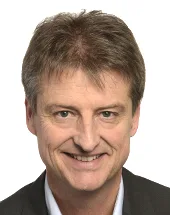
Lukas Sieper | Germany DEU | Non-attached Members (NI) | 390 |
| 2 |
|
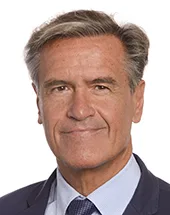
Juan Fernando López Aguilar | Spain ESP | Progressive Alliance of Socialists and Democrats (S&D) | 354 |
| 3 |
|
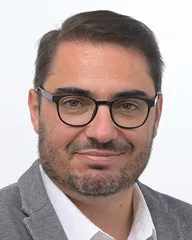
Sebastian Tynkkynen | Finland FIN | European Conservatives and Reformists (ECR) | 331 |
| 4 |
|
João Oliveira | Portugal PRT | The Left in the European Parliament (GUE/NGL) | 232 |
| 5 |
|
Vytenis Povilas Andriukaitis | Lithuania LTU | Progressive Alliance of Socialists and Democrats (S&D) | 227 |
All Contributions (14)
Breaches of EU law and of the rights of LGBTIQ citizens in Hungary as a result of the adopted legal changes in the Hungarian Parliament - The outcome of 22 June hearings under Article 7(1) of the TEU regarding Poland and Hungary (continuation of debate)
The overwhelming majority of the Council members were outraged by the anti-LGBTIQ law Orbán introduced in Hungary. Rightfully so. Orbán has crossed redlines before but that was a new low. I welcome the response by most heads of state and government but it should not stop here. The Council needs to trigger Article 7 against this Hungarian Government. All legal means should be applied in order to show Orbán that he has gone too far. We are a Union of values whether Orbán likes it or not. He does not want to listen to reason, he therefore must face the consequences. The Hungarian anti-LGBTIQ law goes against everything the European Union stands for. When you are a member of the EU, you sign up to our values. It is not an ‘a la carte’ menu. We need to stand up against the deteriorating situation of LGBTIQ-rights in Hungary. We have to take action and hold the Hungarian Government accountable. This is about protecting what is most precious, the freedom of our people.
Presentation of the Court of Auditors' annual report 2024 (debate)
Mr President, Mr President of the Court of Auditors, Commissioner, ladies and gentlemen, the Court of Auditors' annual report confirmed all our concerns: an overall error rate of 3,6 % and even 5,7 % for cohesion funds. Years pass and problems remain. In addition, we know that the Commission aims to import the Recovery and Resilience Facility (RRF) model into the Multiannual Financial Framework. Here too, the utmost caution is required. While the RRF model has been able to provide some flexibility, many shortcomings are also to be regretted, in particular as regards the detection of errors, fraud at national level, as well as in the often unclear definition of the milestones to be achieved. More than ever, we need to pay attention to the establishment of an effective regulatory framework, including through a systematic digitalisation of processes, controls, the use of data mining and better cooperation with Member States.
Discharge 2023 (joint debate)
Mr President, Mr President of the Court of Auditors, Commissioner, ladies and gentlemen, during the 2023 Commission discharge exercise, we talked a lot about NGOs and other peripheral subjects, but for my part, I would like to refocus the debate on the worrying figures provided by the European Court of Auditors, whose quality of work I once again welcome: an overall higher error rate of 5,6 % than before; a stratospheric error rate for the cohesion funds at 9.3%, and the amount of the remainder to be liquidated, which continues to run wild, at 543 billion. All this, in the end, without much reaction from the Commission to remedy it. In addition, during this mandate, I will remain attentive to the announced modernisation of the European budget. Yes, we need to make it more flexible, more flexible, less administratively burdensome, but this cannot be done at the expense of robust controls on the traceability of funds disbursed, their performance and their impact on our economic growth. We need a clear and systematic framework for early detection of fraud and error through the widespread use of data extraction tools. More than ever, every euro spent must be spent with intelligence, efficiency and pragmatism.
Presentation of the proposal on Critical Medicines Act (CMA) (debate)
Madam President, Commissioner, ladies and gentlemen, Europe can no longer remain a spectator of its own vulnerability. We all remember the shortages that have hit our continent in recent years: Amoxicillin, cancer treatments, paracetamol, anesthetics... So many essential drugs that have been sorely missed, in our hospitals as in our pharmacies, which has put lives in danger. These stock-outs did not only affect rare treatments; they also concerned essential medicines, the availability of which should have been obvious. For too long, we have let our critical drugs become hostages to relocations and geopolitical tensions. To depend on a few factories on the other side of the world is to accept impotence in the face of urgency. The Critical Medicines Act must therefore build genuine European pharmaceutical sovereignty. This will require ambitious legislation: strategic relocation of production, establishment of security stocks and enhanced coordination between Member States. This is not just an industrial issue; it is also a public health imperative.
The need to address urgent labour shortages and ensure quality jobs in the health care sector (debate)
Mr President, Commissioner, hospitals are under stress, nursing homes are overwhelmed, medical deserts are spreading: this acute shortage of staff jeopardises the quality of care and access to treatment for millions of citizens. Across Europe, our health systems are suffering from the same emergency, the dramatic shortage of caregivers. 1.2 million is the number of doctors, nurses and midwives that the EU lacks on the ground in order to provide quality health care. The causes are known: ageing of the population, difficult working conditions, unreplaced departures. Result: exhausted caregivers, patients waiting and vocations dying out. Faced with this challenge, no country has the capacity to act alone. We need a strong European response, strengthening training and recognition of qualifications and improving working conditions. Innovation, including artificial intelligence, can represent a real opportunity to speed up certain procedures, including screening, but also to reduce the administrative burden that rests on the shoulders of our caregivers to free up medical time to refocus on care and on the essentials, patients.
Presentation of the Court of Auditors' annual report 2023 (debate)
Mr President, Mr President of the Court of Auditors, Commissioner, ladies and gentlemen, the annual report of the Court of Auditors has amplified many of my concerns: an ever-increasing overall error rate of 5.6%, a stratospheric error rate for cohesion funds of 9.3% and the amount remaining to be settled which continues its mad rush and peaks at EUR 543 billion. I also read, like everyone else, that the Commission is planning to modernise the European budget in order to make it more flexible and reduce administrative burdens. We will see what happens, but Parliament must remain attentive to a clear, precise and effective regulatory framework, in order to be able to systematically detect all errors and fraud, in particular through a systematic digitalisation of processes and controls, the use of data extraction tools and better cooperation between Member States. We needed it yesterday. We will need it even more tomorrow, given the sums at stake with new instruments such as NextGenerationEU and the new priorities for reindustrialisation, defence and support to Ukraine.
Presentation of the Court of Auditors' annual report 2022 (debate)
Mr President, Commissioner, ladies and gentlemen, the Court of Auditors' report, which I would like to thank for its excellent work, has amplified my many concerns: an ever-increasing error rate in the cohesion areas of the European Development Funds and for high-risk expenditure, with an error rate of 6%, with an overall error rate for expenditure of 4.2%. These figures are very far from those announced by the Commission. Parliament has repeatedly called for this: the Commission and the Court must establish an identical methodology for the estimation of the error rate. This is a matter of credibility for both institutions. Second concern: a outstanding balance of more than €450 billion and the absorption capacity of Member States, which remains a challenge for both the Multiannual Framework and NextGenerationEU. Third element: The Court also expressed serious reservations on the methodology used by the Commission for the control of funds related to the Recovery and Resilience Facility of our Member States. Finally, Commissioner, I can only remind you of the importance of setting up data extraction toolkits and of systematising the use of new technologies to optimise controls. This is in the interest of both the Commission and our citizens. The structural problems related to audit management have lasted too long.
Discharge 2021 (continuation of debate)
Madam President, Mr President of the Court of Auditors, ladies and gentlemen, tomorrow Parliament will therefore decide in plenary whether or not to grant discharge for 2021 to 55 European institutions. It is obviously every year a major political act that Parliament carries out, in conjunction with the Court of Auditors, whose work and rigour I would once again like to commend. These votes will therefore allow us to validate the management of funds, transparency, but also to sanction abuses, ineffective policies and misuse of public money. This year, for the discharge of the Commission, we launched a new type of two-part approach: the first, on the classic fiscal framework, and the second on the Recovery and Resilience Facility. And I want to salute and thank our two rapporteurs for their effective work on this issue. As I have already had occasion to say, I have a number of concerns about the implementation of the EU budget. An error rate that remains very significant in the areas of competitiveness, cohesion, but also for high-risk expenditure. An ever-increasing balance to be liquidated and the need to respect the rule of law in order to benefit from European funds, but also the absorption capacity of the States, which remains problematic, as well as a delay in the digitalisation of audit and control procedures. Yes, we need to generalise the use of data mining and systematise the use of new technologies to organise controls, develop a database of all beneficiaries of EU funds in order to better fight fraud. As far as the RRF is concerned, this tool has been put in place to respond urgently to the post-Covid economic crisis we have been through. It is far from perfect, as we know, but it has the merit of existing, of functioning. Better controls on projects, including milestones and their economic performance should be considered. The policy recommendations made in the discharge will improve it when it is revised in 2024. We can only be fully effective with orderly accounts and optimal management of funds. Each euro must be used efficiently and effectively in promising projects, policies with real and significant effects. Our credibility will therefore depend on our actions, but also on the credibility of the European project. In conclusion, I would like to mention the discharge of the 33 agencies, since Renew was the rapporteur this year, and I would first like to thank the agencies for their commitment to the discharge process, and their transparency vis-à-vis the requests of the Committee on Budgetary Control. We have put forward a number of priorities for our agencies. A better human resources policy such as gender balance, work-life balance, geographical balance, but also prevention, management of conflicts of interest, the importance of transparency, the fight against corruption, clear public procurement rules, cyber-protection, the development of best practices, and finally synergies between the agencies themselves. The role of the agencies is essential for the implementation of European policies, and I am pleased that this year we recommend granting discharge to all agencies.
Presentation of the Court of Auditors' annual report 2021 (debate)
Mr President, Mr President of the Court of Auditors, Commissioner, ladies and gentlemen, I would like to begin by thanking the Court of Auditors for the quality of its annual report. But, as I already had the opportunity to say in committee last week, this report obviously did not sweep away my many concerns. First, a still significant error rate in the areas of cohesion, the single market, the European Development Funds, but above all in the area of high-risk expenditure, the error rate of which this year peaks at 4.7%. Then, a remainder to be liquidated, which also culminates. Although it decreases if NextGenerationEU is removed, it peaks at 341 billion and the absorption capacity of Member States remains problematic, both in the Multiannual Framework and for NextGenerationEU. Finally, the Court also highlights the lack of clarity on recoveries and their deadlines. In light of these elements, I am concerned for years to come. Mrs Hohlmeier just said: the amounts that will be spent under NextGenerationEU and, moreover, under the multiannual framework are substantial. And there are concerns about the future and how states, in particular, can absorb these amounts and how to control how they do so. Moreover, the first review by the Court of Auditors of the Recovery and Resilience Facility of one of our Member States, the first that received funding, raises doubts about ex ante controls and the objectives to be achieved. This fear is obviously all the more important when one thinks of countries such as Hungary for their systemic shortcomings in the fight against corruption, conflicts of interest and deficient public procurement procedures. Finally, I can only recall the importance, the urgency of the widespread introduction of data mining tools and the need to systematise the use of new technologies and digital technology to optimise controls. The current situation is simply worrying and we must live up to the expectations of our fellow citizens. We will only be able to do this fully with orderly accounts and optimal flow management.
Discharge 2020 (debate)
Madam President, Minister, Commissioner, President of the Court of Auditors, ladies and gentlemen, at this May plenary meeting we are closing the discharge process for 2020, which we started last September. And first of all, I want to thank the vast majority of the European institutions for their collaboration and for their work. In general, both the Commission and Parliament itself, as well as the agencies, development funds and institutions in general concerned by the discharge, have cooperated fully with the European Parliament's Committee on Budgetary Control. I would also like to thank the Court of Auditors for its work in the discharge process. It is a rigorous and essential task to audit the accounts of each institution so that our Parliament has all the relevant information at its disposal to decide whether or not to grant discharge. This year, as rapporteur for the European Commission, I made it clear that I wanted to achieve a discharge focused on the recommendations on budgetary control, not on an endless list of political considerations. I think we came up with a very good result: a legible report that goes to the essentials. It was an important and dense work, and it was even more seen the exceptional character of the year 2020: the pandemic and the emergence of Health Europe, the new multiannual budgetary framework and the European recovery plan to address the socio-economic consequences of the pandemic. The discharge process is neither an innocuous gesture nor a formality. It is a major political act in the hands of the European Parliament, which makes it possible to endorse the management of funds, transparency, but also to sanction abuses, ineffective policies or the misuse of public money. This good management is essential to maintain the credibility, but also the legitimacy of our political project with European taxpayers. Every euro must be used efficiently and effectively. This is even more the case when we go through a succession of crises. Commissioner, as I have already said in committee, I have serious concerns about the EU budget. A significant error rate in areas such as competitiveness, cohesion or high-risk expenditure, a balance of more than 300 billion, the absorption capacity of Member States, which often remains very problematic and a lack of clarity on recoveries and their deadlines. In the light of these factors, I am concerned for the coming years about the amount of money that will be spent on the next multiannual financial framework and on Next Generation EU, which was put in place to allow Member States to recover from the pandemic. Finally, I can only encourage the Commission, but also the Member States, to introduce mandatory and generalised data-mining tools such as Arachne or EDES, and to systematise the use of new technologies to organise checks and develop a database of all beneficiaries of European funds in order to better combat fraud. The Commission must therefore make progress in each of these areas. The coming years will be crucial for our European project, and this is a component of its credibility. The management of the health crisis and its economic impacts, respect for the rule of law, the implementation of the European Green Deal, the digital transition, research and innovation, the emergence of a health Europe are all topics on which we are expected and for which we must provide sufficient budgetary means to put in place these essential policies. We can only be fully effective with orderly accounts and optimal fund management. Every euro must be spent efficiently on promising projects or policies with significant leverage effects. On our actions will depend our credibility and also that of the European project.
Implementation of the Sixth VAT Directive (short presentation)
Madam President, Commissioner, ladies and gentlemen, my aim here as rapporteur was to send a strong message in order to put an end to the transitional regime, which is a source of loopholes increasing the VAT gap. I would like to thank the shadow rapporteurs for their cooperation. This report was voted in ECON by a large majority, showing a united front to propose solutions to issues that have been outstanding for more than four years. This implementation report addresses particularly sensitive issues, which concern both Member States’ policies, the efficiency of the internal market, the digital and environmental transition and the well-being of our citizens. While the VAT gap in the EU increased from 20% in 2009 to 10% in 2019, it varies considerably across Member States, harming the EU budget, businesses and European citizens. This first factor is compounded by the extent of the differences in standard rates between Member States and the multitude of reduced and special rates. This complexity is a source of opacity, compliance costs, errors, but also fraud. It severely limits the coherence and interoperability of the VAT system and causes the EU to lose some €134 billion in 2019. This is why our report proposes several policy options. First of all, we propose to identify existing good practices at national level in order to apply them to a reform at European level. Secondly, we consider it essential to carry out a careful examination of reduced rates and special rates in order to reduce the cost of compliance and to modernise and rationalise the tax system in the interests of consistency. We also believe that, while the pandemic has catalyzed the development of digitalisation for all transactions, there is still a need to ensure transparency, accountability and automated reporting, which are essential for a definitive, simplified and sustainable VAT system. However, the Commission must also support our SMEs in acquiring technology and know-how. In addition, our businesses urgently need the Taxes in Europe database to be fully operational and provide quick, up-to-date and accurate access to relevant information on the implementation of the VAT system in the Member States, in particular on all standard and lower VAT rates. Finally, we propose to support the climate transition by gradually removing harmful products, but also those that are highly polluting, from the list of derogations from the standard rates. Such a phase-out will have to include compensation measures and reduced rates on basic necessities, in order to help low-income households. On 7 December, Ecofin ministers approved the long-awaited reform of the VAT rate directive. This reform provides, as Parliament wanted, for the phasing out of fossil fuels or environmentally harmful products and for an acceleration of digitalisation. She doesn't want to leave anyone by the wayside. It will therefore be for the Member States of the European Union to ensure a fair balance between compliance with the standard rates and the derogations allowed, but also to avoid eroding the tax base when using the new reduced VAT rates.
Presentation of the Court of Auditors' annual report 2020 (debate)
Madam President, Commissioner, Mr President of the Court of Auditors, ladies and gentlemen, I have many concerns about Mr Lehne’s presentation, which I thank. Significant, high error rate in the areas of competitiveness, cohesion and for high-risk expenditure; the balance to be liquidated, which exceeds EUR 300 billion; the absorption capacity of States which remains very problematic and, finally, a lack of clarity on recoveries and deadlines. I am therefore concerned for the coming years about the amounts that will be spent – 1 800 billion foreseen in the next Multiannual Financial Framework. Furthermore, I can only encourage both the Commission and the Member States to generalise data extraction tools and to systematise the use of new technologies to improve all controls. Given the sums committed, particularly for NextGenerationEU, we will have to live up to the expectations of our fellow citizens. The European Union must allow Member States to redeploy their economies, but also to implement our policies – the Green Deal, Horizon Europe, the digital transition. We will only be able to do this fully if the funds are managed optimally. As such, I welcome the fact that during the recent negotiation of the 2022 budget, Parliament’s negotiators managed to extract additional resources for the Court of Auditors from the Council. We will have to ensure that every euro spent is for the direct benefit of Europeans and it is up to the Commission to make every effort to meet this requirement.
2022 budgetary procedure: joint text (debate)
Mr President, Commissioner, ladies and gentlemen, in addition to the Commission’s initial proposals, we have therefore secured additional investments of almost EUR 500 million for 2022 to achieve our Parliament’s political priorities. I am thinking of research, our youth, SMEs and the green and digital transition, the health dimension, including the global vaccination effort, internal cohesion, external solidarity and respect for the rule of law. We owe this exceptional result to a united European Parliament, to the cohesion of all the political groups working alongside our fellow citizens on a daily basis. And with a budget of €169.5 billion and more than €140 billion in loans and grants under NextGenerationEU to support the recovery in 2022, we will need stronger budgetary control. This is why I have paid particular attention to ensuring that institutions, such as the Court of Auditors or the European Public Prosecutor’s Office (EPPO), are provided with sufficient resources, financially and in capacity, to fully carry out their tasks, thereby strengthening the control of expenditure. We will ensure that taxpayers’ money is effectively used to deliver policies of general interest that reflect those implemented by our governments.
General budget of the European Union for the financial year 2022 - all sections (debate)
Madam President, Commissioner, Minister, ladies and gentlemen, the EU budget will be strengthened through the Next Generation EU recovery plan and the financial effort to ensure that recovery in 2022 will be unprecedented. In order to ensure the trust of citizens, but also of entrepreneurs, European money must be spent wisely. We will therefore pay particular attention to respect for the rule of law, on the one hand, and the fight against fraud against the EU budget, on the other. We are going through a period of climatic, economic, social and geopolitical upheavals. Setting a budget means making choices on promising investments, to ensure a sustainable recovery and an ambitious green and digital transition. It also means ensuring that these investments meet the aspirations of our citizens. That is why I ask the Council, Madam Minister, to take stock of the issues at stake and to review the cuts made in total contradiction to the priorities shared and set out repeatedly within our institution. Colleagues, the sustainability of the EU will only be ensured if it is strong from within through operational institutions. The European Court of Justice, the Court of Auditors and the European Data Protection Supervisor work there on a daily basis. The complexity and increased importance of the legal issues brought before the Court is a reality. The resources allocated to these institutions must be commensurate with our ambitions. And in view of these considerations, we are all aware that Europe, in order to remain credible, must be solidarity-based, inclusive, youth-oriented and responsible.