

| Rank | Name | Country | Group | Speeches | |
|---|---|---|---|---|---|
| 1 |
|
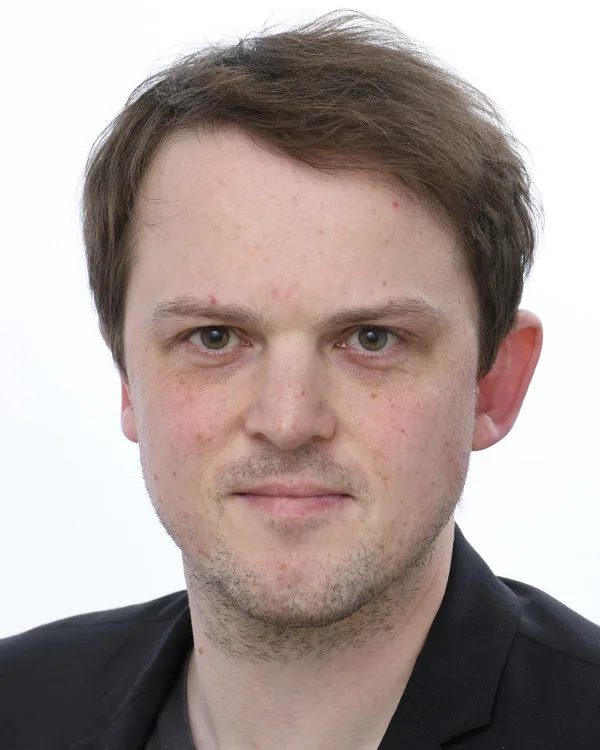
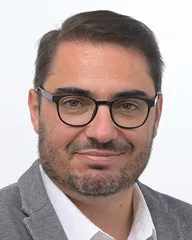
Lukas Sieper | Germany DEU | Non-attached Members (NI) | 390 |
| 2 |
|
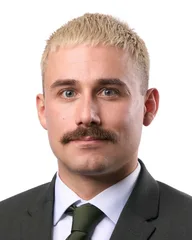
Juan Fernando López Aguilar | Spain ESP | Progressive Alliance of Socialists and Democrats (S&D) | 354 |
| 3 |
|
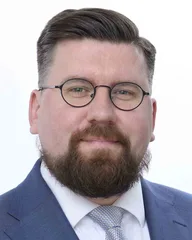
Sebastian Tynkkynen | Finland FIN | European Conservatives and Reformists (ECR) | 331 |
| 4 |
|
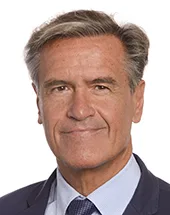
João Oliveira | Portugal PRT | The Left in the European Parliament (GUE/NGL) | 232 |
| 5 |
|
Vytenis Povilas Andriukaitis | Lithuania LTU | Progressive Alliance of Socialists and Democrats (S&D) | 227 |
All Contributions (65)
Criminalisation of humanitarian assistance, including search and rescue (debate)
Mr President! We are in politics to make reality beautiful, not to make it beautiful. And when we look at reality at the external borders, it is not only not beautiful, it is simply cruel. It would have to make us angry enough that so many people at our external borders suffer in search of security and thousands die. But the reality is much worse: Several EU countries at the external borders not only do not help enough, but also hinder, criminalise and incite against those who want to do our job and help people in need. What kind of Europe is this, in which one sees oneself exposed to the real danger of being imprisoned for sea rescue? What kind of Europe is this where you have to hide to give people soup that's hungry, or people a blanket that's freezing? This is exactly what happens every day at our external borders. And why does this happen? Because people should suffer. This is part of a deterrent strategy. We have to be so honest, it's no coincidence. This deterrent strategy is a direct attack on our rule of law. If it continues to be more severely punished to only help people instead of letting them suffer, then we can actually file for moral insolvency at the same time.
The humanitarian situation in Ukraine due to Russia’s attacks against critical infrastructure and civilian areas (debate)
Madam President, Commissioner! What we are doing for Ukraine is not nothing – I think we all know that. 18 billion euros, which were released on Monday, that's a high amount. But what the Ukrainians have been paying since February 24 is such an infinitely greater price for our freedom that I think we have every reason to look: What can we as the European Commission, what can we as the European Parliament, but what can we as Member States of the European Union do to ensure that this fight for freedom is ultimately successful? There are already 4.8 million people who have found refuge in the EU countries. I don't think anyone would have thought last year that we could take in so many refugees. But we also have to reckon with the fact that, of course, more people are fleeing Ukraine this winter, and we also have to prepare for that. I do not see any serious preparation in any of the Member States for the arrival of a few million more people, and it is not just people from Ukraine who need to find refuge in the European Union. I believe that if we look at how perversely this attack also takes place on the civilian infrastructure in Ukraine, then on the one hand it is important that we have to look: 1.5 million people in Odessa, but a total of 10 million people who currently have no electricity in Ukraine. How can we supply more generators? How can we supply more clearing tools? How can we do more in humanitarian aid? But I also want to say that all the humanitarian aid in the end will not stop Putin. It is also a humanitarian act to send enough weapons to Ukraine so that the drones can be shot down, so that the missiles can be shot down, so that Ukraine can be restored to a free, peaceful democracy in the end. I believe that this supply of weapons is what we must also put in the foreground now in the winter, without not doing the other.
The Commission’s reports on the situation of journalists and the implications of the rule of law (debate)
Madam President, Commissioner! I am honestly a little frightened about some speeches – not all of them, of course. I therefore wanted to say that attacks on freedom of the press do not only begin when journalists are murdered or threatened, but, in my view, that begins when we begin to use Parliament here to say about some reports: This is not a free press at all, it has nothing to do with freedom of the press. And the other reports that we like, they're great. Journalism, freedom of the press, we don't have to like that, we shouldn't even like it. As politicians, it is simply important that the press look at our fingers, that scandals are exposed, that the right consequences are drawn, that journalism supports the formation of opinions. Yes, not every report is correct, and yes, of course, there are also organizations that try to exploit or buy press. But I am disturbed by the fact that, overall, we have a broad majority here for press freedom when we are asked: Are we actually all in favour of freedom of the press, but in practice it is already the case that at the external borders, for example, press reports are once referred to as fake news that is suddenly said: There is no need for the press to have access to it. We must address all these restrictions on freedom of the press. That's our job. We are not to applaud freedom of the press, we are to enforce it.
Suspicions of corruption from Qatar and the broader need for transparency and accountability in the European institutions (debate) (debate)
Mr President! Corruption is poison for democracy, and many have said so. We also know that the European Parliament has been poisoned. I've had a lot of conversations these days, and I actually found it very good that there was a broad majority that said: We're not even trying to say this is the problem of some criminals, and we have nothing to do with it. There were also few who said: This is the problem of a group and we have nothing to do with it. I think that's the most important thing we can do right now, that we understand that while few are to blame for this scandal, we all have a responsibility to make sure it never happens again. Of course, there must be consequences for Qatar. But there must also be an understanding that Qatar is not the only state that is attacking democracy. I think we have to look at one side: How can we be better as an institution? How can we make more transparency rules? But how can we also see that these transparency rules are then complied with? There are many MEPs who do not mention lobby meetings – not after three years. That has to change tomorrow. It's perfectly clear. Not only do we have to change the rules, but we also have to look at: How can we enforce them? How can we strengthen law enforcement? How can we collectively tackle this tough task of slowly rebuilding the credibility that has been so devastated?
Negotiations ahead of Parliament’s first reading (Rule 71)
Madam President, In recent days, I have spoken not only to those who have worked on this case, but also to many colleagues from different groups, and that has been a rare thing in common. All of us, all of whom I spoke to, were shocked by the allegations being made here. And everyone agreed that corruption is an attack on democracy, that corruption must also have hard consequences – hard consequences for those who bribed, hard consequences for those who were bribed, but of course also for the EU institutions, which must now do everything in their power to ensure that such events do not happen again. In such a situation, of course, we cannot allow a state that potentially attacks our democracy to get visa liberalization. Therefore, firstly, we need to make sure that this process has not been influenced, we also need to make sure that we draw the right consequences. We must ensure that we do not enter into negotiations on visa liberalisation now. In accordance with Rule 198 of the Rules of Procedure, we therefore request that this report be referred back to committee.
The Human rights situation in Afghanistan especially the deterioration of women´s rights and attacks against educational institutions
Mr President! Commissioner, it is very good that you are here, and it is also very good that we are having this debate, that we have this resolution, that we are showing that we do not forget the suffering of the people of Afghanistan, and in particular that we do not care how we can improve the situation in the future. We just have to look: How can we improve the humanitarian situation in Afghanistan? On the other hand, how can we make it clear that the greatest threat to Afghanistan always remains the Taliban? We all agree that we need to help the people of Afghanistan. What concerns me a bit, in the debates of recent weeks, is that, on the one hand, we feel with the people of Afghanistan as long as they are in Afghanistan; but as soon as they flee the country, try to get out of the country in very unsafe ways with any smuggling networks, any mafia – because there are no legal escape routes – then we lack empathy, then we are very big at saying that the Balkan route must finally be closed; One of the largest groups is people from Afghanistan. I would like us to have the empathy that we show in the resolution with the people of Afghanistan, even with the people of Afghanistan, when they no longer need to know and flee.
The future European Financial Architecture for Development (debate)
Mr President, Commissioner! I would also like to begin by thanking and congratulating the rapporteur on this report. I believe it is an important report, and I also believe that it comes at exactly the right time. We have a situation in which the world, but also Europe, is really confronted with unprecedented crises. You can talk about global warming, you can talk about the war of aggression against Ukraine, you can talk about food security in the world, but also about the fact that more than 100 million people are on the run. And, of course, we do not want to live in a world where people have to flee to Europe in order to find somewhere protection and security, a future, a good perspective. That is why it is particularly important in these times that we ensure that people elsewhere also have future prospects, and I believe that the EU must also take a leading role on this issue in order to meet the 2030 Agenda and the goal of leaving no one behind, but that it is also clear that we must work better together, work better together between the EU institutions, the Member States, the financing structures of the Member States, and also work better with non-governmental organisations. Only in this way will we be able to meet the needs of our partners in the Global South, and only then will we be able to attract new partners; This is especially important at this time. I therefore think and hope that this report will serve as a building block in the strategy of bringing more harmony to the work of the EIB, the EBRD, but also national development finance. I also hope that he will help us, as the European Parliament, to have a more central role in shaping and also reviewing EU spending on development cooperation, and I would therefore like to end by thanking Mr Goerens once again.
The need for a European solution on asylum and migration including search and rescue (debate)
Mr President! Mr Weber, I wanted to address you briefly at the beginning, because you said that you also decide at your doorstep who comes in, and that must also happen at the European external borders. I honestly believe that such language images are also an expression of deprivation of prosperity, which we cannot actually allow ourselves in this House. I believe – and I hope – that no one will freeze to death at night on your doorstep, and I hope that thousands of people will not drown on your doorstep every year. And I believe that if we make it clear what the reality is and that, of course, your front door is not about the rule of law, which defines us as the European Union – but, of course, it is your decision at home, who comes in and who doesn't – but at the external borders, there are very different rules, you can't just ignore that. I believe that we must stop mistaking the cruel reality of our asylum policy with strange speeches. Let me tell you what reality looks like: If you are in distress at sea in the Mediterranean, you are just coming from Libya and you call the Maritime Rescue Coordination Centre in Malta, then probably no one will answer there; And if someone fights, the person doesn't send boats. And if Frontex flies over the Mediterranean and sees a boat in distress, then Frontex does not inform the boats in the vicinity and says: "There is a boat in distress" – no, you inform Libyan militias, Islamist militias, who then ensure that people return to Libya, where women – all women on these boats – are raped and men are mistreated. I believe that if we make it clear that such a reality cannot be part of the solution, but is something that we have to solve – and you can make new laws there, but you don’t need them if you have a bit of decency – then you can simply make it clear that in the end it is not about criticising the NGOs for doing what would actually be our task, but that we now finally have to make sure that you put money in rescue at sea, that you get a proper distribution and that you use the decency that should make up Europe in such a way that we build a Europe that is not embarrassed by everything that should make up our mind, even in migration policy.
Full application of the provisions of the Schengen acquis in Croatia (debate)
Mr President! Let me be clear: I believe that this is a great decision for our House – the European Parliament – for Croatia, but also for the European Union as a whole – a great decision to clear the way for Croatia to become a member of the Schengen area. As a result, the European family grows closer together. It is true that there are more freedoms for many millions of people in Europe. You don't have to say a lot about it because it's a good decision. On the other hand, it is also the case that the area of security, the area of freedom and the area of justice, which is indeed the Schengen area, is precisely an area in which we must also ensure that the law applies – the law also at the external borders for the people who are on the run, who have earned the rule of law procedures, who have deserved that there is order at the borders. That is why I am also pleased that, in our report to the Council, we reiterate the need for this independent human rights monitoring mechanism. This can be an example for many countries. It is also possible that, through this reporting from Croatia to the Commission and also to the European Parliament, we will be able to shed more light and finally end the pushbacks at the external borders. That is why I am pleased to welcome Croatia as soon as possible to the area of freedom, security and justice, including justice, for the people at our external borders who are fleeing there.
Continued internal border controls in the Schengen area in light of the recent ruling by the Court of Justice of the European Union (C-368/20) (debate)
Mr President! I think we need to be clear once again that when we talk about controls at the external borders, in the end there is actually one sentence: Borders are only protected if human rights are also protected at these borders. What we are experiencing now, however, is that also through these human rights violations at the external borders, through this chaos, also through the fact that we are not only building walls at our borders, but also a wall of lies about the situation at the external borders, that we actually have a chaos through this situation, which is also transmitted to the internal borders. We can better organize migration, we can better accommodate asylum applications, we can organize all this well if we really take on this task. The fact that we do not do it, that the Member States do not do it, and that we also watch - also as the EU Commission - that EU rules are violated, we also see this at the internal borders. I come from Germany, and I must say that I must also be a little ashamed in this House. I do not think it is right that the federal government – my party is a member of that federal government – simply extends internal border controls with Austria. And I have to say clearly that I would actually be happy if we did not just leave this to political competition, but if finally the law of the strongest in Europe no longer applies – and the Member States may sometimes feel stronger – but if we would bring the strength of the right forward again. That's why I even believe that infringement procedures are the right way to end up with a decision: How can we best implement EU rules? To also have a decision: How can we best reform the Schengen Borders Code? I believe that it is now also a matter of ensuring that the Member States ensure that this wonderful achievement at the internal borders that we have is, in the end, an achievement that is not frivolously jeopardised.
FRONTEX's responsibility for fundamental rights violations at EU's external borders in light of the OLAF report (debate)
Mr President, Commissioner! You said yes: You were shocked when you read the OLAF report, and I've heard that a lot lately. You are shocked to read this report. Honestly, I'm a little surprised. So, there are no new things in it – there are things in it that we have been discussing here for years. Things that are claimed to be sometimes fake news, sometimes Turkish propaganda, sometimes some political things that others come up with. So I think: To be shocked by this OLAF report must actually make us feel shocked by ourselves. We have known this for years. We knew that and we also knew that we could actually sit down together now and reposition Frontex. But we didn't do it. On the contrary: I received documents from Frontex yesterday, where it is clear: Frontex is also aware of other human rights violations. Nothing happens, nothing happens, and I find it really degrading – also for this House – that at the external borders we not only leave people, screaming women and children and men on unseaworthy boats, but we leave the rule of law behind, we leave behind what Europe should actually stand for, all our values and what we have learned from history. And I think it's actually important that we maybe just pull ourselves together more, then don't tell us that we have a refugee crisis at the external borders, because we have actually had a really substantial crisis of the rule of law for years. A substantial crisis of the rule of law, which I cannot now elaborate on in the speech. But I hope that in the next few weeks we will solve this or at least take a step in the right direction.
The Schengen evaluation mechanism (debate)
Madam President, First of all, I would like to thank Sara Skyttedal, our rapporteur, and also the others who have worked so efficiently and well on this report. I only have one minute, so I focus on a few points. This is, above all, the question of fundamental rights. Respect for fundamental rights at borders is an integral part of the Schengen acquis. But not too much has been noticed in recent years. There have been numerous, including systematic, violations of fundamental rights by EU Member States at the external borders. Many people seeking asylum in the EU are disenfranchised and mistreated, with a lack of democratic control. That is why the direction of our report is very welcome. There is more focus on fundamental rights at the borders, more cooperation with the Fundamental Rights Agency, unannounced monitoring visits at the borders, to name just a few examples. This is important because it is also clear to us that borders are only protected if fundamental rights are protected at these borders. Of course, the key question here is whether infringements by the Member States have consequences. I therefore thank the rapporteur once again and hope that the content of our report will also be implemented in practice.
Situation in Afghanistan, in particular the situation of women’s rights (debate)
Madam President, When I think of the women and girls in Afghanistan, of course, I think of suffering above all else. But actually I am also thinking of an incredible strength, of women in Afghanistan who have suffered so much and then take to the streets against the injustice of the Taliban, using their lives. I think we all have the pictures in mind. If the people of Russia had such courage, perhaps the war in Ukraine would already be over. Yes, we must stand up for women's rights in Afghanistan, but we must not increase the pressure on the Taliban on the backs of the people of Afghanistan. It is of no use to women and girls if they are disenfranchised by the Taliban and then have to starve. That is why we must also review sanctions and, for example, work to ensure that the central bank can pay salaries again. Yes, it needs better support on the ground, but it also needs escape routes for the people who can no longer stay there. These days we see what we can do as Europe if the suffering of people is really important to us. And I can only hope that Afghanistan is important enough for us.
Need for an urgent EU action plan to ensure food security inside and outside the EU in light of the Russian invasion of Ukraine (debate)
Madam President, Commissioner, Minister! Putin's war of aggression is terrible. Terrible, of course, especially for the people of Ukraine – but it can also quickly become a horror for the most vulnerable in the world. Ukraine alone could feed 400 million people. It was the grain chamber of Europe. Anyone who attacks this country, of course, bears responsibility for the suffering of the people of Ukraine. But he also bears responsibility for the fact that millions of people around the world are starving and many of them are dying. To prevent this, we need more humanitarian aid in the short term and more results in food security and poverty reduction in the medium term. In order for this to succeed, it is a good thing that we are talking here in Parliament, but we must also invest. We cannot watch China and Putin assert their interests on the African continent. We have seen with Putin where this leads. One minute will not be enough to describe this topic – complex as it is – or to point out the solution, but perhaps one minute of speaking time is also quite emblematic of the topic we are talking about. We don't have much time anymore, we have to hurry up and the biggest mistake would be to start only when it is too late and already over.
The proposed Council decision on provisional emergency measures for the external border with Belarus based on article 78(3) TFEU (continuation of debate)
Madam President, Undoubtedly, the actions of dictator Lukashenka are inhumane. He uses people to achieve his political goals. It disregards human dignity and international law. It hinders humanitarian aid and free reporting. All this is reprehensible. And because this is reprehensible, it is an extremely weak and also wrong answer if we criminalize humanitarian aid even at our borders, if we prevent reporting, if we ourselves disregard human dignity and confront freezing people with asylum rights aggravation instead of empathy and help. We cannot pretend to be a pull factor if we respect our own democratic laws. There are reasons why we no longer decide with clubs who owns which castle and who has which rights, as in the Middle Ages. There are reasons – and important reasons. And I believe that if we no longer want to be blackmailable, then next year we must make every effort to ensure that the strength of the law prevails again on European borders against the law of the strongest.