

| Rank | Name | Country | Group | Speeches | |
|---|---|---|---|---|---|
| 1 |
|
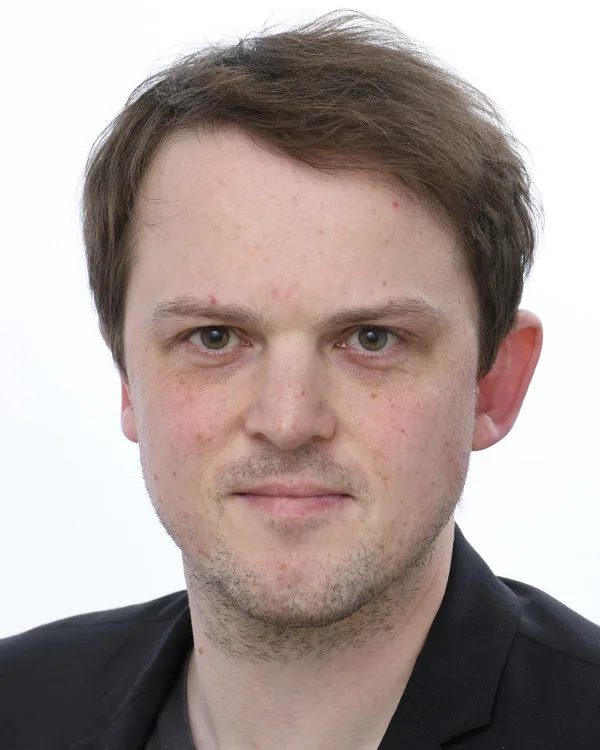
Lukas Sieper | Germany DEU | Non-attached Members (NI) | 390 |
| 2 |
|
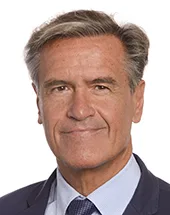
Juan Fernando López Aguilar | Spain ESP | Progressive Alliance of Socialists and Democrats (S&D) | 354 |
| 3 |
|
Sebastian Tynkkynen | Finland FIN | European Conservatives and Reformists (ECR) | 331 |
| 4 |
|
João Oliveira | Portugal PRT | The Left in the European Parliament (GUE/NGL) | 232 |
| 5 |
|
Vytenis Povilas Andriukaitis | Lithuania LTU | Progressive Alliance of Socialists and Democrats (S&D) | 227 |
All Contributions (65)
The adoption of the Special Measure in favour of Tunisia for 2023 (debate)
Madam President, There are many who say in migration policy that the chaos and suffering is due to some green policy or green-left policy or even to rescue at sea. The reality is that for years the Commission and Member States have been increasingly copying and implementing the simple and wrong answers of right-wing radicals. Some bad deal, some glossy pictures, a press release, 150 million to a dictator without any relevant condition – that is the policy that causes the chaos. Democratisation, human rights, the fight against the causes of flight – all this hardly seems to play a role anymore. The only thing that matters is: How do fewer people come to Europe, how do we deter even harder? And even that is completely unsuccessful. I can only appeal to the Commission and the Member States: Stop vying for the favor of corrupt dictators with China and Russia! Let's start together to fight for the perspectives and rights of the population, the youth in the countries of origin and transit! Then we can also better organize migration and organize it in a dignified way and also end the dying in the Mediterranean.
One-minute speeches on matters of political importance
Mr President! Congratulations again! Over the weekend, hundreds of thousands of people were again on the streets in Germany, and I find it impressive that there are so many politicians from democratic parties there. But I would be happy if we, democratic politicians from the opposition and government, could demonstrate there with some humility. Because what we are currently experiencing in Germany is not the biggest protest in the history of the Federal Republic, because the government or the opposition has done everything right. I believe that many people also take to the streets because they lack the confidence that the government, together with the democratic opposition, will be able to inspire people for democracy in such a way that democracy can withstand it permanently. And I would be happy if we also learn how to relearn how to argue democratically, if we provide more orientation, if we bring passion back into the debate, and if we also stop demanding deportation on a large scale, and then wonder that people choose rights when we realise that on the one hand you cannot say ‘Never again is now’ and on the other hand you want to abolish the right to asylum – because that is a core part of ‘Never again’.
Rule of Law and media freedom in Greece (debate)
You said yes, there is political persecution, now from the new government in Poland. You have ruled Poland for years. They have also made some changes in the judicial system there. And I ask you: If politicians are also finally convicted, what reason do you have to believe that the courts, which you have redesigned according to your ideas, then carry out these convictions politically? Why shouldn't the courts created by you have made this decision independently?
Rule of Law and media freedom in Greece (debate)
Madam President, I think dealing with the weakest shows how strong a rule of law really is. And so that you do not misunderstand me in my criticism of the Greek government, I do not expect the Greek government to make green policies. The Greeks have elected, they have elected a conservative party. But I expect all governments in Europe, including conservatives, to abide by the law, the rule of law and human rights. If you see refugees sentenced in the justice system in trials that last no more than half an hour and they are sentenced to decades of imprisonment without translation, if you see more than 600 people died in the Pylos shipwreck and authorities obscure this and the government doesn't seem to have much interest in enlightenment, if you see that journalists you meet there in Greece are afraid to report on migration, then this is not a conservative policy, but then this is a policy that should be condemned by us. I think it's one thing to want to build walls on the borders. I think it's wrong, but people can find it right. But the other is when we try to build a wall of lies about our own politics. This should have no place in Europe. That is why I would like the government, but also the Commission, to take a different path there and put Greece in the right place.
Fight against the resurgence of neo-fascism in Europe, also based on the parade that took place in Rome on 7 January (debate)
Mr President! It is often written in newspapers in recent days that AfD politicians have met with right-wing extremists in Potsdam. And I would like to say that right-wing extremists have simply met there. This is an important difference for me, because I think we have to make it clear that right-wing extremists themselves are now sitting in parliaments and that their ideology is spreading. And if that is not a reason to strongly disagree, then I wonder why some – even conservatives who might think that it would not be strategically helpful to disagree – are so quiet. This silence against right-wing extremism must never happen again in Europe. Because when it comes to the nice-sounding word remigration, it's not about a few more returns. It's about ethnic cleansing, about people wanting back a time that must never happen again. And when it comes to right-wing extremists, it's not about the fact that they have perhaps just made a snippy slogan on TikTok against the Greens, but about the fact that they want to dissolve the diversity that makes Europe, that they want a world that has already brought Europe to the abyss. This situation must never return to normal. Never again is now... (The President withdrew the floor from the speaker.)
Frontex, building on the fact-finding investigation of the LIBE Working Group for Frontex Scrutiny (debate)
Mr President! Let me start with a positive: I believe that it was important for us here in the European Parliament to have set up these, that we have worked on making concrete recommendations as well. I think it is also good that Frontex has already started to implement a number of these recommendations. Of course, we also call for the other recommendations to be implemented. It's also that I believe that with the new Executive Director, some things are moving in the right direction at Frontex. Is that enough? No, no! I believe that when we look at various important issues in this context, such as the major cardinal error that the European Union has made in recent years, I think we simply have to state: Many Europeans do not know what is happening at the external borders. It is also given the impression by Member States and governments that Frontex is actually there to prevent asylum applications. Frontex cannot prevent asylum applications. So we continue to chase an illusion, believe more Frontex at the external borders, more border protection would lead to fewer asylum applications in the end. Because it is an illusion, we then do not use our border guards to enforce the right at the external borders, but break the right to make pushbacks. I think, especially this week – and this is a bit significant – it has become clear once again that Frontex has a number of tasks ahead of it and is making a lot of mistakes. Because it is from mirrors and others have been exposed that Frontex is apparently working with a militia in Libya that is close to the Wagner Group! You can talk a lot about respecting human rights. There is a lot to be said about the fact that we have European values. But if we go this far, I think we are degrading not only refugees at the external borders, but actually the European idea as well.
Schengen area: digitalisation of the visa procedure - Schengen area: amending the Visa Sticker Regulation (Joint debate – Schengen area)
Mr President, Commissioner! Recently, the end of Schengen has been painted on the wall again and again. People are talking about the fact that Schengen actually has no future at all. But if we look at the reality, then we actually see that with the reform of the Schengen Borders Code we are now making Schengen fit for the future, that with the introduction of the entry/exit system we have a better overview of who actually comes to Europe with Schengen visas, who is currently in Europe. And I believe that it would be desirable for the Member States, some of which have been very frivolous in introducing internal border controls lately, to be more aware of this privilege of being part of the Schengen family. I also hope that the Member States, who are still hesitant, will remember that Bulgaria and Romania have long been part of the Schengen family. And especially if one wants a better protection of the external borders under the rule of law, then it is completely absurd that Bulgaria and Romania still need border officers who control the internal borders, instead of being able to act at the external borders in accordance with the rule of law and human rights. I think the visa digitization we're talking about today is a huge step. It saves people from 104 countries – and this must be borne in mind: 104 countries do not have the privilege that we have to simply travel visa-free through the Schengen area – time and money, it relieves the burden on the diplomatic missions abroad and ensures that bottlenecks in the diplomatic missions abroad no longer occur. I think this is a very, very important step. We should really celebrate this success together, that we are making the Schengen area so fit for the future. On the other hand, I also believe that it is important to remind Member States – and this was visible again during the negotiations – that they must not always promise to create legal escape routes. With the introduction of a humanitarian visa, they would have the opportunity to bring particularly vulnerable people to Europe legally and safely. Unfortunately, they refused to do so. And I hope that in the future we will be more successful in creating legal migration pathways that can then also eliminate irregular migration. Once again, I would like to thank the shadow rapporteurs and also the rapporteur for the good cooperation and I am pleased that we have done so well.
Need for a speedy adoption of the asylum and migration package (debate)
Mr President! What worries me is that I get the impression that in the debate on the Pact many Member States believe that we simply have to treat refugees a little worse than today, always treat them a little worse every day than yesterday, and then they would stop coming at some point. It is now so cynical that we are already discussing whether we should save people from distress at sea. I think that the discussion behind it is not whether people are in distress at sea – everyone agrees – but whether people in distress at sea still want to be rescued or whether they should rather drown in order to perhaps deter others later so that they do not come any more. If we start this way and do not realise that this policy of deterrence not only leads to chaos and suffering, but also has not worked for years – after all, we have been conducting the debates for years, we are deterring, and yet more and more people are coming – then I believe that we forget that humanity and the rule of law are not just the backbone of our democracies, but that humanity and the rule of law are the basis of what makes us, the basis of the European order. I believe that if the Member States want to be successful, then it would be important for them to build trust, including among the population, and to do much of what the Pact might be about, what they are talking about, now: fair procedures, better labour market integration, fair distribution, human rights monitoring. Agreements could now also be made to improve the situation on the ground and promote legal rather than irregular migration. That all this does not happen is not because we do not yet have a pact, but because there is a lack of political will. I wish we could start now and then negotiate.
Corrupt large-scale sale of Schengen visas (debate)
Mr President, Commissioner Schinas! You said that the Schengen system is not only one of the greatest achievements we have made as a European Union, as Europe, but it is also something very fragile when confidence in this Schengen system is shaken. What I find important to note is that the Polish government is not working to regain confidence in these allegations. I don't think we will know anything about this scandal before the Polish elections. We will only see the Polish government dismiss this scandal because its own advantage is more important than the Schengen system in Europe. I think you can hold on to that, too. I also believe that we simply see that if you dismantle the rule of law in a country, you have less rule of law. Governments like the Polish may then claim that they are making this out of any lofty targets against any evil forces. But in fact – and I think this must also be said for the Polish people – this government is doing this for its own benefit. And that's what it looks like in this scandal. It looks like the rule of law is being dismantled to make corruption easier. We do not only see this in the visa system, we also see - and I must also say this from a German perspective - that trust in the Schengen system is shaken by the Polish government - if one has the impression that Poland acts as if it would like to protect the external borders, as if it were building fences, but what happens in the end is that, on the one hand, they do not register people at the external borders, as provided for in EU law, but beat them up, send them over the border again and again and at some point there are people at the German border who are not only damaged by the experiences with the Polish border police, but who are also unregistered. This is not the way to deal with the Schengen system. This is the way to deal with Europe's achievements, as the Polish government is doing right now. And if you always promise one thing and do the other, then I think you can't deal with democracy in politics like the Polish government is doing right now.
The 10-year commemoration since the tragedy in Lampedusa(statement by the President)
Madam President, This is the tenth anniversary of Lampedusa's disaster. Within a few days, 600 people were killed - men, women and children - who were later found to have been tortured and raped to a large extent in Libya. The question is, where are we now, ten years after this terrible misfortune? Since then, 28,000 people have drowned, and instead of rescue at sea in the Mediterranean, we are financing militias in Libya who are themselves involved in smuggling. We are financing that as many as possible of those who are now being tortured, raped and partially enslaved will no longer be able to flee these situations. And those who want to help in the face of this thousandfold death will be criminalized and defamed. Many studies show that they are not the reason why people go on their way, but they are the reason why fewer people drown. Madam President, when we were awarded the Nobel Peace Prize in 2012, the Nobel Committee said: "The European Union has turned a continent of war into a continent of peace." I believe we must now be careful not to turn this continent into a continent that is waging a war against those seeking protection. I believe that dealing with the most vulnerable shows how strong Europe really is.
EU-Tunisia Agreement - aspects related to external migration policy (debate)
Mr President! In the public debate it is always so black and white, so you are for or against agreements with third countries. But I believe that the debate today also shows that it is precisely how such agreements are designed that matters. I believe that agreements can be good if they want to achieve certain goals, namely to improve the humanitarian situation on the ground, namely to better organise migration, to avoid dying, and if such agreements also ultimately promote human rights and democracy. But I do not believe that all this will come out at the end of this Tunisian deal. How unimportant democracy seems to us can be seen again in how the agreement actually comes about. We have not even been able to discuss the text democratically in the EU. Parliament was not involved at all. And the fact that the Commission keeps running against the same wall when it fails in Turkey, when it fails in Libya, is a bit surprising. And it is also surprising that especially those on the right side of Parliament who want to fight against traffickers the most are standing there and praising such agreements. For who sends the people there into the desert, and who is sent into the desert? These are the people who can't pay. And who decides which boats to put down? This is the regime. It's unimaginable that Saied doesn't personally benefit from these people dropping out. It is the traffickers with whom we make agreements instead of fighting them.
One-minute speeches on matters of political importance
Mr President! I wanted to speak tonight to draw attention to the situation in Afghanistan, where the Taliban took power two years ago, and tell the people there that they are not forgotten – not even by us here. I remember two years ago when the whole world looked at Afghanistan. And now, unfortunately, one has the feeling that the whole world has forgotten the situation in Afghanistan. Last week, the World Food Programme announced that 10 million people in Afghanistan could no longer be provided with food due to a lack of money from the international community. More and more people are starving there, more and more people are fleeing to the neighbouring regions. And even in the neighbouring regions, we are not doing enough to help, for example, girls from Afghanistan there – for example in Pakistan – with a scholarship to do an education that is denied in Afghanistan. I think that if we look closely at the situation, we should not be surprised when many people from Afghanistan try to flee to Europe. And that we do not meet them with a procedure based on the rule of law, but often disenfranchise them, that, ladies and gentlemen, is actually no longer double standards, that is the end of morality, and it is something that should shame us.
The need for EU action on search and rescue in the Mediterranean (debate)
Madam President, I don't know how the others are doing, but I personally find it difficult to have these debates over and over again. Then you write down speeches and actually notice: Probably we will meet again soon and only have worse things to talk about, and the situation is not improving. I find it difficult when we keep saying: Yes, of course, so people in distress at sea must be rescued, NGOs must not be criminalized, misfortunes must be clarified. And then we stand here, after the shipwreck of Pylos and after there was no joint effort to save these people at all. There was not even a joint effort to recover the bodies still lying around in the Mediterranean because more than 500 people were dragged into the depths by ship. But what actually happened? The boat is abandoned, completely overcrowded, a far too dangerous action. The boat was in distress from the very first moment. It travels for days overcrowded in the Mediterranean, then is found by Frontex. Frontex reports the boat to Greece, but Greece does not save. There is no rescue operation. Greece does not send any other boats. Yes, Greece does not even ask Frontex to continue observing the boat, because you do not want it to be observed at all. And why don't you want that? This comes out in the evening, after the boat is almost on the spot for 13 hours: You send masked special forces to tow the boat and pull it towards Italy, and when you pull it, the boat goes down. When it goes down, you don't immediately start saving, but 80 people have already died when you start collecting the 104 survivors. These survivors are taken to a closed camp, they are not allowed contact with journalists, and they are taken off their mobile phones so that there is no evidence of everything I am telling them. This, ladies and gentlemen, is honestly not unfortunate. It's a crime. I think we should do everything we can to clear up this crime. In the end, we can always affirm that the dignity of every individual should be inviolable. But if we really ask ourselves this question and answer it with yes, then all those who answer this question with yes should now not only talk about the need to act, but show that the dignity of every single person in Europe is still inviolable. You have to show that you can act. For example, the EU Commission could also help to support sea rescue organisations if sea rescue is as important as it is now repeatedly stressed.
The need for European solidarity in saving lives in the Mediterranean, in particular in Italy (debate)
Mr President! So without a doubt it would be good if we improved the laws we have, but no law in the world will free us from the fact that in the end we not only decide solidarity between the Member States, solidarity with refugees, but that we simply have to live them. At the moment, we don't really need new laws to make things better. In 2014, there were 315 kilometers of fences at the external borders. Now, in 2023, it is 2048 kilometers, more than six times as many kilometers of fences at the external borders. And yet the number of refugees is rising again, yet this year we already have 604 dead in the Mediterranean. That's about as many free places as we have right now. I believe that we have to realize that the walls at the external borders also build a wall of lies, a wall of lies that pretends that isolation is a solution. But foreclosure is not a solution, because no fence in the world ensures that there are fewer refugees in the end. The truth that we are experiencing is that EU asylum policy is shaped by the fact that everything is actually subordinated to the goal that fewer refugees arrive in the end. Human rights are subordinated to this goal, human dignity is subordinated to this goal, the rule of law and, yes, also the honesty that all this takes place in this way, are subordinated to this goal. For example: Less than 10 percent of people are currently rescued by sea rescue organizations, and yet there are some who pretend that sea rescue is to blame for people dying in the Mediterranean. The opposite is the case. We need rescue at sea and if you are honest, Mr Hahn, then it cannot be that in 2012 the European Court of Human Rights condemns us to stop bringing people back to Libya and then we think very cleverly: Yes, then we no longer do this ourselves, but give a lot of money to the Libyans, pretend to be the sea rescue and spend 0 euros on civilian sea rescue in the Mediterranean. If, on the one hand, 0 euros stands for real sea rescue and, on the other hand, money stands for people who are themselves involved in smuggling activities, which must therefore actually be in court, but still receive our tax money, then something is enormously wrong. I am very much in favour of renegotiating laws, but actually we should first clarify our relationship with the rule of law. We can change that without having new rules.
Deaths at sea: a common EU response to save lives and action to ensure safe and legal pathways (debate)
Mr President! I think some of you are right, I think so too. The smugglers are evil people who, for false reasons, use criminal energy to send people on a dangerous path, and as a result, people die. But the reason why we are meeting here today is not because the smugglers are sending people off – this has been happening for decades – but because rescue cases at sea are no longer saved, even though we could have saved them. This is what happens on Saturday, e.g. in the morning at two o'clock, half past three people shouting because they are going down, calling people screaming and finding no one to send them help. No aid is sent in international waters for more than 30 hours. The IRINI mission could have been there, the NGO boats could have been there if they had not been blocked in Italy. Cargo shipping could have been there and saved people, but no one gave them the order to save them. I believe that if we take seriously what European values are supposed to be, if we take seriously that human dignity should also be inviolable in the Mediterranean, then we can no longer simply point the finger at the smugglers, after every misfortune, even before the bodies are recovered, pretend that the others are always to blame, but then we must finally begin to take the core of the debate so seriously that we say: If someone is in distress at sea, then we send lifeboats and save these people, no matter where they come from and for what reason they are in distress at sea. That this does not happen, ladies and gentlemen, is a European shame, a shame for which we should be ashamed. I hope that we do not stick to beautiful words, but that we finally start to act. Otherwise, we simply have to assume that the following generations consider us really profoundly evil for what we are doing here.
European initiative to promote civic engagement to protect and better support European volunteers (debate)
Mr President, Commissioner! Thank you also to the others who are there. I now have two and a half minutes, so much time you rarely have. So if you talk here on Thursday afternoon, then you can talk really long, then you can almost think about what you start with all the time. But back to the subject. I would like to start by saying that volunteering has many facets. I think the reason we're talking here today is mainly in terms of the volunteer fire brigade. But when we think about how we can better promote civil society engagement in Europe and how we can better support those who are involved, we have to realise that many people are also involved in sport, including in humanitarian aid, in the churches and in the voluntary fire brigade, and many more things could be told. In many EU countries, these EU countries are really dependent on voluntary commitment. This is partly so – and we have now seen this in the Matzak judgment of 2018 – that MEPs also worry: This is not so that the maximum working time is then exceeded, that voluntary commitment is limited. But I would say that, in fact, this voluntary commitment must always remain voluntary. This only counts as working time, because apparently you have to react within eight minutes when you are with the volunteer fire brigade. I myself was in the volunteer fire brigade in Germany, it is regulated differently. You just try to have so many people in the pool that there is always enough time to respond to emergency calls. And if this is not the case, then the professional fire brigade comes, which takes a little longer in case of doubt. I believe that it would be difficult to discuss this in detail, even if two and a half minutes are not enough. That is why I think that the initiative to promote voluntary engagement is very important. And I think there are a few other ideas that can be tackled, for example, in the field of volunteer fire brigade. It is not so easy for many organisations, including smaller ones, who want to become internationally involved in forest fires to get a registration – this is where you can work on it. You can also look at civil protection, as well as Civil protection mechanism, take volunteering even more into account, can give easier access to smaller organisations. But it is also the case that we could consider: Can we not set up a European Voluntary Fire Brigade, so that there are many different devices in different Member States? And in catastrophe cases, it would be helpful if you had the opportunity for already trained people to come to Greece from Germany, for example, who are already familiar with the equipment and who would then have to carry out additional shifts. You don't have to ship a large device at all, but you can simply bring people there who volunteer. And to have more European networking here would certainly be helpful.
EUCO conclusions: the need for the speedy finalisation of the Road Map (debate)
Madam President, I have read the Council document, and in fact it immediately occurred to me that deterrence and foreclosure have been creating the chaos they claim to be fighting for years. I believe that we should simply stop - and I noticed this in the document - hiding the responsibility for the future of our asylum system behind walls. In the end, people will not be able to deport everyone. Eight out of ten refugees who just arrived last year are from Ukraine. Why are we just talking about foreclosure, not about how we can make them part of society faster? But I also believe that we must be careful not to hide the responsibility for the current situation behind a wall of lies. It is always claimed that we have open borders – we do not have open borders. On the contrary, we have thousands dead at the borders every year and tens of thousands more illegally pushed back. We act as if we cannot register and monitor the people at the external borders. But the opposite is the case. We are even sending Frontex away, for example in Greece, because they have observed too many human rights violations. I believe that if we don't finally start to respect our own laws, then we don't actually have to discuss so much about new ones. I think that, above all, we should pay attention to all the details, that we do not leave the Europe that we see in asylum policy to the next generation in such a way that we have to be ashamed of our policy with our descendants.
Union Secure Connectivity Programme 2023-2027 (debate)
Madam President, I have read the draft legislative report. And sometimes you lose sight of the big picture when you look at the articles and the details – and I think it's great that there has been such an intensive negotiation and apparently a large majority in the European Parliament will be in favour of it – sometimes you lose sight of the big picture. And I believe that on these space issues – space itself is quite large – we must not perish, for example, with regard to those who have already explored space before us, we have always associated great political ideas with it. When John F. Kennedy delivered his speech in 1962, he said: We choose to go to the Moon – we decided to go to the moon – he did not say: Maybe in the next decade we'll try to make it to the moon. No, he said: We decided to go to the moon. And actually, in the speeches I have just heard, I find this great thought very beautiful: We have decided that we will participate in this policy field, that we will participate in space and that we will also try to set our own accents. I just wanted to tell you.
Following up on measures requested by Parliament to strengthen the integrity of European institutions (debate)
Madam President, Thank you also for leading the debate. I am very much in favour of us looking at which rules are effective and how we can then tighten those rules. But I am also in favour of making it clear to ourselves that always new rules alone do not help if we do not enforce these rules. I would like to add something: We may need to take a closer look at some of the rules. We are not concerned about whether the colleague then gave the other colleague a chocolate for Christmas. At some point you don't even look through what might cause problems and what might not. We just talked about NGO transparency. So, if colleagues then say that the NGOs have to enter the transparency register, then that's right. But if the same colleagues have not registered their meetings with lobbyists for a year, I wonder if that contributes to the integrity of this House. I also believe that we need to make it clear that there is not much that can be done against really criminal energy, except to equip the law enforcement authorities well. I also believe – as we are talking about the EU institutions in general – that it is not helpful if, for example, the Council simply does not publish which Member State votes how. As a citizen, I want to know how my government votes. And I believe that we also have to widen our gaze and see how all the EU institutions can help us to strengthen trust in the EU and then regain trust as the European Parliament.
EU funding allocated to NGOs incriminated in the recent corruption revelations and the protection of EU financial interests (debate)
Madam President, Thank you for allowing us to have this debate today. First of all, I would like to thank the NGOs. We already had a discussion today about the terrible situation in northern Syria, in Turkey. Yes, where would we actually be if we just decided on the money here and then there were no people doing this hard work, who are also so flexible, who sometimes go into these cruel situations with a lot of voluntary work and try to save as many people as possible? On the one hand, I think we have to be grateful and say, so to decide the money alone, how weak would we be? We need the people who implement this on the ground, be it in Ukraine, be it in northern Syria, be it in other areas of the world, where we could not do the work that is so important without NGOs at all. On the other hand, it is of course also the case that transparency in financing with EU funds is very, very important. And I would like to see us not just talking about NGOs, but about Commission funding in general. I believe that we must see how we can also use this debate in such a way that, on the one hand, we have as much transparency as possible, but on the other hand, we also repeatedly question bureaucratic hurdles. We now have the situation that, for example, some NGOs in northern Syria cannot act well because there are hurdles where you have to ask yourself again: So more transparency, more requirements are not always perfect. But on the other hand, I think we also have to say: I'm glad we're all on the transparency front. We can agree on this, and we want to know: Where do NGOs want to influence? Who pays money for NGOs? What is the money spent on? But I would also wish that if you find these questions so important when it comes to financing with EU money that you find it important when, for example, MEPs, who are also financed with NGO money, say: What is the money actually spent on in the NGO, who actually pays the secondary income, how many exactly, and where are NGOs trying to gain influence over the members of parliament? It would be important to me that we remain consistent.
EU response to the humanitarian situation following the earthquake in Türkiye and Syria (debate)
Madam President, Children who will never see their parents again, women who mourn their sons, and a man who just won't let go of his deceased daughter's hand. The images you see these days, and especially the fates behind them, are disturbing, tragic, and actually render them speechless. And even though we know that not everything went well with the help, I believe that we have already noticed that we, as the European Union, have tried to help quickly. Thank you too, Commissioner Lenarčič. One can only hope that the donor conference is now successful. But I also believe that deciding on money alone is not the only thing. At the end of the day, the help has to arrive. And for this we need joint pressure against border closures and misuse of funds. But we also need to find ways to support smaller organizations like the White Helmets. But I also believe that we cannot help everyone in the region – I think we know that ourselves. And I can imagine that it would be very important to issue visas quickly now, at least for those victims who have family in Europe. Why is it that people from northern Syria or Turkey who have families here can be taken care of by the family until they have a roof over their heads and can return? I think that would be a sign of strength, and we would be very weak if we were afraid of the victims of this catastrophe.
One-minute speeches on matters of political importance
Mr President! I wanted to point out that it has now become so normal – especially on the right-hand side of Parliament – that one simply claims: The fact that people are fleeing across the Mediterranean is actually due to the aid organizations that rescue people from distress at sea. It's become so normal that you can't even justify it. There are also no arguments for this, but it is simply claimed that the NGOs are to blame for the flight over the Mediterranean. It's their fault that people are drowning. And it is hardly noticeable that there is never an argument. That's why I wanted to say again very briefly that it just doesn't make sense to say that over and over again. These NGOs were founded only after so many people drowned. There are many studies that show that NGOs do not contribute to the abandonment of more ships. And even if you look at the figures last year 2022, it's just that - and you can take note of that - 90 percent of people arrive in Italy either by being rescued by the Coast Guard or not at all, but arrive on their own. Only a little less than ten percent of the people were rescued by civilian sea rescue organizations. So it is not at all important for the people or even the criminal smuggler groups in Libya. It's not because there are NGOs. It is simply important that we take note of this reality. (The President withdrew the floor from the speaker.)
Situation in Afghanistan (debate)
Mr President! In Afghanistan there is now 65 percent unemployment, 90 percent of the people are starving and 20 million women – as was well described in the speeches before – 20 million women in Afghanistan are being disenfranchised and, you can say, deprived of their future. This is really cruel how the Taliban deal with this country, how they make society the plaything of their ideology. And I can say: I think it's not just me, but also many others who are involved in the debate that you're starting to feel helpless. What else can be done to get the Taliban to reason? I think it's right to look for levers, but I think it would be wrong to find too simple levers, say, for example, we need to cut humanitarian aid now because the Taliban are so bad at dealing with the population. I believe it is important to uphold humanitarian principles. Humanitarian aid must not be politicised. But we also have to look for other ideas. One idea – I think we could simply implement it together with the European Commission, the Parliament and the Member States – is that we are giving scholarships to many Afghan women and girls in Afghanistan’s neighbouring countries. We could launch a scholarship program, for example, in Tajikistan, in Pakistan, and with it, I would say, in the next few years even hundreds of thousands of women and girls will offer a future that they probably won't get in Afghanistan.
Preparation of the Special European Council meeting of February, in particular the need to develop sustainable solutions in the area of asylum and migration (debate)
Mr President! Honestly, I am a bit perplexed when I hear the contributions from the right-wing side of Parliament on this subject, and I have actually been doing so for years. It is not new that they are now proposing to build fences, that they are saying that we must increase deportations, that they are saying that we must take the people of the Mediterranean to where they came from. These are not new ideas! These people on the right-hand side of parliament have been telling this for at least 20 years, and the Conservatives have also been governing in many countries for 20 years, and yet nothing happens. I'm wondering: Is this perhaps due to the fact that foreclosure is not the solution to our problem? It could be. It could be that if you suggest bringing people back to Libya, even though the European Court of Human Rights has banned you from doing so, it won't happen in the end. I mean, why do we keep confusing people with really strange contributions instead of telling them that migration is a reality, migration will be a reality – that we have the task of managing it all, but that we should not cover up with any wild conspiracy theories, that we have been failing for years, but that we should take our task seriously and really tackle it together now? And not only with the migration pact, because in the end it will not solve all our problems, but also by putting forward the political will to really tackle this problem. Honestly, I'm missing this from many of the posts I've heard today.
The Global Gateway Initiative (debate)
Mr President, Commissioner! I think we can already see from the debate that we are all relatively united in Parliament. We do not really feel taken with us, but we actually want to contribute to the success of the project, and I believe that when you look at the Commission's homepage, you can see a little bit where the problem might lie. So on the homepage it says: ‘Global Gateway’. This is adorned with beautiful words, but essentially it says: We are committed to investing up to €300 billion – in digital, climate, energy, transport, health, education and research – while respecting democratic values, high standards, responsibility, transparency, equal partnerships that are also environmentally sound and clean. But what projects are these exactly to look at: What's going on there? Is this more the headline, do you try to dress up something with nice words, which actually happens anyway? Or: Where can we control parliament? Unfortunately, this cannot be found on the homepage of the European Commission, which makes it a bit difficult to understand: In the end, are these really beautiful projects that are there, or beautiful words that we find? In the end, of course, this is something where you simply cause concern not only in Parliament, but also when you talk to the development community. There are many concerns: Are the development policy objectives – not only the objectives, but also the binding expenditure spent on development policy in specific areas in the NDICI-Global Europe instrument – still in the foreground? Is geopolitics in the foreground? Are financial interests in the foreground? I don't think it's about opening up contradictions between these different interests. But I think that, as a Parliament, we are driven to look: How can we ensure that funds reach where they are needed – not just where they are most invested, where they are in a large, investment-friendly environment? How do we make these projects sustainable? I think that it is very important – if this initiative is to be successful – that we work together with the development community, with Parliament, but above all also with the partner countries to ensure that this is successful, and that, I must honestly say, is still lacking at the moment.