


| Rank | Name | Country | Group | Speeches | |
|---|---|---|---|---|---|
| 1 |
|
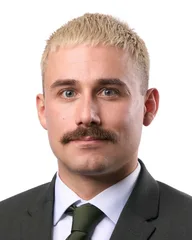
Lukas Sieper | Germany DEU | Non-attached Members (NI) | 390 |
| 2 |
|
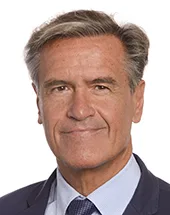
Juan Fernando López Aguilar | Spain ESP | Progressive Alliance of Socialists and Democrats (S&D) | 354 |
| 3 |
|
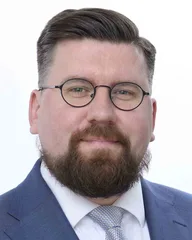
Sebastian Tynkkynen | Finland FIN | European Conservatives and Reformists (ECR) | 331 |
| 4 |
|
João Oliveira | Portugal PRT | The Left in the European Parliament (GUE/NGL) | 232 |
| 5 |
|
Vytenis Povilas Andriukaitis | Lithuania LTU | Progressive Alliance of Socialists and Democrats (S&D) | 227 |
All Contributions (107)
The revision of the Financial Regulation in view of the entry into force of the 2021-2027 multiannual financial framework (debate)
Madam President, BlackRock-Eklat in von der Leyens EU-Commission: It's crazy. Billionaire oil investor advises EU on green and social finances. The decision of the EU Commission to commission the financial group BlackRock with a study on sustainable finance was rightly criticized sharply. How credible is a financial group that continues to invest 85 billion euros in coal? BlackRock has bought itself political influence through a low price. Such advisors are damaging our climate policy credibility. Companies that directly and indirectly benefit financially from European legislation are not good advisors. The fact that it was even possible for the Commission to overlook conflicts of interest in this decision is absolutely unacceptable. That is why Ombudswoman O'Reilly has rightly slapped you in the face, Commissioner Hahn. That is why we also call on you in our report to revise the Financial Regulation to define potential conflicts of interest and to give it a stop sign. The BlackRock case must not be repeated.
Implementation report on the EU Trust Funds and the Facility for Refugees in Turkey (continuation of debate)
Madam President, Over 13 billion euros have been allocated in recent years through the Trust Funds for humanitarian aid to African states, Turkey, Colombia and Syrian refugees. We Greens support the EU spending more on humanitarian projects and showing responsibility. However, we strongly criticize the lack of transparency. No parliamentary scrutiny, no clear objective and no overview of the outflows for the different projects. Instead of non-transparent funds, projects should be adequately financed by the EU budget and controlled by Parliament. We criticize violations of fundamental rights in projects funded by the Funds. There must be no police violence against those seeking protection or isolation disguised as humanitarian aid. If project partners do not respect human rights, they must not be partners in the EU. We therefore call on the Commission to: Revise the trust funds, create more transparency and make a human rights check with the project partners.
EU Health Emergency Preparedness and Response Authority: ensuring a coordinated EU approach for future health crises and the role of the European Parliament in this (debate)
Madam President, Viruses do not stop at national borders. That is why it is right to make the EU a health union. We need better coordination and clear responsibilities. We Greens therefore generally support closer coordination of health policy and more competences for the EU Commission. But the Commission's plans, which are now on the table, are counterproductive. We need more democratic control and transparency. It is not okay for the Commission to be given more resources and tasks without Parliament having any influence on the structure and design. It is wrong for the EU Commission to take money from the research programme, the health programme and crisis funds in order to strengthen its own structures. We fought in the budget discussions for an increase in the health programme to support more health care projects on the ground, not for it to flow into the Brussels administration. Revise the proposal that is now on the table and present an ordinary legislative proposal.
The future of EU-US relations (debate)
Mr President, big tech companies have grown into such powerful giants that they are increasingly threatening our entire democracy. Yesterday, with Facebook, Instagram and WhatsApp down, we experienced how dependent our online communication is on Mark Zuckerberg. Tech monopolies are detrimental to fair competition. Platforms like Amazon and Google are exploiting data from competitors to sell their own products at unfair prices. This is not a conflict of the EU against the US, it’s about a small, rich tech élite who wants to control our economies and societies. Structural problems require structural solutions. We have to break up Big Tech. Both in the US and in the EU, civil society and Members of Parliament are raising their voices. I call on our US colleagues to join this fight alongside the European Parliament.
Brexit Adjustment Reserve - Draft amending budget No 1/2021: Brexit Adjustment Reserve (debate)
Mr President! Brexit is and will remain the biggest failure of European politics in recent years. So that more people do not suffer from the consequences of Brexit, we decide today on the Brexit reserve. €5 billion will be disbursed directly to the most affected regions and sectors – coastal fishermen in the North Sea, small and medium-sized enterprises, organisations to advise workers and also to support EU citizens who are now moving back to the European Union from the UK. The Brexit reserve is intended to help where Brexit is most painful economically. It is important to us Greens that the funds are not simply paid out as watering cans, but that they go into climate-friendly and socially sustainable projects. We are shocked by the behavior of the German federal government, which is obviously planning to seep the funds into the federal budget. We call on Finance Minister Olaf Scholz to: Transfer the funds to the federal states so that the money arrives where it is most needed! Clear the way for it.
European Centre for Disease Prevention and Control - Serious cross-border threats to health (debate)
... our European health system is vulnerable and weak. Now is the time to learn the right lessons. The best health care is of no use to us if the health systems in our neighbouring countries collapse. That is why we need stronger cooperation. Pandemics cannot be combated by isolation. The coronavirus pandemic must and can become a blueprint for EU health policy. By working together and strengthening the EU, we will be able to achieve better healthcare and lower prices for medicines. This requires, in particular, that Member States are prepared to provide the EU with more and timely information on the health situation and pave the way for joint procurement. And to be clear: Parallel negotiations, as we witnessed during the coronavirus outbreak by individual Member States, are damaging the European Union. The danger that our negotiating position will get worse and we will let ourselves be played off against each other is increasing. That is why we want to prevent parallel negotiations by individual states. But secret contracts, such as the corona vaccines, must also be a thing of the past. Citizens have a right to know what happens to their taxpayers' money. That is why we call for full transparency on the contracts that the EU and the Member States enter into with pharmaceutical companies. We must not let anyone fall through the grid, and it was particularly important for us in the Committee on the Internal Market and Consumer Protection to mention that up to 37 million Europeans suffer from rare diseases or from rare diseases. For many of the diseases, there are no or only very expensive medications. If the economic interest of the pharmaceutical companies is lacking, many people will not be helped. And this is precisely why it is important to us that we want to make it more attractive through joint procurement and make medicines cheaper for people suffering from rare diseases. We must do everything we can to help those affected. In the Committee on the Internal Market and Consumer Protection, it was also important for us to reiterate our strong opposition to closed borders. Closed borders make crises bigger, not smaller. COVID-19 has shown us this and, above all, we have felt the economic consequences of it at the beginning. And that is why it is particularly important for us to point out that borders in the EU – also and especially for the movement of goods – remain open even in a pandemic. Let us now work together to ensure that the good position that we have negotiated across committees in Parliament remains in the trilogue and that we succeed in convincing the Member States of our content.
Decent working and employment conditions in the aviation sector - Impact of the COVID-19 crisis on aviation (debate)
Mr President! The aviation industry is in a perpetual crisis. Corona has caused two-thirds of all flights to be cancelled. But the problems of the aviation industry go deeper. The industry has been unhealthy for years. Airlines are trying to outdo each other with dumping prices to the detriment of employees and the climate. The aviation industry will also have to change massively due to the climate crisis. It is shameful that Lufthansa boss Spohr flatly rejects necessary climate regulations and at the same time expects Lufthansa to be rescued by the state in every crisis. While many airlines have been supported by rescue packages without significant restrictions, employees are suffering from fears for the future. For us greens it is clear: The crisis in the aviation industry must not be carried out on the backs of employees. During Corona, more than 7,000 flight connections were cancelled. Many airlines have broken applicable laws and have done everything they can to ensure that passengers are not reimbursed for their ticket costs or are only reimbursed late. This has been very impressively demonstrated by the European Court of Auditors in a report: No clear contacts, hours of queues and misguided forms. Instead of standing with customers, 15 Member States have even created special rules for airlines. We criticize the Greens. The Directive on the strengthening of air passenger rights has been blocked for years from the capitals, including by the German Federal Government. It is time to end the blockade and finally enforce customer rights.