
| Rank | Name | Country | Group | Speeches | |
|---|---|---|---|---|---|
| 1 |
|
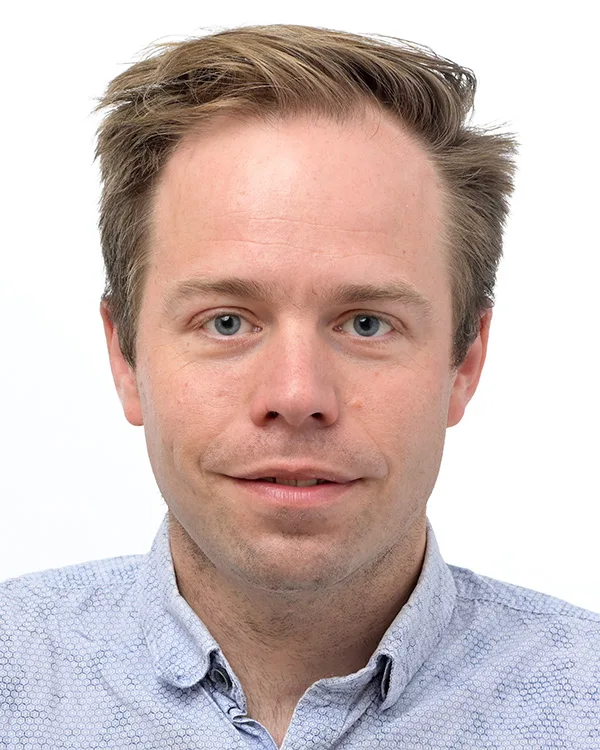
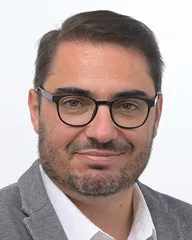
Lukas Sieper | Germany DEU | Non-attached Members (NI) | 390 |
| 2 |
|
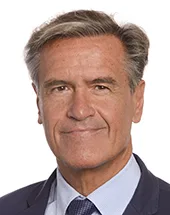
Juan Fernando López Aguilar | Spain ESP | Progressive Alliance of Socialists and Democrats (S&D) | 354 |
| 3 |
|
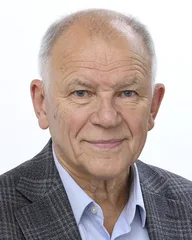
Sebastian Tynkkynen | Finland FIN | European Conservatives and Reformists (ECR) | 331 |
| 4 |
|
João Oliveira | Portugal PRT | The Left in the European Parliament (GUE/NGL) | 232 |
| 5 |
|
Vytenis Povilas Andriukaitis | Lithuania LTU | Progressive Alliance of Socialists and Democrats (S&D) | 227 |
All Contributions (107)
High levels of retail food prices and their consequences for European consumers (debate)
Mr President! More than 42 million Europeans can no longer afford a balanced meal. In recent years, more than half of the people in the European Union have experienced their income being eaten up by too high food prices. And if you want food to finally become affordable again, you also have to talk about inflation. He has to talk about the fact that half of the price increases in the food sector are due to the greed of large food companies. But the good news is: We are not helpless. We can change that. We can finally tax the big profits of corporations like Nestlé, Coca-Cola or Ferrero. We can end financial speculation with food – you don't gamble with food. And we can - and this is also a direct request to the EU Commission - finally reveal with a market investigation for the food sector that the misconduct of these corporations is to blame for the fact that our citizens can no longer afford the bill in the supermarket.
A revamped long-term budget for the Union in a changing world (debate)
Thank you very much, Mr. Colleague. I would not be interested in which financial instruments you reject. I understand that you have a problem with joint borrowing at European level. I would be interested to know how you intend to finance the future priorities of the European Union, such as defence, for example, because I suspect that you also reject own resources. In fact, the only thing left is to redeploy the EU budget, and I would like to have concrete proposals on your part. So far, I have not heard much from the FDP either here in the house or elsewhere.
A revamped long-term budget for the Union in a changing world (debate)
Mr President! When the world is in disarray, it is important to stand together and strengthen the European Union – socially, economically and in terms of security. And the multiannual financial framework must be the time when we move from Sunday speeches to political action. To be honest: This has been lacking in recent years. There have always been Sunday speeches on the one hand, but when we look at the budget, we see that it has too little power to make Europe fit for the future. This meets current challenges, but also the ability to react flexibly to certain events. We also need new financial instruments. And it is dishonest to say, on the one hand, that the EU must do more, but, on the other hand, not be willing to create new financial instruments. This includes, for example, financing investments in climate and security infrastructure through a fiscal capacity. Und dazu gehören auch die Eigenmittel. The big tech companies alone have made billions in profits with us in recent years, and they are hardly taxed with us. This is neither fair nor meaningful. Let's finally create new own resources. Let's tax the big US tech companies.
Ninth report on economic and social cohesion (debate)
No text available
Guidelines for the 2026 budget - Section III (debate)
Mr President! For us Greens, strengthening our democracy and democratic civil society is one of the key themes for the 2026 budget. That is why we are watching with concern how the legitimacy of democratic civil society is now being attacked by large parts, not only here in the house, but also globally. We see Donald Trump cracking down on companies and universities that hold different values than he does. We see that Viktor Orbán accuses independent journalists and human rights organizations of being bought from abroad. But we also see that conservative parties such as the CDU/CSU parliamentary group in the German Bundestag want to undermine the democratic engagement of civil society with a catalogue of questions. Unsurprisingly, these questions always involve organizations that have a different opinion than those that attack them. And exactly the same thing, namely to silence unwelcome organizations, we are now also experiencing this through attacks by the CDU/CSU on the LIFE program and on environmental protection organizations here in the house. Let me be very clear: Tax money must, of course, be spent lawfully. But we have confidence in the Court of Auditors or in the European Commission, which has repeatedly made it clear that the accusations made by the CDU/CSU against these NGOs are untenable. We want broad majorities for the budget here, and we stand by them. But then we must also act together with the other democratic groups here in the House on such issues and not be driven by the far-right.
White paper on the future of European defence (debate)
Madam President, I believe that after more than two hours of debate, it can be said that a large majority here is willing to do more for our security and, yes, to invest more together. But I think our role as a European Parliament should not only be to nod off what the European Commission is proposing, with the ReArm Europeprogram, but to go beyond it. And I want to say very clearly: If we want to take more loans together, we have to make sure that they are used efficiently, that there is transparency and that we also put more European projects forward together. I believe that if we suspend the debt rules, that is not enough, but that we need a proper reform of the debt rules at European level in order to really invest more together. I believe that we should not do this only for weapons and armaments – which alone do not create peace and security. We also need to invest in internal security, cybersecurity or climate infrastructure – only then will we, as the European Union, become more sovereign together.
Cutting red tape and simplifying business in the EU: the first Omnibus proposals (debate)
Madam President, This is not a cut in bureaucracy, but a clear-cut. It is correct: The EU has a bureaucracy problem and EU regulations are far too complicated for businesses; There are also differences between national and European legislation. But simply closing your eyes and pretending that the climate crisis, overexploitation of nature or forced labor are not taking place cannot be an answer. Commission President von der Leyen has promised to stick to the objectives of the laws, but to make the application more practical. Sounds good, but it's not true. If you want to exclude 90% of companies from the scope of central laws as much as possible, then you put the axe to the law. Instead of making the laws useless, we need to talk about how we can better implement them. This includes, for example, transitional plans instead of blanket exceptions. This also includes, yes, a stronger distinction between large corporations and small craft businesses. But what is now in place is clearly beyond the target. That is why we Greens remain very sceptical and hope that changes can still be made in the legislative process.
Cross-border recognition of civil status documents of same-sex couples and their children within the territory of the EU (debate)
Madam President, I want all Europeans to have equal rights, regardless of where they live and who they love. No one deserves hatred and hatred; Everyone deserves respect and equal rights. It is absurd that people in the EU can move freely, but they themselves and their families are not recognized everywhere. There have been several cases in the past where same-sex couples have had to sue for their rights in court. Two Polish women who had a child in Vienna but were not recognized at home. Gay men who did not get their marriage recognised after moving to another EU Member State. It is unacceptable that same-sex couples are still discriminated against in the European Union in 2025. It is our duty to protect the fundamental rights of all EU citizens. To achieve this, we need European laws that protect people's freedom and recognise rainbow families across the EU. Countries such as Romania, which are systematically undermining this, must be subject to sanctions by the European Commission. I would also like to urge you warmly not to let up here, but to back down, even if the political mood in some Member States is perhaps complicated. But you have a responsibility here with us. You have to live up to that.
European Central Bank – annual report 2024 (debate)
Mr President! The monetary policy debate in this House is partly dishonest and also marked by contradictions. Financial stability in 2025 is different from what it was in the 1990s or 2000s. Therefore, the work of central banks must also evolve. For example, if you want inflation to fall and prices to become affordable, you have to deal with the causes. And the reasons for the high inflation in recent years – at least in the European Union, in the euro area – are the high energy prices and partly also the greed for profit. After all, some corporations have taken advantage of the energy price explosions and – while we were discussing sanctions against Russia – have made quite good money. Anyone who wants our currency and our economy to remain stable cannot turn a blind eye to the climate crisis. And anyone who wants us to invest in modern infrastructure cannot ignore the fact that even high interest rates have an effect on it. It is a great pity that the current ECB report, on which we will vote tomorrow, does not answer all these questions satisfactorily, but – on the contrary – closes its eyes to a large part of the problems. It is good that the ECB is much further on these issues than some Members here in the House, because it is urgently needed. And it would also be necessary to deal with what role the US will actually play for monetary policy in the coming years. Trump is making monetary policy, which is mainly in the interest of crypto billionaires. We shouldn't do the same. That is why it is important that we formulate our own monetary policy and that we deal with these issues. We Greens are ready for that. And we are pleased, Mrs. Lagarde, that we will continue to do so with you and your team in the coming years.
Cryptocurrencies - need for global standards (debate)
Madam President, It has been in existence for almost a week Trump meme coin – Economically worthless and for Trump fans, above all, an emotional bond with their great idol. The TrumpCoin is a fraud machine, which partly also foreign money goes into the coffers of the Trump family. While former US President Jimmy Carter had to sell his peanut farm at the end of the 1970s when he was elected, Trump cheats across the board. But the TrumpCoin Above all, it is also a symbol of a different US policy in the field of cryptocurrency regulation, and that should worry us. We should clearly state here that investments in cryptos are associated with high risks and that we also know that the risk of money laundering in cryptocurrencies is significantly higher than in other areas. The added value created by cryptocurrencies is questionable. US President Trump is opening the door to the privatization of the monetary system with blind deregulation and also by promoting crypto-ultras to key tax offices in his administration. Let me be very clear: This must not be the European way. I am glad that almost all speakers from the major political groups have expressed skepticism and made it clear that, on the one hand, we need international standards – yes – but that we should not take the course that the Trump administration is taking here.
Need to ensure swift action and transparency on corruption allegations in the public sector to protect democratic integrity (debate)
Mr President! Not even three days after Mr Reynders, former Commissioner for Justice, left office, the Belgian investigative authorities were at his doorstep. The allegations of money laundering by buying lottery tickets have it all. They are the responsibility of investigative authorities, as they are now investigating and, in the concrete case, ensuring that the allegations are clarified and Mr Reynders is held accountable. But what is interesting about the case is that in recent years Mr Reynders has had a lot of influence on the rule of law, on European democracy. This is also at a time when we have tightened our anti-money laundering rules in recent years. What we have not done, however, is to include national lotteries in our anti-money laundering rules. So exactly the national lotteries, which are now under the charge of helping with money laundering. And that is why I believe that it is a problem that the EU Commission triggers a cover of silence in response here and does not act concretely on these issues. We need clarification. We need to know exactly what Mr Reynders has done to influence this legislation. And we should close loopholes such as national lotteries in the fight against money laundering.
2025 budgetary procedure: Joint text (debate)
No text available
Closing the EU skills gap: supporting people in the digital and green transitions to ensure inclusive growth and competitiveness in line with the Draghi report (debate)
Mr President! A million! One million skilled workers will be missing from the German labour market by 2030 alone, and this is no different in many other European countries. More than 60% of small and medium-sized enterprises say they are already struggling to find skilled workers. The shortage of skilled workers is one of the biggest problems we face in the European Union in the coming years, and quite frankly: There is far too little going on to address him. That is why it is good that we are talking about it here, because if we want to be competitive, then we need qualified labour. The answer is: more migration, more investment in education, a better work-life balance and also better working conditions, because only with attractive jobs will we be able to attract people to us. Because we need more people working in the EU, not less. That is why it is a problem when nationalism, hatred and incitement dominate the debate in our country. No one wants to live in a European Union where Alice Weidel or Marine Le Pen set the pace. We need a welcoming culture that welcomes people and supports them in making their way to work here with us.
World Mental Health Day - need for a comprehensive EU strategy on mental health (debate)
Mr President! Politics has mental health Ignored for too long. Nearly half of all Europeans have had mental health problems in the last 12 months. In young people, it is even more than 60 percent who suffer from depression, anorexia or simply self-doubt. High demands at school, at university or at work are cited as the most common reasons for this. But the global situation with climate change, wars and inflation is also seriously unsettling young people. I can understand that very well. I think we should apologise to the young people for perhaps not taking their problems seriously enough in recent years. We Greens are fighting to ensure that all people have a good future, without wars, without financial worries and without the climate crisis. But we also need to do more to put mental health at the center. It is good that we are largely in agreement here in the house. We need free therapy and we need to invest more in prevention and research. That is why I am happy and grateful that Parliament's position on next year's budget, on a green initiative, earmarks 270 million euros for this very purpose. Member States must now follow suit. We fight for it.
Ensuring sustainable, decent and affordable housing in Europe - encouraging investment, private property and public housing programmes (debate)
Mr President! Retirees who are expelled from their homes after decades, students who cannot find a room at their place of study, or young families who are stuck in apartments that are far too small. Housing policy is the social issue of our time. And it is a scandal that more and more people have to deal with rent increases of 15, 20 percent or even higher rent increases, while the big housing companies continue to pay out billions to their shareholders. Therefore, it is good and right that we agree here that housing is a fundamental right, a human right and must not be an object of speculation. It is good and right that the European Commission wants to present an action plan. But do not forget about the role of large housing corporations, do not forget about the role of financial markets. Housing should not be a speculative object. We need regulation to ensure that all people have affordable housing.
Taxing the super-rich to end poverty and reduce inequalities: EU support to the G20 Presidency’s proposal (topical debate)
Mr President! The club of the super-rich is getting bigger. There are now 249 billionaires living in Germany. That's 23 more than before. Lidl boss Schwarz and the BMW heirs Klatten and Quandt get new friends. The new billionaires can only be congratulated, because once you become a member of this club, it is hardly possible to fly out. Rich people get richer and the majority of people look into the tube. That is the reality. Normal salaries are eaten up by rising energy costs, high rents and expensive food. The wealth of German billionaires alone is greater than the federal government's budget. Instead of luxury yachts and private jets, however, we need good health and an affordable life for all people. With a wealth tax for the richest 0.5 percent, the federal government alone could pay 1.2 million teacher salaries or hire 1.5 million nurses or, for example, increase investment in the railways sevenfold. It is a political decision whether to represent the interests of BMW heirs or the hard-working population. Lindner lies when he claims that a wealth tax on the super-rich would lead to declines in investment, employment, or tax revenue. The opposite is true. The truth is that a fairer distribution of wealth is good for investment, but above all for our democracy. That's why it's good that the G20 is taking this step and proposing a minimum tax on the super-rich. Now, however, this step must also be implemented, and we also want to place the EU Commission in charge. It's not enough to stand on the sidelines and clap. Concrete measures must be taken to make this tax a reality, and we will also measure this against the new Commissioner, Mr Hoekstra, who will be responsible for taxation.
The historic CJEU ruling on the Apple state aid case and its consequences (debate)
Mr President, I think Apple is rotten right to the core, or at least it seems clear that Apple has cheated European taxpayers out of EUR 13 billion. This is just the latest example of big tech companies trying to exploit our society through tax dodges, or by leveraging their market power. The recent court ruling against Apple sends a clear message to big tech companies if you want to do business in Europe, you have to follow our rules. In Europe, politics and not large corporations decide which rules apply. That's why the rulings against Apple's $13 billion tax trick, but also against Google Shopping, are so important. They show that we are not powerless against the power of the big corporations. Google can't just give preference to its own products when it comes to Google Shopping. The dispute with the tech giants is now a few years ago, and since then has also been legislative, for example, with the Digital Markets Act Some things happen. But that is not enough; We need more. We need minimum tax rates for large corporations, a better exchange of tax data and a reform of competition law. We Greens expect the new EU Commission to continue where Vice-President Vestager left off in recent years. We have to catch up, we can't let up.
Outcome of G20 ministerial meeting in Rio-de-Janeiro and fighting inequality (debate)
Madam President, We can no longer afford the super-rich. Wealth inequality is seriously damaging our democracy. It is not fair that the richest 10% own just under 60% of the wealth. Worse still: While the majority of people could afford less and less, a small elite has continued to accumulate their wealth in recent years. For example, the total wealth of the five richest Germans has grown from 89 billion US dollars to 155 billion US dollars since 2020. It is not fair and above all not sensible that a small elite gets richer and richer and at the same time we allow bridges to collapse, hospitals to close or trains to fail. If the state only works for the richest, it doesn't work. This is not about envy debates, but about everyone making a fair contribution to our society. That is why the global minimum tax adopted by the G20 is a step in the right direction. The EU should support this and not block it. We know too little about the wealth of the super-rich, and it is too easy to hide it from the state. That is why we need more transparency. The Commission should therefore, out of our green conviction, extract its plans for a wealth register from the filing cabinets and not protect the interests of millionaires and billionaires. Small incomes should be relieved more and high wealth should be taxed more heavily. A sentence also towards Berlin, where Christian Lindner is a finance minister, who unfortunately seems to see things differently: He's trying to block it. And from here, too, the call to the German Federal Government: Support the plans of the G20! It makes sense, and it makes sense to do it.
The sixth Anti-Money Laundering Directive - Anti-Money Laundering Regulation - Establishing the Authority for Anti-Money Laundering and Countering the Financing of Terrorism (joint debate - Anti-money laundering)
Mr President! What does FC Bayern Munich have to do with the EU's new money laundering rules? Whether through player advisors, sponsorship or ticket sales, investigations in the environment of football clubs take place again and again, and professional sports is one of the hotspots for money laundering. This is also the case with Bavaria, where at least one Russian oligarch has shown himself more often in recent years. Wherever millions are juggled, financial criminals are not far away, and the financial damage alone is very great, with over 250 billion euros for the European Union. But not only the financial damage, but also the damage to our democracy is extremely important in financial crime. We are now putting a stop to financial criminals with the anti-money laundering package. The money laundering package formulates clear rules, first of all binding for football clubs, but also for luxury yachts or also for extremely expensive jewelry or, for example, for cryptocurrencies. We are taking important steps forward. And we are creating an authority that will be responsible for coordinating the fight against money laundering from Frankfurt in the future. Today is a good day against financial crime and a good day for Europe.
Effective coordination of economic policies and multilateral budgetary surveillance - Speeding up and clarifying the implementation of the excessive deficit procedure – amending Regulation - Requirements for budgetary frameworks of the Member States – amending Directive (joint debate – Economic governance)
Mr President! More than 100 million Europeans live in poverty, and investment needs for climate objectives and competitiveness alone in the European Union amount to over 600 billion euros per year. These are not figures that I have come up with or that come from any think tanks, these are the official figures of the EU Commission. And yet here today, Social Democrats, Conservatives and Liberals want to adopt fiscal rules that will do great damage. Instead of future investments in better rail or energy networks, our infrastructure is crumbling and social cuts will be commonplace. The losers are the people and the climate. The absurd thing is that the debt rules will not even lead to a low debt ratio. Because if we slow down economic development by imposing too strict rules, tax revenues will fall and public budgets will run into major problems. Climate goals, competitiveness, defence union, that's not for cloudy words in final declarations from the Council summit. This is something that needs to be shaped in fiscal policy, and unfortunately this reform is not in a position to do so. You can't shape the future with yesterday's recipes.
Guidelines for the 2025 Budget - Section III (debate)
Mr President! Extreme heat, droughts and forest fires in southern Europe, floods in the north – no continent in the world is warming faster than Europe. The climate crisis is a security risk: It will lead to more wars, migration and social conflicts in the future. That is why good climate policy is active security policy, and there can be no good security policy without active climate policy. That is why there should be an outcry in Europe when, as happened yesterday, the European Environment Agency writes to us that we are doing far too little to prepare for the climate crisis. And we do not, and here in the House, too, many Members are not prepared to draw the right budgetary consequences. We invest far too little in our security and sustainable infrastructure. It is true that we are now also talking more about defence in budgetary policy – we Greens welcome that. But we must do more together and also tackle these challenges in terms of climate policy. We hear little about this, neither from the CDU nor from the FDP, but we expect that, otherwise we will become more insecure in our society.
European Semester for economic policy coordination 2024 – European Semester for economic policy coordination: employment and social priorities for 2024 (joint debate – European Semester)
Mr President! Over 100 million Europeans living in poverty, a broad majority of the population that has lost real income in recent years and struggles to pay their bills at the end of the month, and, on the other hand, a small elite of super-rich people who have only had to watch their fortunes increase in recent years. At the same time, the EU Commission describes that we have an investment need for the climate goals of about 600 billion euros more in investments. Europe does not work for everyone, and it is a political decision on how to deal with it. And from my perspective, there are two ways to do this: There is the path that US President Biden is taking, who is very courageous, who has not only made the country fit for the climate crisis with more investments in green infrastructure, but has created 15 million new jobs and ensures that jobs are not only created, but that they are also good jobs with good collective wages. Instead of cutting research and development, as the heads of state and government have done, Joe Biden is investing record amounts in research and development. And then, on the other hand, there is the conservative path that Commission President Ursula von der Leyen seems to be formulating, which relies on budget cuts, which relies on a lack of investment, and which believes that we can shorten our continent in a healthy way. We don't believe that; We think we should show more courage. We also want to call on the Commission President to do what she started in the pandemic – with the Corona Recovery Fund, with the SURE short-time worker tool. Fewer Friedrich Merz, more Joe Biden – Mrs von der Leyen, that is the motto here.
Multiannual financial framework for the years 2021 to 2027 - Establishing the Ukraine Facility - Establishing the Strategic Technologies for Europe Platform (‘STEP’) (joint debate - multiannual financial framework revision)
Mr President! Europe is firmly on Ukraine's side. We are in solidarity and we are also organising the financial assistance needed with the Ukraine Facility in a very concrete way. It is particularly important to me to focus on this at a time when we are seeing that there is still no agreement in the US for more financial assistance to Ukraine and, unfortunately, some national governments are no longer as solidary in arms deliveries as they should be from our perspective. But there are many other areas in the Multiannual Financial Framework where we should be much more critical. I would also like to ask Mrs von der Leyen, the President of the Commission, who is unfortunately not present at this debate today, whether you are still serious about the climate targets that you yourself set at the beginning of the parliamentary term. Do you really want our industry to be competitive and achieve the green transformation? I am no longer so sure when I look at what has actually come out of the EU budget, what has actually come out of the Multiannual Financial Framework. Unlike the Ukraine Facility, investments are extremely weak. And this is despite the fact that the Commission's experts themselves say that we have an investment need of around 600 billion euros per year in order to achieve the climate targets and to keep our industry competitive. We now also have the STEP programme in the vote today, which can be a start. However, the whole thing is equipped without fresh money, and therefore our fear is that not a lot of new impulses can be set there. I would like to ask you, both in the Council and in Mrs von der Leyen, that you find your course here and that you ensure that this is not the last word and that we continue to work on it in the coming months and in the new parliamentary term and that investments flow, because they are urgently needed.
Need to overcome the Council deadlock on the platform workers directive (debate)
Mr President! Peeling breaks, which must be approved individually by the Hamburg-based shuttle company MOIA. Amazon employees treated like robots and monitored with cameras. Delivery messengers who deliver food for tens of hours without breaks and are monitored by apps: This is the reality of millions of platform workers here in the European Union. These working conditions are really crappy, and I am ashamed that it has not been possible to organise a sufficient majority in the Council to improve the rights of these millions of people. The EU can be a place that stands for better working conditions, which concretely ensures better working conditions. It is an embarrassing spectacle what we are now witnessing from the Member States. I am also ashamed of the German federal government, where a liberal coalition partner is so driven by the lobbying of Über and others that they have now completely forgotten what true entrepreneurship actually means. However, I am also ashamed of our Social Democratic Chancellor, who does not seem to be interested in the rights of platform workers or in European unity. It is time to change this situation and there is a solution. Chancellor Scholz, if you take the policy competence and enforce a yes of the German federal government, then we will be able to improve working conditions for millions of people before the European elections.
Implementation report on the EU LGBTIQ Equality Strategy 2020-2025 (continuation of debate)
Madam President, Depression, anxiety, loneliness – too many LGBTIQ people know exactly these feelings. Many young people are afraid to be themselves – in 2024. It is very clear to all young people: You're not a problem. Love whoever you want! It's totally okay to love the same gender and rediscover your identity. Do not be persuaded otherwise; Do not be persuaded otherwise, for example by the fascists of the AfD and many others who are trying to take away your freedom. They want to tell you how to live. Here in Parliament, on TikTok or in quite blatant hate pamphlets, right-wing radicals try to create a mood against human rights – against people. This concerns us all, whether we are heterosexual, bisexual, transgender, intersex or homosexual. Fascists are attacking our freedom, and it is important that we stand up against getting loud now. This is what we are doing here in Parliament, and here in Parliament there is a broad majority that stands up for the rights of queer people – human rights. But it is also important that we do this outside Parliament, that we are loud on the street, that we open our mouths in our private environment, at work, at school or even at university. I am pleased that we are in agreement with a large majority here in the House – this is what we can build on.