
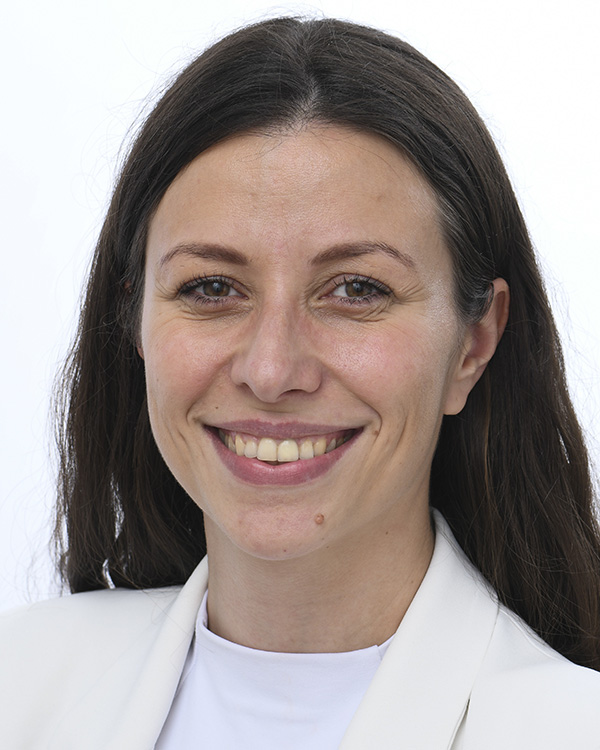


| Rank | Name | Country | Group | Speeches | |
|---|---|---|---|---|---|
| 1 |

|
Lukas Sieper | Germany DEU | Non-attached Members (NI) | 390 |
| 2 |
|
Juan Fernando López Aguilar | Spain ESP | Progressive Alliance of Socialists and Democrats (S&D) | 354 |
| 3 |
|
Sebastian Tynkkynen | Finland FIN | European Conservatives and Reformists (ECR) | 331 |
| 4 |
|
João Oliveira | Portugal PRT | The Left in the European Parliament (GUE/NGL) | 232 |
| 5 |
|
Vytenis Povilas Andriukaitis | Lithuania LTU | Progressive Alliance of Socialists and Democrats (S&D) | 227 |
All Contributions (126)
Combating the normalisation of far-right and far-left discourses including antisemitism (debate)
Madam President. Now I could read you a palette of hateful comments I get on a daily basis. I don't mean critical, I mean evil, dangerous comments, but I won't. Because in this case, I'd have to talk all night, and most of all, because I'm not the only one. Alas, far from it. We all have to deal with the issue of the normalization of extreme discourse. Normalization leads to acceptance. Acceptance, however, affects the perception of reality, and there is more and more of this, even in our house. However, I am not just talking about the pacts of the European People's Party, say, with the far right in breaking down much-needed legislation, but I am talking, in particular, about the dangerous populist demagoguery that dictates the pace and that we must not normalise and accept. They're computational. They create fear and mistrust among people in their favor. Through manipulations, they exploit, for example, the origin of someone for nationalism under the guise of patriotism. It is our responsibility in the middle to reject such discourses in advance and not to compromise our policies or actions with such extremists. Come on, let's set standards.
Protection of journalists and human rights defenders from manifestly unfounded or abusive court proceedings (debate)
Thank you, Mr. Chairman. Journalists, civil society, NGOs. These are three groups that are invaluable for a healthy, democratic society. And these are the three groups that are constantly under pressure from strategic lawsuits to seek the truth and warn the rulers of irregularities. It's the mechanism of repressive politicians, by the way. I am therefore pleased that the directive includes legal safeguards for the protection of victims. To introduce a mechanism for early dismissal of such lawsuits and finally to call for data collection. However, it should by no means be forgotten that, although this directive is a good legal basis, it protects victims only in the case of cross-border judgments. How many of these are there, we don't really know yet. We know, however, that there are hundreds of such lawsuits and judgments within some countries. And, unfortunately, they will obviously not be affected by this directive, although it is precisely there that the three groups mentioned at the beginning would most need such protection. Therefore, I call on those responsible and those responsible to find a solution for them, or even there. Because we in this house - the one who really cares - have done everything we can.
Implementation and delivery of the Sustainable Development Goals (debate)
Madam President. Since the signing of the Sustainable Development Agenda, the Union has sought to become a frontrunner in achieving the objectives set. We want to reach them by 2030, don't we? And during this mandate, we have taken steps in the right direction with the Green Deal. There was a pandemic. And we have established a joint solution to health problems, but war has entered the continent and with it the energy and financial crisis. We are not prepared for the problems that occur, while inequalities are increasing and environmental, health, financial, food, social challenges are deepening. We should learn that such all-inclusive challenges cannot be solved with small, fragmented sectoral solutions. But apparently we didn't. The year 2030 is around the corner and there is still no strategy and financial plan for the implementation of the agenda, even though we called on the Commission to prepare both in the same report last year. May this call be more successful, because it is time for action, for people, for the planet, for prosperity and, last but not least, for peace and freedom.
Update of the anti-corruption legislative framework (debate)
Mr President. The LuxLeaks affair, the Galvin Report affair, the so-called ‘Money for Influence’ affair. The most prominent, the Cresson affair, which led to the resignation of the whole Commission and is currently the most topical, Quatargate. These are just a few high-profile corruption scandals at European level, and there are even more at Member State level. They all challenge our democratic values and further undermine the already fragile trust in politics. We are here to work for the common good of all people, not to create an easier path for companies, countries, individuals with deep wallets at the expense of their own profit. We do have some anti-corruption safeguards and mechanisms, but obviously not enough. And although this proposal for a directive has come, I will not say too late, but late, it finally brings us uniform supranational legislation with sanctions against criminal acts of corruption. And so those who want to profit will end up with the other violators behind bars.
EU Global Health Strategy (debate)
Madam President. We needed a pandemic for the Commission to present a renewed Global Health Strategy after thirteen years. But, well, at least we got it. And it is well designed and, if successfully implemented, will put the Union at the forefront of health on a geopolitical scale. I unequivocally support this, especially since the strategy is labelled as an external aspect of the European Health Union. Now, does this mean that we are genuinely, and not only conceptually, ready to establish a Health Union and transfer health competences from the Member States? Without this, it is difficult to set up strategies to establish effective health systems, while within the Union they suffer greatly, and in some cases they are already falling apart. I believe in solidarity and support the help of all those in need, including, but not limited to, healthcare. But when implementing strategies, one should not forget about the regulation of one's own problems.
Keeping people healthy, water drinkable and soil liveable: getting rid of forever pollutants and strengthening EU chemical legislation now (topical debate)
Madam President. Clean water, safe food, unpolluted soil, clean air. These are basic goods that should be taken for granted. It is true that these are areas in which the Union is doing a great deal. But somehow we are forgetting about the regulation of chemicals, where there have been no serious changes since 2006, when the still current REACH was adopted, the renewal of which the Commission has apparently been promising us for three years. It appears that the proposal will only be published in the last quarter of this year, just a few months before the elections. So, for now, these empty promises will seem to remain just that. Empty. Meanwhile, humans and other organisms remain exposed to harmful chemicals, the negative effects of which will last for decades. All the environmental and health protection measures we have taken and are taking stand and fall in the messy areas that affect them. Enough of the delay. We need the REACH recast proposal now, while we still have time to adopt it.
One-minute speeches on matters of political importance
Thank you very much. Every decent man takes responsibility for his actions, doesn't he? If it proves to be illegal, it takes responsibility. Get out of here. And what does the management of RTV Slovenia do? Director-General Andrei Grah Whatmough is – proven in court – unlawfully in office. He won't resign. Former TV director Natalija Gorščak was – proven in court – unlawfully dismissed. Her successor, Uroš Urbanija, will not resign. RTV employees will be on strike next week. Again. Justified, of course. Because the leadership doesn't want to take responsibility. Because they do not want to end this agony, because they do not want to admit that they are obscene, indecent to their positions. Able only to disable journalistic work, ground mobbing employees and demolition of the public service. I will conclude with the words of journalist Val 202 Nataša Štefa, because with them she said everything that we must also take into account. I quote: “We do not need compassion. Let it be legal and by standards. Or let the latter not only turn off the TV, but the light.” Thank you.
Cross-border adoptions from third countries (debate)
Mr. President! Children are our future. I know, it sounds clichéd, but it's really that simple. At the same time, as the most vulnerable part of society, these children are left to our decisions to take measures to ensure their safety. International adoptions are undoubtedly very noble and it is right to provide the right conditions for them. If this is not the case, we allow for the possibility of illegalities, resulting in violations of human rights and, above all, serious crimes with devastating consequences in the lives of victims. Nevertheless, there is no uniform legislative framework or mechanism at Union level to address the prevention of potential trafficking in human beings in the context of intercountry adoption. Who knows how many such cases have happened before, unnoticed. In the meantime, the Commission has been passing on the lack of regulation to the Member States for years, there are enough excuses as to who is competent and who is not. Let's take responsibility, all of us, and let's act if we don't, we won't pay the price. The children will pay for it. Our future. Does it still sound cliché? It's so simple.
More Europe, more jobs: we are building the competitive economy of tomorrow for the benefit of all (topical debate)
Mr. President! More Europe, more jobs. Faster development of the economy, better competitiveness. Creation of new professions, adequate education. All of this goes hand in hand, but there is nothing without proper education and training. I emphasise this in particular because this year, as we have heard many times today, is the European Year of Skills, and we must take into account the need for additional, effective training for individuals to match the skills needed to take up new occupations when designing economic strategies and creating new jobs. In this area, through targeted economic development strategies, the Union can encourage companies to develop further, while at the same time calling on them to take into account the need for appropriate qualification and retraining of the workforce. This is crucial for our future.
The erosion of the rule of law in Greece: the wiretapping scandal and media freedom (topical debate)
Madam President. Threats, attempts to control, silence, subjugate. To deal with this in journalism, unfortunately, is not new. But in recent years, it has only intensified, even gaining new momentum: New control technology. There are many methods, but we need to address them comprehensively. It is also happening in Europe. There are no ‘mere’ threats, ‘mere’ attempts, ‘mere’ surveillance, murders. It has been almost two years since the murder of Greek journalist Giorgios Karaivaz and the investigation has not been completed. Karaivaz' death paid for the investigation of the connections between the top police, politics and organised crime. Separately, it was revealed that espionage – not only for the opposition, but also for journalists – was led directly from the Prime Minister’s cabinet. In this case, Greece appears to be the wild west of the demolition of the rule of law, but unfortunately it is not the only one. Digital surveillance of journalists must be prevented. We are preparing legislation in the Media Freedom Act, but without the criminal responsibility of those who use these methods, there will be no success. We need to do exactly what makes them blackmail and spy: Reveal them and stop them before anyone else dies.
Establishment of an independent EU Ethics Body (debate)
Mr. President! Integrity, transparency, accountability. Zero tolerance for corruption. Without this trust in our work, there is and will not be. Some rules already exist, that's right. But we have different codes of conduct across the institutions, which is why the standards are then patchy, the investigative powers are insufficient, so that I do not even talk about flawed, often unconvincing sanctions. It is true that in the end everything stands and falls on the integrity of man himself, but it is nevertheless right to have a European ethical body with unified, clear rules of conduct within all institutions. With strict rules, I hope, of course, the strictest possible. Most of us in this house asked for it two years ago. After all the recent scandals, I really hope that this time the Commission will deliver on our request and on their commitment at the time. Zdaj pa je menda ja vsem jasno, da drugače ne bo šlo. For those who don't have a problem with rules and ethics anyway, that's for sure.
Situation of journalists in Morocco, notably the case of Omar Radi
Madam President. Right to information and freedom of expression. It is enshrined in the Moroccan Constitution. For nothing obvious. Journalists are extremely limited in their work, forced into self-censorship. The right to report on corruption, the status of the monarchy and the status of Western Sahara is, to put it mildly, severely curtailed. Because if no one reports government corruption, it certainly doesn't exist, does it? Meanwhile, the Moroccan government appears to be portraying media pluralism in the country. In reality, however, they have only one independent media outlet whose journalists are harassed, persecuted, often unjustifiably arrested, and even imprisoned on false allegations of illegal abortion and sexual assault. All this and much more that the Moroccan Government is doing is outrageous. It is time for the EU not only to clearly condemn such actions, but to act even more vigorously. Let this resolution be just the beginning. And to the gentlemen who are advocating such moves, I say: No, the resolution is not based on manipulated data, and we will not look quietly and calmly at what you are doing.
New developments in allegations of corruption and foreign interference, including those related to Morocco, and the need to increase transparency, integrity and accountability in the European institutions (debate)
Madam President. It's a shock. It's a horror. Shame on you. And there's something else to be found to describe the corruption scandal that's been going on in this house. Yes, of course, third-country interference is unfortunately also happening – which is unacceptable to understand. And it is right to stop this – but... will that be enough? Rules need to be tightened in all areas, at all levels, for all institutions, absolutely. But – you know, we can have no matter how harsh, no matter how clear, no matter what the rules are. In the end, everything, really, ends – not with money. Not for me. It all ends with people, with us. And we owe to the citizens, we owe to the dignity of this house, after all, that we do what we preach to many. Everybody. And if a third person tries to bribe: It's not the rules that will stop it. This can only be successfully stopped by our integrity, colleagues and colleagues.
The Commission’s reports on the situation of journalists and the implications of the rule of law (debate)
Madam President! Thank you! Ensuring the safety of journalists is a prerequisite for effective media freedom, which is one of the cornerstones of the rule of law. To ensure their safety at Union level, we set standards in all reports, action plans, legislative proposals, more or less successfully. We also often mention the quality of reporting, which affects the credibility of the information provided. Quality, however, is steadily decreasing with the rise of disinformation, interference with editorial policy and censorship or self-censorship. We are at a point where simply mentioning the importance of quality reporting is not enough. Let's be clear. Not everyone can be a journalist just because, I don't know, he wants to perform on television, let alone because he wants to fulfill the wishes of the work of a certain politician. What do I want to say? That, in order to ensure an important aspect of the rule of law, we lack clearly defined standards for determining the quality of the pursuit of the journalistic profession. It's time to set them up. Maybe it's the Media Freedom Act.
This is Europe - Debate with the Prime Minister of Slovenia, Robert Golob (debate)
Madam President-in-Office, Honourable Prime Minister, Honourable Colleagues, Honourable Colleagues, the European Union has grown from a peace political project into a true political community in seven decades. Together, we set global standards for people in climate policy, digital rights, healthy food, democratic values. Is everything perfect? It's not. During this political evolution, an overcomplex bureaucratic apparatus has also grown, which struggles to adapt to the constant new challenges or crises of our time. We have taken great steps in recent years. Of course that's true. Climate policy already mentioned, specifically the Recovery and Resilience Fund. Great, but where are we today? In the present situation brought to us by the criminal war in Ukraine and the energy crisis, despite all the efforts and achievements, I miss more ambition at Union level, including in other areas. I would also like to see unity in joint responses to alleviating this crisis and a common framework for the necessary investments for a green Europe that is energy independent of all authoritarian states. RePowerEU, joint gas purchases, electricity price caps are good design, and these days, when we are discussing an unfair US anti-inflation act towards the European Union, we should also find the political will for a European response, such as the creation of a new flexible fund to deal with crises. Vetoes in the Council force unacceptable compromises. Corruption at the systemic level in the Member States, not to speak of clearly individual ones, even here in this house – this inspires our credibility. This is also why, and above all to allow flexibility by expanding the fiscal capacity of the Union, institutional reforms are necessary, with the opening of the Treaties, the abolition of unanimity, the democratisation of our processes and the establishment of a genuine European public discourse. That is why such agreements and discussions are so important, to the exclusion of some... (Speaking time expires)
The European Year of Youth 2022 Legacy (debate)
Madam President! The European Year of Youth is coming to an end, or otherwise, if you wish, the European Year of Youth is not yet over. This means that it is somewhat difficult today to determine its final success, or to speak in sufficient detail or concretely about its legacy. Instead, of course, we can talk about concrete proposals to improve the living conditions of young people. There are a lot of areas that need to be regulated, we all know this, and it is impossible to list them in a minute, but it can be said, unfortunately, that we did not manage to do this this this year. We have managed to carry out many events, this is true, of course, and I absolutely support this, but that is not enough. And we can't even replace everything backwards or forwards with such activities. Unfortunately, young people do not have one overarching law, directive or act aimed solely at them, so we need to make sure that we always put them at the forefront. I do. With young people and for young people. We owe them at least that.
EU response to the increasing crackdown on protests in Iran (debate)
Thank you. Iran is a country with a beautiful landscape. It could even be idyllic if it didn't have the government it has. If only we hadn't followed the constant repression of people, the denial of fundamental rights, the death penalty, arbitrary arrests with torture, the murder of protesters. But it is precisely this repression, precisely this tragic cruel fate of Mahsa Amini and many others, that has achieved the opposite effect this time. They united Iranians and Iranians in the revolution. They brought together all strata, old, young, ethnic minorities, employees in the oil industry, top athletes. Iranian footballers boycotted the national anthem at the championship. In doing so, they put the importance of this revolution on the world stage. They have clearly joined the struggle that has so far been led by women in Iran. So the fight for women's rights, which is actually receiving support from all over the world, including from this house. We've cut off contact with Iran. And rightly so. Women! It's life! It's freedom!
EU-Western Balkans relations in light of the new enlargement package (continuation of debate)
Madam President. Imagine the following: They promise you something, but they lie. They promise you again, you wait, they lie to you again. You feel betrayed, confused. You're waiting. You become suspicious. You're waiting for more promises, but this time you don't expect much because you've already learned. A well-known band sings like this – I'll do it in the original: ‘Empty embraces su mosta commerciala’ (Empty promises are the best advertising) And so, dear colleagues, our neighbours from the Western Balkans feel no less European than I, you or anyone else present in this room. Promises make a debt and we have to respect them. And within the Union, we must be as strict about the rule of law, media freedom, human rights and all other criteria as we rightly demand from our neighbours. But we also have a few countries in the Union that are anything but a good example. Friends in the Balkans, you belong to ovdja jednako kao i svi mi (Friends in the Balkans, you belong here just like all of us.)
Whitewashing of the anti-European extreme right in the EU (topical debate)
Mr President. Human rights restrictions, attacks on journalists, brutal attacks on LGBTQI+, disregard for the rule of law, corruption. These are just some of the horrific acts from the Union that some of us have been vocally pointing out for years. They show a decline in democratic values, for which the radically right-wing populist option is responsible in our society, but our warnings repeatedly come across deaf ears, as evidenced by an increase in illiberal tendencies. To mobilize the people and their followers, the far right uses historical legacy with often perverse interpretation. In Slovenia, for example, the extreme right is doing so through a fictitious fight against long-standing communism, and the Union is expressing concern instead of acting. The lack of measures and solutions, in the meantime, gives the far right the possibility of further expansion and, as we know, their expansion means a constant demolition of the foundations of the Union. We need to free Europe from kleptocratic, autocratic tendencies and protect our values. It's enough to close your eyes.
UN Climate Change Conference 2022 in Sharm-el-Sheikh, Egypt (COP27) (debate)
Mr President-in-Office! Running, cycling, sailing. 7,767 kilometers, 38 days and one message: We're running out of time. According to this motto, the climate relay is running today for the 19th day. It started in Glasgow, will end in Sharm el-Sheikh and will also cross my country – Slovenia. In order to cope with climate change, we need all the holders of the relay rod. World, European, national, local, individual. Everything, from the first to the last. The Paris Agreement commits us to one and a half degrees of global warming by 2100. Do you know where we are now? We're not close. We need to strengthen our objectives, make new commitments and, above all, stick to those that already exist and then to those that follow. Because... we are witnessing cataclysms – growing and growing. Are we really going to wake up to a natural disaster? Because... you'd think we'd experienced too many of them a long time ago. And I would have thought we were already aware. We're running out of time.
Continued internal border controls in the Schengen area in light of the recent ruling by the Court of Justice of the European Union (C-368/20) (debate)
Mr President-in-Office! If ever, at the time of the worst Covid restrictions, we have really all been able to see which advantage of the European Union is among the most crucial. We have seen how it is when practically all state border controls are back again, in Slovenia we have even been imprisoned in municipalities. Now let's tell Bob Bob again: Intra-Schengen border controls – without legitimate reasons – are inadmissible. They prevent the free movement of people. They make life difficult for those who work in a neighboring country. Above all, they create unnecessary divisions between countries. Even more so, after one country has done so, the others have to do it. Under the regulation, only temporary control for half a year is possible, and all the reasons for prolonging this period, which in some cases has already lasted for several years, are basically pulled by the hair. In these cases, the Commission should give a formal public opinion and protect the interest of the Union through action, with determination. Member States are invited to agree on common solutions – legal and justified. Whether this is possible or not is only in the mind.
Commission proposal for measures under the Rule of Law Conditionality Regulation in the case of Hungary (debate)
Madam President, thank you very much. Under the rule of law mechanism, the Commission proposed to freeze the funds of Hungary. Finally, but we're not at the finish line yet. The first problem is that this concerns only part of the funds. The second problem is that from the current budget, the money is flowing smoothly to Hungary, despite corruption and the demolition of the rule of law. The third problem is that this is clearly creating a political agreement. Compromises with the Iliberal Governments, however, are not possible, you know, that is what the EU should have learned at some point. All right, I accept that the mechanism can be triggered again or extended. I also accept the penalty, and I hope that this is the case, that other levers of pressure are used through the Recovery and Resilience Fund for the independence of the judiciary or prosecution. There should be no concessions here, because I doubt that the Hungarian Government will change its actions in any way, at most for the worse. On the proposed measures to unlock funding, however, it appears that the Hungarian government is pretending to adopt reforms and the EU is pretending that these reforms are sufficient. I hope that the Member States are aware of this and will block at least this part.
One-minute speeches on matters of political importance
Madam President. Colleagues and colleagues. The Member States of that Union are, as far as I know, on an equal footing. And – as far as I know – all our languages are also equal. And – as far as I know – we have a common market. And so I do not know why we should allow some multinationals that are in our markets not to take this into account. The rules that apply in our single market in the physical world must also apply in the digital world. Of course, legislation is also important here, that is clear. In this case, however, it is just as important, if not more important, to be aware that there should simply be no discrimination. That we should all have the right to choose, in this case to choose to watch a film or series with subtitles or synchronization in the native language. No language is more or less important, but it is certainly the most important language for everyone, i.e. Slovenian. I will therefore do my utmost to ensure that our multilingualism is respected at all levels, including at the level of all digital platforms. And because, as far as I know, Slovenia is not the only one facing this problem, my dear colleagues here, I am counting on you too.
European Centre for Disease Prevention and Control - Serious cross-border threats to health (debate)
Greetings fellow Members, Commissioner. Health is the foundation of everything. Without health, there is no functioning economy, school systems, social protection, politics ... nothing. As long as we have it, we like to forget it in our daily lives. But two years ago, we all received a clear warning, which also showed how very vulnerable individual countries are in the fight against crises of this magnitude. Managing cross-border threats and threats to public health depends, of course, on a number of factors. The first is to strengthen the mandate of the European Centre for Disease Prevention and Control. Its successful functioning will also depend on digitalisation, data collection and data processing, while ensuring adequate security. In the meantime, the quality of treatment and access to medicines should not depend on the country you come from. This is why we need uniform standards and their delivery, perhaps even joint procurement of health products through EMA. The most important thing is that we have an effective health system in place, because none of us knows the future. Health, as I said, is the foundation of everything.
The situation in Bosnia Herzegovina (continuation of debate)
President-in-Office. We're in the twenty-first century. I know you know, but unfortunately you also know that autocrats and democrats who threaten peace and human freedoms still exist. In the twenty-first century, even here on European soil. Thirty years after the war in Bosnia and Herzegovina, Milorad Dodik is destroying the state and institutions. He denies genocide. As if what people had already lived there wasn't enough. Thirty years after the war in Bosnia and Herzegovina, the war in Ukraine begins. Vladimir Putin is a criminal, and rightly so. Because that's exactly what it is. But what is Dodik? How can anyone not condemn his actions? Since some of his clients are connected to him, is he a less evil man? The citizens of Bosnia and Herzegovina also deserve a better life, you know, and leaders who care, and we must support them, the citizens, on their way to the European Union. While we must resist, equally loudly, all autocrats and criminals, because the hypocrisy of the European Union in this context was long overdue. Even in their own ranks. The methods are very similar, unfortunately.



