
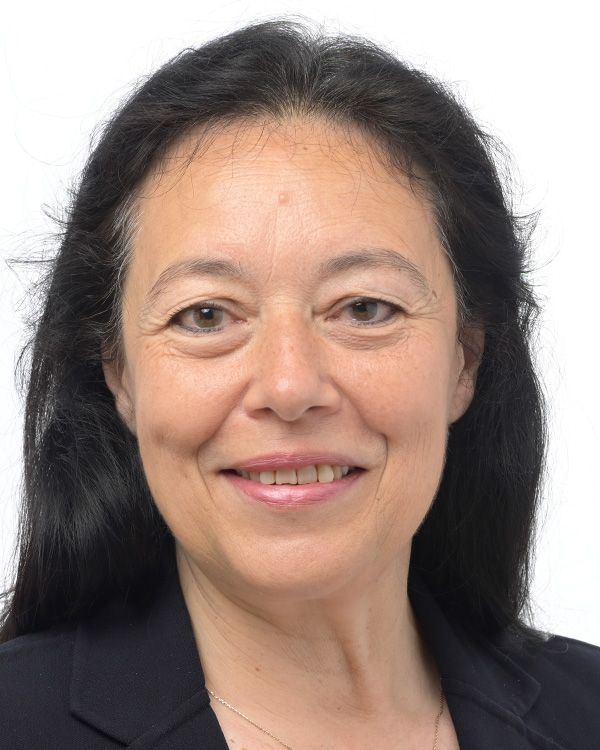






| Rank | Name | Country | Group | Speeches | |
|---|---|---|---|---|---|
| 1 |
|
Lukas Sieper | Germany DEU | Non-attached Members (NI) | 390 |
| 2 |
|
Juan Fernando López Aguilar | Spain ESP | Progressive Alliance of Socialists and Democrats (S&D) | 354 |
| 3 |
|
Sebastian Tynkkynen | Finland FIN | European Conservatives and Reformists (ECR) | 331 |
| 4 |
|
João Oliveira | Portugal PRT | The Left in the European Parliament (GUE/NGL) | 232 |
| 5 |
|
Vytenis Povilas Andriukaitis | Lithuania LTU | Progressive Alliance of Socialists and Democrats (S&D) | 227 |
All Contributions (94)
The need for a united support to Ukraine and for a just and durable peace concluded on Ukraine's terms, with Europeans and without surrendering to Vladimir Putin's conditions ahead of the foreseen Budapest summit (debate)
Mr President, the Ukrainian people have now been fighting against the Russian aggressor for three and a half years. Ukraine is fighting this fight for its survival, its sovereignty, its independence, but also by its fight it protects us, our democracies. We owe them not only recognition, but also all the help we are capable of. Thousands of Ukrainian men, women and children have lost their lives and experienced trauma that will never allow them to live in peace again. This is because of Russia's hegemonic cravings. It would be unacceptable for peace to be achieved under the terms of the aggressor. We, the European Union, owe it to the Ukrainian people to be united, united in the defence of Ukraine, and we must work together – together – to ensure that with peace the Ukrainians regain their territorial integrity. Also for peace to be made with them and for peace to be a lasting peace. Slava Ukraini!
Criminal intimidation against investigative journalists in the EU: the attempted attack on Sigfrido Ranucci (debate)
Mr President, the criminal attack on Sigfrido Ranucci, an Italian investigative journalist, is deeply unworthy of us. It is unacceptable that unveiling the truth exposes such dangers. This attack must also raise a collective awareness of the harsh reality faced by so many investigative journalists today. And this even in our democracies. They are under real threat and the rule of law does not always protect them. We are even seeing a rise in bullying, online and offline harassment, and even more so when it comes to women journalists. And despite our efforts to act against abusive legal proceedings, SLAPPs, we are far from having the necessary effectiveness. However, these abusive procedures divert the spirit of our laws and aim to silence those who dare to expose the corruption that plagues societies. Our democracies are thus doubly attacked, since it is also trust in justice and, in turn, trust in democracy that suffer. I would like to stress this again. Journalists' investigations, their struggle to inform, to expose corruption are essential to the preservation of democracy and the rule of law. We must listen to the demands of free press groups and put in place frameworks and supports that allow journalists and the media an independence, including financial independence, that allows them to offer quality and independent information, conditions that are less and less obvious in today's digital reality. But this is what we owe to those who, often at the risk of their lives and those of their loved ones, undertake to expose the truth in broad daylight.
Delayed justice and rule of law backsliding in Malta, eight years after Daphne Caruana Galizia’s assassination (debate)
Mr President, Daphne Caruana Galizia: Every year, the same starting point, every year, we must see that a journalist in the European Union has been murdered and that co-leaders at the highest level continue to enjoy impunity. Daphne Caruana Galizia was murdered eight years ago. Eight years! His family is fighting an admirable battle. In the European Parliament, we are multiplying calls for the Maltese government to finally take its responsibilities and ensure that impunity ends. Free press groups too, and they are calling for the necessary legislative reforms to ensure media freedom and the safety of journalists. But the slow pace of the Maltese authorities is almost provocative. It is to be hoped that the public consultation on media reform, initiated by the Maltese Ministry of Justice, is not just another move to delay action to ensure a free press, an investigative press capable of exposing corruption and thus combating it. This is Daphne's fight, the one that cost him his life. We demand that all, I insist, those responsible for the murder of Daphne Caruana Galizia be brought to justice.
This is Europe - Debate with the Prime Minister of Luxembourg, Luc Frieden (debate)
Madam President, Prime Minister, thank you for insisting on the values that define our European Union. Today, they are particularly at risk, as authoritarian ideologies continue to gain ground. We must not be mistaken: Where illiberalism takes hold, democracy retreats. Once in power, the illiberals destroy the rule of law. They pass laws designed to prevent political alternation and weaken the independence of the judiciary. It is arbitrariness that reigns. More than ever, we must be united against the existential threats that surround us. Thus, we urgently need common rules in the face of the drifts of social media and opaque and polarizing algorithms. The internet cannot be a place that endoctrines. It is used by unscrupulous people, criminals and foreign powers who want to destroy our democracies and freedoms. We can't let this happen. The European Union is working on this, but we need to be faster and more efficient. Finally, I would like to mention the direct military threat that Russia poses to us. We no longer have the right to naivety or disunity. I will simply recall that, in the days leading up to the massive attack on Ukraine on February 24, 2022, Russia mocked us and the United States, claiming that it had no intention of advancing with its troops in Ukraine. For our own security, we must continue to help Ukraine, continue to invest heavily in our defence and, above all, build a common European defence. Prime Minister, today more than ever the European Union needs to be united. Luxembourg, by its geography and its history, aims to play a role of cement between the countries of the Union. I trust you to build the bridges we so desperately need.
Ukraine (joint debate)
Madam President, three and a half years. Three and a half years that the Ukrainians are awakened, night after night, by the sirens. Three and a half years that they bury their dead, fallen under the blows of the Russian army. A war waged against Ukraine in a completely unjustified manner, without any provocation. We will never forget the horrors of Bucha. We continue to call for the release of civilian prisoners and for the return of deported children to Ukraine. We have decided to support the Ukrainians for as long as it takes, and that is the minimum we can do, not only because we owe this help to our neighbours, who have decided that they want to live free and in democracy, like us, but also because they are our bulwark against an authoritarian regime that makes military threats against us and wages a very real and dangerous hybrid war against our democracies. We must therefore give all possible military support to Ukraine, intensify sanctions against Russia and also accompany Ukraine's efforts to welcome it, as we promised, into the European Union.
The Commission’s 2024 Rule of Law report (debate)
Madam President, ladies and gentlemen, our union is based on fundamental values. It is based on human rights, on the rule of law. What characterizes us with the rule of law is that we have this absence of arbitrariness. The rule of law is the foundation of our democracy. Today we have problems in our Union. We must not hide it. We must confront it and do our best to remedy it. The importance of this report, and our Commissioner has just mentioned it, is absolutely central. This report has been called for by Parliament many times, and we have also called for not only an inventory to be made, but also for countries to be told what to do. And it was done. The report has been improved over the years. It can still be, but it is already a strong tool at our disposal. We must also make an absolute difference between systemic problems in some countries and one-off problems. This must be made clear in the report. I do not accept that countries like Hungary, for example, put forward criticisms against other countries that have absolutely no systemic problems. It is essential that the difference is made.
Combating the sexual abuse and sexual exploitation of children and child sexual abuse material and replacing Council Framework Decision 2004/68/JHA (recast) (debate)
Madam President, thousands and millions of images of child pornography videos are available online, in real time or on a delayed basis. Raw or synthetic images. All are based on the very real abuse of children. Artificial intelligence creations are developed from hundreds of thousands of very real images. We cannot trivialize, accept or remain silent. And then justice must punish. There can be no statute of limitations for these crimes against children. We cannot accept the free circulation of textbooks telling pedocriminals how to gain the trust of children, how to abuse babies without leaving traces. And we cannot in any way consider that there was consent on the part of the child. Never. There is no consent from a child. It is inconceivable that there can be impunity for pedocriminals and all those who assist them in the execution of their crimes. This is why it will be necessary to ensure that, afterwards, this important legislation is rapidly implemented in all the countries of the Union.
The human cost of Russia’s war against Ukraine and the urgent need to end Russian aggression: the situation of illegally detained civilians and prisoners of war, and the continued bombing of civilians (debate)
Madam President, the Ukrainians have shown, with their bombing of Russian military airports, that they are perfectly capable of breaking deep into Russian territory and causing significant damage, by choice of military damage. In response to the reported reaction of the Kremlin leader that he would have to retaliate against these attacks, my first thought was: How to retaliate? By killing civilians again? First, it is difficult to characterize any Russian attack on Ukraine as a response. It is the Russian army that is occupying Ukraine, attacking it relentlessly. And then what is happening before my eyes is the systematic attack on civilians by the Kremlin. The objective of the Russian bombings is, in a repetitive way, daily Ukrainian cities, and the men, women and children who live there. We often talk about deported children, but never enough. It has to be done over and over again. And we must also denounce, without getting tired, the fact that the Russian authorities are detaining civilians imprisoned for no other reason than that they are Ukrainians. Impunity cannot win. We must denounce it and ensure that those responsible are one day tried and punished.
The Hungarian government's drift to Russia-style repression: legislative threats to freedom of expression and democratic participation (debate)
Mr President, I look forward to the day when I stand before you to rejoice that Hungary is once again embarking on the path of democracy. Unfortunately, this is not yet for today. On the contrary, with the draft law on the transparency of public life, the Hungarian government has crossed a new red line. By targeting independent media and organisations, under the pretext of foreign funding, the Hungarian government is using the pattern of Russian repression. Even financial support from the European Union would be suspect under this law. It's just ridiculous. Such a law is fundamentally incompatible with the values and principles of European law. It allows censorship. It gags freedom of expression, independent journalism. Recent polls show that Tisza's opposition far outpaces Fidesz. Only fear of the opposition, fear of independent media, fear of NGOs can explain such a bill. If adopted, it would further weaken democracy by further blocking access to free and diverse information. It would go hand in hand with perpetuating, without any justification, the state of emergency in the country. These are all desperate attempts to avoid a stinging defeat, stifling any dissenting voice. The upcoming elections must be held in a climate of freedom and fairness. That's what we stand for, that's what we fight for.
Return of Ukrainian children forcibly transferred and deported by Russia
Madam President, among all the horrors that the Russian aggressor is inflicting on Ukrainians, a particularly unbearable crime is unfolding before our eyes: the mass deportation of Ukrainian children, orchestrated by the Russian authorities. This is not just a human drama, but a real war strategy. To take away one's children is to try to wipe out a people. Russian aggression is not limited to tanks and missiles. It also uses propaganda and ultimately aims to deny Ukrainian identity, to methodically dissolve it. According to figures put forward by the Russian authorities themselves, several hundred thousand children have been torn from their land since the beginning of the Russian invasion. Behind every number there is a face, a story. Behind every number, there is a child deprived of his language, culture and identity, when it is not from his family. The fate of these thousands of deported children cannot leave indifferent. Under no circumstances can it be absent from future negotiations with Russia. No lasting peace without justice, no justice without truth; These children have the right to truth, justice, dignity and a future in Ukraine. Slava Ukraini!
2023 and 2024 reports on Türkiye (debate)
Mr President, Commissioner, Turkey is a candidate country for accession to the European Union. Turkey has chosen to be a candidate. So it is as such that we address her. Our first concern is therefore the values on which the European Union is founded: democracy, the rule of law. However, the situation of democracy in Turkey is more than worrying. When the independence of the judiciary is flouted, when the main opponent of the current government and mayor of Istanbul is put in prison, we legitimately ask ourselves questions about the space left for democracy, and I have only mentioned the most emblematic example. We must also consider all other local elected officials who have been dismissed by the government. Beyond politicians, it is also civil society that is restricted in its action. And then there is the situation of journalists. Independence and freedom of the press are indispensable to any democratic society. However, journalists cannot freely exercise their profession in Turkey and, above all, many of them are arrested – an alarming situation. These limitations of the democratic space run counter to the aspirations of a large part of the Turkish population to join the European Union. We remain sensitive to this attachment. We are aware of this desire for Europe, but recent developments are still going in the opposite direction to what is necessary to resume accession negotiations. We also recognize the essential role played by Turkey in the region, a NATO member Turkey. Due to its geographical position and diplomatic weight, it can make a major contribution to regional stability and we also welcome its cooperation efforts in the field of migration. However, as a candidate country for the European Union, we also expect Turkey to behave in a manner consistent with the principles that this implies: solidarity among allies, respect for international law, support for independence and respect for the sovereignty of states. We're a long way from that. Subsists a simple message: the door is not closed, but re-engaging in the accession process requires respect for the principles on which our Union is built.
Safeguarding the access to democratic media, such as Radio Free Europe/Radio Liberty (debate)
Mr President, our world today needs more light than ever against obscurantism and information against propaganda. Radio Free Europe/Radio Liberty provides reliable and relevant information where authoritarianism is rife, where people want to be kept in the dark. In democracy, we defend not only that journalists have the right to inform, but also that citizens have the right to information. Authoritarian regimes replace truth with false propaganda. It is therefore of the utmost importance for the defence of democracy that information and the truth of the facts can make their way to the citizens. Thus, we cannot let go of Radio Free Europe/Radio Liberty. Its disappearance, moreover, would not at all amount to the creation of a vacuum: it would be tantamount to giving free rein to propaganda, the enemy of democracy. To accept this would be to play into the hands of our adversaries in the hybrid war they are waging against us. Let's find ways to support Radio Free Europe/Radio Liberty. It carries information where it is imperative to do so. If false propaganda is a weapon, so is the truth. This war, we must win it!
Human rights and democracy in the world and the European Union’s policy on the matter – annual report 2024 (debate)
Mr President, Vice-President and High Representative Kaja Kallas, thank you very much for your words and for all the work you are doing to defend our democracy and human rights. I would also like to thank the shadow rapporteurs, who worked very constructively. We managed to work in consensus, and I hope that the report will be able to find a large majority tomorrow, when it is voted on. To colleagues in this Chamber who have spoken about the countries of the European Union, I would like to remind you that this report is a report by the Committee on Foreign Affairs. It therefore concerns countries outside the European Union. You are often quick to talk about subsidiarity. However, here we have a committee dealing with what is happening in the countries of the European Union: LIBE Committee. And I am sure that, when there are gaps, this committee, of which I am a member, does its job well. I would also like to say that the interventions by colleagues show that this world is entering a new era, an era in which international law, democracy, the rule of law and human rights are fundamentally challenged. The European Union must stay the course and reaffirm its values, which build a world of justice and respect for the human person. If we want our voice to be heard on the global stage, we need to be united. Only together will we be strong enough to be heard.
Human rights and democracy in the world and the European Union’s policy on the matter – annual report 2024 (debate)
Madam President, the European Union is founded on core values: respect for human dignity, freedom, democracy, equality, the rule of law and respect for human rights. These principles are not only enshrined in our Treaties, but they are also the foundation of our cohesion and identity as a Union. This Parliament, the house of European democracy, wants to give a voice to those who have been silenced, to those whose lives are threatened simply because they are defending what is right. Human rights are universal and indivisible, and it is the responsibility of this Parliament to strongly condemn all their violations. Today, it is more urgent than ever to recall this fundamental principle. Unfortunately, these violations, which reflect a general regression of human rights, are becoming increasingly noticeable around the world. The rules-based multilateral order is under threat from increasingly authoritarian regimes. This is not just a theoretical concern, it is a daily reality, and this threat is accompanied by an equally worrying phenomenon: Hybrid wars, which destabilise societies through disinformation and manipulate public opinion, thus stoking tensions and weakening our democracies. In this context, the fight for human rights, democracy, freedom and justice is more than ever a priority. These principles are by no means to be taken for granted. Democracy and freedom must never, ever, be taken for granted. Moreover, global developments show that, unfortunately, it is increasingly the law of the strongest, and not that of international laws, that seeks to impose itself. We will never accept it. The report we are presenting today is also a collective response to this urgency. It carries our values, our struggles and our convictions. It is the result of negotiations and also reflects the common will to defend, beyond many political divisions, the universality of human rights and democracy. It aims to underline the importance of the European Union as a leading global actor and the need for consensus in the management of human rights and democracy crises. One of the major challenges I would like to highlight is the growing crisis of accountability, that of widespread impunity for human rights violations around the world. Those responsible for these violations must be held accountable. It is crucial that the European Union actively advocates for justice and an end to impunity. In this regard, I welcome the fact that, in the report, we reaffirm our unwavering support for the International Criminal Court and the International Court of Justice, which are the essential pillars of impartial and independent international justice. Secondly, as we know, in our time when the accessibility and speed of the internet and the proliferation of social networks overwhelm us with incessant information flows, it is becoming increasingly difficult to sort through this avalanche of data. The report therefore pays particular attention to the protection of human rights in the age of digital technologies. It condemns threats in the digital sphere, such as online mass surveillance and internet shutdowns. The report also stresses the need for monitoring, strict transparency and appropriate safeguards. It also refers to the deterioration of press freedom worldwide and condemns the censorship of journalists and human rights defenders, including through laws against so-called ‘foreign agents’. Independent journalists are at the forefront of the fight against disinformation, which undermines democracies. It is our duty to protect them, because protecting them means ensuring access to fair information for citizens. In conclusion, we must be clear and determined. The fight for human rights, democracy and justice must remain at the heart of our priorities. This report, as an expression of our collective commitment, is a call to action, a tool to affirm our values and an opportunity to strengthen our role as a global actor in the defence of human rights and democracy. Together, we have a responsibility to never give in to the forces that seek to weaken those rights that put human dignity at the centre.
Uniting Europe against actors hostile to the EU: time to strengthen our security and defence (topical debate)
Madam President, as Donald Tusk said this morning on behalf of the Polish Presidency, it is time to act. Our security and defence are at the centre of all priorities. The EU’s strategic autonomy is more necessary than ever, to protect us and to combat military or hybrid threats, cyber-attacks, the instrumentalisation of migrants and disinformation, among others. Hybrid wars and foreign interference are attempts to destabilize our democracies, which we must fight with determination. It is our duty to protect ourselves. Our security is in our hands and not in the hands of external actors, be they allies or enemies. And this requires very substantial investments in our defence capabilities, in our armed forces, in our cybersecurity infrastructure, in the development of new technologies. Without funds, all this will be empty words. We need to give ourselves the financial means to have our destiny in our hands. It is up to us to have the courage and determination to be united and to keep in mind the weight of the stakes: our security, democracy, freedom.
Need for actions to address the continued oppression and fake elections in Belarus (debate)
Mr President, Commissioner, it has been more than four years since Aleksandr Lukashenko stole the elections from the Belarusian people. By crushing and imprisoning those who opposed him, he managed to remain in power, in the purest tradition of authoritarian regimes: lack of rule of law, lack of freedoms and absolute prevalence of force. The situation has not changed. He continues to imprison those who still have the courage to oppose him, on the eve of new or purported ‘elections’. We must not stop denouncing him, just as we must remember that Lukashenko is a dictator who, as a faithful ally of Russia, second Vladimir Putin in his unworthy war against Ukraine. For the Belarusian people, but also for ourselves, we must denounce the ongoing human rights violations in Belarus and actively fight the hybrid war waged by Minsk – and, through it, by Moscow – against the European Union, whose most despicable form is undoubtedly the use of human beings, migrants brought to our borders with the aim of destabilising our Union. Let’s stand united, defend democracy inside and outside our Union, wholeheartedly with Sviatlana Tsikhanouskaya and all democratic forces in Belarus!
Seven years from the assassination of Daphne Caruana Galizia: lack of progress in restoring the rule of law in Malta (debate)
Sir, it seems to me that there is still a real consensus that the sponsors were certainly not arrested.
Seven years from the assassination of Daphne Caruana Galizia: lack of progress in restoring the rule of law in Malta (debate)
Madam President, Commissioner, thank you for your commitment to the rule of law over the past five years. It has been seven years, seven years of justice, seven years of impunity for those responsible for the murder of Daphne Caruana Galizia. His family is fighting a huge battle, and their courage, the example they set, also means that we have no doubt and that we continue to hold people to account, to demand justice. They do not give up; We certainly do not have the right to give up. It would be a game of corruption and criminals to forget. But seven years... What example do we set for our young people? How can we make them believe in democracy when we allow democracy to leave such crimes unpunished? We must do justice for the murder of a woman, a wife, a mother, but also a journalist who was fighting for the truth. She knew the risks she was taking. It has accepted all dangers to make the truth triumph, to defend a world where truth prevails. His commitment cannot have been in vain. We have a duty to do more than demand the truth. All the culprits, all, in particular the sponsors, must end up in prison. Otherwise, our world is not worth defending. I believe in our democracies, but impunity must stop. This world needs to look like the one we're fighting for. We must defeat a democracy where truth and justice prevail.
The case of Bülent Mumay in Türkiye
Madam President, Parliament has chosen to draw attention today to the situation of journalist Bülent Mumay. Bülent is the coordinator of the Turkish editorial board of the Deutsche Welle in Istanbul. It also publishes, among other things, in the Frankfurter Allgemeine Zeitung. He is known for his commitment to free and independent information. However, he was once again targeted by the Turkish authorities. Unfortunately, his case is not isolated. It is part of the systemic trend in Turkey to suppress press freedom and undermine freedom of expression, the right to inform, but also the right of citizens to access reliable information. Mumay's case is emblematic of a regime that seeks to silence critical voices, control political discourse and censor those who dare to question the ruling power. Journalists are regularly subjected to arbitrary arrests, intimidation and unfounded politically motivated prosecutions. This deliberately creates a climate of stifling self-censorship. The numbers speak for themselves: in the 2024 ranking of Reporters Without Borders, Turkey comes in 158e position on 180 countries. This is not just a few isolated arrests, but a veritable repressive machine, aimed at eradicating all forms of media opposition. These attacks on press freedom have consequences that go beyond the individuals they target. It is democracy itself and the rule of law that they threaten. It is therefore our duty to condemn these violations in a clear and firm manner, and to recall that access to independent information is a fundamental right, essential for the proper functioning of any democracy. The right to be informed is intrinsic to democracy. It is also our duty to recall that the right to a fair trial, to strict respect for the principle of the presumption of innocence and to due process are universal rights that must be fought for where they are in danger and where they do not exist – but also where they do exist, because we cannot take them for granted. Journalism is not a crime and press freedom cannot be treated as a threat to stability. The case of Bülent Mumay reminds us of the urgency of defending these rights, but unfortunately he is only one face among hundreds of others who today are fighting for their freedom of expression in Turkey. Our action must not be limited to words; it is essential that the European Union exerts stronger diplomatic pressure and that the defence of press freedom is a constant in the European Union's relations with Turkey. We cannot accept journalists, like Bülent Mumay, risking prison for simply doing their job. The European Union must use all the levers at its disposal to support Turkish civil society and protect those who defend freedom of expression. I will conclude with this: together, let us reaffirm, again and again, our support for these courageous voices, those who risk everything and who nevertheless rise up against repression, because Europe cannot remain silent in the face of these injustices.
The deteriorating situation of women in Afghanistan due to the recent adoption of the law on the “Promotion of Virtue and Prevention of Vice”
Mr President, Commissioner, I stand before you today to denounce in the strongest terms the adoption by the Taliban of the so-called 'Law on the Promotion of Virtue' in Afghanistan. Under the guise of morality, this law is a direct attack on the human rights of women and girls. It imposes draconian restrictions on their freedom of movement, their right to education, to work and even to participate in public life. It is part of a broader and systematic attempt to deprive women of their rights, even the most basic ones. This law sounds like a return to the darkest hours of Afghanistan, where women are relegated to silence and invisibility, to the point of imposing that in the public space we no longer hear any woman's voice. This is a gross violation of human rights. The European Union cannot and must not tolerate it. We have a responsibility to condemn these acts. Whether under the Taliban regime or elsewhere, women's dignity cannot be sacrificed in the name of retrograde ideology or authoritarian social control. Deprived of education, they are deprived of their future, deprived of their liberty, they are deprived of their dignity. Locked up in their homes, silenced, they are deprived of their rightful place in society. These women must not be left to their fate, and their courage in the face of oppression must inspire our action. We must step up our support for those in Afghanistan and beyond who are fighting for a future where women's rights are unconditionally respected, protected and promoted. Let's give Afghan women platforms where their voices will have international resonance. We cannot remain silent in the face of the injustice done to them. These attacks on Afghan women are attacks on the universal values of freedom, justice and human dignity. Respect for human dignity is non-negotiable.
The Hungarian “National Card” scheme and its consequences for Schengen and the area of freedom, security and justice (debate)
Mr President, Hungary, by extending its national card system to nationals of Russia and Belarus, allows them to enter Hungary and thus the Schengen area, without the usual security checks for visas. This undoubtedly poses a security risk to the European Union in the current situation of Russia's war against Ukraine. It is simply not acceptable for a country in the European Union to allow nationals of countries that are waging a hybrid war against us to enter the European Union without a security check. One cannot help but note that this decision by the Hungarian Government is in line with actions in which Hungary is dissociating itself from the European Union since, on many occasions, it has blocked European aid to Ukraine, both military and financial. Viktor Orban also allows himself to visit Vladimir Putin in Moscow. This is even though Hungary holds the presidency of the European Union. This is completely unacceptable. Returning to visas, it is imperative that they are only issued within an effective security framework that also takes into account the hostile attitude of some countries, including Russia and Belarus. This must also be respected by Hungary. This security is indeed imperative if we want to continue to benefit from the opening of our internal borders, a major achievement for our citizens. Visas are part of the protection of our external borders and without effective protection of our external borders, Schengen cannot work. However, we see how Schengen is being undermined on all sides. Let us therefore protect our external borders and keep the freedom of movement within Schengen, as the citizens of the Union are asking us to do.
Continued financial and military support to Ukraine by EU Member States (debate)
Madam President, we cannot repeat this enough: This brutal and illegal war was initiated by Russia on Ukrainian territory. The day the Russian aggressor withdraws from Ukraine, this war ends. Our assistance to Ukraine is helping to ensure that it is not wiped off the map. Ukraine has the right – at home, they say the duty – to defend itself. It is about allowing the Ukrainian people to remain free and decide their own future. We have continued to increase this aid, but in too small a dose, with delays that could have been avoided. In our countries, we are reluctant to give permission to use Western weapons to strike on Russian territory the military bases from which the missiles leave. But in Ukraine, these same Russian missiles reach vital infrastructure and kill. The Ukrainians bury their dead. The European Union has been determined and has responded with unity. But we absolutely must continue for as long as necessary: as long as it takes must remain the watchword. We must be grateful to Ukraine, because despite the massive destruction of its infrastructure, despite the human cost of this war, the Ukrainian people continue to defend their country and its values. Let us do everything in our power to help him.
Ongoing hearings under Article 7(1) TEU regarding Hungary to strengthen Rule of Law and its budgetary implications (debate)
Mr President, Commissioner, Hungary is once again in Parliament's plenary. Yes, again in Parliament's plenary. Unfortunately, that is the whole problem. The Hungarian government does not accept its breaches of the rule of law, does not accept criticism from the EU and does not want to amend itself. The measures taken are obviously simply to throw powder in the eyes, so they are not effective and do not produce the expected effects. This is the case for the Integrity Authority set up by the Hungarian Government to satisfy the Commission’s requests. This authority does not have the powers to carry out its anti-corruption tasks. The Commission must therefore pay close attention to the burdens it imposes on Hungary in the area of the rule of law. It is by no means sufficient to require that means be put in place. It is not enough to demand measures, it is necessary to demand results. And it is on the results that Hungary needs to be measured, also in the case of the Integrity Authority. Thus, apart from all the existing rule of law problems, including corruption and judicial independence, there is now the creation of a Sovereignty Defence Authority, which allows the Hungarian state to use a so-called ‘foreign anti-influence’ law to effectively gag any opposition to the government. This is the typical case of embezzlement of a law originally inspired by Europe, but used in the "Russian" fashion which, instead of protecting citizens and democracy, is transformed into an intimidation law to prevent civil society, journalists and politicians from expressing their opposition to power. The Commission has, moreover, quite rightly launched proceedings against Hungary following the introduction of that law. Finally, I would like to point out that the Council did not play its part in Article 7 and also raise once again the difficult situation in which the European Union will be at the time when Hungary assumes the Presidency of the Union on 1 July, at a crucial moment for the European Union, in the aftermath of the elections and at the time of the constitution of a new Commission. In this Parliament, we asked the Council to take its responsibilities and to consider postponing this Hungarian Presidency to a later stage. This was not done. The 26 must now be particularly vigilant.
The murder of Alexei Navalny and the need for EU action in support of political prisoners and oppressed civil society in Russia (debate)
Mr President, the death of Alexei Navalny, a crime for which the Russian regime is responsible, has brought back to me a huge cry of anger, a deep revolt. This authoritarian, dictatorial regime of Vladimir Putin’s Russian regime crushes all those who oppose it by eliminating them as if they were pawns, not human beings. Il écrase les opposants politiques, mais aussi tous ceux qui, simples citoyens, avocats ou journalistes, expriment la vérité. Prisons are full of prisoners who have committed no other crime than telling the truth. I will mention the name of journalist Alsu Kurmasheva, who is waiting in prison without knowing anything about her fate. It is our duty to support those in Russia and around the world who are fighting for truth, freedom and democracy. And at home, we have an obligation to fight these extreme parties that justify the Russian regime, that participate in the threat against our democratic values and institutions in an open or underground way. I would like to end with Alexei Navalny: If they decide to kill me, you are not allowed to give up. We will continue to wage a constant struggle for freedom and democracy.
Conclusions of the European Council meeting of 14-15 December 2023 and preparation of the Special European Council meeting of 1 February 2024 - Situation in Hungary and frozen EU funds (joint debate - European Council meetings)
Mr President, the rule of law is still not guaranteed in Hungary. New laws, contrary to the fundamental values of the European Union, continue to be passed. Therefore, the fact that the Commission is releasing funds for Hungary poses a danger to the defence of EU rights and the safeguarding of EU funds. While it is important to ensure that the institutions are not blocked – and Viktor Orban does not hesitate to block our Union by abusing the veto – we cannot in any way agree to be blackmailed. The credibility of the European Union is at stake. If we disapprove of the release of funds by the Commission, it is above all the Council that we criticise for its lack of effective action under Article 7. It is the Council that has the power to decide on sanctions, which would prevent the Hungarian government from blocking the Union. It was the Council that had the power to decide that the Hungarian government would not hold the presidency in the next half of the year. It is the Council that must shoulder its responsibilities and do everything in its power to prevent the Hungarian President, from July onwards, from assuming, in addition to the Presidency of the European Union, the Presidency of the Council. This scenario is absolutely unacceptable and even unthinkable.