| Rank | Name | Country | Group | Speeches | |
|---|---|---|---|---|---|
| 1 |
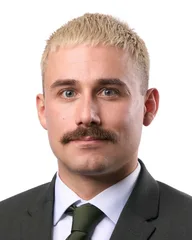
|
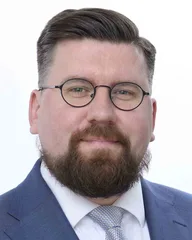
Lukas Sieper | Germany DEU | Non-attached Members (NI) | 390 |
| 2 |
|
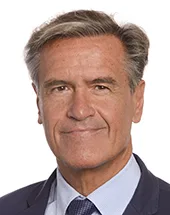
Juan Fernando López Aguilar | Spain ESP | Progressive Alliance of Socialists and Democrats (S&D) | 354 |
| 3 |
|
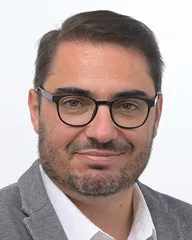
Sebastian Tynkkynen | Finland FIN | European Conservatives and Reformists (ECR) | 331 |
| 4 |
|
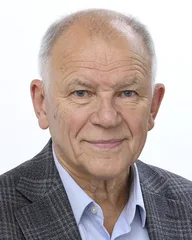
João Oliveira | Portugal PRT | The Left in the European Parliament (GUE/NGL) | 232 |
| 5 |
|
Vytenis Povilas Andriukaitis | Lithuania LTU | Progressive Alliance of Socialists and Democrats (S&D) | 227 |
All Contributions (50)
Prevention and treatment of obesity (debate)
Madam President, thank you very much. Today, a majority of Europe's population is overweight and almost a fifth are obese. The trend is also going in the wrong direction. We see that there is a worrying rise in both overweight and obesity among children. Obesity is linked to several different health risks, not least mental illness and cardiovascular diseases. In order to strengthen public health in Europe, it is therefore of the utmost importance to also combat overweight and obesity. It is particularly important to break the trend among children and young people. Action is needed on several levels, and obesity must be counteracted from the outset. It is about healthy diet, good nutrition and physical activity from a young age. At school, but also in my free time. But we also need to change our approach. Obesity is not only a result of poor lifestyle factors, but it is also a disease. This means that we can not only focus on prevention, but also have to look at treatment. Obesity is a societal challenge across Europe. It requires that we work together to prevent and counteract and that we also learn from each other's experiences. Together we can build a healthier Europe.
World Cancer Day (debate)
Mr President, thank you very much. Early in the morning of January 24 this year, our neighbor and friend fell asleep. He had lost the battle with cancer. He was a beloved husband, father, father-in-law, grandfather and grandfather. He was my children's extra-grandfather and mentor, and he was my husband's best friend. He was a source of knowledge, he was meticulous and wise, and he was the center of the party. For you, he's a statistic. For us, he was Gunnar. I know that all of you who sit here can also dress numbers in names. No one is free from a disease that still has no cure, even if we make progress every day. Every day, 7 500 new cancer cases are detected in the EU. In Sweden alone, 75,000 cancer cases are reported every year. Cancer is a common disease that affects all of us and is today Europe's second most common cause of death. At the same time, we are making significant progress in the fight against cancer, both in the context of Europe's Beating Cancer Plan and through initiatives at national level. In Sweden, we developed a national cancer strategy in 2009, and our focused work has led to cancer mortality being among the lowest in the EU today. We can strengthen our conditions for research and development in Europe. We need to share our good examples for curing cancer, for all those who have struggled and those who are struggling.
Framework for strengthening the availability and security of supply of critical medicinal products as well as the availability of, and accessibility of, medicinal products of common interest (debate)
No text available
Presentation of the EU Cardiovascular Health Plan (debate)
No text available
Conservation and sustainable use of marine biological diversity of areas beyond national jurisdiction (debate)
Madam President, thank you very much. Commissioner, thank you very much. International waters require international cooperation. The sea is our common heritage. We have a responsibility both to ourselves and to future generations to manage that heritage. That is why we must work together to protect our seas beyond our national borders. Marine biodiversity must be safeguarded both in European waters and worldwide. The BBNJ agreement, which will enter into force as early as next year, will be an important step on the road to protecting our oceans. I am proud that all countries in the EU have signed the agreement. It is a strong signal to the world that Europe protects our common resources, that we protect our oceans and that we take responsibility for the future. I would like to thank the rapporteur and the shadow rapporteurs of the other groups for their good cooperation, and I look forward to continuing to cooperate after tomorrow's vote and further into the trilogue negotiations.
Breast cancer: the importance of screening (debate)
Madam President, thank you very much. Commissioner Jørgensen! Every year in October, we pay attention to breast cancer – the most common form of cancer in women. Too many have either suffered themselves or have someone close to them who has done so. But thanks to focused work, we have made great progress in the fight against cancer. In Sweden, nine out of ten survive their diagnosis, but this is not the case in all of Europe. There are still significant differences in both incidence and mortality across Europe. There is a direct link between countries that invest in screening and prevention and reduced mortality. That is why Europe's countries must invest in preventing, detecting and combating breast cancer, so that all women in Europe have equal care and chances of survival.
Circularity requirements for vehicle design and management of end-of-life vehicles (debate)
Thank you, Mr President. Madam Commissioner Roswall! In July every year in my hometown Västerås, thousands of people gather to experience the festivities with vintage cars, with cruising, and if you feel a little romantic, you can even get married. For many, vintage cars are more than just cars, it's also a lifestyle. To finally show off his car after many hours of work and care in the garage all winter. I think that many people feel an extra pride when they get to go in the fine car cruising. Unfortunately, the original proposal risks classifying vintage cars as end-of-life vehicles and thus they must be scrapped. I am therefore proud that we moderates, together with stakeholders in the industry and the Social Democrats, have brought about a change. It is therefore very strange to listen to the Sweden Democrats and Beatrice Timgren here in plenary. You have not made a single proposal. You haven't even been able to lift a single finger to help save the vintage cars. But tomorrow the Sweden Democrats have the opportunity to vote to preserve an important part of Swedish culture, and I think you should take it.
European oceans pact (debate)
Mr President, I would like to thank you. Commissioner Kadis. Commissioner Roswall. The Baltic Sea is today one of the world's most polluted seas and the situation is serious. We see how both fish stocks and the fishing industry are threatened. In just a few years, small-scale fishermen have been forced to close down their businesses, for the simple reason that there are no longer any fish in the sea. This has major consequences for coastal communities, the marine ecosystem and biodiversity. A concerted effort through the Maritime Pact is crucial for the survival of the Baltic Sea. Therefore, it is important that the pact also prioritises the Baltic Sea. Because we need a holistic approach to rebuilding fish stocks, improving the aquatic environment and securing fishing opportunities for future generations. For today's efforts are tomorrow's catch.
Competitiveness Compass (debate)
Madam President, I would like to thank you for your It is a long-awaited debate that we are holding today. How can the EU strengthen its competitiveness? How will we fare better in the global competition? More sectors need innovation and an active industrial policy. I intend to focus on a part of the competitiveness compass, and it is the one on the pharmaceutical sector, which is an important part of competitiveness. We see that the Commission will present new proposals for biotechnology to enable the use of new technologies. But if Sweden and the EU are to cope with competition and maintain a position at the forefront, we need to do more. The new pharmaceutical legislation needs to be put in place to cut red tape and free up more resources for both research and innovation. By investing in research, promoting innovation and improving regulatory frameworks, we can create growth while preparing for the challenges and crises of the future. If we succeed in ensuring a competitive pharmaceutical industry, Sweden and the EU can not only face tougher competition, but also future crises. We know from lessons learned from the pandemic that it is when we work together that we can also stand strong and clear challenges going forward.
Need to detect and to counter sabotage by the Russian shadow fleet, damaging critical undersea infrastructure in the Baltic Sea (debate)
Mr President, thank you very much. Commissioner, thank you very much. It is almost three years since the Russian full-scale invasion of Ukraine began. For three years, the Ukrainian people have shown unimaginable resilience and courage. As friends of freedom, we have a duty to support Ukraine financially, militarily and humanitarianly. Russia is circumventing the sanctions by means of falsely flagged vessels on the Baltic Sea. At the same time, we can see underwater activities. We see that the Baltic Sea has become a target both above and below the water. The EU has done a lot, but more needs to be done. Above all, we need to stop the war economy that finances Russia’s war against Ukraine, among others. I am sure that we can do more from here the EU, together with other actors, to overcome what needs to be done for Ukraine to win the war.
Topical debate (Rule 169) - Budapest Declaration on the New European Competitiveness Deal - A future for the farming and manufacturing sectors in the EU (topical debate)
Mr President, I would like to thank you. Farmers want to cut emissions. They want to contribute to the green transition and strengthen our food security. But too many farmers today are struggling under a heavy regulatory burden, climate change and reduced profitability. At the same time, our expectations for them to produce more food, invest in the green transition and reduce emissions are increasing. In order for this to be possible, we must ensure that agriculture has the right conditions to run sustainable and competitive farms with increased profitability. To achieve this, a number of measures are needed, and today we have voted for a new Commission in which I hope that this is taken seriously. We need to reduce the regulatory burden. Farmers must be able to do what they do best – farm their land. We need to enable new technologies in agriculture, so that we can have agriculture that is able to withstand climate change such as droughts and floods, while also increasing the production of food. If we succeed in this, we will strengthen the competitiveness of our farmers. Europe's food security and agriculture must be given the opportunity to make the transition.
Outcome of the Strategic Dialogue on the Future of EU Agriculture (debate)
Madam President, I would like to thank you for your Madam Commissioner, I would like to thank you for your At the same time as we are debating in this House, my sons are sitting at home in Sweden on a tractor and sowing winter wheat to contribute to our common food supply. That makes me proud. But what worries me is that many farmers today are asking themselves if it is worth continuing. This is largely due to droughts and floods, but also due to a heavy regulatory burden. It is therefore to be welcomed that the Commission has initiated a dialogue on the future of agriculture. Strengthening the competitiveness of agriculture must be part of the EU's priorities for the coming years. Unfortunately, there are parts of the report that risk doing the opposite, with signals to make agriculture more detailed and let politics choose who is the winner and who is the loser. That's not our mission. The dialogue proposes only strengthening plant-based agri-food chains and introducing tax cuts for sustainable products. My question will then be: Who decides what is sustainable and what is not?
Plants obtained by certain new genomic techniques and their food and feed (A9-0014/2024 - Jessica Polfjärd) (vote)
Madam President, and thank you, colleagues, it is a historic day when the European Parliament has voted in favour of science, of food safety and in support of European farmers. After decades of deadlock, we have finally taken a step towards a modern framework for regulating NGTs. And according to Rule 59(4), I request to have the file referred back to committee for interinstitutional negotiations.
Plants obtained by certain new genomic techniques and their food and feed (debate)
Madam President, thank you very much. Thank you to all colleagues and the Commission for this debate. I think it's pretty clear to those who listen that this is an issue that engages. And that's basically good. We shall have an open debate on the future of agriculture and our future food security and in particular on NGT, as it is a technology that plays an important role in this work. I believe and hope that today's debate has made clear what the various political groups stand on this issue. It is clear that some people never wanted to see this bill at all. Others may not be against NGT, but still want to create a product that practically makes its use impossible. What they both have in common is that they cannot offer any constructive alternatives. Instead of letting curiosity and commitment lead us, we have let suspicion and prohibition lead us for a long time. I think it is high time we gave up old prejudices and embraced innovation. The current regulatory framework for gene-edited crops, which is over 20 years old, is not in line with how the development of new plant breeding techniques has taken place over the years. While other countries are progressively advancing in their development and strengthening both their agriculture and their food security, there are colleagues in this House who seem to want to do everything they can not to allow European farmers to take part in a global development that we see and should measure ourselves with in other parts of the world. My group and I, we have never said that this is the only solution to all our challenges. But it will shift agriculture towards more sustainable ones. However, we have said that we need to give our farmers all the tools they need to be able to live up to the goals that we in this house have decided on. In this context, the NGT plays an important role. I would like to thank you for the opportunity to show tomorrow that we are a Parliament that stands up for science and innovation.
Plants obtained by certain new genomic techniques and their food and feed (debate)
Mr President. Every day we eat breakfast, lunch and dinner thanks to farmers who invested and farmed the land to give us food on the table. It is thanks to them that Europe has a world-class food supply. But today our farmers are on their knees fighting and many are asking themselves if it is worth it. Much as a result of droughts and floods, which ultimately affect the quality, size and thus profitability of harvests. At the same time, we are facing a global food crisis, and in a time of war and unrest, we see how vulnerable we are to disruptions in trade flows and how it ultimately affects your and my everyday life. European farmers must be given the right tools to face the future, as farming demands increase and as the climate changes. Today, we have an award-winning technology that can help advance the EU’s climate action – a technology that gives us the opportunity to strengthen the competitiveness of European agriculture and increase our food security. However, despite the fact that both knowledge and technology are already in place, we in Europe cannot take advantage of this opportunity. For many years, the issue has been discussed. It has now been negotiated in the European Parliament for several months. It is a proposal that lays the foundation for a modern regulatory framework and enables and allows NGT in a safe and responsible manner. There will always be new challenges where policy needs to be courageous and forward-looking in order to find new solutions, where policy needs to rely on innovation and science. This is one such occasion. NGT is used in other parts of the world. If we want the EU to continue to be a pioneer in innovation and new technologies, we must also have a regulatory framework in place that enables just that. This is not the case today, but tomorrow this Parliament will have the opportunity to say yes to new technologies and to the future. By voting in favour of the proposal, we are showing that we are a Parliament that stands up for science and invests in the future of agriculture. In 2020, the Nobel Prize in Chemistry was awarded to researchers Emmanuelle Charpentier and Jennifer Doudna for their groundbreaking research on the CRISPR/Cas9 gene scissors. Let us make 2024 the year when we show that Europe can not only praise scientific breakthroughs but also use them to Europe's advantage.
Framework for ensuring a secure and sustainable supply of critical raw materials (debate)
Mr President, thank you very much. Today we will vote to strengthen access to critical raw materials in the EU, i.e. all the minerals and metals needed for the green and digital transitions and for the economy of the future. This is an important decision we will make. At present, the extraction of these raw materials in Europe is almost non-existent, which is why we are dependent on imports from third countries. The risks of such a situation are clear in the light of geopolitical tensions and the protectionist developments that we can see all over the world. But now we have the opportunity to change course with this legislation. For too long, politics has been beating the bones of the mining industry. We have also chosen too much to turn a blind eye to the role of minerals in the transition and in the ongoing work, where demand is increasing every day to cope with our green transition. It is high time we changed that. The mines were one of the basic industries that once made Sweden rich and well managed, they will help Europe on its journey to the future.
Sustainable use of plant protection products (debate)
Emma Weisner, thank you for the question. Yes, just like Emma, I share the view that there must be a method of calculation that allows those countries – in this case the Nordic countries – that have reduced their use of plant protection products to also be credited for this. But it's not just the Conservatives and Christian Democrats who say this. It is also the farmers themselves who say that they find it difficult to achieve the objectives set by the European Parliament if they look like this. It is believed that this will be difficult and that it will lead to difficulties in being able to produce efficiently. Just ask the Swedish farmers, Emma.
Sustainable use of plant protection products (debate)
Madam President, thank you very much. Commissioner, ladies and gentlemen. European farmers need to be able to work under long-term conditions and rules of the game. We need to ensure that plant protection products can be used responsibly and safely, when and where necessary. It is simply not possible, on the one hand, to say that we should strengthen and increase our food production in Europe, in order to have proposals on the table in the next breath that risk knocking away the bones of the producers. Several countries in Europe have done their homework and continuously reduced the use of plant protection products. We should therefore work at European level and give the Member States more influence, not least with regard to the definitions of protected areas. In recent years, we have seen proposals after proposals that question agriculture when, in fact, we should do the opposite. My party group and my party, the Moderates, believe that it is time to stop seeing agriculture as just a problem without actually securing and seeing it as part of the solution. (The speaker agreed to answer a question ("blue card"))
The proposed extension of glyphosate in the EU (debate)
Mr President, Commissioner, thank you very much. We are in a time of worry. We have a war in our neighbourhood. We have rising costs on everything from energy to food. Many people in Europe are struggling to make ends meet. In such times, we cannot afford to put more burden on European agriculture. A ban on glyphosate means lower harvests and higher costs for farmers and consumers. The Greens like to accuse agriculture of being a threat to the climate. At the same time, there are calls for bans when trying on the part of agriculture to reduce its emissions. The desired ban on plant protection products threatens, for example, the cultivation of intermediate crops that bind carbon dioxide in the soil. Without them, emissions increase. It does not benefit either Europe's climate efforts or Europe's farmers. It is therefore to be welcomed that the Commission wishes to renew confidence and approval for glyphosate. Experts have concluded that glyphosate is neither harmful to the environment nor to public health. I want to listen to that evaluation. We cannot afford to ignore the facts. You can't just listen to experts when it suits your own opinions. Our citizens deserve better.
Framework for ensuring a secure and sustainable supply of critical raw materials (debate)
Mr President, thank you very much. If we are to succeed in the green transition, several factors will determine whether we succeed or not. Access to raw materials and materials is crucial for, for example, the electrification of transport, fossil-free energy and the digitalisation of our societies. In the geopolitical landscape in which we find ourselves, we need to reduce dependence from countries such as Russia and China. Therefore, in order to guarantee the minerals and metals we need for the green transition and economic growth, we need to have a higher degree of self-sufficiency in Europe. Demand is high. The proposal on recycling is therefore a good one. But we can also conclude that we need more mines to ensure the needs and competitiveness. That is a good proposal we will vote on tomorrow. It is a necessary proposal for businesses and citizens. I would also like to take this opportunity to thank the shadow rapporteurs in ECON and ENVI and the rapporteur Nicola Beer for their good cooperation. Then I thought I would move on to the Committee on Economic and Monetary Affairs, where I have also been responsible. There, I would like to mention two things in particular, of which I am proud. One is that we emphasise the importance of private funding. It is essential that we encourage and prioritise private capital. The resources of the public sector are not infinite, and the business community wants to be involved in investing in the future of Europe. Public and private funding must be complementary if we are to achieve success and results. Secondly, that we do not leave the philosophy of this proposal to the sectors concerned. As we heard from the President of the Commission this morning, the regulatory burden in Europe needs to be reduced. There are many elements of the legislation that we are voting on tomorrow that we should be inspired by and broadening and inspiring other sectors. Mr President, thank you very much. Let this be the start of a series of legislative proposals that seriously make the European economy a force to be reckoned with!
Ecodesign Regulation (debate)
Mr President, thank you very much. Commissioner. It has already been three years since the Commission presented its Circular Economy Action Plan and we here in the European Parliament drew up our own-initiative report. Since then, we have taken clear steps to achieve our climate goals, and now we are also showing that we are delivering on the transition to a more circular economy. It is a great success and I would like to thank the rapporteur, Mr Moretti, and my shadow colleagues for their good cooperation and for reaching an agreement. There is a great deal of uncertainty in Europe, both politically and economically. In that case, it is particularly important to ensure and maintain the support that we have received from the voters for our environmental policy. This means that we need to think carefully about how we implement it. Clear frames are the way forward, not detail management. For businesses, the most important thing is quite simple: Everyone wants to be able to compete on equal terms. I think we have given them the tools to use what is one of our most important assets, namely the European single market. Our single market is one of our Union's greatest strengths. Unfortunately, we are not using it to its full potential. Sometimes we can even undermine its functionality. Removing internal barriers to trade and growth has therefore been one of my top priorities. But we have also put completely new proposals on the table, not least in terms of tougher measures to encourage more sustainable value chains both in textiles and on the electronics side. With these rules, I believe that European industry will have the opportunity to change on an equal footing. With this proposal, we are on the right track to create an EU market for sustainable products. That's the way to go.
Nature restoration (debate)
Mr President, thank you very much. There is less than a year left of this term of office. That is why it is good that this week we have a debate and vote on the Nature Restoration Act, where everything becomes clear. It matters who represents the electorate. On our side, we are clear. When something does not meet the standard, it should be done again. We do not make up false arguments about this proposal, that it is, or an ecological collapse. That's not true. Such arguments help no one, least of all the environment and climate. We want to strengthen biodiversity, but we also need targets that are realistic and actually feasible. That cannot be said about this proposal. The left has clearly shown that they are not interested in bringing everyone along on this journey towards a sustainable society. Instead, you want debates where they can ugly-paint all those who don't think like them. I think it is unworthy of this Parliament and of European environmental work, which is so important. It also ignores the people who are actually going to manage the land that we actually have to farm and that we depend on. The Conservatives and the EPP will always put people at the centre of our policies. We and our group believe that farmers and foresters are part of the solution, not part of the problem.
Implementation and delivery of the Sustainable Development Goals (debate)
Madam President, thank you very much. The Sustainable Development Goals (SDGs) are and should guide our political work. Much has already been done, but much more needs to be done. Unfortunately, we are now seeing developments going in completely the wrong direction in several areas, not least in the wake of the global pandemic and Russia’s brutal and illegal war in Ukraine. This trend must be reversed. We need to get back on course. This requires clear and effective measures and cooperation and commitment from all the different actors in society. The core of the SDGs must be what we focus on. Otherwise, we will miss the goals. It does not agree that, like some political groups in this house, priority should be given to picking domestic political points on issues unrelated to the SDGs. That's why we need to work together. The business community needs to help. And we know that in politics we have to do what we can.
Batteries and waste batteries (debate)
Madam President, thank you very much. Batteries are in many ways crucial for the future: to cope with our energy supply, for our ability to reach our climate targets and also to implement the industrial green transition. As large parts of the world switch from fossil fuels to renewable energy, energy storage will become increasingly important. To meet this need, huge industrialization is required. At present, we can see that the market is dominated by Asia, especially China, South Korea and Japan. But Europe has good conditions. We are already seeing this in Sweden, where new battery factories are emerging and creating new jobs and opportunities. Now we need to enable further development in Europe. With this agreement, we are taking a decisive step along the way. Two things are particularly important: Firstly, we are strengthening the internal market for batteries. It is crucial to boost investment in the production of sustainable batteries and to strengthen European competitiveness. Secondly, we are also closing a number of gaps in existing legislation. At the moment, we are seeing uneven implementation of EU rules. This means, among other things, that used materials are not used as a new resource – a problem that hinders, among other things, the ability to secure the supply of metals. Now we are taking a step towards a more circular economy that also promotes innovation. I would like to take this opportunity to thank my colleagues for their good cooperation – AchilleVariati as rapporteur-general in Parliament and also responsible negotiator from the other political groups, as well as the Council of Ministers and the Commission.
IPCC report on Climate Change: a call for urgent additional action (debate)
Mr President, thank you very much. There is a lot of clarity that you don't have to read between the lines. The Intergovernmental Panel on Climate Change is one such document. More needs to be done in international climate action. But research not only helps us understand the problems we face, but also points to the solutions available. Copernicus presented a report the other day showing that Europe is warming faster than the rest of the continents. It points to last summer’s droughts, forest fires and so on – that it has concrete effects on our climate and that we are now breaking record after record, but not in the sense that we would like to be the best in Europe. That is precisely why I think it is rather remarkable that there are groups in this house that continue to oppose solutions that we need to put in place to effectively work to achieve the climate goals and counteract the developments that we see in the climate field today. But every time we talk about enabling new technologies, such as carbon capture, which the IPCC also demonstrates is a necessity to reach the climate targets, we go head-on – it turned out as late as this week when we discussed and voted on sustainable carbon cycles. The same applies, for example, to biomass, which is also a resource identified by the IPCC as necessary: Time and again, we can see how colleagues in this Parliament are doing everything possible to undermine the role of biomass in the transition. In my party, the Conservatives, we are clear: All types of energy are needed. This is also being opposed by other political groups, and I think it is a mistake. To want to close the door at this point in time to use all the resources and technologies available to us is nothing short of irresponsible. We will need all the solutions and we cannot afford to say no to anyone.