
| Rank | Name | Country | Group | Speeches | |
|---|---|---|---|---|---|
| 1 |
|
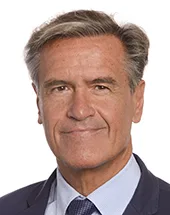
Lukas Sieper | Germany DEU | Non-attached Members (NI) | 390 |
| 2 |
|
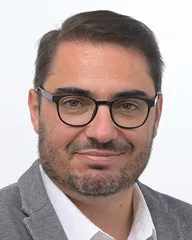
Juan Fernando López Aguilar | Spain ESP | Progressive Alliance of Socialists and Democrats (S&D) | 354 |
| 3 |
|
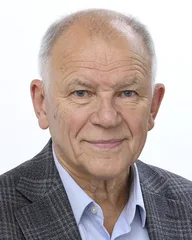
Sebastian Tynkkynen | Finland FIN | European Conservatives and Reformists (ECR) | 331 |
| 4 |
|
João Oliveira | Portugal PRT | The Left in the European Parliament (GUE/NGL) | 232 |
| 5 |
|
Vytenis Povilas Andriukaitis | Lithuania LTU | Progressive Alliance of Socialists and Democrats (S&D) | 227 |
All Contributions (45)
Quality jobs in a competitive future-oriented social market economy (topical debate)
– Mr President, ... on the initiative of the EPP Group – quality jobs in a competitive and future-oriented social market economy. In other words, we are essentially discussing the foundation of all other policies that this House may or may not want to pursue. I say so because sufficient funding is a prerequisite for all other political priorities, particularly the ones concerned with social policy. And I say so because, regardless of what socialists might claim, such funding can in the long term be available only as a result of increased European competitiveness, with better and more high paying, European quality jobs. What then must be done to achieve this foundational target? A lot, of course, especially considering the worrying trends of European competitiveness lagging further and further behind our global competitors. But I would emphasise three especially important areas of actions: better skills, a more competitive regulatory framework and an increased respect for the principle of subsidiarity. Firstly, the still ongoing European Year of Skills, however, is another EP priority and has been and is a success in promoting the mindset of reskilling, upskilling and innovation that must be centre stage in order to help our companies, in particular SMEs, with an urgent European skills shortage. The two Council recommendations adopted in this context are two good examples of concrete legislative actions already taken. European funding, for instance, from the Digital Europe programme to numerous research projects and public private partnerships, are in the same vein: prime examples of cases where European action creates an added value in the area of skills, in particular ICT skills. Secondly, better skills, however, will only carry us only so far if our regulatory framework is not of a similarly high qualitative standard. The good news is that while many of the skills of a competitive Europe indeed are quite advanced, the recipe for a more competitive regulatory framework is not exactly rocket science. European companies need more of a level playing field in relation to their global competitors, and this, in short, means that Europe needs to cut red tape. Several key actions have already been announced by the Commission. We must urgently get in place the reductions of the burden associated with reporting requirements for businesses by at least 25%, and we must work towards a regulatory moratorium in relevant, severely overregulated fields, while also ensuring, of course, that every new piece of legislation passes the standard of an EU competitiveness check. Lastly, we are talking about quality jobs in a social market economy. My sincere hope is that the Commission, as well as colleagues of a more federalist persuasion, will take to heart that such an economic model can only be built by respecting the principle of subsidiarity and the vastly different social models in the Member States. The important calls for European actions for a more competitive social market economy must not be confused for calls for centralised and streamlined social policies. With a more competitive Europe, with more and better higher paid jobs, we will be better off together, united in a prosperous diversity.
European Defence investment programme (EDIP) (debate)
Madam President, Commissioner, Council representative, on 24 February 2022, Russia started its full scale invasion of Ukraine. Since then, our Union has been tested. The European Union was built on the foundation of peace, and in order to yet again achieve peace in Europe, we need to continue to show our united and unfaltering support to the Ukrainian people and to welcome Ukraine into our Union. But we also need to ensure that the EU is better equipped to deal with threats to our common security. ‘If you want peace, prepare for war’. It is clear that we have failed in this regard. Our Member States’ armed forces have been underfunded for decades, and the European Commission’s initiatives to strengthen EU cooperation within this field has so far been short-term and budgetarily-limited. The European Defence Industry Reinforcement through Common Procurement Act (EDIRPA) and the Act in Support of Ammunition Production (ASAP) are important steps, but clearly not enough to truly have a long-term impact to strengthen the defence industrial base in Europe. In this respect, the foreseen European Defence Investment Programme (EDIP) is vital, and expected to be the long-term instrument that provides the base for a stronger defence industry in Europe. However, after being announced in May 2022, EDIP has been postponed again and again. This is not a problem of tomorrow. Russian troops are on European soil today, invading a neighbouring country’s territory. What Putin understands is strength, and it’s unfortunately a sign of weakness that we have failed to deliver EDIP in time and with a proper substance and budget. It is, of course, welcome news that the Commission now plans to propose EDIP in February, but given the background I would not get my hopes up just yet.
Need to release all hostages, to achieve a humanitarian ceasefire and prospect of the two-state solution (debate)
I am deeply concerned about my Irish colleague from the Left Group. Antisemitism is on the rise throughout Europe and an elected official continues to spread antisemitic messages. Also, this is a war that started because of terrorism: a war between a democratic state and a terrorist group. But in your upside-down world, you are calling the democratic state the terrorists and not even mentioning the atrocities committed by Hamas. This, my dear colleagues, is a clear example of the batshit-crazy left that does not belong in any elected chamber, let alone this one.
Framework for ensuring a secure and sustainable supply of critical raw materials (debate)
Sweden and Finland have a lot of the critical raw materials we need for the green transition. I am a little surprised when a Finnish member of the Finnish Green Party wants to give veto rights to Sámi for establishments and also claims that the consequences will be too serious for the environment. But how will we manage the green transition? Will it be better for the environment if we push these substances up from China or in Africa?
Framework for ensuring a secure and sustainable supply of critical raw materials (debate)
Mr President, thank you very much. Critical raw materials are a key ingredient for the green transition. Without these, we will fail in the electrification of, among other things, industry and the transport sector. The choice we really have is whether these raw materials should be mined in China, Africa and Central Asia or whether we should increase our independence and increase mining in Europe. The European Parliament's position for the negotiations on the Critical Raw Materials Act contained the proposal that the principle of Free and Prior Informed Consent (FPIC) should also be enshrined in the legal text itself – something we know in the EU context would risk having the consequence that indigenous peoples would be given veto power over mining establishment. It would be devastating for Sweden, where Europe's only indigenous people, the Sami, live around several of the deposits with minerals and metals that are central to the transition. I am therefore relieved to see today the final result of the legislation, in which this right of veto has been removed from the proposal. At the same time, however, I regret to note that this benevolent legislation hardly compensates for the many steps that have been taken and continue to be taken in the wrong direction, with flimsy environmental policies hampering strategically important industries in Europe.
Proposals of the European Parliament for the amendment of the Treaties (debate)
Mr President, thank you very much. Many of us are saddened that Britain chose to leave the Union at the beginning of this parliamentary term. They claimed that the EU was on its way to becoming a superstate with greatly reduced national influence. They were wrong, but it looks like they might be right. At least if the European Parliament's proposals for Treaty changes were to become a reality. If that were the case, Sweden's ability to stop new EU taxes would disappear. The EU could control health care. Sweden would lose all right to influence its own environmental policy and we would have an EU government. Anyone who wants to safeguard European cooperation must try to stop this kind of proposal to create a European superstate. Otherwise, more countries than the UK will want to leave.
Sustainable use of plant protection products (debate)
Emma Wiesner, even with the exception of countries that have been successful in reducing the use of plant protection products, this means a binding target for the reduction of plant protection in Europe. Plant protection is central to both Swedish and European farmers. The outcome of such binding targets is clear. This means a reduction in food production in Europe. But it is clear that the Center is prepared to pay that price. Another betrayal of the peasants of the former Peasants' Union.
Generational renewal in the EU farms of the future (debate)
Mr President, thank you very much. Let's be clear: Europe needs more, not fewer, farmers. For this to be possible and for there to be young people who want to invest in becoming farmers, we need to simplify their work, not make it more difficult. The European Left, on the other hand, is pushing the opposite. They want to put new administrative burdens on farmers. They want to deprive farmers of the possibility of using pesticides. They want to regulate cattle as an environmental threat, and through draconian measures, such as the Nature Restoration Law, they want to deprive farmers of the right to farm the land they own. Mr President, thank you very much. Next year, the European Parliament will again hold elections – an important election on many levels also for European farmers.
Rule of Law in Malta: 6 years after the assassination of Daphne Caruana Galizia and the need to protect journalists (debate)
Madam President, we are here to honour the memory and work of Daphne Caruana Galizia six years after her assassination. In honouring the memory of Daphne, as well as the work of other brave journalists, some of whom were murdered simply for unveiling the truth, we honour also the ideals that we hold sacred in our democracy: freedom of the press as a prerequisite for informed debate; the rule of law as the basis for solving our differences; and the continuous fight against corruption and impunity as necessary tasks for all legitimate governments. These are high ideals which we must strive towards through concrete actions. For instance, the actions proposed by the much-needed public independent inquiry into the murder of Daphne, as well as the actions proposed by this Parliament in previous resolutions. Six years after the assassination of Daphne, it is clear that such action is still lacking, and this requires efforts across the political spectrum. I conclude that several of my colleagues in this House, not the least the groups seated to the left, yet have to prove their commitment to our shared ideals, and not only criticise violations of these ideals when they are committed by governments representing another political family.
The new European strategy for a better internet for kids (BIK+) (debate)
Madam President, rules that apply offline must also apply online in a world that feels just as real to many young people growing up today. While most kids cannot picture a life without internet, the bullying and abuse that take place online can be constant and literally accompany children into their homes. We must find means to put an end to this. It is also clear that we must find new tools to stop grooming, violations and the spread of sexual abuse material online. The internet cannot be a safe haven for predators. This is the ambition with a new regulation laying down rules to prevent and combat child sexual abuse, commonly called ‘chat control’. However, rules of privacy clearly protected in the real world must also apply in the online world. The principle of secrecy of correspondence is clearly jeopardised by the proposed EU regulation. The road to hell is paved with good intentions. We must not allow the well-intentioned ambition to make internet safe also mean the end of free communication and the open internet as we know it.
The proposed extension of glyphosate in the EU (debate)
Madam President, thank you very much. To use the land on which we live is the foundation of civilization. Without a functioning food supply, our society collapses and everything we cherish with it. With a growing population and fewer land areas available for agriculture, it is of the utmost importance that our farmers can reap their harvests safely, efficiently and competitively. And in order to cope with it, it is absolutely necessary to continue to approve the plant protection glyphosate. There are no other plant protection products or methods that can adequately replace glyphosate. The European Food Safety Authority concluded in July that there were no critical impacts of glyphosate on humans or the environment. But it does not seem to matter, because when I listen to left-wing colleagues in this House, it is their gut feeling rather than the facts that is more important. We must resist when superstitious green politicians call for bans. For the winners of a ban, it would of course be the non-EU operators exporting crops to the Union. The node was to be paid by our own farmers who day in and day out struggle to deliver food to our tables. Let us avoid this betrayal and support science, the conclusions of the expert authority and our farmers.
Framework for ensuring a secure and sustainable supply of critical raw materials (debate)
Mr President, thank you very much. Europe needs to increase its access to critical raw materials. These are essential if we are to cope with the green transition and succeed in electrifying on a broad front. Moreover, if we are to do this while reducing our independence from the outside world, especially China, then recycling is not enough. We need to have first-hand sources in Europe with more mines and make use of the untapped resources available in the Union, for example in Sweden. But the Left and the Greens in the European Parliament are now doing what they can to make it more difficult for the extraction of these necessary minerals and metals, including by wanting to give indigenous peoples such as the Sámi veto rights over the establishments. As a politician, you have to learn to prioritize. Sometimes different interests are against each other. It is clear to me that we cannot allow special interests to stand in the way of this industry, which will play a crucial role in strengthening competitiveness and achieving climate objectives.
EU-Tunisia Agreement - aspects related to external migration policy (debate)
Mr President, the uncontrolled illegal immigration over the Mediterranean is a threat to all Member States and the Union itself, as it erodes the alliance of the free movement, not to mention the many deaths in the Mediterranean that are caused by the activities of cynical human trafficking networks. In order to stop this, we need external cooperation. The EU-Tunisia agreement is essential in order to retain a strict control of the EU border for our own security and for humanitarian reasons. We need to work decisively, long-term and on all fronts. We need to get sustainable and common migration policy in place and we need to deepen cooperation with countries such as Tunisia. Together we can make a difference and save lives that are tragically lost at sea due to hypocritical migration policy.
The need for EU action on search and rescue in the Mediterranean (debate)
Madam President, we still have no final death toll from the disaster of the fishing boat that sank off the coast of Greece last month. Every single loss of life is a tragedy. And of course, we must demand that Member States carry out rescue efforts in their own waters. But this is only a solution for the symptoms of a non-functioning migration policy. Part of the long-term solution is to crush the criminal human networks at the roots. Roots that, for instance, go to the Middle East and North Africa. This requires cooperation with third countries by requiring these countries to put trafficking networks in prison and to increase their control at the border in order to stop migrants. This should be a prerequisite to receive any financial aid from the EU or our Member States. We must also remove the pull factors that cause large number of economic migrants to travel to Europe. Screening processes are needed at the external border, and we need a credible system that enables those that have no need for asylum to return.
COVID-19 pandemic: lessons learned and recommendations for the future (debate)
Mr President, thank you very much. The pandemic has taught us many things. The most important lesson is the intrinsic strength of European cooperation if we act together in crises. Joint procurement of vaccines allowed us to get vaccines to more people faster and cheaper than would have been the case if each Member State had acted individually. More lessons on how the EU can respond to future health crises now need to be drawn, and many correct conclusions can also be found in the report we are debating today. Finally, I would like to take this opportunity to address my colleagues who are calling for EU-centralised health policy. You're wrong. We will learn from each other, be a common market in the form of product regulation and foster patient mobility. But the core of health issues, healthcare as such, must continue to be regulated and financed nationally. If we in this House do not show enough support for it, we risk not supporting measures where the EU can actually play an important role in the future of European healthcare.
Nature restoration (debate)
The Nature Restoration Act has a very heartfelt purpose: strengthening biodiversity. I therefore understand that it sounds good to vote in favour of this proposal, but it is all too often that MEPs seem to care more about what sounds good than what is actually good. We are legislators, not political influencers. This proposal would have devastating consequences for the Swedish heartland. I think that the Swedish Social Democrats should care more about what farmers, foresters and rural municipalities care about in this case, than political influencers like Greta Thunberg think.
Industrial Emissions Directive - Industrial Emissions Portal - Deployment of alternative fuels infrastructure - Sustainable maritime fuels (FuelEU Maritime Initiative) - Energy efficiency (recast) (joint debate - Fit for 55 and Industrial Emissions)
Madam President, thank you very much. We are now debating the Industrial Emissions Directive. The inclusion of cattle in an industrial emissions directive is fundamentally a mistake. Our cows are not emission machines and our farmers' properties are not factories. Nor should we treat them as if they were. Cattle are, in the words of the Swedish Minister for Rural Affairs Peter Kullgren, ‘walking, living stockpiles’. When we legislate at national or European level, we should do so from this point of view. Instead, what is proposed here is to look at cows as a problem, which would need further regulation. That's wrong. Europe needs more farmers, not fewer. We need to make farming easier and more attractive, not harder and less attractive. I therefore ask my colleagues to support the amendment by the AGRI Committee not to include cattle in the provisions of the directive.
State of EU Cuba PDCA in the light of the recent visit of the High Representative to the island (debate)
Madam President, thank you very much. Anyone who wants to show solidarity with the Cuban people does not show solidarity with the Cuban regime. This requires clearer action, partly by the High Representative, but I also note that we have elected representatives from the left group here who actively want to legitimise the Cuban regime – an oppressive regime that consistently violates human rights and that imprisons and murders opposition figures. I am ashamed to have so-called colleagues who do this to the Cuban people, because they are the ones to whom we should show solidarity.
Artificial Intelligence Act (debate)
Madam President, thank you very much. The development of artificial intelligence presents both fantastic opportunities but also difficult challenges. That is why we need wise legislation at European level that allows us to seize the opportunities. But it is not wise legislation to prevent the possibility of using AI to increase security in Europe, where the left in the European Parliament actively wants to prevent the use of AI during, for example, ongoing terrorist crimes or while a child is kidnapped. It is clear that AI here has the potential to save lives, and these are opportunities that we want to be able to use. In addition, the left also wants to stop the possibility of using this to increase border surveillance and ensure that we can better control migration to Europe. It is not wise AI legislation to stop those opportunities, so I hope those proposals fall here tomorrow.
Roadmap on a Social Europe: two years after Porto (debate)
Okay, so you’re asking about an update on the Multiannual Financial Framework. From my point of view, I think the EU should prioritise more strongly right now. We have a war in Europe and I see that we have a strong interest in protecting our security. From my point of view, I see that the defence industry needs to get stronger financing. This should go before the interest of a more socialist Europe.
Roadmap on a Social Europe: two years after Porto (debate)
I’m not sure really if I understood the question of my esteemed colleague. I don’t know if it’s possible to repeat the question. More money to what?
Roadmap on a Social Europe: two years after Porto (debate)
Mr President, thank you very much. The European Pillar of Social Rights was adopted under the auspices of the Social Democrats at the Gothenburg Summit in 2017. The Swedish Social Democracy then made a domestic political point that the social pillar would not lead to more EU legislation in the social field. We who called that bluff, and who warned of the loss of control over welfare as a result, were accused of promoting bourgeois intimidation propaganda. Since then, as we know, we have received new EU directives on, among other things, minimum wages, wage transparency, platform work and a quota of parental insurance. No one can seriously argue anymore that the European social pillar means anything but more supranational legislation on the labour market and social issues, which of course is what the united left in the EU has been calling for all along, right? The resolution that we are voting on tomorrow reiterates the growing list of demands for further new supranationalism, which the left-wing groups in the European Parliament never tire of updating and expanding. These include new enforced EU legislation on livelihood support and traineeships. This involves greater governance of health care, childcare and housing policies. It is a question of loosening the current regulatory framework, which encourages and rewards order in public finances. The EU should instead be able to pay for the European left's ever-longer wish list. It is not that one wonders whether the left-wing groups in the European Parliament are aware of the principle of subsidiarity in the Treaties. It is increasingly clear that the Left does not understand that a strong Europe is built through cooperation, but with respect for the competences of the Member States. (The speaker agreed to answer a question ("blue card"))
Establishing the Act in support of ammunition production (debate)
Mr President, this act in support of ammunition production has the very fitting acronym ASAP (Act in Support of Ammunition Production), which we all know normally just means ‘as soon as possible’, and this is surely the case regarding the need to drastically ramp up the production capacity of ammunition in Europe. The failure to do so will be devastating both for our possibility to stand by our unwavering support towards Ukraine and for our possibility to strengthen security in the European Union. Now the EPP Group is asking for an urgent procedure, which I strongly support, to adopt ASAP as soon as possible. I do want to highlight the regrettable choice from the Commission to finance this proposal with funds already intended to strengthen the defence industry – efforts that are already underfunded to begin with. If the Commission is truly serious about making a difference to boost the industrial base, then it needs to get its act together and move forward with the postponed European Defence Investment Programme, preferably as soon as possible.
EU relations with Iraq (debate)
Madam President, as the chair of the European Parliament’s Delegation for relations with the Republic of Iraq, it was an honour to arrange the seventh interparliamentary meeting in Baghdad during our mission in March. At this meeting, we took an historic decision for our interparliamentary relations by establishing a joint parliamentary committee, and thereby reaffirmed the mutual interest in upgrading the relationship between the European Union and Iraq. Iraq is an important strategic partner in the Middle East, and the EU must continue to support all the Iraqi efforts to fight terrorism and improve security. In particular, I want to underline the importance of the EU’s commitment to protect religious and ethnic minorities, not the least Christians in Iraq. During the mission, we did the first official parliamentary visit to the war-torn city of Mosul, which highlighted the oppression that the Christian community in Iraq had to endure, especially during the years of Daesh control over the city. Better cooperation is also crucial on the issue of migration. We believe it is of mutual interest to ensure Iraq’s territorial integrity and sovereignty and thereby establishing control over the country’s borders. We have hopes that the new reform-oriented al-Sudani Government will continue the democratic process and combat widespread corruption. The EU has to support many of the pressing challenges facing the Iraqi Government, such as finding a sustainable understanding with the Kurdish Regional Government and build a diversified economy integrated in the national system. We believe, through this path, the partnership has every opportunity to grow stronger.
The need for European solidarity in saving lives in the Mediterranean, in particular in Italy (debate)
Mr President, thank you very much. Death in the Mediterranean is actually the result of a European Union that has failed to formulate a migration policy that holds for the future. Since the migration crisis of 2015, all Member States have actually found temporary solutions that do not fundamentally solve the problem, where people feel that the only solution is to seek through the irregular routes, causing us to lose people in the Mediterranean. Every day that the EU fails to develop a new sustainable system that is adapted to future migratory flows and that secures a rapid trial at the EU's external border, it will be a failure for European cooperation, but that is also what makes people sacrifice their lives in the Mediterranean.