





| Rank | Name | Country | Group | Speeches | |
|---|---|---|---|---|---|
| 1 |
|
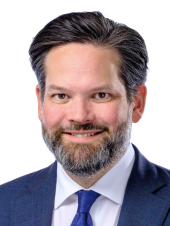
Lukas Sieper | Germany DEU | Non-attached Members (NI) | 390 |
| 2 |
|
Juan Fernando López Aguilar | Spain ESP | Progressive Alliance of Socialists and Democrats (S&D) | 354 |
| 3 |
|
Sebastian Tynkkynen | Finland FIN | European Conservatives and Reformists (ECR) | 331 |
| 4 |
|
João Oliveira | Portugal PRT | The Left in the European Parliament (GUE/NGL) | 232 |
| 5 |
|
Vytenis Povilas Andriukaitis | Lithuania LTU | Progressive Alliance of Socialists and Democrats (S&D) | 227 |
All Contributions (189)
2021 Report on Kosovo (debate)
Madam President, ladies and gentlemen, Mr Lenarčič! The entire Western Balkans – all six countries – are important for the future of Europe. Today we are debating the Republic of Kosovo and the Kosovo report. I would therefore like to point out to you that this is a state with people who have paid a high blood toll for their freedom, a state that could only achieve its independence through the European Union and the United States of America at all, a state that has built democracy and the rule of law at an impressive speed, a democracy that is stable today and that has a high diversity in the country, a state of law, yes, that still needs reforms, but has one of the most modern constitutions in the world in the background, a state that is recognized by well over a hundred states of this world and now also by the state of Israel, which has long been an open question. But a state that is still not recognised by a small minority of Member State governments in the European Union, a state that has citizens who are the only ones in the entire Western Balkans who are not allowed to travel visa-free, a state to which promises are made over and over again, which are then not complied with, are made to the promise, whose compliance is then postponed. This is the Republic of Kosovo. Nevertheless, the people there have the greatest support for European integration, compared to all the Western Balkan states. Nevertheless, there is a confidence there from which everyone else in Europe can learn a lot – from Europe’s youngest state, not only in its statehood, but also in its population. That is why the signal from the European Parliament is so important today.
2021 Report on Serbia (debate)
Madam President, Serbia is a beautiful country with great people, with a lot of cultural heritage. Serbia is a large country compared to the others in the Western Balkans and an economically strong country. It could serve a lot for the region and for all Europe. But I have to remind all of us about our decision in the plenary with a large majority on 1 March, about our deepest concern about Serbian behaviour when it comes to war on European soil. This is why I highly appreciate the work of the rapporteur, Vladimír Bilčík, because it must be extremely hard to conduct a report on such a country with such leadership. We all have to learn our lessons from history. Even we Austrians had to learn our lessons from history, and we still have to. And it is also on Serbia to learn the lessons from history, to align with Europe and European values, to align with the sanctions which are the unbloody defence against the bloody war, and take the first in history, the status of our civilisation, for the sake of the Serbian people themselves.
The EU’s Foreign, Security and Defence Policy after the Russian invasion of Ukraine (debate)
Mr President, with this plenary week and this vote, the European Parliament, on behalf of the people of Europe, will send a clear signal for the security of the Europeans, of this generation and for generations to come. Security means that we have to invest more in defence. Security means that we have to use structures and to strengthen these structures like the European Defence Fund, like the Strategic Compass, in order to contribute to our strategic autonomy. Security means that we have to unify the free world, the so-called political West. We have to align with our partners, our largest partner, the United States, and all the partners around the globe. Because contributing to the free world means to contribute to freedom of people. Security does not mean to militarise society. Security means to have proper armed forces in order to make proper dwelling possible, proper studying, learning, education, work and everything else. It’s about our societies which we like so much and we defend. Unifying the political West also means to contribute to recognition of Kosovo, for example, unifying the political base means to confront also domestically Hungary in our European Union. Within Europe, also to confront Serbia with its obstacles, sending to the process of unifying the political West. Unifying the political West and contributing to security also means to solve our issues within our societies. We have heard today one of our colleagues mentioning it would be two sides of the same medal when it comes to Russia and Ukraine. No, that’s not true. There is one aggressor and there’s one victim. And we are on the side of the victim, on the side of freedom of human dignity, democracy and rule of law. This is what we have to do. We welcome Denmark in the Common Security and Defence Policy this very week after this great referendum there, and we will continue contributing to unifying the free world.
The EU’s Foreign, Security and Defence Policy after the Russian invasion of Ukraine (debate)
– Mr Colleague, I have just heard you say that the support of the free world for the state defending itself – Ukraine – would unnecessarily prolong the war. The question that follows, Mr. Colleague: What outcome of the war and what post-war scenario would you like to see? What's your idea?
The EEAS’s Climate Change and Defence Roadmap (debate)
Mr President, ladies and gentlemen, Commissioner! We chose this outfit today – many here in this house – because we are celebrating 60 years of EU agricultural policy. And this is a success story that needs to be strengthened again and again. I am pleased that an Austrian farmer, Thomas Waitz, has accompanied this important report as chief negotiator, as rapporteur here in the European Parliament – because dealing with climate change and updating defence policy and making it fit for the future are not yet success stories. That's why it's important to see both. It is also good to write both in one report, and I see the report in a very differentiated way. I think it's good that climate change is seen as a security risk in this report because it is. I always like to quote David Beasley, the head of the World Food ProgrammeHe said, after the Man-made ConflictIn man-made conflict, climate change is the second largest cause of crises. We have to face that. I see it critically if, to a certain extent, armed forces are encouraged to make their work more or less CO2-neutral. That won't work. We need to address climate change – in politics, in all areas of society. Armed forces primarily protect people. We also need to protect the climate.
Threats to stability, security and democracy in Western and Sahelian Africa (debate)
Mr President, Commissioner, ladies and gentlemen! I think the migration crisis from 2015 has shown us that we cannot care what happens in other parts of the world, but rather that it affects us directly. I think the pandemic shows us that the world is a village where we are directly dependent on each other. Yes, and the war against Ukraine shows us that freedom and peace, if we do not defend them, will be attacked and destroyed. And all this must make us think when it comes to West Africa and the Sahel, because the region – especially Mali – is marked by incredible tensions and people there suffer incredibly. I am critical of the fact that we are gradually withdrawing from our EU mission in Mali. I understand the reasons. I understand that we are no longer so welcome by the government. I understand that the Wagner Group – which is in fact a Kremlin group that therefore threatens freedom and peace in this world – is also pushing us away. But that's why I ask the question: Is it wise that we let ourselves be so repressed? Shouldn't the lessons from the three crises mentioned above, and indeed from much, much earlier developments, as well as reason and insight into the perspectives for the future, lead us to become more involved and present in the sense of democracy, the rule of law, human dignity and freedoms? This must be borne in mind. I express great respect for the 72 Austrian soldiers who work there, for the approximately 1000 soldiers from 22 Member States, in order to enable training. If famine comes in autumn, winter, as it is predicted, then this region will be particularly affected and our presence will be particularly important.
Use of the Pegasus Software by EU Member States against individuals including MEPs and the violation of fundamental rights (topical debate)
Mr President, Commissioner Johannes Hahn, ladies and gentlemen! It is an old principle that something that can be used for defense and good can also be misused for attack or evil. This is exactly what happened to Pegasus. We need instruments like Pegasus to fight organised crime, terrorism and external attacks. And all the greater is the crime when such an instrument is misused to attack people in parliamentarism and journalism, to attack people in civil society, even to attack people in economic life. And no one should assume at all that she or he himself could not be affected, because abusing such instruments means bringing division into our society, restricting freedoms, and that is exactly what we must not allow. That is why it is important that this committee of inquiry on Pegasus exists. And the Committee of Inquiry will not only investigate and present a very clear report – in any case. But the Committee of Inquiry must ensure that those who abuse such an instrument – and I repeat, that is a crime as such – do not feel safe, those who have done it, those who do it now, those who may still do it, because something that can be technologically broken can also be technologically traced at some point. And this should be known to all those who imagine that they could quickly commit this crime of abuse of Pegasus here or there. We won't let that happen. And the Committee of Inquiry will also make clear recommendations for action on how these instruments, which are important because they are also used to attack Europe, can be used correctly and correctly to defend Europe, under the rule of law, democratically. That will be important. I am pleased that our Commissioner Johannes Hahn said at the outset that the Commission is looking forward to what the Committee of Inquiry will bring, and that will be of substantial value.
The situation of marginalised Roma communities in the EU (debate)
Mr President, ladies and gentlemen. Europe is in an unprecedented defense against an attack. We defend security, we defend the freedom of Europeans and we defend the values advocated by Europe. And one of these values is that we uphold human dignity and civil liberties in Europe. This includes ensuring, here in the Assembly of European Citizens in the European Parliament, that minorities also have freedom rights, also enjoy the rule of law – and, on International Roma and Sinti Day in particular, Roma and Sinti – in education, in the social sphere, in participation in all areas of society. This is what we are defending here. It is depressing to see in this debate that in this European Parliament, too, those forces which are believed to have been supported in the past by those who are now attacking Europe are in turn those who are calling into question the rights of Roma and Sinti here in this debate. You can see how important it is to continue to put human dignity and civil liberties in the foreground. It was important for me to speak on this debate because thousands of people were murdered in the Shoah, the Holocaust, the Nazi criminal state, Roma and Sinti on 2 August in the context of the Roma and Sinti genocide. It is 2 August, which is European Day of Remembrance, and I recommend that all Member States also make 2 August the European Day of Remembrance in Memory of the Crimes of National Socialism against the Roma and Sinti.
Human rights situation in North Korea, including the persecution of religious minorities
Mr President, heading the delegation with the Korean peninsula in this very Parliament, it’s important to me that I emphasise that what the EU calls ‘critical engagement’ is also our approach in the European Parliament in dealing with North Korea, meaning that we push our objective of denuclearisation in North Korea, and we work closely with our great partners in South Korea. As in each and every case and in each and every place in the world, Europe defends the values Europe represents on the planet, and among them is human rights. That’s why this very report of the European Parliament is so important. I myself have seen pictures and graphics of how prisoners are treated in North Korea, and this is something we must not let happen. We must do our utmost to defend human rights, including the freedom of religion and belief, and all the other things that are important for our European values.
The situation in Bosnia Herzegovina (continuation of debate)
Mr President! One of the lessons to be learned from the Kremlin's and Russian leadership's bestial attack on Ukraine is that we must never again allow nationalism, ethnic conflicts, pseudo-religious conflicts or simply lies, false stories, false narratives directed against people because they lead to the abyss at the negotiating tables in Europe or in this world. Stefan Zweig called nationalism the archpest of the century, and he meant the past century. Until recently, I had hopes that things would be better in the 21st century. I am shocked by the nationalist tendencies that have emerged in the Western Balkans, including in Bosnia and Herzegovina, following the Kremlin's invasion of Ukraine. And that is unacceptable. The citizens of Bosnia and Herzegovina deserve democracy and the rule of law and that everyone is equally valuable before the state and the law – in Bosnia and Herzegovina, across the Western Balkans.
The deterioration of the situation of refugees as a consequence of the Russian aggression against Ukraine (debate)
Mr President! The bestial attack on Ukraine, commanded by the Kremlin, leads to an escape movement of incredible proportions. We are holding this debate in the European Parliament on this refugee movement precisely on International Women's Day. It is therefore particularly appropriate to point out that once again the refugees are mainly women and children, also to point out that once again in world history it is women who take on enormous responsibility to get through these times with children. And it is also an occasion for us to say today – because it is true – that there would be less violence, less brute violence and armed conflicts if women had more to talk about. I strongly believe that it takes men and women to complement each other. But if women had a say in the Kremlin, perhaps this bestial attack would have been if these war crimes had not come about. I would also like to point out that this moment of solidarity in Europe, this historic unity must not only be there now in isolation, as a one-day fly, in a sense, but must be sustainable. Europe must come to a new level of civilization. And I would like to point out what Boris Johnson pointed out yesterday: The UK is still a partner for us. Perhaps the current situation also reminds us that there must be no witch-hunting of Russian people if we impose sanctions that are supposed to be effective because they are supposed to help build peace. But all people are worth the same.
Situation in Bosnia-Herzegovina (debate)
Madam President, Commissioner, Minister, ladies and gentlemen! What do citizens want in the Western Balkans and also in Bosnia-Herzegovina? That should be in the foreground for us. Many from this House, who hold talks and conferences with citizens of Bosnia and Herzegovina, know this: They want European integration, as the Balkans Barometer shows, year after year. That is why I want to share with the people of Bosnia-Herzegovina that it is here in the European Parliament after 10 p.m. and that we care about the Balkans, the Western Balkans, and that Bosnia-Herzegovina is close to our hearts. This message is important to me. It is also important to me to direct all phantasists, all ideologues, especially Mr. Dodik: Citizens want European integration. They trust European integration. They do not trust the Russian leadership, they do not trust the Chinese leadership, nor do they trust the Turkish leadership – say others in the Western Balkans; They trust European integration. That's what we stand for. Irrational conflicts based on national affiliation, ethnicity, even religion, must belong to history, are not European and will not serve the Western Balkans, will not serve Bosnia-Herzegovina, have set Europe on the right track – and the Western Balkans will succeed.
Situation in Belarus and at its border with the EU and the security and humanitarian consequences (debate)
Madam President, ladies and gentlemen, this House! I would like to point out two aspects that seem to me to be underexposed in the public debate and, frankly, also in the debate here in the European Parliament. One is that Belarusian leader Alexander Lukashenka brings together criminal activity and political illegitimate pressure against Europe to take action against our borders: on the one hand, the criminal activity of smuggling, organised smuggling, and on the other hand, the pressure on Europe that the Turkish leadership has actually invented. The other aspect is the one that deserves more attention, especially in this House: Namely, that there is a freedom movement in Belarus, which we should support to the best of our ability, which is colorful, which is diverse and which should give the citizens of Belarus their civil right to democracy and the rule of law in their hands.
Foreign interference in democratic processes (debate)
Madam President, Vice-President of the Commission / High Representative of the Union for Foreign Affairs and Security Policy, ladies and gentlemen! There are parts of the world that seek confrontation with Europe. The European model of life does not suit them. The motives for this are very, very different. These can be ideological motives, political motives. They can also be economic motives. They are always very, very short-sighted. And yet this confrontation is sought – by state actors and by non-state actors. We as the European Union consistently defend ourselves against this confrontation, which is expressed in disinformation and which is expressed in the influence of our liberal democracies in Europe from outside Europe, but which is often supported by within Europe. And we need to see that today, by raising awareness, we are creating an understanding of what it means to sow hatred and discord on social media channels, to sow discord between institutions that are democratically legitimate and rule of law, and that Europe is weakening. Because it is the division that is sought by those who are trying to confront Europe. Because the unity of Europe is a great strength, division is the means to weaken Europe. We won't let that happen! And one last point: We are not looking for confrontation. The European way is the way of cooperation. We know inwardly that this ensures prosperity and peace, and we know it geopolitically. In the long term, it is cooperation.