





| Rank | Name | Country | Group | Speeches | |
|---|---|---|---|---|---|
| 1 |
|
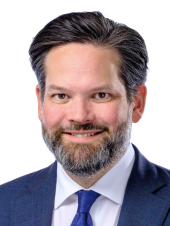
Lukas Sieper | Germany DEU | Non-attached Members (NI) | 390 |
| 2 |
|
Juan Fernando López Aguilar | Spain ESP | Progressive Alliance of Socialists and Democrats (S&D) | 354 |
| 3 |
|
Sebastian Tynkkynen | Finland FIN | European Conservatives and Reformists (ECR) | 331 |
| 4 |
|
João Oliveira | Portugal PRT | The Left in the European Parliament (GUE/NGL) | 232 |
| 5 |
|
Vytenis Povilas Andriukaitis | Lithuania LTU | Progressive Alliance of Socialists and Democrats (S&D) | 227 |
All Contributions (189)
European Health Data Space (debate)
Dear colleague, thank you very much for the question and for the good debate on it. The wording is not important, the word is not important, the possibility is important. And here we represent the citizens of Europe, who have the right to unsubscribe. That is why I have also used the term "unsubscribe" as a general term. And that will be possible, especially with the European Health Data Space in the form we are going to adopt here.
European Health Data Space (debate)
Madam President, Commissioner, ladies and gentlemen! Documentation is so incredibly important for the health of individuals and individuals that, if possible, nothing that has developed in a person’s health is forgotten. Of course, only for prevention and treatment and quite discreetly and not for third parties or even the public. That is why data protection is so important in the context of the European Health Data Space. At the same time, however, it is so important that we secure this data cross-border and sustainably. For something else, this data is so important, namely for the future, for research, research, research. Therefore, it is valuable that we make it possible to store data anonymously across borders, because this generation and next generations will benefit from the fact that this kind of research is possible. Especially from the Austrian point of view, the opt-out option – the possibility to unsubscribe – is so incredibly important to us. Just as the electronic health record is at home in Austria, so is the European Health Data Space. (The speaker agreed to answer a question on the blue card procedure.)
Latest attacks against women and women's rights defenders in Iran, and Iran's arbitrary detention of EU nationals
Madam President, Commissioner, ladies and gentlemen! Socially, prohibition has never worked, and geopolitically, appeasement has never worked. The latest major example of this is the so-called nuclear deal – the JCPOA agreement. Such an agreement cannot be made with the Iranian regime because the Iranian regime does not abide by agreements. The Iranian regime is thus a threat to peace and security in the world. The Iranian regime is particularly a threat to us Europeans, because this regime supports Putin-Russia in the war of aggression against Europe with hybrid means against Ukraine with military means and is thus one of the few remaining supporters of Putin-Russia in this protracted war ultimately against our civilization. The Iranian regime is a security threat to the region and promotes anti-Semitism and Islamist terrorism worldwide. And the Iranian regime is a threat to its own citizens and there again especially to the women who are oppressed, who are persecuted, who do not have a free life, who are far from any form of equality. And this is not only approved by the regime, but also presented to the whole world with all repressive violence. We won't let that happen. We are making sanctions, we are debating this in the middle of the night in the European Parliament, because Europe does not sleep when human rights are violated in this way.
30 years of Copenhagen criteria - giving further impetus to EU enlargement policy (debate)
Dear Mr President, Commissioner, ladies and gentlemen, We are talking about the 30th anniversary of the Copenhagen criteria. The criteria are good, but their application has been in trouble and they are certainly not sufficient to give Europe more external strength as Europe would need. The Copenhagen criteria have a value dimension, an economic and competitiveness dimension and a structural dimension, the so-called acquiswhere compliance with rules is at stake. De facto, when it comes to enlargement, it is always bureaucratic-administrative, especially on the part of the European Commission, with the exception of Commissioner Dubravka Šuica, who is here today; she has come from Parliament, knows parliamentarism and knows what leadership means – reference is made to these bureaucratic issues, not to values. Otherwise, we could not easily negotiate with the current Serbian leadership or treat Turkey as a candidate under the current leadership. And as far as competitiveness is concerned, Europe today often takes itself out of the game altogether, but we demand it from enlargement candidates. We need leadership, we need a clear will – as in the case of German reunification and other moments in the history of Europe.
Humanitarian situation in Gaza, the need for the release of hostages and for an immediate humanitarian truce leading to a ceasefire and the prospects for peace and security in the Middle East (debate)
Mr President, Commissioner and Commissioner for Foreign Affairs! Yes, the weapons must remain silent, the weapons of all terrorist groups organized and financed by Iran: Hezbollah, Hamas, the Islamic Revolutionary Guards and all Islamist terrorist groups around the world, including in Europe, the EU, our capitals. If these weapons remain silent, then there will be no more Islamist terrorism. And yes, the hostages must be freed, and in those hours there seems to be an opportunity to do so. But it is not here in the European Parliament, in comfortable armchairs, that we can decide when is the right time to take a break to free the hostages, but only the professionals of the Israeli army can decide. The Israeli government decides this politically as our partner government, and apparently it succeeds. But some will never return home: These are the more than 1,000 children, women and men murdered by this Islamist attack. I am one who always distinguishes between Islam and Islamism. That is why I call on Muslims to distance themselves from anti-Semitism, which is now taking place all over Europe; It must be fought with all the force of the law, just as the rule of law will hold the terrorists responsible for October 7 to account.
Recent developments at the EU’s external border between Finland and Russia and the need to uphold EU law (debate)
Madam President, Commissioner, ladies and gentlemen, The times are over when so-called hybrid warfare against Europe could be waged by leading people to the borders of the European Union, to the borders of our continent, who thought they might have a ground for asylum, but had or did not have a ground for asylum at all. The first victims of this irregular migration on the basis of organised smuggling crime, on the basis of state-organised smuggling crime in this case, are the people who make their way, although more than 80% do not have the right to asylum, cannot provide a ground for asylum. The path is arduous, the path is expensive, and the path is life-threatening for these people. Others around the world have tried to pressure Europe in this way, as Putin-Russia is doing now – on the border with Finland, among others. And it is to be welcomed that the Finnish government is putting a stop to Frontex's support for the Finnish government. And for all those who still need it in the European Union, it must be the wake-up call that we finally come to an appropriate, appropriate and humane migration and asylum policy in this European Union. We are one of the most attractive parts of the world, but we have no clear rules. And when people from Somalia, from Syria, from Yemen are carted through all of Russia and then brought to the border, it is with full intent and to the chagrin of these people and of Europe as a whole.
Strengthening the right to participate: legitimacy and resilience of electoral processes in illiberal political systems and authoritarian regimes (debate)
Madam President, ladies and gentlemen, Only a democracy is a democracy. And that means much more than having an election day. An election day that culminates in democracy, all citizens are invited and invited to vote. It is the strong sign of democracy that there is this summit, but the conditions that are rooted much, much deeper. It needs not only the right to vote, it needs the right to stand as a candidate, for anyone and everyone without pressure from a false judicial system that does not deserve this name, by restricting freedom of expression, for example, or by trying to favour some and thereby inevitably disadvantage others. This is all that the European Union should show as a shining example to the outside world and in which it should support other parts of the world. And this is not self-evident, because democracies are coming under pressure – everywhere. Democracies are put under pressure by systemic rivalry, but every human being is worth the same, and according to the philosophy of European civilization, every human being deserves such a democratic system. I would also like to say to those citizens in the EU who are often critical of democracy: It is better to argue than to have the calm of an authoritarian system – the quality of the dispute is crucial.
Islamist terrorist attack on French schools and the need to protect people and promote social cohesion (debate)
Mr President, Commissioner, ladies and gentlemen! We are discussing the latest cases of Islamist terror in France today on the basis of the agenda. But tragically, reality has overtaken the agenda. This week, when the agenda for the plenary of the European Parliament was already ready, there was an Islamist terrorist attack in the capital of Europe, Brussels. Almost exactly three years ago there was an Islamist terrorist attack in the capital of my home country Austria. In 2018 in winter here in Strasbourg, while the European Parliament was meeting – I remember it as if it had been yesterday – there was an Islamist terrorist attack here at the Christmas market in the beautiful city of Strasbourg. We must not move on to the agenda. We have said in each of these cases that we will never forget the victims, and we will never forget the victims. We will continue to fight Islamism. This is different from Islam as a religion that deserves religious freedom. That, too, should be said. Islamism, political Islam, is one of the sick ideologies of our time that endangers human lives, kills human lives at the state level and is represented in particular by the Iranian regime. The same Iranian regime that currently supports the aggressor Putin-Russia, the same Iranian regime that supports terror against our partner state Israel these days and hours. We see that those to whom our civilization does not fit in the knot work together, and against whom we assert ourselves with democracy and the rule of law.
Mental health at work (debate)
Madam President, Commissioner, ladies and gentlemen, Mental health has always been important, and even before the pandemic, it was important to break the taboo, talk about mental health and take care of mental health – one’s own and that of others. And it is even more important after the pandemic, because the pandemic has changed so much in our working lives – throughout life, but also in working life – that now reveals so many problems with mental health, with the psyche of people. That's why it's so important that we talk about mental health in the workplace today, because today we know how important it is to how people interact with each other. We could have known it before, but through so much work from home, from the home office, as is said in Germanic English, much has changed in the human network of relationships. And that's why we need to get out of this taboo. I am very grateful to my Irish colleague Maria Walsh for consistently and tirelessly putting this issue on the agenda here in the European Parliament. I am grateful to our State Secretary Claudia Plakolm in Austria for her own referendum, which she initiated, for the mental health of young people in particular. And on this path, we must continue to provide mental health. This is especially important for each individual, but also for society as a whole.
Establishing the Ukraine Facility (debate)
Mr President, Commissioner, ladies and gentlemen! The European Commission has to deal with a lot of criticism these days. Criticism from citizens channelled through their European Parliament – and much of the criticism is justified. But the Ukraine Facility, the reconstruction plan for Ukraine: Here, the European Commission deserves great recognition for the pace and content of what is being done. It is so important that we now prepare in time what will have to be done for the reconstruction of Ukraine. EUR 50 billion will initially be taken into account for this purpose, and they will be good for the whole of Europe: for today's EU Member States and for Ukraine. It will be important, on the one hand, to provide loans and financial assistance and, on the other hand, to implement the investment programmes, including with the private sector, and, on the other hand, to make the so-called technical assistance, as the texts very soberly say, that is also to do the psychological reconstruction, to overcome war traumas, something that has unfortunately been missed in other crisis regions in the past, as in the Balkans, that must succeed in Ukraine. There will be a traumatized society, there will be widows and orphans, there will be veterans. It will be important to make mental reconstruction possible in addition to infrastructure. And I hope that many European, yes, many Austrian companies will be there in good European commonality here with Ukraine and for Ukraine. And I am pleased that all this will be possible under the leadership of an Austrian Budget Commissioner Johannes Hahn in the European Commission.
EU-Switzerland relations (debate)
Mr President, ladies and gentlemen. Mr Vice-President, thank you for responding to almost every intervention in this parliamentary debate, in this reflection. This shows how factually we are debating the Switzerland report here in the European Parliament and how helpful – hopefully not only for the European Commission, but also for the Swiss Federal Council – this report from the European Parliament can be. I applied to adopt this report after Jean-Claude Juncker, the former President of the Commission, said on the change of periods: Among the few things he regretted was that no framework agreement had been concluded with Switzerland. As an Australian, I thought: Perhaps I can make a parliamentary contribution to this, but not alone, but, like everything that happens in a parliament, together with my colleagues. That is why I would like to say thank you at the end of these two and a half years and these months of intensive negotiations – especially to the co-negotiators here in the European Parliament, especially for the second largest group here in the House, the Social Democrats, my Austrian compatriot Andreas Schieder. But I would also like to thank the European Commission and the Vice-President and his team for the good cooperation and also the Swiss side, especially the cantons, which have made a very, very constructive contribution, and the colleagues in the Swiss Parliament. This is not a conclusion, but a decision that indicates what is possible in cooperation between Switzerland and the European Union. I would also like to thank my advisory team Caroline Parsché now, Kevin Kaiser in recent years and also Blagoy Klimov on the part of the parliamentary group, who have supported this process accordingly. The ball is now in the hands of the European Commission and the Bundesrat. We will accompany this, as we always do, with parliamentary attention, critically, but constructively critically. Let me give you one more thought: We have to say goodbye to the idea that if one wins in negotiations, the other must absolutely lose. This will not be the case between the EU Commission and the Federal Council, between the EU and Switzerland. Both will win if we do it right, and there is a lot to win - for Switzerland, we know this very well here, but there is also a lot to win for the EU.
EU-Switzerland relations (debate)
Mr President, Commissioner, ladies and gentlemen, Switzerland is an important state in the European family of states, and Switzerland does a lot geopolitically in peace work, in mediation and thus represents what Europe is, what Europe wants for the world and what European civilization should be now and in the future. This is a dimension of Switzerland that may not have been sufficiently taken into account in the negotiations in the European Commission in the past. Overall, transparency in the negotiations seems to me to have been too low in the past – in both directions. If, as an Austrian, I can say that we have had concerns in the past – on price dumping, on wage dumping, on social dumping – within the European Union, with the opening up of the East, with enlargement, with the strengthening of the European Union through enlargement, but even within the European Union, we have been able to resolve these open questions and no longer have to have these concerns. It is therefore possible to participate in the internal market, also as a high-wage and high-price country, just as Switzerland, and especially Switzerland, is one. It is possible to benefit from the single market, as Switzerland does on a very large scale, without having these concerns. This message is also conveyed in the report of the European Parliament. A common market needs a common place of jurisdiction. Everyone who attends a trade school knows this already in the first grade. A common place of jurisdiction is important to enable fairness, clear rules and compliance with those rules. This is for Europe, for the European single market, the European Court of Justice. They are not foreign judges. I think this is a deliberately wrong term. It is fair judges who decide there, and in order for the internal market to work - for Switzerland and for everyone else - the European Court of Justice is needed. The report also speaks clearly about this. However, the report also covers two other important areas. In addition to geopolitics, which I have already mentioned, these are science and security. We want Switzerland back to Horizon Europe. Switzerland is an important research country, an important innovation country, a science hotspot not only for Europe, but worldwide. We therefore need Switzerland back to Horizon Europe. All sides will benefit from it. The same is true in the area of security. I am pleased, and this is also reflected in the European Parliament's report, that Switzerland is seriously considering participating in PESCO, the Permanent Structured Cooperation of the Armed Forces not only of the EU Member States, but of many other countries. The United Kingdom, Canada, the United States and Norway, for example, are already present as non-EU Member States. This closer cooperation on security is warranted, especially in the light of current geopolitical developments. The report also clearly states that Switzerland is involved in the bloodless defense against the bloody war of aggression by Putin-Russia in the form of sanctions. Honestly, For me, this was a crucial moment for this report. I would have done the reporting, the role as chief negotiator here, if Switzerland had not made this decision, immediately at the beginning of the war, by the way. This is expressed in a positive way, and now there are many levels of cooperation, including Sky Shield on air defence, where, in addition to my home country of Austria, Switzerland and others are also included. These are lines that can be taken up in future negotiations, Commissioner, Vice-President, with the Swiss Federal Council. We must resolve these open institutional issues in the above sense. But we can think more broadly, including geopolitics, science and security. This is reflected in the European Parliament's report on EU-Switzerland relations.
Recent developments in the Serbia-Kosovo dialogue, including the situation in the northern municipalities in Kosovo (debate)
Mr President, Commissioner, ladies and gentlemen, Commissioner Lenarčič sits here and has to represent the European Commission, in which quite different members are responsible for the fact that the European Commission's Western Balkans policy has completely failed in this mandate. Josep Borrell is absent, Mr Várhelyi is absent, or Mr Lajčák as Special Representative for the Kosovo-Serbia Dialogue is absent, does not take part in this debate. I wonder: Where is it more important for these representatives of the European Commission to be now than here? I would like to ask these three gentlemen if they have ever visited the Kosovar valley Krusha e Madhe. This is a valley in which all boys and men were murdered or abducted in times of war, in which women founded an agricultural cooperative to make ends meet. I visited Krusha e Madhe and have an impression of why what is. Kosovars are afraid these days when such things happen as they have in recent weeks. The European Commission must not go back to the agenda, not make appeasement again, but must show a clear edge towards the Vučić regime. And I can only ask the Kosovar side not to be provoked – however bad it gets – not to be provoked and to contribute to de-escalation.
Corrupt large-scale sale of Schengen visas (debate)
Mr President, Mr Vice-President, ladies and gentlemen! The people of Poland are right when they warned of the danger of Putin-Russia for years, if not decades. The people of Poland have participated a lot in history and have a very, very clear positioning. The colleagues here in the European Parliament are often very, very helpful, and the rest of Europe now sees how the people of Poland also defend Europe in the first place when it comes to the Putin-Russia attack. But the government of Poland plays with these feelings on the one hand. The government of Poland pretends to know better than anyone else. The Government of Poland is not ready for Europe-wide cooperation. Here we are again talking about what needs to be done in the area of migration. But it is the Polish government that often stands in the way when it comes to curbing irregular migration. And now there is a huge scandal: It is precisely the government of Poland that is allowing a visa scandal, whereby people for whom this is not foreseen come to the European Union, to the Schengen zone, through corruption - and this is a government that I do not want any EU citizen, any EU citizen, including those of Poland, for which we are all here in the European Parliament.
European Media Freedom Act (debate)
Madam President, ladies and gentlemen, When one speaks of the great innovations, inventions of mankind, then one speaks about printing, for example, or about the electric current, perhaps about penicillin. But freedom of the press is also a great innovation of humanity, by the way, as is parliamentarism. We in Europe defend freedom of the press in particularly difficult times, because the Internet age, because social media has produced not only positives, but also negatives: Fake news, hate speech, disinformation in an organized way, the incitement of people, the division of our societies threatens. That is why freedom of the press is so important, because freedom of the press enables information that is tested, that is researched, that can be trusted, because journalists are behind it, who can and like to do their job and do it according to ethical standards. That's the big difference. Same with food. We would not eat toxic foods, but we are all constantly confronted with toxic information. So that there is also good, useful information, truthful, researched, there is freedom of the press, and we hold it high in Europe.
Combating the normalisation of far-right and far-left discourses including antisemitism (debate)
Madam President, Commissioner! Anti-Semitism, as its victims, has primarily Jewish fellow human beings. But anti-Semitism is endangering our societies as a whole, endangering trust in our society, endangering freedom, defending the values of human dignity, freedoms, what Europe should be, what the free world as a whole should be. In my home country of Austria, the President of the Parliament commissioned studies on anti-Semitism every two years. The results are clear and they speak a clear language, including in relation to the title of today’s debate. Anti-Semitism comes from the far left in the political spectrum, comes from the far right in the political spectrum. Anti-Semitism today also often comes from people with a migrant background. And then there is the old, evil face of European anti-Semitism. And there is anti-Semitism directed against the State of Israel, which calls into question the existence of the State of Israel, which approaches the State of Israel with double standards or does not respect Israeli democracy. All of this has to be taken into account, leaving nothing out of it. It is not enough to fight anti-Semitism. It is about making Jewish life possible without fear in Europe, especially in Europe, worldwide, but especially in Europe. That it can develop, because that enriches Europe, that belongs to Europe, that is part of our identity.
2022 Report on Türkiye (debate)
Dear Mr President, Commissioner! Turkey now wants to be called Türkiye and I respect that. Each entity should decide for itself what it wants to be called, and Türkiye will certainly not become a Member State of the European Union. It is important to keep this in mind, it is important to communicate this to the representatives of Türkiye and also to inform EU citizens that we must live together in the immediate vicinity of Türkiye and make the most of it. There will be no membership. There are very different signals from Türkiye. On the one hand, yes, the re-election of Erdoğan, and that must be respected. On the other hand, the report we are debating here also says that the conditions were not the same for candidates. This is not in line with European standards. On the other hand, we have the pressure on Greece and Cyprus, our Member States, which was also discussed today. But the pressure that was constructed by migration at our external borders was taken back by Türkiye. Let's look for ways of working together, but with clarity about the impossibility of membership.
Recommendations for reform of the European Parliament’s rules on transparency, integrity, accountability and anti-corruption (debate)
Madam President Evelyn Regner, Commissioner, ladies and gentlemen! We are adopting new rules for the European Parliament, for parliamentary work, for parliamentarians, and that is important. There were already rules, and the rules were partly broken, which was the reason for thinking about new rules. It is important to have rules, because to protect parliamentarism is to protect democracy. This is where the laws for Europe are made, where the people of Europe are represented vis-à-vis the world. It is important that this is done on behalf of the citizens who are represented there. It is not in one's own name that a parliamentarian acts and not in the name of any particular interest, but the common good is at the centre. To be able to represent those who are allowed to be represented on the basis of our right to vote, on the basis of democracy and on the basis of our parliamentary system, that is actually the privilege and the temporary task, as Sir Karl Popper, the philosopher, defines democracy as being limited to time, and then everything is back to zero, and then it is decided who will continue to do so. In this context, it must also be said that even the best rules are only the second best protection for our parliamentarism. Because integrity is important, personal incorruptibility is important, character and an understanding of what the job description, is the job description of a Member of Parliament. In a democracy, this is the responsibility of the nominating parties first and then above all of the voters, and all over Europe.
The need for EU action on search and rescue in the Mediterranean (debate)
Madam President, Commissioner, ladies and gentlemen! We are dealing here with a tragedy of enormous proportions. This one shipwreck has a huge scale in itself. There are deaths in the Mediterranean almost every day, and we need to see what the causes are. And the causes start at the beginning of a chain of tragedies, and this chain starts with disinformation, with people in countries of origin getting false information about how to get off the ground and what to expect in the European Union. Who is spreading this disinformation? It is organised smuggling. It is human trafficking that is taking place here in an organized manner, and it is one of the worst forms of organized crime of our time. We also know that state actors around the world are also using this organised crime to put pressure on the European Union. The main sufferers are those who set out, who invest their wealth in this organized smuggling crime and who set out on a dangerous path, some going to their deaths. This is the tragedy. Those who survive come to the external borders of the European Union and have an asylum procedure, and you all know, ladies and gentlemen, that more than 80% of those who enter an asylum procedure are not entitled to asylum. But what do they lose after they have lost their fortune, after they have just saved their lives? They continue to lose life, some many years of life. That is why it was so important to implement this concept that we fight disinformation, that we want to speed up asylum procedures, that we strengthen external border protection and that we clearly communicate to people in the countries of origin in the languages of the countries of origin, as Deutsche Welle is already doing, what the real prospects are in Europe and how dangerous the crossing is. That is why it is so important that this broad access to fight organised crime, which endangers lives at the gates of the European Union, is also taken into account in this resolution.
2022 Report on Bosnia and Herzegovina (debate)
Madam President, dear colleagues, first I want to emphasise that we must never forget that the worst crimes in mankind’s history were committed by Austrians and Germans. And given that, I want to remember that we have commemorated today in this very European Parliament, the massacre of Srebrenica is a part of many war crimes in the wars of the former Yugoslavia. That’s why many of us are wearing these signs today. And this must lead us to the clear analysis that in parts of Europe, like the so-called Republika Srpska, the leadership does not exist of people who share with their children that things like that must never happen again. They don’t think that there is some responsibility, if not for the past, if they are later generations, then at least for the future. In order to take care of the future, we have to take care of reconciliation, of freedom, of human dignity, of rule of law, of democracy in present times. And this is what’s not done in Republika Srpska. This harms Bosnia and Herzegovina, this harms the Western Balkans in its entirety, because the same is true for the leadership in Belgrade. And this is why we have to stick to these very values I have just mentioned in our outreach to Bosnia and Herzegovina on behalf of the citizens, not on behalf of Brussels, on behalf of the people of Bosnia and Herzegovina.
Relations with the Palestinian Authority (debate)
Madam President, dear colleagues, this is called a report on the relations with the so—called Palestinian Authority. So first and foremost we could question whether this is really a priority given the geopolitical situation, but OK, let’s talk about it. I had the privilege to be co—negotiator on a report on a so-called two—state solution half a year ago, and I managed to put into there the language of a security guarantee for Israel, which would be needed, in my view, at least, that a so-called two—state solution could even be considered. There is no democratically legitimised representation of the so-called Palestinian Authority, but OK, let’s discuss it. But when we look deeper into the outcome of this document, it’s actually a blaming and shaming document against the only democracy, the only rule—of—law—based state in the Middle East, our strong partner state, Israel, which is fighting terrorism, fighting a kind of terrorism that also seeks to reach out to our European soil, which is present on EU soil –Hamas, Hezbollah and others, and they are supported by whom as proxies of this regime? By the Iranian regime. And who else is the Iranian regime supporting? The Putin Russian regime that’s attacking us and has been attacking us in hybrid means before February 22 and with military means in Ukraine since February 22. So let’s connect the dots. For me, I felt sorry for the Foreign Affairs Committee that it decided on this report and I would feel sorry for this very plenary if it would decide in favour of this report.
Belarus: the inhumane treatment and hospitalisation of prominent opposition leader Viktar Babaryka
Mr President, Commissioner, colleagues, the situation in Belarus has disappeared a bit from public attention due to this brutal and unjustified war of Putin’s Russia. But the situation in Belarus is still bad. It became even worse. There are political prisoners we are talking about today, there are people accused of something even if they only conduct their right to fight for freedom, and then they are imprisoned and they are persecuted by the bodies of Lukashenko’s regime – and this regime is also supporting this Putin/Russia war. I want to recommend from the side of this very European Parliament to include the Belarusian freedom movement into the European political community, EPC. I request the decision—takers on the administrative level, in the executive branches in Europe, to decide to include also this only remaining state, which is not yet represented in the European political community, via its freedom movement into this community, meeting on 1 June in the Republic of Moldova. This will be a clear signal of the unity of the free world.
2022 Report on Kosovo (debate)
Madam President, Commissioner, ladies and gentlemen, On European soil, we have become alarmingly aware of what is the difference between the aggressor and the attacked, between the perpetrator and the victim, in a war. It is important in the history of Europe, even if we are talking about the Republic of Kosovo, to see that this is a country that had to free itself, that had to pay a high blood duty for its very existence. And the more surprising and beautiful it is that it is the Kosovars who, according to all the studies that exist in the Western Balkans, have the greatest confidence, the greatest optimism, the brightest view of the future in a way. These are the Kosovars. They applied for EU membership in December last year and will finally be allowed to travel visa-free on 1 January 2024, as other Europeans in the European Union have been allowed to do for a long time. But that's not a reason to celebrate, it's a lesson. And we have to learn that it obviously takes far too long on the bureaucratic path to make such self-evident decisions. It took too long to get visa-free. It shouldn't take so long to become a member of the EU. Kosovo has the euro, Kosovo has the youngest population in Europe, Kosovo has the best rule of law and democratic standard in the Western Balkans. Kosovo has a lot of future, confidence, religious freedom, one of the most modern constitutions in the world. So, Commissioner, I ask you to stop talking about both sides when it comes to dialogue. No longer to talk about both sides, I also ask Foreign Commissioner Borrell, I also ask Foreign Representative Lajčák when it comes to Kosovo, Serbia, but to see clearly that Kosovo is on the way to European integration.
2022 Report on Serbia (debate)
Madam President, ladies and gentlemen, Commissioner! About ten days ago I was allowed to visit Serbia, I was allowed to visit Belgrade, and I experienced a lot of hospitality, good conversations. I was allowed to visit the largest Orthodox church in the world, which is the largest because unfortunately the Hagia Sophia cannot currently be used as a church. But we are not provoked by the Erdoğan regime. I've seen what I always say: Serbia can be the Germany of the Western Balkans in terms of the economic driving force, the economic engine, the economic engine of the region. This is the perspective that needs to be created for Serbia. It is good that domestic problems are now being addressed, such as the possession of weapons. It was good that we were thinking of the victims of the recent attacks here in the European Parliament. I cry with the families of these victims. These are real domestic problems. We help Serbia on the way, not to take care of the southern neighbor and conduct mock battles, but to tackle the real problems, to live good neighborhood. That would be a European perspective.
The risk of death penalty and execution of singer Yahaya Sharif Aminu for blasphemy in Nigeria
Madam President, ladies and gentlemen, Nigeria is the largest country in Africa. Nigeria is the seventh most populous country in the world. Nigeria is an important economic partner for us and a major goal of our development cooperation. But those in Nigeria who operate such a system of injustice as the one that puts this young man on death row should know that in the future the European Union will no longer be shrugging its shoulders at the fact that such conditions exist. This is the lesson of the geopolitical developments of our time. That's why it's so important that we address Nigeria clearly: It is not at all a crime to have a religious faith and to express this religious faith. This is part of religious freedom. Then without trial, without a public trial, without a lawyer and the like, not only to punish someone, but even to punish him with death, to want to take his life, to impose a death penalty, that is completely beyond the realm and unacceptable. This European Parliament stands up against this.