
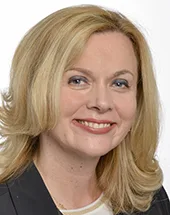
| Rank | Name | Country | Group | Speeches | |
|---|---|---|---|---|---|
| 1 |
|
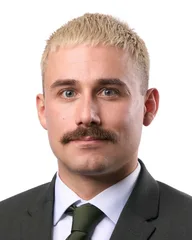
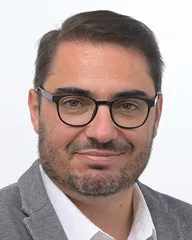
Lukas Sieper | Germany DE | Renew Europe (Renew) | 494 |
| 2 |
|
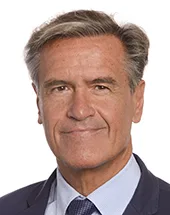
Juan Fernando López Aguilar | Spain ES | Progressive Alliance of Socialists and Democrats (S&D) | 463 |
| 3 |
|
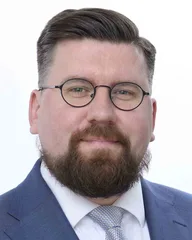
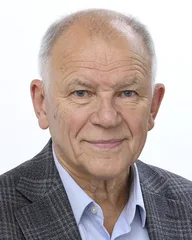
Sebastian Tynkkynen | Finland FI | European Conservatives and Reformists (ECR) | 460 |
| 4 |
|
João Oliveira | Portugal PT | The Left in the European Parliament (GUE/NGL) | 288 |
| 5 |
|
Vytenis Povilas Andriukaitis | Lithuania LT | Progressive Alliance of Socialists and Democrats (S&D) | 276 |
All Speeches (170)
EU strategy in response to the ongoing Middle East crisis, its implications on energy prices and the availability of fertilizers (joint debate)
Date:
29.04.2026 10:36
| Language: EN
Speeches
Mr President, dear commissioner, recent developments have once again highlighted the high cost of energy dependence. In such a sensitive moment, it is particularly perilous to undermine those partners who have proven to be stable, reliable and fully aligned with our strategic objectives. At a time like this, we must not disadvantage the dependable partners from the EU candidate countries, and we should support them, not hold them back. Take, for example, Elektroprivreda Herceg‑Bosne. This company generates electricity exclusively from renewable sources, cooperates closely with EU Member States and has consistently been a secure and predictable supplier in our immediate neighbourhood. Yet under the current design of CBAM, it is being penalised due to the use of national default emission factors, and the Commission does not have any idea or any way to communicate with them in order to facilitate their export of energy. At a time when we need trusted partners more than ever, we should not weaken those who are already delivering on decarbonisation and contributing to our energy security. Simultaneously, we must consider the broader strategic picture. Yesterday, in Dubrovnik, at the summit of the Three Seas Initiative, we witnessed concrete progress where multi-billion investments are being agreed with our consistently responsible transatlantic partners. New agreements with the United States were signed to strengthen energy infrastructure, deepen connectivity, and reinforce cooperation with transatlantic partners. This is the direction we need to pursue. Projects such as Southern Gas Interconnection enhance diversification, reduce vulnerabilities and anchor candidate countries more firmly within the European energy space and together with our only reliable transatlantic partners. Please, Mister Commissioner, get this deal done.
The role of ocean diplomacy for the competitiveness of EU fisheries and aquaculture (debate)
Date:
27.04.2026 21:42
| Language: HR
Speeches
The European Union has a responsibility to maintain leadership in international fora by fostering multilateralism and cooperating with all relevant partners in the field of sustainable fisheries and ocean governance. This also requires further strengthening the capacity of the European External Action Service to have diplomats who understand ocean governance and can effectively represent our interests globally. At the same time, significant funding for ocean governance and ocean diplomacy is also needed to preserve the strategic fisheries sector and deliver on our global commitments and ensure the resilience of coastal communities. This is why I call on the Commission to ensure that fishermen and blue economy stakeholders have easier and more efficient access to finance, with more stability for private investment and better use of existing European instruments. And so, that dear Commissioner, you need a lot more money because for all that you have to do for our fishermen and a single European policy is at the European level, no matter how hard someone tries to say otherwise. That is why we need to secure much more money in the next budget for our fishermen. Ocean diplomacy is no longer a choice, but a strategic need for Europe. It is a tool that we must and can defend standards and strengthen competitiveness and ensure that those who respect the rules are not disadvantaged. Because without a level playing field, there is no fair competition, and without a strong and sustainable fisheries sector, there is neither long-term food security nor a stable future for our coastal communities. Europe has knowledge, has a standard and has global weight. What we need now is the determination to defend these standards beyond our borders.
The role of ocean diplomacy for the competitiveness of EU fisheries and aquaculture (debate)
Date:
27.04.2026 21:19
| Language: HR
Speeches
The EU's fisheries and aquaculture sector contributes around €5.5 billion a year and directly employs 193,000 people. More than 65% of the EU's territory is marine. The European Union controls the largest common maritime area in the world, more than 25 million square kilometres of purely economic zones and more than 70,000 kilometres of coastline. The sea is the foundation of our economy, connectivity and everyday life. But behind these numbers are the people and communities that live from the sea. Small-scale coastal fishing is the backbone of our coastal areas, preserves tradition, ensures food security and maintains life on the coast. At the same time, it faces serious challenges, a lack of generational renewal, difficult working conditions and increasing socio-economic pressures. In this context, the European Union has a unique responsibility, but also an opportunity to lead global ocean governance. This is why the European Ocean Pact has provided an important policy framework and encouraged us to think strategically about the oceans. So here and now we are looking at this whole situation related to the Strait of Hormuz and the trade. All this tells us how important navigation is, how important the sea is and how important the management of maritime areas is. From this approach, the idea of ocean diplomacy has evolved, and this report gives it concrete content and a clear operational direction. Ocean diplomacy must become a tool to ensure a level playing field in the global market and preserve our competitiveness and unique position. Ocean diplomacy must have a stronger presence in the European Union's external action. This applies in particular to our role in RFMOs, where we need to shape rules more actively, increase transparency and ensure accountability for all states. It is these organisations that are essential for effective multilateral negotiations, strong common rules and their implementation, and thus for the competitiveness of our sector. This also means a stronger fight against illegal, unreported and unregulated (IUU) fishing through longer import controls, better monitoring systems and the effective application of compliance mechanisms when rules are breached. Transparency and consumer information must be at the heart of our approach. Citizens have the right to know where their food comes from, how it was caught and under what conditions. Therefore, we need to establish market rules that ensure a level playing field between EU products and imports based on comparable environmental and social standards. At the same time, to make ocean diplomacy a driver of competitiveness, the report proposes targeted measures to restore the sector generationally and make the fishing profession more attractive, as well as investing in a modern, safe and digitalised fleet, better training and working conditions, and strengthening safety at sea. Without people in the fisheries sector, there is neither European food security nor a sustainable blue economy. It is essential to simplify administrative procedures and reduce regulatory burden to enable faster investments and strengthen food security. Once again, I thank all the shadow rapporteurs who have made a huge contribution to this report and I invite all of you to vote for it tomorrow.
Mr President, 'No man is an island entire of itself; every man is a piece of the continent, a part of the main', said John Donne. Sixteen million jobs depend on the transatlantic economy and on our decisions. Every delay costs us EUR 5 billion annually. Businesses on both sides of the Atlantic are calling for clarity and predictability, not uncertainty and delay. Beyond all arguments, the facts are clear: in 2025, our transatlantic economy reached a record USD 9.8 trillion. Behind these numbers are real people – workers, entrepreneurs, families. I stand here to defend the European economy, our interests and our jobs. One certainty remains: even in a more challenging global trade environment, our economic ties have continued to grow. This resilience proves that transatlantic trade works, and if it works, we should strengthen it, not hold it back. In this geopolitical context, the United States is not only our largest trading partner, it is also a key security partner, and it must remain so. Even the democracies with which we seek to diversify our trade relations look to the United States as a key security ally. That remains the foundation of our broader strategic objective. Our history has proven that with the US on our side, we defeated the most horrible totalitarian regimes, from Nazism and fascism in the Second World War, to the fall of the Berlin Wall and defeating communism. For some people, 'hell is other people', as Sartre said. But only together can we defeat the enemy regardless of what face it holds now. Thank you, colleagues, and I call on you to do this historic job and to support this trade deal.
Multilateral negotiations in view of the WTO’s 14th Ministerial Conference in Yaoundé, 26 to 29 March 2026 (debate)
Date:
11.03.2026 17:23
| Language: EN
Speeches
Madam President, we are facing a period of profound global trade challenges. In response, the European Union has adopted a clear strategy: diversifying our trade networks with like‑minded partners, strengthening economic cooperation with reliable partners, and reinforcing a rules‑based global trading system. At the same time, we must work with these partners to ensure meaningful reform of the World Trade Organization. For too long, European companies have been victims of unfair trade practices by third countries, from market distortion and industrial subsidies to discriminatory barriers that undermine fair competition. Our business needs a system that protects fair trade and ensures that agreed rules are respected. Behind every trade dispute stand companies and jobs that depend on clear, stable and enforceable rules. Without them, uncertainty grows, investments decline and global trade risks sliding into fragmentation. This is why WTO reform must focus on three priorities: predictability with a fully functioning dispute settlement system, fairness by ensuring a true level playing field, and flexibility by allowing the system to adopt new economic realities.
Madam President, for many years we have dealt and voted for resolutions against Iranian oppressive regimes, and you all supported it. And just to those of you who are misquoting Albert Camus, he said, 'I believe in justice, but I will defend my mother before justice'. So terrorism cannot be defended, especially the one that killed their youth in thousands for months – the youth that wanted to live in freedom and democracy. The recent attacks carried out by Iran and Iran-backed Hezbollah once again show us why this regime represents a serious threat to regional and international security. For decades, the Iranian regime has oppressed its own people, violently suppressing protests and treating its citizens as enemies rather than partners in shaping their country's future. This repression at home goes hand in hand with destabilising behaviour abroad. Iran's continuing support for Hezbollah and other armed groups fuels tension and spreads instability in an already extremely fragile region marked by rising extremism and multiple overlapping conflicts. The attacks targeting bases in Cyprus and attacks directed at territory of an EU Member State are unacceptable. Just to end, fuel prices cannot be the reason that we should turn a blind eye to what is happening there. The terrorism should stop and the menace for European citizens is greater than the increase in the prices of fuel. I welcome the proposal by the Commission President that Member States should consider their energy policy in the same way that the Croatian Government has done, and to help their citizens to cope with this situation until we finally bring down this terrible regime.
Interim report in view of the consent procedure on the Agreement establishing an association between the EU and the Principality of Andorra and the Republic of San Marino (A10-0003/2026 - Željana Zovko) (vote)
Date:
11.02.2026 12:21
| Language: EN
Speeches
Madam President, dear colleagues, the Association Agreement between the European Union and Andorra and San Marino is the most comprehensive agreement the EU has ever concluded with a third country. It reflects our particularly close ties and covers an exceptionally broad range of areas, including foreign affairs, security, migration, health and energy. Andorra and San Marino are close, like-minded partners and neighbours of the European Union. They share our democratic values and a wide range of common interests, and they demonstrate a strong commitment to multilateralism and continued constructive cooperation with the EU at the international level. I particularly welcome the alignment with the EU's common foreign and security policy, as well as their systematic participation in aligning with statements by the High Representative and with EU restrictive measures. This demonstrates political maturity and a clear strategic choice in favour of European partnership. A key element for both the EU and our partners is to preserve this agreement as an EU-only agreement. I strongly support this approach as it will allow the swift entry into force through a coordinated ratification procedure and provide much-needed legal certainty.
Situation in Northeast Syria, the violence against civilians and the need to maintain a sustainable ceasefire (debate)
Date:
10.02.2026 15:07
| Language: EN
Speeches
Mr President, Madam Commissioner, the situation in Syria remains extremely fragile, and once again it is civilians and minorities who are bearing the heaviest burden. From the very beginning of the political transition, I have consistently underlined that the protection of all minorities must be at the core of any credible and sustainable solution for Syria. Safeguarding their rights is a prerequisite for peace, reconciliation and long‑term stability. Syria continues to face a profound absence of legitimate and inclusive governance. There is no functioning parliament, no credible electoral process and no meaningful space for civil participation. This institutional vacuum has only deepened fragmentation and mistrust across communities. At the same time, deepening destabilisation through the ongoing destruction of cultural and religious heritage represents an attack on its identity and history. Decades of enforced authoritarian centralisation have already demonstrated their failure. Reproducing this model will only lead to renewed conflict and further marginalisation of minorities.
Building a stronger European defence in light of an increasingly volatile international environment (debate)
Date:
10.02.2026 11:47
| Language: EN
Speeches
Madam President, Commissioner Kubilius, Europe is facing the most challenging security environment since the end of the Cold War. Russia's war against Ukraine is a part of a broader and long-term strategy aimed at destabilising Europe and confronting the West. This reality demands a clear shift in how we think and act on European defence. Building a stronger European defence means moving from declarations to real capabilities. Europe remains too dependent on others in key areas, too fragmented in its defence industry and too slow in decision making. At the same time, we are still not sufficiently integrating the hard lessons learned from Ukraine into our own defence planning. Deterrence must be credible. That requires not only defensive resilience, but also the ability to act decisively, including long range and operational capabilities. Defence is not only a military issue, it is about industrial capacity, civil preparedness, resilience of our societies and political leadership. Europe must take greater responsibility within NATO, strengthen joint procurement ... (The President cut off the speaker)
Drones and new systems of warfare – the EU’s need to adapt to be fit for today’s security challenges (debate)
Date:
22.01.2026 10:02
| Language: EN
Speeches
Mr President, coming back to a previous speech, I read your article of Newsweek many years ago at a secluded military base on Croatia's Adriatic coast, where an unpiloted car plane rolled down the runway, then climbed slowly over tall pine trees and headed into hostile airspace. It was July 1995 and the new conflict was brewing. Serbian leader Slobodan Milošević had conquered Croatia's Krajina border zone with Bosnia in 1991, and now Croatia was preparing a lightning assault to get it back. Americans in military uniform operating from a cream coloured trailer near the runway, directed, drawn to photograph, the Serb troops' position and weapons' emplacement. According to top Croat intelligence officials, copies were also sent to the headquarters of the Croatian general in command of Operation Storm. We now understand why we need drones and we need a drone wall on eastern flank, on the western flank, where we should also involve willing Western Balkan partners in the drone world project. We have to protect our borders. We also have to take our American partners who were helping us with their technology at the time. And we have to keep fighting in Ukraine and in all these endangered border alliances, where Europeans are facing, together with our transatlantic partners, the menace of actual dictators.
Madam President, at a time when the European Union is openly considering a more geopolitical approach to enlargement, credibility and consistency are essential. If the Union chooses to apply differentiated standards based on geopolitical realities, as increasingly discussed in the context of Ukraine, then those same principles must be applied fairly and consistently to other candidate countries facing comparable security, political and historical challenges. Bosnia and Herzegovina is clearly one of those countries. It carries the legacy of war, operates within a fragile constitutional and security framework, and remains exposed to persistent internal and external destabilising pressures. While it is largely passing under the radar that Bosnia and Herzegovina is heading into new elections without electoral law that reflects the spirit of the Dayton Peace Agreement, the European Union is competing to offer its services elsewhere. Even Wolfgang Petrich, who bears responsibility for damage done to the Dayton Peace Agreement, recently stated, and I quote: 'I would say now that the Croats need a third entity'. The European Union cannot play a credible role in global peace-making while a core peace agreement in its own neighbourhood remains politically fragile and unresolved.
Situation in Venezuela following the extraction of Maduro and the need to ensure a peaceful democratic transition (debate)
Date:
20.01.2026 18:51
| Language: ES
Speeches
Madam President, ladies and gentlemen, the people of Venezuela have been waiting for this moment to come for more than a decade: the opportunity to leave behind the government of Nicolás Maduro and recover his future. For years, Venezuelans have lived under repression and poverty in a country of vast resources, with its society silenced and its fundamental freedoms eroded. After the last presidential election, evidence pointed to an opposition victory. However, he remained in power and refused the will of the Venezuelan people. The Venezuelan people deserve the right to freely elect their leaders. Venezuela needs a genuine democratic transition led by its own citizens, based on respect for human rights, the rule of law and the peaceful restoration of democratic institutions. Only a process that allows Venezuelans themselves to determine their future can bring lasting peace, justice and prosperity to a nation rich in potential.
Brutal repression against protesters in Iran (debate)
Date:
20.01.2026 17:28
| Language: EN
Speeches
Mr President, High Representative, today we cannot remain silent in the face of one of the gravest human rights crises unfolding in the world right now. In Iran, tens of thousands of people have taken to the streets, driven by economic despair, political repression and the struggle for dignity and freedom. Protests have spread across the whole country. The Iranian authorities have responded with brutal repression, shoot-to-kill orders, mass arrests, a devastating death toll and a total internet blackout intended to hide violations from the world. Women, young people and journalists are being targeted simply for demanding freedom and dignity. Europe cannot remain passive, and I call on the European Commission and High Representative to act decisively and introduce the full designation of the Islamic Revolutionary Guard Corps as a terrorist organisation, hold perpetrators accountable and demand the immediate release of all detained protesters. In addition, ensure unhindered access for families and provide secure communication tools to those at risk. The courage of the Iranian people is extraordinary. Europe must respond with a clear, united and credible stance.
30th anniversary of the signing of the Dayton-Paris Peace Agreement (debate)
Date:
18.12.2025 09:04
| Language: EN
Speeches
Mr President, thank you! Commissioner, it is very nice that you, as an Irishman who seems very well what Good Friday Agreement meant, have read this speech. So, I will read in my proper language, Croatian, the official language in Bosnia and Herzegovina as well as in Croatia. The Dayton Peace Accords were greeted as a news of salvation for a country devastated by a brutal war in which more than 100,000 people lost their lives and nearly half of the population left their homes. Dayton established a framework in which all three constituent peoples were given the promise of equality and legitimate representation in government bodies. But thirty years later, Dayton was all just not fairly implemented. The return was never implemented, nor was reconciliation and trust replaced by the Office of the High Representative. Every year, Europe and the countries at the UN Security Council consider renewing the mandate of peacekeeping missions to preserve peace. We have announced that for the fifth time Bosniaks in the Federation want to usurp and elect Croat members of the Presidency and the intention of Bosniaks to take over the Croatian Club in the House of Peoples through electoral engineering. Unitarism and separatism compete in the public speeches of political representatives. In 2014, this parliament offered federalism as the middle way and a solution to the two opposing forces of separation of Bosnia and Herzegovina. We've heard this in Congress recently. This week, the EU Council of Ministers asked Bosnia and Herzegovina to finally implement constitutional and international rulings, electoral reform. 30 years ago, Bosnia and Herzegovina was a favorite of the international community and the European Union, as Ukraine is today. Actors of that time are no longer with us. The message of Bosnia and Herzegovina and the unfinished business is a serious warning for all those who think that the peace agreement is over. It is necessary to implement the changes to the electoral law as soon as possible, to complete the started and to give the future to Bosnia and Herzegovina, its peoples and citizens.
The situation of Christian communities and religious minorities in Nigeria and the Middle East, and Europe’s responsibility to protect them and guarantee freedom of conscience (topical debate)
Date:
26.11.2025 13:06
| Language: EN
Speeches
Madam President, dear Commissioner, if you didn't know, more than 38 million Christians suffer a high level of persecution and discrimination. Their homes and churches are destroyed, and believers face enormous pressure. In sub-Saharan Africa, violence is rising sharply. Eight out of the ten deadliest countries for Christians are in this region. This instability allows Christians to be targeted, while Islamic militants exploit the chaos to attack with impunity. In the Middle East, Christians are being driven underground. Emigration is transforming an ancient and once numerous community into a much smaller and endangered minority. Above all, the situation in Nigeria is alarming. Since 2009, more than 50 000 Christians have been brutally massacred. I recently visited Nigeria, where I raised the concern directly with the authorities, questioning why stronger protection is not being provided to Christian communities, and why attacks on their churches continue unchecked. These stories have been ignored for far too long by international media, but the silence must end. And in Abuja, I reminded the international community and your services – who are doing this mimicry of interreligious dialogue and sending some stupid projects to dialogue between religious leaders – and they are not leaving Abuja, the central government, and the protection in the capital city to check what is going on on the ground. So don't give us these speeches. This is going on for a few years. We had resolutions here. We asked the Commission to finally start doing their job, and you are not doing your job. The recent kidnapping of 300 schoolchildren from a Catholic school in Nigeria is a brutal reminder that these groups operate as though they are above the law. So history will judge us upon the actions that we are taking here.
Effective use of the EU trade and industrial policy to tackle China’s export restrictions (debate)
Date:
25.11.2025 13:35
| Language: EN
Speeches
Madam President, colleagues, the European Union stands at one of the most challenging geopolitical and economic crossroads in its recent history. China now controls around 60 % of global production and 90 % of the refining capacity for key materials. Its growing use of export controls is a stark reminder that trade can be weaponised and that our dependence on malign actors leaves us vulnerable. This is why the EU must invest in its own strategic capabilities. I welcome the launch of RESourceEU and increased funding for developing a secure, sustainable European supply chain. But this alone is not enough. We must de-risk from China, strengthen cooperation with like-minded partners and build resilient, strategic alliances in the Indo-Pacific, Asia and Latin America. And, together with our transatlantic partners, we must confront unfair trade practices that are harming our businesses, our industries and our workers. And to those who advocate distancing ourselves from the United States, today's situation is a clear lesson: relying on China puts at risk our supply chains, our jobs and our economic security. Europe must lead by example by upholding WTO rules ...
30th anniversary of the Barcelona Process and the new pact for the Mediterranean (debate)
Date:
24.11.2025 20:30
| Language: EN
Speeches
Madam President, 30 years after the launch of the Barcelona Process, the Mediterranean stands at a crossroads. The profound changes reshaping the region demand a strong coordination response and a firm commitment to security, stability and prosperity. In this regard, the new pact for the Mediterranean represents a key milestone in our relations in a context of rising security challenges and geopolitical uncertainties. This pact will enhance cooperation in a wide range of areas such as trade, energy connectivity, security and migration through a new vision grounded in a principle of co-ownership and co-creation, we aim to redefine our engagement with the region and work on consolidating partnership among equals. In the area of education, the pact will importantly support the development of skills and ensure better adequacy between education and the skills needed in a labour market. This aspect is all the more important given that the lack of job opportunities for young people and the resulting brain drain is hindering economic development. I also welcome the commitment in the pact to enhance cooperation in security and defence, notably by exploring potential contribution by Southern Mediterranean partners to CSDP missions and operations. In the current context of rising security challenges, enhanced cooperation is key – notably in the area of maritime security and security of submarine cables and sanctions circumvention. Moreover, as rapporteur of ocean diplomacy in the European Parliament, I support the commitment to deepen cooperation in the field of ocean diplomacy, notably through an enhanced legal framework related to regional fisheries management. The inclusion of Mediterranean partners in the area of ocean diplomacy is positive, as it will pave the way for a level playing field and will prevent unfair competition for our fishermen. As a co-chair of the Working Group on Intercultural and Religious Dialogue, I also welcome the commitment mentioned in the pact to protect cultural heritage, including religious heritage. With the current geopolitical situation requiring stronger ties with like-minded partners, this pact gives us a unique opportunity to boost economic cooperation, improve stability and security, and above all, establish the basis for lasting peace along the shores of the Mediterranean. Congratulations, Commissioner.
First anniversary of the DANA floods in Spain: improving EU preparedness (debate)
Date:
22.10.2025 18:11
| Language: HR
Speeches
Dear Chairman, Dear Commissioner, first of all my condolences to all those victims of the flood that we are now mentioning, which occurred a year ago in Spain, a beautiful country. And this great tragedy has warned us how important it is to prepare for the crises that await us. When, as rapporteur for the opinion on the new civil protection mechanism and back in 2018, I fought for its budget, which barely reached EUR 205 million, the health crisis, COVID, natural disasters made this, initially an undesirable European instrument, the only way to urgently help every European citizen wherever they are. Today, however, we are talking about the EUR 11 billion foreseen in the Union strategy on preparedness to invest in early warning, prevention and rapid response systems. This summer rescEU season has been activated 16 times. As Vice-President of the Intergroup on Resilience and Civil Protection, I am committed to channelling funds to first responders, our firefighters and rescue services. We supported the establishment of a European community of firefighters, welcomed the establishment of the the Firefighter Hub in Cyprus, an important step towards better coordination and joint training. But preparedness doesn't just mean reacting when a crisis occurs, it starts with planning.
Institutional consequences of the EU enlargement negotiations (debate)
Date:
21.10.2025 13:39
| Language: EN
Speeches
Dear President, Madam Commissioner, Russian aggression against Ukraine, as well as the end of the wars in the western Balkans, has made us aware that the only true tool for bringing peace and security to the borders of the European Union is the enlargement process. The western Balkan countries have been dragged through the labyrinth of bureaucratic procedures of the European Union and the philosophy of whether we can accept more countries in our EU family or whether we must first change the rules of decision making. So this report goes along this line as well, dear Mr Gozi, although I really appreciate your role in bringing Croatia to the table as well at a time when no one wanted to discuss these issue. But it's not the time to discuss treaty changes. Countries that have rejected the hegemonic approach of the big brothers in the unions of the past, those who escaped Russian hegemony in the Soviet Union, or Serbian dominance in former Yugoslavia, will never accept being placed in an unequal position in the decision-making process of further enlargement. That's the philosophy of further enlargement – we all have to be equal. The countries that are entering this Union are entering under the condition that they will be equal. So it's not about mercy, it's about the honesty to admit whether or not we want the further enlargement process.
Recent peace agreement in the Middle East and the role of the EU (debate)
Date:
21.10.2025 10:14
| Language: EN
Speeches
Madam President, Commissioner, the announcement of an agreement on the Gaza peace plan proposed by President Trump came as a relief. Yet lasting peace requires clear commitment from all sides to address the real obstacles. As long as Hamas remains the sole security authority in Gaza, reconstruction and a genuine peace will remain out of reach. Its actions continue to undermine the security of both Israelis and Palestinians. The EU must show great determination to contribute to the success of President Trump's peace plan, with a view to facilitating the two-state solution and a peaceful coexistence. Coordination with international partners will be key to ensuring that the current opportunity is not wasted. We must seize this chance to help bring peace to a region torn apart by decades of conflict and violence.
United response to recent Russian violations of the EU Member States’ airspace and critical infrastructure (debate)
Date:
08.10.2025 09:58
| Language: EN
Speeches
Madam President, for God's sake, I mean, I think we should first manage these speaking times here in order to manage everything in a geopolitical order. The recent incursion into European airspace showed that the threat is multifaceted, and that a wide range of means is used to destabilise us. The European Union must respond firmly to these hybrid threats. EU Member States must invest into anti-drone systems to protect their critical infrastructure against the drone attack. This is what Croatia has committed to, along with the participation in the drone coalition, to ensure a stable supply of drones to Ukraine to support production of drones in Europe. Moreover, to counter the Russian threat to our security, I welcome the European Commission proposal to develop European defence projects such as the Eastern Flank Watch. However, in designing this project, we must take into account the full scope of NATO's flank, from north to south, from east to west, Mr Commissioner, as we already discussed, and we also must increase cooperation with our American allies – that remains key to the European continent's stability and security.
Madam President, dear Commissioner, Latin American partners are our natural allies. Despite these close ties, the European presence has significantly declined in recent decades, giving way to Chinese and Russian influence and enabling them to create economic dependencies that influence the foreign policy direction of Latin American countries. It is high time to re-engage with the region on areas ranging from trade to security and supply of critical raw materials. In this regard, the EU-Mercosur Partnership Agreement is key as it will participate in EU strategy to conclude new mutually beneficial agreements with like-minded partners and will contribute to counterbalancing the influence of the EU's competitors in the region. Likewise, the European Union must increase its coordination with Latin America to fight against criminal organisations that constitute a threat to our European security, and yes, narcotrafficking – that's a huge issue for our European citizens and we should start dealing with this. Moreover, as a guardian of freedom of religion, the European Union must protect religious communities worldwide and cannot, therefore, remain silent in the face of the persecution of human rights defenders and members of the Catholic Church in Nicaragua. It is high time to start acting and to stop this communist persecution that we have seen during 15 years of communist persecution in Eastern Europe. This is happening in in Latin America now, and you should act upon that.
Situation in Afghanistan: supporting women and communities affected by the recent earthquakes (debate)
Date:
07.10.2025 19:21
| Language: EN
Speeches
Mr President, Madam Commissioner, in what kind of horrific world could we imagine the deprivation of medical care for women after natural disasters due to a lack of women doctors? In what sort of dreadful world could we envision that a woman's voice could not be heard singing in a public? As inconceivable as it may seem, this terrifying situation exists. The Taliban authorities relentlessly invade every remaining inch of freedom for girls and women. The recent internet blackout in Afghanistan as part of an offensive against immoral practices is merely a symptom of the growing repression of the authorities to isolate the population of Afghan women even further. The European Union must act urgently to intensify pressure on the Taliban through increased sanctions against those responsible for these human rights violations. The European Union must do everything it can to ensure that Afghan women can study, work or sing again wherever they wish and move freely without a male guardian. It's a matter of defending fundamental human rights that the European Union must uphold with vigour.
Madam President, the rise of violent protests against Israel, hate speech and the stigmatisation of Jewish communities across Europe is deeply concerning. So, dear Commissioner Brunner, I think it is last-minute that you appoint a special envoy for freedom of religion, and that we finally start to tackle the problems of people who freely express their beliefs. The horrifying attack on a synagogue in Manchester is a stark reminder of the fear that Jewish individuals face daily. Many are compelled to hide their identities, fearing that expressing their faith might make them targets of senseless violence. In European universities, Jewish students are increasingly experiencing discrimination. Across our continent, some feel the need to remove religious symbols from their homes, living in anxiety that history might repeat itself. As Co-Chair of the Inter-religious Dialogue Group, I emphasised that, without dialogue, there cannot be genuine peace. Dialogue must always triumph over hatred. If we engage in meaningful conversation and strive to understand one another, we can foster a world where every individual feels safe and valued. As Pope Leo said in our meeting last week, we should be a people of dialogue, people who promote peace and inter-religious coexistence in this Europe that we have to share among ourselves. So please, as a consequence of this debate, please, Mr Brunner, finally appoint this special envoy.
The EU’s role in supporting the recent peace efforts for Gaza and a two-state solution (debate)
Date:
07.10.2025 14:16
| Language: EN
Speeches
Madam President, Commissioner, exactly two years ago, hundreds of innocent Israelis were brutally and tragically killed, raped and taken as hostages. This horrific massacre was not a random act. It was a meticulously planned terrorist strategy aimed at erasing any possibility of coexistence between communities in the region. Hundreds of hostages were taken, in acts reminiscent of medieval barbarism, shamefully broadcast online, with the intent to spread hatred and destroy any hope for peace in the Middle East. Those who call for the disappearance of Israel and those who reject the two-state solution are the only ones who benefit from such heinous crimes. Fortunately, President Trump has presented a peace plan which constitutes a crucial step towards building lasting peace and stability in the Middle East. This is our last real opportunity to end this conflict and to secure the safe release of the hostages. The European Union must take an active role in supporting the success of this plan, and in laying the foundation for a viable two-state solution. I wish you good luck, Commissioner.