
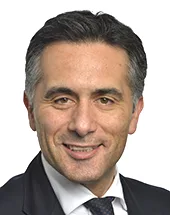

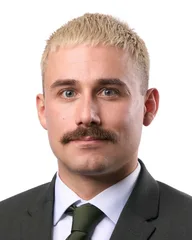
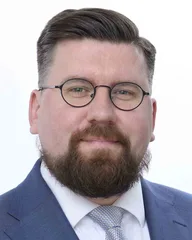
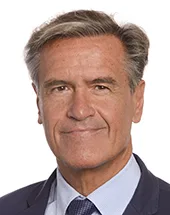
| Rank | Name | Country | Group | Speeches | |
|---|---|---|---|---|---|
| 1 |
|
Lukas Sieper | Germany DE | Renew Europe (Renew) | 494 |
| 2 |
|
Juan Fernando López Aguilar | Spain ES | Progressive Alliance of Socialists and Democrats (S&D) | 463 |
| 3 |
|
Sebastian Tynkkynen | Finland FI | European Conservatives and Reformists (ECR) | 460 |
| 4 |
|
João Oliveira | Portugal PT | The Left in the European Parliament (GUE/NGL) | 288 |
| 5 |
|
Vytenis Povilas Andriukaitis | Lithuania LT | Progressive Alliance of Socialists and Democrats (S&D) | 276 |
All Speeches (59)
EU strategy in response to the ongoing Middle East crisis, its implications on energy prices and the availability of fertilizers (joint debate)
Date:
29.04.2026 10:04
| Language: IT
Speeches
(IT) Mr President, ladies and gentlemen, the Hormuz crisis is generating an unexpectedly large energy storm and this energy crisis will inevitably worsen, because – rightly – the European Union has decided to confirm the reduction in supplies from Russia. Today we are still around 14% of imports from Russia but in 2027 we have foreshadowed a scenario of total leakage from those supplies. So the crisis, given the long reaction to the Hormuz crisis, will be really important. Legitimately and correctly the reaction was there, but it is a reaction that risks being only reaction: AccelerateEU It has the capacity to foreshadow greater coordination between countries. But the countries, from an energy point of view, are still divided: This is the real point. A reaction is not enough: We need a forward-looking reform in the harmonisation between European countries from the energy point of view. Today we have divided prices because the method of calculating the price of electricity, far from encouraging this harmonisation, deepens the differences between countries. Today, for example, on the ETS we have decided to confirm it, reform it, and one of the reforms could be to remove the ETS from thermoelectric power, if we wanted to favour our European manufacture. So, we have to decide whether we want a united or simply coordinated Europe.
Energy security, independence and supply in the geopolitical context - ensuring market stability and affordable energy for industry and citizens (debate)
Date:
25.03.2026 15:48
| Language: IT
Speeches
(IT) Mr President, ladies and gentlemen, we certainly have a serious crisis, caused by the fact that the European Union is not so much dependent on supplies from the Gulf - minimal, as is well known - but the general dependence of the European Union produces a particular sensitivity to the price changes that we are seeing at the moment. And we are also at a particularly critical time because, as you know, as every year, after winter the reserves are practically empty or at least about 30% and between spring and summer we should fill them. We will fill them at a very high price and this, next winter, will produce its effects. So we have a theme related to the fact that at the European TTF today the megawatt hour costs about 70 €. We need to figure out how to deal with it. In the Commissioner's words, there are many of the decisive elements for us, because in the medium or long term a system like the European one, based on an economy that I hope will also remain manufacturing, needs energy security. To have it, we must necessarily invest in energy autonomy, therefore on renewables, on nuclear power, on everything that allows us to be strong and not totally dependent. Renewables must also be accompanied by investment strategies on accumulation and storage because those who have a strong manufacturing need energy security. But in the immediate future we must also work on the price. What I was saying about filling reserves forces us to reckon with one of the great themes, among the many touched upon by the Commissioner, who today occupies the political agenda of this house: the issue of the ETS. I do not believe that the ETS should be abolished or suspended musculoskeletally. I do not associate myself with this kind of debate, which risks being unrealistic, but we have a duty to neutralise, especially now, the impact that the ETS has on the price of energy. I believe this is a duty that we can assume together.
No text available
No text available
Urgent actions to revive EU competitiveness, deepen the EU Single Market and reduce the cost of living - from the Draghi report to reality (debate)
Date:
11.02.2026 10:32
| Language: IT
Speeches
Madam President, ladies and gentlemen, we have a debate that is sometimes innovative, sometimes repetitive. I would like to try to insert an element to change the point of view a bit of the problem of the future of competitiveness in Europe. We have a fact, which we have often discussed in this House, namely the drastic reduction in the presence of European products on world markets and the drastic reduction in European gross domestic product over the last twenty years. Twenty years ago we had about the US gross domestic product, today we have lost more than a third. But all too often we talk only about the techniques of restart and not about the protagonists of restart, i.e. companies, European manufacturing, European business culture. Also in the assessment of the impacts of our Omnibus we have often evaluated only the direct result, but not the indirect one in the relaunch of the corporate culture. For example, earlier President von der Leyen rightly mentioned the various megawatt-hour costs of forms of electricity generation. We didn't consider an element in there, for example the ETS. The ETS accounts for 25 euros per megawatt hour in the cost of energy. Why? Because a significant part of that cost is generated by financial intermediation. That is, those who consume value take money away from those who create value. So this is something to work on a lot. Competitiveness has not only the techniques to be launched, but the protagonists that are companies. Is there a theme of corporate culture in our model of European competitiveness or is it simply a stone guest that we take into account from time to time?
No text available
Effective use of the EU trade and industrial policy to tackle China’s export restrictions (debate)
Date:
25.11.2025 14:07
| Language: IT
Speeches
Madam President, ladies and gentlemen, unfortunately we lost the battle, more than ten years ago, over rare earths and critical raw materials and rightly today, with a discipline in my view that is very adequate that the European Union is adopting, we try to contain the damage with the regulation on critical raw materials, and not only: industrial, environmental and commercial protection measures. But today the industrial production process in China, and its threat, passes through a new challenge, which is that of artificial intelligence and robotics. In the past year, 295 000 new robots have been introduced into industrial processes in China, nine times more than in the United States. So we have production processes, for example port logistics has a schedule that has gone from 24 hours to 10 minutes. The challenge is there, not least because productivity per worker has increased by 40%. We do not pursue yet, we play a game on human capital and research at that level of technological innovation.
Recent peace agreement in the Middle East and the role of the EU (debate)
Date:
21.10.2025 10:03
| Language: IT
Speeches
Madam President, Commissioner, ladies and gentlemen, first of all I would like to thank the Commissioner because, as Mrs Picierno pointed out, a pact for the Mediterranean has been presented, which is certainly a privileged framework for the work, including political work, that we are preparing to do on the exceptionally critical board of the Middle East. The peace agreement – which is a truce rather than a peace – has great merit, in my view: It was signed despite many absences, because you have to have political courage to close an agreement despite the important absences. But this does not allow us not to ask ourselves why the absentees were absent. Because the coexistence - on the one hand - of realities such as Turkey and Qatar and - on the other hand - the absence, for example, of Saudi Arabia introduces a question on what role organizations such as the Muslim Brotherhood will play on the future of this agreement. We have a duty, therefore, to ensure that it is a peace agreement and not just a truce and not to authorize, in my view, what some people are asking for to happen, that is, that the Peace Council starts from where Israel has eradicated the presence of Hamas. It would be an indication of a sort of "Palestinian Donbass". We want two peoples and two states.
Europe’s automotive future – reversing the ban on the sale of combustion cars in the EU (topical debate)
Date:
08.10.2025 14:03
| Language: IT
Speeches
Mr President, ladies and gentlemen, I must say that the debate on the future of theautomotive Today's debate in Parliament has new characteristics compared to the past, and this must be acknowledged by the Commissioner. It would have been useful to take account of the appeals made by this House, this Parliament too, during the previous parliamentary term on the subject of technological neutrality. Today, the Commission is taking a new approach, because the same message also comes from the Council. Here, in the future, I hope that Parliament will be heard more, because this debate has been going on here for a long time. The fact that the enabling conditions for the attainment of the target The rules defined in the regulation had been widely said within this house of democracy, extensively documented with repeatedly illustrated data. The lack of a true impact assessment was widely said. It is clear that, both for light and heavy-duty vehicles, the internal combustion engine must be able to coexist at this stage with the electric motor, so that the evolution, which the European model has always promoted, takes place in a complete, balanced and sustainable way from all points of view. It is no coincidence that the European continent today is the most sustainable continent in the world, because supply and demand have always been balanced, respecting the principle of technological neutrality. We hope that this will also happen in the field ofautomotive.
The EU’s role in supporting the recent peace efforts for Gaza and a two-state solution (debate)
Date:
07.10.2025 13:30
| Language: IT
Speeches
Mr President, ladies and gentlemen, the evil sown by Hamas and terrorism since 1987, well before 7 October and culminating in the 7 October attack, deserved and deserves a reaction. But that reaction cannot be a new project of annexation or occupation of the Gaza Strip, because an annexation project represents fertile ground for the rebirth of new seeds of evil. So welcome, absolutely yes, the draft peace agreement proposed by the current US administration. However, that proposal is not enough. As Commissioner Šuica rightly pointed out - and I thank her - we have a further task. That agreement will certainly generate, indeed probably, a blockade of weapons and war, but not peace. For peace we need more, we need politics, we need dialogue, we need dialogue between cultures, between religions, between countries. It is useful, in my opinion, that we recover the words spoken by Cardinal Pizzaballa in a recent interview, where he speaks of the need for man to recognize the other man other than himself, his culture, his pain. This is the point of politics. Peace is generated when the subject does not believe that he is the only victim, but within his own pain he agrees to look also at the pain of the other. And here the future of the political task of the European Union is also at stake, if it wants to return to being what it was born for.
Madam President, ladies and gentlemen, some analysts have used an effective metaphor to describe the clash between Ukraine and Russia: that of the hourglasses, a competition between hourglasses. The Russian hourglass is an economic hourglass: The time against Russia, the time of the war economy that should not last for more than 18-24 months, it is said. It is up to us to slow down, indeed in this case to speed up, the time of expiry of the flow of that hourglass, with real, stronger, above all secondary sanctions, to avoid the circumvention of the sanctions that we have applied so far. Then there is the Ukrainian hourglass, which is military. Again, our task is to intervene by providing the tools to slow down the course of that negative time for Ukraine, aware that Ukrainian action, defending Ukraine, defends the European Union; as well as the Russian attack, attacking Ukraine, attacking the European Union.
(IT) Mr President, ladies and gentlemen, we are well aware that American tariffs and provocations - even if often out of proportion, unfortunately - will not help US manufacturing to restart. What is the secret for the American economy, for the European economy and for the world economy is the link between the United States and the European Union. With less than 10% of the world's population we make almost 50% of the world's economic value, so we are not divisible, not even by the worst provocations. And this is why the way in which the European Union has decided not to react to provocations is very correct, because in good negotiations the climate is not dictated by the attitude of the adversary, but by the conditions and conditions say that we can collaborate, build and propose as we are doing. On this game, constructively, we have demonstrated what we have not yet been able to demonstrate in other games – for example, in foreign policy – that on international trade policy the European Union has a telephone number to call.
Madam President, ladies and gentlemen, the direction taken with the omnibus in the chemical sector is a direction that, in our view, follows the needs that European industry and European citizens have expressed. So, both the Classification and Labelling Regulation, the Cosmetics Regulation and the Fertilisers Regulation, the prospect seems reliable, but the Chemical Industry Package is an extremely complex package – as we said – at a time when investment in the sector is decidedly low. Today in Europe the existing is consolidated, there is a tendency not to innovate, not to invest in new projects, so what are the pillars of an industrial strategy for the future of chemistry in Europe? First of all, as we said, the cost of energy, energy security and its cost. Why not talk, for example, about a perspective in which we can have a single European electricity market with harmonised prices? The Future of ETS: The energy-intensive industry cannot afford too much non-confident exit from free allowances, so be cautious and careful that tied investments and revenues from ETS auctions finance innovative projects in the chemical sector: chemical recycling, the future of hydrogen and other major projects that also have to do with the ecological transition. Finally, two points: First, technological neutrality, we do not make mistakes in this sector automotive. Secondly, the classification of substances, we avoid the idea of generic danger, generic risk, but we evaluate the specific risk of substances, so as to keep innovation and safety for people together.
Madam President, ladies and gentlemen, the next few days at the NATO summit will not be about just how much money or how we will defend ourselves, but what we are defending, including through organisations such as the Atlantic Alliance. The theme is the future of Western civilization. The question is therefore not how to place national spending within defence policies. We have witnessed in the recent past, with the hasty departure in May 2021 from Afghanistan, one of the worst moments of Western politics, where with a sort of inferiority complex, unfortunately typical of the foreign policy of the nation states, and with the fear of a 'escalation We have created one of the worst. escalation of recent history. Since then, we have had Russia’s 2022 attack on Ukraine and, in 2023, Iran’s intended terrorist attack on Israel, not to mention China’s escalation against Taiwan. Today, therefore, the theme for us is not, through armies, the export of democracy, but the defense of its origin, also through military defense, with all the tools that politics puts at our disposal. It is not a national question, but it is a question of civilization, and Europe exists for that.
Winning the global tech race: boosting innovation and closing funding gaps (topical debate)
Date:
07.05.2025 14:24
| Language: IT
Speeches
Mr President, ladies and gentlemen, there is no doubt that the European agenda contains the challenge of innovation in its many forms. It contains it because, in any case, the resources allocated to it are increasing and it contains it because, as the Commissioner pointed out, there is an effort to simplify it more and more. Objectively, this was a bit of the historical virus of the European Union. This is not enough. Why? Because to support innovation, you have to trust talent. That is, we must support those who are wrong, not those who have already arrived. And this is a bit of the historic drama that Europe is experiencing. Because if when a talented young man has to take risks, make mistakes, he is not protected by the European institutional system, the credit system, etc., he decides to go wrong elsewhere. And when he stops making mistakes, he'll be somewhere else. And it's a shame for us: It is a pity because the demonstrations in the various sectors, of how useful technology is, innovation, are enormous. Some are more chic in artificial intelligence, etc., we always talk about it. But there's one example we've worked on here that's very interesting: in the rail sector, for example, ERTMS, signalling systems, through digital platforms, have shown that if they were to be harmonised at European level, and there was no ERTMS for each State, with the same current infrastructure we would have 20% more rail transport, without an extra euro in infrastructure. The space, the defense, the many games on which innovation can save us money, gaining greater protagonism and even more democracy and more participation, are many and this is the direction we must get.
Mr President, ladies and gentlemen, I would like to thank both the Minister and the Commissioner for having touched decisively on all the crucial points for the future of the European steel industry. Moreover, the European Commission's action plan does not skip one: It is clear that the challenge will now be action, as has already been said by other colleagues. The points are trade defence measures: corrected the prospect of anticipating the time of definition of the origin of the product at the time and place where the steel is melted, this will reduce many circumvention practices. On the other hand, the issue of so-called steel green, therefore with the use of ferrous scrap: limit the export of ferrous scrap, reopening the discussion on critical materials. It is a battle that we fought in Parliament by including ferrous scrap as a critical raw material on a secondary list, and we must reactivate it. And finally, the issue of energy prices. Stepping in with a view to adopting non-temporary but systemic measures: There is the decoupling hypothesis, like other measures. Surely the point is to avoid reducing the positive effect of the price reduction resulting from the production of electricity from renewable sources. The final point, however, concerns the relationship with the United States, in my view: Today a controversy is ignited, a controversy is rekindled, let us not give in to that controversy! Because we, in the face of the Chinese threat, need a shared industrial policy within the West – Europe and the United States.
Madam President, ladies and gentlemen, the logic of integrated crisis preparedness is one of the reasons why the European Union exists, both in the civilian and military spheres, and why this action plan is heading in the right direction. And it is one of the directions on which even on the most serious of the crises facing the doors of the European Union - that is, the military - even in that direction it is even more correct to reason in the logic of coordination. Military action today is assigned by the Treaties to the autonomy of individual Member States, but often those who criticise the actions of the European Union in this direction criticise them precisely because they are not sufficiently unitary. Well, then, either our criticism is a pretext and an alibi for continuing to divide the European Union further, or we reason in the logic of constructive criticism and encourage actions like this, so that we return to the origin of the European Union, both from a civil and a military point of view.
Mr President, ladies and gentlemen, the plan proposed by the European Commission goes in the right direction for many reasons, identifying financial instruments or infrastructure measures that will certainly help to reduce the impact of the cost of energy. The problem is that most of the measures identified in this plan are slow, i.e. they will generate the desired effects in the long term. We also need action, which, however, today allows those who consume energy, in particular our energy-intensive industry, to have positive effects. The Commissioner correctly referred to the need to decouple the calculation of the price of energy in particular forms, distinguishing between energy produced from fossil sources and energy from renewable sources. But the possibility, at least, of revising the design of the electricity market is not questioned. We evaluate to make a real evaluation of the impact of this design, because it was built in times too different from the current ones.
Unlawful detention and sham trials of Armenian hostages, including high-ranking political representatives from Nagorno-Karabakh, by Azerbaijan
Date:
12.03.2025 22:03
| Language: IT
Speeches
Mr President, ladies and gentlemen, the State of Azerbaijan continues its violence against the Armenian people undisturbed. After the military invasion in September 2023 in Nagorno Karabakh and the related deportation of 100,000 citizens, these illegal detentions of 23 Armenian citizens began and, today, these processes are totally opaque. The faults that are not forgiven to the Armenian people are of two natures: The first is geographical: disrupting territorial continuity between Azerbaijan and Turkey; The second is cultural: The Armenian people are a Christian people. The questions that the Armenian people are asking Europe are questions worthy of a European people. Let's be clear! This means that we Europeans are asked to assess whether we are prepared to treat Azerbaijanis as we treat Russians as they do not respect Ukraine's freedom. Real sanctions and freedom for these 23 illegally detained citizens.
Madam President, ladies and gentlemen, we have all been somewhat wrong in this debate. As institutions, we have reversed the order of factors and decided that, in addition to defining the general framework and objectives to be achieved – the task of politics – we have invented a new model in which politics also decides all the steps, techniques and technologies with which to pursue those results. Therefore, from a social market economy, we have forced towards a dirigist economy, very rigid and, therefore, very contrary to an innovative model capable of accepting the most relevant challenges. In fact, we have also forgotten some of these. The issue of autonomous driving, rightly, returns to the plan that the European Commission proposes today but has been missing throughout the debate: We just talked about engines. So there are some points on which the Commission's plan, exceptionally, takes the point, because on the one hand, it intervenes on the subject of fines and intervenes well. On the subject of innovation, he intervenes correctly and I thank the Commissioner for Transport for having clearly anticipated that, by the end of this year, there will be a revision: We will not wait until 2026. What revision will we have? An ambitious review: Yes, an ambition that is the typical ambition of politics that does not go in a single direction but that opens the market and that looks to citizens and businesses exactly according to their interests and not according to the interests of politics. Open to the market and open to technological freedom.
(IT) Mr President, ladies and gentlemen, thank you, Commissioner, for the clear introduction you have made and for reiterating that the centrality of the issue of competitiveness has finally made a great comeback in Parliament's debate, a Parliament that had decidedly calmed down in a torpor that was not good for our companies in global competition. We have some elements to clarify, because it is clear that the flaw of the most daring and ideological version of the Green Deal It was not an excess of environmental ambition. The real flaw is the excess of technological leadership, that is, the excess of political identification of the technologies to be adopted. That is the real problem, which denies the assumptions on which the Green Deal and turns it into a regressive, anti-innovative measure. We have some elements that have been remembered. The ETS is a form to be reviewed because it forces companies to spend more on carbon quotas than on innovation and research. Or the electricity market: the design was made in an emergency situation and needs to be modified. But then another point, geopolitical: the relationship with the United States. The European Union cannot go back to being a major player in global markets without consolidating the transatlantic alliance. You cannot leave this message in the hands of those who hate the West or in the hands of those who conceive the relationship with America in a servile way, depending on who governs. We hold the future of the West in our hands and in this way we will also hold the businesses of our Europe in our hands.
Uniting Europe against actors hostile to the EU: time to strengthen our security and defence (topical debate)
Date:
22.01.2025 13:55
| Language: IT
Speeches
(IT) Madam President, ladies and gentlemen, we have a debate in Parliament which once again returns to the concept of security and defence and runs many of the risks that it has already run in the past. The first instrument we have to guarantee the security of the European Union is unity among the Member States, perhaps reducing, if possible, the hypocrisy of the political debate. We have very often confused the concept of peace, reducing it to a very poor and modern version of peace. appeasement, but on the other hand we celebrated security, perhaps also celebrating a culture of division between nation states. To have security we need unity and to have unity we must also defend ourselves from internal threats, which often make our debate and culture of responsibility disharmonious: for example, avoiding pointing the finger at those who are our possible external friends. What is happening in the United States forces us not so much to give lessons in democracy, but to understand who our friends are, to sit at the table to build the internal unity of the Union and the entire West.
Restoring the EU’s competitive edge – the need for an impact assessment on the Green Deal policies (topical debate)
Date:
18.12.2024 14:15
| Language: IT
Speeches
Mr President, ladies and gentlemen, we have an economic crisis, let us say, but it relates more to the European real economy, which has two types of causes. The first has nothing to do with the Green Deal and concerns the incorrect and short-sighted choices we have often made regarding the identification of unique suppliers: a striking case is Russia on energy, or unique market outlets as in the case of China. But there are also causes that can be traced back to some rigid and anachronistic interpretations of the Green Deal. There are some business associations that have rightly pointed out that the increase in the expenses that energy-intensive companies have to bear to buy carbon quotas corresponds to the progressive reduction of investments in research, development and innovation. This contradiction must be remedied, because it removes sustainable products such as those made in Europe from the global market. We have the tools to resolve this contradiction, dear Commissioner. Some of these have been mentioned: the revision of the electricity market design to change pricing policies or the revision, to some extent, and the correction of the ETS and CBAM, so that it does not pass the message that here in the European Parliament we want to reduce ambitions. On the contrary: we want to increase them, we want to be more ambitiously present with innovative European products in global markets.
Toppling of the Syrian regime, its geopolitical implications and the humanitarian situation in the region (debate)
Date:
17.12.2024 09:59
| Language: IT
Speeches
Mr President, ladies and gentlemen, the voice raised by this Parliament is a legitimately desirous and dreamy voice of the rule of law also in Syria, but the march - as we know - is extremely complex. We have before us enormous divisions within that country and an enormous division also between all those outside that country who have chosen their interlocutors, within the enormous social rift. This debate has also shown division – everyone chooses their favourite ally. It will be a very difficult march, dear Vice President. There is a particular type of risk: two actors, in the Syrian scenario, have confronted each other by dividing, namely Russia and Turkey. There is a difference between these two actors: Russia is not our ally and has recently invaded a non-European country; Turkey is our ally in NATO and has invaded a European country, like Cyprus. Then we have to decide who to be with to find peace in Syria, understanding that Russia and Turkey, divided on everything, often have a topic on which they unite: Damage to Europe. This will be the riskiest work point for us.