
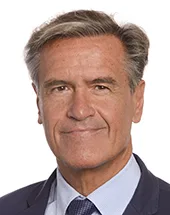
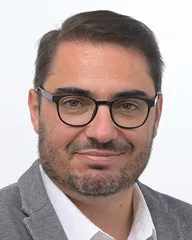
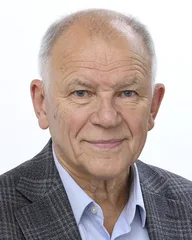
| Rank | Name | Country | Group | Speeches | |
|---|---|---|---|---|---|
| 1 |
|
Lukas Sieper | Germany DEU | Non-attached Members (NI) | 390 |
| 2 |
|
Juan Fernando López Aguilar | Spain ESP | Progressive Alliance of Socialists and Democrats (S&D) | 354 |
| 3 |
|
Sebastian Tynkkynen | Finland FIN | European Conservatives and Reformists (ECR) | 331 |
| 4 |
|
João Oliveira | Portugal PRT | The Left in the European Parliament (GUE/NGL) | 232 |
| 5 |
|
Vytenis Povilas Andriukaitis | Lithuania LTU | Progressive Alliance of Socialists and Democrats (S&D) | 227 |
All Contributions (92)
Presentation by the Council of its position on the draft general budget - 2023 financial year (debate)
Mr President, Minister, Commissioner, colleagues, the rapporteurs both addressed the different strands. I therefore take the liberty of looking at things a little more broadly, but at least I agree with the disappointment that exists at the fact that the Council has failed to respond to the great challenges that are facing us today and are already among us. Conducting policy in times of crisis requires courage from everyone around the table. Indeed, we are currently facing – I believe – two monumental crises: the energy crisis and the rise in inflation, which is very persistent. To start with the latter: It is an illusion to think that inflation will go away on its own. A vigorous policy is needed, both in monetary and fiscal terms. We must not lose sight of the fact that it makes little sense to take difficult monetary decisions to combat inflation and at the same time leave the crane open on a budgetary basis. Concerning the energy crisis: Today we must dare to admit that we have called this for a large part about ourselves. Three elements: Europe and at least some key Member States have for decades built an economic system on the availability of cheap Russian gas; the evolution towards sustainable energy production, which is obviously necessary, is clearly underestimated in terms of problems; Given the two previous elements, it would be logical to start counting on nuclear energy again, something which certain political groups still stubbornly refuse. As regards the overall financial framework, the architecture of the MFF is at odds with its limits. The framework provides discipline, but should of course not act as a brake on effective action where necessary. For example, the Commission’s initiative to promote joint procurement of defence assets is – if successful – certainly something that needs to be mobilised. I would also like to stress the importance of the quality of our spending, especially with the temporary increase in the budget through the recovery plan. There should be a better understanding of the final beneficiaries of these funds. The EU budget is an investment budget. Resources are limited, so we obviously need to focus on added value and innovation. By the way, it is too easy – and I conclude – to think that spending resources is enough to solve a problem. Good coordination and clear agreements between Member States are at least as important.
Objection pursuant to Rule 111(3): Amending the Taxonomy Climate Delegated Act and the Taxonomy Disclosures Delegated Act (debate)
Mr President! Due to the geopolitical context, we face three major challenges more than ever: first and foremost to control electricity and energy prices; ensuring a stable energy supply; Ensuring a sustainable energy transition. Nuclear energy can play a decisive role in each of these three challenges. In the energy transition, some have radically turned their backs on nuclear energy, with the result that we now even have to fall back on coal. The EU was established at the time as a Coal and Steel Community. Are we really going back to that time or are we going to show the courage to invest in all modern, innovative technologies that include nuclear energy? If we want energy that is affordable, that offers certainty with as little emissions as possible, then nuclear energy undoubtedly deserves a place in that.
EU initiatives to address the rising cost of living, including the implementation of the European Pillar of Social Rights (debate)
Mr President, policy must be pursued today within what I call a danger triangle: climate, energy, purchasing power. The choices made in each of these three policy areas clearly have an impact on the other two measures taken in the fight against climate change. They have an effect on energy supply and will affect, probably even affect, the purchasing power of citizens. But it is equally true that ensuring energy supply by, for example, reverting to gas and coal-fired power plants has an impact on climate objectives. Today's debate on purchasing power is therefore inextricably linked to this week's other major debate, on taxonomy. I know my party. We are firmly committed to a sustainable energy transition, but also to prosperity and competitiveness. We must not be blind to the drastically changed geopolitical situation and to the support of citizens and businesses. The transition will fail if citizens see their trust and purchasing power compromised. If, in the longer term, we want to keep electricity prices somewhat under control with a stable energy supply and achieve the climate objectives, then Europe has no choice but to opt for nuclear energy. This week, Parliament holds the keys to finally recognising nuclear energy as a renewable energy source. In the short term, I am calling for maximum protection of citizens' purchasing power and the competitiveness of businesses through taxation, through reductions in the burdens of the Member States.
Implementation of the Recovery and Resilience Facility (debate)
These are uncertain times. One crisis follows another and no one knows what to expect in the near future. And man does in such cases what he or she can best, namely adapt. At European level, we have added a recovery plan to the multiannual investment framework. That recovery plan will also serve as a new focus on our joint energy independence with REPowerEU. You yourself pointed out, Commissioner, that this should be actively involved in this debate. The resources we have are limited and so we have to spend them where we collectively have the most return. The EU must therefore focus on those areas – and there are many of them – where it can make a difference. In this respect, the emphasis on energy independence is a very good thing. In addition, REPowerEU also calls for an accelerated green transition. And here we have to consider something that is important today. Current inflation is not only driven by the rising price of fossil fuels and the disruption of global supply lines caused by the pandemic. We are also dealing with greenflation, namely the upward pressure on the price level, precisely because of that transition. It is not least about ever-increasing commodity prices, especially of much-needed rare metals and minerals. The International Energy Agency, the IMF and the World Bank agree in their conclusions: These price increases will continue for some time to come. As far as I am concerned, the blind increases in climate targets are counterproductive. I find it a little worrying that certain groups in Parliament continue to lose themselves in an outpouring of climate objectives. This sky-high ambition will soon be met by citizens in the form of higher burdens. And that at a time when purchasing power, to use a euphemism, is already under heavy pressure. I would therefore ask the Commission to continue to focus on energy independence and not to use the crisis to accelerate the green transition, which continues to lead to rising prices.
Revision of the EU Emissions Trading System - Social Climate Fund - Carbon border adjustment mechanism - Revision of the EU Emissions Trading System for aviation - Notification under the Carbon Offsetting and Reduction Scheme for International Aviation (CORSIA) (joint debate – Fit for 55 (part 1))
Mr President, Commissioner, ladies and gentlemen, I think that just about everyone in this House is convinced of the need for a sustainable transition for the European Union. Europe can and should also play a leading role in this. But what I see is not a Europe that leads the way, but a Europe that threatens to overtake itself. The transition must be more than just sustainable. It must also provide the necessary security and be affordable. Colleagues, we are in a situation of war, of great geopolitical unrest, an energy crisis and worryingly high inflation. Against this very unstable backdrop, the Commission wants to achieve great ambitions, and Parliament tends to step up its efforts. But these plans cost a lot of money and there's no such thing as a free lunch. Are we just going to increase the burden on citizens and businesses? The resources available are not endless, difficult choices are inevitable, and it would be politically courageous to say so honestly and out loud.
Pilot regime for market infrastructures based on distributed ledger technology (debate)
Madam President, dear colleagues, dear Commissioner McGuinness, dear Minister Beaune, integrated capital markets are a prerequisite for sustaining growth over the longer term. I therefore welcome all measures to provide additional input impetus to the European Capital Markets Union. At the same time, digitalisation is rushing through the financial services industry, and to cope with this trend, it is not only vital to make existing financial legislation fit for digital, but also to show an openness towards new technologies that could make financial markets safer and more efficient. The digital finance package is an important milestone in that regard. The technology that underpins crypto assets – the so-called distributed ledgers, or DLT – has a great potential for creative destruction and this will lead to productivity improvements. Its possible benefits in the provision of financial services include less complexity, strengthened network resilience, and reduced operational and financial risks. Currently, financial markets infrastructures are not authorised to use DLT to issue, trade, and settle financial instruments such as bonds, shares and exchange-traded funds. The DLT pilot regime aims at testing exactly that while also addressing associated risks. The project fully fits the CMU objectives, helps us to keep on track in an evolving digital world and puts the EU at the forefront of innovation. During the trilogues Parliament held high six objectives or principles. First, innovation. We followed a ‘sandbox’ approach, meaning that we allow for temporary and conditional exemptions from current legislation. The experience gained that way should foster innovation further. Secondly, market integrity. The existing Market for Financial Instruments Directive and the Central Securities Depositories Regulation apply in a traditional, account-based environment. To ensure adequate regulatory and supervisory requirements for this regime, we checked in detail which rules from both pieces of legislation would also be essential for application in a DLT environment. Third principle: investor protection, which I think speaks for itself. Fourth element: financial stability. Our feeling was that the initial commission proposal was a bit too lenient on financial stability safeguards, as provided for in the CSDR. We have significantly strengthened these safeguards. Fifth: level playing field. Providing equal opportunity to all market players is a fundamental principle of EU legislation. And the sixth and last of the objectives was of course technological neutrality. As a final remark, I would like to address our successors as co-legislators with a few words of caution for the longer term. What works in a limited testing environment does not necessarily work in a broader context. If the project turns out to be successful, simply expanding its scope and changing the permanent regulatory framework for financial services accordingly might create risks that are not noticeable or that were not noticeable in the pilot phase. Secondly, future co-legislators should thoroughly scrutinise the exemptions granted under the pilot project before upscaling them. This is notably the case for possible risks linked to settlement in commercial bank money. Thirdly, the Parliament negotiating team would also have liked a stronger role for ESMA as a central supervisor of the DLT pilot regime, but that turned out to be a no-go for the Council negotiators. Let me, to finish, express my thanks to all involved in the file: the shadow rapporteurs, particularly Jessica Polfjärd, Eva Kaili, Stephanie Yon-Courtin and Ernest Urtasun; the Slovenian Presidency; the European Commission, particularly Commissioner McGuinness; and of course the parliamentary services.
European Semester for economic policy coordination: annual sustainable growth survey 2022 – European Semester for economic policy coordination: employment and social aspects in the annual sustainable growth strategy survey 2022 (debate)
Mr President, Commissioner, Vice-President, under normal circumstances, I would reiterate here my call for growth-oriented reforms and sound, austere public finances, the best guarantees for the prosperity and well-being of our citizens. Moreover, such a combination also allows to absorb external shocks and thus increase our resilience and resilience. Unfortunately, these are not normal circumstances. The coronavirus crisis is not really over yet and we are dealing with a terrible war here on the European continent. The Ukrainian crisis holds up not one but several mirrors for Europe. For too long, Europe has made a sterile distinction between economic interests on the one hand and geopolitical strategic considerations on the other. The war in Ukraine also shows the enormous risk associated with energy dependence, and then dependency on a fickle dictatorial regime. That is why we are still advocating for reforms, and especially reform of our geopolitical thinking. In the short term, this must ensure that we can heat ourselves at acceptable prices in the coming winters, and above all that in the long term we create a situation in which we no longer constantly fall behind the facts, which unfortunately has been the case for far too long. Let's open our eyes to this debate. Let's look at how we can better connect our energy markets. That's the big secret, I think. But above all, let us finally bury the old green dogmas, such as the disastrous crusade against nuclear energy.
European Central Bank – annual report 2021 (continuation of debate)
Madam President, President Lagarde recently referred in an interview to not being prepared to take a turn in fifth gear. Now you’re absolutely right to do that, but we all know that the car that has a fifth gear also has a fourth, a third, a second and a first gear. And in terms of adapting its policy to the new environment of high and still rising inflation, the European Central Bank’s car at the moment is, I think, fair to say, in first gear. Some speeding-up is urgently needed and not so much because of the inflation numbers themselves but because of two related phenomena. First of all, inflationary expectations – consumers, producers, investors are rapidly adjusting upwards their inflationary expectations and I think a significant move in monetary policy is needed to avoid further escalation of these inflationary expectations. Secondly, insufficient immediate action might and probably will necessitate much higher interest rates in the future than if indeed immediate action were to be taken now.
Outcome of the COP26 in Glasgow (debate)
Mr President, when we talk about the results of COP26, we must certainly talk about nuclear energy. If we are serious about the goal of European climate neutrality by 2050, we need nuclear energy. Both the Commission's internal services and the International Energy Agency clearly recognise this. Nuclear energy is good for the climate, safe and makes us less dependent on volatile third countries. France wants to focus on small modular reactors. In the Netherlands, the debate apparently reopens and during the COP it became known that the American NuScale will build a small modular reactor in Romania. So there are a lot of countries that see the light. In others, like mine unfortunately, the light threatens to go out and they switch back to polluting fossil sources. Last year, Vice-President Timmermans made it clear that he had nothing against nuclear energy, but only as an interim solution. Today the minds seem to be ripening, because Commission President von der Leyen recently made it clear that we need nuclear energy. It is indeed high time that the ambiguity about nuclear energy gave way to clarity. The Commission must give clear wine, follow science and recognise nuclear energy as a green source, including in the taxonomy.
2022 budgetary procedure: joint text (debate)
Mr President, to conclude this debate, the agreement on the 2022 budget as a whole is a good agreement. It responds to a number of challenges that we will face in the coming years, and certainly also specifically in 2022. It also responds to Parliament's expectations over the past year. It has already been pointed out several times: an additional EUR 500 million has been raised. I have listened carefully to Commissioner Hahn's suggestion that we should perhaps think more carefully next year. But in any case, the programmes in which the money now ends up are at least programmes with a high added value: Horizon Europe, Health and others (e.g. support to SMEs in the Single Market Programme). Let me conclude and first of all thank all the colleagues and their collaborators who made these negotiations a success for the Parliament. I was the first witness to see that they all worked very hard and that they were really up to the task. Certainly my big and sincere congratulations to the two rapporteurs, Damian and Karlo. Karlo and Damian, two young guys – and this is a 60+ man who says this – who have been working very hard, who have been very eager to learn, who listened to me sometimes, to the other more seasoned colleagues, but who at the end of the day did a fantastic job as negotiators. I was really impressed and I'm not afraid to say that in public. Thank you very much. My sincere congratulations and that's it for me tonight.
2022 budgetary procedure: joint text (debate)
Mr President, the budget agreement reached for 2022 cannot be separated from the reinforcement provided by NextGenerationEU. In addition to the 169.5 billion commitments from the regular budget, another 143 billion in grants/gifts come from the recovery plan. In addition, there is of course also the possibility for Member States to take out loans. Next year's budget is therefore fully geared towards a strong economic recovery. In doing so, we do not lose sight of reality. The COVID-19 pandemic is still unresolved and the EU will also need to continue to mobilise resources. During the negotiations, Parliament has consistently called for the EU’s research efforts in the field of health to be stepped up. An additional EUR 75 million is foreseen at our request. In addition, there is also EU support for healthcare within and outside Member States, including when it comes to vaccination. The concept of health must also be defined more broadly. We also look at the health of our businesses and our society. Through the recovery plan, we hope to boost the necessary reforms in the Member States. Structural, lasting reforms are imperative to sustainably strengthen economic growth potential. The EU budget can also contribute to this through spending, especially in the area of research and development. They are the key to modernising our economies. They are an investment in our common future. Expenditure is largely best done at EU level because of the obvious economies of scale. It also provided much-needed reinforcements so that the EU can respond to a number of particular challenges ahead. But I would also like to make a strong case for greater solidarity when it comes to strengthening our external borders. It is the countries at our external borders that make the most sacrifices to ensure that we are protected in the Union as a whole. So let us also assist them with actions to do what is necessary. Therefore, I am also satisfied that the 2022 budget foresees an increase of the border management and visa instrument, namely with an allocation of EUR 25 million to fight the migration crisis at the borders with Belarus, a dictatorial regime that shamefully abuses that migration crisis. As far as I'm concerned, that's just a start. It is legally permissible to use these EU funds to build and maintain a barrier at our external borders. I therefore think it is appropriate to work on this in everyone's interest.
Preparation of the European Council meeting of 21-22 October 2021 (debate)
Mr President, Commissioner, ladies and gentlemen, rising energy prices, very high energy prices are high on the political agenda. The uncomfortable truth is that in the short term, we stand with our backs against the wall. We are on the Russian gas infusion and can only hope for a mild winter at the moment. It really shouldn't be much more cynical. The question may also be asked, I think, why this self-proclaimed geopolitical Commission did not see this crisis coming. The toolbox of possible measures proposed by the Commission last week should dampen the bitter pill a little. But it is actually about ad hoc measures that the modal citizen loses sight of a little too much. Those who work and invest today pay the price of political clumsiness. A structural solution is needed. The Commission expects great benefits from renewable energy. But there is no mention of the elephant in the room, namely nuclear energy. Nuclear energy reduces CO2, makes us less dependent on imports and provides more security of supply. I am therefore pleased that at least ten Member States have already asked for nuclear energy to be designated as a sustainable investment.
EU Health Emergency Preparedness and Response Authority: ensuring a coordinated EU approach for future health crises and the role of the European Parliament in this (debate)
Mr President, ladies and gentlemen, Commissioner, the crucial question of whether we need a new institution at all remains unanswered. Is it not better, or was it not better, to further expand the tasks of EMA and ECDC? HERA's cooperation with these two institutions is still very unclear. Another pressing problem is the Commission's €50 billion budget. A budget of this size has a huge impact on existing programmes and on the budget of Member States. I also see a real risk to the agreements made on the new MFF. Involvement of all actors is necessary. Finally, this seems to be a top-down prestige project with which the Commission wants to compete with the United States. It is passing through both the Member States and Parliament, and there is no constructive dialogue with this House, the European Parliament, for the time being. So I'm anything but convinced. The Commission still has a great deal to explain in terms of substance, budget and procedure.
Presentation by the Council of its position on the draft general budget - 2022 financial year (debate)
– Mr President, I think it’s an understatement to say that a lot has changed in the past year. We kicked off a new budgetary cycle with the adoption of the new MFF a little bit more than six months ago, and we also reached an historic agreement on the recovery instrument. However, it is clear that at this point in time the signs of improvement of the economic scene remain very fragile. We cannot ignore the ongoing struggle with the pandemic, and also the fact that we are seeing the new Delta variant, we are seeing possibly a new wave. But there are some things that do not seem to change. The Council appears for us the guardian of an outdated ‘business as usual’ approach, still following the logic of top—down cuts to reach a pre—determined overall reduction target. Concretely this means cutting across Union programmes and instruments no matter the added value, no matter the absorption capacity or the political relevance. A striking example is Horizon Europe. We all know this programme. It has proven its success and ability to support health, digital, green and other objectives. This programme was cut by the Council already in the MFF negotiations, and from Parliament’s side we succeeded in getting back EUR 4 billion into it, but now the Council is proposing to downsize it once more, for 2020. This is not serious. Also, how can the Council reduce the digital dimension, when achieving digital sovereignty is a clear and across—the—board shared objective? And how can it justify the cuts in the EU4Health programme? At the moment we are hearing that probably tomorrow we will hear about a new initiative, the Health Emergency Response Authority, with a budget of EUR 6 billion. So we are looking forward to seeing how that fits in with what is already on the table and what should come on the table. It’s time for Parliament to define its position. We will be ready to enter into negotiations, as the rapporteur has already indicated, as soon as Parliament has adopted its reading in mid—October, with a clear objective that the 2020 budget is fit to face the challenges ahead of us. However, it is already clear for us that we need to revise the MFF in order to take into account the impact of, for example, the new Health Initiative, the consequences of the situation in Syria, and then of course also the recent developments in Afghanistan. There will be a lot on our plate.
European Centre for Disease Prevention and Control - Serious cross-border threats to health (debate)
Mr President, Commissioner, ladies and gentlemen, COVID-19 has been keeping us under a spell for a year and a half now. The pandemic has exposed many pain points, in particular that the EU was absolutely not ready for a crisis of this magnitude and indeed most Member States were not. We pay a high price for this with a lot of human suffering and heavy socio-economic costs. Better cooperation and coordination across borders, while respecting the competences of Member States and Länder, is certainly needed. What we need is a simple mesh that works efficiently, is transparent and delivers high performance. In doing so, we must absolutely avoid falling into what we in Flanders call a ‘koterij’, where structures are constantly being created and built up in order to arrive at a totally unclear whole. In this context, we certainly support the strengthening of existing structures, such as the European Medicines Agency and the Centre for Disease Prevention and Control. We owe it to ourselves to strengthen and improve these institutions. This is definitely preferable to the mordicus of creating new institutions. In this sense, I look forward with concern to the proposals on HERA, which the Commission will publish tomorrow. The Commission gets the mustard in the US for this, but as you know, the differences between the European Union and the US in certain areas – fortunately, but – are still large. I hope that the Commission will remain faithful to the motto of ‘unity in diversity’, focus on perfecting what we have and thus indeed omit vomiting.
Conclusions of the European Council meeting of 24-25 June 2021 (debate)
President, President Michel, Vice-President Šefčovič, earlier this year, the Council decided to provide further support for the reception of refugees in Turkey. The Council also decided that efforts should be made in the wider region to help Syrian refugees. This is certainly necessary for these refugees, but is also well-understood self-interest. The final word has not yet been said about the budgetary execution of this financing. Nevertheless, I would like to talk briefly about the way in which the funds are spent. To date, there is a fairly broad consensus that this is done efficiently and effectively enough. However, it is clear that the continuation of this support and the structural anchoring of this effort will also change the nature of the operation, which may have an impact on the proper use of the funds. I therefore call for a management structure with sufficient flexibility, in which envelopes are not definitively committed and in which basic support remains central. So we should not institutionalise a temporary support measure – something we are unfortunately good at in the Union – in order to come to the conclusion together later that we could have done better differently.
Financial activities of the European Investment Bank - annual report 2020 - Control of the financial activities of the European Investment Bank - annual report 2019 (debate)
Mr President, President Hoyer, Vice-President Dombrovskis, the COVID-19 pandemic has partly put our lives on hold, but at the same time has exacerbated the challenges we face. We need to invest more in our people, our businesses and our future. Everyone agrees on this and the necessary resources have now been made available. However, the quality of implementation is at least as important. We count on the European Investment Bank for this, both for the actual investments and for the advice it provides in the design of projects. For this reason, we support the strengthening and continuous improvement of the EIB's professional structure. In doing so, we set the following three absolute conditions for a high-quality service: the necessary capacity and expertise to build sustainable partnerships, coordination between the different national and regional players, and a corporate culture driven by the search for innovative investments that support growth. The EIB is crucial if we are to emerge stronger from the current COVID-19 crisis.