



| Rank | Name | Country | Group | Speeches | |
|---|---|---|---|---|---|
| 1 |
|
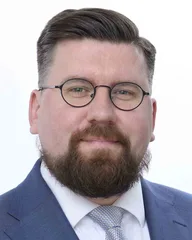
Lukas Sieper | Germany DEU | Non-attached Members (NI) | 390 |
| 2 |
|
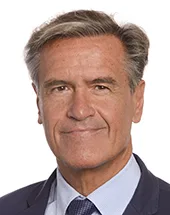
Juan Fernando López Aguilar | Spain ESP | Progressive Alliance of Socialists and Democrats (S&D) | 354 |
| 3 |
|
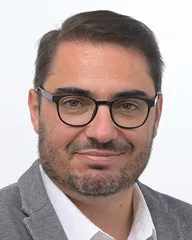
Sebastian Tynkkynen | Finland FIN | European Conservatives and Reformists (ECR) | 331 |
| 4 |
|
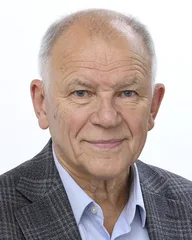
João Oliveira | Portugal PRT | The Left in the European Parliament (GUE/NGL) | 232 |
| 5 |
|
Vytenis Povilas Andriukaitis | Lithuania LTU | Progressive Alliance of Socialists and Democrats (S&D) | 227 |
All Contributions (92)
Composition of the European Parliament (A9-0265/2023 - Loránt Vincze, Sandro Gozi) (vote)
Madam President, as Chair of the Budget Committee, I would propose a statement in the resolution to make clear that the draft decision on the composition of the European Parliament is without prejudice to the prerogatives of the European Parliament and the Council in the annual budgetary procedure, and that recital 5 of that draft decision concerns matters that do not fall within the scope of the European Council’s competences under Article 15(1) and the legal basis of Article 14(2). It is for the European Parliament and the Council alone to decide on the content of the Union’s budget in accordance with the procedures laid down in Article 314 of the Treaty on the Functioning of the European Union.
Delivering on the Green Deal: risk of compromising the EU path to the green transition and its international commitments (debate)
Mr President, Commissioner, the sustainable transition and the reduction of carbon emissions are a necessity. Extreme positions or approaches, let alone dogmas – from any side – do not help to achieve those objectives. The policy around the Green Deal focuses too much on ideology. We must dare to ask ourselves more often what is being achieved with this and whether more regulation is needed to meet the new challenges. This debate has been begging for a realistic approach from the very beginning. A data- and science-based transition that can sustain and even strengthen our prosperity and purchasing power. No sky-high ambitions that deter investors, companies and society and create uncertainty. Realism. It is important to work with all stakeholders, including industry, to ensure a business and investment environment that rewards innovation without drowning in regulation. And all this in a realistic way with a feasible timing.
Make Europe the place to invest (debate)
Mr President, ensuring an attractive investment climate is one of the core tasks in which the EU can make a difference. The return on investment for citizens and businesses, but also for the Union as a whole, is many times greater than what can be achieved with fragmented subsidies and outdated programmes. High investment risk is inherent in innovation. Governments can reduce this risk by facilitating access to finance. That is why the Capital Markets Union is essential at the moment. Another important incentive for investors is clear but lean regulation and reduction of administrative costs. These things cost the government nothing. The EU can and should do better in this area. Those who say innovation and investment automatically end up with the sustainable transition. If this transition is thoughtfully and realistically addressed, it can and will attract massive investments. Towering, blind ideological climate ambitions, on the other hand, achieve the opposite. Instability and uncertainty inhibit investment and innovation. I have recently noticed that some Members of the Commission have actually been aware of this. However, this understanding should be inspired not only by the upcoming elections, but also by the general interest of the EU and its Member States.
Competition policy - annual report 2022 (debate)
Mr President, one of the greatest achievements of the EU is the internal market, which is based on the principle of free competition. The single market has brought growth and prosperity. However, some seem to turn their backs on this success formula. Governments should be given more freedom to grant state aid to companies. This not only favours large Member States with deep pockets, but also exacerbates persistently high inflation. Moreover, the final results of such a dirigism are often rather disappointing. The creeping changes from original, clear objectives – the so-called ‘mission creep’ – are a particularly bad development in economic policy. Monetary policy is designed to safeguard price stability, not to pursue climate policy or promote biodiversity. The same applies to competition policy, which aims to ensure fair market forces for the benefit of consumers. In order to be able to conduct policy efficiently, we need to put an end to the ongoing mission creep.
Impact of the interest rate increase decided by the ECB on households and workers (debate)
Mr President, Commissioner, I have a message for the friends on the left of the political spectrum who criticise the ECB's interest rate policy as harsh and antisocial. That message is that the ECB should have acted even more decisively and quickly, because inflation is the most unjust and discriminatory tax there is. It affects the least well-off in our society the hardest. People and families who are at the bottom of the socio-economic ladder feel the burden of the shopping cart becoming more expensive proportionally the most. It is therefore in the interest of all of us, and not least of the least well-off, that the inflation train be stopped. But monetaryly on the brakes and fiscally clinging to significant deficits will put us in the sausage of all worlds Inflation that is out of control, economic growth that is declining, jobs that are disappearing, and continued financial instability.
Revision of the Stability and Growth Pact (debate)
Mr President, Commissioner, ladies and gentlemen, the current budgetary rules are simple and clear. Government debt should not exceed, or should not exceed, 60 % of GDP and budget deficits should be limited to 3 %. Thirty years after the adoption of these principles, the average debt ratio in the EU is 85% and the average budget deficit is 3.6%. In the Eurozone, these figures are even higher. And in its latest forecast, the IMF hardly foresees any improvement in this, even towards 2028. Moreover, a Member State which fails to comply with the rules has never been sanctioned by the Commission, especially in the case of larger Member States. The financial markets did this by charging higher interest rates. Commission proposes new fiscal rules with a debt reduction programme à la tête du client: each Member State negotiates its deleveraging. Any reform – or adjustment – will ultimately stand or fall with the proverbial stick behind the door and its application. And in both cases, the Commission's new proposals do not really provide for far-reaching things. This is the only way to keep government leaders in the loop. There is a real need to reduce budget deficits and debt, also in order to win the fight against inflation, to prevent further financial instability and, ultimately, to keep monetary union together.
Impact on the 2024 EU budget of increasing European Union Recovery Instrument borrowing costs - Own resources: a new start for EU finances, a new start for Europe (debate)
Mr President, ladies and gentlemen, Commissioner, on the current debate, I would first like to emphasise that the repayment of the recovery plan is independent of the repayment capacity. Member States have implemented sufficient guarantees through the Own Resources Decision to ensure the repayment of the one-off loan operation. I think it is appropriate to emphasize this. Furthermore, it is true that the Member States have shown openness in the search for own resources. But the introduction of new resources will not take the wind out of the Member States’ ‘for what needs to be done’ logic. I think that's a wishing dream. In each Member State, calculations are made on an ongoing basis for all areas of expenditure, but also for taxpayers' ability to pay. Member States will continue to count and check the cost of the EU budget for their citizens. This is normal. In our Union, the Member States bear the responsibility for tax jurisdiction. I personally oppose the introduction of new European taxes, because they can be called "resources" in jargon, they are and remain taxes. This competence does not exist for the EU and there is no public support. The tax burden across the European Union is already very high. Taxes undermine our growth potential, which we very much need, and ultimately they also destroy jobs. Taking a look at the expenses seems to me to be a useful exercise in this context. At the same time, we are looking forward to the Commission's proposal to revise the current financial framework. This is bursting at the seams and does not meet tomorrow's needs or the expectations of our citizens. As Commissioner Hahn himself has repeatedly pointed out, the EU budget is limited, so we must use it where the difference can be made, where the EU has real added value.
Impact on the 2024 EU budget of increasing European Union Recovery Instrument borrowing costs - Own resources: a new start for EU finances, a new start for Europe (debate)
Mr President, Commissioner, ladies and gentlemen, the present report, which I have accompanied as rapporteur, asks for a small introduction. As you know, in response to the COVID-19 pandemic and its socio-economic consequences, the EU launched a recovery plan in 2020 with the aim of structurally assisting Member States to jointly emerge stronger from this challenge. To finance this recovery plan, Member States have allowed the Commission to launch a one-off loan operation. During the current financing period – until 2027 – we only pay interest, and afterwards the capital repayments will follow. My report deals with the budget of those interest expenses in the current period and for the 2024 budget in particular. At the start of the loan operation, we had a particularly favourable situation, both in terms of interest charges and in terms of available liquidity. This has ensured on the one hand the smooth start-up of the entire operation and on the other hand a very favorable cost. At the time, I repeatedly urged the Commission, as a good father, to adjust the timing of loan issuances to the interest rate developments that were unfortunately to be expected. At the beginning of 2022, the structural nature of the inflation problem was actually already clearly visible, and in other words also the interest rate hike. So the market situation we are in today has not just come out of the blue. Good policy requires looking ahead. Gouverner, c’est prévoir. We have seen that the ECB has waited too long to take the appropriate steps and we now also see that the Commission is not anticipating sufficiently. With our Committee on Budgets, we have also warned from the outset of the uncertainty and difficulties in setting out a budgetary path for interest payments. Placing these burdens below the ceilings of the current fiscal framework was and remains a wrong choice. The framework serves to enforce budgetary discipline. Including interest costs in this has consequences, and this has also been shown to be clear. The planned fiscal space is not sufficient, nor are the margins for flexibility. Together with the Council, we regret the manifest lack of openness on the part of the Commission about its calculations when it comes to these interest charges. We have repeatedly asked about these calculations, about the models and the associated assumptions that are used. So far we have not received a satisfactory response. This is not a correct way of working. Both the Council and the Parliament should be adequately informed about the impact of the financing costs on the EU budget. We need to know how the Commission arrives at the figures that are now before us. Making a budget is a process of thoughtful, serious considerations and choices that have to be made, and that can only be done if the necessary information is on the table.
Digital euro (debate)
Mr President, Commissioner, ladies and gentlemen, trust is the most important asset in the financial world. It comes on foot and it goes, as they say, on horseback. In this sense, the euro, together with other classic coins, has been challenged and hunted by the so-called cryptocurrencies over the past ten years. That crypto craze in itself stemmed directly from the unconventional, say, irresponsible monetary policy of the 2010s, which greatly fuelled mistrust in the monetary system. For some, the cryptos became the tulip bulbs of our time. For others, it was a fine cover for financing dark practices. There must be a regulated response to this type of practice, which, in my view, cannot be restrictive enough. Why does the Central Bank still have to come up with a digital euro? Electronic money transfer, we can do that very simply with an app on our mobile phone. Making our banks obsolete? Attractive to some, but that turns out to be fans of the Soviet model on closer inspection. An answer to China? You don't fight an authoritarian, dangerous, aggressive regime by copying it. In short, the digital euro does not respond to a specific need and certainly not to the reason why citizens have started seeking refuge in cryptos, namely a shocked trust in the monetary system. This will only come back with discipline, both fiscally and monetaryly. Debt must be reduced and inflation must be tackled. Mortgaging our economic and civil liberties on a China-by-China basis is more likely to bring about the opposite.
Revision of the EU Emissions Trading System - Monitoring, reporting and verification of greenhouse gas emissions from maritime transport - Carbon border adjustment mechanism - Social Climate Fund - Revision of the EU Emissions Trading System for aviation (debate)
Mr President, the aim of the Fit for 55 package is to: Endorse and achieve a sustainable transition. This transition is possible and necessary. However, the way in which we want to achieve the goal makes us reluctant. The level of ambition is very high in the transition phase, offering citizens and businesses insufficient time and comfort to take steps together. A package of this size requires support. In terms of timing and modalities, the transition as it is now foreseen will become something that will lead to a loss of purchasing power for many families and certainly in the Flemish context. This while the security of energy supply is still not guaranteed. I therefore regret that the energy transition does not unequivocally opt for nuclear energy as a fully-fledged, reliable and sustainable source in this respect. I am not talking about Member States that choose to keep some nuclear reactors open with their backs against the wall, but I am advocating bold investment in new generations of nuclear reactors. If this does not happen, then that will be a choice that could break us up very badly later.
Failure of the Silicon Valley Bank and the implications for financial stability in Europe (debate)
Madam President, Commissioner, the bankruptcies of Silicon Valley Bank, Silvergate and Signature Bank were accidents waiting to happen. Two lessons should be drawn from this experience. First, central banks should stay the course and withstand pressure to deviate from their present policy trajectory, not only to fight inflation, but also to contain excessively speculative behaviour. Should central banks give in to the pleas for monetary expansion, then new impulses are given to the disastrous cycle of excessive debt accumulation and asset bubbles ending always in major financial accidents. Secondly, financial regulation or financial regulators always tend to fight the last war. A better way to financial stability are higher capital requirements for banks or financial institutions in general to ensure absorption of shocks and lower the probability of bailouts by taxpayers. This lesson is very relevant for the ongoing trilogues on the banking package. It is not too late to finalise the post-crisis reforms 15 years after 2008 with the faithful implementation of the Basel recommendations.
European Semester for economic policy coordination 2023 - European Semester for economic policy coordination: Employment and social priorities for 2023 (debate)
Mr President, Commissioner, ladies and gentlemen, the European Semester is the cycle that must align the economic and fiscal policies of the Member States. Sustaining prosperity and growth and safeguarding our competitiveness are the objectives. That challenge is now also sharpened by the famous American Inflation Reduction Act (IRA), with its long train of subsidies. The European response to this cannot and should not follow the same logic. After all, in terms of subsidies, we must not be inferior to the US at this stage. Carefully estimated, we are already pumping over EUR 500 billion in subsidies into our industries over several years. If we are serious about strengthening our competitive position and a serious response to the IRA, we must have the courage to ask a crucial question: more money, more subsidies, is that the right answer? Subsidies have been at the heart of European economic policy for decades, in the hope that they would be sufficient to attract investment and promote growth. At most, it was partially successful. Our backlog is not due to a lack of subsidies and we should not look for our opportunities there either. The focus must finally be on less patronizing, more sensible regulation, simple procedures and less bureaucracy, in short, on more freedom and more oxygen. The rather static subsidy model leads to a cycle of often inefficient spending and is not conducive to longer-term economic growth.
European Central Bank - annual report 2022 (debate)
Mr President, the ECB has only recently recognised the structural nature of the inflation problem, which was already visible in the course of the first quarter of last year. Fortunately, the initial hesitation has given way to the necessary measures in the field of interest rate increases and balance sheet reduction. However, we are far from there. General inflation is falling, but underlying inflation is currently stable. Nevertheless, it is still on the high side. This means that additional efforts are needed. In terms of long-term policies, the 2% inflation target for the prices of goods and services needs to be examined. After all that we have experienced in recent times, we must ask ourselves how useful it is to focus only on that one standard or that one target. For example, we need to look at the ongoing inflation of assets that has affected us significantly to a large extent in a number of areas in recent times. In my view, it is high time to include more active old-fashioned aggregates (money volume, credit volumes) in policy-making. In any event, price stability must and must remain the determining task for the ECB. After all, price stability is of great importance for socio-economic stability. Other objectives, including climate policy, are secondary to the objective of price stability.
REPowerEU chapters in recovery and resilience plans (debate)
Mr President, our dependence on cheap energy from Russia has become an expensive geopolitical lesson. We must move towards a strategic vision for the future that will last in the long term. Further electrification and increased use of hydrogen will pose additional challenges for us. In my opinion, a sustainable transition without a prominent role for nuclear energy is doomed to fail. We'll have to face this sooner or later. There are a number of pitfalls, both in terms of funding and spending REPowerEU, leading to the fragmentation of policies and resources. The aim is to become less dependent on energy supply, to provide sustainable alternatives and to set up solid internal energy networks. So let us not deviate from these objectives. I therefore call for a thorough monitoring of the use of the funds, as is done for the Recovery and Resilience Facility. Respectable institutions such as OLAF, the European Court of Auditors and Europol sound the alarm in this regard, at a time when the EU budget is under severe pressure. It is no longer justifiable for two thirds of the EU budget to remain untouchable and undebatable in these circumstances.
Protection of the EU’s financial interests - combating fraud - annual report 2021 (debate)
Mr President, ladies and gentlemen, the report we are discussing today makes several references to the Recovery and Resilience Facility, the recovery fund of over EUR 720 billion, of which almost half are grants. That is actually outside the regular budget and is therefore also difficult to control. We should expect new funding channels to be made as fraud-proof as possible from the outset. Unfortunately, however, the RRF does not fulfil that criterion. After all, it has been the Council's pleasure to pass control on to the Member States themselves. This includes a limited number of large countries that claim most of the funds, especially in terms of subsidies. The fact that the control is carried out by the Member States themselves raises problems. I would like to reiterate my call for Parliament and the other monitoring bodies to play a genuine and objective monitoring role in this respect.
Control of the financial activities of the European Investment Bank - annual report 2021 (debate)
Mr President, Vice-President, Commissioner, colleagues, we all agree on the need to work on sustainable investments for the benefit of climate and the environment, and the EIB does so in a sound way. But that should not be the only priority. The EIB’s strategic investments, whether climate-related or not, should also continue to monitor and boost the level of our prosperity in society. Moreover, the return of climate-oriented investment in growth and jobs, viewed on a net basis, is less evident than is all too often suggested. By the way, is it no longer obvious to take a more positive approach to certain climate-related activities – I am thinking, for example, of mining and nuclear industry? I therefore simply call for fewer dogmas and more balance in order to ultimately better serve society, the economy, the climate and prosperity as a whole.
Amending Council Regulation (EU, Euratom) 2020/2093 of 17 December 2020 laying down the multiannual financial framework for the years 2021 to 2027 - Amending Regulation (EU, Euratom) 2018/1046 as regards the establishment of a diversified funding strategy as a general borrowing method - 'Macro-Financial Assistance+' instrument for providing support to Ukraine for 2023 (debate)
Mr President, Commissioner, ladies and gentlemen, the European Union must do all it can to support Ukraine and its citizens. We owe that to them and to ourselves for the sake of our common values and norms. Although I do not have the slightest doubt about the allocation of these funds, I would nevertheless like to advocate that proper monitoring of the effective use of these funds should not be overlooked. The next step, of course, is to mobilise the necessary finances for reconstruction. In my view, this should initially be looked at in the direction of the currently estimated 80 billion in blocked Russian assets. If the Russian elite is unable to take responsibility for what is being done, then we must help them in a powerful way. I am aware that this can and will be a legally complex operation, but I trust that the Commission will take the necessary steps to analyse and carry out this in depth.
Question Time (Commission) - Future legislative reform of the Economic Governance Framework in times of social and economic crisis
Do the Commissioners think that they have sufficient instruments at their disposal to intervene to hurt countries that do not live up to what has been agreed upon, in terms of deficits as well as in terms of structural reforms?
Question Time (Commission) - Future legislative reform of the Economic Governance Framework in times of social and economic crisis
Budgetary discipline is still important. Some seem to have forgotten that a bit in the past period, but it remains important. The budgetary situation of most countries in the debt evolution is such that fiscal discipline alone will no longer be sufficient to correct and control these situations. This requires economic growth, sustained economic growth and natural economic growth, which in turn necessitates reforms: serious reforms in the labour market, pension systems, energy markets, taxation and more. In a number of Member States, including my own country Belgium, the lack of such reforms is already very problematic. My question is: how much effort will the Commission put into these reforms? And is there a kind of trade-off between those reforms and what the budget figures are then concrete? In other words: Is there anything more possible in terms of budgets and budget deficits if additional efforts are made in terms of reforms?
2023 budgetary procedure: joint text (debate)
Mr President, Minister, Commissioner, ladies and gentlemen, in my introductory speech I already mentioned the role that Parliament should play in the preparation of the budget. This is not only about correctly applying the powers of the European institutions, but also about ensuring the quality of expenditure. In addition, sufficient attention should be paid to detecting and correcting fraud, improper use of resources and phenomena such as possible . I am also convinced that my colleague, the chairman of the Committee on Budgetary Control, is of the same opinion. In conclusion, I would like to say the following: the 2023 budget or the agreement reached on this budget certainly has its merits. However, I would also like to make a warm but urgent appeal. The European institutions need to move away from the realities of the day and dare to think about the choices that have the most to offer us in the longer term and that can also give us a head start. In terms of content, but also the way in which we translate that policy into a good budget in a transparent and effective way. Finally, I would like to thank all the staff and those responsible for all their efforts during the long procedure that preceded this moment, namely the approval of the agreement for the budget for the coming year. That is why I would also like to congratulate the two rapporteurs, to thank the Commissioner, to thank the people of the Presidency and once again to thank them all for their continued efforts.
2023 budgetary procedure: joint text (debate)
Mr President, Commissioner, ladies and gentlemen, the outcome of the 2023 budget conciliation resulted in a number of reorientations and savings, as well as a number of important and necessary reinforcements. For example, additional funds were mobilised to support Ukrainian society: 290 million in total through various programmes. Everyone will agree that Ukrainian society and its citizens are in dire need of this support. We can expect other global actors, such as the US, to follow suit. In addition to the necessary and obvious acute expenditure, we are also investing further through the 2023 budget in areas where the EU can make a difference. These are steps in the right direction, but to my taste they are too small and not ambitious enough. In terms of budget, the European Union is still too committed to policy options from the past that lay a major mortgage on the future. We can't let that slow us down. I would like to see a budget that looks even more forward, that focuses even more instead of fragmenting and that radiates the ambition to make Europe a frontrunner in research, development and innovation. Urgent and necessary is also the redesign of our supply chains, with the aim of being strategically less dependent on regimes that reject our values and norms. If you have the feeling that I now mainly have China in mind, then you have concluded well. The geopolitical context shows us on several fronts that such a redrawing is necessary. The Multiannual Financial Framework as it currently exists is also hitting its limits. In its current form, the instrument is no longer suitable to provide answers to the major challenges of today and tomorrow. Symptomatic for this is the fact that solutions and vehicles must always be set up outside the budget. It points out that the multiannual framework is no longer suitable for absorbing everything correctly. But at least as problematic is the fact that expenditure control is significantly eroded. On the large items of expenditure outside the regular budget, such as the Coronavirus Recovery Fund, the RRF, this Parliament cannot properly exercise its scrutiny function. Parliament is expected to give its assent to the establishment of such mechanisms, but it has an ex-post consultative role to play in the actual implementation and use of these funds. It is my duty as chairman of the Committee on Budgets to point this out and to continue to point it out.
REPowerEU chapters in recovery and resilience plans (debate)
Mr President, it goes without saying that a well-functioning European energy market is crucial for both citizens and businesses. Recently, it became clear to everyone in our part of the world that energy security and energy independence are essential, strategically invaluable and necessary for our free way of life. REPowerEU should help reduce our energy dependency without taboos in the short term, including in the area of oil and gas supply investments. Parliament rightly calls for cross-border investment to form a solid European network. REPowerEU was created as an extension of the national recovery and resilience plans. It should ensure swift implementation, but under no circumstances undermine the much-needed reforms already agreed under the recovery and resilience plans.
Presentation of the Court of Auditors' annual report 2021 (debate)
Mr President, Mr President, Commissioner, we are facing important budgetary discussions. However, the presentation of the budget must not be limited to allocating expenditure, but must also ensure the quality of that expenditure. Both because of the pandemic and because of Mr Putin’s insane war, we are confronted with budgetary instruments that are outside the regular EU budget. I agree with the need to free up budgets in times of crisis, but the way we work now carries great risks. For example, Parliament cannot properly exercise its scrutiny role. This applies both to the Coronavirus Response Fund – the Recovery and Resilience Facility – and to funds going to Ukraine. There is no doubt that financial support to Ukraine is absolutely necessary, but the money must be spent to achieve the intended goals and, of course, it must reach the vast majority of the Ukrainian population. The reality is that this Parliament is not sufficiently aware of this today. I call for Parliament's monitoring role to be strengthened in the interests of combating fraud and preventing the misuse of resources.
General budget of the European Union for the financial year 2023 - all sections (debate)
Mr President, Minister, Commissioner, colleagues, the next budgetary year is certainly a key year. This is due to the challenges facing the Union. They are well known: the war in Ukraine, the consequences of COVID, geopolitical relations, energy, et cetera, et cetera. But 2023 is also a key year because it is a pivotal year in our multi-year financial planning. Next year will be the last year with payments from the previous planning period and the year in which the Commission will propose a comprehensive review – preferably revision – of the current financial framework. But the ever-increasing prices should also wake up the good housefather in the EU. For example, the EU is currently borrowing massively on the financial markets for the recovery plan. Expenditure is reasonably well known, although subject to certain conditions. I have repeatedly pointed out the savings that can be achieved by increasing the lending rhythm in the near term, in order to make use of the current, even lower interest rates. In addition, there will be increased EU spending next year as a result of the EU Recovery Plan. The quality of these investments and reforms is of course crucial. But here, too, we really should be careful not to further stimulate the inflation spiral that we are in danger of falling into. The frontloading Expenditure on urgent needs may seem self-evident, but in the context of already generally rising prices, increased expenditure can also have a very negative impact on that price level. We have to make sure we don't end up in a hellish vicious circle.
Keep the bills down: social and economic consequences of the war in Ukraine and the introduction of a windfall tax (debate)
Mr President, Commissioners, ladies and gentlemen, we have ended up in the danger triangle that I warned about before the summer. Climate, energy supply and purchasing power are the three corners of that triangle. Instead of losing our time with semantic discussions about inefficient price caps anyway, there is an urgent need to develop a framework that offers certainty in the longer term and in which nuclear energy deserves a prominent place as a stable and sustainable source. With regard to excess profit taxes, some Member States, including Belgium, want to go even further than the European plans and are thus on slippery ice. Energy prices are no longer the main determinant of inflation. The problem has become much broader than just energy. Social unrest has apparently become inevitable at the moment. Unfortunately, in order to control this inflation, the belt must be tightened, both fiscally and monetaryly. The fact that this leads to a recession has become almost inevitable today – unfortunately, due to the too long hesitation in some policy areas.