

| Rank | Name | Country | Group | Speeches | |
|---|---|---|---|---|---|
| 1 |
|
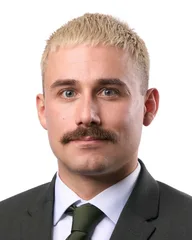
Lukas Sieper | Germany DEU | Non-attached Members (NI) | 390 |
| 2 |
|
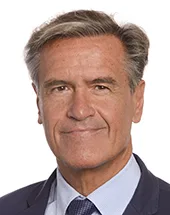
Juan Fernando López Aguilar | Spain ESP | Progressive Alliance of Socialists and Democrats (S&D) | 354 |
| 3 |
|
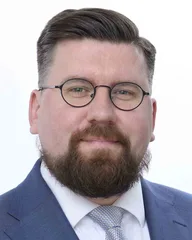
Sebastian Tynkkynen | Finland FIN | European Conservatives and Reformists (ECR) | 331 |
| 4 |
|
João Oliveira | Portugal PRT | The Left in the European Parliament (GUE/NGL) | 232 |
| 5 |
|
Vytenis Povilas Andriukaitis | Lithuania LTU | Progressive Alliance of Socialists and Democrats (S&D) | 227 |
All Contributions (74)
Condemning the illegal unilateral declaration of the secessionist entity created by Türkiye in Cyprus and the continued Turkish military occupation (debate)
42 years have passed since the unilateral illegal proclamation of an independent state by the Turkish Cypriot leader Dektaş of the occupied Cypriot territory. For 51 years, a part of a Member State of the European Union has been under invasion and occupation, against the condemnations of the UN Security Council, against a series of condemnatory resolutions of the European Parliament and against a 20-year-old declaration of the European Union, which is repeated by its institutions and in the annual reports on Turkey, and recognises only the Republic of Cyprus as a subject of international law. Once again, today, we note and witness Turkey's attempt to provoke faits accomplis, by upgrading the pseudo-state through participation in international events, through bilateral contacts with leaders of third countries, such as Australia and the United Kingdom, as well as by continuously strengthening its military forces in the occupied territories. It is obvious but above all necessary, colleagues, to admit that European policies towards Turkey have failed, which continues its efforts for international recognition of the pseudo-state, violating international law and consciously disregarding European values. We call on the European Union to change its stance, to abandon the empty statements of the past and to finally adopt a realistic policy of curbing Turkish aggression.
Presentation of the action plan against cyberbullying (debate)
Mr President, ladies and gentlemen, the action plan to combat cyberbullying is a crucial step in protecting young people online. Cyberbullying knows no limits, it's a scourge. It is reinforced by anonymity and is now a social pathogen with serious consequences for the mental health, dignity and lives of thousands of children and young people. When one in six young people is a victim, treatment is a one-way street. The criminalisation of cyberbullying with the cooperation of all Member States here and now. Above all, however, emphasis is needed on prevention and early intervention, as new technologies, such as artificial intelligence and virtual reality, are constantly emerging. We must invest directly in the digital education of young people and parents and in the training of teachers. To guarantee a safe online environment for our children in the future. And platforms must finally be obliged to comply with the provisions stemming from the Digital Services Act on the protection of minors. They have a responsibility. Colleagues, we have intervened on cyberbullying with serious resolutions in 2021, 2022, 2023 and 2025 with an own-initiative report. But the problem is present, it is evolving and it is very serious and dangerous. Tackling it effectively requires a combination of joint actions by all Member States. It is not a choice, it is our duty to young people and future generations.
Restoring control of migration: returns, visa policy and third-country cooperation (topical debate)
Mr President, the new Pact on Asylum and Migration is a major European success. But it's not enough. There are new facts. For our migration policy to be credible, it must be complemented by an effective system of returns, without which it cannot be sustainable. A strong legal and operational framework, simplification of procedures and effective cooperation with third countries are needed. Where such cooperation does not work, concrete consequences should be envisaged. The Union should use all available tools to build strong and mutually beneficial relations to ensure the implementation of readmission decisions and to prevent irregular arrivals. Consider also setting up return centres outside Europe. My country, Greece, a key gateway, has shown that effective border management is possible. In 2025 we had 13,000 fewer arrivals, while in December last year alone there were almost 1,000 returns, double the annual average. With uniform rules, a proportionate sharing of responsibilities for all members and a common system of returns, we can effectively protect our borders, strengthen the security of citizens and ensure fair, and above all humane, management of migration.
Presentation of the programme of activities of the Cyprus Presidency (continuation of debate)
No text available
EU Defence Readiness (joint debate)
No text available
After 10 years, time to end mass migration now - protect our women and children (topical debate)
Mr President, for ten years as a Member of the European Parliament and a member of the Committee on Civil Liberties and Internal Affairs, I have been following closely the evolution of migration in the European Union. Today we are controlling the phenomenon with organised guarding of the external borders, reinforced Frontex, cooperation of Member States and modernisation of our asylum and migration legislation. But each Member State has its own responsibility. My country, Greece, a key gateway, has succeeded over the past six years in curbing illegal immigration with targeted actions. Recently, the government, with a new law, sent a strict message of zero tolerance to the violation of borders in all directions and especially to traffickers who criminally instrumentalize people to get rich illegally. Colleagues, let us finally decide together that today is one of our obligations: guarding our borders. It is a challenge, a duty and a sacred mission. And it is certain that we can fulfill it.
Two years since the devastating Tempi rail accident (debate)
Mr President, Italy, 2016, train collision, 23 dead; Germany, 2016, train crash, 12 dead, 85 injured; Spain, 2013, train derailment, 80 dead, 40 injured. I'm not going on, colleagues. Why were such cases not discussed in plenary? Why is the Tempi tragedy only being discussed, two years after the accident and after a statement by the President of the European Parliament in March this year? Because the opposition in Greece - which provoked today's debate - believes that the legitimate government can fall, vilifying it everywhere as solely responsible for the tragedy and calling for a number of ministers and the prime minister himself to be convicted as criminals under common criminal law, with heterogeneous alliances. The government, however, from the outset, acknowledging the mistakes and omissions, took steps – among others – to complete the teleadministration system and implement additional security projects with additional funding. It also submits every two months a progress report on agreed actions – mentioned by the Commissioner – in cooperation with the Commission, to enhance railway safety. At the same time, with legislative interventions, the government immediately facilitated the acceleration of judicial proceedings to investigate the causes of the tragic accident, while the investigation is in full swing. 43 people have already been brought to justice and more than 250 requests submitted to the investigating magistrate by relatives of the victims, as they were entitled to do so, have been examined. Greece is a state governed by the rule of law with strong institutions that work. Relatives of the victims of the tragedy, like Greek citizens, are seeking justice and punishment for those responsible – and will receive it from the independent judiciary of my country. The work of the government at all levels – including in the field of transport safety – will be judged in two years' time in the national elections by the Greek people.
Combating the sexual abuse and sexual exploitation of children and child sexual abuse material and replacing Council Framework Decision 2004/68/JHA (recast) (debate)
Madam President, the increasing use of technology in communication and information, without any control whatsoever, makes more urgent than ever the need to modernise European Union law to prevent and combat child sexual abuse online and offline. The new arrangements in the excellent Lenaers report effectively enhance the safety and security of children and encourage reporting – even taking into account new forms of crime, especially in the digital environment. Artificial images or videos of abuse and virtual rape must be criminalised immediately and without exception. It is also necessary to provide for responsibility for digital platforms. Technology must stop harboring perpetrators of child sexual abuse. In addition, the revised rules are the basis for cooperation between Member States, with the aim of effectively reducing these heinous crimes and ensuring the protection of children’s rights in all aspects of their minority. Colleagues, we have a duty at last to show zero tolerance through the common strict rules that we establish and, above all, to ensure that they are properly applied. Child protection needs to be enduring, decisive and – above all – non-negotiable.
2023 and 2024 reports on Türkiye (debate)
Mr President, Commissioner, in the current circumstances there is no European perspective for Turkey. The report rightly points to significant backsliding in the areas of the rule of law, the protection of fundamental rights, freedom of the press and the safeguarding of democratic values. Turkey is not delivering on its commitments to security and stability in the Eastern Mediterranean in the context of good neighbourly relations – a matter of major importance for the Union. The constant questioning of the sovereign rights of Greece and Cyprus, the promotion of the doctrine of the "Blue Homeland", the contempt for the role of the Ecumenical Patriarchate for Orthodox Christians, the lack of cooperation for the control of illegal immigration and the threat of war for the 12 nautical miles in the Aegean constitute the image of a country that insists on its revisionist policy, in complete contradiction with European ideals, international law and the decisions of the Council of the United Nations. Unfortunately, colleagues, the gap between Turkey and European values remains – at its own risk – unbridgeable.
Crackdown on democracy in Türkiye and the arrest of Ekrem İmamoğlu (debate)
Madam President, Commissioner, the recent arrest of the mayor of Istanbul İmamoğlu, a political opponent of President Erdoğan, with the aim of excluding him from the presidency of 2028, was not surprising. Because during Erdoğan’s ten-year tenure there have been dozens of convictions of journalists, a ban on the operation of media outlets, mass arrests of protesters and total manipulation of justice. In addition, Turkey's revisionist policy against Greece and Cyprus continues to exist with at times inflammatory statements, direct questioning of international law, non-compliance with agreements and refusal to comply with the Commission's recommendations. Turkey, ladies and gentlemen, is characterised by a serious crisis of democracy and the absence of the rule of law. This is why today, more than ever, it highlights the need for the Commission's annual report to clearly reflect the following: Zero tolerance for the undermining of fundamental rights and the systematic disregard of international law and European values by the Turkish government.
Presentation of the proposal on a new common approach on returns (debate)
Madam President, Commissioner, we welcome the proposal for the new regulation. It is a necessary complement to the proper implementation of the Pact on Asylum and Migration. In recent years we have indeed faced threats to the security of our citizens, also because of our failure to return those who do not have the right to stay on European soil. But return policies are not just Europe's responsibility. Cooperation with third countries of origin and transit is key to their success. I recall that the joint EU-Turkey statement, which provides for returns, and the readmission agreement, which has been in force since 2016, are not being implemented by Turkey. It is necessary to agree that third countries of origin and transit of migrants who refuse to accept rejected asylum seekers will henceforth face consequences – as you have said. In addition, the European Parliament should insist on the mandatory mutual recognition or enforcement of return decisions by any Member State to ensure the effective implementation of the new legislation. Otherwise, we risk adopting unenforceable policies once again. The need to strengthen Frontex is self-evident. Dear colleagues, only a common European return system with the active participation of all Member States can shield the Schengen area from secondary movements. Thank you very much.
Roadmap for Women`s Rights (debate)
Mr President, Commissioner, ladies and gentlemen, this year International Women's Day brings out the strong message for all women and girls: "rights, equality, empowerment", which holds us accountable. Although the 2024 Gender Equality Index shows significant progress in the Union, women continue to face serious inequalities, mainly in the workplace. The gender stereotypes of modern societies continue to affect women's daily lives in all areas. According to the Gender Equality Roadmap, the majority of women still cover underpaid and underpaid but meaningful jobs. Even today, in the 21st century, women are still fighting for recognition of their rights. Colleagues, we owe a brave self-criticism to the European citizens who have entrusted us with crisis management. We have taken important steps, but the fight to eradicate discrimination has not yet been won. We have an obligation to raise the awareness of civil society through information campaigns on the roots of prejudices and by promoting healthy models for example. Provide institutional incentives for career women and financial tools to implement innovative initiatives, and promote common practices through exchange of programmes between Member States to balance work and private life. Looking to future generations, with a sense of duty and quality political will, the goal is not far off.
Commission Work Programme 2025 (debate)
Madam President, I welcome the Commission's work programme for 2025. Important initiatives in individual policy areas to strengthen the Union’s competitiveness, resilience and cohesion. I focus on security issues and the implementation of the new Pact on Migration and Asylum, because they are the main pillars of development and progress. To strengthen competitiveness, we need to maintain security. The fight against organised crime, including trafficking in human beings and cybercrime, is a prerequisite for the well-being of citizens and the stability of Member States. Effectively guarding our external borders against illegal influxes and cracking down on smugglers' networks requires long-term strategic planning and operational coordination. Otherwise, we risk strengthening the voice of populists who, through propaganda and fake news, instrumentalise human suffering. This, however, primarily implies uniform implementation of the Pact on Migration and Asylum and the avoidance of unilateral measures by some Member States. It is necessary to immediately promote a new legislative framework to speed up, simplify the return process and strengthen readmission agreements with third countries. In the same context, we must ensure that returns are carried out with respect for human rights and that decisions are mutually recognised throughout Europe.
Links between organised crime and smuggling of migrants in light of the recent UN reports (debate)
Madam President, ladies and gentlemen, let us be honest, migrant smuggling is an important part of organised crime and a key activity for criminal networks operating in the European Union. We have not yet managed to control irregular migration and break the business model of smugglers. Smuggling with sophisticated methods is a high-profit business. More than 90% of irregular migrants resort to the assistance of smugglers. From this Chamber we have repeatedly pushed for operational cross-border cooperation and data exchange between the competent authorities of the Member States. Immediate implementation of the new asylum and migration package is now needed. Developing legal travel routes and a pan-European return system in cooperation with third countries. With irregular crossings at the external borders increasing, it is more necessary than ever to step up prevention and effectively tackle these crimes.
One-minute speeches on matters of political importance
Madam President, Turkey has since July returned to the policy of provocations against Greece by sea and air at a four-year high after 2020. A few days ago, Turkish Foreign Minister Hakan Fidan called for Thrace to be included in the Greek-Turkish leaders' talks, calling the region's Muslim minority for the first time Turkish, while Devlet Bahçeli, Erdogan's government partner, claimed that Greece usurped the Dodecanese islands which he took, verbatim he said, "with toys of the foot". The response from the Greek Foreign Ministry was shocking, with reference to Greece's sovereignty and international law, and with the explicit statement that Greece does not relinquish its right to defence, especially when threatened with casus belli, war. President Erdogan's ongoing revisionist policy defiantly flouts international law and institutional decisions. A swift and rigorous response from the European Union is now more necessary than ever.
Managing migration in an effective and holistic way through fostering returns (debate)
Madam President, at the European Council on 17 October the issue of immigration was extensively discussed under the weight of new recent initiatives, such as Germany with temporary internal border controls and Italy with the transfer of migrants to Albania. We will not stop stressing that addressing this issue requires responsible implementation by all Member States of the new legislation based on solidarity. Equal burden-sharing, cracking down on smugglers' networks and guarding the Union's external borders are arms of the new package. Returns, in addition, guarantee and determine its successful implementation. That is why EU leaders asked the Commission for an immediate and swift legislative proposal on returns and clear recognition of safe third countries. We all need a unified stance and immediate implementation of the legislation we have recently voted on. When we talk about a fair European immigration policy, we must also mean it.
Strengthening the security of Europe’s external borders: need for a comprehensive approach and enhanced Frontex support (debate)
Madam President, Mr Vice-President, ladies and gentlemen, in recent times, with what is happening in the Middle East and the risk of a generalised war, concern about uncontrolled mass immigration seems reasonable. In the previous term, after many negotiations and collaborations, we completed a balanced pact on asylum and migration, which all member states must implement without exception. It is the only way to demonstrate what European citizens are asking us to do, solidarity in practice. But it is neither solidarity nor unilateral actions to impose internal border controls, nor the unequal burden on first-host countries. It is certain that an effective guarding of our external borders is a prerequisite for the correct and fair implementation of a single European asylum policy. My country, Greece, as the first country of entry, is doing well. But it is not a matter of the South. It's all over the European Union. That is why, colleagues, we have a duty to complete the Union's agreements with the countries of origin of asylum seekers to facilitate returns, to secure substantial funds from the European Commission for infrastructure and management projects to control the external borders, to step up operations to combat smugglers' networks and to strengthen Frontex, always in cooperation with the Member States and with respect for the law and fundamental rights.
Need to prevent security threats like the Solingen attack through addressing illegal migration and effective return (debate)
Mr President, at the end of the previous period we voted for a balanced new Pact on Asylum and Migration, which – for the first time – introduces mandatory solidarity and equal sharing of responsibility. Proper implementation of the new rules guarantees the security of European citizens under the following conditions: effectively guarding the Union’s external borders – a mission that recognised Greece’s success, creating legal pathways for migration by cracking down on smugglers’ networks and improving cooperation with third countries to carry out returns. Turkey, for example, is not respecting the 2016 agreement and has not accepted a single return. Colleagues, the immigration issue concerns us all. It is not fair that first-receiving countries shoulder the brunt, and unilateral border closures undermine the single Schengen area and the European common migration policy.
Madam President, ladies and gentlemen, the agreement we are voting on today is a resounding response to those who accuse the Union of failing to respond to citizens' major and serious problems. The regulation on situations of crisis and force majeure, which I had the honour of being rapporteur for my political group, the PPE Group, allows Member States to deal with sudden and massive inflows of third-country nationals, by way of derogation from the general provisions, always of course with respect for the fundamental rights of asylum seekers. And we have succeeded in including the instrumentalisation of migrants – a long-standing tactic of third countries, such as Turkey. This is an important political achievement, especially for the first host Member States, such as my country, Greece. The new legislation, applicable throughout the European Union, provides for mandatory solidarity between Member States and a proportionate sharing of responsibilities. In addition, it also provides for mandatory compensation from contributing countries to cover 100% of the needs of the Member State in crisis. Finally, I think it is necessary to point out that the fair demands of the first host countries are finally being met.
Report on the Commission’s 2023 Rule of Law report (debate)
Mr President, the Commission's Rule of Law Report is our impartial institutional tool for assessing the progress of each Member State in matters of the quality of democracy. This year's report acknowledges the significant progress made by Greece and highlights the reforms undertaken by the Greek government to enhance transparency, equality, better financial control of state officials and the safety of journalists. My country today ranks among the top 20 democracies according to the Democracy Index 2023. Regarding the text on the rule of law and media freedom in Greece, the country's Supreme Court strongly protested against vague references and unjustified direct interference in the work of the independent judiciary. Colleagues, issues to be improved on the crucial issues of democracy are being observed in all the Member States of the Union. This is why, when we report breaches of the rule of law, we have an obligation to provide official data. European citizens demand objectivity from us with a high sense of responsibility.
One-minute speeches on matters of political importance
Mr President, on Wednesday in plenary the well-known political groups once again attack my country, Greece, promoting a resolution on the rule of law and press freedom that is leniently unacceptable. Because they consciously ignore the serious institutional and administrative reforms carried out by the government over the last four years and deliberately omit the formal conclusions of the Commission’s 2023 Rule of Law Report, which highlights my country’s progress in its recommendations. It is provocative that the resolution deliberately adopts fake news and arbitrary claims disseminated by the opposition in Greece. In addition, illegal interference in the independent Greek judiciary is attempted for pending cases. The issue, ladies and gentlemen, is very serious. This resolution serves political purposes ahead of the European elections, in an effort to hurt Greece's self-sustaining government and its prime minister Kyriakos Mitsotakis. Texts such as this are the epitome of populism and disinformation and, unfortunately, undermine the credibility of the European Parliament.
Rule of Law and media freedom in Greece (debate)
Madam President, how many more times in plenary will the same political groups as the same colleagues bring back a malicious debate on the rule of law in Greece? The petition is about the very same cases pending before the independent Greek judiciary and about the very same unsubstantiated complaints that we have discussed extensively on several occasions, we have reached resolutions, followed by PEGA Committee recommendations and findings. Two people have already been arrested and charged in connection with the murder of journalist Karaivaz. What else do you know, colleagues? Whatever you know, say it, report it to the D.A.'s office. No slander without evidence. As far as freedom of the press is concerned, we will be with the Council of Europe, which recognized only in July 23 the government initiatives of my country, or with fake news, such as the supposedly abandoned dead refugee in Evros, for which even the reputable newspaper Der Spiegel apologized to Greece. In the summer, colleagues, elections were held in Greece that showed democratically for the second four years, a strong self-sustaining government of New Democracy at the helm of the country. Was there a problem in the functioning of the rule of law in this? Nothing at all. Do you not wonder what the purpose of today's debate is in view of the upcoming elections? Should we not be concerned about the attempt to vilify my country without any serious evidence that offends the Greek people for their recent verdict? Those who seek it will fail once again. With malignancies and fake news, colleagues, there is no policy of principles. Our European values dictate otherwise.
One-minute speeches on matters of political importance
Mr President, in recent years, and especially after the end of the pandemic restrictions, there has been an alarming increase in child delinquency throughout the European Union, and in my country, Greece, repeated cases of violence involving minors as victims or perpetrators impress negatively. We are not only talking about school blackmail, but also about crimes, even felonies and a plethora of hate crimes. Experts focus on parental or educational deficit, but mainly on the catalytic role of the internet, because children and adolescents are unable to manage a variety of stimuli and in many cases identify with perpetrators. The Union Youth Strategy and the Procedural Safeguards Directive for suspected or accused minors are not enough. It is imperative today, with information campaigns, the promotion of sound standards and the exchange of information and know-how, to have a directly organised European policy to prevent child delinquency. We must effectively control the phenomenon before it reaches uncontrollable proportions.
Order of business
Madam President, in every plenary session lately, for many months, this demand for the rule of law in Greece and for matters that are before the Greek judiciary comes and goes back. The Greek judiciary is an independent authority, completely independent and proven, and this obsessive repetition of an issue is directed against the Greek government, which only in the recent national elections was elected as a one-person self-reliant government by the Greek people. I believe that this request should not pass, because it has been repeatedly judged without evidence, without any substantive data against the rule of law in Greece.
International day for the elimination of violence against women (debate)
Mr President, today we are discussing gender-based violence in the shadow of wars taking place in Europe's wider neighbourhood, leaving behind hundreds of thousands of women, brutally abused, sunk and murdered, and mothers with babies in their arms uprooted, hopeless. We must be haunted by these images of shame. But across the world and on our continent, of course, in times of peace, women are being abused every day with all forms of violence, and incidents are growing at an alarming rate. Completing European legislation that we are proud of and must – we stress – include rape in the crimes of major worth, cannot in itself control this appalling phenomenon that plagues our societies. We need new common European standards to effectively tackle violence. Because taking pan-European actions in cooperation with competent bodies and women's organisations remains our main priority in the FEMM Committee with very important legislative and political work, but, colleagues, we must not forget that gender-based violence is based on a distorted conception of gender equality. With this premise, this fact, we have a moral obligation to nurture new generations, starting with elementary education, so that young people know from a very early age that all people, regardless of gender, have equal rights and obligations.