

ℹ️ Note: Bureau
This Member is President or Vice-President of the European Parliament and is therefore not included in the ranking.
| Rank | Name | Country | Group | Speeches | |
|---|---|---|---|---|---|
| 1 |
|
Lukas Sieper | Germany DEU | Non-attached Members (NI) | 390 |
| 2 |
|
Juan Fernando López Aguilar | Spain ESP | Progressive Alliance of Socialists and Democrats (S&D) | 354 |
| 3 |
|
Sebastian Tynkkynen | Finland FIN | European Conservatives and Reformists (ECR) | 331 |
| 4 |
|
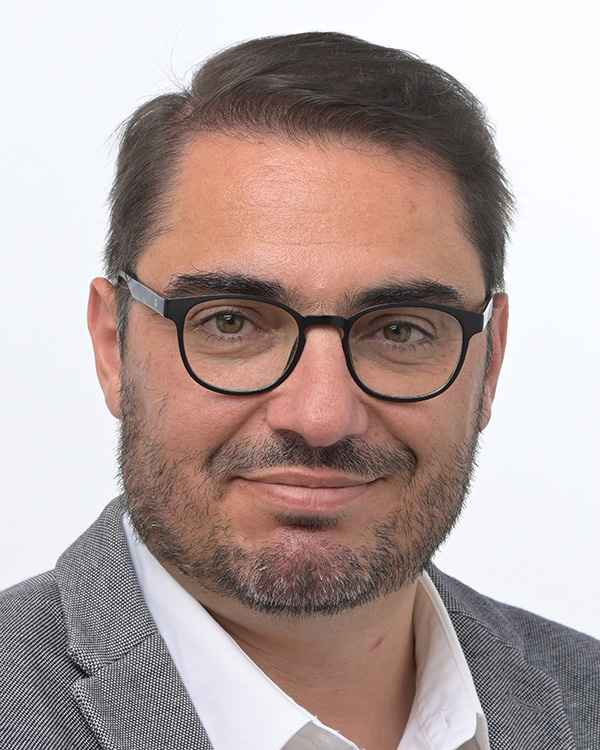
João Oliveira | Portugal PRT | The Left in the European Parliament (GUE/NGL) | 232 |
| 5 |
|
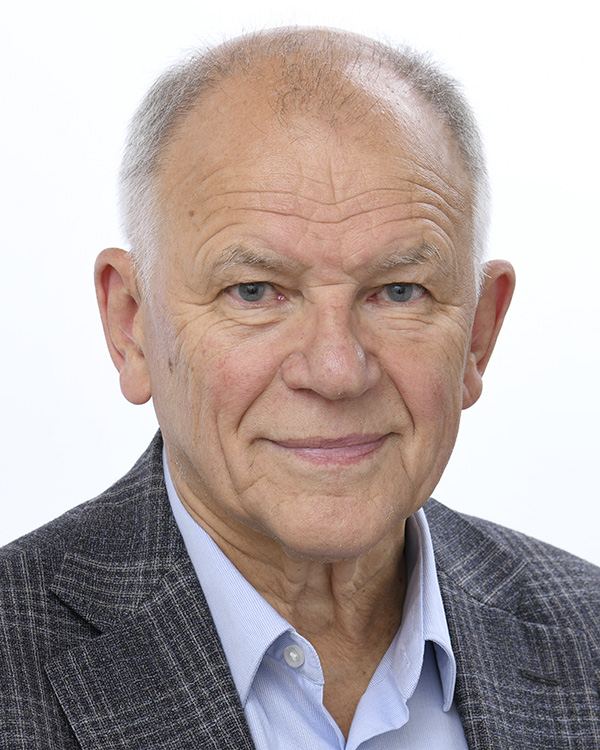
Vytenis Povilas Andriukaitis | Lithuania LTU | Progressive Alliance of Socialists and Democrats (S&D) | 227 |
All Contributions (363)
EU Rapid Deployment Capacity, EU Battlegroups and Article 44 TEU: the way forward (debate)
Madam President, there is a clear consensus in this House on this report, especially with support for building rapid response capacity. Some of your interventions have stood out. I believe that necessarily learning has to come out of the battlegroups. To a large extent we want to build this new instrument because the operability of the battlegroups. They've never been activated. They have not been activated for operational reasons and for reasons of political will. We need to learn the lesson now that we create a new instrument: rapid response capability. What kind of nature is it? We are not creating new European troops. We are creating an instrument that allows us to activate troops of the national armies, that is very clear, that are rotating in twelve months and that are coordinated and integrated and that work together to make it easy and effective to activate them on behalf of the European Union, with unanimity in the Council with the Member States. What are we going to activate them for? Rescue and evacuation, assist our missions, assist withdrawal, initial phases of entry and stabilization. It is already marked for what we want to use this rapid response capability. In the interventions there are a couple of trade-offs that I reject: the trade-off between diplomacy and defence, between diplomacy and defence capabilities. Indeed, having security and defence capabilities makes us a more credible and effective diplomatic actor in the world. Or between NATO or European capabilities. We do not work only with NATO, we work especially in NATO and we need to be a credible actor and ally in NATO. Finally, I thanked all the Members and the staff of the groups their work. And I would also like to do so to all Members' offices, which without them we would not be able to do our job, including mine, which has worked hard for this report.
EU Rapid Deployment Capacity, EU Battlegroups and Article 44 TEU: the way forward (debate)
Madam President, today in this Parliament we are having an important debate on what will be a key instrument for strengthening our security and defence capabilities: the EU Rapid Deployment Capacity. This is a proposal by the High Representative, Josep Borrell, following the frantic and very problematic evacuation and departure from Afghanistan during the summer of 2021, which highlighted some security shortcomings, such as not having a force of its own prepared from the European Union to act quickly in a hostile environment. With this report, Parliament sends a clear message of support for the creation and implementation of this EU Rapid Deployment Capacity, which will have at least 5 000 troops that will be continuously available and jointly trained, and which will also aim to become a permanent force. The Capacity should be ready by 2025, have a 12-month rotation, and respond and act within a reporting period of five to ten days. With regard to funding, the European Parliament calls for maximum use to be made of the European Treaties. This means that administrative expenditure is financed by the Union's regular budget and operational expenditure by the European Peace Facility, which we must strengthen and increase. The report proposes that decision-making and the use of Article 44 of the Treaty on European Union should be done initially by unanimity, although constructive abstention is allowed and then qualified majority voting can be used in subsequent operational decisions. The report also addresses other very important issues, such as the need for a defence industrial base in the European Union and the further strengthening of the EU's relationship with NATO. We must understand this mechanism, this EU Rapid Deployment Capacity, as one more element of our cooperation within NATO, and that it is necessary to overcome the current gaps in strategic enablers. We in Parliament will continue to support the work of the High Representative and, in addition, we welcome the fact that, during the second half of this year – during the Spanish Presidency – the first joint military exercise of this Capability will take place. I do not want to end without thanking all Members and all shadow rapporteurs for their work and contributions. I would particularly like to thank Mr Sikorski from the EPP Group, Mr Nart from the Renew Group and Ms Neumann from the Greens/EFA Group for their contributions. I believe that your work, your suggestions and the joint discussions have made it possible to have a final proposal that is better than the first proposal, the initial proposal. This final proposal is balanced, ambitious and realistic. I would also like to thank all the technical teams in this House, in Parliament and in the groups for their work. The truth is that the brutal war – the invasion of Ukraine – the exit from Afghanistan and the security of our neighbourhood are causing a real strategic awakening for the European Union. And, within this strategic awakening, lies this proposal for the EU's Rapid Deployment Capacity to defend and protect our citizens, defend our legitimate interests and our values in the world, become a stronger ally within our Atlantic Alliance and work for our necessary strategic autonomy in the world, with the will that Europe becomes a true geopolitical agent, effective, real and credible in the world. A world full of competition to which we have to adapt.
Situation in Peru (debate)
Mr President, High Representative, Peru is experiencing a serious institutional political crisis, especially since December 2022, but during the last five years it has not been possible to channel the country's governance. Since 2022, the country has experienced huge demonstrations that have left 60 dead and 1,200 injured. That is why, today, I think it is worth it that, from here, from the European Parliament, we send several messages. First, respect for the country's institutions and democracy. There are no possible shortcuts, and any attempt to break the constitutional order like the one this country has experienced is reprehensible. Secondly, the claim of the legitimate right to peaceful protest in the country, which has been violated in recent months, and the claim of ongoing national and international investigations to know what has happened to these 60 dead, because there are indications of a disproportionate use of force by public order. Thirdly, in the face of this blockade that is leaving serious wounds in the country, new elections are necessary, as the president has defended, which are being blocked today by the Peruvian Congress. It is true that new elections in the country are not a magic wand, but it is difficult to imagine an inclusive exit and the recovery of confidence by the citizens of Peru without holding elections in this friendly and allied country.
Revision of the EU Emissions Trading System - Monitoring, reporting and verification of greenhouse gas emissions from maritime transport - Carbon border adjustment mechanism - Social Climate Fund - Revision of the EU Emissions Trading System for aviation (debate)
Mr President, during this week we approved some of the most relevant elements of the Fit for 55 legislative package, which should allow us to decarbonise our economy. We turn our promises into action, into transformative agreements that – we stress – have a very important social element. I would like to highlight the extension and strengthening of one of the pillars of our climate policy, which is the emissions trading system, which has allowed us, since it has been in place since 2005, to reduce emissions from the areas it regulates by more than 40%. We raised three questions about this emissions trading scheme: to extend it to maritime transport, which is very important; prevent the price of allowances from skyrocketing with some set of clauses, and at the same time build the Social Climate Fund, which should exceed €86 billion to support the most vulnerable. Added to this is the Carbon Border Adjustment Mechanism, which has to protect our industry and prevent unfair behaviour by foreign producers. We do all this, moreover, when the IPCC has just recalled that immediate action is absolutely necessary.
Strengthening the EU Defence in the context of the war in Ukraine: speeding up production and deliveries to Ukraine of weapons and ammunitions (debate)
Madam President, the invasion of Ukraine has probably been the most important geostrategic shock to Europe since the end of the fall of the Berlin Wall. But it has also highlighted our defence and security gaps and challenges. A country attacked and an aggressor country. And obviously, Europe seeks peace: a just peace, respecting the principles of sovereignty and territorial integrity. But to seek a just peace, today, support for the one who defends himself in self-defence and the military assistance that has been given and should continue to be given to Ukraine are indispensable. To be against military assistance is not to be in favor of peace, it is to accept, by way of facts, that Ukraine is a country subjected to barbarism and brutality: That's what it means today. Not only has it obviously been a red flag; It is also a call to action, to action on defence to build one's own capabilities, one's own industry, to obviously use economies of scale and coordinate our purchases to continue to assist those who continue to defend themselves in self-defence.
Binding annual greenhouse gas emission reductions by Member States (Effort Sharing Regulation) - Land use, land use change and forestry (LULUCF) - Revision of the Market Stability Reserve for the EU Emissions Trading System (debate)
Madam President, Mr Vice-President Timmermans, tomorrow the European Parliament will approve several key pieces of the Fit for 55 legislative package, our roadmap for decarbonisation. Among them, we will adopt the Effort Sharing Regulation, a key piece, as we have rightly said, because it will regulate 60% of greenhouse gases and have an impact on European transport, buildings or agriculture. In addition, it maintains the objective set by the European Commission to reduce emissions by 40% in all these areas regulated by the Effort Sharing Regulation by 2030. Why is this regulation that we pass tomorrow important? First, because the impact of climate change is a reality. It is only necessary to see the anomalous temperatures that we have had this week throughout Europe, the extreme phenomena that are reproduced or the droughts, which already affect important parts of the European territory. This reality is only a call for early action and rapid implementation of the decarbonisation process and the entire mitigation policy. To this end, the Effort Sharing Regulation includes an ambitious linear trajectory and also limits Member States' flexibilities, because we want demanding regulation. Secondly, what we approve tomorrow is very important because the world today is in a huge race to develop green technologies, and today's efforts are Europe's economic competitiveness tomorrow. Therefore, we must demand in all fields that we make this type of effort, because it assures us of a solid and prosperous economy in the future. Third, it allows us to take steps forward towards a just transition, with important clauses that incorporate a social dimension alongside the climate dimension. Fourthly and finally, why is it important what we approve tomorrow? Because, to tell the truth, in recent weeks we have heard voices willing to break the consensus that had been built around the European Green Deal in recent years in Europe – very worrying voices. Much of what we adopt tomorrow we adopt with great agreements thanks to the good work of Parliament, of rapporteur Jessica Polfjärd, as well as the work done by the Council, the Commission, Vice-President Timmermans; they show that it is possible to reach the necessary agreements to advance decarbonisation and that jeopardising the consensus on the European Green Deal puts at stake not only the future of the continent, but also the economy and competitiveness of Europe and its future.
CO2 emission standards for cars and vans (debate)
Mr President, Mr Vice-President Timmermans, today the European Union is going to take an important step towards meeting its climate objectives. A fundamental step. A new regulation for CO2 emissions from cars and vans, which allows us to have the horizon of the year 2035 for our arrival on the Moon in this field: Put an end to combustion cars. In addition, we must remember that it is a fundamental step to meet our climate neutrality objective by 2050. 20% of emissions come from this sector. It is an ambitious step, but at the same time technologically flexible. But it's not just a climate ambition. Today we approve regulatory certainty for a strategic sector for us. In the race that exists in the world, with the big blocks competing for green technology, what does Europe do? Are you taking a step in that direction? That is why the decision we are going to take today is so important, and at the same time it protects public health, because pollution causes 300 000 deaths a year in Europe. It is an enormous cynicism to vote against this dossier. and then defend the public health of Europeans.
The storming of the Brazilian democratic institutions
Mr President, today the European Parliament wants to show full support for President Luiz Inácio Lula da Silva, the president-elect of the country of Brazil, after fair and free elections, and to express our utmost solidarity after an unprecedented attack on Brazil's democracy on the main institutions, the main powers of the country. An attack that, in addition, has the same pattern: the pattern of the far right trying to delegitimize institutions. Just like lies, misinformation and fake news They led the mob in Washington to the Capitol: The exact same thing has happened in Brasilia. It is time to support the investigations that are taking place in the country today. Investigations that seek perpetrators and culprits. Also with respect to those security forces and bodies that, by action or omission, allowed the attack. Also the investigations about the financing of the demonstrators. We are ready to collaborate with the new Brazilian authorities, because now, with Lula, Brazil returns to the world and needs it as much as the Brazilians needed Lula to return to the presidency.
“The Road to 2023” - Towards a stronger EU-Latin America partnership (debate)
Madam President, Commissioner, from here, from the European Parliament, we welcome the roadmap for 2023 of the High Representative, as the expression of the will and the need to strengthen and bet on our strategic relations with Latin America, because we share values, because we have enormous complementarity and because we also need ourselves to protect our autonomy in the world and address the great global challenges. Why are relations between Latin America and Europe important? Because they are necessary to rebuild multilateralism, to defend democracies in the world, as two democratic blocs, to ensure fair growth based on fair trade, to face the energy crisis that Europe is suffering today, to face the food crisis that the world is suffering today, or to avoid a bipolar world. For all this, relations between the European Union and Latin America are necessary. Therefore, we want this roadmap to become a reality, we want to use the EU-CELAC Summit to talk about these policies and we want to complete the association agreements that are necessary with Mexico, Chile and Mercosur in what remains of the European mandate, because the future of the world is also at stake in these relations.
EU response to the protests and executions in Iran (debate)
Madam President, Iran's human rights record is egregious and bleak. We know that there has always been a systematic violation of fundamental rights in the country: absence of freedoms, persecution of minorities, systematic use of arbitrary detentions, torture, extrajudicial executions... But now, more than ever, we want to raise our voices in the face of the Iranian regime's brutal response to the protests that are calling for freedom in the country after the murder of young Mahsa Amini by the Islamic morality police. But the question here is: What do we do, what do Europeans do, what will our response be? And we want to demand a change in the foreign policy of the European Union and its states vis-à-vis Iran, an extension of the policy of sanctions against those responsible for the brutal repression that the country is experiencing. And, above all, we want to send a message to the young people and women who are the protagonists of the protests in the country today: We will not leave them alone, we will not leave them alone, we will be to accompany them so that the country opens a new scenario of freedom on behalf of the women who today in Iran protest for their future.
New developments in allegations of corruption and foreign interference, including those related to Morocco, and the need to increase transparency, integrity and accountability in the European institutions (debate)
Madam President, Commissioner, in view of the regrettable and very serious case of corruption that came to light at the end of the year and for which we have more information today, it is time for us to demand a response with the utmost forcefulness and determination from the European Parliament, from this institution, because it is the only way to restore the credibility of this House, of this House. One: reclamamos la máxima colaboración en los procesos judiciales para esclarecer todo lo ocurrido y unas consecuencias ejemplarizantes para los implicados. Two: reforms of the Rules of Procedure of this House (we already have some reform proposals). But we are calling not only for new rules, but also for measures to ensure compliance with the rules we set. Greater transparency, greater accountability for Members. Three: democracies are under attack. This has been an example, with accomplices inside, but it is time to put in place relentless mechanisms so that third actors, third countries do not intervene in the decision-making processes of our democracies. Because what is at stake is trust in our institutions, which is the basis for the functioning of democratic systems and also for the functioning of the European Parliament.
Prospects for the two-State solution for Israel and Palestine (debate)
Mr President, we are making a resolution here today, in the European Parliament, because we are concerned about and occupied by the conflict between Israel and Palestine. We are concerned that tension has increased in recent years and that violence is being experienced by both sides. At the same time, we believe that, after five years without a resolution by the European Parliament on the conflict, this was the time. Also because things are happening on the ground, including the arrival of a new government in Israel, to which we want to send a new message on what the European Parliament's position is. The European position on the conflict is the need to provide security guarantees, obviously on both sides, to Israel, but, at the same time, to lay the foundations for a negotiated solution, which inexorably passes through the creation of two viable, democratic states that coexist hand in hand. That is what the resolution does. At the same time, we also explain how settlements, settlement expansion, systematic demolitions and occupation not only violate public international law, but make the two-state solution impossible in practice. We also reiterate our support for a solution that crosses the 1967 borders, for an end to the blockade of the Gaza Strip and for the European Union to play a leading role, with a peace conference, in order to help the coexistence, peace and security that Israelis and Palestinians deserve.
Outcome of COP27 (debate)
Madam President, Mr Vice-President Timmermans, we all wondered after COP 27 whether it was a good COP or a bad COP. It was probably a difficult COP, and you know it better than anyone. All these types of encounters end with a bittersweet taste. There are shadows, which we have mentioned: the difficulty in maintaining mitigation objectives and ambitions; the gap that continues to exist between science, our goals and the national commitments that each country is contributing; and the difficulty to continue with this commitment of the degree and a half and the elimination of fossil fuels. But there are also lights, and we must highlight them. Some of the lights: the creation of the Undamaged Loss Fund, which is a huge achievement for climate justice, supporting and helping the most vulnerable; It also highlights the role played by the European Union, Frans Timmermans, the Commission and its Member States in seeking transactions, building bridges and finding solutions. Because we must remember that multilateralism always suits the European Union very well and we always know how to play our cards to find solutions.
Human rights situation in Egypt (debate)
Mr President, now that the COP27, held in Egypt, in Sharm el-Sheikh, has come to an end, but that the nightmare experienced by human rights activists and defenders, journalists and civil society has not ended in the country, it is a good time to talk about it, to shed light on the more than 60 000 political prisoners in the country: women and men who are arbitrarily imprisoned and do not have access to a fair trial. I would like to make two small comments on the interventions that have preceded me. The European Commission has literally said that it applauded President Al-Sisi's commitment to human rights: Would you say of the president of a brutal autocracy that systematically violates human rights a qualification like this? At the same time, we have heard an intervention from another political group on its position and progress. I think all we should try to do is have a shared demand, because then when we come here and talk about China, or Iran, or Russia, why don't we use the same language? Why do we talk so differently? And then the rest of the world tells us, rightly, that if we use double standards. All I'm asking for is a little bit of demand. Because what might seem like an opportunity like the COP, in the end, has been a mirage. There has been no real progress, gestures have been made that have not become reality, there is a deplorable situation in the country ... In the end it has been a showcase for repression, which is what we have been able to see the delegation at the COP, with an absolutely disproportionate and unprecedented presence of Egyptian security forces inside the enclosure. It is worth remembering the cases of Alaa Abdel Fattah, Zaki and, obviously, Giulio Regeni, for whom we ask for justice, reparation and, above all, truth. We must continue to collaborate, work, with the Egyptian authorities, but stop doing what does not work. And the work in terms of human rights with the country is not working.
Whitewashing of the anti-European extreme right in the EU (topical debate)
Mr President, many conservatives and some liberals have decided that to achieve power anything goes, covering up their bad results in the elections; Everything goes, even agreeing with the extreme right. We have seen it now in Sweden, where the traditional right has reached the government thanks to a party with neo-Nazi roots. We are also seeing it in Italy, where Berlusconi's traditional right has decided that she will place a post-fascist as prime minister. And we also see it systematically in Spain, where popular and the extreme right of Vox reach agreements in countless regions, such as Madrid or Andalusia. And in democracy not everything goes. Not everything goes because our actions entail consequences and normalize racism and homophobia generates, obviously, violence and intolerance. Normalizing machismo ends up generating gender violence and normalizing the simplistic and fanciful recipes of the extreme right will only generate resentment and frustration. Today the far right in the institutions is a solvent for democracy and liberals and conservatives should not be complicit in it.
UN Climate Change Conference 2022 in Sharm-el-Sheikh, Egypt (COP27) (debate)
Mr President, Commissioner, the international community is meeting again to address climate change. We do it at COP27, in Egypt, and we do it when there continues to be a great crack, a great gap, a great distance between our rhetorical aspirations and the actions, the facts that we undertake. In fact, in addition, this happens when we are about to reach the point of no return. Meanwhile, extreme weather events are multiplying: droughts, floods or heat waves. The European Parliament, in an agreed resolution, sends three messages on the important work to be done in Sharm el-Sheikh. First, increase ambition in terms of mitigation: decarbonising our economies. We go to that conversation with the Green Deal on the table and, in addition, having lived in our own flesh what dependence on fossil energies means. Today, decarbonizing is not only climate action, it is also minimizing the power and strength of some of the autocracies that bring a rules-based world into play. Secondly, we need large investments in adaptation, because climate change is an absolute reality and because we know that these investments are economically efficient, diminish the possibility of disasters in the future and are socially just, because then disasters always end up affecting the most vulnerable and developing countries. Thirdly, to continue with a conversation that began in Glasgow, which is that of loss and damage by operating a real financial mechanism for developing countries. Undoubtedly, climate finance is a great unfinished business, because we have systematically failed to meet all the commitments that have been made. For all these reasons, we demand that Europe, with the European Green Deal at the forefront, can lead a global conversation that faces, from justice, science, responsibility and solidarity, which is the greatest threat that humanity lives, because our way of life depends on it all.
Nicaragua, in particular the arrest of the bishop Rolando Álvarez
Madam President, Commissioner, today we are talking about the latest episode in the politics of terror that Nicaragua unfortunately lives as a result of the dictatorship that both Daniel Ortega and Rosario Murillo have ended up establishing. After having systematically imprisoned all presidential candidates, persecuted any voice of dissent, journalists, human rights defenders, student leaders ... the latest repression has reached one of the few discordant voices that the country had, which is the Church, with the imprisonment of Bishop Rolando Álvarez. Unfortunately, in addition, this is accompanied by the public pointing out and photographs of some of the political prisoners that we have been able to see during the last weeks: This is a regrettable situation that deserves our strongest condemnation. The question is: what to do? Mobilize all our diplomatic efforts, talk to all our partners in the region, who must be involved in our response, and obviously use all the mechanisms - including the trade agreements we have - for political cooperation to be suspended: every effort necessary to combat the dictatorship that the country is living through.
EU response to the increase in energy prices in Europe (debate)
Madam President, Commissioner, the European energy market is broken. Simply put, the goals for which it was created today are not being met in terms of accessibility, by price to its consumers, and positive economic incentives and disincentives. Strong intervention on the part of the public authorities and Europe is necessary if we do not want inflation and the price of energy to end up destroying our economic growth and incubating a gigantic social unrest. Because today the situation for many households is unsustainable. This intervention in the European energy market involves: first, to extend the Iberian exception to the rest of the continent, decoupling the price of electricity from gas; secondly, to control gas prices for access to international markets; third, to control futures markets that are speculating on gas; and, fourth, to limit the obscene falling profits of energy companies from the sky. It is a moment of heightened vision, solidarity and general interest. And that is why there is no room for the partisan and irresponsible use that some oppositions face of the energy saving measures that are absolutely necessary.
The situation of indigenous and environmental defenders in Brazil, including the killing of Dom Phillips and Bruno Pereira
Madam President, today in this Parliament, we solemnly want to condemn the murders of Dom Phillips and Bruno Pereira in the Amazon with all our force and force. But we also want to do it next to the analysis of what is happening in Brazil and the rhetoric of the current President Bolsonaro. Its aggressive and intimidating rhetoric towards rationalized people, environmental defenders, human rights defenders, women and the LGTBI collective contributes decisively to harassment and attacks in the country. And all this happens after a very poor management of the pandemic, it happens after a nefarious environmental policy in the Amazon and it happens after constant attacks on Brazil's electoral system. That is why it is so important that today we say loud and clear that it has to end its rhetoric of hatred, its attacks on democracy and its attacks on the planet. We are sure that Brazil and the entire planet deserve better.
The EU and the defence of multilateralism (debate)
Mr President, Commissioner, I believe that in today's debate the unwavering commitment of this House to continue to fight for the multilateral method, a way of organising international relations, has become clear. Some things have also been made clear. One of them is what the war in Ukraine means for the multilateral method; that a nuclear force invades a third country by lifting the right of conquest as a method of conflict resolution and, above all, that it uses force – the most brutal and egregious force – to change the logic of borders, the sovereignty of states. And that is why, obviously, it directly challenges a logic based on rules, institutions and dialogue such as multilateralism. But it's not the only episode. During the last two decades, mention has also been made of the war in Syria and the inability of the international community to respond to it. These are other unilateral actions in the world that I believe have been breaking the multilateral method, which today is in deep crisis and which, therefore, challenges and challenges the European Union. And we should be able to rebuild it. Rebuild it how, too, has it been said? With our allies, especially those who share democratic values and this multilateral vision of the international method. That is why it is important that those democracies that want to claim themselves as such work hand in hand to rebuild international institutions, make them more effective, more inclusive and oriented to results. But remembering that our alliances with democracies are not to seek divisions in the world, but to organize a multipolar world that needs multilateralism. Thank you very much to everyone, to the people who work in this House, to the shadow rapporteurs who have contributed to this debate and this report.
The EU and the defence of multilateralism (debate)
Madam President, today we are debating the report, on which we have been working in the Committee on Foreign Affairs for the past year, on the European Union and the necessary defence of multilateralism. A last year in which, especially, the shadow rapporteurs have been contributing decisively to a good report. I would like to thank all of them for their contributions, which have made us have a useful and particularly relevant text; that is both the debate and the text that we are going to adopt. Relevant for the international context in which we find ourselves: a world in turmoil, full and full of tensions, typical of the logic of great empires and where some real threats have shown how they are willing to step, by force, the organization of a world guided by rules. And because, in addition, during the last years, and especially through the pandemic, we have learned how interconnected we are and how necessary international cooperation and multilateralism are to face the current global challenges. This is also a report that responds to the inter-institutional conversation that the European Union is having after the Communication, which we recognise, from the Commission and the High Representative, on the European Union and multilateralism. It is a report that aims to do five things. First, to point out the reasons and causes for the current crisis of multilateralism, a crisis that we call influence, relevance and legitimacy, and to lay out a road map for the reconstruction of multilateralism in the world. A more effective, inclusive, values-driven and, at the same time, results-oriented multilateralism. Secondly, the report underlines the symbiosis between the European Union and multilateralism. It's part of our DNA. Indeed, we, as a political organization, are also a multilateral product of the will to build common norms, dialogue and institutions. And, for this, we demand two things: an increased presence of the European Union as a global actor in multilateral bodies, with good cooperation between the Member States and the European institutions; and a greater weight and influence of multilateral fora in global decision-making, which we believe will go hand in hand. Thirdly, the report contributes to the necessary debate on updating and reforming the United Nations, an organization that has been overtaken in recent years, especially by conflicts involving permanent members of its Security Council. That is why today we call for a more inclusive Security Council, more representative of today's world, with a real presence of the European Union in decision-making and in which veto powers are minimized. Fourthly, the report also talks about the role of this House and parliamentarism in multilateral fora, calling for parliamentary diplomacy in the service of multilateralism and calling for a relevant role for assemblies in these multilateral fora. And, fifthly, we call for results-oriented multilateralism, to the challenges that we all know today that require cooperation, especially: climate change, which by its very nature forces and pushes us to cooperate – and competition is not worth it; economic governance, which is now heavily punished; the need for cooperation in the field of taxation or, also, gender equality; and, of course, global health, which has undoubtedly been one of the lessons of this pandemic. However, today we demand a firm commitment from this House, from this House, for the necessary reconstruction of a multilateralism in crisis that requires a stronger European Union, as a global actor, for that reconstruction and for us to have a world guided by rules, dialogue and common institutions, to face the challenges shared by humanity.
Binding annual greenhouse gas emission reductions by Member States (Effort Sharing Regulation) - Land use, land use change and forestry (LULUCF) - CO2 emission standards for cars and vans (joint debate – Fit for 55 (part 2))
Mr President, first of all, the truth is that it is worth saying that this is a process that comes from below; whereas today we have this huge package to discuss because over the last few years, if not the last few decades, science has been warning us where we were going; and that the youngest and the mobilizations all over the planet were telling us on the streets that it was necessary to start the process of decarbonization. We all respond to a movement from below that comes from science, that comes from social movements and, therefore, today we have the Goal 55 package, which will also be a unique and exemplary roadmap for the rest of the world to decarbonize. It is not without problems, obviously, because we are the first in the world who are designing how to do something as complex and as transformative as the Industrial Revolution. That is why today we are discussing it, which comes from below. Having said that, as shadow rapporteur for the Effort Sharing Regulation, I would like to thank all shadow rapporteurs for their work. The truth is that it is a very important regulation that covers 60% of greenhouse emissions and that, at the same time, what it does is support the Commission proposal for the 40% reduction of emissions covered by this regulation by 2030 compared to 2005, and that also introduces some elements for the debate and discussion with the Commission of this regulation. It is important for us to have a linear trajectory and limit flexibilities by borrowing, accumulating or transferring and removing the additional reserve. All this, in addition, by asking that we continue to use this instrument beyond 2030, that we have equitable behaviour and efforts on the part of all sectors, including a very important clause for my group, that of the Socialists and Democrats, around the just transition, and the need for the European Commission to include common guidelines and methods that think about the labour and social impact of the Regulation. But that is why, from below, we will apply a regulation like this.
Revision of the EU Emissions Trading System - Social Climate Fund - Carbon border adjustment mechanism - Revision of the EU Emissions Trading System for aviation - Notification under the Carbon Offsetting and Reduction Scheme for International Aviation (CORSIA) (joint debate – Fit for 55 (part 1))
Mr President, Mr Vice-President, today the European Parliament is launching the Objective 55 package, our roadmap for decarbonisation. We hope that the measures we are promoting, and are debating today, will make it possible to transform our maritime transport and aviation sector using the emissions trading system. For this, the European Parliament demands to take into account carbon leakage, which is a process that can happen in some ports in southern Europe, such as Algeciras, have an effective price control mechanism and, at the same time, take into account the island and outermost realities of the continent. Not just that. We also seek to adapt our imports and our trade to environmental standards, thus also making a true protection of our industry and promoting the rest of the world in the green agenda, without forgetting the green dimension, which has to be linked to the social dimension that is going to be launched with the Social Climate Fund.
The EEAS’s Climate Change and Defence Roadmap (debate)
Mr President, today climate change is not only a gigantic environmental problem, it is also one of the greatest threats to our global security because it acts as a threat multiplier and because it has enormous implications in terms of security because there are four factors behind it that aggravate it: one, delve deeper into poverty; two, it will multiply forced displacement; Three, it's going to increase competition for resources, and four, it's going to increase conflict on the planet. That is why, here in Parliament today, we are adopting this report, which we are debating in response to the defence and climate change strategy put forward by the European External Action Service. Three important messages: incorporating the climate dimension into our security and defence policy, achieving the decarbonisation of our instruments in terms of foreign and security policy and, at the same time, adapting our missions to climate change-affected environments. Let us welcome the fact that today the European Parliament incorporates the climate dimension into its foreign and security policy, and let us also congratulate the Strategic Compass for doing the same in this dimension.
EU preparedness against cyber-attacks following Russia invasion on Ukraine (debate)
Mr President, Commissioner, the war in Ukraine is yet another example of how cyber-attacks have become elements of the battlefield. And, unfortunately, they will be part of the landscape of international tensions for years to come. That is why, with good judgment, the Strategic Compass explains how cybersecurity and cyberattacks are one of the main threats facing Europe. A threat to their prosperity, but also a threat to their national security and even to their democracy. That is why we must learn to combat them forcefully and decisively as Europeans. Learn, to what? Learn, first of all, to respond, having clear tools to be able to respond to cyberattacks. Secondly, to resist, which means protecting critical infrastructure and our electoral systems. And thirdly, clearly attribute who is behind it and then be able to apply sanctions. Resist, respond, attribute. All this to also become a geopolitical actor in the digital field.