

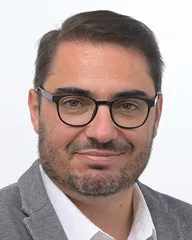
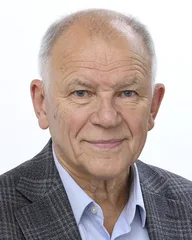
| Rank | Name | Country | Group | Speeches | |
|---|---|---|---|---|---|
| 1 |
|
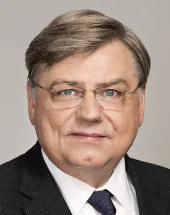
Lukas Sieper | Germany DE | Renew Europe (Renew) | 494 |
| 2 |
|
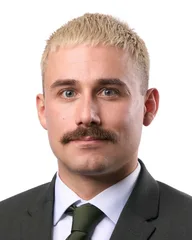
Juan Fernando López Aguilar | Spain ES | Progressive Alliance of Socialists and Democrats (S&D) | 463 |
| 3 |
|
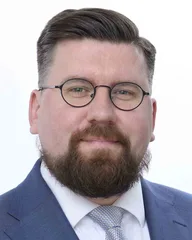
Sebastian Tynkkynen | Finland FI | European Conservatives and Reformists (ECR) | 460 |
| 4 |
|
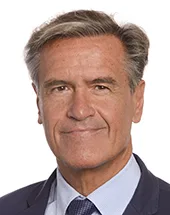
João Oliveira | Portugal PT | The Left in the European Parliament (GUE/NGL) | 288 |
| 5 |
|
Vytenis Povilas Andriukaitis | Lithuania LT | Progressive Alliance of Socialists and Democrats (S&D) | 276 |
All Speeches (82)
Mr President, thank you very much. Artificial intelligence is a topic that has become a subject of discussion and debate not only in the circle of specialists or scientists, but in principle in every possible forum and in every sector of the economy. We all understand that this is a turning point in the digital transformation process, the consequences of which will be very serious and global. When designing rules and standards in the area of AI, we must remember that Europe is important, but only part of a huge market dominated by companies from third countries. Developing a common position among democratic countries around the world on the creation of trustworthy generative AI is therefore essential to effectively protect European consumers, their privacy or data. Thanks to this, European creators will also have the right to fair remuneration in a situation where the effects of their work will be copyrighted and used to train fundamental models. Much of the work in building such an international agreement on AI has already been done by the OECD, which is an excellent forum for debate between experts, governments and companies from the most developed countries. That is why, when preparing the Artificial Intelligence Act in the European Parliament, we were eager to benefit from the achievements of this organisation. Building a strategic partnership and mutual trust in AI between the European Union and the United States is particularly important. In order to encourage our overseas partners to follow our lead in regulating AI, we should also be open about our concerns about the dominance of several Silicon Valley companies in this very young market. At the same time, Europe must be open to investment and knowledge transfer from third countries, which must not be hampered by administrative or legal barriers. I hope that the Commission will continue its regulatory dialogue and consultation with non-European governments and companies to create clear guidelines on the application of EU AI regulation.
Mr President, thank you very much. Mr. Commissioner, I'm sorry. Ladies and Gentlemen, Small and medium-sized enterprises are the strength of the European economy, which is threatened by unnecessary bureaucracy, barriers to cross-border activity or poorer access to finance. The crises that have hit our continent in recent years, such as the pandemic or war-induced inflation, have been particularly costly for small and medium-sized enterprises. At the same time, the ambitious pace of the European Union's energy transition or the requirements of the digital revolution require continuous investment, for which entrepreneurs often lack funds. The Commission should pay more attention to creating exemptions and facilitations for small and medium-sized enterprises, including those in the new technologies sector, in the proposed rules and regulations. Access to the digital single market, especially in e-commerce, is a huge opportunity for many small and medium-sized enterprises. We must consistently remove any barriers that prevent them from offering products and services in the Member States.
Madam President, I'm sorry. Digitalisation can be an effective remedy for many of the challenges we face as humanity. Artificial intelligence opens up new opportunities in many areas of life and economic sectors, but like any drug, it also has side effects. Therefore, we must use this technology consciously, understanding the risks and threats associated with it, but also recognizing that its development and use can bring much more benefits than problems. To achieve this, we need not only EU regulation, but also a robust global partnership to create trustworthy AI that is safe and ethical. For the ECR, the most important part of the work on this regulation was to strike a balance between new administrative obligations for businesses, especially European small and medium-sized tech companies, and an adequate level of protection for consumers and citizens. I thank the rapporteurs for their efforts to find this delicate compromise and my colleagues and experts who have supported me throughout the negotiations. Artificial intelligence is already with us, so we need these rules as soon as possible to control and understand it. I hope that tomorrow we will take another step in this direction.
Madam President, I'm sorry. Mr. Commissioner, I'm sorry. Ladies and Gentlemen, Data is the fuel of the digital economy, fuelling innovation and creating new business models. The European Union generates a huge amount of information, which should be easily and cheaply stored, exchanged and used for economic purposes. Only a well-functioning market for competitive cloud services can provide this. However, a better balance is needed between cloud providers and cloud users, especially small and medium-sized enterprises, which are most exposed to unfair practices or unfavorable contracts. The vast amount of data about us collected and processed by connected devices needs to be better protected. Providing access to IoT products to independent service points will reduce repair costs and extend the cost of living of equipment. From the point of view of the development of European technologies, such as artificial intelligence, these rules are crucial. Europe needs to make better use of the potential of the data we generate, ensuring the maximum level of protection.
Activities of the European Ombudsman - annual report 2021 (debate)
Date:
13.03.2023 19:18
| Language: PL
Speeches
Madam President, I'm sorry. Oh, Mrs. Spokesperson! Mr. Commissioner, I'm sorry. The European institutions are in a serious crisis. To the democratic deficit and the lack of transparency of many of the decisions taken in Brussels, we can add further serious problems destroying the credibility, the credibility of the European Union, such as the corruption that has shaken the European Parliament in recent months, and the unclear procedures on conflicts of interest in the European Commission, as discussed today. The pandemic, which has been the main challenge that Member States and the European Union have had to respond to in recent years, has also exposed a number of weaknesses and omissions that need to be thoroughly explained. The process of negotiating, purchasing and supplying vaccines still raises questions about the limits of access to public information and the efficiency of public spending. We count on your activity and relentlessness in finding answers to them. I would also like to thank Ms Anne-Sophie Pelletier for the report that we will support.
Consumer protection in online video games: a European Single Market approach (debate)
Date:
17.01.2023 12:44
| Language: PL
Speeches
Mr President, thank you very much. Dear Commissioner, Europe needs a strong digital sector, of which the gaming industry is an essential part. Our companies, including Polish ones, have great experience and successes in this area in the world, which we must show and support. Video games are not only a business, entertainment or art form, but also a huge community of conscious users of technology that has its rights and expectations. Unfortunately, this report largely ignores this fact, exaggerating the importance of negative phenomena and suggesting more bureaucracy and more supervision as a solution. A number of existing regulations also apply in the gaming industry. The proposal for new sectoral legislation is redundant and can be very costly for businesses and for players themselves. We are talking about gender balance Of course, among game developers, it's absurd. Strong, creative and innovative European companies will not be created by new rules, but by education, investment and enthusiasm of young people, including game developers. Let's not kill that enthusiasm by accepting reports like this.
Mr President, thank you very much. Commissioner, I'm sorry. The European Union is above all an organisation with economic objectives, whose single market is one of the most important achievements. However, trade in goods and services, free of unnecessary barriers, is still an ideal that we must continue to strive for. In my report, which Parliament adopted last year, we point to problems that require a special and urgent commitment from the Commission. The pandemic crisis or inflation that has affected us all can reinforce protectionist tendencies that have been clearly visible for years. The free movement of services is challenged by unnecessary controls, inadequate penalties or difficulties on the part of local administrations in conducting business by foreign companies, including small and medium-sized enterprises. Also in the Digital Single Market, and especially in online commerce, there are barriers that make life difficult for small and medium-sized enterprises on the one hand and consumers on the other. I hope that this anniversary will be an opportunity to reflect constructively on what else we can do to make the Single Market work better and more uniform.
Amending Council Regulation (EU, Euratom) 2020/2093 of 17 December 2020 laying down the multiannual financial framework for the years 2021 to 2027 - Amending Regulation (EU, Euratom) 2018/1046 as regards the establishment of a diversified funding strategy as a general borrowing method - 'Macro-Financial Assistance+' instrument for providing support to Ukraine for 2023 (debate)
Date:
23.11.2022 16:08
| Language: PL
Speeches
Mr President, thank you very much. Ladies and Gentlemen, Ukraine needs our support for many reasons: as a neighbour, a victim of aggression and a partner who should become a member of the European Union in the near future. The war unleashed by Russia generates enormous economic costs that we all feel. But it is the victim of this barbaric aggression who suffers the greatest losses. We must not allow Putin's plan to succeed, and a country that is economically ruined and politically unstable will remain at our borders. We should continue to be an arsenal of democracy and peace, supporting the functioning of Ukrainian public institutions, which are facing an ever-increasing humanitarian crisis. Russia deliberately destroys and devastates infrastructure, schools and hospitals, hoping that the next wave of refugees will weaken our determination. Financial support for Kiev will be the best proof that such a scenario will never become real.
Countering the anti-European and anti-Ukrainian propaganda of Putin’s European cronies (topical debate)
Date:
05.10.2022 14:41
| Language: PL
Speeches
Mr President, thank you very much. In war, fighting disinformation is as important as destroying enemy tanks or planes. For years, Russians have been using the opportunities offered to them online to influence European public opinion. Unfortunately, many journalists, politicians or artists in the Member States more or less consciously support Moscow's narrative. We are still unable to counteract this effectively. We could also see this in Poland during the artificial migration crisis, when attempts were made to sabotage the decisive actions of our government in defending the borders of the European Union. Criticism of such projects as the canal through the Vistula Spit, the Baltic Pipe pipeline or the expansion of the Polish army also serves exclusively Putin's interests. In the information war, each of us is a soldier, but as we have seen recently, one ill-considered tweet can have the power to blow up an atomic bomb.
Radio Equipment Directive: common charger for electronic devices (debate)
Date:
04.10.2022 09:25
| Language: PL
Speeches
Madam President, I'm sorry. Ladies and Gentlemen, Europeans have more and more portable electronic devices in their homes, pockets or backpacks. These are not only smartphones, but also tablets, e-book readers or laptops. By harmonising the charging standard, using them will be easier, cheaper and will reduce the production of electro-waste and the consumption of rare metals. From the outset, the ECR supported this project and supported the extension of the list of devices that will be equipped with a USB-C port. We also pointed out that consumers must be properly informed that a common charging port does not mean that the same charger will be ideal for every device. The graphical indication system we propose, which the Commission is to design, will help to acquire the charger that best suits our needs. We also wanted customers to be able to choose as long as possible whether they want to buy a new device with or without a charger. We also understand that research into more efficient charging technologies, including wireless charging, must continue, and we expect the Commission to follow and support innovation in this regard. And Mr Alex Saliba deserves a very special thanks.
Madam President, I'm sorry. We all agree that small and medium-sized companies are the backbone of the European economy in almost all sectors – including digitalisation, which we often forget when we think of these big companies. It is also a huge number of family businesses that deserve special attention on our part. Unfortunately, despite the declarations that we can often hear in this Chamber, the situation of small and medium-sized enterprises after the pandemic, as well as in the face of rising energy prices, is constantly deteriorating. Moreover, their activity in the Single Market is limited by unnecessary non-tariff barriers and protectionism, especially when it comes to transport companies or small service companies. Many entrepreneurs do not cope with the bureaucracy and the overly complex mechanism of obtaining European funds, which prevents them from quickly adapting to the requirements of the digital economy. When designing new legislation, we need to pay more attention to these issues. Small and medium-sized enterprises will create innovative products and services if we create the right conditions for them. When working on the AI Act or Data Act, we should especially bear this in mind and keep administrative requirements for small and medium-sized companies and the resulting costs to a minimum.
Better regulation: joining forces to make better laws (debate)
Date:
07.07.2022 11:33
| Language: PL
Speeches
Mr President, thank you very much. Mr. Commissioner, I'm sorry. The call to improve the process of creating European law is most correct. Our procedures are opaque and completely incomprehensible to citizens. The lack of transparency in the decision-making process proves that the democratic deficit is one of the biggest drawbacks of the European Union. Unfortunately, this report in itself is an example of the fatal way in which documents are produced in our institution. Instead of clear suggestions and recommendations on how to make better laws, here we have a bunch of random and general statements, political declarations and ideological postulates. This is far too long, a long text that mixes important issues, completely irrelevant and absolutely unrelated to the creation of effective and understandable regulations. If this is how Parliament wants to convince someone that it knows how to make better laws, I am not fortune-telling.
Sustainable aviation fuels (ReFuelEU Aviation Initiative) (debate)
Date:
07.07.2022 10:23
| Language: PL
Speeches
Dear Mr President, Air transport is an important and innovative part of the European economy, which is extremely sensitive to any market distortions. Recent years have shown how many jobs have disappeared due to the drastic reduction in the number of flights. The war in Ukraine, rising fuel and ticket prices, the crowd in European airspace are once again threatening the future of this industry. It is a mistake to try to impose additional and costly obligations on this sector at such a dramatic moment, which will affect the competitiveness of European airlines and the cost of air travel. We agree that innovative, environmentally friendly and sustainable fuels will help reduce emissions in air transport. We appreciate the rapporteur's openness to our arguments and the inclusion of many ECR Group proposals. We fully support the creation of a fund to invest in research into alternative fuels in aviation. The definition of sustainable aviation fuel in the transport committee is also a good compromise. However, the proposed calendar for airlines to increase the share of such fuels is, like the entire Fit for 55 package, detached from economic and social realities. We cannot therefore support this report.
Madam President, I'm sorry. Two years ago, 340 million Christians lived in areas where they could be persecuted. Today it is 360 million. And not because people, Christians, move to areas where they are persecuted. Last year, 5,900 Christians were killed precisely because they professed the Christian religion. That's 20% more than a year ago. This is a serious problem. There was a massacre yesterday. At least 50 people were killed during a church service on Sunday. This is sufficient reason for the European Parliament to address this issue in the debate. This is why the ECR Group is asking for such a debate.
EU preparedness against cyber-attacks following Russia invasion on Ukraine (debate)
Date:
03.05.2022 20:04
| Language: PL
Speeches
Mr President, thank you very much. Mr. Commissioner, I'm sorry. Ladies and Gentlemen, Russia has been waging a cyber war against the European Union for many years. The aggression against Ukraine was preceded by hacking attacks on public institutions, government officials and critical infrastructure in many Member States, including Poland. Building resilience to the online conflict is fundamental to our security. It is worth using the potential of advanced technologies, including artificial intelligence, for this purpose. We have European companies that can provide the right cybersecurity tools in both military and civilian contexts. But we have to create the right conditions for their development. The AI Act project we are currently working on is a great opportunity to do so and make it easier to conduct research and invest in measures to protect against cyberattacks.
Artificial intelligence ignites the imagination of both technology enthusiasts and opponents of accelerating automation in the economy and social life. Reconciling these two approaches and building a broad compromise is a difficult but possible task. Unfortunately, in our opinion, this report has not been entirely successful. We appreciate the effort and commitment of the rapporteur to the report, but as ECR we will abstain. There is no clear, coherent and strong message in the final text that Europe wants to seriously join the global technological race and be a place where innovation is not only consumed, but above all created. Artificial intelligence is a huge opportunity for our companies, including small and medium-sized ones, which can develop modern products and services if they receive the right support. That is why it is so important to invest in research and development and to work closely together on ethical, legal and technical standards with international partners who can and want to share their knowledge and experience in AI with us. We must not allow our strategy to develop artificial intelligence and the data economy to fall victim to long and idle discussions. Especially since we have to work on the regulation of the AI Act, which should above all create an innovation-friendly legal framework. I hope that we will seize this opportunity and not build another bureaucratic corset for companies, including European ones, operating in the new technologies sector.
Dear President, Commissioner, I'm sorry. Mr. Commissioner, I'm sorry. The development of the Digital Single Market is not possible without opening access to big data, which underpins the creation of innovative products and services. This is particularly important for small and medium-sized companies, which face the biggest barriers in this area. Administrations and public institutions have huge data sets that can be successfully used in the economy. Member States should open these files, of course respecting the principles of protection of sensitive and personal data. The actions and achievements of the Polish government in this area are an example that this can be done effectively and safely. In order to be competitive in the world, the European Union must share a real space for the free exchange of data. This is the only way we can harness our potential in the global technological race for the benefit of European consumers and businesses. I would also like to stress that I join all the congratulations and compliments to Mrs Niebler. It was a really good job.
The deterioration of the situation of refugees as a consequence of the Russian aggression against Ukraine (debate)
Date:
08.03.2022 17:46
| Language: PL
Speeches
Mr President, thank you very much. There is a saying: "Who borders Russia? Answer: Russia borders with whomever it wants.” For two weeks now, Russia has been showing the whole world how much it does not want to border Ukraine. For two weeks, a Russian roller has been rolling through Ukraine, destroying military, civilian, industrial and agricultural infrastructure, destroying houses in cities, destroying houses in villages, killing people. Now is the time, ladies and gentlemen, for us to ask ourselves: Do we want to border Russia like that? It is clear from today's debate: No, we do not want to border such Russia. Ladies and Gentlemen, we have to be consistent. We must be very consistent and this war must end in our victory.
Tackling non-tariff and non-tax barriers in the single market (debate)
Date:
15.02.2022 21:15
| Language: PL
Speeches
Mr President, thank you very much. Mr. Commissioner, I'm sorry. Dear Colleagues, The Single Market is the cornerstone of the European Union. The abolition of restrictions on the movement of goods and services has undoubtedly been a key factor in creating prosperity and economic growth in the Member States that joined the Community after 2004. However, despite clear evidence that free trade and the freedom to provide services have a clear positive impact on our economy, there are still many non-tariff barriers that hamper the potential of European companies, especially small and medium-sized enterprises, operating in a cross-border environment. This is particularly worrying in the services sector, which is over-regulated in many sectors, and is negatively affected by the lack of cooperation between administrations and by effective and rapid appeal tools at European level. We are constantly witnessing a growing wave of protectionism in the Member States, which has the effect of restricting access to national markets, including for posting companies. This approach threatens the idea of a single market that benefits businesses and consumers alike. It is also an obstacle to ambitious projects such as the Industrial Strategy for Europe or the Green Deal, which cannot succeed without a well-functioning Single Market. A particular example is the road transport sector, which is of strategic importance for the smooth functioning of the European economy. Carriers, especially from Central and Eastern European countries, are exposed to the risk of costly and unnecessary bureaucracy outside the country of registration, disproportionate financial penalties and often unjustified actions by national control authorities. The development of the Single Market for digital services also faces a number of non-tariff barriers that limit its potential and prevent consumers from accessing products and services offered in other Member States. Given the ongoing digital transformation of the European economy, removing barriers to the development of e-commerce seems to be one of the key challenges for the European Commission. Unfortunately, most of the initiatives taken to tackle the existing and most burdensome non-tariff barriers are ineffective or face strong political resistance in the legislative process, as evidenced by months of attempts to remove the absurd and environmentally harmful obligation for heavy goods vehicles to return to the country of registration every 8 weeks from the mobility package. The pandemic has clearly shown that, in a crisis situation, smooth trade and the free movement of services are extremely sensitive to disproportionate action by national authorities and a lack of harmonisation and cooperation between Member States. The disruption of supply chains in the Single Market has seriously jeopardised the stability of production and distribution, in particular in sectors critical to the fight against the health crisis. A Single Market free of unnecessary barriers is the best guarantee for a swift recovery of the European economy after the COVID-19 crisis. Through the efficient use of digital services and the widespread deployment of eGovernment tools at European and national level, we can eliminate a significant number of obstacles faced by businesses operating in more than one Member State. I thank all the shadow rapporteurs and our advisors and assistants for their substantive and unbiased cooperation on this very important report. We have managed to build a compromise that takes into account the demands of all groups. I hope that the Commission will use our recommendations and recommendations as part of the work of the SMET Single Market Enforcement Task Force. We see the goodwill of many Commission officials and their willingness to effectively tackle barriers to cross-border trade, the posting of workers or the free movement of services. Unfortunately, their commitment and initiatives are often suppressed and blocked by the political pressure of their superiors, including Commissioners. I would like this report to be an incentive to overcome such limitations in the decision-making process and to be an important argument in the discussions on the future of the European Union, which is above all a community of economic interests. I would be grateful if you could support this report and thus the barrier-free single market.
Mr President, thank you very much. Dear Commissioner, We cannot ignore digital market failures and their impact on our privacy, consumer rights, security or the freedom of public debate. Digital platforms have led to a situation in which, whether they like it or not, they create a reality, including a political one, without taking any responsibility for it. Complicated internal rules and unclear procedures for appealing decisions, such as removing content on social media, are examples of self-regulation that does not work. The Digital Services Act is needed to address the lack of control and transparency. However, we must remember that the Internet is not only digital giants, but also a huge number of small and medium-sized companies that, thanks to their online presence, can effectively reach customers. Their situation is specific and they should not be subject to excessive burden and regulation.
Mr President, thank you very much. Ladies and Gentlemen! Today, all Member States are facing record levels of inflation, also driven by rising transport costs. The creation of restrictions on intra-Union trade therefore primarily affects consumers. Today, we already know that vaccination is the only effective way to fight the pandemic, and that restoring borders between Member States not only does not help to reduce the number of infections, but is also the cause of the deepening of the economic crisis. The Commission's failure to respond to the Austrian government's decisions, which increasingly hamper the provision of transport services in the Tyrol region and negatively affect supply chains and the environment, is a scandal. At the same time, the obligation to return trucks to the countries of registration every 8 weeks will come into force next year, which will result in a radical increase in emissions. The Commission is aware of this, but is still doing nothing to stop this threat to the climate. This provision should be amended as soon as possible. Good luck, Commissioner!
Continuous crackdown on civil society and human rights defenders in Russia: the case of human rights organisation Memorial
Date:
16.12.2021 11:23
| Language: PL
Speeches
Madam President, I'm sorry. Mr. Commissioner, I'm sorry. Ladies and Gentlemen! History is not only an excellent teacher of life, but also an effective conscience of nations. The attempt to liquidate the Memorial is nothing more than an attempt to silence conscience, which reminds the Russian authorities of the crimes of the communist system. The Soviet Union was a barbaric state, built on terror, forced labour and mass deportations. They affected many ethnic and social groups who did not want to come to terms with Soviet slavery. However, the first victims of gulags and deportations were the Russians themselves. It was for them that Memorial was created to show the truth about communism to those who would never hear about it in school or in the media. It is impossible to build a partnership with Russia, in which the authorities are still proud of the evil that the Soviet Union has done to the countries of the Eastern Bloc. Memorial has been defending the right to truth since 1989. We should defend the Memorial.
Situation at the Ukrainian border and in Russian-occupied territories of Ukraine (debate)
Date:
14.12.2021 17:08
| Language: PL
Speeches
Madam President, I'm sorry. The constant political and military pressure that Ukraine has been subjected to in recent months is also a test for the European Union and a test of the credibility of our supposedly firm policy towards Moscow. But how do you defend yourself without guns? Unfortunately, the decision to block arms purchases for the Ukrainian army by Germany and the Netherlands is proof that the mere threat of gas blackmail is enough to paralyze any effective action. And what will happen when Nord Stream 2 is ready, pumping millions of euros into the pockets of Russian oligarchs? Pro-Russianism is not measured by words, but by actions! Neglecting the threat to the security of Europe, especially Poland and the Baltic states, posed by Russia's aggressive policy is the same mistake of the West, repeated for years, which President Lech Kaczyński spoke about already in 2008 in Tbilisi.
Mr President, thank you very much. Road safety depends not only on modern infrastructure or drivers' skills, but also on the effectiveness of the motor insurance system. Harmonisation of rules in this area is necessary due to frequent travel and high mobility between Member States, both for professional and tourism purposes. The possibility of easy access to the entire history of our claims will facilitate the insurance of the vehicle in another country and will avoid discrimination against the owners of the vehicle on the basis of nationality or previous residence. In recent years, there have also been many new categories of vehicles that were not covered by compulsory insurance. Their users also cause accidents, so it was necessary to expand this list. At the same time, it welcomes the fact that Member States will be able, where justified, to provide for exceptions in this respect and to adopt rules that are more favourable to victims than the minimum laid down in this Directive.
European solutions to the rise of energy prices for businesses and consumers: the role of energy efficiency and renewable energy and the need to tackle energy poverty (debate)
Date:
06.10.2021 12:11
| Language: PL
Speeches
Dear President, Commissioner, I'm sorry. Ladies and Gentlemen, The increase in energy prices, which today affects many citizens of the European Union, is proof that economic policy cannot be conducted on the basis of ideological assumptions and naive belief that Russia is a reliable partner. No one today has any doubts that the sudden increase in gas prices is the result of the manipulation of the supply of this raw material. Vladimir Putin himself speaks about it openly. All the fears presented for years by Poland and the Baltic states that such dependence gives Moscow an excellent tool for influencing political decisions and social moods in Europe are materializing. It is also not without fault that the climate policy pushed by the European Commission is unrealistic and detached from the social costs. Today's situation on the energy market is only a prelude to the problems caused by the energy transition carried out too quickly and in isolation from economic realities.