
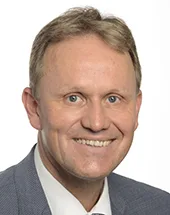






| Rank | Name | Country | Group | Speeches | |
|---|---|---|---|---|---|
| 1 |
|
Lukas Sieper | Germany DEU | Non-attached Members (NI) | 390 |
| 2 |
|
Juan Fernando López Aguilar | Spain ESP | Progressive Alliance of Socialists and Democrats (S&D) | 354 |
| 3 |
|
Sebastian Tynkkynen | Finland FIN | European Conservatives and Reformists (ECR) | 331 |
| 4 |
|
João Oliveira | Portugal PRT | The Left in the European Parliament (GUE/NGL) | 232 |
| 5 |
|
Vytenis Povilas Andriukaitis | Lithuania LTU | Progressive Alliance of Socialists and Democrats (S&D) | 227 |
All Contributions (40)
Air passenger rights (debate)
No text available
Presentation of the automotive package (debate)
No text available
Development of an industry for sustainable aviation and maritime fuel in Europe (debate)
No text available
Europe’s automotive future – reversing the ban on the sale of combustion cars in the EU (topical debate)
Madam President, Commissioner Hoekstra, ladies and gentlemen! The European automotive industry is in deep crisis. Almost weekly, we hear about new dismissal announcements from manufacturers and suppliers. In Germany alone, more than 51,500 people have been released this year. So the hut is on fire, but apparently not everyone understands this. Instead of finally giving the car industry the much-needed support, the right-wing factions are losing themselves in pure hatred of electric cars. The most recent example: the complete blockade of the toll exemption for e-lorries that has just taken place. At the same time, left-wing factions blindly cling to a pure electroideology. Dear colleagues, as an EPP, we seem to have understood how precarious the situation in the country really is, how people feel on the line and the engineers in the offices. The future is not purely electric, nor is it purely the combustion engine – that is perfectly clear. We need reason and realism in our politics. We need a technology mix. We need a technological openness. Our automotive industry now urgently needs support. We must promote the ramp-up of electromobility, yes, expand the infrastructure, improve site conditions. But there is also an urgent need for a realistic plan for decarbonisation. That is why we need a proposal from the Commission. Ursula von der Leyen announced it, and I am glad that Commissioner Hoekstra has just mentioned that new technologies such as plug-in hybrids and range extender They will play a role, as will sustainable fuels. If we want to combine climate protection and competitiveness, then we need all available technologies. Otherwise, we will lose this industry in Europe. Ladies and gentlemen, we will probably receive a Christmas present from the Commission at the end of the year. As an EPP, we are ready to work in the middle of this House – I stress this explicitly. Let us tackle this together in the middle – for jobs, for prosperity and for a future for Europe’s automotive location.
Circularity requirements for vehicle design and management of end-of-life vehicles (debate)
Mr President, Commissioner Roswall, ladies and gentlemen! Now is the time to summarize. This is a bit difficult if you want to talk to your colleagues. With regard to Mrs Sardone: I would have liked to have said something about the actual things that we have decided – the question of documentation obligations, because we have actually reduced it. But she doesn't seem to be interested in the debate because she's not there at all. I would also have liked to have said to Mrs Matthieu from the Greens that in the end – if you don’t know any more – to claim that we are working with the right is simply wrong in the matter and also a bit cheap. There is no cooperation! I would just ask you to take note of that here. We are at the end of a long process; We have come up with a balanced compromise. The time has come for a decision, and I naturally ask for support for this balanced compromise. Amendments and also separate votes reflect more particular interests tomorrow and then endanger the whole thing. I am firmly convinced, together with my co-rapporteur Paulius Saudargas: Tomorrow we have the chance to vote for a sustainable automotive industry and for a strong European circular economy. Finally, a request and a thank you: I ask for your support – that is, in the middle of this House. Thank you, of course, to my co-rapporteur Paulius Saudargas, to Alexandra Mehnert from the Committee on Transport - the opinion was very helpful. Mrs Tomašič has already said: 1 700 amendments – it was even 1 929, a hard piece of work – and here we would like to express our thanks to all the staff who have worked hard here. Let's harvest tomorrow, so to speak, thank you very much!
Circularity requirements for vehicle design and management of end-of-life vehicles (debate)
Madam President, Commissioner Roswall, ladies and gentlemen! Imagine this: Nearly 300 million cars drive on Europe's roads every day, with 3 to 4 million disappearing every year. Just go away. The question is: Where do these vehicles land? Some reappear in third countries such as Africa, where they pollute the air with their old exhausts. Others are parked somewhere on the side of the road and slowly rot in front of them. Still others end up with backyard dealers, who exploit them completely and sell them cheaply in individual parts. This is not only to the detriment of the environment, but also to the detriment of honest companies that work really cleanly. This is where the new End-of-Life Vehicle Ordinance comes in: It keeps our raw materials in circulation, reduces dependence on imports and promotes recycling. In short: It makes our automotive industry circular. We as the EPP Group support the Commission proposal, but we need to improve its feasibility. We focus on three main areas: realistic goals, less bureaucracy and fair market conditions. First of all, the EU Commission wanted to require that 25% of plastics in new cars must be recycled, a quarter of them from old vehicles. However, industry has rightly pointed out that collection, sorting and recycling capacities are not yet sufficiently developed to achieve this goal. Therefore, the EPP Group proposes realistic steps: 20 % recycled plastic in new cars, of which 15 % directly from end-of-life vehicles – an achievable but challenging target at the same time. We also promote technology-open recycling, including chemical processes, to enable innovation and flexibility. In the intra-European trade in used cars, we are committed to ensuring that no additional evidence is required. The owner decides, not the EU - that is subsidiarity. Such requirements would be a bureaucratic monster, and they would not bring back the vanished cars; That would cost a lot of money. Instead, we need clear export controls to third countries. It must be clear whether a car is still driving or is really junk. And finally, we demand fair market conditions, not only for the large corporations, but also for the many small and medium-sized enterprises. Therefore: no compulsory contracts between producers and recyclers. The workshops need access to certain vehicle data. Only they can repair cars and safely remove engines or batteries at fair prices for customers. With our compromise proposal, we are putting the Commission's idea of sustainability on a realistic course. We not only set feasible recycling targets, but also ensure fair market conditions for small and medium-sized companies. We strongly oppose new proof requirements and ensure that the valuable raw materials such as steel and aluminium remain in the European Union through stricter export regulations for scrap cars. This regulation paves the way for a circular automotive industry with a reliable planning framework to enable companies to invest safely, such as in recycling facilities and long-lasting vehicle design. Our proposal shows: Environmental protection and economic reason can go together – ambitious but feasible. Exactly that was, exactly that is our claim. That is why I ask you tomorrow to agree to our negotiated compromise. With a compromise, you can not always achieve everything, there are no 100 percent solutions; But I believe that tomorrow's compromise proposal is balanced. That is why I am seeking your approval for a sustainable European automotive industry and a strong European circular economy.
Latest developments on the revision of the air passenger rights and airline liability regulations (debate)
Madam President, Minister Szłapka, Commissioner Tzitzikostas, ladies and gentlemen! The rights of air travellers are not a nice extra – they are at the heart of European consumer protection. However, this protection is currently being dismantled with an announcement, namely by the position of the Council, which decided on 5 June. We all agree: There is an urgent need for action in the revision of passenger rights. The current air passenger rights, as has already been said, are 21 years old and the Commission's proposal to update them has already been on the back burner for 12 years. I am therefore fundamentally grateful to the Polish Presidency for having taken up the issue. But what the Council is now presenting after a decade of inaction is nothing less than a frontal attack on passengers' rights. Let's not fool ourselves: With the decision to conclude the first reading, the Council has massively damaged trust between the two co-legislators. Now, after 12 years of standstill, a fast-track procedure cannot work that way. The Council wants to create facts, and these facts will serve neither passengers nor the interests of the aviation industry. I therefore say quite clearly: We will not accept these deteriorations of the status quo. With the tactic of surprise, the Council bets on the wrong horse and risks a political disaster. Our position has been on the table since 2014. We are willing to negotiate, fair, reliable; balanced rules for consumers and businesses, but no relapse into legal arbitrariness on the backs of passengers. That's what we should be working on. So we will work constructively, as far as possible, if three months are a little short. But we can do it in the interests of consumers and industry.
CO2 emission performance standards for new passenger cars and new light commercial vehicles for 2025 to 2027 (debate)
Mr President, ladies and gentlemen. The automotive industry is a cornerstone of our European industry. About 13.8 million people work in the sector and generate 7 percent of the gross domestic product. We want automotive history to continue to be written in Europe, but the industry is under considerable pressure – global uncertainty, technological change, restrictive policies and the tariffs we have just discussed. Many manufacturers will not be able to meet their climate targets for 2025. There is a threat of high penalties. In this tense situation, it would be a fatal signal from Brussels if there were penalties. We reject the other option of entering into pooling agreements with foreign producers, thereby directly strengthening competition. We want to keep industry and jobs in Europe. Flexibility is therefore necessary, and it is precisely this flexibility that the Commission proposal brings. We will also comply with the climate targets, i.e. a win-win situation. Ladies and gentlemen, let us together take the first important step towards saving our industry. Agree to the urgent procedure today and then to the proposal on Thursday.
The importance of trans-European transport infrastructure in times of stalling economic growth and major threats to Europe’s security (debate)
Madam President, Commissioner Tzitzikostas, ladies and gentlemen! With the Connecting Europe Facility (CEF) we have a funding instrument that is clearly structured and focuses specifically on transport and energy infrastructure. Now about a new European Competitiveness Fund If it is discussed, I think it is completely wrong. Any new horizontal funding instrument would also dilute this important focus of the CEF and create more bureaucracy and confusion with additional conditionalities. The CEF is already ensuring that Europe remains competitive. So instead of talking about deleting or dissolving the CEF, we should strengthen it. The CEF is already oversubscribed four to five times, and the investment deficit is enormous. Mario Draghi puts this deficit at between €750 billion and €800 billion per year in his report. If we want better infrastructure in Europe, we must be willing to spend money on it. And yes, at the same time we have to invest in our defense. But that's not mutually exclusive. Rather, it overlaps. 94 percent of the network for military mobility is also used for civilian purposes. That clearly means investing in our infrastructure is also investing in our security. The same reinforced bridge over which a freight car with tanks and ammunition occasionally rolls will be much more frequent for civilians and freight trains, thus keeping our economy running in Europe. Given the current world situation and threats, we must not pit infrastructure and defence against each other. We need to think both together and talk about an increase in CEF funding. The Council's proposal here to reduce the budget line by 80 percent is the wrong signal. We quickly need two things: Firstly, a rapid restructuring in the current MFF to provide more funding for infrastructure development, and secondly, sustainable, focused funding for infrastructure in the next MFF. Roads, railways, airports and waterways are the lifeline of the European economy. Let us work together to ensure that Europe gets the transport network it needs.
Action Plan for the Automotive Industry (debate)
Madam President, Commissioner Tzitzikostas, Minister Szłapka, ladies and gentlemen! In the automotive industry, the headlines are currently dominated by economic downturn and crisis. It is clear that there can be no "continued like this"; I am glad that the Commission has now also recognised this. We need a pragmatic and balanced policy. The action plan on the automotive sector, which we are discussing today, is a first important step towards a much-needed change of course for the Commission. And time is pressing. Industry now needs flexibility in its 2025 targets. No one would understand if in these hard times with factory closures and waves of dismissals, penalties were also due. The Commission must put the proposal on the table by the end of the year, as announced. We need to get faster. In the future, innovation, digitalisation and competitiveness will have to play a much stronger role. The announced initiatives on autonomous driving or to support research and development in Europe are therefore very welcome. But although the action plan contains many positive elements, it is not the big throw hoped for. Instead of finally providing clarity on the ban on combustion engines, the Commission is missing out on this opportunity to make a clear commitment to legislation that is open to technology. Instead, it remains vague and inconcrete; Just announcing that the review should be brought forward is not enough. The Commission must deliver quickly. For the EPP it is clear: We need a comprehensive approach, full technology neutrality by 2035, a recognition of the role of plug-in hybrid electric vehicles. We need an improvement of the charging infrastructure, especially for electric trucks, and an early review of the targets for heavy-duty vehicles and trailers because they are not realistic. As an EPP, we are determined to secure millions of well-paid industrial jobs in Europe and maintain technological leadership. We want to achieve Europe's climate goals by not stifling industry, but relying on innovation. It's time for a change of course. Let's get it ready!
Competitiveness Compass (debate)
Mr President! Mr Executive Vice-President Séjourné! Dear colleagues! The enormous challenges facing the European automotive industry are well known. There are millions of jobs in this key industry. And what do we have now? We have a strategic dialogue for this automotive industry and now a compass. The question: Is that enough? That is certainly not enough – it takes action! Employees and companies expect clear decisions and, above all, quick results. My expectations are clear: No additional bureaucracy, but concrete solutions within 100 days, at the latest until the summer. The time of hesitation is over. We now need concrete proposals to support industry in this crisis, to make this sector future-proof and to preserve jobs in Europe. In this example of the automotive industry, we have also specifically promoted openness to technology, realistic goals and the avoidance of penalties. We need investment in recharging and refuelling infrastructure, as well as accelerated permitting procedures. What is incomprehensible to me is that this issue is not addressed in the Strategic Compass, nor in the Commission's work programme. That's missing. There is now an action plan on 5 March, and I would urge the Commission that this action plan ultimately deserves its name. Here we need concrete actions, legislative measures. They're overdue.
Restoring the EU’s competitive edge – the need for an impact assessment on the Green Deal policies (topical debate)
Mr. Chairman! Vice-President Ribera! Dear colleagues! The situation is indeed serious, and I am somewhat stunned when I hear colleagues from the SPD such as Tiemo Wölken, who then speaks of legal certainty and planning security here. I don't know if he says the same to VW employees who are afraid of losing their job. Redundancies, plant closures, loss of competitiveness – that is the truth. And the Green Deal is still, I would say, not a success story. That is why we need a change of policy, and that goes to you personally, Mrs Ribera. Frans Timmermans' Green Deal has failed, we need a new deal. Commission President Ursula von der Leyen said: We need one Green Industrial Deal. However, this also requires willingness to change. The competitiveness of the economy needs to be brought back to the forefront. We have to deliver, and we have to correct the mistakes of the Green Deal. This requires technological openness, innovation and no bans – the ban on combustion engines is an example. Putting innovation on a broad scale, allowing all fuels – then we can get back on the road to success. The same is true in aviation: Fair conditions of competition. When we make laws – I am also in favour of SAF quotas in aviation, we need to make aviation more sustainable. But if these quotas only apply to European airlines, but not to competitors, then we are damaging our business location and our jobs and our employees. No more red-green ideology. We need common sense and pragmatism again. Then we come back to the track of success.
Implementation of the Single European Sky (recast) (debate)
Mr President, Commissioner Hoekstra, ladies and gentlemen! Thank you for this constructive exchange. Although it is of course difficult on the far right and the far left to work constructively on such a factual topic, I believe that we have had a good debate overall. The Single European Sky demonstrates once again our European and also our EPP commitment to the continuous support of passengers, the aviation industry, research and development, including in the aerospace and space sectors, as well as the respect of environmental promises. We are certainly striving for more efficient air navigation services, fewer delays, a lower environmental footprint and also lower costs for passengers and airlines. The Single European Sky is a first step forward to remove the bottlenecks in the airspace, to finally create a truly single EU space without compromising national sovereignty. This will also lead to lower costs and better environmental performance. I think tomorrow can really be a good day for Europe. I therefore make a clear appeal to all colleagues to come to the vote on time tomorrow and vote in favour of this recast. I agree with Commissioner Hoekstra, current Commissioner and hopefully re-elected Commissioner in the near future: This is a first step today, and more will have to follow in the next five years. But for the EPP, I can say: We are ready to continue this work. Our citizens will certainly thank you.
Implementation of the Single European Sky (recast) (debate)
Madam President, Commissioner Hoekstra, ladies and gentlemen! 30 000 daily flights, 600 million passengers per year, more than 500,000 airline jobs, less than 17 000 national traffic control jobs, congested airports, a patchwork of routes due to air traffic control along national borders – this is the picture of the last European monopoly: air navigation services. I'm here today to ask you: Say yes to shorter distances, more efficiency, more performance, more cooperation, and yes to a truly European Single Sky. Why is there no performance review body? Why isn't there a common system of benefits? Why isn't there a European network manager? These are all important elements to improve air traffic control performance and limit damage to passengers. Air traffic controllers will keep their jobs, they will work less stressed, they will work better because they work with their neighbors. I'm here to tell you: Yes, we can make flights safer, shorter, greener and more affordable for the average citizen of the European Union. We have huge potential here. Billions of euros have been invested by both the European Union and private stakeholders through the SESAR project. SESAR delivers the digital European airspace. It's now in our hands, but we can't just rely on investing in technology. While technological progress has advanced through the SESAR program, the structural reforms needed here to achieve both capacity and environmental performance have stalled for more than a decade and are holding us back in the past. The Member States did not take part in this either, they were on the brakes. Take a look at this summer alone: From June to August, air traffic control in Europe has 16.9 million – I repeat: 16.9 million – minutes of delays accumulated in the European network. This was 41% more than in the entire summer of 2023. For comparison: In 2017 – throughout the year – there were 15.9 million minutes. Taking out the weather-related delays, delays have increased by 82% compared to summer 2023, and only seven national air navigation services have caused 85% of these delays. This shows that the situation is deteriorating from year to year – unfortunately – especially now that air traffic has returned to pre-pandemic levels. This reform, which we now have here, is needed, it is urgently needed! The creation of a truly single European sky has been blocked for far too long by Member States that were not prepared to embark on a restructuring of air traffic control for the benefit of the general public, for the benefit of passengers. Thanks to the tireless work of Mr Marian-Jean Marinescu, our EPP rapporteur, for the Single European Sky and EASA over the last 16 years, we will now be able to implement this new airspace regulation. But here I would also like to recall the great work done by Mr David Maria Sassoli, our late President of Parliament, with whom Mr Marinescu worked on the EASA Basic Regulation. But I should also like to remember my Socialist colleague Bogusław Liberadzki, who has worked closely with Mr Marinescu, as Johan Danielsson does with me now. Allow me, Madam President, now to call on the Member States to swiftly rework the errors that we still have in implementation. There is huge potential for the benefit of citizens and ultimately for meeting climate targets. So, we have to keep working.
The crisis facing the EU’s automotive industry, potential plant closures and the need to enhance competitiveness and maintain jobs in Europe (debate)
Mr President, Mr Dombrovskis, ladies and gentlemen! The transformation that the Greens, Social Democrats and Liberals initiated here a year and a half ago by banning combustion engines is not working. International sales markets are weakening, sales of battery vehicles in Europe are falling and the necessary infrastructure is not available. Even companies that have fully focused on electric vehicles are revising their plans. The emission targets set are difficult to maintain and billions of euros in fines are threatened as early as 2025. In short: The European automotive industry is in a deep crisis. The current legal framework is proving too narrow and too inflexible. The consequences are dramatic – jobs are being lost, most recently a plant in Brussels that has closed or will close next year. That is why we must act now. First, we must do everything we can to avoid penalties in the coming year. In the current phase, companies cannot and must not be forced to make such payments. This money should flow better into the transformation, the preservation of jobs and locations. Secondly, we must implement what has long been a key demand of the CDU/CSU: The ban on combustion engines from 2035 must be lifted, not only in 2026, but as soon as possible in 2025. The industry needs this clear signal that we are taking back this wrong decision. We finally need openness to technology instead of a policy of banning it. Thirdly and lastly, we need to be broader. The pure focus on electro is a dead end. We need all technologies, a broad mix and also the recognition of climate-neutral fuels.
Type-approval of motor vehicles and engines with respect to their emissions and battery durability (Euro 7) (debate)
Mr President, Commissioner, ladies and gentlemen! The green ban policy is ubiquitous: First the burner-off, then absurd restrictions on the driver's license including night driving ban for beginners, finally a law to restore nature, which can paralyze our agriculture. In this House, we are increasingly engaged in correcting this anti-consumer and anti-industrial policy, a policy of de-industrialisation of Europe that reduces our prosperity and increases our dependence on other regions of the world. This is not how global environmental protection works. But contrary to the opinion of the Greens and Social Democrats, the protection of health, the protection of our European industry and the protection of jobs are not contradictory – the result of the negotiations on Euro 7 is the best proof of this. The result is pragmatic and realistic, for three reasons: Air quality is sustainably improved by stricter exhaust emission limits for trucks and buses, by regulating emissions from brake and tyre abrasion for the first time – which is particularly important for electromobility – but also by replacing older vehicles with the latest-generation combustion engines. The industry remains competitive, the moderate adjustment of the limit values creates the necessary planning certainty for the industry. This is practical and oriented towards economic feasibility. And thirdly and lastly: Individual mobility remains affordable. Strict limit values and new test procedures would have made cars considerably more expensive, but brought little added value for air quality. Especially in times of crisis like these, cars must remain affordable for citizens. In the Euro 7 negotiations, the voice of reason has won. The result is a prime example of how environmental and industrial policy can go hand in hand if we leave green ideology out. That is why I ask you to agree with this trilogue tomorrow, so that we can once again shape policy with moderation, because smart environmental protection with industry – which works, but against industry – will be difficult.
Driving licences (debate)
Madam President, ladies and gentlemen, Driving licences are part of growing up for many young people, especially in rural areas. A driver's license means freedom to meet friends, take a holiday trip or just drive to work. Thanks to the EU, the driver's license is also valid outside Germany. The EU Driving Licence Directive has thus far been a success story with real added value for each of us. The Greens, the Left and the Social Democrats seem to want to change that. I cannot explain the amendments in any other way, ladies and gentlemen. Mandatory medical tests for everyone, no Europe-wide recognition of accompanied driving from 17, special rules for beginners. In any case, these proposals do not serve road safety. On the contrary: For young drivers, the frequency of damage is 25 percent lower if they have already obtained a driver's license at 17. I experienced this with my daughter, who also did it at 17, which is successful. The ‘accompanied driving’ system is therefore a success story. So: No more paternalism, more pragmatism, trusting people – with Europe-wide recognition of accompanied driving, recognition of driver's licenses and concrete simplifications for all road users.
Strengthening the CO2 emission performance targets for new heavy-duty vehicles (debate)
Mr President, Commissioner Hoekstra, ladies and gentlemen! Buses and trucks are currently responsible for 6% of emissions in the EU, and we all depend on their services in our daily lives – for commuting to work or for full shelves in the supermarket. Just give up, that's out of the question. And only together can we manage to reduce the emissions of the industry. All options must be on the table. But instead of making this possible, Greens and Social Democrats prefer to push ahead with their ideology of prohibition. Because again, CO2-neutral fuels should play no role, again there should be artificial restrictions on electric and hydrogen. Again, no openness to all technologies, rather ban, rather Bas Eickhout. And you can do that better – as you have already shown in the car – that is your policy. But with us – the many jobs, the small and medium-sized manufacturers of trucks and semi-trailers seem to be completely indifferent to Greens and Social Democrats – manufacturers that are deeply rooted in their regions and offer well-paid jobs. Unrealistic targets – and frankly, ruinous penalties – are now looming. This is politics against our industry and also against our middle class, in the end politics against the people – we must not accept this. Today's vote is the last chance to leave the wrong path of technological hostility in this legislature. And Bas Eickhout said: We shouldn't talk about e-fuels. So, dear Bas Eickhout, there are three options from the EPP today: We have a broad definition of CO2-neutral fuels, we have a carbon-correction-Factor with a lid, and we have a request only to e-fuels. And I can say for the EPP: If today we finally move this Parliament in the right direction and one of these motions is approved, then the EPP is also on board and then we can correct the mistakes we have made in the past. We are ready as an EPP, I hope the Greens too.
Type-approval of motor vehicles and engines with respect to their emissions and battery durability (Euro 7) (debate)
Dear Mr President, Commissioner Dalli, ladies and gentlemen, I want more realism in this debate. We all want better air quality for our citizens, affordable mobility for citizens and businesses and a competitive industry in the European Union. In order to make progress in all areas and not overburden anyone, we need a healthy middle ground in the Euro 7 standard. We have already worked out this, and this proposal is being voted on here today. It improves air quality. Stricter limits will result in Euro 7 cars emitting 60% less particulate matter and trucks emitting 60% less nitrogen oxides compared to Euro 6. Mobility remains affordable. Strict limit values and new test procedures require considerable investment, but bring comparatively little added value for air quality. If we keep the proven Euro 6 test procedures and only moderately tighten the limits, we will prevent high investments in expensive technology that ultimately pays the consumer. We ensure the competitiveness of European industry. It was only at the beginning of this year that the incinerator phase-out was decided in the EU from 2035. We cannot force the auto industry to invest billions in an end-of-life technology. Climate protection only works with industry, not against it. Air quality and maintaining competitiveness and jobs in the EU are our priorities. This proposal strikes the necessary balance. What is missing is a passage to technology neutrality. Carbon-neutral fuels help climate protection. And by what means we achieve climate protection or better air in the end, must not be prescribed. We need competition. A ban on certain technologies is never effective. Politicians are not better engineers. I haven't found any, even among the Greens, although I have been looking for a long time. For this reason, we have introduced changes so that the continued operation of combustion cars that are operated climate-neutrally with CO2-neutral fuels is still possible after 2035. Ladies and gentlemen, we have found a good compromise. That's why I appeal to everyone here: Please support this balanced approach to better air, affordable mobility and a globally competitive industry.
SME Relief Package (debate)
Vice-President Wieland, Commissioner Jourová, ladies and gentlemen! The economic situation in industry and SMEs is extremely tense. War in Ukraine, inflation, disruptions to international supply chains and numerous natural disasters are causing uncertainty. We won't solve all problems at once, but we need to start offering solutions again. A new start is now needed for greater competitiveness in the European Union. It is high time that the EU Commission implements a concrete location policy for the EU. The SME relief package presented yesterday is only a first step, a good and correct signal. Of course, as an EPP, we are pleased that our long-standing calls for a SME representative in the Commission have finally been successful. However, this position must now also be filled quickly. Equally positive and overdue: The competition test is to come, administrative procedures and reporting obligations for our companies are to be simplified and the transitional periods for SMEs are to be extended. However, it is important that it does not remain with vague announcements. We need concrete measures to cut red tape. And there I see openly still a crux and a enforcement deficit, I want to say. The last four years of this College of Commissioners have been marked by consistent bureaucracy building. Instead of One in, one out It is de facto: Three new laws in, one out. This is the Commission's last chance to change that. The target announced by the President of the Commission to reduce reporting requirements by 25% is also a real step here, but again only the tip of the iceberg. If Ursula von der Leyen is serious, then we must now One in, one out Consistently implement. We need a real U-turn, we need concrete instead of vague announcements. And this also includes a stress moratorium for medium-sized companies, because the relief comes only through implementation. We will be economically successful again if we implement these simple principles.
State of the SME Union (debate)
Madam President, Commissioner Gentiloni, ladies and gentlemen, ladies and gentlemen! It's just sad now. Theoretically, I could give the same speech from last year again. Unfortunately, not much has changed. There is still no stress moratorium. We have also been waiting for the SME envoy for more than three years now. is just a distant utopia. Instead, we are approaching the status of “at least three new legislative proposals in and one out”. This bureaucracy and these rules take the air out of the middle class to breathe. I can't do that. It is a good thing that, as the European Parliament, we are once again emphasizing our demands with a resolution this week, giving this and the next Commission another task list. It can't go any further. If our demands continue to be ignored, I see black. Then rows of medium-sized companies, farmers, bakers, metalworkers will simply give up. Instead of vague announcements, real measures are needed: Finally, the establishment of an SME envoy centrally positioned in the Commission President's cabinet, who can also take action if new legislation is overburdened with bureaucracy, the mandatory application of One in, one outWe have been calling for this for a long time, in order to avoid ever more bureaucratic requirements from the outset, for the introduction of mandatory SME tests in the impact assessments of new laws in order to anticipate the impact on SMEs, and finally for a burden moratorium on the 25 million SMEs in Europe suffering from these excessive regulations. We just talked about it for two hours: Tax the rich. Before we collect taxes here, the money must first be earned. In this respect, we need relief for small and medium-sized enterprises. Let's start this today!
Industrial Emissions Directive - Industrial Emissions Portal - Deployment of alternative fuels infrastructure - Sustainable maritime fuels (FuelEU Maritime Initiative) - Energy efficiency (recast) (joint debate - Fit for 55 and Industrial Emissions)
Madam President, Commissioner Vălean, ladies and gentlemen! This is an important signal today! Lack of charging infrastructure is still a major problem. Without public acceptance, there will be no reduction in emissions. We need a Europe-wide success story and not a few charging stations in a few countries. AFIR has been a great success here, including for the EPP. Where others wanted to exclude again, we relied on technology openness, agreed on legally binding goals that give planning certainty. This must now be implemented by the Member States. The AFIR was just the starting signal. More commitment is needed, in particular due to the ban on combustion engines from 2035, while we are still waiting for Vice-President Timmermans' proposal for the recognition of climate-neutral fuel. Well, either he can't or he doesn't want to, in any case: So far, the Vice-President has delivered nothing. Prohibitionists remain loyal. Although the truck expansion targets in AFIR have been weakened – there was simply no majority in the Council for more ambition – the Greens now also want the ban on combustion engines for trucks and buses. I think that's just unworldly and unrealistic. We need all the solutions: Electricity, hydrogen, LNG, sustainable fuels. We shouldn't rule out anything. In the end, we reached a good compromise on the AFIR technical file. I would like to thank everyone involved and allow me to make a personal statement: Colleague Ertug has left the house. Dear Ismail, all the best to you and your family, and I hope to see you again outside Parliament.
Dieselgate: suspected widespread use of defeat devices in cars to reduce effectiveness of pollution control systems (debate)
Madam President, Minister Roswall, Commissioner Schmit, ladies and gentlemen! We should take the ICCT report seriously. And also the judgment of the ECJ. Shut-off devices are only legal if they serve to protect the engine. This must be assessed on a case-by-case basis by the competent authorities. In Germany, in my home country, the Federal Motor Transport Authority is responsible for this. This commented the ICCT report soberly: The measurements are outdated, and there have been numerous retrofits and recalls since then. So before some are eagerly working on the next campaign against the automotive industry, let's take a look at the facts: The fact that European legislation has developed in particular in the context of the diesel scandal, that we are now examining it more closely and more closely – as the Commissioner has just pointed out – and that we finally have tests in real operation and no longer rely solely on laboratory tests, is what we, as the EPP, have been advocating from the outset, including in the EMIS Exhaust Gas Testing Committee and in the subsequent legislation. It is also a fact that air quality in the EU has improved significantly in recent years. For example, even the German Federal Environment Agency (Umweltbundesamt) attests that there are virtually no more exceedances of the applicable limit values in Germany. In 2021, only one percent of urban measuring stations were found to exceed the nitrogen dioxide limit value. That's good news. In addition, air quality is improved even further every year through fleet renewals and the switch to alternative powertrains. So whoever incites or polarises now and whoever conjures up a new scandal should be honest that he really has different intentions, that he uses every opportunity to brand the automotive industry, that he does not care about the European car industry and also the workers in this industry. It is the same ideology, the same hostility to technology, which has also promoted the ban on combustion engines here in the House.
Order of business
Madam President, ladies and gentlemen, This is basically a proper debate. We have had a new situation in the Council of Ministers since last week. We have a blocking minority, led by Germany, Bulgaria, Italy and Poland. Other countries will follow: The Czech Republic is here now. It is now up to the Commission to make a new proposal. However, it is obvious – as we all know in the room – that the Commission is not yet in a position to make this new proposal. Therefore, we as the EPP are against holding a discussion now on Wednesday on the basis of speculation. I believe that the Commission should first reorganise itself and see what it can propose. We as the EPP look forward to the debate. We have always been in favour of openness to technology and against bans. In this respect, I would like to have a debate, not this week and then next time with the resolution, but now is not the right time.
CO2 emission standards for cars and vans (debate)
Madam President, Vice-President Timmermans, ladies and gentlemen! Today we can still take it, the last exit before the final combustion ban from 2035. Today we have the last chance to leave this technologically hostile road that Greens, Social Democrats and Liberals have taken. They are the ones who want to make a bet here and put everything on one card. There are very clear arguments against this insanity. For the necessary emission reduction in the transport sector, we need innovation and space for smart ideas, but the ban on combustion limits this much-needed freedom. Our proposal is better: set a clear, strict framework and then let the market decide which technologies are needed to achieve the objectives. The ban also ignores the current situation. Price advantages for end customers were the favourite argument of Social Democrats and Greens in the negotiations. But the current reality is different: high electricity prices, inflation and expiring purchase premiums. All calculations for price advantages are void. And finally: In Germany alone, 600,000 people are working on vehicles with internal combustion engines – their jobs are now at risk. We are already seeing the first consequences: the promise of liberals, greens and social democrats to create new jobs – battery cell production often goes to Canada or America. And some in the European Commission would have liked to have continued happily. They wanted to get rid of the incinerator on trucks and buses. Again, there is no room for innovation, no competition of the best ideas – instead bans again as if nothing had been learned. Now, however, one seems to have come to their senses at the last few meters, and this is also a success of those who have so far opposed this prohibition policy. Ladies and gentlemen, send a clear signal again today and vote against this trilogue agreement.