

| Rank | Name | Country | Group | Speeches | |
|---|---|---|---|---|---|
| 1 |
|
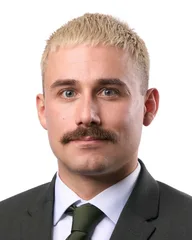
Lukas Sieper | Germany DE | Renew Europe (Renew) | 487 |
| 2 |
|
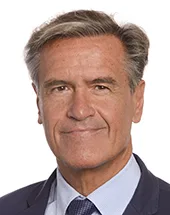
Juan Fernando López Aguilar | Spain ES | Progressive Alliance of Socialists and Democrats (S&D) | 454 |
| 3 |
|
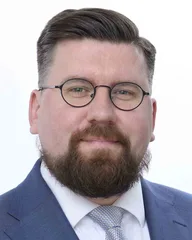
Sebastian Tynkkynen | Finland FI | European Conservatives and Reformists (ECR) | 451 |
| 4 |
|
João Oliveira | Portugal PT | The Left in the European Parliament (GUE/NGL) | 284 |
| 5 |
|
Vytenis Povilas Andriukaitis | Lithuania LT | Progressive Alliance of Socialists and Democrats (S&D) | 273 |
All Speeches (64)
Threats to stability, security and democracy in Western and Sahelian Africa (debate)
Date:
04.05.2022 19:42
| Language: FR
Speeches
Mr President, Commissioner, despite the ingratitude of the Malian junta towards the 59 French soldiers who have fallen in the Sahel, our total withdrawal from that region is not conceivable. On the one hand, because other actors will soon have to make up for the departure of Westerners. Turkey already strengthens its military and diplomatic presence, when it does not play, moreover, the religious card. On the other hand, because any advance by Islamist terrorists would inevitably affect Europe in terms of security and migration, this is all the more true at a time when the conflict in Ukraine raises the spectre of famine in an Africa dependent on its wheat imports. However, in the aftermath of the end of Operation Barkhane and its European counterpart Takuba, the deterioration of the balance of forces on the ground is blatant. This is evidenced by the chilling admission of the Nigerien president in December that the jihadists are superior to certain African national armies. The long-announced rise in terrorism to the Gulf of Guinea has now been proven. With its new Peace Facility, it is hoped that the European Union will finally approach military cooperation with Africa in a realistic and lucid manner. At the same time, Europeans are likely to remain the largest providers of development aid. But our considerable commitment must finally be paid back: it is intolerable that the sacrifice of French soldiers should be met with an obsessive hatred of our country.
Madam President, persistent reports on organ harvesting in China point out that this trafficking is not confined to areas ravaged by war or organised crime. They are also false with the allegiance of ‘roses’ cleverly orchestrated by the Middle Kingdom, via a considerable investment in its external propaganda. The country probably has the sad record of applying the death penalty, on which it maintains a certain opacity. Organ harvesting from convicts, too often carried out in defiance of consent, is symptomatic of the indifference to human dignity within the Chinese prison system. Religious minorities are at the forefront of these abuses. And while the plight of the Uyghurs is regularly denounced in the media, the plight of Christians is hardly more enviable. Beyond the dread that these practices inspire, we must collectively take responsibility. The measures introduced in Canada, Spain and Italy against medical tourism in the field of transplants must be precursors in order to eradicate, finally, this particularly sordid form of trafficking in human beings.
Madam President, ladies and gentlemen, teachers murdered because they teach in French rather than Arabic, or because they teach a secular, non-Quranic curriculum: This is what has reduced Burkina Faso to the onslaught of Islamist terrorism. In addition, on the one hand, the persecution of Christians, who make up more than 20% of Burkina Faso’s population, and, on the other hand, the increasingly frequent recruitment of children by terrorist groups, justifying the country’s addition to the UN’s annual report on children and armed conflict. An entire generation is thus in the process of being deprived of education and, to put it mildly, of the future, in addition to the 1.3 million and some internally displaced persons. All this is desolate; Whose fault is it? France has courageously and at arm's length carried out a vast counter-terrorism operation in the Sahel since 2014. Barkhane will have cost the lives of 58 of our sons, not to mention the many wounded, victims of the cowardly explosive device attacks favoured by terrorists. All this to confront the hateful obsession of populations heated white by social networks and the staggering ingratitude of the Malian junta in power. The future will tell whether the attitude of the Burkinabe lieutenant-colonel, who was declared president yesterday, will be on the sidelines. However, the attacks on Tuesday 8 and Thursday 10 February in Benin, the perpetrators of which were neutralised in Burkina Faso, confirmed that the destabilisation of that country carries the risk of conflagration throughout West Africa. Following its withdrawal from Mali, France will therefore have to reconfigure its military apparatus. As for the European Union and the Member States, which are clearly unwilling to support it in this perilous task, they will at least have to try not to blow on the embers by adding the political deadlock to the security chaos.
Madam President, High Representative, ‘effective and mutually beneficial instruments for managing migration’: from Dakar, the President of the Commission echoed the Greek Prime Minister’s call for legal pathways for migrants from Africa at the dawn of this week’s summit with the African Union in Brussels. In short, it is assumed that in return for small concessions on illegal immigration, the floodgates would be opened to legal immigration. The French, who are mostly hostile to it, will appreciate it. As for development aid, although the European Court of Auditors has undermined its effectiveness in its 2020 report on Kenya, it will take the lion's share of these discussions, in addition to the new mirifique programme that is intended to respond to the Chinese silk route, the Global Gateway. How could these faded solutions lead to the shadow of a result? Mali is a case in point in this regard, since, despite $1.8 billion in international public aid in 2019, the readmission rate of its migrants from the European Union is capped at 2.1%. A scandal to which is now added an inexcusable diplomatic affront, flouting the sacrifice of French soldiers in the Sahel since 2014. In short, everything must change so that nothing changes, and the so-called New Deal with Africa, with its snoring Anglicism, will undoubtedly be a new illustration of this.
New orientations for the EU’s humanitarian action (debate)
Date:
14.12.2021 18:15
| Language: FR
Speeches
Mr President, the question of the amount of humanitarian aid provided by Western countries must have as its corollary the question of its effectiveness and its merits. First of all, it cannot remedy the shortcomings of national authorities indefinitely. The approximately 32 million displaced or refugee Africans, for example, must be offered sustainable solutions in their own countries instead of just our subsidies. In addition, there have been numerous scandals over the management of these funds, from the artificial inflation of beneficiary lists to the extortion of aid workers, in particular by Islamist Al-Shabab terrorists in Somalia, from which some NGOs have been withdrawn. The fact that Niger or Nigeria have for some time declared recognized organizations persona non grata illustrates the tangible risks of diversion to belligerents or terrorists. For my part, I have also urged clarifications with regard to the Tindouf camps, de facto under the leadership of the Polisario Front, to no avail. It is also illusory to claim that European humanitarian aid to Afghanistan, which is supposed to be quadrupled, will not pass through the Taliban in any way, since the Taliban will necessarily intervene in its distribution. They will also hinder the exercise of women humanitarian workers, thereby affecting Afghan women and their children. The European Union, the world’s largest donor, cannot compromise itself for the benefit of regimes or entities that we disapprove of and have sometimes fought at the cost of the blood of our own soldiers.
Madam President, as I pointed out in 2019, the Anglophone crisis in Cameroon does not lend itself to outrageous simplifications. While there is agreement on its most tragic aspects, many of the reforms undertaken since its inception have often been overshadowed. Whether it is the creation in 2017 of a national commission for the promotion of bilingualism and multiculturalism, the recruitment of English-speaking teachers and magistrates, or the major national dialogue and status granted in 2019. Occult, the attitude of the leaders of the English-speaking agitation in the North and South-West regions, many of whom reside in the United States and Europe, is also omitted, as some would have rejected any discussion with the government. Moreover, is this insurrection based solely on linguistic and cultural considerations? Many Anglophones live, after all, in regions that are not, in this country 80% French-speaking. The claim of some Anglophones regarding their representation in oil companies could be symptomatic of underlying economic motivations. Let us refrain from shouting haro at Cameroon, let alone at a time when Islamist terrorism seems to be on the verge of inflaming the whole of Central Africa. The heavy toll paid by the country in its resolute struggle against the Islamic State and Boko Haram, on its soil and beyond, in the framework of the Multinational Joint Force and the Trans-Saharan Partnership cannot be overemphasized. In addition, hundreds of thousands of Nigerian and Central African refugees are being received in difficult circumstances. At a time when, in 2020, the Far North of Cameroon will have been the target of more Boko Haram attacks against civilians than Nigeria, Niger and Chad taken together, Cameroon, a guarantee of stability in a region under tension, needs our support, not our anathemas.
Mr President, the enlargement process to the Western Balkans is symptomatic of the European Union’s democratic deficit. Indeed, 59% of the French are opposed to these new accessions. Figures from other Member States, such as Germany or Austria, are in unison. This massive rejection contrasts with the apparent fait accompli emanating from the European authorities. At today's summit, the President of the Commission declared that the Balkans were already part of the European Union. A democratic aberration, this enlargement is also a democratic aberration in social and economic terms. First of all because, together with Albania, Kosovo and Bosnia-Herzegovina, outside the Republic of Serbia, the EU would integrate, for the first time, states that are predominantly Muslim and, above all, won over by imported radical Islam. Indeed, the region has been disastrously marked by the highest concentration of jihadists returning from Syria or Iraq in Europe. States such as Bosnia and Herzegovina or North Macedonia have even publicly and voluntarily repatriated some of them. Moreover, while the EU has lost, with Brexit, a significant net contributor and one of its economic drivers, these countries are undeniably lagging behind in this area. Our industries will inevitably suffer from increased competition at least in terms of wages and social security. Albania has the lowest monthly minimum wage in Europe. The textile sector, which is starting a timid renaissance in my region of Grand Est, will soon have been swept away by this massive dumping. Moreover, the Commission denies even its own principles. Thus, Jean-Claude Juncker theorized in 2018 that the resolution of border disputes would be a prerequisite for any new accession. However, the enlargement process is continuing today, even though tensions are high in the Balkans over Kosovo Serbs, the Orthodox Church of Montenegro and the differences between North Macedonians and Bulgarians. In short, this senseless project confirms the inevitable decline to which the European Union is committed. This decline is all the more obvious in view of the insolent dynamism of the United Kingdom... (The President withdrew the floor to the speaker)
Employment and social policies of the euro area 2021 (debate)
Date:
18.10.2021 19:49
| Language: FR
Speeches
Madam President, we do not want France to become an economic desert. However, this is what our country is gradually becoming. Lack of investment in transport, medical deserts and brain drain are the dramatic consequences of general impoverishment. Right now, my compatriots are panicking at the soaring cost of energy. Fuel oil has increased by 40% in six months. This increase will drive millions of our citizens into poverty and further worsen the situation of those already in it. Before the crisis, my region of Grand Est was already the most affected region in France by energy poverty. In 2015, one in four households reported having great difficulty in meeting their heating expenses. By depriving us of our levers to act, the European Commission is helping to stifle our economy. Worse, the Green Deal will plunge the French into the red. We don't want your solutions. They help to accentuate our problems. The National Rally will never stop fighting for France to take back its destiny by proposing the real solutions.
Mr President, the sentencing of Paul Rusesabagina to 25 years in prison is a scathing denial of Paul Kagame's pink legend of Rwanda, justified by the country's fair economic performance. There is no need to go back to the details of the case in order to challenge the disproportionate nature of the sentence imposed on the hero of Hotel Rwanda. Moreover, it could have been expected that his bravery during the 1994 genocide – when, in his capacity as deputy director of the Hôtel des Mille Collines, he saved more than 1,000 people from carnage – would have been taken more into account. This judicial epilogue is also part of a particularly harsh context for the opposition. Consider the unsolved disappearances of certain political and cultural figures, as well as allegations of mass surveillance of electronic communications. These accusations are doubled by suspicions of pressure that the country would exert on diasporas, present in particular in Europe. On the latter point, the European Union, the Member States and the international community must demand full transparency.
The role of development policy in the response to biodiversity loss in developing countries, in the context of the achievement of the 2030 Agenda (debate)
Date:
04.10.2021 17:28
| Language: FR
Speeches
Mr President, ladies and gentlemen, I can only support the philosophy which permeates this report and which corresponds to the ideal of localism, which is ardently defended by the Rassemblement National. This is the only relevant response to both the challenge of global development and the challenge of preserving biodiversity. However, Europe, already burdened by draconian environmental constraints, cannot assume a global leadership role. This is especially true at a time when China has sometimes been associated with environmentally harmful projects, whether in terms of fossil fuels, infrastructure or deforestation. No need to go further than in my region of the Grand Est to convince yourself of the impact of the strong Chinese demand for imported timber. Secondly, it is true that agroecology has an underestimated economic potential; but it is also the responsibility of the countries concerned to develop the frameworks, including legal ones, that are conducive to its development. There is also an urgent need to mobilize new sources of financing for sustainable development beyond international aid alone. For example, in 2017, remittances from emigrants to their countries of origin reached $466 billion, about three times the value of official development assistance. It is a reservoir of insufficiently exploited resources. In short, the only prism of European and Western responsibility seems to me to be a largely outdated approach, because in our multipolar world, our action will have little impact if it is not part of a global effort.
The case of human rights defender Ahmed Mansoor in UAE
Date:
16.09.2021 11:43
| Language: FR
Speeches
Madam President, the tragic case of human rights activist Ahmed Mansoor highlights the persistence of arbitrariness in all countries where the rule of law is not the rule. It is true that criminal legislation and the penitentiary system fall within the sovereignty of each State. However, the judicial and prison treatment of Ahmed Mansoor violates not only the relevant international standards, but also the directives of the competent judge and the applicable national legislation. It is also clear that this case is part of a general context of serious restrictions on fundamental rights, in particular of opinion and expression. This trend obviously primarily concerns those States where authoritarianism was already entrenched, in this case those in the Gulf. In this regard, there is an urgent need to consider the possible role played by the NSO company, whose shadow had loomed over the Kashoggi case, as well as, in general, the use of surveillance technologies against certain political activists. However, the denunciation of this tragedy cannot amount to an unqualified condemnation of the United Arab Emirates, whose contribution to the fight against Islamism on their soil and in the world must be recalled. For example, the country has classified the Muslim Brotherhood or Islamic Relief Worldwide as a terrorist organization. This is all the more remarkable at a time when another Gulf state, Qatar, is accused of compromising with radical movements. This is evidenced by the blockade initiated against this country in 2017. Undoubtedly, huge progress remains to be made in the area of fundamental rights, including social rights. The Ahmed Mansoor case calls for unreserved condemnation, the plight of workers under the yoke of the iniquitous kafala system leaves no one indifferent. All these issues must be on the agenda of the bilateral dialogue with the Emirates, which is also a partner in the fight against Islamist terrorism.
Fair working conditions, rights and social protection for platform workers - New forms of employment linked to digital development (debate)
Date:
13.09.2021 19:54
| Language: FR
Speeches
Madam President, only France can decide to amend its own Labour Code. Here is a statement that may no longer be a truth tomorrow. This is evidenced by this report on platform workers. The appalling working conditions and precariousness of the bicycle delivery workers who travel the streets of our cities are all the more signs that wild globalisation is producing a veritable economic jungle that we must fight. Here, neither one nor two, the European Union, affected by the Savior’s Syndrome, runs to their bedside. In vain. Indeed, as always, the Brussels bureaucracy, whose slowness of action is no longer to be demonstrated, is again outdated: Spain, France, but above all Switzerland and the United Kingdom, outside the EU, are already working to address the problems of bogus self-employed. Our nations do this by promulgating decrees or letting the courts act sovereignly. The reclassification of contracts is ongoing and that is a good thing. Therefore, let us not allow the European Union to take advantage of people’s misfortune to interfere in matters for which it does not have competence. France is acting and must do more to pay those who need to be. We must also put an end to the scandalous use of illegals in the platform economy. We reject immigration that causes social dumping. Our jobs must be reserved for ours first and foremost. If globalization rhymes with precariousness, let us make the nation the lever that will make it possible to fight effectively against these unworthy practices.
Madam President, we all agree here that the case before us today is a reminder of Iran’s propensity to fire all the woods to extract some concessions from the West, such as the release of its own nationals. One would be tempted to see this as a link with the trial in Belgium of Assadollah Assadi, for a planned attack in France. In addition to the tragic case of that academic sentenced to death in Iran on the basis of specious allegations, that resolution rightly denounces a judicial and prison system of another age which applies, inter alia, the worst corporal punishment, from amputation to flogging, or the death penalty in its most degrading form, that of public execution. I regret, however, that the fate of the Christian minority has been completely overshadowed, in particular that of the converts, like the man who was sentenced to 80 lashes for drinking communion wine. This cause should be at the heart of the Europeans’ dialogue with Iran, which must continue.
Mr President, the likely graduation of Bangladesh from the category of least developed countries requires a review of our generous trade policy towards it, all the more so in view of the meagre progress made in the area of labour law. In the textile sector, the Rana Plaza tragedy in 2013 certainly led to some safety improvements. But in the clothing and leather industry for the local market, for example, 58% of workers are said to be under the age of 18. Women employed in the textile sector suffer serious abuses there, in a country that has also been won over by Islamist fever – the Charlie Hebdo case proved this. Moreover, how can the European Union, which has never been greedy for moral lessons on the plight of migrants, evade Bangladesh’s track record in combating international trafficking in human beings? Thus, the authorities sometimes bring legal proceedings against their own citizens who have returned from a period of work emigration, on the aberrant ground that they would have damaged the national image. This is particularly the case for those who have been victims of kafala, a form of modern quasi-slavery, in some Islamist countries. The US has excluded Bangladesh both from its trade preferences and, it seems, from a possible free trade agreement. That decision recalls that the grant of such advantages is not a right, but a privilege.