

| Rank | Name | Country | Group | Speeches | |
|---|---|---|---|---|---|
| 1 |
|
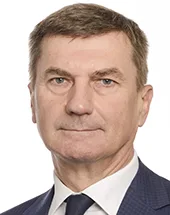
Lukas Sieper | Germany DEU | Non-attached Members (NI) | 390 |
| 2 |
|
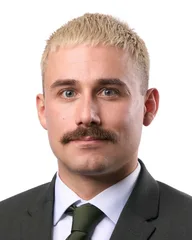
Juan Fernando López Aguilar | Spain ESP | Progressive Alliance of Socialists and Democrats (S&D) | 354 |
| 3 |
|
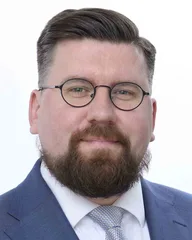
Sebastian Tynkkynen | Finland FIN | European Conservatives and Reformists (ECR) | 331 |
| 4 |
|
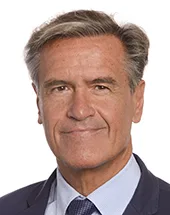
João Oliveira | Portugal PRT | The Left in the European Parliament (GUE/NGL) | 232 |
| 5 |
|
Vytenis Povilas Andriukaitis | Lithuania LTU | Progressive Alliance of Socialists and Democrats (S&D) | 227 |
All Contributions (40)
State of the Union (continuation of debate)
The speech was realistic and focused on the most important – vaccines and digital development. Vaccines and a digital certificate have been a success story for Europe this year, despite the difficult start. Estonia is lucky to be in the EU, we do not have to fight for vaccines like many other countries in the world. As a former Digital Commissioner, I am delighted that digital issues are crucial for Ursula von der Leyen. He spoke about the responsibility of digital platforms, a topic that I am currently working on in depth in the European Parliament. The president linked digital developments to security. He stressed that we are too dependent on Asia for the production of chips. Europe must itself be able to produce chips and thus reduce its dependence on China. I've been thinking about 5G security for years. This is why the relevant legislative initiative of the European Commission is particularly welcome. As far as our region is concerned, it was great that von der Leyen said directly - the Lithuanian border is a hybrid attack with the aim of destabilising Europe. This is not a migration crisis. People are put on planes and pushed to the border of the European Union. It's not tolerable. The president said unequivocally: the European Union will oppose these attacks together with Lithuania, Latvia and Poland. This is a good example of defence cooperation already in place.
Russian aggression against Ukraine (continuation of debate)
I fully support the resolution but it is not enough. I feel that I am also guilty for what is happening in Ukraine. We are heating our family house with the Russian natural gas. As we are paying a high price for Russian natural gas, we helped Putin to collect USD 600 billion as governmental sector reserves. And now he is using this money to kill innocent people in Ukraine. It was a huge mistake to believe that Russian natural gas is needed for us as much as our money is needed for Russia and that such interdependence helps to build up democratic Russia. It is not enough to talk about sanctions against Russia. We have to fully isolate Russia and set an embargo on Russian crude oil and Russian natural gas. I believe there should be no international sports competitions with Russian sportsmen, no EU visas to Russian citizens and further. Full isolation is also costly for us but we have to remember – freedom is not free.
Substantiation and communication of explicit environmental claims (Green Claims Directive) (debate)
Mr President, Commissioner, colleagues, I would like to thank you for this debate. The Green Claims Directive is about commercial green claims. With this proposal, we are not reshaping the carbon market or taxing businesses. Companies can use green claims or not. It is up to them. It’s their free choice. Anyway, I am sure that we can’t talk about happy consumers if every other green claim is false, as studies show. We can’t talk about a level playing field for our entrepreneurs if some traders are cheating. I believe that the Green Claims Directive, as it is proposed now, is balanced. It will bring clarity to our consumers and is less burdensome for traders. I am looking forward to have a successful vote tomorrow.
Substantiation and communication of explicit environmental claims (Green Claims Directive) (debate)
Mr President, dear Commissioner, dear colleagues, the overall goal of the Green Claims Directive is to increase transparency of green claims made by traders. There is a need to increase the trust of our consumers and bring legal clarity to our entrepreneurs. Unfortunately, the current situation with green claims and labels in Europe is not satisfactory. Studies show that over 50 % of companies’ environmental claims, such as ‘climate neutral’, ‘carbon neutral’ or ‘100% CO2 compensated’ are vague, misleading or unfounded. Consumers do not have a way to assess the truthfulness of such claims. They do not understand that a claim that is made about the entire product can, in fact, concern only a certain aspect of the product. In half of the cases, the traders provide a weak or completely absent verification of their green claims. Greenwashing is a real problem. Exactly the same claim can have a totally different meaning in different EU Member States. There is a need to harmonise the rules about green claims. Citizens and companies want to be certain that nobody is cheating when using green claims. Level playing field and fair competition are crucial also when we talk about products coming from third countries. Companies are ready to pay to get a more level playing field, but they are not ready to pay more than they are expecting to gain. It is important that to avoid adding a disproportionate administrative burden to our companies and Member States. I believe that our IMCO-ENVI proposal on the Green Claims Directive is more balanced. It will bring clarity to our consumers and is less burdensome for traders. I believe that we have achieved a reasonable solution. Therefore, I invite everyone to support the compromise we reached and not reopen the questions that we already have agreed. The amendments proposed by myself and the co-rapporteur Mr Engerer, are of technical nature to align our Green Claims text with the recent outcome of the trilogues on the Carbon Removal Certification Framework. I invite you to support these amendments. I would like to thank the Commission for this proposal, as well as the co-rapporteur, all the shadow rapporteurs and our teams for a good cooperation. Please vote in favour of the Green Claims Directive.
European Digital Identity framework (debate)
Madam President, Commissioner, colleagues, in Estonia, the digital identity has been in use for more than 20 years. It has been a success story – soon people were giving 1.3 million digital signatures per week. Our population is only 1.3 million. Thanks to the digital signature, we save one working week a year, which is equal to 2% of GDP. Convenient digital solutions are available in every Member State, but unfortunately, cross-border access is poor because mutual recognition of digital identities has been a problem. I hope that with the digital identity wallet, we will take the necessary step towards the mutual recognition of digital identities in the European Union.
Artificial intelligence in a digital age (debate)
Mr President, first of all, I would like to thank our rapporteur, Axel Voss, and all the shadow rapporteurs for their good work and excellent cooperation. I consider this report a good vision paper which describes our ambitions and how to reach them. Our aim is to build human—centric artificial intelligence, which will serve our people while respecting their privacy. The report encourages us to use more solutions based on artificial intelligence. The report is carried out by the sense of urgency. The European Union must significantly increase its investments in artificial intelligence so we have competitive solutions. The European Union must also significantly improve the access to data, but bearing in mind that the only legal basis for the processing of data is the General Data Protection Regulation. I hope this report will lead the way in the development of artificial intelligence in Europe.
Barriers to the free movement of goods (debate)
Mr President, this oral question aims to address the barriers to the free movement of goods introduced by Member States at national level. The Committee on the Internal Market and Consumer Protection (IMCO) has stressed on several occasions that a well-functioning, strong, fair, inclusive and resilient internal market was also an essential component of the EU’s response to the socio-economic crisis generated by the COVID—19 pandemic and of its recovery efforts. The barriers between intra-EU border crossings hinder the integrity of the Union’s internal market. This is not in our common interest since the fragmentations reduce choices for consumers and the opportunities for companies, bearing a negative impact on our citizens and our economy. On the other hand, Member States could indeed introduce measures to restrict the free movement of goods where such restrictions are justified by overriding reasons of public interest. Among the national measures, the IMCO Committee would like to draw the attention of the European Commission to traffic restrictions that may affect major EU green-lane border crossings. Those measures should be taken in a coordinated way, with the involvement of the European Commission and Member States, to avoid environment problems being translated from one Member State to another and to avoid creating unnecessary delays and deviations in the supply chain. We fully support policies aimed at improving the sustainability of our economy and preserving the environment. A balance should therefore be found between the free movement of goods and environmental and health protection. Furthermore, it is important to have an update on how the European Commission intends to act to overcome such restrictions or to find alternative solutions agreed at EU level to safeguard the free movement of goods and the proper functioning of the internal market.
Digital Markets Act (debate)
Madam President, honourable Vice-President, honourable Commissioner, dear colleagues, I am not just happy to speak in favour of the Digital Markets Act (DMA) today, but I also want to give praise to Commissioner Vestager and Commissioner Breton for their excellent proposal. As Renew Europe, we have long fought for a unified single market where all businesses, whether big or small, should be able to compete freely and fairly. In short, the DMA is about freedom. The DMA will create more freedom for consumers to choose between platforms and applications. Consumers will have more choice, over how their data is used and for what purposes. The DMA will create more freedom to innovate, by setting clear and fair rules for the most powerful players in the field. For us as Renew Europe, it was always clear that the DMA must not aim to punish foreign companies, but to protect European consumers. The DMA should have a common European approach. Renew Europe argued for the involvement of Member States through the competition and other relevant authorities, while preserving the leading role of the Commission to make final decisions. The DMA must increase consumer choices not limit them. Some groups wanted to completely ban whole business sectors, like targeted advertisements, but Renew Europe believes that consumers should have a right to choose if they want to see targeted ads or not. The sooner we are able to implement the DMA, the sooner our consumers and businesses will profit from a stronger, more unified and more innovative single market.