

| Rank | Name | Country | Group | Speeches | |
|---|---|---|---|---|---|
| 1 |
|
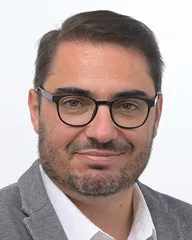
Lukas Sieper | Germany DEU | Non-attached Members (NI) | 390 |
| 2 |
|
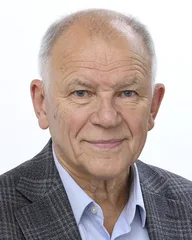
Juan Fernando López Aguilar | Spain ESP | Progressive Alliance of Socialists and Democrats (S&D) | 354 |
| 3 |
|
Sebastian Tynkkynen | Finland FIN | European Conservatives and Reformists (ECR) | 331 |
| 4 |
|
João Oliveira | Portugal PRT | The Left in the European Parliament (GUE/NGL) | 232 |
| 5 |
|
Vytenis Povilas Andriukaitis | Lithuania LTU | Progressive Alliance of Socialists and Democrats (S&D) | 227 |
All Contributions (126)
Order of business
No, I wish to put our proposal to the vote.
Order of business
Madam President, let us hope that this time it will be approved by our Chamber. It is simple: On 16 November, Member States will validate the European Commission's proposal to renew the glyphosate licence for another 10 years. We refuse it. We say stop glyphosate because when so many independent studies denounce the toxicity of this product to human health, reauthorizing glyphosate is criminal. When so many other studies denounce the devastation caused by this herbicide on nature and biodiversity, reauthorising glyphosate is a betrayal. There is an urgent need to ensure the protection of our health and life by immediately and definitively turning the page on glyphosate. This is a major public health issue. We only have one life. Let's defend her together. So, colleagues, I propose that we include on tomorrow morning’s agenda, at 8.30 a.m., a debate with resolution entitled ‘Declaration by the Commission and the Council on the renewal of glyphosate and the urgency of an exit’. This debate would be organised with one speech per political group and I would like two separate votes: one on the holding of the debate and the other on the adoption of a resolution.
Order of business
Madam President, ladies and gentlemen, a few months ago there was a new scandal: the "Pesticide Gate". We then learned that several pesticide companies, including Syngenta and Bayer Monsanto, had knowingly hidden from the European authorities the results of studies demonstrating the toxicity of their products to citizens, and in particular to children. The European Commission then denounced a breach of legal obligations. But since then, nothing. Neither a committee of inquiry, which we had proposed to launch in the European Parliament, nor a simple statement by our body, which is supposed to defend the interests of Europeans by guaranteeing in particular compliance with our laws. Colleagues to the right of this Chamber: Your refusal to face the problem is unworthy and irresponsible. By looking away, you are encouraging the very impunity we are fighting. I therefore call here for a statement by the Commission and the Council on the lack of transparency of authorisations for pesticides and their risks to the environment and human health to be put on the agenda. This is without a resolution for this evening, this Wednesday evening, with one round of speeches per political group. And I ask, Madam President, that this be done by a roll-call vote.
Situation in Nagorno-Karabakh after Azerbaijan’s attack and the continuing threats against Armenia (debate)
Madam President, I have a minute, a minute to talk about a pain that has lasted for centuries, that of the Armenian people who have been martyred, humiliated and so little defended. To talk about the current exodus in Nagorno-Karabakh is to talk about our responsibility, our complicity, it is to talk about the gas that we prefer to import rather than to oppose an ongoing ethnic cleansing. Looking away is not only a moral mistake, it is also a tragic geopolitical mistake. Because when there is an aggressor and an assailant, one cannot pretend to be neutral without endorsing the aggression. Didn't we learn anything from history? Have we forgotten the 1915 genocide? I am ashamed of this Europe that knows but does nothing. And as we know, the risk today is that of undermining the territorial integrity of Armenia. So yes, we need peacekeepers, yes, we need trade and economic sanctions. Yes, we must immediately denounce the shameful gas deal signed with Aliyev. A balance of power must be imposed if we are to protect peace and the Armenian people. We cannot fail, otherwise Europe will have blood on its hands.
Protection of workers from asbestos (debate)
Mr President, asbestos is an invisible killer that has caused much suffering and shortened far too many lives. Lives stolen by indifference to workers' suffering, lives poisoned by the law of profit placed above the protection of workers. Yet their lives matter. In Dunkirk, France alone, more than two thousand asbestos victims, such as Pierre Pluta, have recently been rejected. More than a quarter century of fighting those who knowingly exposed them to poisoning. In vain. I would therefore like to thank those who have made this directive more ambitious. Unfortunately, however, the text we are adopting makes no room for the liability regime that we wanted to establish, nor for the inclusion of asbestos exposure in social protection schemes. Hundreds of thousands of workers now want to be protected, finally properly recognized and those responsible punished. The situation is also terrible in our schools for our children. The text we are adopting today is therefore only one step. We urgently need a directive for the mandatory detection of asbestos, with effective techniques such as surface sampling, means and the establishment of true justice.
State of the Union (debate)
Madam President, ladies and gentlemen, the extreme right says that on 9 June we will have a choice to make, a choice of civilisation. Well, that is true. Either we choose decline and populist national confinement, or we choose ecology to respond to the new climate regime and social justice. This is the choice we will have to make. Madam President, I listened well to your speech, in some brave ways, but I want to talk to you about ecology, because I heard your words, but I also heard your silences. You tell us about the beauty of European forests, the Wadden Sea, but you persist in your silence on the restoration of nature. However, this law must be adopted, as you know, it must stand firm. Your speech, in the end, is that of a captive trapped in the retrograde prison of the dogmas of your political family. But the new climate regime leaves us no choice, and you know that, too. It must be understood that the laws of the economy are not above the laws of nature and that the economy must be rebuilt within planetary boundaries. Ecosystems have rights that must be recognized. We need to get out of the civilisation of toxic substances, of PFAS, of environmental threats, and that is the Chemicals Regulation. We must also ban the export of pesticides and chemicals that we consider too dangerous to be authorised on our territory. We also need an animal welfare law. The battle for ecology is a battle to safeguard the possibility of living on our planet. Our common duty and to stand firm in the face of merchants of death and climatosceptic bonimenteurs.
Towards a more disaster-resilient EU - protecting people from extreme heatwaves, floods and forest fires (debate)
Mr President, the planet is going through a deep ecological crisis and Europe is no exception. We have entered a new climate regime, as shown by the unprecedented fires in Greece, the drought in Spain, and others could be mentioned. But instead of reconnecting with the living, the war continues, waged here by the right wings who opposed the law on the restoration of nature before the summer. Before the summer, the President of the Commission had been silent on nature restoration, and the President of the Parliament had been discreet. Ms Metsola is now telling us that it is climate policies that are fuelling populism in Europe, at a time when millions of Europeans are suffering climate change in their flesh. The truth is that what feeds populism is the same as what feeds the ecological crisis. What feeds democratic and ecological crises is how leaders bow to lobbies and king market rules. It is the refusal to change a deadly system that crushes human beings and destroys nature. It is time to change the logic if we want to prevent the collapse of life. Every minute counts, we must act.
Nature restoration (debate)
Mr President, ladies and gentlemen, we are experiencing the accelerated collapse of life as a result of biodiversity loss and climate change. Everyone knows that. The Nature Restoration Act has a crucial scope. It must be adopted. Every parliamentarian in this Chamber has in his or her hands a share of the destiny of humanity. So, colleagues, open your eyes! Millions of species are disappearing, our fields are becoming poorer, our soils are drying up, our forests are burning. It is life itself that disappears. This law was to be the most important law for biodiversity adopted in 20 years. And yet you, to the right and to the far right of this Chamber, are trying to destroy it. By condemning nature, you condemn our future. Where did your conscience go? Was it bought by the lobbies? Is it non-existent? What will you tell your children? Have we sacrificed nature for the success of the Union of European Right? It is unworthy, it is irresponsible and it is criminal. So, ladies and gentlemen on the right, there is still time to pull yourself together. I call on you to disobey your leaders who dishonor you and to pass this law.
Humanitarian and environmental consequences of the destruction of the Nova Kakhovka dam - Sustainable reconstruction and integration of Ukraine into the Euro-Atlantic community (debate)
Mr President, "the worst environmental disaster in Ukraine since Chernobyl": This is how the Ukrainian government described the attack on the Kakhovka dam. And for good reason: 18 billion tonnes of water were released, raising the level of the river by six metres. The disasters observed are expected to extend over 5 000 kilometres: 5,000 kilometres of flooded land, including 11 natural parks and 48 protected areas; 5 000 kilometres of decaying organisms, pollutants, heavy metals and fertilisers, which may spill into the Black Sea, where tens of thousands of dolphins have already been found dead since the start of the conflict; 450 million tonnes of engine oil spilled; and, at the end of the race, the risk of an accident at the Zaporizhzhia nuclear power plant, awakening the painful memory of Chernobyl’s devastating ecocide. Yes, the attack on the Kakhovka dam caused ecocide. The Ukrainian investigation was opened on the basis of Article 441 of the Ukrainian Criminal Code establishing ecocide. Then I ask the question. Ukraine has asked us to accelerate its accession to NATO and the EU, and we have responded. The Ukrainian government has asked us for military support, and we have responded. Volodymyr Zelensky has been asking us for months to recognise the crime of ecocide, in order to facilitate the trial of the crimes committed by Vladimir Putin in Ukraine. But silence reigns. Why?
Closure of procedure for requests for the waiver and defence of Members’ parliamentary immunity
Madam President, ladies and gentlemen, Europe is facing a new scandal. We learn this morning that several pesticide manufacturers have deliberately lied to the European authorities. For several years and several times, Syngenta, but also Bayer, allegedly subtracted scientific analyses demonstrating the toxicity of their products on human health, and in particular on the development of children's brains. These pesticides cause neurodevelopmental disorders, autism, and impact the intellectual quotient of children. For almost 20 years, the European Food Safety Agency has therefore been deliberately prevented from ensuring the health safety of citizens. The Health and Environment Committees must study, as quickly as possible, what can and must be done to deal with the toxicity of these products, which are too widespread. Ladies and gentlemen, there is every reason to believe that we are facing a PesticideGate, as several colleagues from different groups have pointed out. So, beyond our political differences, beyond our national affiliations, we must defend the general European interest, which starts with transparency, the search for truth and the good administration of our institutions. That is why we must set up a committee to ensure that no one ever again violates European health and democracy. Ladies and gentlemen, lying to the European authorities, lying to us, cannot go unanswered.
Corporate Sustainability Due Diligence (debate)
Mr President, ladies and gentlemen, the situation is simple: If companies do not comply with the Paris Agreement, then we will not be able to limit global warming to 1.5°C. And let us be clear, let us be honest, none of the European oil and gas companies, neither Repsol, nor ENI, nor of course Total, is now on the trajectory of the Paris Agreement. Things are simple: If companies continue to spread plastic or eternal pollutants throughout their value chains, then we will not be able to protect the Arctic, the Himalayas or the world’s forests from these pollutions that make our planet toxic. In short, if we are not able to re-embed the economy within planetary boundaries, then we will continue to make our planet unlivable. This is what is at stake in the text on due diligence, which we are studying and which we must adopt tomorrow. Because companies are obliged to respect the laws, rights and principles that are binding on all, and they must assume their social and environmental responsibilities. Because the lives of women workers, shattered by both forced labour and toxic products that infiltrate their bodies outside our borders, are just as valuable as the lives we have to preserve on European territory. Because when Hilda, Vanessa or Patience ask us to protect their natural parks and lands from Total's EACOP drilling project in Uganda and the world's youth claim their right to a future, we in the European Union need to act.
IPCC report on Climate Change: a call for urgent additional action (debate)
Mr President, the IPCC is formal: the climate crisis is abysmal and deadly, for humanity as well as for many other species. But the IPCC is also formal: it is still possible for us to act. For this, at least three foods in the recipe. The first: Freeing yourself from fossil fuels. This means stopping all funding, support for fossil energy projects and their infrastructure. And this applies to the European Union, to its Member States, but also to European businesses. We need to legislate in this direction. The second: It is dangerous to focus on carbon alone. Climate and biodiversity are linked, but they are linked with other planetary boundaries: ocean, fresh water, chemicals and toxics and rare metals. Reducing our material footprint in just sobriety, adapting and adopting the Green Deal texts on life and on toxics, this is what we need to do today. The third: Climate efficiency is based on social justice – with 16% of the richest responsible for 40% of emissions. So this is also the path we need to take. The conclusion of the IPCC is that we need to move towards carbon neutrality by 2040. So I ask you: What are we going to do?
Keeping people healthy, water drinkable and soil liveable: getting rid of forever pollutants and strengthening EU chemical legislation now (topical debate)
Madam President, ‘we have made the planet inhospitable to human life by irreversibly contaminating it, so that nothing is clean anymore, so much so that it is not clean enough to be safe’. These words are those of scientific researcher Ian Cousins, evoking per- and polyfluorinated PFAS, a family of more than 10,000 substances that are eminently toxic and so persistent that they will never disappear from the Earth. In addition to the global limit for chemicals, the limit on fresh water is also exceeded. Rainwater has simply become unfit for consumption everywhere, even in the Arctic or on the Tibetan plateau. These eternal pollutants are indeed everywhere: in our kitchen utensils, clothing, packaging, paints, cosmetics, car batteries, and even dentures or toilet paper. We also find these eternal pollutants in the pesticides we apply in our fields and even in our wombs. The subject that brings us together today is serious, perhaps even the biggest scandal of the 21st century and centuries to come. Behind this raw reality, lives wasted, ecosystems destroyed. Kidney, breast, testicular cancers, reduced fertility, reduced immune response to vaccines in children, obesity too (one in three children), thyroid diseases, cardiovascular risks, and so many other diseases, surely, for which the link has not yet been established. What are we waiting for to get out of the toxic civilisation? The European consortium of journalists The Forever Pollution Project recently revealed that 17,000 industrial sites in Europe are highly contaminated and another 21,500 are likely to be - if only we bother to analyse the pollution there. Four Member States have recently requested a total ban on substances in the PFAS family. I want to express my full support for them here, but we must act now, and not just in a few years' time, to deal with the request of these four States. First, because, as with all toxic substances, it is necessary to regulate by family and not by substance, otherwise industries simply substitute one prohibited substance for another, which is just as toxic. Secondly, because certain necessary derogations must not become the rule. If manufacturers think the use of a PFAS is essential, then they must fully demonstrate it and reserve it for vital uses, such as medicine. Of course, we cannot be satisfied with the ban on these substances. In the Valley of Chemistry, south of Lyon, France, farmers are calling for help. If the soil is contaminated, then all their farms and incomes are at risk. So, what to do? Europe needs to set up a public fund financed by the polluters themselves to clean up what can still be cleaned up and provide reparations to victims. A famous American trial, traced by the film Dark Waters, showed that the chemical industry was fully aware of the devastating effects of eternal pollutants as early as 1961. But she hid them. Robert Billot, the lawyer for American families, warned us: the battle will be fierce, but industry has to pay. The mere fact that PFAS contamination was possible points to the failure of our current rules on chemicals. This is why we urgently need to revise the REACH regulation on chemicals. That is why environmentalists want once again to ask President von der Leyen about the urgency of proposing this revision, which is literally vital for so many people and ecosystems. This regulation has already existed for 20 years and has shown us all its limits. It currently takes 10 years to initiate a procedure for analysing and then banning dangerous products. At the current pace, it would take us centuries to achieve the goal of a toxic-free Europe. It is too long. And when the plastics and chemical industries – 3M, Solvay, ExxonMobil, Arkema, or Chemours – are fighting against the ban on eternal pollutants, it is BASF, VCI, BDI or CEFIC that are fighting against any reform of the REACH Regulation. They seem to have found in Commissioner Breton a strong ally, which allows them to hope to postpone the presentation of this text in December, in other words a proper burial. So let's just say it straight: If the Commission's proposal is not presented to us in June, we will not be able to adopt it by the end of the mandate, and the Commission will not be able to deliver on its repeated promises of a Europe finally free of toxic products. Recall that these are 10% cancers that could be prevented. During the time of my speech, more than 2,000 tons of eternal pollutants were produced. So let's finally be responsible and turn the page on the civilization of toxics.
Revision of the EU Emissions Trading System - Monitoring, reporting and verification of greenhouse gas emissions from maritime transport - Carbon border adjustment mechanism - Social Climate Fund - Revision of the EU Emissions Trading System for aviation (debate)
Mr President, four texts, four texts to accelerate our climate action. But while the IPCC is asking us to reach carbon neutrality as early as 2040 and we are claiming that we do not want to leave anyone behind, the question arises: Are we there? With only one minute left, I will only talk about the extension of the carbon market to transport and housing. Your proposal is to increase the cost of heating, when energy poverty explodes and inflation depletes; the cost of transport as early as 2027, when many are still forced to use their thermal car due to a lack of alternatives and when free quotas will be maintained for industry until 2036. And by a market mechanism by definition unstable and volatile, responding to the law of supply and demand, when transparency and democracy should be the key words. The reality is that the vast majority of citizens can reduce their emissions through public policies, from spatial planning to building renovation, and through our ability to better regulate the private sector. The laws of economics are neither above the laws of nature nor above those governing social justice. Yes, we need a carbon price, but a fair price and a democratic price. Let’s face it, the total market is not a solution.
Deforestation Regulation (debate)
Well, dear colleague, it depends. There are agricultural organisations, both in Europe and around the world, who regret that we are adopting this legislation. Why? Well, simply because a large number of practices consist precisely in clearing forests, destroying ecosystems that are nevertheless the lungs of the world, the places where a certain number of people live, in order to be able to exploit products, either agricultural products, often intensive agriculture, with a lot of pesticides, dangerous products, or, more often, to raise livestock, livestock that very often ends up on our plates, since that is the purpose of this regulation that we are adopting today. And it must also mean for us in Europe to reduce our meat consumption, to change our practices. But a number of farmers around the world are as excited as we are to help them protect the ecosystems on which their lives depend.
Deforestation Regulation (debate)
Mr President, the decision we are adopting today is historic. This is a huge step forward for the world’s forests, climate, biodiversity, but also for human rights and, it must be remembered, the regulation of an economy that has gone mad. Because the laws of economics are not above the laws of nature. Today, the European Union is responsible for 16% of deforestation through products such as soybeans or cocoa. And so our responsibility is to guarantee Europeans that they do not contribute to the destruction of forests every time they shop. I really want to thank my colleagues, the rapporteur and the shadow rapporteurs here. Faced with Parliament’s ambition, it is true that trilogues have not always been obvious. We can welcome the inclusion of additional products such as rubber or printed paper, as well as higher penalties for companies not complying with their obligations. We will remain vigilant because it is essential that this text is expanded in order to have an impact on fragile ecosystems such as mangroves, to include other products such as maize or to integrate financial actors that finance many projects leading to deforestation. In two years, some forests will have reached an ecological point of no return. There's an emergency. (The speaker agreed to respond to a blue card intervention)
Conclusions of the Special European Council meeting of 9 February and preparation of the European Council meeting of 23-24 March 2023 (debate)
Madam President, Mr President, you are here to tell us about the discussions currently taking place between the Member States. Only, you don't say a word about Afghan women, not a word about Iranian women who keep being harassed. Not a word about Polish and Hungarian women fighting for their rights, as we celebrate the anniversary of International Women's Day. Nor do you say a word of regret about the 60 or so deaths that we have counted in the Mediterranean, murdered by our selfishness, not a word about the victims that we could receive from the most important earthquake in history, on the borders of Europe. The chair of the committee told us about the IRA and her meeting with Joe Biden without mentioning the project. Willow approved by Joe Biden in Alaska, when there is an urgent need to protect the climate and the Arctic. I ask you the question: Do the suffering of human beings and the collapse of life make you so indifferent? Are you so possessed by the demon of liberalism? What world do you live in? What world do we live in? Instead, you talk to us about free trade, competitiveness. A competitiveness of which Philippe Lamberts recalled that it was part of a finite world. It is absolutely necessary to open your eyes. We no longer have time to wait.
Question Time (Commission) - How to ensure energy security in the EU in 2023
You are answering me, Commissioner, on the diversification of the supply of natural and enriched uranium. You do not answer the question of waste, and there is also another threat to energy security with regard to nuclear energy, which is the question of water. Nuclear is 150 to 180 liters of water to produce a megawatt hour of electricity. And it only takes a short episode of heatwave to make up to five gigawatt hours of nuclear power unavailable, or 8% of the French fleet, which is the one that supplies the rest of Europe, not to mention obviously that it endangers the supply of water for agriculture or simply for human consumption. The issue of security is therefore not finished, exhausted, once the issue of diversification of uranium resources has been resolved. I would therefore like to ask you again: how to secure energy supply and production in the European Union in the context of a nuclear energy model?
Question Time (Commission) - How to ensure energy security in the EU in 2023
Mr President, Commissioner, we are here in a debate on the energy security of the Union and therefore also, in the background, on the security of the European Union. However, there is a blind spot in the policy that is being pursued today, namely that of uranium from Russia. Imports of natural uranium reached 2 358 tonnes in 2021, amounting to around EUR 210 million, not counting the EUR 234 million sent to Kazakhstan, where uranium is operated by the Russian company Rosatom. For France, the country I come from is almost two thirds of the enriched uranium that comes to us from Russia and 43% from Kazakhstan and Uzbekistan, where Rosatom or its subsidiaries also work. Not to mention the ten tons that leave each year in the form of waste to Siberia, also in Russia. Then I ask you the question. We now see a real boost for nuclear energy in European legislation. We saw it with the taxonomy, we saw it with the gas package. This can be seen in the ongoing discussions on hydrogen, or in the Energy Market Reform Directive. It may even emerge in the context of renewable energy or in projects such as BarMar, a real Trojan horse for nuclear energy. Commissioner, my question is simple: Is this not a contradiction? And how to answer this question of energy security given the context in which we are?
Outcome of COP27 (debate)
Madam President, COP27 is a painful failure. Some of you, Mr Vice-President, have criticised China, India or the United States for hindering climate action, sometimes with good reason. But how can we claim to be exemplary ourselves, when we persist in investing in fossil fuels? I would like to welcome here the proposal that has been put on the table on loss and damage. But how can we not deplore the European ambiguity in this matter? Europe is therefore asking developing countries to separate themselves from fossil fuels, so as to deserve the money of Western countries. But the reality is that, as a Europe, we have barely reduced our carbon footprint since 1990, and that, in addition to repairing our climate debt of yesteryear, we now have the debt linked to current climate inaction. The reality is that Member States and their companies, sometimes unfortunately supported by the Commission, signed new oil and gas contracts during COP27 with Senegal, Egypt or Qatar, to the detriment of human rights, corruption or climate evidence, which means that fossil fuels now remain under the ground. The reality is that despite repeated calls by the UN to criminalise those who damage the climate, we have not yet done so here. So, Mr Vice-President, we have no more time to waste. We must now, ladies and gentlemen, take action.
A post-2020 Global biodiversity framework and the UN Convention on Biological Diversity COP15 (debate)
Mr President, Commissioner, ladies and gentlemen, one million species at risk of extinction, 70% of wild animals already extinct since 1970. We must understand that we are one with the living and that to destroy it is also to destroy ourselves. Therefore, it is indeed imperative that we finally ratify an agreement on biodiversity. But I want to draw attention to two points. First, nature has never been protected by violating human rights. European history is marked by looting and enslavement of peoples, who have sometimes hypocritically taken the protection of nature as a pretext. This must never happen again. Secondly, there is an urgent need to protect the living from grabbing, financialisation and thus, ultimately, destruction. However, the terms of nature-based solutionsNature-based solutions are now being used even to pursue this logic of grabbing and to keep open the possibility of destroying, through a securitisation market. We must resist these liberal logics. Protecting nature means first of all recognising one’s rights and duties towards it. So let's finally take this path.
Question Time (Commission) - Future legislative reform of the Economic Governance Framework in times of social and economic crisis
Thank you for proposing this reform of the tax rules that apply today in the European Union. It has been seen in recent decades how inept and unfit these rules are - unfit to preserve the dignity of peoples and democracy as in Greece; Unable also to guarantee the imperative of social justice, this shared prosperity at the heart of the European promise; We are ultimately unable to protect the public services, social services and essential workers that we have seen so much needed during the pandemic crisis, and we now lack 142 billion investments every year to preserve these public services. Incompetent, finally, because these rules do not – and unfortunately still do not – take into account planetary boundaries or the need to combat climate change. They do not even take into account that climate change will weigh on debts and public finances in the future. However, the laws of economics are not above the laws of nature. Liberal and accounting logic cannot chase itself, it must be put at the service of a real political objective. So my question is: how will you ensure that these rules are indeed aimed at shared prosperity and preservation of the environment? Do you not think that it is high time to amend these rules in depth, for example by means of an environmental treaty that would take account of social ceilings?
Corporate Sustainability Reporting Directive (debate)
Madam President, ‘flaws large enough to carry a diesel tank through’: These are the words with which Antonio Guterres described the gaping gaps between companies' climate commitments and their actions. Today we are adopting European legislation on the obligation to reporting from companies that trade products in our markets. And this is essential. For how can Europe decently claim to defend human, social, trade union and living rights, without equipping itself with the solid tools to regulate economic activity? The laws of economics are neither superior to the laws of nature nor to the constitutive values of humanity. But I come back to the toxic cover-ups denounced by Antonio Guterres. We discovered last week that Total, the 19th largest polluter in the world, with huge profits, would have amply reduced the reporting its greenhouse gas emissions. This ‘Total gate’, because it is one, highlights two things: firstly, that we need to develop democratically the methods with which these companies calculate and present their emissions, but also that we still have a lot of work, a lot of work, to ensure that the rules we draw up, that the values we claim to defend are finally respected. Let's not let multinationals dictate the laws of the world. On the contrary, let us take our full part in the battle to civilise the economy. The hardest part is ahead of us.
Preparation of the European Council meeting of 20-21 October 2022 (debate)
Madam President, it was our dependence on fossil fuels that put us in Putin’s hands, blew up the bills and destroyed the only planet we have. So let's not repeat the mistakes of the past. Under the guise of freeing us from Russian gas, you are now preparing our dependence on US shale gas, Qatar or Azerbaijan, in defiance of Armenia. All this while accelerating climate change, turning a blind eye to the fact that the cost of living will increase inexorably with the displacement of planetary boundaries. The solution lies in the ability of the Member States to make available together the billions needed for the green transition. What we need are binding targets for our reduction in energy consumption and the 2035 deadline to finally free ourselves from gas altogether. And to ensure that it is the biggest consumers, not households, who make the necessary efforts. Industry, agro-industry, private jets or space tourism: some do not consume energy, they consume it. However, the cheapest energy is energy that is not consumed. It is their efforts that will ensure citizens’ right to energy. The challenge is not who will wear a sweater this winter, but how we can move towards a just sobriety that will allow everyone to live in dignity.
International Day for the Eradication of Poverty (debate)
Will climate and environmental policies harm the poorest and exacerbate poverty? No, I do not believe it and I even believe the opposite. Do you know who is at the forefront of climate change today? Well, it is the poorest, especially those countries that we have plundered, from which we are still extracting oil while they are on the front line in the face of rising water levels and extreme temperatures, and also in the face of violence against their fellow citizens. The situation is the same in Europe. Who were the first to die from coal pollution? Well, it is the workers who have been exposed to these impacts. Who lives next to the most dangerous industrial sites, Seveso sites? Well, it is these people at the bottom of the social ladder, because the richest know how to protect themselves. Who suffers from exposure to pesticides, especially chlordecone, and we have just talked about ultramarine populations in France? Who lives in degraded housing, in which it is difficult to heat? Which population has a poor diet because they are unable to access healthy food? So no, sir, ecology is not another punishment imposed on the poor, but on the contrary it is a work of social equality and a work of dignity for everyone in our continent.