| Rank | Name | Country | Group | Speeches | |
|---|---|---|---|---|---|
| 1 |
|
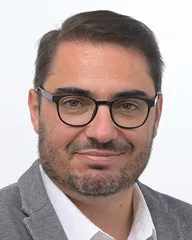
Lukas Sieper | Germany DEU | Non-attached Members (NI) | 390 |
| 2 |
|
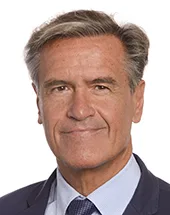
Juan Fernando López Aguilar | Spain ESP | Progressive Alliance of Socialists and Democrats (S&D) | 354 |
| 3 |
|
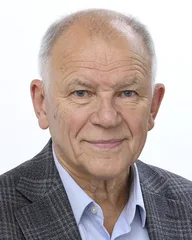
Sebastian Tynkkynen | Finland FIN | European Conservatives and Reformists (ECR) | 331 |
| 4 |
|
João Oliveira | Portugal PRT | The Left in the European Parliament (GUE/NGL) | 232 |
| 5 |
|
Vytenis Povilas Andriukaitis | Lithuania LTU | Progressive Alliance of Socialists and Democrats (S&D) | 227 |
All Contributions (357)
Eliminating violence against Women (debate)
This brings us to the debate on the Council and Commission statements on the elimination of violence against women (2022/2951(RSP)).

Gender pay and pension gap in the EU: state of play, challenges and the way forward, and developing guidelines for the better evaluation and fairer remuneration of work in female-dominated sectors (debate)
No text available
Addressing subcontracting chains and the role of intermediaries in order to protect workers’ rights (debate)
Mr President, Madam Vice-President of the Commission! These days we talk a lot about competitiveness – then please also about fair competition! Should we not better protect our companies, our SMEs from unfair competition through sub-sub-contracting of competitors? Particularly in high-risk sectors such as construction, work is systematically outsourced. The responsibility that wanders down the chain, and in the end no one is liable for unpaid wages or work accidents. This structure is not a coincidence; This is a deliberately used, unfair business model that bypasses taxes and social security contributions. This must end! In essence, we therefore call for: Major companies need to be jointly and severally liable, long sub-chains need to be limited, employment intermediaries need binding minimum standards and licences, and we need to strengthen direct employment rather than outsource it. Our appeal to the Commission is therefore clear: Good work needs clear rules, and it needs clear leaders.
Developing a new EU anti-poverty strategy (debate)
Madam President, Madam Vice-President! Poverty is often lonely. Poverty creates shame among those affected – completely unjustified. Poverty is unfair. And even work does not always protect against poverty. There are millions working poor, including many women – especially single parents – who keep our single market running. We are often sold that it is a great – often entrepreneurial – freedom for workers to be able to work for several companies at the same time. But in reality, that often just means: no stable income, no planning security, no real social protection – poverty. This apparent freedom is nothing more than organized insecurity and exploitation. Therefore, the future anti-poverty strategy of the European Union must also be binding. We need European minimum standards. This includes minimum security, unemployment insurance, fair wages and strong labour rights, because we always have to see the whole picture.
European Central Bank – annual report 2025 (debate)
No text available
The 28th Regime: a new legal framework for innovative companies (debate)
No text available
Preventing sexual harassment in public institutions: latest revelations and resignations in Spain and institutional responses (debate)
Mr President, Commissioner, harassment, sexual harassment can affect anyone, anywhere. Essentially, it is what happens afterwards. Is the victim taken seriously? Are the systems in place? And do people in power take responsibility? In the European Parliament we have been dealing with these questions for years, yet only managed to get some improvements. And why? Because especially the far right and also many from EPP deny already the existence of harassment as such, except when they can use it to slander political opponents. But when it comes down to actual improvements, they always find excuses. For example, we still do not have an external audit, which we need so much, or a professionalisation of the procedures within the European Parliament. So, taking responsibility also means to realise when the system is not working as well as expected. As socialists, we always take this responsibility, not just when forced to. Therefore, dear colleagues from PPE, only once you support the changes we need within this House, will we believe that victims of harassment actually matter to you.
EU strategy for the rights of persons with disabilities post-2024 (debate)
No text available
Business in Europe: Framework for Income Taxation (BEFIT) (short presentation)
Mr President, Madam Virkkunen! Tax fairness – this sounds technical, but at its core it is about something very human: for justice. That is why large corporations make a fair contribution, that small and medium-sized enterprises are not disadvantaged and that success in Europe is based on innovation, not on tax tricks. Let's face it – our current tax system is fragmented, complicated, unfair. Companies operating in several Member States have to fight their way through 27 different tax systems. A thicket of rules, exceptions and calculations. This creates bureaucracy, uncertainty, competitive disadvantages and above all costs a lot of money. Especially for those who are honest. With BEFIT, the framework for corporate taxation in Europe, we want to change that. BEFIT is our proposal for a common and modern tax base for the largest companies in the European Union. The objective: Less complexity, fewer loopholes, less tax avoidance, a fairer, easier playing field for everyone. Another central principle at BEFIT is the rule of significant economic presence. It ensures that profits are taxed where they actually arise, even when companies work digitally or service-based, i.e. without a physical presence, without offices, without factories, without people. In this way, we prevent corporations from simply shifting their profits to low-tax countries. This is how we adapt the tax system to the 21st century. We also enforced that after the transition period, large medium-sized groups of companies, as defined in the Accounting Directive, should also be covered by BEFIT. Tax fairness should not only apply to the largest corporations. Another important point is our inclusion of the rules to combat aggressive tax planning. We close loopholes in royalties and intra-group payments so profits are not artificially shifted. And we are strengthening the rules for controlled foreign companies, i.e. the controlled foreign companies, to prevent profit shifting into tax hulls. At the same time, we create incentives for investments that secure our common future in the areas of climate, social and security. Companies that invest in these projects should be able to write off these expenses more quickly, i.e. an incentive for future investments instead of tax avoidance. Finally, we have found a clear position in Parliament on the distribution of the tax base. After the transition period, a formula should apply that reflects real economic activity, i.e. wealth, labour and turnover. In this way, we ensure that taxes flow to where value is actually created. Ladies and gentlemen, ladies and gentlemen! With this agreement, the European Parliament has shown that a fair and common tax policy is possible. Here in the European Parliament, we have shown that we need to make progress on tax policy at European level. There is simply no other way to secure a genuine single market and compete in the global market. With our report, we are calling for structure for a system that has grown over years but has never really grown together. We see this clearly here in the House, and we also see clearly that there is a need for change here. Now it's the Council's turn, now it's the Member States' turn. We need progress towards a fair, simple and sustainable tax system. This is what BEFIT is all about. We can combine economic power and justice. I would therefore like to thank all the shadow rapporteurs for their constructive cooperation on this file.
The role of simple tax rules and tax fragmentation in European competitiveness (debate)
Mr President, Commissioner! Thank you very much to the rapporteur for this report, Mr Hadjipantela. Taxes are our common contribution to a just and solidarity-based society. If corporations are always looking for new loopholes and unfortunately also find them, but small and medium-sized companies often fail at forms, then something is going enormously wrong. We need a tax system that is simple, fair and in solidarity – a tax system for people, not for corporations, for the nurse in a nursing home, for a craftsman, for the founder of a cool start-up. Innovation arises where opportunities are fairly distributed. Instead of tax loopholes for a few, we need to invest in what really matters: in education, in good work, in the protection of our planet, in digital equality. Let us not, therefore, allow tax policy to become a tool of inequality. Let's make it an instrument of justice. Let's make our tax system fair.
Establishment and functioning of European Works Councils - effective enforcement (debate)
Madam President, Commissioner! A company without employees is nothing more than an empty factory hall, an open-plan office without people, a dead site, a standstill. It is the employees who make the difference – their ideas, their daily work. This is the engine of economic success. And works councils are the voice of employees. European works councils ensure that participation does not end at the border. With the revision of the European Works Councils Directive, we are ensuring that employees are fully and meaningfully involved in a timely manner and that companies face financial penalties if they fail to comply with their obligations if they ignore them. However, co-determination also means thinking along with the diversity of employees, thinking along with equality. And that is why I am particularly pleased that there is now also a quota of women on the European Works Councils. That is why I would like to thank Gabi Bischoff, who has worked very hard for this, but above all all all the shadow rapporteurs and Dennis Radtke, who has put a lot of effort into reaching agreement and compromises here.
Investments and reforms for European competitiveness and the creation of a Capital Markets Union (debate)
Madam President, Commissioner! Congratulations to the rapporteur, Aurore Lalucq, who has managed to produce a balanced report on the Investment and Capital Markets Union, in a context that is certainly not very simple. The report clearly shows: If Europe wants to stay strong – and we all want that – then we need to put a tooth in it. We need investment; Investments that benefit everyone, a true Capital Markets Union. The private savings of the people, private money of the people in Europe should flow into productive investments. Start-ups and innovative companies need a much simpler, real access to capital. This requires clear rules, strong supervision and safe European investment products. But it will not succeed without public impulses. Europe needs to invest together – courageous, determined and strategic.
Endometriosis: Europe’s wake-up call on the gender health gap (debate)
Where is the question? I mean, I'll try to figure out the question out of that, but as I get it, what we need is real equal treatment of everybody in medicine. Our situation is like this: we're living in patriarchy and, therefore, women's health is not taken seriously enough. That's what we have to work on and, of course, this has to be applied with everyone – every single person in society.
Endometriosis: Europe’s wake-up call on the gender health gap (debate)
Where is the question? I mean, I'll try to figure out the question out of that, but as I get it, what we need is real equal treatment of everybody in medicine. Our situation is like this: we're living in patriarchy and, therefore, women's health is not taken seriously enough. That's what we have to work on and, of course, this has to be applied with everyone – every single person in society.
Endometriosis: Europe’s wake-up call on the gender health gap (debate)
Mr President, Commissioner! Imagine you're in so much pain every month that they determine your life, and no one takes you seriously. This is how millions of women with endometriosis do it. 10% of all women of childbearing age are affected. However, many people don't even know the term. The path to endometriosis diagnosis takes an average of six years, accompanied by pain, misdiagnosis and the feeling of not being taken seriously. Severe pain during the period is often considered normal. As a society, we need to rethink. Pain is never normal. In addition, endometriosis can endanger a desire to have children. A lifelong dream that can burst like a soap bubble. All of this shows a structural problem. Women and their complaints are often not taken seriously in the health care system. This is the Gender health gap. It is time to close it – with research, awareness-raising campaigns and genuine equality in medicine.
Endometriosis: Europe’s wake-up call on the gender health gap (debate)
Mr President, Commissioner! Imagine you're in so much pain every month that they determine your life, and no one takes you seriously. This is how millions of women with endometriosis do it. 10% of all women of childbearing age are affected. However, many people don't even know the term. The path to endometriosis diagnosis takes an average of six years, accompanied by pain, misdiagnosis and the feeling of not being taken seriously. Severe pain during the period is often considered normal. As a society, we need to rethink. Pain is never normal. In addition, endometriosis can endanger a desire to have children. A lifelong dream that can burst like a soap bubble. All of this shows a structural problem. Women and their complaints are often not taken seriously in the health care system. This is the Gender health gap. It is time to close it – with research, awareness-raising campaigns and genuine equality in medicine.
Safeguarding the rule of law in Spain, ensuring an independent and autonomous prosecutor's office to fight crime and corruption (debate)
Mr President, Commissioner, dear colleagues, we are once again witnessing a debate hijacked by national interests misusing the European Parliament for partisan gain. Frankly, it's irritating to watch the Spanish Partido Popular point fingers while refusing to confront their own records. From Gürtel to Bárcenas, Spain has seen institutional decay under conservative leadership. Allegedly, the PP even used the Interior Ministry to obstruct justice and block prosecutors. Meanwhile, the current Sánchez government is acting swiftly and taking responsibility. So let's be clear: transparency isn't optional, it's the oxygen of democracy. Without it, corruption festers and accountability withers. And that's why the current Socialist government has invested in judicial reform, strengthened oversight and joined the European Public Prosecutor's Office. This is what real commitment to transparency looks like. Independent prosecutors safeguard democracy – something the EPP, including the Spanish Members, has actually supported at European Union level. Yet the Spanish PPE blocks reforms at home. So endorsing EU oversight while blocking it domestically is like preaching fire safety while setting fires in your own backyard. It's simply hypocritical. Fighting corruption isn't about slogans, it is about strong institutions. Too many in the EPP forget that in their scramble for power. But history shows that when conservatives weaken institutions – and therefore democracy – for their short-term gain, the far right picks up the pieces. So let's end the charade and return to the table. Not with finger‑pointing, but with a shared commitment to defending democracy at home and across Europe.
Implementation report on the Recovery and Resilience Facility (debate)
Madam President, ladies and gentlemen, In times of great uncertainty, Europe has shown courage. With the Recovery and Resilience Fund, i.e. the RRF, we have not only responded to the pandemic and the energy crisis, we have invested with billions. Cohesion and the future were poured into figures, into an investment instrument. Where markets fail again, Europe has acted. Where people lost their jobs, the RRF helped. Where states have needed support, the RRF has invested in schools, hospitals, railways, wind turbines and much more. It has not only secured jobs, it has created the future, social justice, economic stability, ecological renewal – all in one investment instrument. A success that does not expire, but should be further developed, of course improved, of course well controlled. Because what bears in the crisis can also strengthen in the future. A role model for a true Investment Union – that is what it is all about. For a social and resilient Europe. Daring more Europe means investing more in the future, and therefore a thank you to the two rapporteurs.
80 years after the end of World War II - freedom, democracy and security as the heritage of Europe (debate)
Madam President, Eighty years ago, the Second World War ended. Europe was in ruins. Eighty years ago, the foundations were laid for a Europe of peace. Thanks to the European Union, we have been working together ever since. ‘United in diversity’ – our EU motto also goes back to the spirit of Lagerstraße in Austria. So that millions of us Europeans will never die again in camps, in our own homes, on battlefields. For this, many old contradictions must be set aside, and we must work together, find compromises, build democracy so that peace holds. This is not self-evident. Democracy can be destroyed. This is what the Second World War has shown us, and therefore we must defend this great achievement. Democracy needs us all. We must celebrate and uphold the end of this terrible war and the beginning of our European Union. Because right now it needs the "never again", it needs attitude, it needs Europe.
Malta's Golden Passport scheme circumventing EU sanctions against Russia (debate)
Mr President, Commissioner! What is the value of the EU passport? Is it a promise to the rule of law, to peace, to freedom? Or a dubious business model, a special right for oligarchs? When individual Member States sell EU passports, they are not just selling a document, they are selling the protection of our values and trust in Europe. As we impose sanctions on Russia, the very ones we want to sanction find their way into the heart of Europe – through loopholes, through so-called investor programmes, through bought golden passports. Therefore: No deals with despots, no passports for Putin's henchmen. And the European Court of Justice has now made it clear: The sale of EU passports is in breach of EU law. Citizenship must not be for sale – whoever makes Europe money loses Europe’s credibility. Bypassing sanctions strengthens the aggressor. Europe is not a business model.
Union of Skills: striving for more and better opportunities to study, train or work in the EU and to bring our talents back home (debate)
Madam President, Madam Vice-President Mînzatu! The Union of Skills, the Union of Skills, this is a good start; We want to support you in this, but we want to continue. We need a European right to further training, a right that gives workers the opportunity to use their working time to increase their skills without losing their wages and costs. We are in the midst of a change in the labour market, there is a lack of skilled workers at the back and at the front. We need to put people first, and most importantly, we need to give everyone the same opportunities to benefit from this change. The economic success of a company stands and falls with qualified, well-trained employees, and in-house training binds the employees to the company. I repeat: In-house training is particularly important, so companies benefit from it. It is a win-win situation.
Cutting red tape and simplifying business in the EU: the first Omnibus proposals (debate)
Madam President, ladies and gentlemen, ladies and gentlemen, The Supply Chain Act has introduced a paradigm shift. It clarifies: Companies must be liable if they cause damage, just as private individuals do. They must respect labour law, environmental law and fundamental human rights. The Commission's omnibus package is synonymous with evasion of responsibility. It is a knee-jerk of the President of the Commission in front of a few large corporations, on whose pressure passed laws are being reopened. What does this mean: Companies are no longer liable. It becomes almost impossible to hold the parent company accountable if problems have been identified with a subsidiary. Penalties are cancelled. Our competitive advantage in the European Union is that the European Union stands for quality, that investors, that consumers, that companies and states worldwide can count on us to meet high standards - and we must not give up.
The need to address urgent labour shortages and ensure quality jobs in the health care sector (debate)
Mr President! Dear Executive Vice-President! A great conviction, an excellent work ethic, a vocation to care for others – that is what I perceive in the health sector with female doctors, nurses, midwives, nurses for the elderly, and that must remain so. These caregivers like to work in the industry when they have enough time to do their job well. In Austria – and now the average is only for the country I know best – there are 76,000 missing nurses by 2030 and as many as 200,000 by 2050. What does this mean in everyday life for those who are in the front row? Many do the work for two. That is, they are psychosocially under stress and pressure. 30% of them are over 50 years old. Retirements are imminent. We need to take care of the young people, but above all the men we need to attract to the care sector. Whether man or woman: Anyone, anyone can learn care. Man, with two N, and thus one of the most important jobs, should of course do this job just as well.
European Central Bank – annual report 2024 (debate)
Mr President! Dear President Lagarde, Dear Commissioner Albuquerque, The European Central Bank is much more than just a bank: It is the backbone of our economic policy, the pillar of the European Union. Their monetary policy determines our economic future, and those who tie their hands to it block progress, endanger social peace and oppose shared responsibility. Price stability is at the core, not to say the sacred cow of monetary policy. But monetary policy goes far beyond mere price stability. Therefore, the European Central Bank also has two mandates, and the second mandate includes responsibility for people's prosperity, for jobs, innovation and also for equal opportunities. At a time when climate change and social inequality are increasingly impacting people, the European Central Bank's second mandate is more urgent than ever. We S&Ds are firmly on the side of the ECB, as its role is essential, including in the fight against climate change. In fact: Price stability and climate protection are inextricably linked. Because the climate crisis threatens people, threatens our planet and the economy alike, and those who do not understand this live in an illusion. Unfortunately, there are still forces in this House that want to force the ECB onto a market-neutral line, as if this were an inviolable dogma. But we know: Market neutrality is not a law of nature, but at most a concept conceived by humans, which leaves us in the climate war in the lurch. This policy of market neutrality would exacerbate the problems of people and the planet, rather than bring solutions. The recognition that climate change, social justice and price stability are closely linked must give us the guide on how to shape monetary policy. Only a sustainable and just economy can ensure long-term stability for all of us.
Need to update the European strategy for the rights of persons with disabilities (debate)
Madam President, Dear Commissioner, United in diversity – that is the motto of our Union. Only half of people with disabilities in the European Union are employed – often part-time or in low-wage jobs. United in diversity – but for me that also means that we have to appreciate this diversity. We need to look at people's potential, not just their disability or illness. People with disabilities can contribute so much to our community. But we also need to let them contribute and create the right framework conditions – and they start early. People with disabilities must have equal access to education and training, equal access to the labour market. Above all, they do not want to pass the time with work that is completely below their competences. Inclusion and appreciation in the labour market – we need to look closely at this over the next five years.