
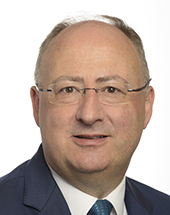


| Rank | Name | Country | Group | Speeches | |
|---|---|---|---|---|---|
| 1 |

|
Lukas Sieper | Germany DE | Renew Europe (Renew) | 494 |
| 2 |

|
Juan Fernando López Aguilar | Spain ES | Progressive Alliance of Socialists and Democrats (S&D) | 463 |
| 3 |

|
Sebastian Tynkkynen | Finland FI | European Conservatives and Reformists (ECR) | 460 |
| 4 |

|
João Oliveira | Portugal PT | The Left in the European Parliament (GUE/NGL) | 288 |
| 5 |

|
Vytenis Povilas Andriukaitis | Lithuania LT | Progressive Alliance of Socialists and Democrats (S&D) | 276 |
All Speeches (79)
System of own resources of the European Union (debate)
Date:
22.11.2022 14:04
| Language: PT
Speeches
Mr President, ladies and gentlemen, Commissioner, this European Parliament has always advocated new revenue for the budget of the European Union, genuine own resources, which should be genuine and not exclusive transfers from the respective budgets of the Member States. It is essential to end the distinction between net contributors and net beneficiaries. In fact, all the Member States are beneficiaries of the European Union budget, and many of those who are called frugal forget, and do not tell their citizens, that they are the ones who benefit the most, for example from the internal market. No one can feel that they own the budget because of the transfers that are made, and so we have always advocated the necessary creation of new revenue, new own resources. The decision to create new own resources is a complicated, time-consuming decision of the most complex in the legal order of the European Union. The European Commission makes its proposal. The European Parliament gives a non-binding opinion. The Member States in the Council have to decide unanimously, and then there is ratification according to the constitutional rules of each national parliament. This is also proof that there are no European taxes. In the end, there must be a ratification by all national parliaments in order to have new revenue. If the revenues were important, today they are still much more important. With the NextGenerationEU, the European Commission has sought €800 billion from the markets, but €420 billion has given rise to the creation of the recovery and resilience plans and also to the reinforcement of some programmes that will be paid from the EU budget, and that will be paid by 2058. And we can't penalize the next generations. Nor can we cut the next programmes, and the cost of paying off the debt after 2027 is high: it is more than EUR 15 billion a year, which is why new revenue is increasingly important for us to pay off our debt and to meet the new challenges in terms of what common projects we need to have. And our principles for creating new resources are simple: Those who don't pay should pay. Those who benefit most from the internal market should contribute. At the same time, we must respect and influence and pursue the priorities of this Parliament and the European Union, the fight against climate change, the goal of digital. And to that end, we have succeeded and put forward new proposals for own resources, along the lines of the Commission, the strengthening of the emission allowance market, the border adjustment mechanism, which allows for more justice and fairer competition. Those who are producing outside the European Union and shipping here products that do not have the same rules, particularly in terms of the emissions allowance market, for the sake of fairness should also see these products taxed. In addition, the digital giants and multinationals, who benefit from the internal market, must also be called upon to contribute. I hope that this package of own resources, which originates from the interinstitutional agreement, will be respected and then there will be a new package to respect the interinstitutional agreement, the roadmap, in order to protect the citizens, to respect our priorities, to have resources to deal with the debt and what are the common programmes in the European Union that we all have to defend.
Mr President, Commissioner, ladies and gentlemen, the European Union budget is always an investment, an asset for the whole of Europe. Administration expenditure is only 6% of the Union budget. A budget that is essential for growth, competitiveness and territorial cohesion, and which should be given increased attention, and our proposals go in that direction, given the current situation of households and small and medium-sized enterprises. There is no shortage of millions for Member States at the moment, and 2023 is a key year. If you look at my country, it has EUR 10.5 billion available in 2023. The Multiannual Financial Framework 2014-2020 ends in 2023. The 2021-2027 should already be in place, and we still have the Recovery and Resilience Plan. We now demand from the states that they comply, that they execute, in favour of the Portuguese in the case of Portugal, of the European citizens, and also external solidarity is essential with Ukraine and with developing countries.
Borrowing strategy to finance NextGenerationEU (debate)
Date:
21.11.2022 21:07
| Language: PT
Speeches
Madam President, ladies and gentlemen, Commissioner, allow me to thank the co-rapporteur of this report, Valérie Hayer, for all the work she has done and also for work that is bearing fruit, in order to have new revenue, new own resources. A thank you to all those who have brought their position and their opinion here and support for this report. A thank you to the Commission for all the work it is doing and a request to the Council: Quickly execute all the millions you have at your disposal. Farmers and fishermen need it. Families are waiting. Small and medium-sized enterprises need your support. The researchers, too, are absolutely essential. There is no shortage of resources for Member States. There is no shortage of money for the Member States. It is the money from , which has given way to the recovery and resilience plans. The Multiannual Financial Framework 2014-2020 still has EUR 100 billion to implement. In many countries, unfortunately, as in my own, there are zero payments executed in the Multiannual Financial Framework 2021-2027. And so the Member States have a lot of money to use. They must do it quickly and then they must realize that unity makes strength. We need a Union of energy, digital, security, a common stance on the goal of civil protection. And that needs resources. And the debts are also to be paid. And new own resources, new revenue from the budget, are possible without penalising the citizen, with a very simple principle: Those who don't pay should pay. Those who benefit from the internal market should contribute. And it is with this objective that, I am sure, we will build a strong Union, with solidarity and where development exists throughout the territory.
Borrowing strategy to finance NextGenerationEU (debate)
Date:
21.11.2022 20:22
| Language: PT
Speeches
Madam President, ladies and gentlemen, Commissioner, the European Union's response to the pandemic crisis is unprecedented. It's a historic response, a strong response. For the first time in the European Union, the Commission went to the markets and it was not just to lend money to the Member States, it was to strengthen the programmes, it was to give grants to the Member States, to make the recovery and resilience plans. It is EUR 800 billion that should be paid for the amount that the budget will bear – in this case only EUR 420 billion – which should be paid by 2058. It's something you have to hold us accountable for. Member States, in addition to these amounts, still have what is the Multiannual Financial Framework until 2027. It is EUR 2 trillion that the Member States have available if they add these two instruments together, a rain of millions. There have never been so many resources that, however, are being depleted because they are not being used at the speed that should be used. And it is not enough to spend, it is necessary to spend well for the citizens of the European Union in order to protect the future of young people. And here is one point that is extremely important: If necessary, the date of the NextGenerationEU, the date of the recovery and resilience plans, because we need good projects, quality projects. It is not necessary, nor can it be accepted, to run projects in a hurry just to spend the money that is available. In addition, Commissioner, there is a great responsibility here, as I said we have: EUR 420 billion will be paid by 2058. And right now, that debt is being paid through the budget and within the budget, which brings constraints, diminishes flexibility and undermines other programs. The RRF, the NextGenerationEU, recovery and resilience plans cannot be made at the expense of other programmes, other policies. And for this reason, we always defend and insist: the payment of the debt must be within the limits of the budget, but above the ceilings of the budget, so that we do not undermine the programmes, so that we do not undermine other policies. And there is another essential point: is that these resources, which are currently being paid out of the budget of the European Union, cannot go against the next generations, and so it is essential that this Parliament approves new own resources, new revenue that cannot penalise citizens, which must be in line with the objectives of the European Union and which we urgently need, and indeed there is an interinstitutional agreement, which is legally binding and which the Member States must respect. And the European Parliament has done its job, the European Commission has also advanced. It is now in the hands of the Member States not to penalise the next generations, and that is absolutely crucial, it is absolutely essential. And I trust that our governments have the sensitivity not to harm the future of future generations and have a Multiannual Financial Framework in the future, where the debt that has to be paid does not harm the policies, priorities and programmes of the European Union.
REPowerEU chapters in recovery and resilience plans (debate)
Date:
09.11.2022 18:23
| Language: PT
Speeches
Mr President, Commissioners, ladies and gentlemen, energy union is essential for the European Union and, in this sense, REPowerEU is very positive. However, there are some problems here and I draw the Commission's attention to them. There will be no energy independence of the European Union without cross-border projects and interconnections. Here's a question: What are the interconnections and cross-border projects that the European Commission advocates? We should know them by now. They should be quantified before they can be funded. What the European Commission has done is to announce a fine sum of EUR 300 billion, but it does not define what is truly essential, at risk. This is going to be additional to the recovery and resilience plans, which are currently poorly implemented. A country like Portugal, for example, needs interconnections, cross-border projects and a good implementation of these funds and there needs to be no national selfishness, such as Mr Macron in France, who made it impossible to implement a project that was essential for the European Union and Portugal.
Conclusions of the European Council meeting of 20-21 October 2022 (debate)
Date:
09.11.2022 17:00
| Language: PT
Speeches
Mr President, ladies and gentlemen, I must emphasise the fact that we have a President of the European Commission, Mrs von der Leyen, who is supportive, competent and proactive, which contrasts with the governments we have, as we can see from the timid conclusions of the European Council. We must have strategic autonomy, but this cannot be done with rulers who only look at their navel, with national selfishness. That is why it is necessary and I ask the Commission to move forward with the definition of the cross-border projects and interconnections necessary so that a country such as Portugal is not undermined by the selfishness of a ruler, of which Mr Macron is an example. In addition, the Commission must also do its job with regard to what should be the relationship with China, which cannot be bilateral, which must be a relationship where the whole of the European Union is involved. From that point of view, I also consider Chancellor Scholz's position in this area to be negative. And then the Council has to do its job. An additional €100 billion from the 2014-2020 Multiannual Financial Framework is not being used. The RRP has a poor implementation. Governments have a lot of money at their disposal. They should use it to help families and businesses in this difficult time.
General budget of the European Union for the financial year 2023 - all sections (debate)
Date:
18.10.2022 13:29
| Language: PT
Speeches
Madam President, Commissioner, dear Council representative, ladies and gentlemen, the 2023 budget, according to our proposal, is a budget that helps families and businesses to respond to the challenges, to the problems that the Russian invasion of Ukraine has brought us. We want more growth, more internal solidarity. We must also not forget humanitarian aid and support for Ukraine and other countries in Africa, for example, and external solidarity is essential. But there is one thing missing, Commissioner. We must have a budget that helps Europe to have strength, be a geopolitical Europe, that has strategic autonomy and so we need programmes for the union of energy, digital, health, strengthening the civil protection mechanism, having security and defence. A revision of the Multiannual Financial Framework is needed, because our budget is bursting at the seams and we do not have enough resources for this autonomous European Union that we need. I also have a request for the Council. You have many resources at your disposal. It would be criminal to lose a single cent of what's available. In the Multiannual Financial Framework 2014-2020 alone, Member States have around EUR 100 billion to implement by 2023. You have to. In addition, there is an urgent need to use the current Multiannual Financial Framework. Partnership agreements have zero implementation. Businesses need it, families need it. Investigators are waiting for resources. Local authorities need to move forward with investments that together enable competitiveness and cohesion.
The death of Mahsa Amini and the repression of women's rights protesters in Iran (debate)
Date:
04.10.2022 19:37
| Language: PT
Speeches
Mr President, Mr Vice-President and High Representative, ladies and gentlemen, first of all, we must express our condolences to Mahsa Amini's family and friends. Unfortunately, she was murdered by the Iranian regime. It should be stressed that this is not an isolated case. And we should also ask whether we have done everything to condemn, repudiate and prevent these cases from happening. The Iranian people want freedom, they want the rule of law, they want democracy. Our obligation is, or should be, to always help, not least because, as I said, there are thousands of Iranians who have been murdered, who have been tortured by this regime. That is why the European Commission must do everything it can, not only to condemn, but also to take concrete action, such as sanctions or restrictive measures, as the High Representative has said.
Commission proposal for measures under the Rule of Law Conditionality Regulation in the case of Hungary (debate)
Date:
04.10.2022 17:25
| Language: PT
Speeches
Madam President, Commissioner, Minister, ladies and gentlemen, I have said this more than once, respect for the rule of law, for European values is not an option, it is an obligation. And I don't feel good about even being here talking about a regulation that we shouldn't even have and that shouldn't even be necessary. But it is important to say that this regulation is not punitive in nature, it is not punitive in nature. The main objective is prevention and, at the right time, we approved it, and the European Commission is making a proposal and, now, we must not forget, it is in the hands of the Council. Minister, when does the Council intend to decide? Does the Council have a timetable? Does the Council have any preparatory work on this? Are you convinced that you will have a qualified majority? Because the Council also has to respect the rule of law, and all we talk about is the Commission and pressure and good. But then we want to know how every head of state, every ruler in the Council is going to take a stand on this important matter. And I hope that Hungary will deliver, for the sake of its citizens and the European Union. Those who entered the Union knew the conditions and must continue to respect them. And I'll end with one question: Why does the Council, which helped the rule of law so much, not accept something as simple as a digital platform, where all projects approved by European funds are available to the whole public? Why did they refuse?
Question Time (Commission) Tackling depopulation through cohesion policy instrument
Date:
04.10.2022 16:21
| Language: PT
Speeches
Mr President, Commissioner, it is essential not to lose a cent of Cohesion Policy 2014-2020 and to accelerate Cohesion Policy from 2021 to 2027. In Portugal, Portugal 20-30 runs the risk of not having a single euro used in 2022. In addition, it is very important to pay particular attention to regional operational programmes. Does the Commissioner know that, in the case of Portugal, the regional operational programmes, as they are being designed, will make it difficult or even impossible for municipalities with fewer populations to access all the axes and amounts of the regional operational programmes? Because if so, there will be more depopulation, there will be more desertification. And I wonder if the Commissioner has this indication and how will she act? Because I know that is not the way you want cohesion policy to be implemented. And finally, the linkage is essential, how will the linkage be made between the EAFRD and also the cohesion policy programmes and the regional operational programmes?
European Centre for Disease Prevention and Control - Serious cross-border threats to health (debate)
Date:
03.10.2022 17:40
| Language: PT
Speeches
Madam President, Commissioner, ladies and gentlemen, it is our duty to do everything we can to protect the lives of our citizens and to provide them with the best possible health. This requires coordination and sharing. For this, there is an urgent need for a health union, a health union that has proven joint purchasing and research for vaccines and that has allowed vaccines for all and a cheaper price. This coordination is also needed in the area of research, where more can be done, in the area of cancer. We have always advocated a European plan to combat cancer prevention and treatment. In addition, cross-border care is obviously essential, as is the possibility that an examination that is carried out in one country may be used in another country. This means efficiency and means saving resources. In addition to everything I have mentioned here, we need to work together to catch up with the pandemic. For example, a country like my own, Portugal, has this year had an excessive death rate in relation to the European Union average, which has gone far beyond the Union average.
Financial activities of the European Investment Bank – annual report 2021 - Control of the financial activities of the European Investment Bank – annual report 2020 (debate)
Date:
06.07.2022 16:33
| Language: PT
Speeches
Madam President, Commissioner, ladies and gentlemen, the European Investment Bank is an asset and we need it to remain strong, competent and active. The economic situation demands it. My congratulations on having mobilised more than EUR 95 billion in loans to support the economy and, above all, to support 430 000 businesses. What I ask is that we do even more and speed up, for example, the InvestEU, which has been standing still and which is an essential instrument. I know that competitiveness or analysis of projects and their quality is essential, but I am pleased to note that attention is also paid to territorial cohesion and less developed regions. I would also point out that, through the InvestEU, it is possible and desirable to create instruments for the capitalisation of companies at national level. I remember that the InvestEU has a national compartment. I know that there are Member States, like my own, that do not have promotional banks, muscular development financial institutions. However, I ask the European Investment Bank, together with national governments, to help create instruments for the capitalisation of companies, something that is absolutely necessary at a time like this.
Mr President, Commissioner, ladies and gentlemen, to support the social economy is to strengthen social Europe. These entities are key to promoting the quality of life of our citizens, territorial, economic and social cohesion. They are proof of solidarity: favor and include. They are entities where we verify the value of volunteering. Entities that respond and are present in the most depopulated places, in rural areas and respond in times of difficulty. So, Commissioner, we must support them, we must value them, and I know that you have made an effort to do so. But we need to work with the Member States to ensure that the enormous financial resources at their disposal are well spent. Recovery and resilience plans, cohesion and rural development funds should be available to those entities. They must be eligible, so here is this request and this challenge: such entities should be supported and valued.
National vetoes to undermine the global tax deal (debate)
Date:
23.06.2022 10:25
| Language: PT
Speeches
Mr President, Commissioner, ladies and gentlemen, unanimity cannot mean blockage, it is not acceptable for it to be used for blackmail. The Council has to be much more than the sum of the 27 national selfishnesses that we sometimes see. In an area such as taxation, it is essential that this OECD agreement is put into practice, as it will mean more social justice. It is also important that those who earn the most are those who contribute the most. It is also essential to combat tax fraud, tax avoidance and tax evasion, which could be achieved through harmonisation and which, according to the European Commission's own accounts, amounts to around seven annual budgets, or around EUR 1 billion per year of loss. This means that we can have more revenue and not penalise, on the contrary, we can relieve European citizens. In addition, and I will conclude, it is essential that Pillar I be used for the European Union's new own resources and that the digital giants give '...' (The President took the floor from the speaker.)
Implementation of the Recovery and Resilience Facility (debate)
Date:
22.06.2022 19:37
| Language: PT
Speeches
Madam President, Commissioner, ladies and gentlemen, the recovery and resilience plans in terms of grants amount to EUR 338 billion resulting from a debt that the European Commission has made. This means that our leaders must act responsibly. It has to be worth it. This is an effort of solidarity which, if necessary, should be repeated in the future. For this, this action and the results have to happen and have to be positive. Therefore, further implementation is needed. In my Member State, Portugal, in 2021, we received EUR 2,1 billion and executed EUR 90 million, and there are Member States that have an even worse execution than this. In addition, it is necessary to ensure that there is no replacement of expenditure, that the RRPs do not replace the State Budget. The RRPs must be additional and cannot promote centralism or concentration, either in terms of investments in the territory or in terms of investments in the same company. Territorial cohesion is needed and these amounts must also be well distributed. Finally, I will end with a question: there are Member States that will receive more than expected, because they reacted worse, so to speak, and responded worse to the crisis. My country, for example, will receive an additional €1.6 billion, which will be added to the €13.9 billion in grants. It means that recovery and resilience programmes will be changed. Will the Commission participate in these changes in the face of war and new demands? Are you going to direct them? It is a question to which we also need an answer, because the European Commission must enforce the regulation and must take into account the new reality arising from the situation we are experiencing.
The rule of law and the potential approval of the Polish national Recovery Plan (RRF) (debate)
Date:
07.06.2022 18:20
| Language: PT
Speeches
Madam President, Madam President of the Commission, your presence here is a sign of compromise and I have no doubt that you will do everything to ensure that the rule of law is respected in the European Union. But on this side, on an issue like this, Mr Macron should be there. There are a lot of people, and I have not heard anyone mention it, who forget that, in order for suspensions to exist, it is the Council that approves those suspensions. The Council will approve the Recovery and Resilience Plan. The question is: Why did they only turn to the Commission? I would like to know what the Council's position is. Will the Council approve without conditions? If the Commission makes a proposal for the suspension of payments, will the Council approve it? How are the majorities there? Then I will want to see the parliamentary leaders who are here to express their views on the position of their respective leaders. I'm talking about Socialists and Democrats, and I'm also talking about Renew. Because there is no doubt that the rule of law and European values are our common ground and we must respect them, we must cherish them. It is absolutely unacceptable that a Member State, in order to belong to the European Union, has to comply with European values and, after being there, does not respect them. Therefore, we defend and agree that those who infringe, who do not comply and do not respect European values cannot, of course, be financed by a budget of the European Union or by the recovery and resilience plan.
Revision of the EU Emissions Trading System - Social Climate Fund - Carbon border adjustment mechanism - Revision of the EU Emissions Trading System for aviation - Notification under the Carbon Offsetting and Reduction Scheme for International Aviation (CORSIA) (joint debate – Fit for 55 (part 1))
Date:
07.06.2022 10:11
| Language: PT
Speeches
Mr President, Mr Vice-President of the Commission, ladies and gentlemen, the objective of combating climate change has no borders and has an impact in the light of our ambition, the goals and objectives we set, economic impact and social impact. It requires support for citizens, for the modernisation of our economy. Of course, we cannot deindustrialise, and for that we need European funds, funds that must be, Mr Vice-President, within the European Union budget, with the necessary amounts to support the most vulnerable citizens, to support businesses and also to support all territories. Words are not enough, actions are needed, and for that we must also have our own resources, revenues within the budget, for the budget, such as the Carbon Border Adjustment Mechanism and also the new mechanism and the extension of the emissions allowances market.
The REPowerEU Plan: European solidarity and energy security in face of Russia's invasion of Ukraine, including the recent cuts of gas supply to Poland and Bulgaria (debate)
Date:
19.05.2022 11:39
| Language: PT
Speeches
Mr President, Commissioner, energy independence is an essential objective of the European Union. It is unacceptable that we are buying energy from Russia for EUR 1 billion a day. In practice, we are financing the purchase of weapons for Mr. Putin. But this goal is not new. We have been talking for a long time about interconnections and, for example, interconnections for energy between Portugal, Spain and France. The Commission should have included this REPowerEU in the Multiannual Financial Framework. Not having done so, it must now include it in a review that is urgent, just as it is urgent, in order to live up to the citizens' wishes, to have new revenue for the Union's budget, new own resources. We cannot be funding REPowerEU. cutting amounts from poorer regions, cutting amounts from rural development. This initiative is welcome, but funding must not come at the expense of the poorest.
Madam President, Commissioner, ladies and gentlemen, we can rejoice that we have 53 institutions in the European Union and their budgetary weight is less than 7%, which means that the Union budget is truly an investment budget and that it is a high added value. As far as Parliament is concerned, we can also be proud to know that we can give the 2020 discharge. The accounts are correct, they comply with the rules and all the legislation in force. I should also like to thank you for the fact that, in 2020, in the midst of the pandemic, we worked quickly and remotely for citizens, thanks to all the officials in this Parliament and in this institution, in addition to the speed with which we worked in difficult conditions and were pioneers on a global scale, we were able to have solutions for citizens, legislation of an enormous quality. So thank you very much and we will, of course, give discharge to the 2020 budget of the European Parliament.
Guidelines for the 2023 budget – Section III (debate)
Date:
05.04.2022 13:26
| Language: PT
Speeches
Madam President, Commissioner, ladies and gentlemen, the 2023 budget will necessarily be a budget for solidarity and cohesion. The necessary financial resources cannot be lacking for humanitarian aid and also for supporting Ukrainian refugees. They are concrete actions and it is de facto solidarity. In addition, we must help Europeans, families, who are also in difficulty in the face of inflation and rising prices. The protection of human life and the defence of human dignity are irrevocable principles that we must put into practice. In addition, and also with this objective, we must support businesses and, above all, small and medium-sized enterprises. We must not lose jobs and we must have quality jobs. Support for farmers is also needed in the area of food and food production. But we must not stand by the immediate, we must also work now, in the future. And if these crises have a lesson to learn, it is that we need more unity and more sharing: the union of defence, energy, health, the defence also of the food sovereignty we need, the digital one. Together, I am convinced, we will succeed and we will overcome the challenges that lie ahead.
MFF 2021-2027: fight against oligarch structures, protection of EU funds from fraud and conflict of interest (debate)
Date:
23.03.2022 23:04
| Language: PT
Speeches
Madam President, Commissioner, ladies and gentlemen, European funds must be managed and implemented transparently. It is a legal obligation, but it is also a way of respecting the effort of European citizens who contribute their taxes to the Union budget. Fraud, misuse of funds, is not acceptable, it is not acceptable. This is why Member States, governments, are required to do their best and commit. I don't understand, for example, why it doesn't make itself publicly available on a platform. online, all beneficiaries, their projects and amounts that are approved, typology and location. This alone made it possible to follow the trail and also made it possible, for example, to avoid duplication. It is also necessary to avoid mistakes that often result from bad legislation, legislation that is not simple, legislation that is unclear and ambiguous. And in that sense, too, there is an effort to be made, because there are many beneficiaries who make mistakes, being in good faith, then being penalised, and we can never confuse errors with fraud.
Implementation of the 2021-2027 cohesion policy (debate)
Date:
07.03.2022 17:59
| Language: PT
Speeches
Madam President, Commissioner, ladies and gentlemen, we all recognise that cohesion policy is fundamental, it is crucial. And it is crucial for cohesion, competitiveness and sustainability. Therefore, there is an urgent need for coordination between cohesion policy and the recovery and resilience plans in order to have synergies. And it is also very urgent that not one cent of cohesion policy 2014-2020 is lost. And then I asked a question right away: what is the amount of expenditure that has not been committed and that was available from 2014 to 2020 and that can, for example, be used to address the calamity that we are all experiencing? But partnership agreements must also be implemented as a matter of urgency and must be approved for this purpose. And, regrettably, only Greece has the partnership agreement approved. And these partnership agreements, Commissioner, should involve the territories and beneficiaries. They should be based on simplicity and then also on transparency. It was necessary for us to know where the money is falling, in which projects, who are the final beneficiaries and the location. Because there's something that costs me: For example, cohesion policy is often anti-cohesion. Money for the poorer regions often goes to the richer ones, which increases rather than diminishes regional disparities.
The Rule of Law and the consequences of the ECJ ruling (debate)
Date:
16.02.2022 18:25
| Language: PT
Speeches
Madam President, Mr Secretary of State, Commissioner, ladies and gentlemen, respect for the rule of law is a condition for a Member State, for a country, to join the European Union, it is not an option. And once you are in the European Union, it is an obligation to respect the rule of law. Our common ground, our European foundations, are values that we must protect, such as democracy, freedom, the separation of powers, the defence of human dignity. The regulation we adopted was in line with the Treaties, that was our conviction and today's decision by the Court of Justice of the European Union proves that we were right. There is no more time to waste, Commissioner, now is the time to implement the regulation. The conditionality in this regulation is intended to defend the European values it referred to and to protect the European Union budget. We must make good use of the contributions of European citizens, while respecting the values of the Union. This conditionality is unfortunately necessary in the face of signs of breaches of the rule of law by some Member States. I shall conclude by insisting: this Regulation should be applied.
State of play of the RRF (Recovery and Resilience Facility) (debate)
Date:
15.12.2021 16:49
| Language: PT
Speeches
Madam President, Commissioners, ladies and gentlemen, the recovery and resilience plans must serve to modernise economies, to make them more sustainable and resilient, to make the economies of the Member States more productive in order to achieve more competitiveness and, at the same time, more territorial, economic and social cohesion. But in order to modernise our economies, we need real reforms. It is not enough to change the name of a decree-law, it is not enough to pretend. In addition, transparency is also needed so that this mechanism can be repeated in the future if necessary. And for that we have to know where the money is falling, and for that it is necessary to know which projects are being approved, their location, their amounts, the final beneficiaries. I hope, Commissioners, that the European Commission will make a platform online They shall contain the projects in such a way that they are accessible to the public, the amounts of those projects that are approved, their typology, as well as the final beneficiaries. It is a way of monitoring and also enhancing transparency. This is European citizens' money, and European citizens too must be involved and they must also seek to know where their taxes fall, in projects that help the European Union, help our economy and overcome the global challenges we all face.
Mr President, Commissioner, ladies and gentlemen, this is a budget that helps growth, recovery, increased competitiveness and productivity and helps us to meet the challenges before us. In good time, Parliament was able to increase the amounts for the health of citizens, to fight the pandemic, to strengthen programmes for small and medium-sized enterprises, to strengthen that competitiveness and productivity of which we were talking, without ever forgetting economic and social territorial cohesion, that is, internal solidarity within the European Union, but also the external solidarity of the European Union and development aid. Humanitarian aid is well present in this 2022 budget. Member States now have sufficient resources at their disposal and they need to be well used, well managed. Member States still have the Multiannual Financial Framework 2014-2020 and now have the Multiannual Financial Framework 2021-2027, in addition to the amounts that are present in the recovery and resilience plans. I hope they are up to the challenges and demands of European citizens.