
| Rank | Name | Country | Group | Speeches | |
|---|---|---|---|---|---|
| 1 |
|
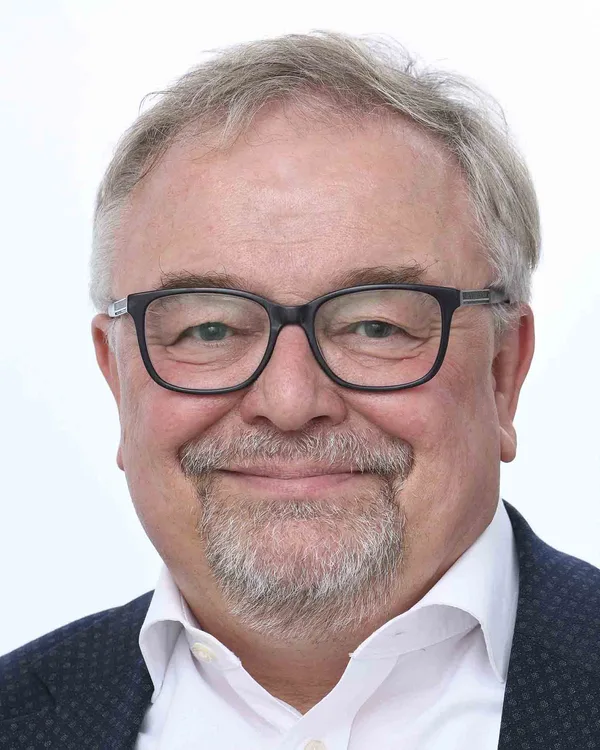
Lukas Sieper | Germany DEU | Non-attached Members (NI) | 390 |
| 2 |
|
Juan Fernando López Aguilar | Spain ESP | Progressive Alliance of Socialists and Democrats (S&D) | 354 |
| 3 |
|
Sebastian Tynkkynen | Finland FIN | European Conservatives and Reformists (ECR) | 331 |
| 4 |
|
João Oliveira | Portugal PRT | The Left in the European Parliament (GUE/NGL) | 232 |
| 5 |
|
Vytenis Povilas Andriukaitis | Lithuania LTU | Progressive Alliance of Socialists and Democrats (S&D) | 227 |
All Contributions (37)
State of the Union (debate)
Madam President, Mrs von der Leyen! I would like to thank you for your proposals against the energy price crisis. Closing prices, siphoning off excess profits – that's all right. Separating the price of electricity from the price of gas, at least temporarily, is also a very good idea. And who knows, maybe we can think of something that works better even in peacetime. And the most important thing is the gas price cap. Unfortunately, so far we only hear what is not possible and that new proposals are being worked on. Hopefully this will have to happen quickly. Mrs von der Leyen, I think that when you talk about the situation of the EU, you cannot remain silent about the situation of the rule of law and democracy in the EU. This blank space in your speech must not mean that the topic disappears from the agenda. If the EU breaks down, that's why.
EU response to the increase in energy prices in Europe (debate)
Madam President, We as the EU are not at war, but the European economy operates under conditions that are determined by war. If I look at the situation on the energy markets, then we probably agree quite broadly here that nothing is normal here anymore. The prices are so high, ladies and gentlemen, that anyone who has an oven has to think about whether they will get their money's worth by turning it on. This applies from the bakery to the steelworks. It is right to absorb the excess profits – I welcome this proposal, Commissioner – and thus relieve consumers and businesses. But it is also right to separate the price of electricity from the price of gas. My request to the Commission is therefore: Mrs Simson, be courageous, think outside the existing patterns, make suggestions that will help this continent. Finally, a commentary on my colleague Ehler: Yes, of course it is right to expand critical infrastructure that we lack, so that we can help each other as European states. This is my own suggestion. I have also suggested this myself at this point. But it is not an alternative to curbing prices and redistribution. I think that's more complementary.
The REPowerEU Plan: European solidarity and energy security in face of Russia's invasion of Ukraine, including the recent cuts of gas supply to Poland and Bulgaria (debate)
Mr President! Commissioner Simson, thank you very much for the proposal that has been made. I very much welcome this. It is high time that we start doing the unfinished homework in the European Union. The one unfinished task is a lack of diversification of energy supply. Believe me, as a German, I know what I'm talking about. The second is to take action against price developments. We urgently need to take action to support the EU's political stance both in terms of: Green Deal and not to lose in the policy of sanctions against Russia. Another homework that needs to be done is to urgently draw attention to the lack of critical infrastructure and also - and this would be an additional request to the Commission - to come up with a priority list of critical infrastructure that needs to be urgently addressed now so that we can support each other. The best example of this remains the interconnector between France and Spain. But they also have to be hydrogen transportable, so H2-ready. Otherwise, it's the wrong investment. I think this is a test of European solidarity. We must not let ourselves be divided, because then Russia will win. We need to be able to help each other effectively.
Conclusions of the European Council meeting of 24-25 March 2022: including the latest developments of the war against Ukraine and the EU sanctions against Russia and their implementation (debate)
Madam President, High Representative Borrell, Vice-President Šefčovič! We are discussing the depressing situation in Ukraine this morning. The horrific images from Butsha – many have spoken about it – fill us all with dismay, despair and anger and, yes, also with determination, not least to punish those responsible for these crimes. Putin, I am very sure, did not expect this determination. And in order to maintain this determination, we as the EU must stick together. And I believe that in order to stick together, we need to take into account the different concerns that exist in the EU. This applies to support for EU Member States that share a common border with Ukraine and are therefore the target of war refugees above all else. And it applies to the correct calibration of sanctions. No one is helped when there are production outages, when factories turn into scrap, because glass or aluminium smelters, for example, need a continuous energy supply. And since we are in a single market, it is not local outages, but supply chain disruptions will quickly spread to other Member States. My concern is about the possible reaction of people in the tangle between rising energy prices and concerns about the workplace. Colleagues, if the populations no longer support the sanctions, then in the end Putin plays into the hands, and no one can want that. The renunciation of gas imports from Russia is right and it needs to be prepared by increasing the resilience of the European Union, i.e.: Expansion of renewable energies fast and continental. This means that we do our homework in the Member States of the European Union and close the gaps in infrastructure in order to be able to better distribute existing energy among the Member States. And that means diversification in the import of energy. Let us put an end to Europe’s dependence on fossil fuels, first from Russia, then from everyone else.
The Power of the EU – Joint European Action for more affordable, secure and sustainable energy (debate)
Madam President, Vice-President Dombrovskis, Minister Beaune, ladies and gentlemen! Yes, it is right to make Europe independent of fossil fuels – now, first and foremost, of those from Russia. That is the right demand. This is the political task of the hour. Let's do everything we can to speed up the transformation of energy supply. Now the mistakes that have been made in the past become obvious. And yes, some may have been too optimistic that peaceful cooperation will emerge from economic interdependence. But the others – and I am also looking in the direction of your government, Minister Beaune – have done too little to complete the internal energy market. The fact that, for example, the pipeline gap between Spain and France has still not been closed is a problem. Mr Vice-President, your references to storage capacity indicate that the European infrastructure is not perfect in terms of energy supply. My request is: Make it clear where the gaps in the infrastructure lie, which must now be closed as a matter of priority. This is a great opportunity for us, as EU countries, to help each other.
Rising energy prices and market manipulation on the gas market (debate)
Mr President, Commissioner, ladies and gentlemen! Today we are discussing a question for Parliament's oral answer to the Commission, which asks, among other things, what measures could be taken to deal with the political pressure in this difficult, crisis-ridden political situation with the exploding energy prices. Colleagues have already addressed many, many different aspects. I want to focus on one thing: the important projects of common European interest, for which we always use the British abbreviation – the English abbreviation – IPCEI. In the Communication presented today by the Commission, for which I would also like to express my heartfelt thanks, the Commission undertakes to review these IPCEIs for their correctness under competition law by the end of the first half of 2022. It's a little late, Commissioner. We have just launched quite a few IPCEIs from Germany to boost the hydrogen economy in my country. I know about companies that are facing the investment decision and are waiting for the release of this money and these projects. So if we want the investments – the ones that lead us out of fossil energy because they can substitute – then we need to get faster.
Russian aggression against Ukraine (continuation of debate)
Mr President! I am grateful for this special session because it gives the opportunity to express what the political message of this day must be: We condemn the violation of international law committed by President Putin with his order to attack a peaceful neighbouring country, Ukraine. That is why the members of the SPD in this Parliament will give their full support to the resolution that has been tabled. Chancellor Scholz is right – this is Putin’s war. To him and his government is our resistance and our protest, not to the Russian people. Our thoughts today are with the people of Ukraine, with those who fight for their freedom, who die in the process and who flee to save their lives. Slava Ukrajini! On this occasion, the EU and its institutions have demonstrated that they can do their job and show an unprecedented determination and capacity to act. The EU’s common foreign policy – that is, it works if the Member States want it. Sanctions hit hard. Many European politicians have warned Putin how costly an attack on Ukraine will be. This is now becoming true. Humanitarian aid for refugees is underway. Our solidarity is with the Member States on the western border of Ukraine, which are now providing their first aid. You are not alone! But we must now also further develop our policies through all aid to Ukraine and to our European neighbours. How do we imagine security in a multipolar world? Putin has asked us this question in all brutality. We will find answers.
Preparation of the European Council meeting of 16-17 December 2021 - The EU's response to the global resurgence of Covid-19 and the new emerging Covid variants (debate)
Mr President, Commissioner, ladies and gentlemen. EUCO is facing a whole package of problems. Many of them are serious and urgent at the same time. It is time for the new German government to give a new impetus. One of these issues is the continuing high and volatile energy prices. We now know from the European agencies that there has apparently been no market manipulation. But this actually increases the pressure on the Council and the Commission to act. I still lack an initiative for a new climate and energy foreign policy. There is also a lack of the necessary strategy – from the use of transitional technologies to the widespread use of sustainably produced electricity and CO2-free hydrogen. If the Commission presents the new gas market package today, it can be a new mosaic stone. This package must organise the start of the phase-out of fossil gas, even if we will still need this for a transitional period. At the same time, it must set the framework for building the infrastructure for renewable gases, such as hydrogen. In doing so, we want to prevent greenwashing, but ensure the ramp-up of hydrogen production. Security of supply, energy efficiency and social compatibility must be ensured. This will be the focus of the Socialist Group.
State of the Energy Union (debate)
Mr President, Commissioner, ladies and gentlemen! I believe that the report that the Commission is presenting to us shows several things at the same time. On the one hand, it shows that we, as the European Union, are on the right track in terms of energy supply, the substitution of fossil fuels with new ones, and that to this day we have come a successful way when it comes to decarbonisation. However, it also shows that we are still 1.8% above the linear trajectory towards achieving the 2030 energy efficiency target. So: With all the joy and pride in what has been achieved, there is still a great task for us to achieve this goal. I'm looking at Comrade Bloss – sorry, Mr Bloss, but his party and mine have today signed a coalition agreement together, where we can at least say: Germany will do its part to achieve this goal. We can also achieve this goal by taking an even more ambitious approach to the RED III initiative. We must finally achieve mandatory expansion targets for the Member States as well. This is all the more important because 31 million people in energy poverty must not let us rest.
Preparation of the European Council meeting of 21-22 October 2021 (debate)
Madam President, Mr Minister, Commissioner! I actually intended to talk about energy prices again this morning, like many colleagues, but I decided to make a few remarks after the debate on the course here. I have heard a lot of criticism from the right side of the House this morning about the state of the EU and the steep thesis that it – the EU – and its mistakes of the last 30 years are to blame for this crisis. I may have been misinformed, but as far as I know, all states have voluntarily joined the EU. No one was forced. They all signed a treaty, which the Member States themselves drafted and unanimously adopted. And if the European institutions are now demanding compliance with these treaties, are they invasive? The mistakes are actually made by the Member States. One cannot enter into this alliance of states, which wants to take advantage of advantages such as the internal market, freedom of movement, the cohesion funds and otherwise, please be nice, can do what one wants. The EU is not Disneyland. The European Council now has the opportunity to finally demonstrate its capacity to act on the energy price crisis. My request to Mrs von der Leyen would be to urgently ensure that the European Council does not become a non-binding coffee drink. Citizens expect that.
European solutions to the rise of energy prices for businesses and consumers: the role of energy efficiency and renewable energy and the need to tackle energy poverty (debate)
Madam President, Commissioner, Minister! Mrs. Simson, you said that prices will remain high this winter. But ‘heating or eating’ must not be the alternative for people in Europe this winter. Yes, last year gas prices were very low, but that's no consolation today if we see a partly rapid increase since May 2020. Commissioner, your authority's actions are urgently needed, they are actually overdue. But short-term protection for people from high, even priceless, energy prices is entirely in the hands of the Member States. What lies in the hands of the European institutions are, above all, medium- and long-term measures. Speakers from my group have already made proposals on this. What I want to underline once again is: Europe will never be energy self-sufficient. We can produce a lot of sustainable energy, but the needs for households, for mobility, for the decarbonisation of industry are enormous. So if imports remain unavoidable, then it is necessary that we diversify in supply to avoid dependencies in supply and prices. So let's start now with a climate diplomacy towards North Africa for the development of renewable energies there and the production of green hydrogen.
State of the Union (debate)
Madam President, Madam President von der Leyen! I do not want to repeat what my group's colleagues have said about the social dimension, migration policy and the rule of law. I think that the Commission's proposals come too late or are not ambitious enough. As I said, I don't have to repeat that. Please do not let us be too late in addressing the challenges of industrial policy. Thirty years ago, Europe had three major chip manufacturers. Today we are dependent on imports. This is one of the many downsides of globalization. Today, we must make great efforts to rebuild our own capacities. Let us be very quick with your Commission proposal. And, of course, the creation of fair conditions also includes a supply chain law that combats inhumane production conditions. Thank you for a law against forced labour. But does it also take into account child labour, scandalously poor health and safety at work or the overexploitation of natural resources? This, too, would be a measure for global justice and the protection of European jobs.