

| Rank | Name | Country | Group | Speeches | |
|---|---|---|---|---|---|
| 1 |
|
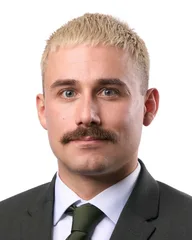
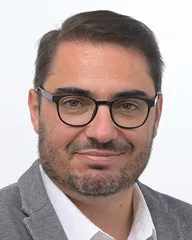
Lukas Sieper | Germany DEU | Non-attached Members (NI) | 390 |
| 2 |
|
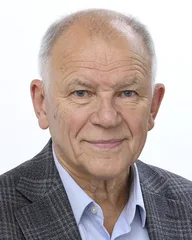
Juan Fernando López Aguilar | Spain ESP | Progressive Alliance of Socialists and Democrats (S&D) | 354 |
| 3 |
|
Sebastian Tynkkynen | Finland FIN | European Conservatives and Reformists (ECR) | 331 |
| 4 |
|
João Oliveira | Portugal PRT | The Left in the European Parliament (GUE/NGL) | 232 |
| 5 |
|
Vytenis Povilas Andriukaitis | Lithuania LTU | Progressive Alliance of Socialists and Democrats (S&D) | 227 |
All Contributions (150)
Competition policy - annual report 2022 (debate)
Mr. President, please. Europe needs a fair competition policy that promotes competitiveness, easy access to finance, transparent rules and quick decisions. In comparison, the Commission's response to these changes is very slow. It has relaxed State aid rules, but so far only the big ones have benefited from them, threatening to distort the internal market. The Commission was able to wait four years, for example in the case of Hungary with the approval of a grant, so that we could support an investment with our own resources. This is unacceptable! Only 30% of the recovery money has reached its destination, and Hungary and Poland are in a political game. Meanwhile, trade policy has become ideologically based, so it is no wonder that in 2010 the EU accounted for 22% of global GDP, up from 17% today. China has doubled its share, overtaken us, and the US has increased its advantage. Of the world's ten largest companies, only one is European, and European-based companies are preparing to relocate overseas to take advantage of the Inflation Reduction Act. The Commission should abandon its reactive policy. Acknowledge Europe's interests at last and act consciously to increase competitiveness.
Corporate Sustainability Due Diligence (debate)
Mr. President, please. This proposal is another blow to Europe's competitiveness. It entraps companies while giving NGOs the power to keep the company they control at bay. They have to be responsible for things that they have no control over. Companies will now be each other's gendarmes instead of focusing on creating value and jobs. I would like to ask the Commission: How will this result in the announced 25 percent reduction in reporting obligations? What happened to the ‘One in, one out’ initiative? Where is the famous SME filter that the Commission does not come up with a proposal that is bad for SMEs? In the last five years alone, more than 150 laws affecting businesses have emerged. Inflation, unleashed by war and sanctions, energy prices put SMEs in particular in a difficult position. At the very least, there is now a need to increase their administrative and financial burden. Let us believe that companies are able to act fairly without threats. The left has always been anti-business, but I ask the People's Party and the liberals to finally wake up and not vote for this freak!
Ukrainian cereals on the European market (debate)
Madam President, I'm sorry. There is a charm in discussing this issue after yesterday's vote on the extension of Ukraine's trade-liberalisation law. But it's better later than never. The Commission has a huge responsibility to ensure that most of the cereals destined for the hungry in Africa are stranded in countries on the EU's eastern borders. At the same time, I am pleased that, as a result of regional cooperation, the Commission has finally listened to the voice of Central and Eastern Europe. This required the introduction of unilateral safeguard measures by four Member States. If Ukrainian maize imports had increased by 7,000 percent or cereal imports by 1,000 percent had landed on the French or German market and not on the Hungarian, Polish, Slovak, Bulgarian or Romanian markets, how long would it have taken to wait for the Commission's reply? I have no doubt: the surplus grain would have been in the mountains before Berlaymont a week later and the Commission would have reacted immediately. Let them finally get used to the fact that the problems of our farmers are just as important as those of Western farmers. Market turmoil is a European problem in both the East and the West. There is no question that we stand with Ukraine, but we will not allow the farmers of Central and Eastern Europe to pay the price of the war.
The role of farmers as enablers of the green transition and a resilient agricultural sector (continuation of debate)
Mr President, Commissioner, I would subscribe to your words, but please accompany me to a reality check. Elnök Úr! A zöld átmenethez a gazdák istenadta szövetségesek, hiszen természeti kincseink megőrzése az ő meg- és túlélésük záloga. A jogszabályok azonban, amelyeket csak úgy ont magából a Bizottság, a megváltozott körülmények ellenére túlzott bürokratikus és pénzügyi terhet ró rájuk anélkül, hogy az intézkedések pozitív hatását bármilyen hatásvizsgálat alátámasztaná. A szőlőtermelők és borászok a legelkötelezettebbek a fenntartható fejlődés mellett. Ahogy viszont a Bizottság ténylegesen eljár a címkézési szabályok, a növényvédő szerek betiltása és a körforgásos gazdálkodás terén, az egyenértékű a családi birtokok és borászatok tönkretételével. 27 tagállami szabályozás, 27 körforgásos címkézési, visszaváltási, újrahasznosítási kötelezettséggel a legkisebbeknek is. Egy termelőnek a saját országában történő regisztrációja már nem jelent automatikus belépést egy másik tagállamba. Egyes nemzeti egészségvédelmi szabályok, mint az ír, jelölési előírásokkal gátolják a közös európai borpiac fejlődését. Miért veri szét a Bizottság az egységes piacot? A gazdák komoly emberek, ez így hiteltelen politika. Egy ideológia nevében ne tegyék tönkre saját termelési hagyományainkat, sokszínűségünket és versenyképességünket. Nagyon kérem, ehhez ez a Parlament ne asszisztáljon!
Revision of the Stability and Growth Pact (debate)
Mr. President, please. Life has really overridden our rules of economic governance. At the same time, these new proposals must also be tested to see whether they strike a balance between growth and responsible management, whether everything is simplified and whether all Member States are measured on an equal footing. I have to say, I'm not at ease here. Firstly, I believe in rebalancing the budget, not in the indebtedness of countries and the EU. By removing the debt target, the Commission will be able to judge individual Member States on uncertain grounds. This undermines predictability and undermines the principle of equal treatment. Second, it is not clear on what basis the Commission could propose to open an excessive deficit procedure, and guarantees would be needed to prevent the Commission from abusing its discretionary power. Third, medium-term fiscal structural plans are good for predictability, but in the current challenging environment, fiscal policy should have flexibility to act as a buffer in case of disruption to other sectors of the economy, if needed. Fourth, overloading the European Semester with new areas leads to debates and loss of focus. Finally, the powers of independent fiscal institutions vary widely. I do not think that regulation at EU level is important. These five dilemmas need to be addressed in order to strike a balance between credible, predictable debt reduction and the fiscal flexibility needed to address the challenges.
Revision of the EU Emissions Trading System - Monitoring, reporting and verification of greenhouse gas emissions from maritime transport - Carbon border adjustment mechanism - Social Climate Fund - Revision of the EU Emissions Trading System for aviation (debate)
Mr. President, please. I am pleased that there is also an element of the climate package that serves to protect European industry. This is vital, as manufacturing companies struggle to survive amidst war, sanctions and US protectionist actions. The CBAM is finally doing what should be the principle of a sensible climate policy: instead of the general public and SMEs, it is paid by polluters, cheaper companies producing in third countries with lower climate protection standards. At the same time, I only hope that this will encourage our partners to move towards the green transition, and that they will not sell goods that have been pushed out of our markets in other countries that are less sensitive to environmentally friendly production. I call on the Commission to include the competitiveness of the Union in the future review of the CBAM, i.e. not to unnecessarily restrict imports from third countries, as this will make both European production and EU exports more expensive. The impact of the CBAM on EU exports will also need to be assessed. It is important to comply with the rules of the World Trade Organization.
More Europe, more jobs: we are building the competitive economy of tomorrow for the benefit of all (topical debate)
Dear Mr President, The European economy is under severe pressure from war, sanctions, the energy crisis, the burden of the green and digital transitions, bureaucracy and protectionist industrial policy. Our economic and trade policy is permeated by ideology. We produce new rules every day without assessing their impact in advance. It is not possible to heat or create jobs with dreams and gender ideas. The Commission should therefore urgently change course. Instead of gold-plating, we need a business-friendly investment and operating environment and a sustained reduction in energy prices. Our trading partners must be selected for mutual business benefit. Stand on multiple feet to reduce our exposure to external actors and ensure a stable supply of raw materials to industry. My fellow Members! One third of the time for the allocation of recovery funds has passed and only one fifth of the funds have been allocated. Five Member States, including Hungary, have so far received no money at all. By withholding funds, the Commission is undermining Hungary's competitiveness and is interfering with competition between Member States. This needs to stop as a matter of urgency. I ask the Commission not to hold back the money by political games. Finally, only by cutting red tape, and not at the cost of indebtedness, will we be able to create new jobs.
European Semester for economic policy coordination 2023 - European Semester for economic policy coordination: Employment and social priorities for 2023 (debate)
Dear Madam President, Dear fellow Members, The European Semester, which was born in 2011 under the Hungarian Presidency, originally served to coordinate the economic processes of the Member States and to ensure financial discipline. It is now heavily overwhelmed: Leftist pressure went beyond its original mandate and gave it an ideological charge. In addition, the Commission is already holding Member States accountable for issues that fall under national competence. I have four suggestions. The first one: greening should not be achieved at the expense of competitiveness, cohesion and convergence, but should be coordinated. Second: country-specific recommendations should not go beyond the scope of the Commission's powers and should be issued in an objective manner, tailored to the situation of the Member State and avoiding any suspicion of double standards. This requires a meaningful dialogue between the Member State and the Commission. Thirdly, the recovery instrument addressed a one-off situation, the COVID crisis. It is not suitable for renewing the economic coordination framework on that basis. Finally, my fellow Members. Low self-restraint: I propose that the EP itself respect the rules of the game. Stay within your sphere of competence and do not demand greater influence in the processes of economic coordination. This would prevent ideology from coming to the forefront, and everyone would be able to focus on efficiency and feasibility.
European Central Bank - annual report 2022 (debate)
Madam President, I'm sorry. Sanctions against Russia have skyrocketed already rising energy and food prices. As a result, inflation became double-digit last year in the EU, a tax on the poor. Thus, it is crucial that the ECB works to restore price stability to its full potential. This is also important for non-euro area countries, as they cannot decouple themselves from what is happening in the euro area. Against this background, I welcome all measures taken by the ECB to ensure financial resilience and price stability. I regret, however, that once again the left is not concerned with the interests of its citizens. In the midst of the fight against inflation, they want to give an ideological boost to central bank activity, and they would even prevent price increases from being contained by lifting monetary tightening. I acknowledge the ECB's efforts in the field of greening, the Magyar Nemzeti Bank is also a pioneer in this field, but we should not turn the institution into a green or development bank. The main task is to stop the decay of money. Please, Madam President, leave no room for such proposals and do everything possible to restore price stability.
REPowerEU chapters in recovery and resilience plans (debate)
Madam President, I'm sorry. The Council finally approved the Hungarian recovery plan in December. By March, we will have completed the agreed super-milestones and milestones. In relation to the REPowerEU chapter, a government decision already stipulates that the €700 million should be spent on energy efficiency, increasing the share of alternative energy sources and strengthening the electricity system. However, Commissioner, it has not been good for relations that the Commission has come up with new ones after the conditions previously negotiated. In order to perform in good faith, it is necessary not only for one party to legislate what has been agreed upon, but also for the other not to invent new obstacles. Unfortunately, this happened in December. I hope that the Commission will stick to what Commissioners Dombrovskis and Gentiloni promised last Monday at the meeting of the relevant EP committees. They do not impose new, especially non-political, conditions if the undertakings are fulfilled. I hope this can be seen as a guarantee. I trust that by disbursing the funds, the Commission will put an end to the current unequal situation in Hungary and Poland in the single market.
Protecting the Rule of Law against impunity in Spain (topical debate)
Madam President, ladies and gentlemen, we need a major corruption scandal by several Socialist Members in this House in order for the S&D Group to agree to put the debate on Spain on the agenda. Sánchez's government works thanks to an agreement with anti-constitutional and far-left parties. Your activity involves fulfilling your agenda: dismantling the rule of law, freedoms, interfering in private life and putting the daily security of Spaniards at risk. Criminals on the street. Appointments of comrades to high positions of justice. Changing the rules of the game to validate your positions. Criminalize judges for their decisions. And do you have the courage to criticize us for our rule of law? In Hungary, the law and the Constitution would never allow this to be done. You use the recovery funds very opaquely, while you blackmail the Commission into not giving funds to Hungary. Commissioner, when are you going to take action against the Spanish Government? Or do they only take them against conservative governments that represent values like freedom and family?
An EU strategy to boost industrial competitiveness, trade and quality jobs (debate)
Madam President, I'm sorry. Commissioner, how can it happen that you wait six months for Europe to respond adequately to the US Inflation Reduction Act? In fact, you first welcomed it. I also wonder why the Member States are only just beginning to be consulted. What have they done so far? There is a risk that the most modern European companies will relocate to the US and that the losers will be SMEs. Hungary is particularly affected by the law because it has invested heavily in the sustainability industry. The competitiveness of the Union has been a problem for a long time. There are no Europeans among the world's 20 largest companies. The price of energy due to war and sanctions is several times higher than that of competitors. Europe's economy will stagnate this year. The Commission should finally propose measures to protect industry and improve the attractiveness of our investment environment. It guarantees that smaller Member States can benefit equally from the facilitations. Adapt State aid rules to changed circumstances. Parliament should finally stop ideologically blocking free trade agreements and allow European companies to have access to them. By withholding the money due to us, the Commission knowingly puts Hungary and Poland at a competitive disadvantage. We expect impartiality and impartiality. Deliver the resources we deserve and ensure a level playing field in the internal market.
Rules to prevent the misuse of shell entities for tax purposes (debate)
Mr. President, please. In these times of crisis, when we have barely recovered from the coronavirus pandemic and a war is raging in our neighbourhood, while we are shooting ourselves in the foot with sanctions, it is more important than ever that we actually collect taxes. As pointed out in the Commission's impact assessment, shell companies used to evade tax are responsible for around €23 billion of tax revenue losses per year at EU level. I therefore welcome the fact that we are also taking action against them in the context of cross-border cooperation. However, the European Parliament is a bit out of line. The original aim of the proposal was to create a fair and stable business environment for companies, but the EP would significantly increase the administrative burden for the corporate sector by extending the scope of companies subject to reporting. In the fight against tax evasion, I propose that my fellow Members also take into account aspects of efficiency and enforceability. I hope that common sense will prevail in the Council, and that in the end a law will be passed that will bring practical benefits and impose a reasonable burden on companies, and that we will only create difficulties for those who really deserve it.
30th Anniversary of the Single Market (debate)
Mr. President, please. We are celebrating, but we know very well that the single market is still not functioning properly. Benefits are unevenly distributed, with some Member States and their companies benefiting more than others. According to a report, with the current relaxation of state aid rules, 80 percent of French and German companies, which are already strong, win. The Commission should guarantee equal opportunities for all in the single market. This principle has been breached with the Mobility Package and the regulation of posted workers, and now with regard to subsidies. Furthermore, by withholding EU funds for both Hungary and Poland, the Commission is putting countries at a disadvantage in the single market and even young people at a disadvantage by blocking Erasmus. It does so at a time when, as a result of war and sanctions, energy prices are running out, inflation is inhumanely high and our competitors’ machinations – see the protectionist green policy of the US – are already weakening Europe’s competitiveness. I am convinced that this is contrary to the Commission's mandate. I would ask you, Commissioner, to make sure that this illegal state of affairs is eliminated and that Hungarians and Poles can once again compete on equal terms in the single market.
EU response to the US Inflation Reduction Act (debate)
Madam President, I'm sorry. This law is another side slash to Europe, and no one should have any illusions: we are allies with the US, but we are also economic competitors. EU leaders must finally recognise that the energy situation, sanctions and US economic policy are all damaging to our competitiveness. It is now clear that the US will not change the law, it will not exempt European companies. Our options are limited if we don't want a trade war. Introducing an import tariff would not be in line with the WTO, litigation is time-consuming, and our companies have long since relocated to the US by the time we get redress. Subsidies from Member States would create an unequal situation between rich and poor in the EU. What's to be done? We are finally concluding the pending free trade agreements, rethinking the EU's state aid system. Instead of cumbersome and slow rules, we need an investment-friendly environment. Finally, if the Commission wants to create a new fund, I hope that it does not want to create it out of debt. And it is also very important to get rid of our own rules that increase bureaucracy and cripple SMEs.
Addressing persistent challenges in the aviation sector and the impacts on passengers, workers, capacity and safety (debate)
Madam President, I'm sorry. I am pleased that this house is finally putting on the agenda an issue that directly affects our citizens. In the summer, when delays, cancellations, hours of waiting, stacked suitcases dominated airports, 46 fellow Members and I put a question for written answer to the Commission. The board responded evasively and shrugged, pointing at national authorities when we discussed how it enforces relevant EU legislation with airlines. While in other cases the Commission is not accustomed to be embarrassed if it goes beyond its powers, it has now covered itself with this objection. European legislation is in vain if airlines find loopholes. Just one concrete example: For example, you can file a complaint, but even with an IT degree, it is not easy to find exactly where on an airline's website. I am pleased that the Commissioner has made a more constructive voice in this debate. I call on the Commission to enforce the rights of air passengers and to establish a system of enforcement available in all Member States, which is easily accessible and traceable for those concerned. We need a practical solution, not a new office. We can't let the chaos in air travel perpetuate, and just one small note: today we arrived in Strasbourg from three cities around the same time in the afternoon and around 15 of us lost our luggage.
Question Time (Commission) - Future legislative reform of the Economic Governance Framework in times of social and economic crisis
Well, I wish you were right, and I admire Gaudi's architecture. But I'm afraid that doesn't give us enough guarantees that the burden will be less. I would like to thank you for answering my previous question on how this new instrument for monitoring the implementation of investments and reforms will relate to the excessive deficit procedure in the interest of non-euro area countries. And I have another fear that this whole procedure will not become overly subjective. The Commission's powers would seem to be increased. And I ask, how does the Commission expect Member States to take more ownership of the whole procedure?
Question Time (Commission) - Future legislative reform of the Economic Governance Framework in times of social and economic crisis
Dear Mr President, Reforms are good if they are effective, deliver tangible results and are less burdensome. For the time being, I believe that there are more questions than answers to the question of economic governance reform. I ask, what is the guarantee that debt sustainability calculations will be sound and will bring simplification? I ask, what is the guarantee that we will be able to make a sound assessment of the economic and debt sustainability impact with the help of the new instrument to monitor the implementation of investments and reforms? And I ask, as a Member who does not come from a euro area country, how will this new instrument relate to the excessive deficit procedure?
Borrowing strategy to finance NextGenerationEU (debate)
Dear Madam President, We knew in 2020 that we were playing with fire, and we proved it. We did not want to solve the crisis caused by the pandemic on the account of future generations, but we listened to the requests of the people of the South who were in a difficult situation. You know, we've had some bad experiences of our own: Hungary was endlessly indebted by the Communists, and the first freely elected government almost fell into debt after 90. We did not want the EU to do the same. In 2020, we agreed that the loan-financed Recovery and Resilience Fund was a one-off and extraordinary solution. Now we see that Parliament would perpetuate this instrument and even bring it within the budget. I am convinced that this is totally incompatible with Article 310 of the Treaty. It is not a question of new borrowing, but of allowing Member States to use the existing framework as soon as possible and with as few obstacles as possible. Hungary, of course, has not yet received the recovery money, while it is already paying the interest on the loan. As we saw in today's debate, the left-wing majority will not rest while Hungary has a conservative government. I trust only the Commission's sanity to judge impartially the measures taken by Hungary to ensure a fair use of resources and agreed with the Commission.
Assessment of Hungary's compliance with the rule of law conditions under the Conditionality Regulation and state of play of the Hungarian RRP (debate)
Dear Madam President, Dear Member, When adopting the agenda, your group leader said that national laws should be decided and debated in national parliaments. You know, it was in the context of a Spanish law under which perpetrators of violence against women and paedophiles could be out on the streets sooner, so they would have to serve fewer sentences. I ask you, do you accept that this is also true for Hungary because we decide at home on matters falling within Hungarian national competence? Why do you doubt, I ask, that the Commission acts and negotiates with the Hungarian Government in accordance with the Treaties and the law, including conditionality? What would be enough for you if the 17 measures from which the parties are close to reaching an agreement were not good enough? Isn't it a question of not resting as long as there is a conservative government in Hungary? Do you not want to put Hungary under guardianship?
Corporate Sustainability Reporting Directive (debate)
Madam President, I'm sorry. In my opinion, it is not advisable to put additional burdens on European companies in peacetime either, but in times of war, after an epidemic and on the threshold of another crisis, when many of them are struggling to stay on their feet, it is a huge mistake. This is particularly true for SMEs. Let's see what it would mean if the plan were implemented. Let's take Joe's small digital development business, which wants to grow, is already listed on the stock exchange to realize its plans. In spite of 2028, Europe is still high on energy, inflation – read the IMF forecast – and Joe is suddenly faced with an annual report on his company’s contribution to climate change mitigation, marine resources and biodiversity. It should report on measures to combat violence and harassment in the workplace, on its contribution to diversity, but also on what it is doing to respect the UN Declaration on the Rights of Indigenous Peoples. Joe packs his bags and moves his headquarters to Asia. They are no longer interested in the European market. Are you sure this is what you want, ladies and gentlemen?
REPowerEU chapters in recovery and resilience plans (debate)
Mr. President, please. I am sad to note that Parliament has once again ruined an initiative that is intrinsically good. What's this about? The Commission has recognised that the accelerated energy transition we are facing as a result of the Russian aggression in Ukraine puts a different burden on Member States because of their different capabilities and exposure to Russian energy sources. Member States should therefore be supported financially in carrying out this work. The Council has also succeeded in achieving a more balanced proposal on how and on what basis resources can be provided, but the EP, by excluding investment in the oil and nuclear industry to support the transition, demonstrates that it is not interested in a successful energy transition in Central Europe and does not see that there are physical, technical and geographical constraints. If the parliamentary text triumphs, independence will be slower, the price of which will be paid by the population with more persistently high energy prices and inflation, European industry will be displaced, our competitiveness will be reduced. So I respectfully ask the majority on the left to understand: Greening must be based on economic rationality, not ideological conviction. Please don't try to destroy Europe.
Whitewashing of the anti-European extreme right in the EU (topical debate)
Dear Mr President, The left side of this house does not rest. Every month, it generates a debate defaming the right. This is often referred to as a debate in Hungary or Poland, but since citizens in two other Member States have now dared to vote in large numbers for right-wing parties, it was time to put a broader mud-throwing on the agenda. You are doing this at a time when it is more necessary than ever to stand together and focus on how the grave situation of war and sanctions can be remedied together. You shouted snake frogs to the right in Italy and Sweden during the campaign. Then, because it didn't work, because the citizens weren't buyers of your derogatory words, now they're trying to re-shoot. Much of the left has been anti-European for a long time. How do they come to label emerging governments with all sorts of labels? You think the left has only the middle and the right has only the edge. Why didn't they cry wolf when in Spain he raised the Maduro regime's favored far-left Podemos to the Socialist Sánchez government? Or when in Hungary the anti-Semitic, anti-Gypsy Jobbik teamed up with the socialists and the liberals? Are you post-fascist now, and are the crimes of communism and Nazism pardoned? Enough with the double standard. I ask for more respect in the free and democratic choice of the people.
Outcome of the Commission’s review of the 15-point action plan on trade and sustainable development (debate)
Dear Mr President, In these times of crisis, it is clearly in Europe's interest to gain access to new markets, to have as many suppliers as possible, i.e. to have as many trading partners as possible. In this way, we can reduce our vulnerability to a third country. This requires the widest possible range of free trade agreements. This would give European companies more opportunities and create more jobs. In comparison, this house continues to create new obstacles for the EU economy to thrive. Because nothing is ever enough for the EP, we are not able to reach the agreements that have already been negotiated, because the EP is raising its expectations towards its partners. Instead of threatening sanctions, dialogue is more effective, we achieve more with it than with education. It does not matter whether it is environmental protection or social and human rights. We need to wake up, Europe is no longer the center of the world. If we continue to act as missionaries, our global weight will continue to decline and our competitiveness will deteriorate. I therefore ask the Commission not to allow itself to be blackmailed by the EP and to stop creating ideologically burdened legislation such as ‘due diligence’.
Commission proposal for measures under the Rule of Law Conditionality Regulation in the case of Hungary (debate)
Dear Madam President, Dear Vice-President, You sent a famous message to Hungary and Poland that these peoples should be starved. That didn't sound so good in any country. I would like to ask you if you know how many countries have integrity authorities in the fight against corruption at all? Then I'll tell you the number. I would also like to ask you if you know what percentage of OLAF investigations will be prosecuted in Hungary and what is the EU average? I am also very happy to share this, because in Hungary proceedings are launched in a much higher number than the EU average.