
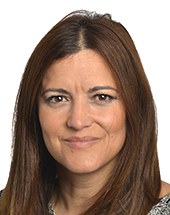






| Rank | Name | Country | Group | Speeches | |
|---|---|---|---|---|---|
| 1 |
|
Lukas Sieper | Germany DEU | Non-attached Members (NI) | 390 |
| 2 |
|
Juan Fernando López Aguilar | Spain ESP | Progressive Alliance of Socialists and Democrats (S&D) | 354 |
| 3 |
|
Sebastian Tynkkynen | Finland FIN | European Conservatives and Reformists (ECR) | 331 |
| 4 |
|
João Oliveira | Portugal PRT | The Left in the European Parliament (GUE/NGL) | 232 |
| 5 |
|
Vytenis Povilas Andriukaitis | Lithuania LTU | Progressive Alliance of Socialists and Democrats (S&D) | 227 |
All Contributions (46)
Binding annual greenhouse gas emission reductions by Member States (Effort Sharing Regulation) - Land use, land use change and forestry (LULUCF) - CO2 emission standards for cars and vans (joint debate – Fit for 55 (part 2))
Mr President, making the European Union's climate policy dependent on a speculative emissions market has delayed our response. A market that has little helped to reduce carbon emissions and that has been permeable to the lobby of industry and fossil fuels. Just a few days ago we saw the news of Members of this House having dinner with representatives of the airlines. The targets presented are below what science says, or lobby He squandered all the proposals. Wanting to meet financing needs by shifting costs to the most vulnerable while protecting the business is immoral. The proposals we are discussing here are clearly short in terms of the objectives and the means available, and we are talking about very small steps that, nevertheless, the denialist right of this House wants to shorten. We are fighting the battle of our generation and future generations and we risk clamoring for failure.
The REPowerEU Plan: European solidarity and energy security in face of Russia's invasion of Ukraine, including the recent cuts of gas supply to Poland and Bulgaria (debate)
Mr President, Commissioner, what we are experiencing is a reflection of the more structural problem of energy dependence, which we have been warning about for a long time. It is therefore necessary to combat the myths of European energy policy. The first is that the market is capable of self-regulation. The second is that this problem is temporary and is the result of the invasion of Ukraine. It got worse, but it's not the cause. Without changing market rules, fixing prices and strengthening public control of energy, everything will continue on the same path, with energy cartels accumulating profits and distributing dividends, while households continue to pay. We need to invest more in renewable energy and ensure a real energy transition. The Commission proposal does not abandon these myths. It admits, for the first time, that the invisible hand of the market does not magically regulate everything, but does not draw consequences. So we have to go to the causes. It is not enough and, above all, it is not enough to replace dependence on Russia with dependence on Saudi Arabia or the United States. Only a fair model, publicly controlled and compatible with climate goals, can help our energy sovereignty.
Global approach to research and innovation: Europe’s strategy for international cooperation in a changing world (debate) (debate)
Madam President, Commissioner, we need a global approach to research and innovation and we also need to strengthen the existing cooperation within the European area itself. This debate is mainly linked to academic freedom and we believe that this freedom cannot be limited. Academic freedom, which is currently under threat in several countries, is essential in a democratic society. Science can and should be a tool for peace. There are many positive aspects to the proposal that we will vote on, such as multilateralism, gender equality, association with the UN Sustainable Development Goals, synergies with the IPCC or other international institutions, or even a greater focus on small and medium-sized enterprises. We believe, however, that the approach to geopolitics or scientific diplomacy should follow a different path, more in line with the wording of the resolution itself. And we always need to continue to protect the work of researchers, both in terms of their working conditions and their rights, but also in terms of how they can communicate the outcome of their research work.
Data Governance Act (debate)
Madam President, I would also like to begin by thanking the rapporteur for the inclusive way in which she has conducted this whole process. This legislation that we are voting on here today is important and necessary. Ensuring that data protection is in line with European legislation, data sharing holds enormous potential in the area of research and innovation and can generate important social and economic benefits. With this regulation, we can increase data sharing in the Union, especially for the benefit of civil society, cooperatives and small and medium-sized enterprises. However, we have some reservations about the final text. The sharing of data on workers, which in Parliament's version had been eliminated, has now disappeared from the agreement. The concept of general interest in the field of data altruism or data sharing with third countries has become even more undefined. The monitoring of all processes, which was guaranteed by public agencies and institutions, is now handed over to private parties. We are increasingly moving towards a governance model that, in our view, does not protect the fundamental interests of the citizens of the European Union. However, this is an important proposal, as I said, and so, because the final agreement fell short of Parliament's position, we will abstain.
The Power of the EU – Joint European Action for more affordable, secure and sustainable energy (debate)
Madam President, relaxing state aid, setting price caps or thinking of a tax on the fallen profits of the sky, which could yield around EUR 200 billion this year alone, are steps in the right direction. But the Commission's proposals fail in the main: energy continues to be treated as a commodity and not as a right, and its price is still fixed on the stock exchange. It also does not involve a price formation mechanism. Defending energy profits, which in the first half of 2021 alone amounted to more than 4 billion, remains more important for the Commission than defending people. We need a socially and environmentally fair energy system that promotes energy independence and sovereignty and stops failing those who need it most. Calling people to turn off the heat sooner, as the Commission has done, is offensive and reveals a profound ignorance of the difficulties and sacrifices they are experiencing. Energy poverty exists because politics has failed. If there is political will, we can go to the essentials.
Foreign interference in all democratic processes in the EU (debate)
Mr President, it is important to talk and act on foreign interference and its multiple facets: disinformation, social media manipulation, cyberattacks, threats to journalists and activists, covert funding to political parties, revolving doors between politics and business, among many others. It is democracy that is at stake, as well as our rights and freedoms. This report touches on essential problems and offers important proposals to combat them, but it suffers from bias and a reduced reading of reality. Yes, there are Putin’s manoeuvres with far-right European parties and we must fight them. Yes, there are revolving doors between Chinese or Russian energy policy and business, and we must fight them. Yes, there is abuse of personal data, algorithmic manoeuvres and other social media schemes and they need to be tackled. Yes, there is an attack on journalism and journalists, there are espionage schemes like the Pegasus scandal and we have to fight them. We understand, however, that disinformation and manipulation by Russia and China are very real, but they are not the only ones. These schemes only work because there are actors available inside to fuel internal interference and we know well the role of far-right parties in this race to the abyss. The revolving doors between politics and business at Gazprom or CFC China Energy are very real, but they are far beyond energy and the financial sector remains untouched. Moreover, maintaining Gold visas and tax havens makes us complicit in this threat to democracy, the rule of law and the rights of citizens. If there are revolving doors it is because the rooms are contiguous between political power and financial interests. We will not vote against this report, but we regret that the work done did not have the ambition to be blameless from the point of view of what it says to fight. Above all, we must not allow the fight against disinformation to be usurped as an excuse to end freedom of expression and information.
Political crisis in Sudan
Madam President, in April 2019, the popular movement reversed the dictatorship of Omar al-Bashir, who had been in power since the 1989 military coup. This democratic transition was interrupted on 25 October 2021, when armed men took the Prime Minister hostage, as well as ministers and all civilian members of the Sovereignty Council. General Abdel Fatah al-Burhan, the instigator of this coup, announced the dissolution of the transitional organs and declared a state of emergency on the same day. Since the military coup, we have seen massive protests in Sudan, including by women and young people, who continue to express their dissatisfaction with the coup. These demonstrations were followed by arrests of civilians, the usurpation of political rights and violence against protesters. At least 62 civilians have been killed so far. On 3 January 2022, Abdalla Hamdok, then Prime Minister, resigned on the grounds that he had failed to achieve political consensus on his agreement and the repeated violations by the military. The coup has already been condemned by the African Union and the United Nations. We too must strongly condemn this coup. Not only formally, as has already been done by the European Union and the Member States, but by providing support in all international bodies to help Sudanese restore democracy, eliminate poverty and build a society of well-being. We must also show full solidarity with the popular mobilizations taking place in Sudan, demanding an end to the coup and fighting for social progress, democracy and against the return of dictatorship. We also ask for European Union aid to be granted in the form of grants and not loans. We ask Member States to meet the targets in development aid and to all participate in the Food Aid Programme.
Digital Services Act (continuation of debate)
Mr President, regulating digital services is a matter of urgency. Every day, users around the world turn to digital platforms on which they interact and trust personal information. If there is no regulation, it is the big corporations that continue to set the rules and put profits ahead of data protection and rights. This is already the case today, with the use of increasingly improved techniques of profiling and collection of personal data. That is why any regulation has to be serious and it has been halfway through on key issues. The main one is targeted advertising. In 2020 alone, Google raised $147 billion and Facebook $84 billion in advertising, thanks mainly to the development of tools to identify target consumers, which they use to increase their profits. This proposal could and should have gone much further. Increasing transparency is not enough. It is necessary to create mechanisms to eliminate targeted advertising and everything associated with it. As this proposal stands, it is supporting a business model that is incompatible with human rights. In addition, we should also have implemented limitations on the protection of freedom of the press and freedom of expression and also on the protection of the cultural and creative sectors. Freedom of the press and access to culture are key dimensions of any democracy. Our rights and freedoms cannot be for sale.
Preparation of the European Council meeting of 16-17 December 2021 - The EU's response to the global resurgence of Covid-19 and the new emerging Covid variants (debate)
Mr President, the new variants of COVID-19 will not stop emerging unless the necessary measures are taken to vaccinate the world. The selfishness of rich countries is pushing us all back. It is therefore urgent to release patents and even let the world be vaccinated. Internally, it is necessary to allow serious investments in health services and systems. Health professionals have been tireless and continue to work without means or resources. We've been making these requests since day one and we're not going to stop making them. As regards energy prices, there is an urgent need to review the rules of the electricity market. It cannot be the big companies that self-regulate prices. In recent decades electricity companies have had total impunity to fix prices and also to buy political goodwill. The situation of oligarchic power in which large electricity producers operate means that 34 million households in the European Union are unable to heat their homes. The key question is: Does the European Union really want to act or does it prefer to continue pretending?
Digital Markets Act (debate)
Madam President, we are well aware, at a time when we are living in digital integration, of the importance of regulating digital markets. We also know that we are always chasing after the damage, and so this proposal is an important, though not sufficient, proposal. It is important to fight the monopoly of the five platforms that control digital markets. It is also important to combat the control these digital platforms have over our data. In fact, this data is from citizens and citizens, and that is not how it has been happening. But more importantly, it would have eliminated targeted advertising for all people. This is a key element of market control and, unfortunately, in this proposal targeted advertising is only eliminated for minors. Be that as it may, it is a first step, as I said. A first step that helps us in such important measures as interoperability. But more needs to be done and I hope that the ambition of this proposal will not yet be reduced.
A pharmaceutical strategy for Europe (debate)
Madam President, the pandemic has reaffirmed the limitations of current value chain management and access to medicines and vaccines. But shortages of medicines in the European Union are a long-standing problem and the number of incidents related to these shortages has increased in recent years. An efficient pharmaceutical strategy should cover measures not only to mitigate shortages of medicines, but also to prevent them by analysing their root causes. It should also foster strategic autonomy, and security of supply should be ensured, including by diversifying supply chains for essential medicines and medicines, including European production facilities and public procurement. Equitable access to safe, effective and affordable medicines is a fundamental right and the full realisation of this right requires a society that puts health first and pharmaceutical research and innovation guided by public health objectives. There will be no strategy that works as long as options and power are in the hands of pharmaceutical multinationals.
European Partnership on Metrology (debate)
Mr President, Commissioner, I would like to begin by thanking the rapporteur for the work she has done on this proposal. Building on a good working base of the European Commission, it was able to improve it and include proposals from the various political groups. The importance of metrology is well known. It serves all areas of growth and as such also serves politics. Serve us every day. It serves energy when we want to improve methods of measuring the efficiency, for example, of solar cells. It serves us in health, when we want to improve, for example, the quality of procedures such as MRIs, when we want to have more efficient ventilators, or when we want rapid tests that are more effective in fighting COVID. It serves the environment to improve and monitor polluting agents in the atmosphere. Finally, as I said, it serves us in life, it serves us in politics. This report and this negotiation make it possible to ensure greater transparency, reduce conflicts of interest and improve the relationship in terms of gender equality, which, unfortunately, remains unfulfilled, also in this partnership. It is a public-public partnership of the utmost importance. The science of measuring is in every sphere of our lives and I believe we urgently need to implement this proposal.
The state law relating to abortion in Texas, USA
Mr President, we welcome the news this evening of the possibility of a US federal judge blocking the implementation of the anti-abortion law in Texas. If this happens, it will be a victory for American women, and consequently a victory for all of us. The Texian proposal to almost ban access to safe and legal abortion is a violation of sexual and reproductive rights and fundamental human rights, protected under international law. It is a proposal that would leave out 85-90% of Texas women who need to resort to abortion, forcing them into illegal and unsafe channels with risks to their health and lives. We therefore express our solidarity with the women of Texas and call for this kind of proposal not to move forward in order to ensure that all abortion services are accessible to all women and girls. Our bodies, our rights: This is a struggle of all of us, of all of us. Every time we back down on the rights of some women, it's all of us who back down, and that's why we don't give up and walk away from our solidarity with the women of Texas.
The case of Paul Rusesabagina in Rwanda
Mr President, we repeat today and we will do so as often as necessary to ensure security and justice for Paul Rusesabagina. Paul Rusesabagina was sentenced to 25 years in prison following arbitrary detention and an illegal transfer to Rwanda. Regardless of their guilt or innocence – it is not up to us to make such a trial – we need to ensure that the trial is independent and fair, as we have already called for before. It is also necessary that, following his unlawful detention, he be released immediately on humanitarian grounds. We also call for their physical integrity and psychological well-being to be guaranteed at all times, as well as access to the medication that they need so much. The European authorities, the European Union delegation, therefore have a duty to put pressure on the Rwandan authorities to ensure that justice is guaranteed and that the safety of Paul Rusesabagina is not called into question again.
European solutions to the rise of energy prices for businesses and consumers: the role of energy efficiency and renewable energy and the need to tackle energy poverty (debate)
Madam President, the system is rigged, the Commission is responsible, and we cannot pay for the greed of the big corporations. The profitability rates of the major producers are absurd and scandalous, and the Commission and the governments are protecting them. Privatisations in the energy sector, as in my country in the case of EDP and REN, are absurd and scandalous, and the Commission and governments are protecting them. Speculation on the carbon market is absurd and scandalous, and the Commission and governments are protecting it. Energy poverty is scandalous where, last winter, 36 million households were unable to heat their homes, and the Commission and governments do nothing. We need to treat energy as a common good. There is an urgent need to accelerate the transition to renewable energy and end dependence on fossil fuels. But the most absurd and scandalous thing about all this is that the Commission and the governments remain on the side of the big corporations and not the people.
EU Health Emergency Preparedness and Response Authority: ensuring a coordinated EU approach for future health crises and the role of the European Parliament in this (debate)
Madam President, Commissioner, do we need a European health emergency authority? Most likely, yes. But do we need it to be a private office of the European Commission that can negotiate directly with pharmaceutical companies and the private sector, without transparency, without democracy, without Parliament? No, no. Were there gaps in the management of the pandemic? There were, and several. And they also include the fact that we have divested ourselves of national health services, because there have often been cuts imposed by European policies. They also fail to give due value to the agencies we already have, namely the European Medicines Agency and ECDC. So we certainly need an articulated response, but responding to health crises and the health emergency is also about strengthening national health services, the response of professionals, and investing in scientific research and science. We cannot accept, in any way, a European agency, a European authority that answers these questions without knowing how or why, what its role is, what its mandate is, and without citizens being able to be heard.
The future of EU-US relations (debate)
Mr President, Mr High Representative, the election of the Biden/Harris administration has given us an opportunity to improve relations between the European Union and the United States. Relations that must be based on democratic dialogue and be based on cooperation on issues that are fundamental to the most urgent problems we face today, such as the fight against inequalities, such as the fight for gender equality, the fight against racism, human rights or climate change. The future relations of the United States and the European Union must be based on equality, and therefore the European Union must have the capacity to ensure its autonomy and to have its own strategic resources within these relations. Our trade policies should be based on the issues of the digital transition, the green transition and also the equality and rights of those who work. This is what should be the basis of our cooperation, and not cooperation aimed at fighting competitors, to be based solely on military cooperation, or to play a decisive role in escalating tensions, and not in combating the tensions of the international community. The success of our agreement, the success of our cooperation relations, should be the success of meeting objectives such as the objectives of sustainable development, for example. And that is not what is present in this report, unfortunately. I believe that we can be partners, yes, in the future, but not on the basis of being an ally, an arm of the United States, and not a partner on equal terms.
The situation in Kakuma refugee camp in Kenya
Madam President, Commissioner, the situation in the Kakuma camp and also in Dadaab, Kenya, is a tragic and urgent situation, which is why we have come together here in this resolution. I am sorry to say, but I believe that we have always fallen short of the real responsibilities of the European Union. Unfortunately, this resolution is an example of that. We rightly call for the Kakuma and Dadaab camps to be maintained, but at the same time we fail in the need to ensure the relocation of refugees. Yes, the European Union and the Member States can do more about it. We rightly call for ensuring respect for the human rights of refugees, we rightly call for guaranteeing the human rights of the most vulnerable, in particular the LGBTQ+ population, but we do not work hard enough to prevent conflicts or to address the real causes of these conflicts. I therefore regret that this resolution does not call for these responsibilities of ours. We know that many countries in the European Union, in particular four of them, are conducting military operations in the region and thus contributing to conflicts. We have tried several times to introduce into these resolutions an issue as basic as the call for an end to arms exports to conflict regions, and we have failed to do so. Again, it does not appear in this resolution. We therefore call for these issues to be looked at, not just on one side, but on both sides, and also on the side of our responsibility. Arms exports to the region, to Ethiopia, to South Sudan, to Somalia, always contribute to destabilization and to these conflicts that lead people to be in refugee camps. Colleagues, I hope that in the next resolution we will not only look at external responsibilities, but that we will take on all of our responsibilities as well.
Situation in Lebanon (debate)
Madam President, Mr Vice-President, the internal difficulties facing Lebanese society have often been identified, internal difficulties which have been aggravated by a very strong economic crisis, to which the explosion of the port of Beirut has not helped. It also affected access to essential goods, since the port of Beirut was the entry point for around 70% of imports. We have also seen many aid attempts over the years that have only created difficulties for the Lebanese people. Several austerity-laden financial aid packages, with reforms that imposed austerity and exacerbated the hardships of the people living there. We are also witnessing a people who have been able to receive Palestinian and Syrian refugees with great solidarity, and we are now witnessing the difficulties experienced by the United Nations, particularly as regards maintaining the minimum conditions for Palestinian refugees. We therefore need to continue to support UNRWA and not let it lose its funds and stop supporting those who need it most, and that is a responsibility that we have and that we must fulfil. Finally, a word on sanctions. I have asked this question several times, but I want to repeat it. We need to guarantee and protect the ability of the Lebanese people to decide their future without any external interference and, in that sense, I would like to ask, once again, criteria that are not discretionary because, if sanctions are applied, we may once again be playing an interfering role and interfering directly in what is Lebanese society and choice. I would very much like to have the assurance that we do not use interference or any form of intervention.
The case of Ahmadreza Djalali in Iran
Madam President, today we are voting on a resolution on the case of Dr Ahmad Reza Djalali from Iran. Dr Ahmad Reza Djalali is a Swedish-Iranian citizen specialising in emergency medicine and an academic who has worked at several universities, including Brussels and Piedmont. Djalali was arrested on 24 April 2016 by Iranian security forces. In October 2017 he was sentenced to death on spurious espionage charges and followed an unfair process based on a confession that was forced, extracted under torture. Djalali's state of health is critical after months of prolonged solitary confinement. He suffers from sleep deprivation, dramatic weight loss and already has difficulty speaking. We therefore call once again for the immediate suspension of Djalali's execution and his release. This is a violation of international law across the board. Incidentally, there are several arbitrary prisoners in Iran and, therefore, this case shows us the need to strengthen our dialogue with Iran for the protection of human rights and also reminds us of the permanent and uncompromising need to protect human rights defenders, in particular women. I therefore join my colleagues in this 'Free Djalali' appeal.
Conclusions of the European Council meeting of 24-25 June 2021 (debate)
Madam President, we agree that it was not an easy six months for the Portuguese Presidency. But the results of the last meeting with the Portuguese leadership are, to say the least, frustrating. Frustrating because, faced with the clear violation of the rule of law by the Hungarian government and the adoption of a law that discriminates against and attacks the LGBTIQ+ community, the Portuguese government decided to maintain neutrality - as if there could be neutrality on human rights. Frustrating because, once again, it continues to mark a step in the fundamental decision to raise the patent and fight COVID-19 on a global scale without creating more inequalities and more difference. Frustrating because, with every step that is taken, and a very modest step towards an asylum protection law, it is accepted, at the same time, to continue to negotiate with Erdogan and pay Turkey to continue to detain migrants and suspend their rights. We will also agree, therefore, that it was not a good farewell.