


| Rank | Name | Country | Group | Speeches | |
|---|---|---|---|---|---|
| 1 |
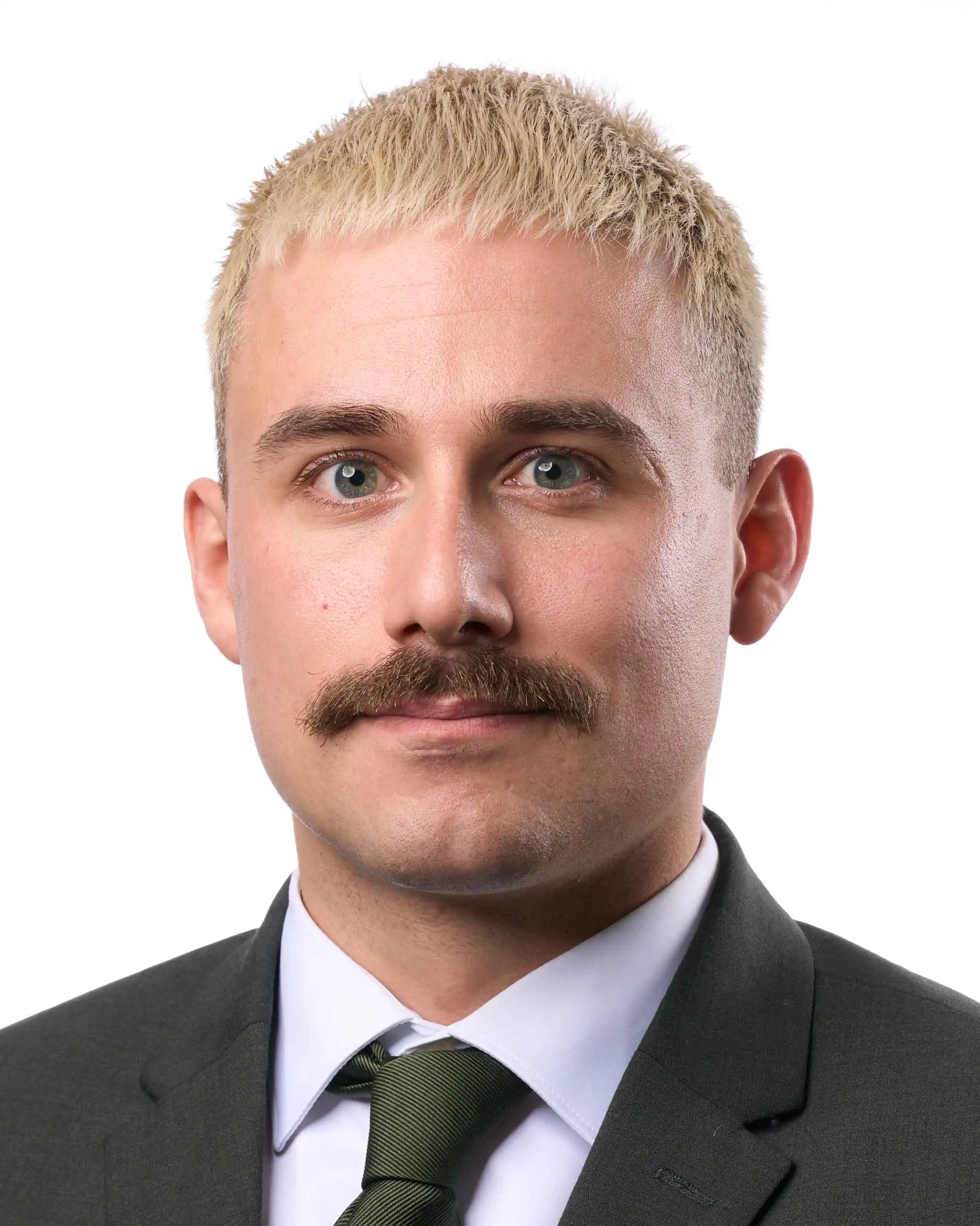
|
Lukas Sieper | Germany DE | Renew Europe (Renew) | 494 |
| 2 |
|
Juan Fernando López Aguilar | Spain ES | Progressive Alliance of Socialists and Democrats (S&D) | 463 |
| 3 |
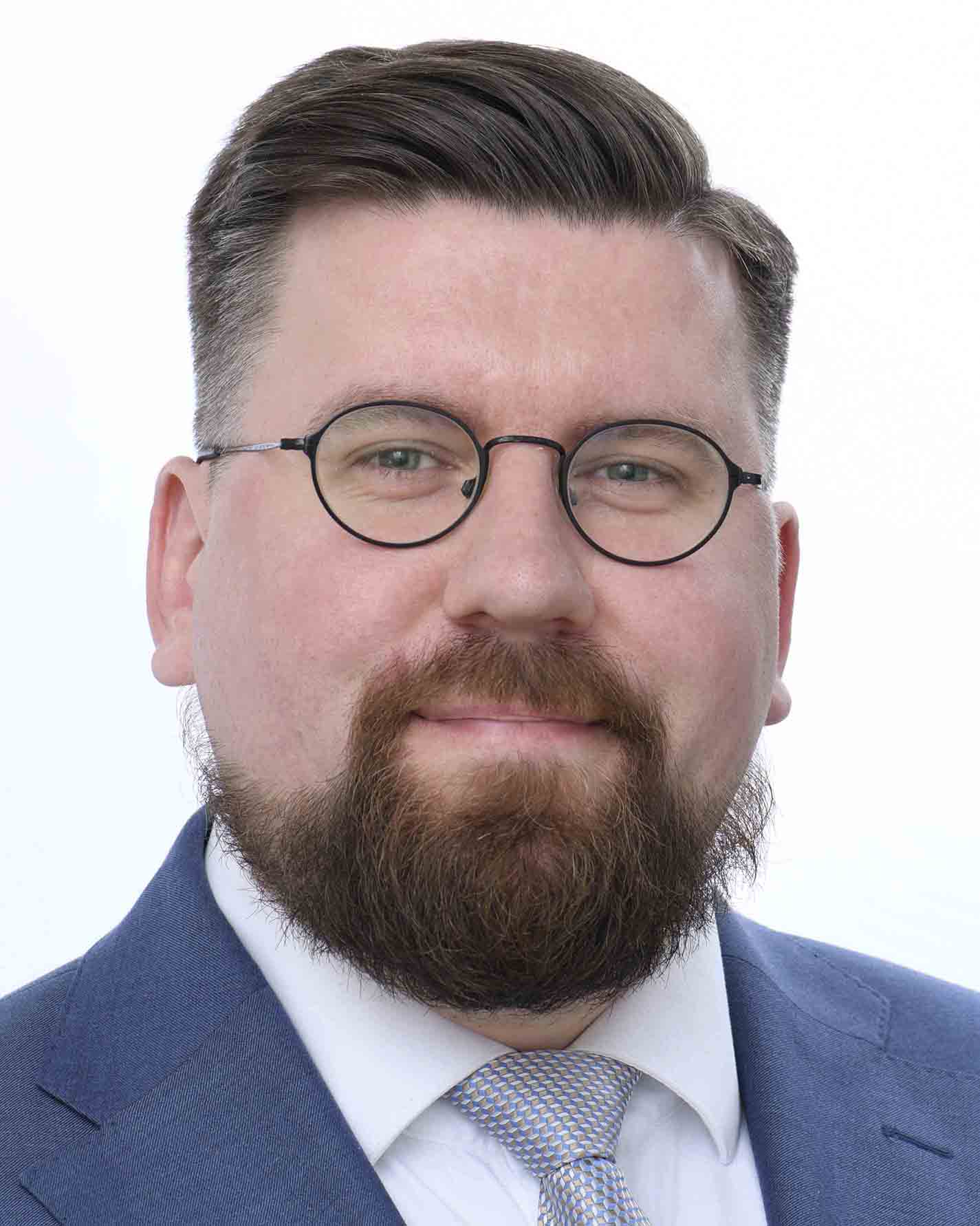
|
Sebastian Tynkkynen | Finland FI | European Conservatives and Reformists (ECR) | 460 |
| 4 |
|
João Oliveira | Portugal PT | The Left in the European Parliament (GUE/NGL) | 288 |
| 5 |
|
Vytenis Povilas Andriukaitis | Lithuania LT | Progressive Alliance of Socialists and Democrats (S&D) | 276 |
All Speeches (517)
Amending Directive 2011/36/EU on preventing and combating trafficking in human beings and protecting its victims (debate)
Date:
22.04.2024 20:38
| Language: ES
Speeches
Madam President, Commissioner Johansson, in 2011 I had the honour – together with a co-rapporteur from the Committee on Women's Rights, Soraya Rodríguez – of being the rapporteur for the Committee on Civil Liberties, Justice and Home Affairs for the evaluation report on the ten-year validity of the current European anti-trafficking legislation. And now I have the honour to be, indeed, shadow rapporteur on this updated European legislation which responds to a clear mandate from this European Parliament. Thousands of people fall victim to human exploitation and illicit trafficking every year. 70% are women. 70% are victims of sexual exploitation; the other 20%, work. Of the 70% who are victims of sexual exploitation, 20% are minors. Therefore, we are facing a brutal landscape that we have to undertake. The implementation report reveals shortcomings in the protection of victims, shortcomings in the coordination of national authorities, shortage of demands, shortage of complaints and, therefore, the need to address the demand for labour and sexual services. That is the essential point of this legislation: invite Member States to criminalise the use of labour or sexual services by victims of trafficking, in addition to criminalising forced marriage, illegal adoption, removal of organs and, of course, exploitation of surrogacy. This is a step forward in European legislation, a criminal directive against illicit trafficking that gives a clear mandate for the European legislator to commit itself against this unbearable form of exploitation of people such as illicit trafficking and trafficking in human beings.
Ongoing hearings under Article 7(1) TEU regarding Hungary to strengthen Rule of Law and its budgetary implications (debate)
Date:
10.04.2024 20:05
| Language: ES
Speeches
Mr President, indeed the umpteenth debate - a classic unfortunately of every plenary session of the European Parliament - on the Hungarian syndrome, which is a general syndrome of non-compliance and, even more so, of contempt for European law. Just listen to those who defend Viktor Orbán and his government. They do so not because there is a discrepancy of interpretation with regard to what it is to comply with European law, but simply because they claim that Hungary is exempt from complying with European law, that Hungary disregards European law. I therefore invite the Commission to keep its guard very high and to act on all available instruments. Of course the rule of law conditionality mechanism and its enforcement for access to European funds and the Cohesion Fund. Because they add the repression of the media, the repression of the free formation of public opinion, the repression of information pluralism, the individualized persecution of independent journalists and political opponents: all the acquis of massive breaches of European law that has characterized the action of Víctor Orbán. So go ahead, Commission.
Laying down additional procedural rules relating to the enforcement of Regulation (EU) 2016/679 (A9-0045/2024 - Sergey Lagodinsky) (vote)
Date:
10.04.2024 17:36
| Language: EN
Speeches
Madam President, in view of the vote, I can only invoke Article 59(4) of our Rules of Procedure and ask for the referral back to the committee for interinstitutional negotiations.
Madam President, the European Parliament is the only directly elected supranational and legislative institution in the world. We are a democratic expression of the irreducible diversity and complexity of European integration. We come from our 27 Member States, which have not dissolved with the European Union, and we are going to elections on 9 June. And I say this to remind you that the legislative procedure we came from has been extremely difficult. How could it not be? In no way can the negotiators who have participated in it be entirely satisfied, and I am not. I've heard legitimate criticism, and I respect it. Of course, I have also heard disinformation with rebuttable arguments as soon as we read the content of the European regulations that we are going to approve - I hope - in this session, which is historic. But I have a lot of respect for those who have criticized it from humanitarian organizations. I would like to remind you that there are leading international organisations – the UN High Commissioner for Human Rights, the UN High Commissioner for Refugees and the International Organisation for Migration – that have welcomed the Covenant as a positive step forward. But to those humanitarian organizations that have criticized it, I say: I have made their criticisms my own, I have fought for them in every negotiation, I have fought with all my strength to assert their views. But at the same time, I say: We are members of the European Parliament and we are not activists. In this Parliament we have been elected to decide and legislate, not to make fiery but sterile speeches indefinitely. We have been chosen to take responsibility for making decisions. And I want to say that the alternative to not voting on each of the regulations of this Pact is worse. It is not just condemning things to continue as they are, with all our protests, with each plenary saying "shame, what a shame that the European Union continues to do nothing with regard to migration and the right to asylum". It is not acknowledging that we have tried and failed. It is much worse and more discouraging for the future because it will be telling voters: Forget it, the European Union is not able to respond even when it proposes it and when it spends so many years in the effort. That's why I say: Let's not miss the opportunity. It's now or never. After all these years of work, it is worth taking a step forward, with all its limitations, but also putting order, guarantees and common rules where so far there have not been. We are going to vote in favour of each of the regulations of this European Pact.
Mr President, Mr Vice-President, Commissioner, ladies and gentlemen of the European Parliament, today we are taking a decisive vote, certainly by decision, not only looking to the past and present of the European Parliament, but, above all, looking to the future. Because it is a question, first of all, of fulfilling a mandate under European law, the Treaty of Lisbon and the Charter of Fundamental Rights of the European Union: that there be a common migration system, with a common European migration policy and legislation, and a common asylum system, with an asylum policy and legislation that add value to the unilateral, fragmented and insufficient solutions of the States, which we have described as unsustainable, as well as unfair. It is therefore a question of finally putting into force a European law and of doing so, in addition, with respect for our values and bringing about a joint approximation of the five regulations, which are five directly binding laws. One of them is the Regulation on crisis situations, which is not the ordinary response, but the response to situations in which a Member State declares itself overwhelmed by a massive or quantitatively very important, very shocking arrival of irregular migrants, especially after rescue and rescue operations, also at regional and island levels. This therefore requires an articulated European solidarity mechanism, a European response buffer, a European solidarity involving the Commission with an implementing act and also the Council through the Commission Recommendation to raise its solidarity offers to all Member States, either through relocation programmes ordered, at last, by a European coordinator, or through contributions to the Asylum and Migration Fund, which help Member States equip themselves to provide an adequate response to such emergencies. It is therefore a question of finally enacting predictable European legislation with legal certainty in areas where there has been only action-reaction so far. It is also about doing so with common guarantees, in particular by protecting people in the most vulnerable situations, such as women, women with dependent children, unaccompanied minors and, of course, victims of trafficking. These situations require differentiated treatment, and that is why we have fought hard in the negotiation with this Council. Of course, we are aware that this matter has not been easy. In fact, it is the most divisive and thorny on the European agenda for too long. Negotiation has therefore not been easy in this European Parliament and, of course, it has not been easy with the 27 Ministries of the Interior, which is the Council with which we have dealt with the final stage. It must be said that in any negotiation, concessions must be made and the result has limitations. But the result, if it offers legal certainty and guarantees, is always better than no result at all. Of course, it's better than leaving things as they are. It is better than abandoning the governments of the Member States to their fate. It is better than sending the message that, whenever there is an emergency migratory situation in island situations such as in the Canary Islands, Lampedusa or the Greek islands, the response simply has to be strictly national and no solidarity can be expected from the European Union. No, that cannot be the future of the European Union nor can it be the message before the June 9 elections. It must be that we have done everything in our power. Have we done it all? No. It is, of course, necessary to fulfil our own mandate to put in place a coordinated European rescue and rescue mechanism, and to fight jointly and effectively against criminal organisations that traffic and exploit people, as well as to continue to open up legal and safe avenues that give people fleeing despair a chance to reach Europe without risking their lives in the effort or losing their lives tragically, as has been happening for too long. The two options are clear: rules are established with guarantees, with all the limits and with all the criticism that a particular point or other may have raised, which is inevitable in such a complex negotiation, or Member States are simply left to their own devices. The situation could get even worse if, after all the accumulated work and all the energy and time we have consumed in this, the message is that we have not achieved it, because much worse than the situation as it is - which is already unbearable - is to have tried and not to achieve it. Achieving a step forward, with all its limitations and also with guarantees, is within our reach if we vote in favour of each of the Regulations, of the European laws that make up this pact.
The time the European Commission takes to deal with requests for public access to documents (debate)
Date:
13.03.2024 22:11
| Language: ES
Speeches
Mr President, Commissioner, the right to good governance, good administration, transparency and access to documents are fundamental rights protected by Articles 40 and 41 of the Charter. Moreover, it turns out that there is a regulation – binding, therefore, on the Member States – from 2001 which this Parliament has been trying to update in line with the Charter for years and which has been blocked by the Council for no less than 13 years. But fortunately, it is also a fundamental right to have access to the Ombudsman and, even more fortunately, it turns out that we have a European Ombudsman elected by this Parliament, Emily O’Reilly, who has launched an own-initiative inquiry that shows that there is a systemic and unacceptable delay in access to the documents of the European administrations and institutions that needs to be corrected. The necessary resources and staff must therefore be provided to correct this unacceptable level of systemic and widespread delay in access to documents, so that that fundamental right protected by the Charter, which is access to documents, is fulfilled at once and, hopefully, in the next legislature we will see the Regulation on public access to documents of the European institutions unblocked, so that we can once again update that European Regulation as well.
Rising anti-LGBTIQ rhetoric and violence: recent attacks in Thessaloniki (debate)
Date:
13.03.2024 21:42
| Language: ES
Speeches
Mr President, Commissioner, ladies and gentlemen, thank you for being here late at night testifying to a commitment put in writing by the Commission in the LGBTIQ Equality Strategy 2020-2025, but, above all, honouring mandates of the Charter of Fundamental Rights of the European Union, which entered into force with the Treaty of Lisbon with the same legal value as the Treaties, and whose Article 21 prohibits any form of discrimination on grounds of sex or sexual orientation. And so, when we talked here tonight about rights in Venezuela, about rights in Afghanistan, how are we not going to talk about fundamental rights to non-discrimination, to equal treatment and to respect for all people, whoever they are, whoever they have decided to be, love as amen, in the European Union, in its Member States? We would be failing in our duty if we were not debating that in Thessaloniki, in Greece, a member state of the European Union, two twenty-one-year-olds have been brutally harassed by a fascist horde with the fabrications and appearances characteristic of fascist intolerance. And this puts us back on notice that the freedom, equal treatment, dignity, equal dignity of all people in their sexual orientation and even in their differences, is never guaranteed forever and certainly not in the European Union. And it reminds us of the duty that we have every time this happens to point the finger at the governments of the European Union that look the other way, that do not institute criminal proceedings and purge all responsibilities and that do not feel before the criminal justice who lacks respect for any human being for being what he is, for his identity, for his sexual orientation, for loving who he loves.
Allegations of corruption and misuse of EU funds in Spain during the pandemic (topical debate)
Date:
13.03.2024 13:19
| Language: ES
Speeches
Mr President, yes, we already know, ladies and gentlemen of the Spanish right. They do not like the amnesty law that requires for approval the absolute majority of the Congress of Deputies: all groups except the PP and its far right. And you do not like the Government of Spain, which has reduced independence to a historical minimum, the support for independence, when you had it at a maximum, with two unilateral declarations of independence. And they have the nerve to bring here a corruption debate with their record of bonuses, of black money, of box B, with four former ministers of the Popular Party today sitting before the criminal justice, in addition to those who have already been convicted and have gone through jail, including the manager of their party. And without asking today for the resignation of Isabel Díaz Ayuso, the president of the Community of Madrid. What a tough face! Gallope of Gish, enormities and tired falsehoods. But I ask you a question: what would you do with Spain if you were in government? In addition to the corruption they squandered in their time of government, in addition to putting in jail all those hundreds of officials and workers who have some relationship with the events of 2017 and whose families are ruined by civil responsibilities. I'll tell him. They have no idea what to do with Spain because they neither accept nor understand it. They are only obsessed with returning to the Government of Spain. And let me tell you, the reality of Spain may not be what you like and maybe it is not exactly what I would like, but it is the one that is represented in the Congress of Deputies, whose absolute majority rejects you... (the Chair took the floor from the speaker).
Need to address the urgent concerns surrounding Ukrainian children forcibly deported to Russia (debate)
Date:
13.03.2024 09:36
| Language: ES
Speeches
Madam President, Madam President-in-Office of the Council, Commissioner, it has been two years since Putin's criminal war against Ukraine, during which this European Parliament has debated and established imprescriptible war crimes involving dozens of innocent civilian victims, including, of course, children. But here we are talking about another war crime qualified as such by the International Criminal Court, which has issued an arrest warrant not only against Putin, but against the Russian Commissioner for the Rights of the Child, according to the report of the UN Committee on the Rights of the Child in January and the resolutions of this European Parliament condemning the forcible transfer of more than 20,000 girls and boys to Russia. It demands their return, their immediate return to where they belong. And, of course, it qualifies as a war crime what it is: It is a crime of genocide under international law, in addition to a war crime, to deprive of identity and to remove from the culture to which twenty thousand innocent children belong. And this Parliament sends a very clear message. It may not be tomorrow or the day after tomorrow, but war crimes do not prescribe and this Parliament will not stop until those responsible for war crimes are brought to justice at the International Criminal Court.
A single application procedure for a single permit for third-country nationals to reside and work in the territory of a Member State and on a common set of rights for third-country workers legally residing in a Member State (recast) (debate)
Date:
12.03.2024 18:39
| Language: ES
Speeches
Madam President, Commissioner Johansson, this European Parliament has been asking for years to change its focus on migration and to open up legal and safe ways to enter the European Union. And here we finally have an instrument, the Single Permit Directive, within the package of measures on skills and talent adopted during the Spanish Presidency (well done, Javier Moreno, rapporteur for this initiative!), which makes it possible to shorten the deadlines for applying for the permit, improves the conditions in relation to unemployment, provides clear legal rules for the residence permit, with safe safeguards, and, of course, increases equal treatment, with an emphasis on that equal treatment which has also been introduced by our colleague Agnes Jongerius. Therefore, here we have, at last, a tool that serves regular migration in the European Union, which will have to be complemented by others so that, at last, the European Union prides itself not only on having a standard of respect for the fundamental rights of migrants – let alone those of asylum seekers – but also on respecting their rights as workers in the European Union.
Question Time with Commissioners - Preparedness of EU governments to combat foreign interference, including from Russia
Date:
12.03.2024 16:46
| Language: ES
Speeches
Madam President, Vice-President Jourová, we are in the European Parliament's Question Time on Russian interference in democratic processes. Este Parlamento Europeo ha dedicado muchos debates a seguir paso a paso a la Comisión y al Consejo los últimos nueve años, desde la Brújula Estratégica hasta los grupos especializados de trabajo StratCom, el Centro de puesta en común y análisis de la información, el Observatorio Europeo de los Medios de Comunicación Digitales —que los obliga a la rendición de cuentas, transparencia y responsabilidad por sus actos— y el Código de Buenas Prácticas en materia de Desinformación. Well, we have all the elements for an analysis and a diagnosis, but it's about giving an answer. Madam Vice-President Jourová, in the event of Russian interference in the upcoming electoral process leading up to the June 2024 European elections, what will be the guarantee of an effective response in defence of the integrity and credibility of the European elections? What will be the sanction for those who interfere in the democratic process? What will ultimately be the framework for a European response – deterrent and repressive – to foreign interference in democratic processes?
Mr President, Commissioner Breton, in this parliamentary term, no less than a European law on artificial intelligence, the European Union was not only at the forefront of the world, but also faced with an extremely difficult material objective, as evidenced by the negotiation and the pre-emptive attacks launched by the technological giants. The aim is to establish a risk-based system, with prohibited uses such as indiscriminate biometric recognition or predictive policing and high-risk uses – all of which affect fundamental rights – with a European obligation to assess the impact of fundamental rights. And a transparency rule that prohibits "deep fake" without giving an account of it or that particularly protects against the use of generative intelligence without giving an account of the copyright or intellectual property that are involved. And with a governance model, the European Artificial Intelligence Office that, hopefully, is the first step for a European agency capable of imposing, with coercive sanctions, the obligations on the technological giants that have resisted this law so much.
Mr President, Vice-President Jourová, by finally approving the European Media Freedom Act in this plenary session of the European Parliament, a lawyer recognises a constitutional step forward because we are protecting journalists in secret from sources, but also from espionage. We are protecting information pluralism by establishing transparency obligations in the financing and advertising of each media outlet. We are protecting the consumer of information on digital platforms, through digital literacy, and subjecting digital media to the obligation to comply with the Digital Services Act, also adopted in this legislature of the European Parliament. And we are establishing a service, the European Council for Media Services, which will be effective against disinformation and will also link digital media. It is, therefore, a giant step that we are practicing at the moment in the European Parliament and I sincerely thank those who have made it possible in a work that has lasted the entire legislature.
Council and Commission statements - Preparation of the European Council meeting of 21 and 22 March 2024 (debate)
Date:
12.03.2024 10:32
| Language: ES
Speeches
Mr President, Mr Vice-President Šefčovič, President von der Leyen has announced that the Council intends to support the humanitarian maritime corridor from Larnaca (Cyprus) by a chance route of four hundred and fifty kilometres to try to help a crowded population, tortured by the brutal aggression, brutal offensive, of the Netanyahu Government, in Israel, the most far-right in history, and subjected to infectious diseases. For one reason only, and that is because the Netanyahu government prevents land access for that humanitarian aid. The message is therefore clear. Strategic autonomy, yes. With a humanitarian voice of the European Union that is audible, but that has something to say, as High Representative Josep Borrell has done, saying loud and clear that this brutality against the civilian population in Gaza exceeds the right to self-defence against the terrorist attacks of 7 October and violates the law of war and its conventions. But it also violates international humanitarian law. The European Union must tell you clearly that not only does this not have the support of the European Union, but it will not go unpunished.
Definition of criminal offences and penalties for the violation of Union restrictive measures (debate)
Date:
11.03.2024 20:38
| Language: ES
Speeches
Mr President, Commissioner Reynders, as Chair of the Committee on Civil Liberties, Justice and Home Affairs, I had the honour of being rapporteur for the transitional legislation, the provisional one, which led to this definitive criminal directive that we are approving in this plenary session of the European Parliament, happily, to establish criminal sanctions – binding on all Member States – for those who fail to comply with the restrictive measures of asset freezes, travel bans or embargoes related not only to the progress of European criminal law, but to the common foreign and security policy and the common security and defence policy of the European Union. And I welcome the introduction of gross negligence – also punishable by European law – and the criminal liability of legal persons – of companies – and, of course, I welcome the exclusion of humanitarian aid from this criminal law, because humanitarian aid must be distinguished from intentional or grossly negligent circumvention or violation of the sanctions imposed on those who violate the restrictive measures imposed by the European Union in defence of its common foreign and security policy and its common security and defence policy.
Deepening EU integration in view of future enlargement (debate)
Date:
28.02.2024 20:00
| Language: ES
Speeches
Madam President, Commissioner Reynders, yes, we agree that the history of enlargements is the story of success, just as the only case of voluntary departure from the Union – Article 50, Brexit – ends in a fiasco for those who promoted it. But there are several debates in this plenary where we have urged the European Union to move beyond the age of innocence and that means, in terms of enlargements - to Moldova, Georgia, Ukraine and the Balkans - that there can be no enlargement that does not calculate its impact on cohesion policy; on the constant budget, without own resources; on agricultural policy, and on the strategic dimension of our inexorable neighbourhood with Russia. Enlargement must therefore be taken seriously and the decision-making method must also be reformed. But, Commissioner Reynders, if there is one point on which it is important to calculate the consequences of enlargement well, it is precisely in the European idea of democracy and the rule of law in Article 2, because there can be no room for manoeuvre for newcomers in terms of variations, breaks or breaks with respect to the European idea of democracy and a liberal drift.
Report on the Commission’s 2023 Rule of Law report (debate)
Date:
28.02.2024 16:47
| Language: ES
Speeches
Mr President, Commissioner Reynders, Fourth Rule of Law Report with its four chapters: anti-corruption strategy, independence of the judiciary, freedom of the press and democratic control of public authorities. But instead of being able to talk here about the link between the rule of law, conditionality and Article 7, I have to talk once again, unfortunately, about what I have heard the spokeswoman of the Spanish People's Party say when she poured her inconvenience against the Government of Spain with arguments as unfair as they are false. Madam spokesperson of the Popular Party, you have spoken of corruption, and let me tell you that there is not a single member of the Government presided over by Pedro Sánchez who has not already been prosecuted or accused, but not even singled out in any criminal proceedings. And you tell me, that you sat in a Council of Ministers of the People's Party, where there are four members of your Council of Ministers of the People's Party currently sitting before a criminal court in Spain. The Minister of the Interior, by the patriotic police, who tried to destroy the evidence of very serious crimes. Two Vice-Presidents of the Government, who were Minister of Economy and Minister of Development, criminally charged with illicit enrichment. And a Minister of Labor, who was president of the Valencian Community, prosecuted for all conceivable crimes of corruption. So, gentlemen of the People's Party, to the question: speak of the rule of law, reserve all your noise capacity for the Congress of Deputies, which already suffers enough. But please save this European Parliament.
The murder of Alexei Navalny and the need for EU action in support of political prisoners and oppressed civil society in Russia (debate)
Date:
28.02.2024 14:04
| Language: ES
Speeches
Mr President, President-in-Office of the Council, Commissioner, Yulia Navalnaya's testimony this morning is impressive. And strong and prolonged the applause of this European Parliament standing before the testimony of the martyrdom and murder of the heroic Alexei Navalny, Sakharov Prize for this European Parliament in 2021 and creator of an anti-corruption foundation with which he stood up to the Russia of Putin, an inexorable neighbor of the European Union - the largest country in the world - an existential threat to our values and, of course, to that proclaimed vocation to grow and mature once and for all as a geopolitically global actor of the European Union of which we spoke this morning. Here we have a credibility test. Many voices in this European Parliament doubt that the European Union can approve it, but others are betting that it will surpass it. First, by maintaining military support for Ukraine. Secondly, by maintaining sanctions and ensuring that there will be no impunity for the perpetrators of Alexei Navalny's murder. But finally imagining - as Yulia Navalnaya wanted this morning - strategically, in her common foreign and security policy, a Russia after Putin, a Russia other than Putin's Russia, a free and democratic Russia like Alexei Navalny dreamed of.
Strengthening European Defence in a volatile geopolitical landscape - Implementation of the common foreign and security policy – annual report 2023 - Implementation of the common security and defence policy – annual report 2023 (joint debate - European security and defence)
Date:
28.02.2024 10:59
| Language: ES
Speeches
Madam President, Madam President of the Commission, the ambitions proclaimed by President von der Leyen for the European Union to mature once and for all towards a relevant geopolitical actor with a foreign security and defence policy and, let us not say, for the next Commission to incorporate a defence portfolio will be incomplete if the institutional reform that makes it possible to overcome the contradictions that the European Union shows when making its own decisions and, moreover, does so by overcoming the criticism of double standards and double standards is not addressed. If we have acted unitedly in defending Ukraine against Putin's brutal aggression, we must do the same in the other corner of the Mediterranean, in the face of the brutal disproportion of the Israeli military offensive in Gaza, demanding not only a ceasefire with an audible and unitary voice but also compliance with the precautionary measures of the International Court of Justice and, above all, the diplomatic solution of the two states.
Mr President, Commissioner Urpilainen, when we are talking in this European Parliament about growing inequalities in the world we are talking about the root causes and, in essence, the migratory event, for whose political and legislative response we have worked tirelessly in this European Parliament during this legislature. In a globalized world there are now 75 million people on the move from where they were born, spurred by inequality; only a very small percentage, about 3%, points to the European Union. But there is also inequality in the European Union, which explains why there are profoundly anti-European political platforms. These are indeed the crisis of European values, and not the migratory fact, and they are exploiting precisely the fear of migrants who suffer those who feel harmed by globalisation in their inequality. It's a radically wrong answer. It is therefore absolutely urgent that we build a political and legislative response to migration that is supportive not only between Member States, but also for migrants fleeing inequality in search of opportunities.
One-minute speeches on matters of political importance
Date:
26.02.2024 21:43
| Language: ES
Speeches
Mr President, as Chair of the Committee on Civil Liberties, Justice and Home Affairs, I had the honour of participating in the Council of Justice and Home Affairs Ministers of the Belgian Presidency. I remember a remarkable moment, when a warm welcome was given to the announcement made by the new Polish Minister of Justice to restore the rule of law, facing the difficulties of reforming the Judicial Council, the Judicial Office, the Supreme Court and the Constitutional Court, massively interfered with by the political intervention - during two mandates, with a majority - of the conservative Law and Justice party. But I hope that this will also have consequences for the procedural situation of a Spanish journalist who has been imprisoned in Poland for two years, Pablo González, without the accusation against him being known at this stage or, therefore, it being possible to know whether there is incriminating evidence to justify such prolonged pretrial detention. It is therefore to be hoped that in this restoration of the rule of law welcomed by President von der Leyen, too, Poland will manifestly commit itself to the Charter of Fundamental Rights of the European Union, in addition to the European Convention on Human Rights and the procedural guarantees legislated by this European Parliament.
Protection of the environment through criminal law (short presentation)
Date:
26.02.2024 21:21
| Language: ES
Speeches
Mr President, Commissioner Breton, criminal law was the exclusive competence of the Member States of the European Union until the Treaty of Lisbon entered into force, with the area of freedom, justice and security making this European Parliament a criminal legislator. Now that we are so concerned about the environment – for so many good reasons – now that we are embarking on the green transition, now that we are witnessing the need to deploy solidarity funds in the face of provoked forest fires, criminal law is part of the response and, therefore, this Directive strengthens that capacity, noting proportionate and dissuasive penalties, not only for natural persons who perpetrate ecocides – harming water, soil, natural resources or the environment – but also for legal persons who are incorporated into their criminal liability, with penalties ranging from 3% to 5% of their annual turnover or penalties ranging from 14 to 40 years of deprivation of their contracting rights with the European Union, depending on the Member States. It is therefore a decisive step in strengthening European criminal law.
Transparency and targeting of political advertising (debate)
Date:
26.02.2024 19:10
| Language: ES
Speeches
Mr President, Vice-President Jourová, the elections of 9 June 2024 are approaching and it is time for the truth that the European Union, which is an area of freedoms, does not allow precisely that guarantee of fundamental freedoms – including free communication and the free flow of information – to harm, deteriorate or weaken the integrity of democratic processes. That is why the Committee on the Internal Market and Consumer Protection and the Committee on Civil Liberties, Justice and Home Affairs have worked together on both the Digital Services Act and this regulation on the transparency and targeting of political advertising. The participation of the LIBE Committee consists precisely in ensuring the highest standard of protection of fundamental rights and privacy in the world, so that algorithms in no case weaken the integrity and credibility of the democratic process, which we are already looking at imminently. This Regulation therefore needs to be a decisive step – together with the Digital Services Act – to ensure that the protection of personal data also acts in the reception of online political advertising.
Implementation report on the EU LGBTIQ Equality Strategy 2020-2025 (continuation of debate)
Date:
07.02.2024 20:49
| Language: ES
Speeches
Madam President, Commissioner Dalli, EU no place for hate. That beautiful motto has resonated strongly in three debates this afternoon in the European Parliament and it does so now, rightly so, when we assess the implementation of the LGTBIQ European Strategy. It is time to affirm that the infamous motto of LGBTIQ free zones must be overcome by its alternative, that the European Union be an LGBTIQ freedom zone. And that will not be until we ensure the free movement, the free choice of residence of rainbow families. rainbow families— with all his rights in tow: rights of succession, rights of parenthood and, of course, recognition on an equal footing in all Member States, in compliance with the judgments of the Court of Justice. There are those who argue that family law falls within the competence of the Member States. None can, however, oppose the forcefulness of Article 21 of the Charter of Fundamental Rights of the European Union, which prohibits any discrimination not only on grounds of sex, but also on grounds of sexual orientation.
The EU priorities for the 68th session of the UN Commission on the Status of Women (debate)
Date:
07.02.2024 19:27
| Language: ES
Speeches
Mr President, Commissioner Dalli, the Chair of the Committee on Women's Rights, Robert Biedroń, brings this point to the European Parliament seeking inspiration to represent us all with dignity at the next session of the UN Commission on the Status of Women. I believe that the voice that emerges with resolution from this debate in the European Parliament is clear and clear: equality of women is a matter of human rights and fundamental rights in the European Union. A society that fully guarantees them – which is the obligation of the European Union – is a society that is not only fairer and more equitable, but also more economically efficient and more socially prosperous. Equality of women in the European Union requires respect, not discrimination. It demands to overcome the wage gap definitively. It requires all women to be safe from all forms of violence. It demands freedom for women to develop their personality without being subjected to any prejudice or stereotype. And it also demands, of course, that we once and for all affirm that equality and non-discrimination are an absolutely fundamental issue. There is no more beautiful clause in European law than that which prohibits any form of discrimination on grounds of sex, gender or sexual orientation. It is Article 21 of the Charter of Fundamental Rights of the European Union. Therefore, dear Robert Biedroń, there is your inspiration.