



| Rank | Name | Country | Group | Speeches | |
|---|---|---|---|---|---|
| 1 |
|
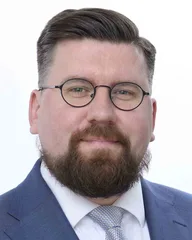
Lukas Sieper | Germany DEU | Non-attached Members (NI) | 390 |
| 2 |
|
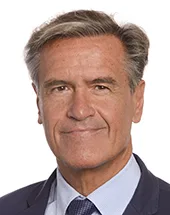
Juan Fernando López Aguilar | Spain ESP | Progressive Alliance of Socialists and Democrats (S&D) | 354 |
| 3 |
|
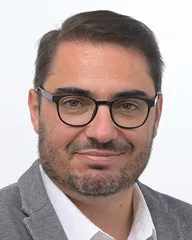
Sebastian Tynkkynen | Finland FIN | European Conservatives and Reformists (ECR) | 331 |
| 4 |
|
João Oliveira | Portugal PRT | The Left in the European Parliament (GUE/NGL) | 232 |
| 5 |
|
Vytenis Povilas Andriukaitis | Lithuania LTU | Progressive Alliance of Socialists and Democrats (S&D) | 227 |
All Contributions (56)
Impact of Russian illegal war of aggression against Ukraine on the EU transport and tourism sectors (debate)
Mr President, Commissioner, the war in Ukraine is having dire consequences on our economy, including in the transport and tourism sectors. The European Union will not be the same after this war, the consequences of which add to the ravages of the pandemic. We see shortages of supplies, disruptions in the logistics sector and high energy prices. The automotive sector, for example, suffers from a shortage of electronic compounds and many of these companies have paralyzed their activity. Europe needs a competitive industry and not just a service provider. For this, the transport sector is essential. We need to roll up our sleeves and look for ways to maintain European competitiveness. We must bet on digitalization to optimize the logistics chain in air, sea and land transport. We must be aware of the situation, the challenges we face and the threats that exist, and rethink how we want to face them in order to maintain a Europe that is peaceful, prosperous and competitive. To maintain the logistics chain, the transport sector is key. Tourism is also about protecting and promoting our values and lifestyle.
Impact of Russian illegal war of aggression against Ukraine on the EU transport and tourism sectors (debate)
Mr President, thank you very much. We have problems with the Spanish translation. So it’s coming and going and we cannot follow the debate without the translation. In English it’s still fine, but if somebody else is going to use other languages, we have problems with that. If you can fix it, please.
Right to repair (debate)
Madam President, Commissioner, redesign, reduce, reuse, repair, renew, recover and recycle. This, as you know, is the seven Rs rule, the fundamental pillar of the circular economy. It includes a fundamental step: repair. The right to redress that the European Commission intends to create must be based on the circular economy, one of the foundations of the Green Deal. From here we welcome the presentation by the Commission a week ago of the circular economy package of proposals, in particular the proposal for a regulation on the ecodesign of sustainable products, based on the seven R's rule that I have just mentioned. In general, we have a serious problem with waste management, also in the European Union. That is why we must work on proposals that fight against planned obsolescence and empower citizens. It's not just an environmental issue, it's also an ethical one. It is time to overcome the habit of consumption, of using and throwing away. We must return to bet on quality and durable products as was done in the past and find a way to make this profitable for our industry and, especially, for our SMEs. It should also be an attractive option for consumers, so that repairing a product is an alternative to valuing before being forced to buy a new product. The circular economy will be a competitive advantage not only for our industry, but above all for the environment. Let's bet on the circular economy. Let's bet on the right to reparation.
Digital Services Act (continuation of debate)
Mr President, Madam Executive Vice-President of the European Commission, Commissioner, first of all I would like to congratulate the rapporteur, Mrs Schaldemose, also the shadow rapporteur of my group, the EPP, Arba Kokalari, for the great work she has done, and, likewise, the other rapporteurs involved in her spirit of cooperation: I would like to highlight the great consensus work that has taken place among all the groups. I welcome the fact that the European Commission presented the proposal for a Digital Services Act, which undoubtedly went in the right direction: this proposal was much needed to adapt European legislation to the new digital reality. I think it comes out of this Parliament strengthened and well on its way to trilogues, especially since here we have already dealt with the various sensitivities of the different political groups represented in this House and have reached a great consensus. This law is a regulation designed to create a safer network environment while promoting digital innovation in the European Union. This proposal updates the e-commerce directive of the year 2000: during these 20 years, the world has changed radically with the emergence of new digital services; therefore, legislative alignment was and is urgent to address these new challenges. No one questions the progress that these services have brought to our societies; however, the need to increase online security has also been identified. The new obligations established by this law on digital services go precisely in this direction: We want to protect our citizens and businesses from the abuses of internet giants. To this end, the measures provided for in this Law are based on a fundamental principle, ‘what is illegal offline must also be illegal online’, a principle that is implemented through transparency rules. All this is key to the fight against the impunity that currently exists on the internet and that affects our most vulnerable citizens and companies, especially children and our SMEs. I would also like to stress that we have taken special care with the type of obligations imposed on SMEs, since, due to their limited resources, some of them could not comply with them: It is a matter of simplifying their lives, not adding bureaucratic and administrative procedures. We will have to continue working to complete this legislation, which is just a first step: With this law we lay the foundations of what security should be in the digital environment, but there are still many challenges to be addressed. It is a comprehensive and transversal legislation with which we establish a foundation for digital regulation in the European Union, that is, it sets basic standards for all digital content, products, services and activities based on a principle of horizontality. We certainly need future initiatives to address concrete challenges and complete robust legislation in line with our European values: this week we will adopt Parliament's position on this law, and I encourage the trilogue negotiations to continue in the spirit of cooperation.
Digital Markets Act (debate)
Madam President, Madam Vice-President, Commissioner, this week we voted on the Digital Markets Act, one of the most important proposals for our single market in this legislature. I should like to congratulate the Commission, which, after twenty years, is finally bringing forward a proposal in line with the needs of the digital market vis-à-vis the internet giants. This proposal is of vital importance for our SMEs. Far from going against anyone, it seeks to create a balanced playing field for our SMEs, so that they can compete on equal terms and with the same rules of the game as the digital giants. To date we have not had clear legislation regulating how these giants act within our market. With this proposal we create legal certainty. Every company is, without a doubt, welcome, as long as it complies with our way of doing things, what we have called the «European way». The privacy of our data is fundamental and, therefore, we have opted for transparency. We want to have our own way of managing in the digital field and not the one imposed on us from outside. Until today we could only act in terms of competition a posteriori. With the mechanism ex ante Today we want to make it easier for our SMEs to grow digitally by generating jobs and wealth, while being globally competitive. The Digital Markets Act puts us at the global forefront. Europe is again an example in digital regulation, as we already are in data protection with the General Data Protection Regulation. I would like to congratulate the rapporteur, Andreas Schwab, and the shadow rapporteurs for having done so in the time set at the height of the pandemic, and I hope that it will be adopted as soon as possible and along the lines set by the rapporteurs, who have worked with a strong will to compromise.
International ports’ congestions and increased transport costs affecting the EU (debate)
Mr President, Commissioner, thank you very much for being here. I welcome the fact that, at last, we are dealing with this important debate that we have proposed from my parliamentary group - from the EPP - because it is undoubtedly one of the priority issues in Europe and it affects not only the transport sector, but all the links in the logistics chain and, ultimately, of course, all Europeans. The pandemic has caused transport costs to increase by more than 1 000 %, causing delays and blockages in the distribution of goods globally. This is creating great legal uncertainty for all actors involved. Added to this is the increase in energy costs and the scarcity of raw materials, which we in the European Union have to import and which mostly enter our ports. Indirect effects, such as rising prices and inflation, threaten the economic recovery, the pockets of our citizens and the competitiveness of our businesses. As I said, the crisis affects all sectors, of course food, but also automotive, construction or textiles, to name just a few. The threat of shortages is real and is expected to continue at least until summer 2022. At the same time, in the European Union, we are working on a new framework for the system of CO2 emissions – the so-called ETS – including maritime transport, the consequence of which will undoubtedly be the increase, even more if possible, of the already very high cost of maritime freight today. A relocation of current traffic to third countries not affected by the ETS system is foreseen, although this will already give us for discussions later. We know that the causes and solutions of the crisis are global. But, having said that, we cannot sit idly by waiting to see how things evolve. Action must be taken to contain the impact and ensure that our ports remain globally competitive. What does the Commission intend to do at European level to minimise the effects of this crisis on the single market, on our citizens and on our industry, and especially on our SMEs?