

| Rank | Name | Country | Group | Speeches | |
|---|---|---|---|---|---|
| 1 |
|
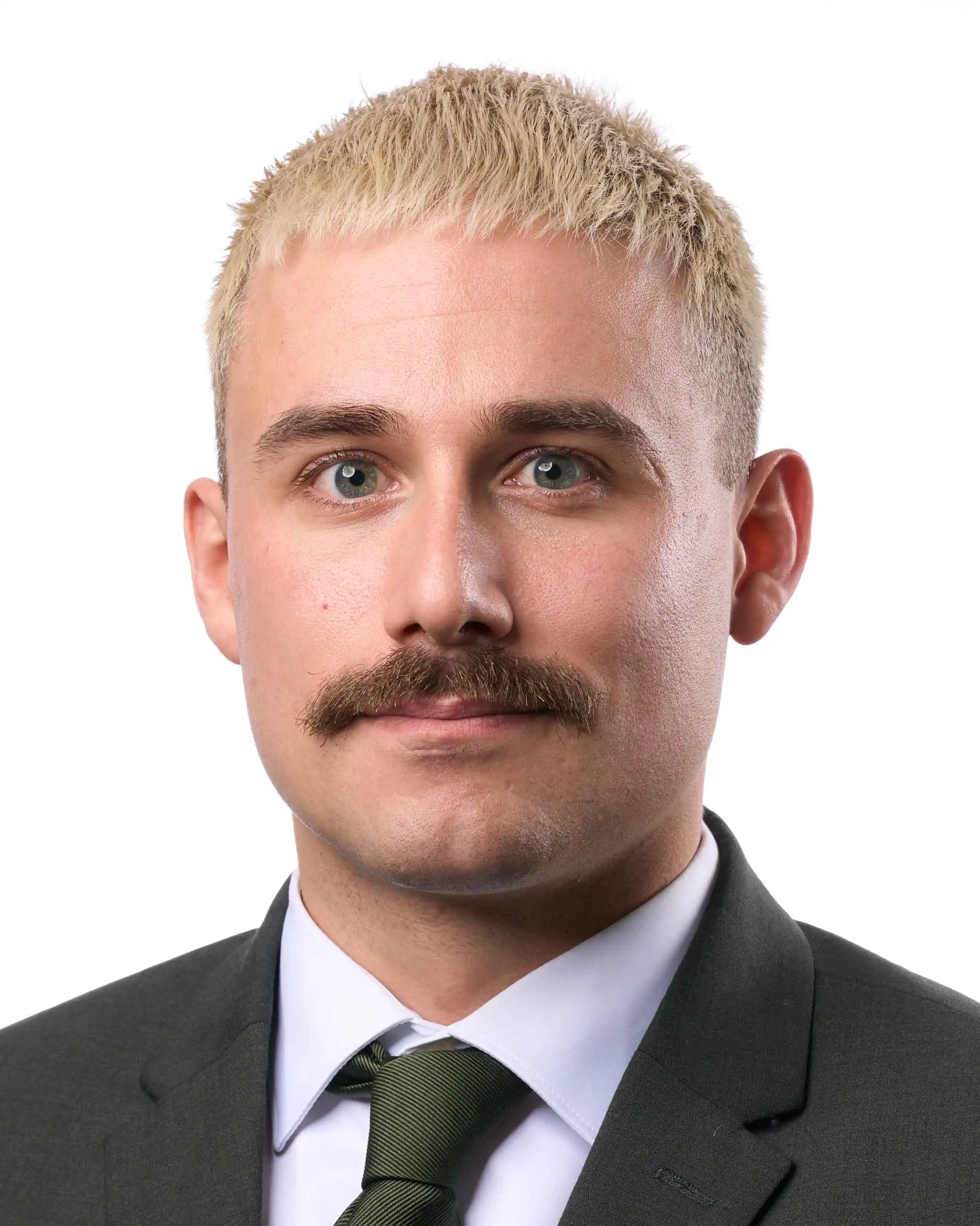
Lukas Sieper | Germany DEU | Non-attached Members (NI) | 390 |
| 2 |
|
Juan Fernando López Aguilar | Spain ESP | Progressive Alliance of Socialists and Democrats (S&D) | 354 |
| 3 |
|
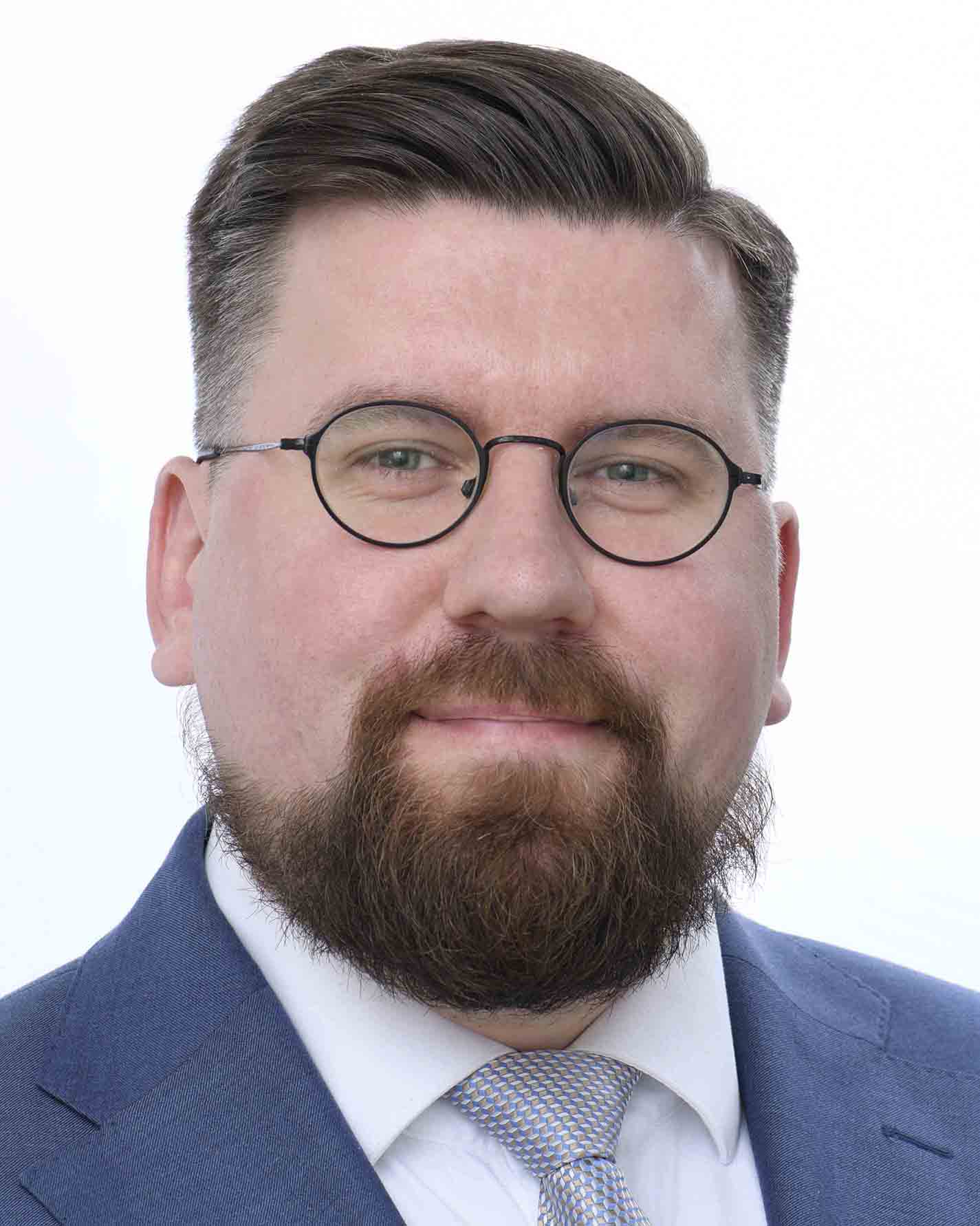
Sebastian Tynkkynen | Finland FIN | European Conservatives and Reformists (ECR) | 331 |
| 4 |
|
João Oliveira | Portugal PRT | The Left in the European Parliament (GUE/NGL) | 232 |
| 5 |
|
Vytenis Povilas Andriukaitis | Lithuania LTU | Progressive Alliance of Socialists and Democrats (S&D) | 227 |
All Contributions (80)
Need to fight the systemic problem of gender-based violence in Europe (debate)
Mr President, thank you very much. Commissioner, I'm sorry. Once again we are meeting in this House and once again we are discussing how to tackle the problem of violence against women. And it is very sad that so many European women and children are affected by this problem. More than 62 million women over the age of 15 have experienced physical or sexual violence, not to mention economic violence. Ladies and gentlemen, unfortunately, the latest estimates show that more than two-thirds of victims do not report this crime because of fear, stigma or simply because of a lack of support. Economic inequalities, lack of adequate education and insufficient support for victims appear to be key problems. We need to speed up our actions. In particular, women in rural areas, where traditional gender roles and economic dependency create additional barriers for women seeking help, need support. The fight against violence against women is not only a legal obligation, but also our moral obligation. And I believe, and I want to believe, that in this term of office, Commissioner, we will be able to adopt legislation that helps women and stigmatises and punishes perpetrators and protects victims.
European Disability Card and European Parking Card for persons with disabilities - European Disability Card and European Parking Card for persons with disabilities for third country nationals legally residing in a Member State (joint debate - Disability cards)
Mr President, thank you very much. Commissioner, I'm sorry. Equality and the right to free movement are fundamental principles enshrined in the Treaties of the European Union and the Charter of Fundamental Rights of the European Union. Unfortunately, people with disabilities often cannot benefit from them due to the lack of availability of adequate services, as well as the existence of barriers that hinder their daily functioning and movement. I am convinced that the establishment of the European Disability Card and the updating of the European Parking Card for persons with disabilities, on which I have had the pleasure of working as shadow rapporteur of the Committee on Transport and Tourism, will contribute to the elimination of obstacles and improve travel conditions and, through the mutual recognition of disability status, will ensure access to parking services and facilities throughout the European Union when staying in another Member State on the same basis as nationals of that State. I am pleased that we will be able to adopt these rules before the end of this legislature. We owe it to those we represent in the European Parliament. (The President took the floor)
Combating violence against women and domestic violence (debate)
Mr President, thank you very much. Commissioner, I'm sorry. Equality between women and men, a Europe free from violence against women and girls – this is what we strive for in our work in the European Parliament. And it is a shame, ladies and gentlemen, that in the 21st century we women have to fight for our rights all the time. It is a shame that in the 21st century women and girls are affected by different types of violence. And it is a shame that in the 21st century we still see political resistance to fight violence and to include rape on the list of EU crimes. However, ladies and gentlemen, I would like to stress that the outgoing term of the European Parliament has been one of the most successful in terms of our efforts to achieve equality and combat violence against women. We have done a very good job in the Committee on Women's Rights and Gender Equality. Never before has the voice of this committee been so loud and audible as it is now. I would like to congratulate the rapporteurs who have devoted a lot of effort and commitment to these difficult negotiations. In particular, I would like to thank my colleague Frances Fitzgerald for her determination, strength and tireless fight for women's rights. I believe that this directive, despite the inadequacy of the fact that, as I said, some Member States have blocked certain legislation, for example on the criminalisation of rape, I believe that this is a good step in the fight for better protection of women's rights and protection of women against violence. I and our entire group will vote for this directive Once again thank you very much girls for your work.
Driving licences (debate)
Madam President, I'm sorry. Commissioner, I'm sorry. Ladies and Gentlemen, The Driving Licence Directive from the Committee on Transport was adopted with only one vote. Twenty-two MEPs voted in favour, twenty-one against. This shows how much controversy she has. I believe that we, as representatives of the people of Europe in the European Parliament, should create solutions that facilitate, simplify and reduce bureaucratic burdens that respond to needs, challenges and opportunities that remove existing barriers and increase security. And that is exactly what I was guided by when I was working on this directive on behalf of the EPP Group. I am pleased that during the work in the Committee on Transport it was possible to reject many controversial amendments or regulations, and to adopt those that are expected in Europe, such as the introduction of a digital driving licence or the concept of a temporary driving licence, which will allow European Union citizens to obtain a certificate that will be valid throughout Europe, which confirms the right to drive in the event of loss or theft of a driving licence. Unfortunately, as a EPP group, we cannot agree with mandatory medical examinations, especially if they are based solely on age and not on objective health conditions as the only form of verification of fitness to drive. We strongly support the recognition of existing diverse national systems, often more economical and effective. Nor can we agree to the introduction of an EU penalty point system. This is contrary to the Treaties, to the principle of subsidiarity. As EPP, we support proposals that make it easier for young people to enter the labour market as drivers, subject, of course, to strict conditions. Ladies and Gentlemen, I believe that in the votes we will reject socially unacceptable amendments, and we will accept those aimed at improving safety, digitizing, increasing the number of drivers and facilitating especially for young drivers. Finally, I would like to thank everyone for their cooperation and I hope for a good vote, because this is also what the people of Europe are waiting for, and I do not want many of our voters to be discouraged from the European Union through our decisions, because we are opening the door to those who are opposed to the European Community.
Ensuring European transportation works for women (debate)
Thank you very much, Commissioner, for the positive conclusions and for noticing that change is needed and that there should be no such barriers in today's world at all. Ladies and gentlemen, I would like to thank all those who took part in the debate today, as well as those who worked on this report, very much. I am pleased at all that this debate has taken place today and I firmly believe that change is possible and that safe and sustainable transport is the key to success in many aspects. Once again, I will say why it is so important that transport meets the needs of women. We have emphasized here in the debate (or have we emphasized) that women make up more than half of the population. Statistically, we are more likely to deal with children, the elderly, the sick, more often we use public transport and more often we are exposed to attacks, exclusions and various dangers, including harassment. Women's safety in public transport, the removal of barriers, accessibility should be the norm in today's world, not a challenge. Unfortunately, I think we still have a long way to go, although I think that if we push hard, explain, we will significantly accelerate the changes. Ladies and gentlemen, let me stress once again that if more women work in the transport sector, especially where decisions are made and where solutions are found, then as a society we will not encounter absurd barriers and exclusions. And let me reiterate: the more women planning infrastructure and logistics policies and solutions, the more efficient, greener and more user-friendly transport will be. So I believe that after today's debate, many of the barriers and problems that we all agreed on, which I am very happy about, we will be able to remove the obstacles faster together, which I wish for all of us here women and Europeans.
Ensuring European transportation works for women (debate)
Madam President, I'm sorry. Mr. Commissioner, I'm sorry. Ladies and Gentlemen, The report that I am presenting to you today touches on a very important social topic and comes after many years of work in the Committee on Transport and the Committee on Women's Rights. I am also pleased that this topic - transport that meets women's expectations - is one of the priorities of the Spanish Presidency. I think it is symbolic that this report will be adopted by the European Parliament just before the announcement of the Gender Equality Index 2023 with regard to the implementation of the Green Deal and especially the socially just transition in the two energy and transport sectors. Ladies and Gentlemen, the report consists of two parts, it deals with women as, on the one hand, users of different means of transport and, on the other hand, women employed in this sector, and the barriers we women encounter in both aspects. In the report, I stress that if European transport meets the needs of women, it will actually meet the expectations and needs of society as a whole. Changes and challenges in the transport sector, reduction of CO2 emissions, exclusion of the centres of one hundred European cities from car traffic by 2035, alternative low-emission drives, transport solutions - in short, more advanced, sustainable green transport must take into account the needs of all users. It is therefore necessary to adapt public transport to the needs of women, taking into account the fact that it is we, women, who travel most often – with children, shopping or accompanying people with disabilities. Therefore, it is also necessary to improve the safety of public transport, because all statistics show that 90% of all cases affect women. We are the victims of crime, theft and violence, including sexual violence in public transport. We must also tackle the phenomenon of transport exclusion, which also affects women, especially those living in rural and remote areas. We must not allow the transition to low-emissions to make the use of transport a luxury good. If we want more people to use bicycles and other sustainable solutions, we need to ensure that we have the right infrastructure. We must also not forget about women, about the safety of women in passenger vehicles, because I do not know if you are aware that in crash tests dummies are still used that do not take into account the anatomy of women. It's time to change that. As we move on, ladies and gentlemen, to the issue of employment in the transport sector, we see how it is dominated in all its dimensions by men. Transport policy is developed by men, so they naturally adapt the sector to their needs, which makes it not an attractive place to work for women. Security, stereotypes and gender discrimination are still the biggest barriers to women's employment. Research shows that the more women planning transport policies, infrastructure and logistics solutions, the more efficient, greener and friendly transport. For this reason, the report focuses on how to actively involve both genders in creating a better working environment and removing barriers to women's employment. Change is necessary and possible, and I firmly believe in it. Finally, ladies and gentlemen, I would like to thank all my fellow shadow rapporteurs for all their valuable comments, substantive discussion and cooperation. And I would like to extend a special thank you to my assistant Agnieszka Przyborowicz.
Regulation of prostitution in the EU: its cross-border implications and impact on gender equality and women’s rights (debate)
Mr President, thank you very much. Commissioner, I'm sorry. Prostitution always involves violence against women. The victims are children, teenagers, people in poverty, fleeing the war or not knowing the language. Prostitution is not only sexual services that take place in public homes. It is also a very dangerous virtual world, of which younger and younger people are falling victim. The available data show that the vast majority of all women in prostitution are victims of human trafficking, and the victims are very often refugee women who, fleeing the tragedy of war, experience another tragedy. Instead of the expected help, they go to public houses all over Europe. That is why, well, I am very happy and I thank those who have taken up this subject, this difficult subject, and I am glad that we here in the European Parliament are demanding a response from all the Member States. I am glad that we are focusing on support programs, exit from prostitution, reintegration and education. I also believe that we must fight those who try to perpetuate and promote such socially harmful behaviour. Ladies and Gentlemen, This report can only be criticized by those who use the services of prostitutes or who earn huge amounts of money from prostitution. I think we should support the Nordic model, which decriminalizes women in prostitution and criminalizes people who buy sex. I also understand and am aware that there is no perfect solution, that there are also people who consciously choose such a path, but as I emphasize, we cannot allow such behavior. More and more often we hear that nothing has happened, that some women decide on this path themselves. It is always a tragedy, a misfortune, and a woman who has no choice decides to take such a final step.
Council of Europe Convention on preventing and combating violence against women and domestic violence – EU accession: institutions and public administration of the Union - Council of Europe Convention on preventing and combating violence against women and domestic violence - EU accession: judicial cooperation in criminal matters, asylum and non-refoulement (debate)
Madam President, I'm sorry. It is appalling that domestic violence against women and children continues to be justified in some Member States today in the 21st century. Instead, she protects the embryos with all her might, looks into our bedrooms, makes decisions for a woman that sometimes lead to her death. In my country, only one in ten women report sexual violence to the police. The same goes for other types of violence. The statistics look very good, and the facts? Every year, hundreds of women lose their lives and thousands are raped and beaten. ‘Let’s protect children from sexualisation from the West’, ‘Let’s protect children from sexual education’, some politicians shout. I have never heard the same politicians shout, ‘Let’s protect children from paedophiles!’ And often children are used as a campaign bat, when real dramas take place at the same time in schools and in homes. The state, the administration, the institutions and the environment that should respond are deaf and blind. As a result, we see a huge wave of depression and suicide among women, adolescents and increasingly younger children. And infamous statistics of tortured and killed in the comfort of the home toddlers. It's terribly sad. If the state and the institutions established by the state do not act and do not react, then the adoption of the Istanbul Convention by the entire European Union may be the only means of any change and the only effective means of combating violence.
Women activism – human rights defenders related to sexual and reproductive health and rights (SRHR) (debate)
Madam President, I'm sorry. Ladies and Gentlemen, It is sad that once again from this place we have to speak, remind and call for the defence of human rights in the area of sexual, reproductive and health rights. Yesterday, Justyna Wydrzyńska was sentenced by a Polish court to 8 months of community service and found guilty of helping with a pharmacological abortion that did not take place. One can get the impression that this process had a political dimension, hitting activists and human rights defenders. Once again, I ask the question: How much does it take to hate women in order to condemn them to trauma, suffering, life-threatening situations, and often to give up pregnancy in the face of legal consequences and lack of choice? Why do so many politicians want to be women's consciences and why do so many of them claim the right to make decisions for us? And why do these politicians support so many other women? I don't get it. I hope that our work here in the European Parliament on solutions to protect women from violence in the broad sense will put an end to the suffering of many women and bring the perpetrators to justice. I also believe that with the great support of women, it will be possible to change those governments that not only do not support our rights, but even disregard them. From this point of view, I would like to thank all the activists, especially in my country, who are fighting for democracy, freedom and human and women's rights.
Council of Europe Convention on preventing and combating violence against women and domestic violence: EU accession (continuation of debate)
Madam President, I'm sorry. It is a shame that so many communities turn a blind eye to violence against women. It is a shame that so many member states are not dealing with it, and the police, prosecutor's office and courts often ignore the problem, showing not only a lack of empathy, but also ignorance of the rules to protect women from abusers. And maybe when we realize that the perpetrators of most acts of domestic violence are not men on the margins, but those enjoying the impeccable opinion of their environment, often politicians, presidents, doctors, judges, policemen, then maybe we will understand why we are in this place, why it is so difficult to fight violence and why so many are against the ratification of the convention. From this point of view, I would like to thank the rapporteurs, but above all NGOs in Poland, in my country and also in Europe, who raise awareness, educate and fight violence. And I hope that the European Parliament will send a strong signal to all of us in this House: zero tolerance for perpetrators of violence.
CO2 emission standards for cars and vans (debate)
Mr President, thank you very much. Who wants to make Europe dependent on China, on Chinese production, to make Europe dependent on rare metals, mostly mined in countries with a very unstable political situation? It also raises another question: Do politicians in the United States, for example, have less knowledge and do they have a different view of environmental protection because they do not want to impose such great solutions as electric cars on their companies and their society? Ladies and gentlemen, we are all aware of the importance of reducing CO2 emissions, of the importance of the path to climate neutrality. We are all in favour of putting in place measures that will enable us to go this way and achieve the goal, but I also believe that this should be done in a realistic, technologically neutral and socially responsible way. Today we have a question: can European society afford electric cars? No, ladies and gentlemen! Do we have a sufficient network of charging stations, powered by green energy? No, ladies and gentlemen! And finally, I am nowhere, and I also asked this question at the transport committee, do we have data, honest data that tells us what is the CO2 emissions in the entire production process, the disposal of electric cars? We do not have this information, so please, I will not support this report.
New developments in allegations of corruption and foreign interference, including those related to Morocco, and the need to increase transparency, integrity and accountability in the European institutions (debate)
Madam President, I'm sorry. If you are a politician, you should know what ethics and standards are and follow them. If you don't know how to behave, behave decently. How can you fight, Ladies and Gentlemen, for the rights of women and LGBT people and at the same time take bribes from countries that are far from complying with these standards? This is hypocrisy. And it is sad that now we all have to be ashamed of our colleagues and really be subject to such a kind of collective responsibility and negative assessment by voters. It is worth being decent and honest, but I also want to say, Ladies and Gentlemen, that if someone is not such a person, that if someone is a bribe, that if someone loves money and they are a standard setter for him, then his behavior will not change any regulations and no directives. Just as the penal code does not protect society from perpetrators of violence, rape, crime, theft.
Gender balance among non-executive directors of companies listed on stock exchanges (debate)
Madam President, I'm sorry. Despite the changes taking place on the European labour market, despite many ideas to remove barriers that limit the advancement of women, stereotypes in the assessment of our competence are still noticeable. Still, women experience the glass ceiling and perception through the prism of parenting, which limits our professional development. Many, including in this House, recognise that it is artificial and counterproductive to draft legislation that seeks equality, to create equal opportunities between women and men. I do not agree with this approach, because when we look at women's education and competence, we see that women have achieved incredible progress. Unfortunately, this does not result in the use of our potential, abilities and skills. It is a loss that affects the economy and society. This is a waste to which there should be no further agreement. The project we are talking about today is primarily about equal opportunities, about a fair selection process for the highest positions. There is no preference for any group. I know we have a long way to go. It took ten years before we started this discussion and to make a decision today. But changes are necessary and I believe that the implementation of this directive is a good start for changes in the wider economic area.
Fighting sexualised violence - The importance of the Istanbul Convention and a comprehensive proposal for a directive against gender-based violence (debate)
Madam President, I'm sorry. Commissioner, I'm sorry. Ladies and Gentlemen, In the 21st century, violence and rape cannot be allowed. In the 21st century, victims should be protected, not perpetrators. And it is not the victims of rape and violence who should be afraid to report a crime. Criminals should be afraid of punishment. In the 21st century, there should be a clear definition of sexual abuse and rape in all EU countries. Victims should not be forced to answer questions about whether their clothing, makeup or appearance provoked the perpetrators. In the 21st century, it cannot be that victims prefer to remain silent than to report a crime. 90% of crimes of a sexual nature are not reported, and in the remaining ten only one in four cases ends in a sentence for the perpetrators, usually on probation. Strong legal instruments and a zero-tolerance policy support and protect women. The ratification of the Istanbul Convention and the criminalisation of gender-based violence in the European Union are steps that we must take without delay. Unfortunately, I am also aware that changes can only take place with the support of men, and today they are like a cure in this room. I hope we feel that support. Finally, I would like to say applause to those countries that have ratified the Istanbul Convention and applause to President Kopacz here, who had the courage to ratify the Istanbul Convention in Poland when she headed the government.
Sustainable maritime fuels (FuelEU Maritime Initiative) - Deployment of alternative fuels infrastructure (debate)
Mr President, thank you very much. Commissioner, I'm sorry. Ladies and Gentlemen, Electrification and decarbonisation of transport is a key element of the Green Europe Plan. However, we must remember that no transport operator and no consumer will invest in a low- or zero-emission vehicle if they are not sure that they are able to operate it according to their needs, which means being able to charge quickly. So if we want to convince European citizens to move to e-mobility, charging cars should be as easy as refueling today. When we look at the statistics and the number of charging points, we see that we have a lot to do. We must also remember that there are countries where most of the electricity still comes from coal. Therefore, meeting these regulations in today's socio-economic and political situation may prove to be very problematic. But we have to take this situation into account. I therefore agree, support the report and congratulate the rapporteur. I agree with the Commissioner, who said that we need very ambitious but achievable and achievable objectives.
Binding annual greenhouse gas emission reductions by Member States (Effort Sharing Regulation) - Land use, land use change and forestry (LULUCF) - CO2 emission standards for cars and vans (joint debate – Fit for 55 (part 2))
Mr President, thank you very much. Ladies and Gentlemen, Today's debate and today's vote can certainly be called a new industrial revolution, because the decisions we will make will have a huge impact and significance for European industry and the economy. Today, there is no doubt that it is our responsibility as a European society to protect the environment, to protect the climate, to reduce fuel consumption and, consequently, to protect the health and life of European citizens. But to achieve this, we must propose solutions that are feasible for the Member States and socially acceptable, because only then will we achieve our objectives. We must also remember that Europe and European society are still struggling with the consequences of the COVID pandemic and the consequences of the war in Ukraine. We must therefore, while protecting the environment, keep European companies, European industry and European jobs in mind. That is why I propose trajectory B in the Effort Sharing Regulation. It is also ambitious, but allows Member States some flexibility, predictability and a safety buffer to achieve their objectives. We also recently voted on the Climate Law, which says that Europe achieves climate neutrality by 2050 collectively, collectively, and not as proposed by the ENVI Committee, each Member State individually. Because, as rapporteur Polfjärd said, each country has a different level of development, different capabilities, opportunities and a different level of GDP... (The President took the floor)
Building of a wall on the Polish – Belarus border in the Białowieża primeval forest (debate)
Madam President, I'm sorry. Commissioner, I'm sorry. The security of the European Union's borders is extremely important and everything must be done to strengthen them. There are always costs in these situations. When we look at the war in Ukraine, sanctions are also at the expense of us, the people of the European Union. In the case of border surveillance, such a cost may be, for example, interference with the environment. The fundamental question, however, is whether the planned construction of a wall on the border with Belarus, with all its controversies, including interference in a valuable natural environment, and ambiguities, including financial ones, will deter potential refugees? I dare to doubt. An example is the wall on the U.S.-Mexico border. Has he restricted refugees or those who want to cross borders illegally? No – it may have only extended the time of crossing or changed the location of the border insignificantly. I would also like us to remember that there are also women and children on the border with Belarus. I stress women and children. I'm not talking about men. And they too are fleeing the war, which is often the responsibility of the same man, Putin. Remember that people live in the border area. Residents, who until now lived only from tourism, conducted tourist economic activity, today are deprived of this possibility. Entry ban for journalists – ladies and gentlemen, journalists can enter Ukraine, where they are in danger of being killed, and there is a ban on the border with Belarus, and the argument is that, for the sake of their safety, they cannot stay there. This raises many doubts, ambiguities. They should be all checked, explained. But the most important thing - this is the last sentence - is to prepare and develop common European solutions, long-term and effective.
The impact of the war against Ukraine on women (debate)
Mr President, thank you very much. Commissioner, I'm sorry. The war in Ukraine has a woman's face. Women and children make up nearly 90% of the nearly 5 million refugees. It is women who help as much as they can, taking on their shoulders to evacuate, protect and support their families, and on an equal footing with men, reach for their weapons and fight on the front. It is women and girls who are most often victims of war: are raped, tortured, killed or transported deep into Russia. They are also victims of human trafficking. The world sees it and Europe sees it. And I think that today, from this place, we have to tell Ukrainian women that crimes and deeds will be written down and remembered, that criminals will be judged and held accountable. Ladies and Gentlemen, we must also bear in mind that the enthusiasm for aid – and this is noticeable – is slowly declining. Inflation and the economic situation are draining portfolios, for example in Poland, which has received the most refugees. Local officials say they are running out of money. Therefore, from this place, I once again appeal to the European Commission for direct and targeted support for local government, for NGOs and for ordinary people, because they are on the first front of aid and support for all Ukrainian refugees.
Impact of Russian illegal war of aggression against Ukraine on the EU transport and tourism sectors (debate)
Mr President, thank you very much. Peace, freedom, security and democracy are invaluable, and the war in Ukraine is the best example of this. One of the victims of the war and of the necessary sanctions, as the Commissioner has said here, is the transport sector. It is therefore necessary to carry out an economic and social assessment and to strengthen and provide adequate financial support to the sector in order to ensure its smooth functioning in the internal market of the European Union, but it is equally important to support the transport sector in Ukraine. Another casualty of the war, which we must not forget, is the transport sector. Tourists refrain from travelling to certain Member States for fear of the consequences of the war, such as Poland, Romania, Slovakia, Bulgaria or the Baltic States. Despite these problems and despite COVID, which has also affected this industry, the tourism industry actively supports refugees from war-torn Ukraine and does what it does best, i.e. organizes transport, provides accommodation and food for hundreds of thousands of Ukrainian citizens. Therefore, from this point of view, I appeal to the European Commission for financial support for the transport sector and the tourism sector, but also for direct financial support for local government units, especially in Poland, because this local government supports and helps refugees from Ukraine at the expense of its income. This is a huge burden on local government budgets and they do not really have financial support and assistance out of nowhere.
The deterioration of the situation of refugees as a consequence of the Russian aggression against Ukraine (debate)
Mr President, thank you very much. Today is a holiday for Ukrainian women, because some of them are fighting for the freedom of their homeland on an equal footing with men, others are fleeing, leaving their homes to save their lives and those of their loved ones. Others mourn the deaths of their children. And I cannot understand why the world supports criminals, people who, out of fear, hatred, lust for power and wealth, are able to create a hell on earth for others. The heroism and courage of President Zelensky and the Ukrainian people should be an indication of how to behave with dignity. And the governments and politicians who feed Putin, who do not want to apply sanctions, do not behave worthily. On the other hand, thousands of Poles and thousands of Europeans behave worthily, those who open their hearts and their homes. And from this place I would like to thank the inhabitants of my Subcarpathian region, which borders Ukraine, for your heart, support and help. Local government officials, volunteers, NGOs, as well as those who support Poles in this help given to Ukrainians. Today there are over one million women and children in Poland. They need home, security, school, work, the support of psychologists. They also need information when their life returns to normal, and it turns out and probably everything indicates that it will not return quickly. That is why today I appeal to the European Union, to politicians, to go with help, with real help. Financially support local governments, organizations, volunteers and ordinary people. Without money and political decisions, there will only be more pain and tragedy. Thank you very much! Fame to Ukraine!
The EU priorities for the 66th session of the UN Commission on the Status of Women (continuation of debate)
Mr President, thank you very much. Gender equality is one of the fundamental values of the European Union. I think we can confidently say that we are a leader in promoting this idea, through which we strive for security, peace, economic growth or environmental improvement. There is no doubt that there are links between gender and climate change and environmental challenges. All studies and data show that women and children are the main victims of conflicts, climate change and disputes over natural resources. On the other hand, the full and equal participation of women in political and financial decisions, including those concerning sustainable development and the fight against climate change, has a significant impact on the positive effects of the measures taken. And while women are increasingly influencing economic change, entrenched social attitudes are slowing it down significantly. Women's rights are being questioned in many places, restricting access to the labour market, education, health care. Violence against women is widespread, including sexual violence, which has been further exacerbated by the COVID pandemic. However, I hope that the implemented strategies and programmes, I hope that the attitudes of the young generation, I hope that the activity of many NGOs, which I would like to thank from this place, and I hope that the responsibility of wise politicians will increase public awareness and contribute to solving the problem of inequality and supporting positive changes and transformations.
MeToo and harassment – the consequences for the EU institutions (debate)
Mr President, thank you very much. Once again in the European Parliament, we are discussing the problems and tragedies that affect women. This is very sad, because it shows how difficult it is to change social attitudes and social consents and what courage it takes to say ‘me too’. The courage of some gives courage to others. I think that the MeToo civic movement and the global campaign, which showed the scale and prevalence of sexual harassment against women, the courage of women on the front pages of newspapers who said ‘me too’, gave courage to other women, also here in the European Parliament and in the EU institutions. It would seem that every public person, politician, employer or supervisor should know where the joke ends and harassment begins, where the thin line is. But research and data show a sad picture. They show that the perpetrator always defends and protects another perpetrator, that the victim is often blamed, and that having power and lack of consistency emboldens the perpetrators. I agree with those who say in this House that there can be no consent here in Parliament, or in the institutions, or on the road, or at work, or anywhere else, for a woman to feel uncomfortable and for someone to be allowed to be harassed. I will support mandatory training, because I believe that it is our duty to do everything to counteract such situations. But we must also be aware that training alone is not enough if there is no social criticism of such a person and if there are no consequences, both professional and social, that will be borne by the perpetrators. And taking advantage of the fact that this is the last day of Parliament's proceedings before Christmas, I would like to offer all the inhabitants of my Subcarpathian region, a difficult region, my country – Poland – and all the inhabitants of Europe healthy peaceful holidays and joy and hope in the new year.
EU response to the transport poverty (debate)
Mr President, thank you very much. Commissioner, thank you very much. People affected by transport poverty have limited access to goods, services or social capital, which in turn limits their life chances. And yet work, home, education, shopping or health care are essential mobility in our lives. Transport poverty usually affects older people, people with disabilities, women, children, poor people or people living in remote areas, with limited access to public transport. Removing all transport barriers, and therefore poverty and exclusion, should therefore be a priority for the European Union's social policy. The changes and proposals being prepared should take into account the deteriorating economic situation of a large part of the population of the European Union, caused by successive waves of COVID and rising prices of fuels, goods or services, as my previous speakers have already talked about here. We should also take into account the public perception of the proposed solutions and the energy transition process, which may limit or already limit confidence in these regulations, because they may result in additional financial burdens for households. We must also remember, Commissioner, that even the best proposals, such as low-emission cars, for example, are still too expensive for a large part of society, and even special incentives will not change that. If we want to move to a low-carbon economy and achieve climate neutrality, we must remember that this cannot be done at the sole expense of the people of the European Union.
Equality between women and men in the European Union in 2018-2020 (debate)
Madam President, I'm sorry. The Treaties of Rome introduced the principle of equal pay for equal work. 65 years later, we still have a problem. Why is that? Most decisions are made by men. And if they do not understand that women should be in the right position in society, if they do not support our aspirations and aspirations, then we can have dozens of conversations in this House, in the national chambers, and 65 years will pass, and the problem will remain unresolved. In addition, the pandemic has slowed down these upward trends in women’s position in the labour market. More and more men – and I say this with regret, because there are many great men, including politicians – many men would see a woman in this social role in the kitchen, at home, with children, without ambition, because often many men cannot stand the fact that a woman is as good as a man, can occupy the same position and can manage large companies or governments. Take a look at the governments of the countries of the European Union: How many women are there? It shows how far the road is ahead of us. Nevertheless, I hope that the directive on which work is underway will not, Commissioner, be stuck in the Council like the directive on women on boards, because really then we can only continue to discuss it. This directive is absolutely, absolutely necessary. This is what I call on all Member States.
Combating gender-based violence: cyberviolence (continuation of debate)
Madam President, I'm sorry. How weak it takes to hide behind the anonymity of the Internet to humiliate, frighten, insult and discredit women. I suppose that many of us politicians have experienced this situation, and I experience it very often, as do millions of women in Europe and around the world, and the COVID-19 pandemic has only exacerbated this phenomenon. We must be aware that regardless of the form of cyberviolence, it always causes a feeling of helplessness and loneliness and lowers one's self-esteem, just as in the case of violence experienced in the real world. Therefore, there cannot be our consent to such a situation. I am convinced that we need coordinated action in this direction, which will eliminate online violence and make millions of women in Europe feel safe online. Educational measures are needed, including those raising public awareness, as well as legal solutions that will be a tool to effectively fight those who commit this violence. And I am glad that this discussion is taking place here in the European Parliament, because I get the impression – and I hear it often from women – that in many countries of the European Union women are increasingly deprived of proper support and protection.