
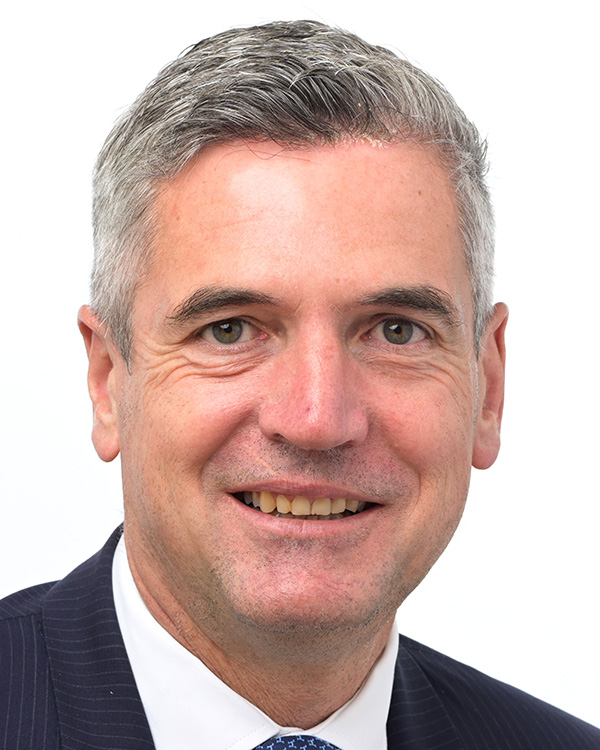


| Rank | Name | Country | Group | Speeches | |
|---|---|---|---|---|---|
| 1 |

|
Lukas Sieper | Germany DE | Renew Europe (Renew) | 487 |
| 2 |

|
Juan Fernando López Aguilar | Spain ES | Progressive Alliance of Socialists and Democrats (S&D) | 454 |
| 3 |

|
Sebastian Tynkkynen | Finland FI | European Conservatives and Reformists (ECR) | 451 |
| 4 |

|
João Oliveira | Portugal PT | The Left in the European Parliament (GUE/NGL) | 284 |
| 5 |

|
Vytenis Povilas Andriukaitis | Lithuania LT | Progressive Alliance of Socialists and Democrats (S&D) | 273 |
All Speeches (80)
Madam President, ladies and gentlemen. Food is important for our survival, for our health, for our well-being. Food is not only energy, but also enjoyment, especially when it is of high quality. Now we have a strategy and, Commissioner, you said it, that strategy must then be transformed into legislation. And as soon as we get proposals for it, we expect a proper impact assessment. But I also think, having listened to the debate here, that once again we did not talk about the Farm to Fork strategy. We talked about the farm. We are always stuck in agriculture. We are not talking about the responsibility of the industry; we are not talking about the responsibility of trade; We don't talk much about the responsibility of the customer. If the strategy is already called "farm to fork", then we should talk about "farm to fork" and not only about "farm". We must also stop perpetually denouncing agriculture and farmers on this continent. Yes, there are things that need to be improved. But there are also hundreds of thousands of farmers who do an excellent job every day, who know how to produce food and do so sustainably. Because I can guarantee you: The farmers are the first to think sustainably and see that they pass on their land properly to the next generation. Only if we succeed in finding a common approach here will we be able to inspire young people for agriculture. If we do not come with this know-it-all that I sometimes hear in this house, but simply try to go a new way with farmers, then we will ultimately be successful. Then we will also inspire young people to enter agriculture. And if we don't succeed, then everything we do here is wasted love effort anyway.
Madam President, Commissioner, ladies and gentlemen! The Commission presented its Farm to Fork strategy almost a year and a half ago, and we have worked very hard here in this House in recent months to find a report, an answer to this strategy. And I would like to begin by thanking my co-rapporteur Anja Hazekamp and the shadow rapporteurs from all the political groups for the very intensive work and also for the constructive cooperation that we have had here in recent months. I think that when it comes to this and when the goal is to make the food chain in Europe as a whole higher quality and to make nutrition more balanced and also healthier, then we find a great deal of agreement here. But unfortunately the strategy presented by the Commission – although it aims to look at the entire food chain from farmer to table – very often remains stuck in agriculture. All numerical reduction targets – wherever one has really set numerical targets – concern agriculture, and indeed there would be many things in the whole chain – I am thinking of trade, I am also thinking of consumers – where one could also set much more concrete targets. I am thinking, for example, of the distribution of value added along the chain, where it is very clear that agriculture is coming under increasing pressure and trade is cutting out the increasingly larger part. But still: It goes without saying that reduction targets are also important and correct in agriculture – when it comes to plant protection products, when it comes to fertilisers, when it comes to antibiotics. We need alternatives to what is happening today. For us to have alternatives, we need research and development. And these alternatives must also be available in agriculture. A balance needs to be struck between food safety, security of supply on the one hand, and the pursuit of greater sustainability on the other. I believe that the COVID-19 crisis of recent months, of the last year and a half, has shown the importance of food sovereignty on our continent and in the European Union. Let me say something very clear here: Since the beginning of this year, the Commission has had at its disposal a study commissioned by itself and carried out by the Commission's Joint Research Centre. This study dealt precisely with this question, and obviously the results of this study in the Commission did not suit everyone. This study, although we have asked several times, has not been published by August of this year, and I think that, Commissioner, is a gross foul. This is not the way to deal with Parliament. I can't do that. If we want to discuss honestly and transparently, then we must have all the facts on the table. That was not the case in this case. I am also really sorry that part of this House has refused to discuss this incident in more detail in this House. I think transparency is not only good if it fits into everyone's concept. But still: We have mentioned many things in our work, in our report – many things from the point of view of agriculture, the link with the common agricultural policy, the question: How can sustainability be brought to agriculture as a whole, not only with organic farming, but also? What is the role of integrated crop protection, for example? – all things that are important to achieve our contribution to climate objectives. But above all, there is a very important element, and that is the consumer. The consumer will ultimately decide with his purchasing decisions whether this strategy will be successful. Every day, as soon as he goes to the supermarket, he decides what he buys and how he leads this strategy to success.
Reforming the EU policy on harmful tax practices (including the reform of the Code of Conduct Group) (debate)
Date:
06.10.2021 16:42
| Language: DE
Speeches
Mr President, ladies and gentlemen, Commissioner Gentiloni! The recent events we have just discussed, the Pandora Papers, have shown very clearly how urgently we need to take action when it comes to tax fraud, evasion, abuse and even tax optimization. In the area of corporate taxation, further restrictions are needed, especially for larger, internationally active companies, which exploit differences and deviations in individual tax systems in order to pay as little tax as possible. This practice is unfair. Above all, it harms small and medium-sized enterprises, which we always want to defend. This is because they cannot simply move the tax domicile to a place where less taxes are incurred. And they don't have the chance to create any sophisticated control structures. The Code of Conduct for Business Taxation remains an important instrument of the European Union to prevent precisely these harmful tax practices. I believe – and I fully agree with you, Commissioner – that the Code needs to be revised and modernised. Globalization, digitalization, and the increasing importance of intangible assets are opening doors to new opportunities for evasion and optimization, and this has nothing to do with fairness. This is not about preventing legal tax competition between states, and this is important to my group, but simply about implementing a responsible tax policy in the European Union. Nor do we support an unrestricted extension of the scope of the Code of Conduct to include income and wealth tax on a flat-rate basis. The Code of Conduct Working Group has done a good job so far. It now needs to be further developed and the code itself needs to be further developed. In this sense, my group will also support the report, and I would like to thank the rapporteur very warmly for the good cooperation over the last few weeks and months.
Pandora Papers: implications on the efforts to combat money laundering, tax evasion and avoidance (debate)
Date:
06.10.2021 15:50
| Language: DE
Speeches
Madam President, What you have come to know in recent days under the title Pandora Papers demonstrates the importance of the work we have been doing here for years, including in the FISC special committee. Immediately afterwards, we will discuss a report on tax optimisation and tax evasion in the European Union, which I myself worked on. Of course, it must also be said that the mere fact that someone invests money abroad is not a crime in and of itself, as long as it is not proven that this is considered tax evasion. That's why we shouldn't make hasty convictions in the Pandora Papers, which are still up to the courts. In my opinion, however, the situation is explosive if someone illegally or on the fringes of the law collects money from the EU budget and then invests tax-free in tax havens. Andrej Babiš, the Czech Prime Minister, who collects subsidies in the mid-double-digit million range from the EU Agricultural Fund every year, seems to have had to repay at least 11 million euros at the moment because they have been obtained unjustly, and has now apparently invested part of this money in tax havens. This is, in my opinion, double theft. This is first theft to the European Union and then theft to one's own taxpayers and to one's own citizens, whom he presides over, where he does not pay the taxes. We also have to think about this in our own legislation on the common agricultural policy. It is not possible for our agricultural funds to be handled in this way.
Assessing the Union’s measures for the EU tourism sector as the end of the Summer season nears (debate)
Date:
05.10.2021 21:35
| Language: DE
Speeches
Madam President, ladies and gentlemen. It is, of course, regrettable that drastic travel restrictions during the COVID pandemic have restricted the free movement of people and have, of course, harmed tourism, which is dependent on the free movement of people. Unfortunately, we – and also the Commission – have not been able to find a uniform approach here and to oblige states to introduce uniform rules. Of course there was also a lot of nationalism, also a lot of egoism. The slogan ‘take a holiday at home’ is not very European, and some states have deliberately introduced rules to prevent people from travelling. One example, which is unfortunately far from positive, is that of the EU Digital Travel Form. I believe that the Commission has drawn up a good model for this. Three Member States out of 27 have used it so far. The other Member States use their own models, which is anything but a European approach. But it doesn't help at all if we just look back now. We need to look forward. We are just a few months away from a winter season. The last winter season has completely failed in parts of Europe, and we must now also give new hope to the surgeons. Travelling doesn't get more dangerous because you're crossing a border. We need to know that tourism is an elixir of life, especially for many rural areas in Europe. We have to make sure that this elixir of life flows again and these regions get back on their feet.