


| Rank | Name | Country | Group | Speeches | |
|---|---|---|---|---|---|
| 1 |

|
Lukas Sieper | Germany DE | Renew Europe (Renew) | 487 |
| 2 |
|
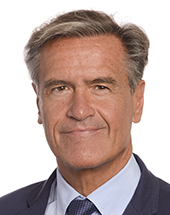
Juan Fernando López Aguilar | Spain ES | Progressive Alliance of Socialists and Democrats (S&D) | 454 |
| 3 |

|
Sebastian Tynkkynen | Finland FI | European Conservatives and Reformists (ECR) | 451 |
| 4 |
|
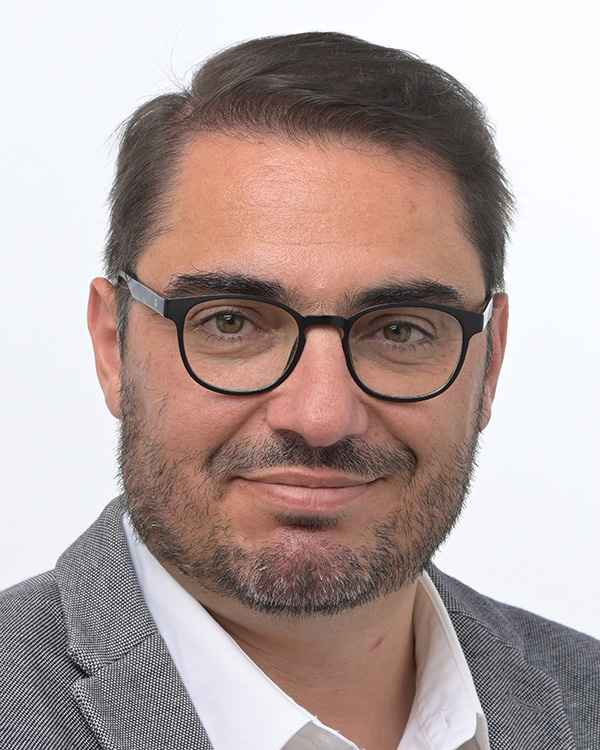
João Oliveira | Portugal PT | The Left in the European Parliament (GUE/NGL) | 284 |
| 5 |

|
Vytenis Povilas Andriukaitis | Lithuania LT | Progressive Alliance of Socialists and Democrats (S&D) | 273 |
All Speeches (23)
Withdrawal of the Union from the Energy Charter Treaty (debate)
Date:
23.04.2024 18:55
| Language: EN
Speeches
Madam President, Commissioner, we all agreed that the current Energy Charter Treaty (ECT) is outdated and is not compatible with the EU Green Deal objectives, and that is why the EPP has always supported the EU collective exit from the ECT, but linked to the modernisation of the treaty. Unfortunately, two years ago, political conditions for the ECT modernisation at the Council and at the EP level did not exist. Now, the new approach proposed by the European Commission opens the possibility for the EU to withdraw from the ECT. Parliament is expected to give its consent for the Council decision on the withdrawal and the EPP is supportive of the withdrawal decision of the Council. For the modernisation to take place during the November ECT Conference, Member States wishing to stay in the ECT should not prevent its modernisation. We expect the Council to accept this approach and hope that this agreement regarding the authorisation procedure will not become a stumbling block for those states that would like to remain members of the modernised treaty. We also understand that the Commission and the Council will take into account the fact that after the notification of the withdrawal, the EU will have only one year of grace period. We also expect to be informed as soon as possible about the inter se agreement.
Deepening EU integration in view of future enlargement (debate)
Date:
28.02.2024 19:12
| Language: EN
Speeches
Mr President, Vice-President, Commissioner, colleagues, it was a pleasure to work on this report at this time. European enlargement policy is a powerful tool to promote democracy, the rule of law, respect of fundamental rights. It also gives the EU a stronger voice on the world stage. For aspiring countries, a credible, merit-based prospect of EU membership is the key driver of transformation. Striving to join the European Community, they see the EU membership as a geostrategic investment in prosperity, stability and security based on common European values. Becoming part of the largest single market in the world opens doors for businesses to expand, innovate, invest and create new jobs. Recent rebooting of the enlargement policy after the aggression of Russia has a geopolitical logic. It will expand the democratic space on our continent and make it clear to Russia what is our preferred political order in Europe. But there are risks. The end of the war is unpredictable. We failed to isolate Russia globally, and we must spare no effort to avoid a decline of support for Ukraine. European enlargement has always been a ‘win-win’ situation for the Union and the newcomers. To ensure it this time, the EU must make its institutional and structural frameworks fit for purpose. The EU has committed to stand with Ukraine every step of the way towards the end of the war and the accession. We expect from the Commission to step up the efforts and proceed swiftly and timely with all the phases of accession process, and provide the negotiating framework by mid-March. Indeed, history is watching us.
Unitary supplementary protection certificate for plant protection products - Unitary supplementary certificate for medicinal products - Supplementary protection certificate for plant protection products (recast) - Supplementary protection certificate for medicinal products (recast) - Standard essential patents (joint debate - Patents)
Date:
27.02.2024 13:12
| Language: EN
Speeches
Mr President, Commissioner, dear colleagues, I speak on SEPs as rapporteur of the opinion for the International Trade Committee. We have thoroughly examined the proposed regulation, focusing on global competition and the Union’s geopolitical, economic, trade and security-related interests. In INTA’s view, the regulation is not well balanced with respect to the role of patent owners and implementers. It also risks violating EU obligations under the WTO and affecting our strategic partnerships. The new measures may reduce innovation incentives and European companies’ revenues, opening up the space for state-sponsored Chinese firms to thrive, especially in military equipment. We need to take more time to find a better balance for the text. We should maintain the positive elements such as the FRAND determination, the transparency register and the competence centre, but they should be accompanied by rebalancing measures that are not in the proposed text, such as, for example, removal of the aggregate royalty provisions, the introduction of a dedicated stakeholder group and of a more credible timeline for implementation. I believe that the SEP Regulation deserves further scrutiny and a proper impact assessment, consulting European patent authorities and striving for a better balance of measures to safeguard Europe’s global innovation and standard-setting role.
Amendments to the Markets in Financial Instruments Directive (MiFID II) - Amendments to the Markets in Financial Instruments Regulation (MiFIR) (joint debate - Markets in financial instruments regulations)
Date:
15.01.2024 19:28
| Language: EN
Speeches
Madam President, I would like to thank all the colleagues for their remarks, and I would also like to thank all the shadows for their work, which was not easy, if you remember, and for their cooperation throughout the negotiations on this important file, and also for building a compromise which I believe is good for Europe. Let me say again that the MiFID review comes at a critical time for the Union, and the consolidated tape will be a key element of our efforts to ensure that private investment is channelled into the economy efficiently. We also hope we will have an attractive ecosystem for new listings and a more efficient trading landscape. I expect it will boost investment activity, making the Union's markets easier to navigate and more attractive, including for small investors. Tomorrow's vote marks the beginning of the work for the implementation of the regulation. ESMA has already announced that by the end of this year, it will launch the public tender for the first consolidated tape for bonds, which will become operational as of 2025, and the Commission – as Commissioner Nicolas Schmit said – has begun already its work to make the reference data for derivatives more transparent and meaningful. So the work at level two will then continue for the next couple of years. The CMU for quite some time has been a key political project aimed at reducing dependence on bank funding and overcoming national differences, but it was a project that too often lacked the political will and momentum to drive the vision of a robust and integrated capital market union forward. But it was not the case in this review where, thanks to the strong support of all political groups in Parliament and of the Commission, we were able to secure an agreement that is a great success for the Parliament. This House has shown once more that we continue to show the ambition to push towards the creation of a truly single capital market union for the benefit of all European citizens. Given the positive outcome and the strong endorsement at the ECON Committee level, there were only two abstentions. There was no negative vote and nobody was against. I would like to invite all the colleagues to vote in favour of the Interinstitutional Agreement tomorrow.
Amendments to the Markets in Financial Instruments Directive (MiFID II) - Amendments to the Markets in Financial Instruments Regulation (MiFIR) (joint debate - Markets in financial instruments regulations)
Date:
15.01.2024 18:56
| Language: EN
Speeches
Mr President, I was running the last kilometre but I hope I will be able to do it, so thank you very much for this opportunity to remind us about the MiFIR and MiFID. Tomorrow we will vote to endorse the interinstitutional agreement on the review of the Regulation and Directive on the Markets in Financial Infrastructure. The changes to both MiFIR and MiFID modify the rulebook governing participation in European capital markets, which play a fundamental role in channelling capital to the real economy. We need to ensure that our economy grows strong and remains competitive as there are long term challenges around. Europe requires more than EUR 500 billion of additional investment funding annually to ensure its sustainable competitiveness and resilience. This is not a mere financial challenge. It is a strategic imperative. Yet we remain dependent on bank-based financing while our capital markets are lagging behind. They are fragmented, which contributes to the inefficient allocation of capital. The once vibrant landscape of initial public offerings – IPOs – now stands at less than half the size of the US new listings. The US stock market's value relative to GDP is nearly twice that of the EU. Many in this House will remember that we embarked on building the Capital Markets Union back in 2015, but the project was tailored to the EU of 28 Member States with a major financial centre across the channel, and the focus was on national capital markets rather than on the removal of cross-border barriers. We need urgently to move away from fragmented capital markets and towards the idea of a capital market union. Advancing towards a truly single and vibrant capital market union is of fundamental importance for European open strategic autonomy. This context to the MiFIR and MiFID review, which had four key objectives: to reduce market fragmentation and market data costs; to harmonise and simplify the transparency rules; to enhance the levels of investor protection; and to increase the attractiveness and competitiveness of EU markets. I can proudly say that the text that we will vote on tomorrow achieves all these objectives. Thanks to the assertiveness of our House, for the first time, Europe will have a consolidated tape, a database designed to democratise access to market data and improve data quality by providing a continuous electronic live data stream on prices and trading volumes, consolidating the information obtained from multiple trading venues across the EU. It will reduce the fragmentation and cost of market data, will empower financial institutions and retail investors to observe in a single place the price and volumes for shares, ETFs, bonds or derivatives in the Union. The discussions on the consolidated tape were the most difficult part of the package, due to divergent views on the exact features that this new market infrastructure should have. In the review, we have also taken a careful look at the functioning of the market transparency rules in the Union, as well as in other jurisdictions. We put forward changes that seek to increase the competitiveness of EU firms, supported by the simplification and harmonisation of the transparency rules applicable across Europe. We have introduced greater flexibility in the framework by empowering the European Securities and Market Authority to set the thresholds and limits applicable to market transparency, and to oversee market developments, intervening when required. The harmonisation and simplification of transparency rules should strengthen the level playing field between all market participants and increase the overall transparency of European market structure. The report also mandates the Commission to carry out a holistic assessment of the financial markets legislation with respect to commodity derivatives, in light of the learnings from the energy crisis. To conclude, thanks to the efforts of the negotiating team, to whom I am really grateful for the openness, the final text contains many of the elements that the Parliament was calling for throughout the negotiations, and I believe that the final compromise represents a great victory not only for the Parliament, but for all those who care about the importance of the European Capital Markets Union.
Opening of negotiations of an agreement with the United States of America on strengthening international supply chains of critical minerals (debate)
Date:
13.09.2023 18:03
| Language: EN
Speeches
Mr President, Commissioner, dear colleagues, negotiations with the United States on the critical minerals agreement are a major step to address some of the EU concerns about the Inflation Reduction Act, and contribute to increasing the extraction, processing and hopefully recycling of critical raw materials in the EU, in particular those of a strategic nature. They can also impact supply-chain dependencies with China, especially when it comes to critical materials and products that are needed for the digital and green transitions, and are of critical importance for EU supply chains. If we are not watchful, the EU runs the risk of switching addictions from Russian fossil fuels to Chinese raw materials. I trust that no efforts will be spared to ensure the best possible outcome of the negotiations. Thank you, Commissioner, for some good news. I agree with Mr Lange: it will be important that the final agreement covers all 50 minerals listed in the Inflation Reduction Act. I strongly regret that the scope of the mandate sought by the Commission does not cover recycled raw materials. The EU should push for the inclusion of recycling in the scope of negotiations. I trust that concluding the deal before the end of the year will be feasible and would allow the EU critical raw materials to qualify for the US clean vehicles tax break. Of course, the CMA would only remedy the concerns – though big ones – that the EU faces under the Inflation Reduction Act. In the Inflation Reduction Act, there are more provisions with negative repercussions on the EU industry that go beyond the CMA and which are not compatible with WTO rules, or unfairly disadvantage EU companies on the US market. Let me conclude by urging the Commission to keep engaging with the US Government to address all our outstanding concerns. We also expect an agreement that will be fully in line with the goals of the EU Critical Raw Materials Act, promote fair competition and facilitate EU—US trade.
Amendments to Parliament’s Rules of Procedure with a view to strengthening integrity, independence and accountability (debate)
Date:
11.09.2023 19:10
| Language: EN
Speeches
Madam President, let me start by strongly agreeing with President Roberta Metsola that the transparency of our actions as the institution and the individual Members is crucial to regain citizens’ trust. We are about to vote on the outcome of the work in AFCO regarding changes to the rules of procedure and, again, I share the views of President Metsola, who said that she wanted to go further, but the new rules will also serve as a deterrent. And as a member of the Advisory Committee, I would like to support the proposal of AFCO regarding more detailed rules on some aspects of the work of the Advisory Committee. The committee has always believed in the importance of preventing rather than punishing. The committee was convinced about the need to revise the Code of Conduct for Members to increase the clarity of the rules and precision of the contents on the ethics and transparency obligations impending upon Members. We were also in favour of changing the title of the code to go beyond the focus on financial interests. And, to conclude, let me also inform you that the committee has always had, since 2010, the right to invite outside experts with independent advice when assessing cases of alleged breaches of the Code of Conduct while keeping full confidentiality. And this, I believe, is important.
Madam President, Commissioner, the issue we are discussing today is how to maximise the EU’s potential of financing the real economy, generating growth and responding to future challenges. And the scale of the challenge is clear. The Commission estimates that only to realise the green and digital transition, Europe will need additional investments of EUR 645 billion every year for the next decade. This capital can only come from private investment channelled to the best use through efficient capital markets, which Union is lacking. They remain fragmented and small. This reduces market liquidity and the efficiency of capital allocation. It affects as well European SMEs, undermining their efforts to scale up and become competitive in the internal market and internationally. That is why, in shaping the European capital market, we should spare no effort to simplify the legal framework, reduce the administrative burden that companies face and make them grow and be more competitive. The introduction of consolidated tape will increase the visibility of smaller firms, boost their attractiveness for investors and facilitate the development of local exchanges. It is therefore rather frustrating to see that some Member States do not support the efforts to accelerate the creation of deep and liquid capital markets, boost growth, drive innovation and ensure a level playing field for all markets participants. We should continue our efforts to complete the European banking and capital market. unions and our political calendar should be an incentive to speed things up.
Mr President, the review of the Stability and Growth Pact is not only about bringing back a reinvented pact with strong enforcement, including the rule of law mechanism, allowing for progressive consolidation of public finance and investing in the future. There is much more than a macroeconomic angle to it, and recently implemented reforms should be incorporated into the governance framework. Sustainability of the debt is fundamental in the long run, but in parallel we need to strengthen the role of fiscal policy in shifting Europe away from its business model, and use public investment to boost changes to the way we run Europe and its structural change. We are now pivoting to a completely different world and we need to focus collectively on economic resilience and security without abandoning the competitiveness perspective. There is a need to move away from strategic dependencies without switching to new ones. With a growing risk of a global subsidy race, smart use of public money becomes a bigger challenge than ever, and European public goods are crucial when national economies suffer from limited fiscal space, when you cannot just cut the debt but grow your way out of debt, and when a broader group of actors have to be brought into this pivot towards a different world.
Madam President, colleagues, I am among those who see the introduction of the digital euro as a meaningful opportunity for Europe. I see it as well as a chance to strengthen the international role of the euro. The important question for me is whether the EU should focus its efforts on modernising the digital form of the euro for a wholesale purpose, or implement a retail digital euro first. At present, discussions in the euro system seem to be mainly focused on the retail option, but addressing the wholesale version could be easier and quicker as it would concern large—value payments, and these are common amongst euro system banks and counterparties which already have the necessary infrastructure in place. With the exception of China and a few others, our global counterparts are focusing on the wholesale version of the digital currency. For both options, interoperability with other currencies will be a key aspect. CBDCs can make cross-border payments cheaper, faster and more efficiently settled compared with current payment systems. Making the digital euro usable for cross-border payments will significantly increase its international attractiveness. I also think that it is critically important that the regulatory framework for the digital euro is fit for the future. That implies that the regulation that the Commission will present and the infrastructure that the ECB will build should not stifle future innovation, but rather be flexible enough to accommodate and incentivise future technological changes. To this end, it is fundamental that European Union authorities draw on the knowledge and experience of the private sector and provide them with a framework that they can leverage to develop new value—added services for citizens and businesses.
Failure of the Silicon Valley Bank and the implications for financial stability in Europe (debate)
Date:
15.03.2023 15:09
| Language: EN
Speeches
Madam President, the failure of SVB is attributable to the bank’s mismanagement and its particular risk profile. However, the bank’s mismanagement went unnoticed because the bank was not captured by the regulatory scrutiny, as it was not under the scope of prudential rules. This is why, while the ultimate fault rests with the bank itself, there are important lessons for the regulators and two in particular. First, that the politically motivated watering—down of prudential rules and safeguards must be avoided, and also agreed international standards should be implemented faithfully and promptly. After the 2008 crisis, the Dodd Frank Act defined banks with 50 and more billion dollars in assets as systemically important and subject to the strictest scrutiny. But in 2018, the Trump administration raised this threshold five times. Conveniently, SVB stayed just under the 250 billion in 2021 and 2022, escaped regulatory scrutiny, and the lack of liquidity caused the bank’s demise. The second message: I trust that in the review of the EU’s crisis management and deposit insurance (CMDI) framework, we will ensure that mid-sized banks do not become a source of systemic risk. And we need an ambitious review of the CMDI framework promptly. With today’s rules, if we had a similar situation, the ECB would not have the same capacity or the same tools to intervene as the US authorities. Our banking union remains incomplete and that’s why I hope that the Commission will include the ECB’s recommendations on the CMDI revision, including a bigger role for deposit guarantee schemes. But we all know that what we really need is an agreement on this.
Implementation report on the Agreement on the withdrawal of the UK from the EU - The Windsor Framework (debate)
Date:
14.03.2023 20:44
| Language: EN
Speeches
Mr President, Vice—President Šefčovič, colleagues, I agree with you, Vice—President, we are at the beginning of a new chapter in the EU—UK relations, this time hopefully based on trust. With the Windsor framework, we have a set of practical solutions to the implementation of the Northern Ireland Protocol. The deal will lower the cost of doing business and settle the flow of goods from Great Britain into Northern Ireland without breaching EU single market rules. It strikes a careful balance between facilitations for the UK and effective safeguards for the EU single market. It brings the Northern Irish economic, political and civil society stakeholders into the framework. Now we must set in stone this agreement in principle as soon as possible, and the Commission urgently needs the mandate to adopt the framework at the next EU-UK joint Committee meeting. I hope that the agreement will open the path to solving other pending issues and that the Northern Ireland Protocol Bill will be promptly and fully withdrawn, as promised by the UK Government. It is noteworthy that the Windsor framework does not address citizens’ rights, which are subject to the withdrawal agreement and are covered by Pedro Silva Pereira’s implementation report. As of December 2022, under the settlement scheme, 181 000 EU citizens were still waiting on a decision on their pre-settled status, most of them for more than six months, uncertain about their immigration status and the reunification of their families. It is positive to hear that the UK Home Office will not appeal the UK High Court’s December 2022 ruling, according to which the Home Office had wrongly interpreted the withdrawal agreement. I hope the Home Office will take all the necessary steps to swiftly apply the ruling, communicate it effectively to EU citizens and not deprive citizens of their rights under the withdrawal agreement. Finally, I hope that the implementation of the UK’s EU Retained Law Bill will not undermine the UK’s obligations under the withdrawal agreement, including the protocol, and the TCA not damage the enforcement mechanism.
Outcome of the modernisation of the Energy Charter Treaty (debate)
Date:
09.11.2022 17:31
| Language: EN
Speeches
Mr President, colleagues, in my view the question we should be asking ourselves is if we were to leave, when should we do it? We have three options ahead of us: withdrawing now; modernising and staying in the treaty; or withdrawing after the modernisation of the treaty. If we withdraw from the ECT now, taking into account that the EU is the leading force behind the modernisation process, the ECT will not be modernised. This implies that EU investments would be subject to old ISDS rules for 20 years. Member States’ existing investments in fossil fuels will remain under the ECT’s protection system for 20 years. Even if we have an inter se agreement among Member States, intra—EU cases under the ECT could continue to be legally brought. What would be the benefits of a modernised ECT? It explicitly forbids intra-EU disputes. This is, I think, the safest legal way to ensure that arbitrators cannot continue to allow intra-EU disputes. It explicitly protects our right to regulate and provides for the space to adopt ambitious climate policies. The modernised ECT is aligned with the Paris Agreement. It is the first ever investment agreement to end the protection of fossil fuels. If the ECT Conference approves the modernisation on 22 November, then by 15 August 2023 all new investments in fossil fuels will no longer be protected under the ECT. For existing investment in fossil fuels there is a ten—year phase—out. This means the EU would stop protecting all fossil fuel investments as soon as 2032. The modernised treaty would also incentivise European renewable energy companies to invest in other contracting parties’ territories. If we live under a modernised ECT, new and existing fossil fuel investment will not be protected during the 20—year sunset clause. The sunset clause would in reality will be down to ten years. Intra—EU cases will still be forbidden and green investments will remain protected. We should take, in my view, all the necessary steps to modernise the ECT, and the best way is modernising and coming back to the question of leaving when the modernised treaty is in place.
The UK government’s unilateral introduction of the Northern Ireland Protocol Bill and respect for international law (debate)
Date:
06.07.2022 13:15
| Language: EN
Speeches
Mr President, the Northern Ireland Protocol Bill is not a trivial set of adjustments, as Prime Minister Johnson described it; it is a near-complete unilateral rewrite through domestic law of a binding international treaty voluntarily entered into by the UK Government. This is a clear breach of international law. The bill would grant UK ministers extraordinarily wide discretionary powers to implement their alternative to the protocol without negotiating with the European Union. Some of the so-called fixes would actively undermine the unique status of Northern Ireland, depriving it of the best of both worlds. We must remember that the protocol provides access to the EU internal market for the goods coming from Northern Ireland. The bill brings major risk to this access. The UK Government needs to accept responsibility for the protocol and return to the negotiating table as soon as possible. It is not too late to avoid new local elections in Northern Ireland and increased legal uncertainty.
The call for a Convention for the revision of the Treaties (debate)
Date:
09.06.2022 10:03
| Language: EN
Speeches
Mr President, Commissioner, colleagues, I would like to strongly support our call for the convention and raise three points in this context. First, European treaties codify our past. They, of course, also reflect lessons learned from problems we faced together and overcame or not. But they should also give us effective instruments to cope with the challenges of tomorrow, and that is why treaties need changes. For the years to come, we will need a legal framework that will offer a more unified European jurisdiction, leave no space to populist political forces undermining European foundations, allow us to be more proactive, hopefully also less prescriptive and more principle-based. Of course, thinking ahead requires political will, strategic vision, but also a lot of political courage. And my second point is that the good news here is that aiming towards treaty change, we will not be starting from scratch. The one-year-long debate in the framework of the Conference on the Future of Europe and citizens’ engagement offer a vision of a Europe caring about democracy and the rule of law, competitive internationally, climate-friendly, socially sensitive, providing security and able to build global alliances. The moment is, indeed, as many of you said, unique. As for this treaty change, we have brave and pragmatic citizens with us. And the last point: our resolution will send a strong political signal about the need of changing European treaties in all areas that will make the Union fit for the future. And the Conference has proven that a convention is the best path towards the new treaties the Union needs.
The follow up of the Conference on the Future of Europe (debate)
Date:
03.05.2022 18:59
| Language: EN
Speeches
Madam President, I hope we all remember that before the conference started, at the beginning, we committed ourselves to deeply engage in it and also to deliver on its outcome. And now we simply need a good plan to transform its conclusions into a real change. And I have two major takeaways from this unprecedented public dialogue, which might be useful. First, on the value of the process itself, let me say that the more citizens are engaging also emotionally, the more ambitious, courageous and future-oriented were the ideas about the future of Europe. One can also say that the long awaited European demos has been born and it must not be lost. I think participatory democracy worked. And my second takeaway is that during this conference, citizens have called for ‘more’ Europe. And I read it as a demonstration of the trust and faith in us, as an expectation that the Union that was brought closer to them, thanks to the conference, will remain close and caring. The conference, through well-structured, thoughtful conclusions, prepared a core of reform packages. And European institutions, Parliament, I hope the Commission, Madam Commissioner, also the Council will work now on their implementation. We could see during the last plenary the commitment of all institutions in this regard. The conference, through the way it worked and the conclusions it provided, paved the way towards European Convention in the meaning of Article 48. And that implies that we need to take the conclusions and start working on potential treaty change content and do what is our right and duty within Article 48. So I trust we learned from this conference how to build the future of Europe in the most participatory way possible.
Update from the Commission and Council on the state of play of the Energy Charter Treaty modernisation exercise (debate)
Date:
24.03.2022 10:24
| Language: EN
Speeches
Mr President, with energy prices that were already on the rise before the war and now with the illegal, tragic and insane invasion of Ukraine by Russia, and taking into account the impact of sanctions, the modernisation of the Energy Charter Treaty (ECT) is happening under a different light and with regained momentum. We have to bear in mind that key provisions of the Treaty have remained unchanged since the 1990s. It is also today the most litigated investment agreement in the world. Provisions are not up to par with modern standards, especially those on the protection of investments. So I support the efforts undertaken by the Commission to negotiate provisions that reflect the EU’s reformed approach on investment protection and its firm intention to conclude the negotiations in June. In the event that the negotiation is inconclusive, I would like to strongly encourage the Commission to consider and prepare the option of a coordinated exit from the ECT that would take into account our current geopolitical context, mitigate the effect of the 20 year sunset clause and alleviate, to the extent possible, the negative impact on the security of our energy supply.
Gender mainstreaming in the European Parliament – annual report 2020 (debate)
Date:
08.03.2022 21:58
| Language: EN
Speeches
Mr President, in this House, we know how important equality and representation are for democracy. We also note that inclusive leadership is good for the quality of decision-making and, with 40% women among our membership, the European Parliament represents inclusive leadership in European politics. But we also know that some political parties in this House do not accept any inclusivity, including in terms of gender. The context for the equality we have to look at today includes COVID consequences, insane Putin’s aggression, long—term gender gaps in many areas of our lives, and the conclusions of the recent report on the Recovery and Resilience Facility (RRF) implementation. This context tells us that the need for progress on all gender fronts remains fundamental. We also see with more clarity that progress can only be achieved through binding measures. Fortunately, as co—legislator, we have the tool in our hands. Colleagues, now, in the time of multiple challenges, we must remain particularly vigilant. There are risks of reversing the EU’s gains, its shift in gender equality over the last two decades. What was a largely supported achievement 10 years ago, the Istanbul Convention, is questioned today in some political parties, in particular in central European countries, where ruling parties reject even the word ‘gender’, and we heard it tonight. This anti—gender attitude means that gender equality is rejected as a recognition of human rights for women. We should include these issues in our dialogue with national parliaments. The EU has always been seen as a global champion in gender equality, largely due to the commitment of the European Parliament. As we see that political commitment to gender equality cannot be taken for granted, we count on the engagement of the Commission, and our House should strengthen its role as guardian of gender equality.
Assessment of the implementation of Article 50 TEU (resumption of short presentation)
Date:
14.02.2022 21:57
| Language: EN
Speeches
Madam President, Madam Commissioner, thank you for your comments on Article 50. Now I will present my comments. As you know, Brexit has been an unprecedented process with undeniable political, legal, economic and social consequences. And all European institutions, including the European Parliament, have expressed regret regarding the UK decision, but we respected it. We were strongly convinced that the withdrawal of the UK without an agreement would have dramatic negative consequences, and we felt responsible for ensuring the accomplishment of this process in the best interests of the Union and its citizens. The cross—cutting legal dimension of the whole process with Article 50 as its core was fundamental. This is an implementation report that specifically looks at one article and assesses its operation from the constitutional and institutional perspective, informing the plenary how Article 50 of the Treaty on European Union was implemented in the framework of EU law as a whole. First and foremost, I would like to thank everybody who, in the course of the work on this report, helped preserve the institutional memory of the process of implementing Article 50: the shadows and opinion-givers, but also all colleagues of AFCO, both in the previous and current legislatures; the AFCO Secretariat, all those who provided scholarly input and the Parliamentary Legal Service. The report assesses the way the provisions of Article 50 were interpreted and applied and the way procedures of the withdrawal were organised and conducted under those provisions. The implementation of Article 50 allowed to draw lessons for and reflect on the constitutional order and institutional organisation of the Union. As an exit clause, Article 50 provides rules allowing the withdrawal to take place within the EU legal order, protects fundamentals of the integration process and preserves the interests of the Union. And this test, the article has passed successfully. Its implementation allowed to set out the terms for orderly withdrawal and for disentangling the UK from rights and obligations undertaken as a Member State. The implementation of the article required, however, additional tools to be deployed, going beyond the letter of the article, leading to an active role played by politics. Indeed, Article 50 deals with a confluence of the constitutional and institutional aspects of the process and the role of political constraints. This political component played an important role in protecting the rights of millions of EU citizens in the UK and UK nationals in the EU, and taking into account the special circumstances confronting the island of Ireland. The main guiding political documents were an outcome of high-quality and responsible cooperation between European institutions. Acting in the interest of the Union, they identified core constitutional principles for the process, enriching the EU constitutional identity. During the implementation of Article 50, those principles played the role the Copenhagen Criteria play in case of enlargement, which is protecting EU interests. In short, the core principles ensured that, while changing its membership, the Union could preserve constitutional integrity and autonomy of decision-making. Article 50, supported by Article 218, proved to be an empowering legal provision. Let me can conclude, pointing to the fact that Article 50 involves, as well, the preparation of the post-exit relationship. It implies that negotiated orderly withdrawal gives a chance for a post—exit voluntary partnership. So Article 50, one can say, in combination with Article 8, can provide an integration-friendly outcome.
Plans to undermine further fundamental rights in Poland, in particular regarding the standards of the European Convention of Human Rights and Sexual and Reproductive Health and Rights (debate)
Date:
15.12.2021 18:01
| Language: EN
Speeches
Madam President, last month, the Polish Constitutional Tribunal deemed unconstitutional Article 6 of the European Convention on Human Rights, which says that everyone is entitled to a fair and public hearing within a reasonable time by an independent and impartial tribunal. This is the latest assault on the integrity of European and Polish rule of law. Today, there might be another one. Undermining the standards introduced by the Convention on Human Rights (ECHR) is one of the battlegrounds in the total war against the rights of the citizens. It is a dangerous path to be taken by any democratic state. The European Convention on Human Rights is not just some document. All 27 Member States are parties to the Convention, and the EU itself is currently negotiating its accession. It is a cornerstone of what a democratic political reality should look like, and it is so happening now that when the norms of democratic politics give way to authoritarianism, it is usually women who are first to suffer. Their reproductive rights are questioned and their health is threatened. By issuing its anti-abortion ruling of 2020, the Polish tribunal violated the private space protected by Article 8 of the ECHR. The new government proposal to register all pregnancies and miscarriages in a medical information system is straight from Orwell. Two women are known to have already died in my country as a result of fear induced in doctors by that inhumane ruling. This week, the Committee of Ministers of the Council of Europe called on Poland to execute the judgments of the Strasbourg Tribunal on abortions and to ensure effective access to legal abortions and prenatal examinations. In a letter to the Polish Foreign Minister, the Secretary-General asked Poland to explain how it ensures the effective implementation of its obligations under the Convention. We shall call the Polish Government on that thousands of times, if needed, until it returns to the democratic path.
Multilateral negotiations in view of the 12th WTO Ministerial Conference in Geneva, 30 November to 3 December 2021 (debate)
Date:
23.11.2021 20:56
| Language: EN
Speeches
(inaudible) fit for the 21st century and requires reform to keep the organisation credible, functional, and also relevant. At its 12th ministerial conference the WTO membership must deliver a reform roadmap to proceed with the necessary overhaul of its negotiation, adjudication and monitoring systems. The reforms should integrate plurilateral agreements into the multilateral architecture and provide a straightforward mechanism whereby resulting agreements can be seamlessly incorporated into the WTO rulebook. In this context, the decision of the EU, US and Japan to renew the trilateral partnership to address global challenges posed by non-market policies and to meet on the margins of MC12, is good news. The plurilateral talks on reforming industrial subsidies rules should start now. Such talks can ensure progress in areas not mature enough for negotiations among the entire membership to ensure benefits through the most favoured nation clause extended to all WTO members, allowing the WTO to continue to deliver for people around the world.
Madam President, the Banking Union Annual Report 2020 assesses the situation in the European banking sector and effectiveness of the regulatory measures already in place. It calls for action on missing elements of the system but also considers how unfinished architecture undermines the functionality of the already-existing European Banking Union framework. The focus of regulators, supervisors, central banks, but also legislators, has been on ensuring, on the one hand, the resilience of the banking sector, and on the other, its contribution to the recovery and growth of the real economy. Overall, most European banks have been weathering the crisis well. The two pillars of the Banking Union, the Single Supervisory and the Resolution Mechanism, as well as the robust regulatory framework put in place following the global financial crisis, have made the banking sector better prepared and more resilient to shocks. The temporary regulatory and supervisory relief granted to banks and the capital conservation practices that were applied increased the banks’ capacity to withstand the shock and continue financing the economy. Indeed, one can say that this time around, banks could have been considered as being part of the solution and not a part of the problem. However, in spite of economic policy response with a concerted implementation of fiscal, monetary and prudential measures on an unprecedented scale, economic uncertainty is not gone. European supervisors diligently keep monitoring the situation, especially as public support, including for credit institutions, will be gradually subsiding. Within the single market, as recovery from the impact of COVID proceeds, enhanced integration and consolidation in the banking sector becomes all the more important. Unfortunately, cross-border activity and banks’ appetite to consolidate have remained low. Actually, since the creation of the Banking Union, the degree of cross-border exposures of banks has not increased. A centralisation of tools and funding at EU level would reduce fragmentation and increase the credibility of the overall Banking Union, thereby further enhancing financial stability. Banking Union should provide a fully-fledged framework, with the rules facilitating the free movement of liquidity and capital across the Union, making cross-border activity easier for all banks by bringing down the regulatory obstacles that still impede the emergence of a true single market for financial services in the Union. The lack of a harmonised bank insolvency framework poses challenges to the Banking Union, leading in particular to the inconsistent application of the resolution regime in different Member States. Completing Banking Union is fundamental for the long-term sustainability of the system. In absence of a Common Deposit Insurance Scheme, capital and liquidity remain largely fragmented in individual Member States, as banks are reluctant to move liquidity. A proper risk assessment and capital allocation within the Union and within European cross-border banking groups needs the foundation of a Common Deposit Insurance Scheme. Common standards and solid safeguards for large-scale depositors, as well as ensuring the resolvability of cross-border groups, would provide confidence in the markets. This is particularly needed in the post-pandemic context, where different speeds of recovery are observed across the Union. The European Commission has been reviewing the Bank Crisis Management and Deposit Insurance Framework. The review has been focused on addressing deficiencies in the current framework, in particular related to filling the gap between the resolution framework at European level and national solvency procedures. This is an important concern in relation to small and medium-sized banks, which play an important role in financing the European economy. A complete Banking Union, as well as increased cross-border activity and consolidation, would allow European banks to grow inside the single market and benefit from economies of scale, reducing their costs and thus improving their competitiveness on a global level. The Eurogroup’s current efforts to agree on a step-by-step and time-bound work plan on the issues that need to be resolved in order to complete the Banking Union are still inconclusive. My understanding is that completing the Banking Union remains a priority for the European Commission, as it is for this House – as the report makes clear. Unlocking the potential for fully-integrated Banking Union would allow us to better respond to needs and expectations of the citizens and emerge stronger globally. I also trust that a complete Banking Union would provide an important boost to the Capital Markets Union. The European Parliament remains committed to enhance its efforts and act together with the Council and with the European Commission in reaching an agreement on the remaining issues in the European banking sector, an important contributor to economic and social development. And I’d like to use this opportunity to thank all the colleagues with whom we worked together on this report for their commitment, but also for their ambition.
Mr President, I would like to comment on the responsibilities of the European Union and the US that we share at the global regulatory space. In the ongoing international technological race, it is our joint duty, with like-minded partners, to fly the flag of our democratic values and ethics while shaping common regulatory spaces. The World Trade Organization (WTO) rulebook not only needs to reflect the world that we currently live in, but it also needs to adjust to the future challenges that await us. That is why finding a way to cooperate on reforming the WTO should be amongst our most urgent priorities. Integrating more open and inclusive plurilateral agreements into the multilateral architecture to ensure progress in areas not mature enough for full membership is a way to go. I agree with Executive Vice-President Dombrovskis that a world without a functioning WTO, with a fragmented trading system, would be a worrisome world. We stand in a rare window of opportunity where the European Union and the US can set the foundations of the rules for tomorrow’s challenges. Let’s seize it.