





| Rank | Name | Country | Group | Speeches | |
|---|---|---|---|---|---|
| 1 |
|
Lukas Sieper | Germany DEU | Non-attached Members (NI) | 390 |
| 2 |
|
Juan Fernando López Aguilar | Spain ESP | Progressive Alliance of Socialists and Democrats (S&D) | 354 |
| 3 |
|
Sebastian Tynkkynen | Finland FIN | European Conservatives and Reformists (ECR) | 331 |
| 4 |
|
João Oliveira | Portugal PRT | The Left in the European Parliament (GUE/NGL) | 232 |
| 5 |
|
Vytenis Povilas Andriukaitis | Lithuania LTU | Progressive Alliance of Socialists and Democrats (S&D) | 227 |
All Contributions (138)
The use of Russian frozen assets to support Ukraine’s victory and reconstruction (debate)
Madam President, war is certainly a violation of international law, but also what we are proposing here today and what we are talking about here is, in my opinion, a violation of international law. You yourself have said this, Mr Borrell, that there is some innovative idea that we need to innovate and invent a way to do it, because it is clear to us from the outset that this is not right, and I think that, although I am here in a kind of isolated voice that will say this, we must replace the emotions that touch us all with truly pragmatism and common sense. We cannot replace a violation of international law with a violation of international law. The European Union is not Robin Hood. We are an institution based on the rule of law, on the law and on clear rules and a functioning system. In particular, the certainty of law which the European Union stands for and which it is trying to present is at great risk in this case, and I do not think that, although we might all like to do so, this is the right way to use it. We cannot innovate in this way, Mr President and Vice-President of the European Commission, and I am also very pleased that, in this debate, you have finally acknowledged that the European Union does not have the competence to buy arms, and that is why you have devised a peace instrument so that you can use it, because that is also very important in this debate, we cannot bend the law as we like it at the moment.
Prohibiting products made with forced labour on the Union market (debate)
Madam President, work must be voluntary, working conditions must be adequate and, of course, there must also be a well-deserved reward for these people. Forced labour has no place in the 21st century, and we can already see that even chronic violators of these rules are gradually approaching the rules of the International Labour Organization. If it is standard and prohibits such work. There is no reason why we, as the European Union, should tolerate or stop actually addressing this situation, and we should allow for the possibility that some people and some companies may actually still benefit from forced labour. There is no tolerance at all for companies to talk about not being able to check in their production chain whether there was any forced labour that might have happened during that production. In my view, it is also a very good solution that the European Commission investigates such breaches. If a company violates this possibility and will not be able to prove whether there was any forced labour, because, of course, there will always come first some kind of stimulus, which will certainly have some justification. I don't think that's going to be the way we're going to abuse these companies. Certainly, if we do not use such products, this is our concrete way of combating forced labour ourselves. And I think it is good that we ban it from importing into the European Union if something like this has been produced. We can't afford to buy cheap things because people were abused in making them. We are in the 21st century.
Common rules promoting the repair of goods (debate)
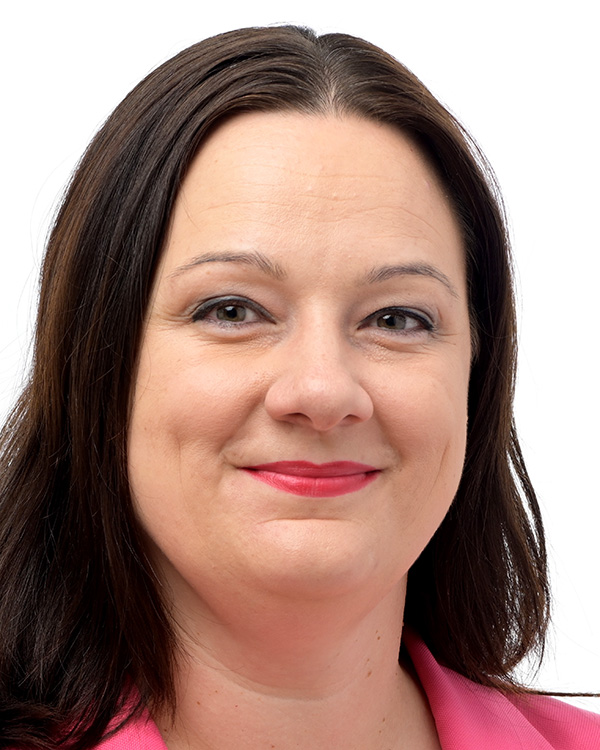
Madam President, I would like to congratulate Mr Répas on a great report and perhaps tell you a little about what I am wearing. This skirt from my sister, but this part is part of the costume from the village of Čeľadice near Nitra in Slovakia, which was worn by both my grandparents and people before them, and it was precisely those generations who valued their resources and all that they had and tried to repair all the things they wore. And today we're going back to the common sense that worked here, and we're really trying to get back to what should have been. If someone buys something, they should have the right to have it repaired somewhere. This will not only create additional jobs on the European market, but will also create additional jobs in factories that produce various spare parts. And I think that this is also the right step to maintain not only the resources that are very limited on our planet, but also that common sense that we must return to. There are people who say that if we have such a right to repair, we will actually make some further progress impossible, or that they will have to store some of these parts somewhere. But you know, when there was also a discussion about, for example, keeping a 2-year guarantee for products that people buy, some people also said that that's why some companies go bankrupt, and basically nothing happened. So I think it's a very good suggestion to give consumers a lot more freedom, and what we buy should have the right to keep as long as possible.
Attempts to dismantle Rule of Law and media freedom in Slovakia (debate)
Madam President, it is such an interesting debate that there is, I think, even up to fifteen MEPs who are interested, even though Mr Hojsík is saying that the whole of the European Union is here. Some who signed up for the debate did not even come to it, so this is how the Slovak Republic and this is your fictional topic of all MEPs. And I think it's completely meaningless again. We transfer domestic issues and domestic debate to the European Union. And here we talk. Not all Slovak MEPs are sitting in this room, because they probably do not consider it so important to protect their country. I think it is good what Commissioner Reynders said. And thank you very much for correcting your position from December last year, for appreciating the approach of the Slovak government and for really having the communication. We don't pretend to do everything ourselves. The Slovak Government has the right, and the Slovak Republic has the right, to pass laws that we think are good for us. And, of course, we are in communication with the European Commission so that these laws are in some correspondence with European law. As my colleague Mrs Benova said, yes, it is at this very moment that the Slovak Government meets with the Ukrainian Government. So all your accusations of some opposition colleagues, how pro-Russian we are, and these stupid things, you have the answer today. At the same time as we sit with Ukrainians and talk about how we are going to help, how we are going to help cross-border cooperation and those people who are fleeing Ukraine. I think that this polarisation of society, which you are demonstrating here, is absolutely inappropriate, and we see that there are already increasing attacks in Slovakia not only on us as coalition MPs, but also on us as coalition politicians, but also among people. And this needs to be stopped. We don't need another enemy. My colleague, who also just left, who spoke in front of me, so neither you nor I think you have been to Slovakia in your life, here you are talking about Fico, whom you have not met in your life. You are making him a demon because you need to think of some other proxy themes before the European elections. But I ask you, don't take my own country, my own state, my own colleagues into your mouth, because you don't know anything about it and you're shaking stupidity.
Cohesion policy 2014-2020 – implementation and outcomes in the Member States (debate)
Madam President, cohesion policy is an investment policy, as someone has rightly said to me just now. I think that this is one of the best policies that the European Union has, and that is why it is very important that we continue to support it and that we continue to leave sufficient funding for cohesion policy, because we see, as someone also said a moment ago, that when you go anywhere in Europe, you have signs everywhere saying that projects are financed by the European Union. Whether it has been in the fields of education, social policy, digital, regional disparities, construction, etc., it is indeed a very successful policy. I would like to highlight for this period, which we are talking about today, the pilot projects that were also on the territory of the Slovak Republic. Whether it was, for example, the transformation of coal regions in Upper Nitra, but also a special project for the so-called lagging, catching-up regions, where there was Prešov and Banská Bystrica self-governing regions in Slovakia, which received special funding just for the transformation of these regions, and as pilot projects we could try different types of policies that can work in these regions. I believe that this policy must continue to be supported, strengthened, but above all combatted in the area of cohesion policy, both against the bureaucracy that still persists in this policy and against the Gold Platingwhich we still have.
A single application procedure for a single permit for third-country nationals to reside and work in the territory of a Member State and on a common set of rights for third-country workers legally residing in a Member State (recast) (debate)
Madam President, the European Union is a place that is both interesting and attractive for talent and for skilled people, including from third countries. And I am very pleased that we are going to promote legal migration to the EU, because that is what we need. There are no illegal migrants who are being exploited, but we need legal people who will come, who we know who they are, what their job skills are, and they can fill those jobs that we have been in for a long time. For example, we need a lot of drivers, drivers, people who can handle, for example, retail cash registers, we need technicians and a variety of other people, not only those who are highly educated, but also those who may be less qualified for jobs that are vacant for a long time and for which Europeans may no longer want or can no longer fill them. I think it is very important in this proposal that we also want to protect these people who come as legal migrants, that they have the labour protection that workers in the European Union also have, because in doing so we will prevent illegal exploitation, dumping of cities, cheaper labour, so that the conditions are really the same for all, and thus we will protect workers also in the European Union. And anyone who comes up with a desire to work should really have the right to stay if he can work for our good, for the good of all of us.
Data collection and sharing relating to short-term accommodation rental services (debate)
Madam President, information for people who use such platforms for temporary housing is, of course, very important. For example, many of us live in some other country, such as Belgium, Brussels, and sometimes we need to rent something for a short period of time or go on holiday and rent accommodation via different platforms, because we do not like to live in a hotel. However, the information provided by these platforms is diverse and not sufficient, which is why I think it is a good step taken by the European Commission and the European Parliament to somehow unify this information and data, to collect it, and to know, in particular, what is happening, where it is happening, and how we can then further protect, in particular, the consumers that matter most to us. I think that we are concerned not only with information, but also with the protection of consumers as such, so that later they can actually claim themselves if they need to protect their rights in some way. Because even today we see that in Slovakia, in Bratislava, there are growing various housing units and complexes, in which most of the apartments, for example, are rented for a short time through different platforms and there are different people living there, about whom we often do not even know much. So I think that's a good step. I will support it and congratulations to the rapporteur.
Deepening EU integration in view of future enlargement (debate)
Mr President, I think the enlargement policy of the European Union is one of the best things we have. However, whoever wants to be a member of the European Union must comply with the rules, as we have all had to do here today. And all countries, of course, must agree to the accession of this country. I think it's a good policy. It is a way of improving life, progress, better cooperation for all people in Europe. I support the enlargement of the European Union to include countries in the Balkans, because I believe that these countries have been waiting for membership for quite a long time and we should make more efforts to help them along this path. However, I am more sceptical about Ukraine and I would like to call on us to avoid making false promises and bending our own rules just to please Ukraine. I think Ukraine's road to the European Union will still be very long, but they really have to go through it like everyone else. Just like all the countries before them. And changing the rules in their favour will not only be fair to the rest of us, but also to those countries that I have just mentioned, such as those in the Balkans. As far as this proposal is concerned, I am very pleased that we are talking again about the European Union Commissioner for Enlargement, because this is one way to help.
Preventing work-related deaths following the Florence tragedy (debate)
Mr President, health and safety at work is very important. And up to 97% of the various accidents that happen in the workplace could be avoided if really sufficient training or safety measures were made, which are sometimes forgotten by employers. People are tired people, they have a lot of work and they do not have enough rest, and therefore sometimes some misfortune can also happen. The greater the problem is if this misfortune is fatal. And I think that any such death is absolutely meaningless and very difficult to explain to the family that will remain after such an employee. People choose jobs. It's not like it used to be. They are no longer slaves who have to work for the company's profits, but people choose where they want to work and choose for a reason. That is why employers should treat them with respect and protect their rights, their work and, of course, their lives. It is all the more important now also to work with trade unions, with representatives of employers who propose very good and positive measures to prevent not only such accidents, accidents, but also to protect the health and life of employees, as this must not be sacrificed at the expense of profit.
One-minute speeches on matters of political importance
Mr President, I will talk about the right to unions. Large foreign companies coming to Eastern Europe and Slovakia feel that they can choose from our legal order what they will respect and what they will not. In my opinion, the law applies equally to everyone. And even a large company, which has thousands of employees, can not choose what it will adhere to and what it will not. It happened to us recently that we had problems in a trade union in a large company, LIDL, and today we have very similar problems in a large organisation, DELL. Dell is an American company that also operates in Europe and has several thousand employees in Slovakia. These employees formed a union three years ago, and when they started making demands or wanted to work in that union, this big company decided to simply fire them. Of the ten members of the union's management, seven are either on notice or have already been dismissed. This is something absolutely unacceptable, and I would also like to call on large multinational companies such as DELL from this place that they cannot choose what they respect and what they do not. The right to trade unions, social dialogue with trade unions is an important part of European law and social dialogue and our democracy.
State of play of the implementation of the Global Gateway and its governance two years after its launch (debate)
Mr President, I think that the Global Gateway proposal or initiative is a very good, correct way for us to actually support the whole world. As the richest, most successful, we also have a responsibility towards other parts of the world, and this infrastructure support is a very good idea for me that the European Commission has come up with. After two years, we can see that it works. I very much liked Mr Bullmann's suggestion that we could extend this cooperation to the parliamentary sphere, and it would certainly be a good and beneficial idea, as this cooperation is based not only on the promotion of energy, digital and transport infrastructure, but also on the exchange of experience and perhaps some good solutions, because together we can make much better progress. I think that this cooperation platform is an opportunity for progress not only for the European Union, but especially for those parts that will work with us in other parts of the world, and we can support the countries that are developing. For example, by promoting not only digital skills but also digital connectivity, we can promote better education, better opportunities for countries outside our territory. But we can also link not only education but also the freedom to reduce regional disparities and support young people in these regions to have better opportunities.
Quality traineeships in the EU (debate)
Mr President, eight months ago in June we had the same discussion on this subject. And when I look around the room, there are the same people sitting here. There was Agnes, there was Alicia, João, Brando, Atidzhe, Seán, all the same people who are still talking about the same thing that we want to support young people in the European Union, and that internships are not a substitute for a job and must not be used and abused by companies to do the work that traditional employees should do. That is why I think it is really time, after years of talking about it, that traineeships should be paid and these people really protected, these young people entering the labour market, it is really time for the European Union to finally do something to ban traineeships that are unpaid. And I am very sorry that it is not only the institutions within the European Union, but also some national institutions that still use traineeship places that are free, because it is really young people who finish some of their education, want to get into the labour market, and many times some kind of traineeship experience is required, so that we do not really put these people in a situation where they still have to pay for themselves from their family budgets to work somewhere. This is indeed unacceptable in the 21st century, and I would like to congratulate Commissioner Schmit on his nomination as a spitzenkandidat for the Socialists, and I believe that you will win.
EU2040 climate target (debate)
Mr President, I would be very interested to know why we came up with such an overambitious goal. When I listen to this debate, it's not funny for most people, but it's just something we disagree with. I think we should focus more on how to reduce the European Union's own consumption and how to use what we have, how to stop exploiting third countries for the raw materials and resources we need for our innovations, to be more beautiful and better. I think that reducing our consumption or therefore our emissions in 50 years by 90% is an absolute number that I do not know who came up with it at all and why. But I am even more impressed with agriculture, by 30%, where we want to reduce emissions compared to 2015. And I would be interested to know that now how we want to do it, that we will now have some cow meters, how many gases they produce, and we will now discuss how much they can or can't or what we're going to do. Indeed, I think we will have clean air, perhaps in 2040, when we will achieve these goals, which I do not believe in at all, and we will have clean air, but no food and we will all die for beauty, because the European Union does not really need such investments or, therefore, such changes. And rather, let's think about what we can do with what we have, and not invent new things of this nature.
Plants obtained by certain new genomic techniques and their food and feed (debate)
Madam President, I join the crowd of people who have spoken before me, who do not support this proposal in its current form, because whether we call it NGTs or GMOs, it is still a genetic modification of plants, and for me it is not a natural process, and we still do not have sufficient information about the consequences and consequences this can have not only for the human organism, but also for the environment. I think that consumers, because we somehow grow everything to have something to eat, which is, of course, a prerequisite both for me and for these crops, or therefore for these new seeds, consumers should have informed choices. That means they should know what's in it. And as we have written on some products today, it's GMO-free. It's something people are explicitly looking for, and we don't have to go or look out at those protesting farmers, or the hundreds, thousands of emails we've received when we know it's something people don't want. So it's important to me if we should make any such adjustment, the one that's on the table isn't good. I don't like it. We need to have clear research. We need to know what the consequences are for the human body, for the environment, for pollinators. We must know what consequences this may have, for example, for organic farming, which, of course, is very specific, but I think, as Mrs Tóth said, that the Member States should decide what they want to grow on their territory and whether they will agree that such breeding techniques are used in seeds in their environment or in their country.
State of EU solar industry in light of unfair competition (debate)
Madam President, I am very pleased that we are talking about this topic, such as the solar industry in the European Union, because it is a standard trade war. The overproduction of solar panels in China caused a significant drop in prices, led to a surplus of imported modules in the ports and warehouses of the European Union, and today European producers are unable to sell their production because Chinese companies sell it below the cost of production. Although we are focused on supporting domestic production and would like to reduce the dependence currently dominated by China in the area of solar panel production, somehow we are not doing very well. From my point of view, however, it is not only about preserving the industry and preserving the profits and firms that operate in the industry, but we must focus on the people, on the jobs that we also need to protect in the solar industry. We need to keep this industry going. And I am very pleased that the Commissioner has spoken about a number of measures that the Commission has presented, because those jobs and those people are really the ones that we should be looking at as the European Parliament at the moment. Industry is warning us that this is a closure of production lines, and we really should focus on how to avoid this.
Instant payments in euro (debate)
Madam President, today, when you want, for example, to go to lunch with your colleagues and pay the amount you owe, or when you want to pay, for example, a hairdresser by transfer to his account, it so often happens that this payment takes time because your bank keeps the money so that it can trade with them and make money from them. Currently, these instant payments, which we are talking about today, are often specially charged or cost some extra money. I am very pleased that this will not be the case for a long time, and that the European Union is taking this step, that instant payments, which are very often used, will not be able to be charged with higher fees as far as banks are concerned, and that people will also be able to use them more, because they are really payments that you sometimes need to pay at the last moment, so that you may not get a fine, for example, if you are late with something. I am very glad that we are talking about the fact that these payments should even last 10 seconds, that is, they should be very short, but also that we are talking about protecting the people who use this money, that is, we will also check what accounts this money goes to, whether really the account that you think belongs to that person is really his. Of course, we are not replacing cash. Cash will continue to be used in the European Union, but we are only allowing people to use instant payments as a faster way to pay and will not be specifically charged for them.
Situation of fundamental rights in the EU in 2022 and 2023 (debate)
Madam President, I think that the report as such on fundamental rights in the European Union is important. To say that even though we love to teach others, we ourselves are not perfect, but we should subtract what we have done and where we still need to improve. Personally, I think that the right to live in dignity is also highlighted in this report as one of the key attributes, because we want all citizens to be well. The right to live in dignity means for me that people do not live in poverty, that we do not have one in five children at risk of poverty in the European Union, but also that people who work know about this work, the income they earn, that they can live in dignity and that they can meet all their needs. I also think that we need to work more on freedom of expression, on the right to freedom of expression, in order to be able to accept opinions that may not be what the majority thinks, which may be a little different, and not to persecute those people who have a different opinion, to allow them to express a different opinion. I also think that we need to continue working to promote and combat violence against women. As the rapporteur has stressed, because this is a very important thing for all of us, and also for supporting people with disabilities. In this context, I am very pleased that we will have a common card for these people, for the whole of the European Union, to improve their position in life.
Improving the socio-economic situation of farmers and rural areas, ensuring fair incomes, food security as well as a just transition (debate)
Madam President, I am wearing a green one today, like grain in the spring when it grows up here in Slovakia. And I would very much like to point out that we sometimes think that food will come to the canteen where we choose it, but in fact it is these people, farmers, farmers, whom I would like to support from this place, who will prepare the food that we eat every day. These are the people of work. These are the people who bring us bread every day that we can eat, and that is why we should support them. We should not forget when we talk about transition, about the transition to a green economy. We are still adding new regulations to them, new things that they still have to comply with, but then we forget that we should also support them. We can't just pick them up. We really need to support farmers, farmers, because at the same time we say that we want to keep people in the regions, that we want people to stay in those rural areas. Then we support cities and say that we support young farmers, but at the same time we are still giving them new and new things that they have to meet more and more and we are not really helping them. So let's think about that regulation, and actually about everything we do for the future. How it turns out for those people at work, for those people who really bring us that food. Because when they leave, we won't have anything to eat.
Quality jobs in a competitive future-oriented social market economy (topical debate)
Mr President, while technology, automation and robotisation make our work easier, they also dismantle some types of work and put jobs at risk. Thank goodness, I think that these new technologies also mean that workers may not have to do such a hard job, and we are seeing new opportunities, especially in the area of digitalisation or even the silver economy, for new, better, better quality jobs. However, I think that the rights of employees should not be forgotten, so that the jobs we create are really of high quality, so that they have a good salary, so that they can not only survive on that salary, but live in dignity and really have all the opportunities and conditions they would like. Of course, this progress brought about by digitalisation, digitalisation also brings higher profits for companies, but I think they should just return it to those employees and people who make the profits. I think that this is also a very good opportunity to reflect in the future, perhaps on a four-day working week and perhaps a reduction in additional working time, so that we can make better use of the work-life balance also for our citizens.
Transparency and accountability of non-governmental organisations funded from the EU budget (debate)
Mr President, everyone who receives money from the European Union and from our budget must, of course, operate transparently. The dot. That is simply our rule, and I do not think there should be any exceptions, even for non-profits or NGOs. This could indicate that these organisations may be using some unfair practices. We do it for countries, we do it for governments, companies, universities. Everyone needs to be transparent. So I am very pleased that we are also talking about transparency in the field of NGOs and their functioning. They are not holy cows or nonprofits. And I think that, as has been said, also from the mouth of the rapporteur, and I am glad that the Commissioner said that we should also have some regulation or some legislative framework for the functioning of non-profit organisations within the European Union. I totally support that. We need this, we need to know who we're financing, what we're financing, because it happens that sometimes that money is used for a conference where the same people come together and talk about the same thing all the time and then have an opulent dinner and then write that they're protecting democracy. And I am also very pleased that the Commissioner said that we also want to know about third-country funding for these non-profits and that we want to be transparent in this area too, because that is also a very important thing.
Empowering consumers for the green transition (debate)
Mr President, we are still talking about a greener economy and how great it is for the environment, and about solutions. It's still a mantra. I am pleased that we are also looking at protecting the final consumer who uses such products on this occasion. And I would like to commend the rapporteur, Mrs Borzan, for a very good report. We don't want it to be written on everything. eco, bio, rawTo be such a mantra that companies often abuse in their marketing campaigns, but also mislead people because they buy more products that they think are better, that they are better, that they are better, that they are better for the environment. I am very pleased that with this report we are introducing the fact that it cannot be abused. It will have to be backed up by some evidence that which product is really better for the environment, but that we are also looking at how to use these products for as long as possible so that we don't spend, buy more things, but fix things more. I would also like to emphasise that I think that the objective we are talking about of putting something like this into effect 30 months after it is adopted is sufficient, because in two and a half years, manufacturers can really deal with it. Thank you, rapporteur.
Ensuring proper functioning of EU-Ukraine Solidarity Lanes (debate)
Madam President, I think we should calm down a little and not bring the courts to judgment when we do not know what is really going on. We cannot really sacrifice ourselves in everything for Ukraine. First of all, we should think a little bit about our citizens. And you know, in the east with Ukraine, these are Schengen borders, and now our short-sighted bombastic decisions have put these borders at great risk, and they have also put free movement within the European Union at risk. That is why we now have some internal Schengen borders closed. But I invite you, colleagues, who have a taste, because here you very much like to talk about what is happening in the East. I am going to the Ukrainian border at the end of the week, I am going to look exactly at the truck strike in Slovakia and I would very much like to inform the European Parliament about how all this is going, because I think that these people are also a little bit right. The pressure on carriers within the eastern side of the European Union is enormous. But not just on them. This puts pressure on people living in the east of the EU. These are small villages. Slovakia has 97 kilometers of border with Ukraine. We have one border crossing. Poland has closed border crossings and all those trucks, they are really huge quantities, they pass through tiny villages in the east of Slovakia, where those people live. This is a huge onslaught on the road infrastructure, on the lives of these people, on their safety. And this is really what we should be aware of, so come with me at the end of the week. I invite you very much.
Planned dissolution of key anti-corruption structures in Slovakia and its implications on the Rule of Law (continuation of debate)
My colleague, I understand that you have friends from political groups other than my friendly groups and that they are telling you some delusions. And I would be interested to know that when you talk about the fact that Mr. President, Prime Minister Fico, has been accused of some corrupt things, I would be very interested in which ones. Because what he was accused of was Facebook status and the organization of press conferences. I don't know if this can be considered corruption. I would be very happy if you could explain this to me.
Planned dissolution of key anti-corruption structures in Slovakia and its implications on the Rule of Law (continuation of debate)
Madam President, I think this meeting is absolutely useless, and I do not know why we have it here today. The opposition in Slovakia did not win the elections, so the sulfur, the fire on Slovakia, we defame our own state. This is probably the latest practice. In three and a half years, the opposition was persecuted, even the representatives of my own party, so you did not mind. No one asked for a meeting of the European Parliament. People were dying in custody. Public hunting for opposition leaders was perfectly fine, led by the head of the special prosecutor's office you're defending here today, who was abused. This office has been used for political cleansing. The special prosecutor, Mr. Lipšic, whom you are protecting, did not hide the fact that he is the political enemy of our political party. I cannot now fully imagine how such a person can be absolutely impartial and how he can impartially decide the lives of all of us. The media received information from the living writings and influenced public opinion in favor of the one who suited them at the time. I think, colleagues from Slovakia who initiated this meeting, that you are a disgrace to the Slovak Republic. Today is St. Lucia and we throw out devils and strigues at St. Lucia and I believe that on June 8 next year you will be swept away by Slovaks. They'll sweep you away at the European elections and you'll never sit here again. I have a right to my own opinion, my colleague, and I will listen to you as well.
EU strategy to assist young people facing the housing and cost of living crisis (topical debate)
Mr President, I am very pleased that the socialists have sparked a debate about young people and their situation, both in terms of the cost of living and in terms of housing. I have spoken a lot on this subject and I am very pleased that we can talk about it again in this House today. But what really matters is what we can do. I am very pleased that it was also the leftists, it was the socialists who, for example, created the Youth Guarantee, the Youth Guarantee, which helped a very large number of young people in the European Union to get out of unemployment and really helped them find perhaps the other skills they needed for the labour market. I think it was a very successful project. We should build on it with other successful projects or other ideas that could really address the situation of young people. In my country, Slovakia, young people also stay with their parents for a very long time. We are among the worst in the European Union. And it's not that these young people are so comfortable, but it's really because it's a necessity, because they can't afford their own housing. I think we need to help them find work, but most of all we need to build affordable housing and certainly involve them in the political process. And I am very pleased that, as a former Vice-President, I can commend the work of the European Youth Forum, which really works with young people and well represents their rights and the demands they would ask for.