
| Rank | Name | Country | Group | Speeches | |
|---|---|---|---|---|---|
| 1 |
|
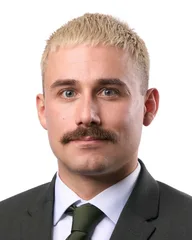
Lukas Sieper | Germany DEU | Non-attached Members (NI) | 390 |
| 2 |
|
Juan Fernando López Aguilar | Spain ESP | Progressive Alliance of Socialists and Democrats (S&D) | 354 |
| 3 |
|
Sebastian Tynkkynen | Finland FIN | European Conservatives and Reformists (ECR) | 331 |
| 4 |
|
João Oliveira | Portugal PRT | The Left in the European Parliament (GUE/NGL) | 232 |
| 5 |
|
Vytenis Povilas Andriukaitis | Lithuania LTU | Progressive Alliance of Socialists and Democrats (S&D) | 227 |
All Contributions (82)
International Day for the Elimination of Violence against Women (debate)
Madam President, every woman knows a woman who has experienced violence, another woman or she has experienced it herself. One in three women in Europe experience violence against women and sexual violence. That's 75 million women. Only one in eight report this. Why is that? This also illustrates the way in which we in society deal with this. We ask women the question: “Did you say no? Why didn't you leave earlier? Have you not given cause to do so yourself?’ And with that, we shift responsibility to the victim and not to the perpetrator. If we want to eradicate violence against women in Europe, we must do something about it! We need to listen to the girls and the women who are going through it. We must ensure that in our legislation consent becomes the basis for the legal definition of sexual violence. We must continue to support organisations that help and support women to ensure that we can continue to speak out and end violence against women.
One-minute speeches on matters of political importance
Mr President, while the number of people living in extreme poverty is only increasing – by millions – the Dutch Minister for Development Cooperation of the PVV, Mrs Klever, announced a halving of the budget: A total of EUR 2.4 billion will be cut. This chilling billion-dollar austerity in the Netherlands does not stand alone. For example, future President Trump with his Project 2025 puts the knife in development cooperation and the agreement to spend 0.7% of your GNP on development cooperation has not been achieved by many European countries for years. The EU's failure in this area harms not only people and communities in need, but also the EU itself. Foreign policy is not a one-way street. International solidarity is one of the key pillars of European foreign policy. If you cut into it like that, you cut into your own power. At the same time, we need strong international partnerships based on European values of justice and solidarity. Also for our own economy and also for our own security.
Closing the EU skills gap: supporting people in the digital and green transitions to ensure inclusive growth and competitiveness in line with the Draghi report (debate)
Mr President, Commission, "skills, skills, skills", that is the mantra we see in the new Commission. The word "skills" is even in the title of the new Commissioner who should actually be about social rights and social policy, while the terms "social rights" and "social policy" have disappeared from her title. Reskilling and upskilling workers to best prepare for the green and digital transitions is important. We need to make sure that people have the right skills to be able to work in the future. But it also means: listen to employees and ask them what they need; work together to plan for the future and protect workers if their jobs are at risk of being lost. Because without employees, we can still want so many transitions, but they will not come. Mr Draghi himself writes in his report: we can only increase our competitiveness if we do not forget about social policy.
Situation in Sudan (debate)
Mr President, Commissioner, ladies and gentlemen, one of the greatest human rights violations of our time is now taking place in Sudan. Many, many Sudanese are victims of crimes against humanity. Children cannot go to school. Sexual violence against women and girls is endemic and millions of people are at risk of starvation. There is not enough international aid and – as you mentioned – part of that aid is also blocked. The fact that there are no words to describe the inhuman suffering of the Sudanese community cannot and must not mean that the international community is doing nothing. Sudanese feel abandoned by the international community in this – it seems – forgotten war. We must not look away, we must make a fist against this violence. The Member States and the European Commission can do three things: 1) Ensure that the blockades on humanitarian aid are lifted and that there is sufficient aid where people depend on that aid to survive. 2) Sanctions should be extended, including against those specific organisations and individuals responsible for these human rights violations. 3) The High Representative has said that the EU will not look away and witness another genocide. I therefore hope that, at the forthcoming summit between the European Union and the Gulf States, he will speak out against the countries in that region that are facilitating and financing this war. That would also be a good step to stop the war.
The crisis facing the EU’s automotive industry, potential plant closures and the need to enhance competitiveness and maintain jobs in Europe (debate)
Mr President, Commissioner, the industry needs clarity. The automotive industry also needs clarity. Sustainability is the clear direction we need to take. Mop policy or going back again as some here suggest is not a good direction and offers no certainty. Not for the industry and certainly not for the workers who work in that industry. Because the automotive industry is under pressure because of the competition with China and because we are too slow with this sustainability. This also has consequences for the employees who work there. I have seen it myself in the car factory near Brussels, where almost 3 000 employees are going to lose their jobs, even though they have indicated for years that changes are desperately needed. So if we are working on that just transition that is so necessary, it must be a fair transition in which we also keep our eyes open for what is needed for the employees and ears open to listen to what employees ask. In short, if we have a policy for the car industry and for that fair transition, let us leave room in that action plan for the voice of workers. Because they know very well what is needed in their own factories and in their own industry.
EU response to the Mpox outbreak and the need for continuous action (debate)
Mr President, Commissioner, colleagues, the Democratic Republic of Congo, but also Burundi, Rwanda and Kenya are severely affected by the mpox virus. This year alone, more than 700 people have died from the virus in 15 countries, most of them children. The World Health Organization calls the outbreak an international health crisis and calls for international solidarity. Of the 10 million vaccines estimated to be needed this year, the EU is sending around 500 000. That's nice, but certainly not enough. Japan, for example, has already pledged three million vaccines. During the coronavirus pandemic, we have seen the consequences of a health policy that has been inward-looking for too long, with countries sitting on vaccines that they do not use themselves. And yet that is exactly what a number of right-wing governments in Europe and also the Dutch minister Agema would like to do with the mpox virus again. I therefore call on the Commission, together with the Member States, to rapidly step up its efforts to support these affected countries, to prevent further spread of the virus and human suffering, and to be a credible and solidarity-based international partner.
Outcome of G20 ministerial meeting in Rio-de-Janeiro and fighting inequality (debate)
(NL) Mr President, Commissioner, ladies and gentlemen, more than 700 million people worldwide live in extreme poverty and, after decades of successful fight against extreme poverty, it is now increasing again. At a time when the European Union and member states such as the Netherlands are skimping on relations with other countries, the presidency of Brazil of the G20 shows how things should be done. It is right and necessary for Brazil to put poverty reduction, the achievement of the Sustainable Development Goals and the creation of equal opportunities back at the heart of G20 development cooperation. And that while here in the European Union we seem to be mainly concerned with ourselves. But only with equal partnerships and the involvement of civil society organisations can we tackle extreme poverty. Member States and the new Commission should recognise that investing in people and in sustainable development is the necessary basis for international cooperation and trade and therefore for a social, solidarity-based and strong Europe.