

ℹ️ Note: Bureau
This Member is President or Vice-President of the European Parliament and is therefore not included in the ranking.
| Rank | Name | Country | Group | Speeches | |
|---|---|---|---|---|---|
| 1 |
|
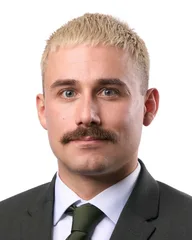
Lukas Sieper | Germany DEU | Non-attached Members (NI) | 390 |
| 2 |
|
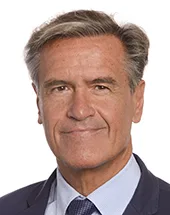
Juan Fernando López Aguilar | Spain ESP | Progressive Alliance of Socialists and Democrats (S&D) | 354 |
| 3 |
|
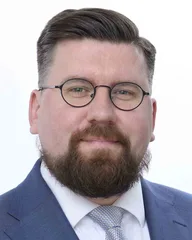
Sebastian Tynkkynen | Finland FIN | European Conservatives and Reformists (ECR) | 331 |
| 4 |
|
João Oliveira | Portugal PRT | The Left in the European Parliament (GUE/NGL) | 232 |
| 5 |
|
Vytenis Povilas Andriukaitis | Lithuania LTU | Progressive Alliance of Socialists and Democrats (S&D) | 227 |
All Contributions (427)
Attempted takeover of Lithuania’s public broadcaster and the threat to democracy in Lithuania (debate)
I have to explain to our colleague Mr Gražulis that because we have limited time I can only pick one question, and unfortunately the ones that have already asked questions will not have the possibility to come back. You already asked three questions. I am just trying to keep the time. Please understand. Mr López Aguilar, you have a blue card from Sabine Verheyen.
Attempted takeover of Lithuania’s public broadcaster and the threat to democracy in Lithuania (debate)
Sorry. We have to respect the timing. You went beyond the time available for the question. Everyone knows the rules, and everyone will respect the list when I'm chairing. Sorry for that. You can answer, but respect the time.
Presentation of the Digital Networks Act (debate)
Madam President, Commissioner, ladies and gentlemen, Europe has a clear problem. Our digital networks are not keeping up with our economic ambitions. We have fragmented rules, insufficient investment and large differences between Member States. The Digital Networks Act is intended to address these issues. It is not a technical regulation, it is a regulation about competitiveness, security and cohesion. We need high-capacity networks, fiber, 5G, preparation for 6G. Without them, there is no modern industry, no digital public services, no real innovation. The act proposes simpler and more predictable rules, stimulates investment, reduces fragmentation of the European market. But we must be clear, investments cannot come without responsibility. Networks must be safe, accessible and fair for citizens and SMEs. Digitalisation is not an end in itself, it is a tool for better jobs, more efficient public services and a stronger Europe. This act must deliver exactly that. A modern, secure and inclusive European digital infrastructure.
European Council meeting (joint debate)
Mr President, Commissioner, ladies and gentlemen, many people are worried. I feel insecure, I feel tired, I feel like the world is changing too fast. We live in a tense period, with real risks, with economic pressures, with a lot of uncertainty. At the European Council, one thing was clear: Europe must provide stability, not declarations, but decisions. European security matters, jobs matter, purchasing power matters. To be strong and united on the outside, people's trust matters. This means that we need transparency and dialogue with citizens, including on difficult topics. For Romania, things are simple – we need a united Europe that protects, that anticipates, that leaves no one behind, that asserts itself, but also that is not dependent. In an uncertain world, Europe must be a point of support, and for that we also need empathy, so that people can truly support the difficult decisions that we have to make together.
One-minute speeches on matters of political importance
No text available
The 28th Regime: a new legal framework for innovative companies (debate)
No text available
Preparation of the European Council meeting of 18-19 December 2025, in particular the need to support Ukraine, transatlantic relations and the EU’s strategic autonomy (debate)
Madam President, dear colleagues, let us be clear: the December European Council is about the direction of the European Union, about whether we are ready to act or whether we continue to react. The Union needs clear decisions to strengthen its own security, its strategic autonomy and its ability to protect its economic and political interests. We need clear security guarantees, especially for the eastern flank. In a context of intense geo-economic competition, Europe must reinforce its industrial base, its supply chains and its defence readiness through real investment, not just statements. The future EU budget is the central test. The next multiannual financial framework must be a budget for action, stronger support for competitiveness, for skills, infrastructure, security and cohesion. Without adequate resources, Europe's ambitions remain empty promises. This European Council must send a clear signal: the European Union knows what it wants, is ready to defend its future and delivers concrete benefits for its citizens.
Presentation of the EU Cardiovascular Health Plan (debate)
No text available
EU response to the continuous airspace violations and sabotage of critical infrastructure in the EU originating from Russia and Belarus (debate)
No text available
Draft amending budget No 3/2025: adjustment in payment appropriations, update of revenues and other technical updates (A10-0237/2025 - Victor Negrescu) (vote)
Madam President, dear colleagues, the third draft amending budget is not just a technical adjustment. It is a test of Europe's ability to react quickly, to correct course and to support citizens in a moment of pressure and uncertainty. DAB3 brings over EUR 2.5 billion in additional payments targeted where Europe needs strength the most: cohesion, social investment, border management and strategic security. The European Regional Development Fund receives a substantial reinforcement, the European Social Fund Plus gains new resources, and the Border Management and Visa Instrument is strengthened at a moment when instability and hybrid threats are increasing around our borders. This is what Europeans expect: a Union that invests, not one that hesitates; a Union that protects communities, supports vulnerable groups, and builds economic resilience in every region. This DAB proves once again that our budget must become more flexible and more responsive. Crises no longer wait – geopolitical shocks, technological transitions and social pressures require immediate budgetary action. This amending budget is a step in the right direction, but it also shows the limits of our current architecture. This is why the next multiannual financial framework must be stronger, more agile and centred on the real needs of Europeans, with a clear role for the European Parliament. Let us be very clear: this amending budget is not just about reallocating money. It is about reinforcing Europe's capacity to act. It is about providing stability where citizens feel vulnerable. It is about showing that even in difficult times, the Union delivers. Europe must continue to invest. Europe must continue to protect. Europe must continue to lead.
EU position on the proposed plan and EU engagement towards a just and lasting peace for Ukraine (debate)
Madam President, the US proposal for a peace plan marks an important moment. Any initiative that can bring an end to Russia's brutal war must be examined seriously but should come with guarantees for Ukraine's sovereignty and Europe's security. Nevertheless, Russia sent drones again over Romanian territory. These incidents are a reminder of the challenges faced by frontline countries. The Black Sea has become a strategic target, and the EU and the US must provide, in any peace agreement, clear security guarantees for the eastern flank. We cannot afford ambiguity. At the same time, the Republic of Moldova and several EU countries face constant hybrid threats and attacks aimed at destabilising their democracies. Supporting our resilience must be a central element of any European engagement for a just and lasting peace. Europe, together with our US partner, must remain united and firm. Any peace plan must uphold international law, ensure real security guarantees and prevent dangerous concessions that would threaten the stability of our region. A responsible, shared and durable peace is the only path that protects our citizens and our common values.
Increasing the efficiency of the EU guarantee under the InvestEU Regulation and simplifying reporting requirements (debate)
Madam President, Vice-President, Commissioner, dear colleagues, InvestEU is one of Europe's most powerful tools to turn political priorities into real investments. Today's reform goes exactly in the direction citizens expect: more efficiency, more impact, less bureaucracy. With this agreement, the EU guarantee increases by EUR 2.9 billion, unlocking at least EUR 55 billion in new investments. This means more projects, more innovation and more opportunities across our Union. We also call for a better geographic distribution of funds. We simplify procedures for SMEs, reduce administrative reporting and make it easier for Member States and private partners to contribute. We save millions of euros in administrative costs – money that can go back into real projects, not paperwork. This reform strengthens key strategic priorities and I would say especially affordable and social housing, defence industry and military mobility, modern transport infrastructure, export credit facilities to support SMEs and investment in the energy and digital transitions. It also reinforces the advisory hub, the InvestEU portal and technical assistance. Most importantly, Parliament strengthened its oversight, ensuring transparency and proper use of the EU guarantee. InvestEU is Europe at its best, investing in people, in communities and in our long-term competitiveness.
Escalation of the war and the humanitarian catastrophe in Sudan (debate)
Dear Members, this is an evacuation exercise, so please follow the instructions and exit the Chamber in an orderly fashion. The sitting is suspended and will resume after the exercise is concluded.
Escalation of the war and the humanitarian catastrophe in Sudan (debate)
The next item is the debate on the Council and Commission statements on the escalation of the war and the humanitarian catastrophe in Sudan (2025/2984(RSP)).
2026 budgetary procedure: joint text (debate)
The vote takes place tomorrow and I would kindly invite you all to attend. The debate is closed.
2026 budgetary procedure: joint text (debate)
I join the Commission in saying it was a good exercise.
2026 budgetary procedure: joint text (debate)
We have finished with the interventions on behalf of the European Parliament. I also join many of the voices here in the House congratulating and thanking our rapporteurs, Mr Halicki and Mr Nemec.
2026 budgetary procedure: joint text (debate)
Madam President, Commissioner, ladies and gentlemen, Madam Vice-President, the European Union budget for 2026 is not just a technical document, it is a commitment to the millions of Europeans who, in uncertain times, expect stability, real opportunities and protection. People want safe communities, decent jobs, quality public services and the right path to build their future. And this budget is made exactly on these priorities. As a member of the European Parliament’s negotiating team, I worked to obtain funding that influences citizens’ daily lives. We have strengthened support for farmers, increased funding for hospitals and schools, strengthened investments in digitalisation and cybersecurity, and supported the development of the only European structure hosted in Bucharest, the European Cybersecurity Competence Centre. And I am also proud that we managed to launch a pilot project for Via Transilvanica, which highlights the Romanian cultural heritage and supports rural development. But Europe needs to do more. The next Multiannual Financial Framework must be stronger, more flexible and people-centred. Our responsibility is for every euro to work for the benefit of citizens. We must give the European Union the future it deserves.
One-minute speeches on matters of political importance
No text available
Conclusions of the European Council meeting of 23 October 2025 (debate)
Madam President, dear colleagues, Europe is going through a decisive moment. Faced with worsened economic pressures, we must show that European unity is not just a phrase, but a real force. Our direction must be clear: a Europe able to defend itself, with reduced strategic dependencies and investment in industry, energy and competitiveness. But these goals, dear representatives of the Council and of the European Commission, cannot be achieved without an adequate European budget and a strong social dimension. You seem to forget that. This includes a deal on the Russian frozen assets. We need lower energy prices, a fair digital transition, less bureaucracy and access to housing and decent jobs for all Europeans. For our neighbours, from the Republic of Moldova to the Western Balkans, we must send a clear message: Europe remains open, united and committed to democratic enlargement as soon as possible, so stop blocking the process. This is the Europe I believe in – a strong, fair and united Europe ready to defend these values through action, not only through words.
General budget of the European Union for the financial year 2026 – all sections (debate)
Mr President, Commissioner, the European Union's budget for 2026 is not just about figures, but about where Europe is going. I have proposed in Parliament’s position concrete measures for a safer, fairer and more prepared Europe for the challenges of the future. Firstly, the creation of the European maritime security hub at the Black Sea, an essential initiative to protect energy and trade routes, but also to strengthen the European presence in an area of strategic importance. I also managed to include through my amendments in the position of the European Parliament more than EUR 250 million in additional allocations for key areas such as research, energy, agriculture, health, education and support for young people and SMEs. We said no to austerity and asked for more resources, including for new pilot projects, such as the one on financing tourist routes, such as Via Transilvanica. Europe needs a bold budget that invests in people, provides stability and protection for its citizens, and leaves no region and no person behind.
Commission Work Programme 2026 (debate)
Mr President, Europe must rebuild its trust through concrete solutions and a well-executed agenda. In 2026, our priorities must be education, health, digitalisation and access to housing, all underpinned by a fair and courageous budget. Education is the basis for any progress and that is why it is important to discuss the future of Erasmus+. At the same time, in the area of health we see a proposal for the European Global Health Resilience Facility, and this is crucial to strengthen the capacity of Member States to produce essential medicines and provide affordable treatments for all. At the same time, many proposals refer to the future Multiannual Financial Framework and we repeat that we support a dedicated budget for people that will create jobs, support public services and make all our communities stronger. But the future of Europe also depends on digitalisation, some concrete proposals that will advance the European economy. Last but not least, we support this idea of coming up with a concrete proposal on access to decent housing. So the Europe we are fighting for is one that educates, protects and innovates and gives dignity.
Institutional consequences of the EU enlargement negotiations (debate)
The next item is the report by Sandro Gozi, on behalf of the Committee on Constitutional Affairs, on institutional consequences of the EU enlargement negotiations (2025/2041(INI)) (A10-0177/2025).
Approval of the minutes of the previous sitting
The minutes of yesterday's sitting and the texts adopted are available. Are there any comments? I see there none. The minutes are approved.
A new legislative framework for products that is fit for the digital and sustainable transition (A10-0189/2025 - David Cormand) (vote)
The next vote is on a new legislative framework for products that is fit for the digital and sustainable transition (see minutes, item 6.12).