
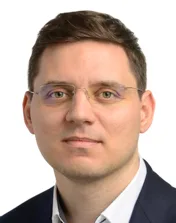

Note: Bureau
This Member is President or Vice-President of the European Parliament and is therefore not included in the ranking.
| Rank | Name | Country | Group | Speeches | |
|---|---|---|---|---|---|
| 1 |
|
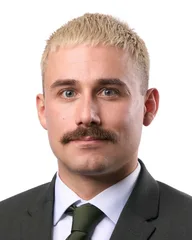
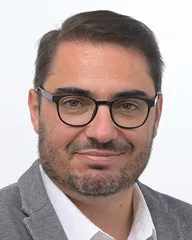
Lukas Sieper | Germany DE | Renew Europe (Renew) | 494 |
| 2 |
|
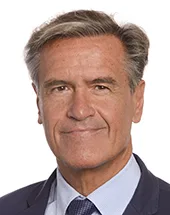
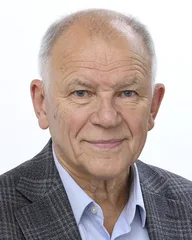
Juan Fernando López Aguilar | Spain ES | Progressive Alliance of Socialists and Democrats (S&D) | 463 |
| 3 |
|
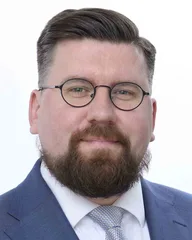
Sebastian Tynkkynen | Finland FI | European Conservatives and Reformists (ECR) | 460 |
| 4 |
|
João Oliveira | Portugal PT | The Left in the European Parliament (GUE/NGL) | 288 |
| 5 |
|
Vytenis Povilas Andriukaitis | Lithuania LT | Progressive Alliance of Socialists and Democrats (S&D) | 276 |
All Speeches (304)
General budget of the European Union for the financial year 2022 - all sections (debate)
Date:
19.10.2021 16:23
| Language: EN
Speeches
Madam President, European leaders must show responsibility and act in accordance with the agreement that was reached in the Multiannual Financial Framework (MFF). The cuts proposed by the Council prevent us from delivering on the objectives we have for Europe, implementing the policies agreed upon by the leaders, and planning for a strong social recovery for the future of Europe. In the view of the European Parliament and of our political Group, we believe it is important to show more ambition when it comes to next year’s budget. We need to provide adequate resources to deal with the health crisis, but also with the social and economic challenges it raises. We call for an increase in the EU budget of EUR 2.7 billion, while preserving sufficient margins and resources for the special instruments. These funds will enable the EU to do more for each European, each Member State and each European policy. For that, we need the Commission to also make sure that 2022 will be a full implementation year for the budget. We cannot lose any more time. 2021 was a lost year for the current MFF, and that is not our fault. Member States and the Commission should have done more to speed up the implementation. The Socialists and Democrats in the European Parliament have three key priorities. We support the social recovery with a special focus on youth, employment, education, cohesion, SMEs and start-ups, for which we request EUR 1.2 billion. We want to invest in a sustainable future, including climate, research, innovation, health, digitalisation, transport and agriculture, for which we believe an extra EUR 2 billion is needed. We believe that Europe should promote solidarity and democratic values within the EU and across the world and, for that, the Parliament calls for more than EUR 600 million in additional funds. These priorities are reflected in the reinforcement increase of all the EU programmes. We also call for the rapid implementation in 2022 of the European Child Guarantee, making sure no child is left behind and suffers the negative effect of the pandemic. Our demand for an additional allocation of EUR 700 million for the Child Guarantee represents a key achievement of our political Group. We are also happy to see several of our requests being integrated in the proposal, like, for instance, the new tourism line of EUR 42 million, an additional EUR 24 million for SMEs and start-ups, EUR 5 million for social dialogue, EUR 7.5 million for employment, and EUR 90 million for the Eastern and Southern Neighbourhoods. Our discussion today is key. If we want to do things better at local, national and European level and match our priorities, we need to allocate adequate resources for the EU budget. In this respect, our proposals are constructive and clear and can represent the starting point of a new European budget fitting citizens’ priorities.
Mr President, dear colleagues, partnership with the United States is extremely important for the future of Europe and for ensuring a climate of global peace and stability. The United States is not just a partner, but a strategic ally, with whom we share common democratic values, with whom we need to find solutions to security challenges, those generated by the pandemic or by new digital or environmental developments. For this, cooperation with the United States, and in particular with the new American administration, must be expanded by identifying new methods of collaboration. But for this development of cooperation to be a success, it is central that all Member States enjoy the same rights. That is why I call again in the European Parliament for Romanians to be able to travel to the United States without visas. This depends on the political will of decision-makers on both sides of the Atlantic and is a right to total reciprocity, actually guaranteed by European mechanisms. I am confident that the current international political context can allow this and that the partnership with the United States will enter a new period of development.
Madam President, dear colleagues, in order to discuss the state of the Union, we need to really know and understand the state of European citizens. The pandemic, widening discrepancies, falling living standards and rising energy prices are making life harder for many citizens. Unfortunately, political instability and weak governance, as is the case in Romania, a country that you ignored in your speech, require concrete and prompt actions. That is why the European Union needs to be involved in new areas. In this context, education must become a priority. All European citizens must be able to learn in decent and quality conditions. No child or young person can be left behind. As you want to focus on the future of Europe, I am asking for your support to build a Europe of education. An educated Europe means a stronger Europe, capable of responding to new challenges and projecting itself as a global leader. I propose that we organize a global summit on education, in which we focus on increasing investment in the field. I count on your support to put education at the top of the European agenda.
Conclusions of the European Council meeting of 24-25 June 2021 (debate)
Date:
07.07.2021 10:55
| Language: EN
Speeches
Madam President, the European Council meeting in June represented an opportunity to make an assessment of the current situation at European level, but European leaders should do more in addressing the present challenges. Indeed, we are at a better moment right now when it comes to the pandemic, but the danger has not disappeared. We need to implement the necessary preventive measures in order to avoid a fourth wave. Some countries are incapable of implementing the target of the vaccination campaign and are completely ignoring the need for a recovery that takes social aspects into consideration. The recovery plans should be about doing things differently, but some are promoting austerity measures. The approval of 12 plans is good news, but this is not enough. Some governments – this is the case in Romania – presented weak recovery plans that failed to provide adequate answers to citizens’ needs. We have to intervene to make sure no one is left behind. We need to work together in helping each Member State to develop strong recovery plans and making sure our common targets are reflected in the measures adopted by European governments.