
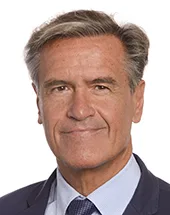
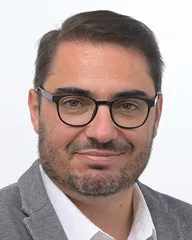
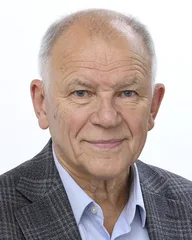
| Rank | Name | Country | Group | Speeches | |
|---|---|---|---|---|---|
| 1 |
|
Lukas Sieper | Germany DEU | Non-attached Members (NI) | 390 |
| 2 |
|
Juan Fernando López Aguilar | Spain ESP | Progressive Alliance of Socialists and Democrats (S&D) | 354 |
| 3 |
|
Sebastian Tynkkynen | Finland FIN | European Conservatives and Reformists (ECR) | 331 |
| 4 |
|
João Oliveira | Portugal PRT | The Left in the European Parliament (GUE/NGL) | 232 |
| 5 |
|
Vytenis Povilas Andriukaitis | Lithuania LTU | Progressive Alliance of Socialists and Democrats (S&D) | 227 |
All Contributions (80)
Collaboration between conservatives and far right as a threat for competitiveness in the EU (topical debate)
Mr President, the most recent problem of possible collaboration between the Conservatives and the far right is currently in Austria. Let us hope that this can still be avoided. In Germany, the subject was invited in the election campaign. The candidate of the Chancellery, Friedrich Merz, most solemnly denies any possibility of collaboration with the German AfD. It seems to me that this is an unequivocal undertaking. Let's take it at its word. As for the leaders of the German far-right party, they too must be taken at their word. Let us ask them, for example, what they mean by the word 'remigration'. Who, in terms of remigration, should leave Germany permanently, according to them? What are the selection criteria? Where will these people have to go? Will all those who will be affected by the remigration be thousands, hundreds of thousands, millions to have to leave Germany? Let us take them at their word, because we would like to be enlightened. The impact of remigration on Germany's competitiveness in the EU would result in the ruin of the EU's main economy. However, I think it would be wise to first thematize the blow to our liberal democracies by the words of the extreme right once in power, before assessing their possible impact on the internal market.
Escalation of violence in the eastern Democratic Republic of the Congo (debate)
Mr President, the problem we are discussing is not a new one. It boils down to the question of how to transform the vicious circle of exploitation of scarce resources in the face of the lust of actors from all over the world. With declaratory art, we're not going to make it. The repeated convictions have resulted in nothing, it is not clear why it would work this time. In my view, the only way to bend those responsible for the violence in the eastern part of the DRC are targeted sanctions decided by a broad coalition of countries that are no longer willing to condone the tragedy that is taking place in the Goma region. In addition, the broad coalition I call for should support the holding of a summit on the plundering of resources in Africa and more particularly in the DRC. This would make it possible to clarify each other's responsibilities and to punish unlawful behaviour. Having repeatedly articulated this claim, I would like this time it to be followed by a little more effect. The suspension of the EU-Rwanda Memorandum of Understanding on raw materials seems to me to be the least that can be done in this case.
Use of rape as weapon of war, in particular in the Democratic Republic of Congo and Sudan (debate)
Madam President, High Representative, our debate today is about rape as a weapon of war in Congo and Sudan. What is happening there is absolutely abominable. Other countries could have been added so as not to be limited to African countries, because at the heart of Europe we deplore the existence of the same scourge. Everything must be done to prevent this ignominy. If a country involved in a war has done nothing to prevent this unspeakable drift, it will not only be complicit, but also guilty of the nature and scale of these crimes. Rape occurs in conflict situations where respect for human rights and the defence of the weakest are not ensured. Those who assume the sovereign powers of a state at war are clearly responsible, if not guilty, and must be brought before the International Criminal Court. In the meantime, it is important to properly document the evidence that, sooner or later, will give hope to the victims, who are waiting for justice to be done. Ending impunity is also a form of prevention. It is a question of morality, it is a question of justice, it is a question of political responsibility.
International Day for the Eradication of Poverty (debate)
Madam President, Commissioner, the fight against poverty must manifest itself both inside and outside the European Union. However, practice seems to confirm this point. The European Union has certainly not succeeded in eradicating poverty, as each of us would like. In his defense, let us recall that his skills are insufficient to solve this problem. The resources available to the Member States, on the other hand, are far greater than those available to the Commission. In this respect, it can be seen that the Member States that perform better in the fight against poverty at home are often the same as those that are most involved in development cooperation for the countries of the South. This correlation is not trivial. It makes us think that solidarity is indivisible. It is therefore a question of coherence, a question of fairness, which applies in the same spirit both inside and outside the European Union. To support my point, it is enough to read the annual reports of the United Nations Development Programme and compare their results with those achieved in the fight against poverty in the Member States.
EU response to the Mpox outbreak and the need for continuous action (debate)
Mr President, today we are facing a new health threat with mpox, a disease that, although long neglected, has returned in strength. This situation requires a rapid and coordinated response at European level. It reminds us that infectious diseases know no borders. We therefore need to strengthen our surveillance systems across Europe to quickly detect any outbreaks. This also requires increased investment in research and development of vaccines and treatments with equitable access for all. But this response should not be limited to emergency management. We need targeted investment in research and development of vaccines and treatments for mpox, ensuring that these resources are equally accessible in all Member States. I propose establishing a European vaccine solidarity pact to ensure that every country and every population, regardless of their size or means, has fair access to the necessary tools. It is also essential to conduct awareness campaigns to inform our citizens about the transmission and prevention of mpox, while fighting stigma. Working with civil society and health professionals will be crucial to maximizing the impact of these efforts. Finally, it is imperative that the European Union takes the lead on the international stage by working with global health organisations to share data and best practices. Together, we can not only fight mpox, but also prepare our health systems for the challenges of tomorrow. Now is the time to act. Let us protect our citizens and affirm European leadership in global health security.
The proposed repeal of the law banning female genital mutilation in The Gambia
Mr President, today's debate almost ends this parliamentary term, but it is far from an end to female genital mutilation. On the contrary, the draft resolution reminds us: 230 million women worldwide remain victims of these practices. And yet, there is no shortage of declarations of intent to put an end to it. One of two things: either the authorities of the States where such practices still exist are powerless to maintain an abominable tradition, or the authorities are malicious and let go. In the first scenario, we need to pool all our efforts – we, i.e.: the European Union, our Member States, the voluntary sector, the United Nations agencies and, in particular, UNICEF – to raise awareness among women and the political authorities in the countries concerned and provide them with the necessary budgetary resources. Unfortunately, too few examples show us that we can do something. When a government, as is the case in The Gambia, acts contrary to history, we still need to do more to put an end to a crime that will now risk being legalised.
Guidelines for the 2025 Budget - Section III (debate)
Mr President, thank you to the rapporteur for successfully negotiating an agreement on this part of the budget. However, let us not ask for the impossibility of the current budget in particular and the multiannual financial framework in general. The budget is the instrument that allows us to respond to priorities in the immediate, medium and long term. Given the limited funds allocated to the European Union, Member States should urgently agree on the mobilisation of additional funds to safeguard a civilised life at home and in our immediate neighbourhood, including in Ukraine. I am convinced that our fellow citizens, eager for security and freedom, will have a great deal of sympathy for an extraordinary extra budgetary effort. To this end, our governments, concerned about the well-being of our citizens and aware of their responsibilities, should agree on the launch of a Eurobond whose mission would be to signal to Kiev that our Union will not let Ukrainians down, in addition to the efforts already made in this area to be able to meet our responsibilities.
State of play of the corporate sustainability due diligence directive (debate)
Madam President, the problem is complicated; otherwise, the Belgian Presidency, whose quality is indisputable, would have already come to an end. Do we want to end forced labour, child labour and inhumane practices in exploiting the resources we need at home? In that case, and that is my position, the directive in question must be adopted. It is well known that, on the substance, everyone is rather in agreement. It is the question of feasibility and how to put due diligence into practice that may be problematic for some. However, this is a rather general problem and does not only concern due diligence. Faced with the criticism that this directive would entail additional administrative burdens, this could be remedied by reducing burdens in other areas of European policy. If the Directive is not adopted, Member States, or at least many of them, will be tempted to have their own legislation adopted at national level. The consequence of that approach would be the fragmentation of the internal market, which would not be in anyone’s interest.
Deepening EU integration in view of future enlargement (debate)
Madam President, Commissioner, let us take the place of Ukraine or Moldova, two countries threatened in their existence. Both candidates for EU membership know that, alone, they are lost. They aspire to be able to solve their problems of security or economic vulnerability and precariousness. They need strong, united partners who can make timely decisions. Have we already become this long-awaited anchor for the candidate countries? Alas no, not yet! The war at the heart of Europe has made us rediscover what we have known for a long time: a political union, a defence union, a foreign policy rather than 27 external policies and decision-making mechanisms must be put in place to enable the EU to act, react and influence world affairs. We know this, we repeat it all day long and we have adopted a report calling on the European Council to launch a European convention to start the necessary reflection on changing our way of working. Let us have this audacity so that we can face with our heads held high the problems that are before us!
Financial activities of the European Investment Bank - annual report 2023 (debate)
Mr President, if, during 2024, the European Union were to remain the only one willing to help Ukraine in its fight for its freedom, would we still be able to mobilise the necessary resources to that end? The crates are empty. We can scrape the drawer bottoms. That's not enough! We can ask the Member States to make an additional effort. It takes a long time. We can ask the European Union to finance Ukraine’s needs. The answer may come too late. Time is running out and all the solutions envisaged are likely to last too long and come too late. Let us therefore be open to the possibility of the European Investment Bank playing a role in financing the military equipment Ukraine needs. I have co-signed an amendment calling on the heads of the European Investment Bank to amend its eligibility list for its interventions. It is difficult, I concede, but let’s stop always looking for excuses to do nothing!
State of play of the implementation of the Global Gateway and its governance two years after its launch (debate)
Mr President, if you had not reminded me of my age, it would not have been an insult. Thank you so much. Dear friends, the Global Gateway initiative seems to be coming out of its running-in period. Indeed, after a trial period of more than two years, we see a multitude of projects taking shape in terms of improving connectivity in the most diverse areas. In line with the principle of policy leadership, Global Gateway aims to close the infrastructure investment gap. We have repeatedly insisted on the gigantic amounts required to be able to meet the ever-increasing demand. The United Nations estimates that an additional $4.200 billion is needed per year - per year! – in order to achieve the Sustainable Development Goals. Of course, global official development assistance is only about one-fifteenth of that amount. It is therefore in the private sector that the missing amounts will have to be mobilised. To this end, the financial architecture for the development of the European Union is expected to be up to par. The European Investment Bank is arguably best placed, together with the national promotional banks and the European Bank for Reconstruction and Development, to address these needs. It took a long time to start. It has become promising in the meantime. Now that the movement has started, it is important to act in such a way that as much private sector capital as possible is mobilised to achieve the desired goals.
Implementation of the Treaty provisions on national parliaments - Implementation of the Treaty provisions on EU citizenship (joint debate – Implementation of the Treaty provisions)
Mr President, the role of national parliaments in European affairs is, in my view, greatly underestimated. National parliaments ratify the treaties. They have a final say over Member States’ contributions to the EU budget. National parliaments ratify directives and have control over the national executive involved in the European legislative process. Moreover, if they want to, they are involved in monitoring subsidiarity and proportionality, not to mention their role as a political impetus. To this end, the idea of a European week for European decision-makers to discuss the European agenda with national MEPs seems to me to be struck at the corner of common sense. As well as the proposal to increase from 8 to 12 weeks the time set aside for national parliaments to study legislative proposals in view of their compliance with the principles of subsidiarity and proportionality. I am deeply convinced that any MEP who continuously inquires about the priorities and positions of national parliamentarians, and the MEP who inquires about the work being done at European level, are and will remain unavoidable. As for the European Parliament, we have an interest in rethinking how to exchange with our national parliamentary colleagues. Very often, these regular meetings in Brussels are quite disappointing because they are in principle limited to a series of monologues. The more people there are, the more monologues there are and the fewer interactions there are between the participants. It would be a pity to maintain this practice indefinitely.
Transparency and accountability of non-governmental organisations funded from the EU budget (debate)
Mr President, an NGO is by definition a non-governmental organisation. It should therefore not be reduced to the role of parrot of a government or administration. It is a separate entity whose objectives may be different from those pursued by the official policy of the country that supports it financially. This reduces, in addition to co-financing its activities, the role of political institutions to that of effectively monitoring the use of the money made available to it by public authorities. The measures proposed in our own-initiative report aim to respect the freedom of action of NGOs without jeopardising them. In any case, they are not designed to curb the ardour of the voluntary sector, but to ensure that sufficient and essential precautions are taken to ensure good management. Let me say at the end that NGOs also have legitimacy. NGOs are legitimized by a cause while the political world is legitimized by universal suffrage: Both are then legitimized.
Implementation of the Neighbourhood, Development and International Cooperation Instrument – Global Europe (A9-0374/2023 - Tomas Tobé, Pedro Marques, Charles Goerens, Michael Gahler) (vote)
Madam President, in this Parliament we spend a great deal of time on subjects on which the Treaty does not provide for competence, and when we have competence, we sometimes refuse the debate. Indeed, the European Parliament did not consider it useful to plan a debate on the evaluation of NDICI-Global Europe funding. This is a pity, because the instrument for financing the European Union's external policies, from which the countries of the South and the neighbourhood are beneficiaries, seems to bear the brunt of the mid-term review of the multiannual financial framework. Frugal or radiant states, call them whatever you like, tend to view aid to the weakest as an adjustment variable. This makes little mention of the difficulties faced by the weakest and most vulnerable people on our planet. This means making little mention of the image of our partners in the South, who have already been sufficiently ill-treated by successive crises. That is to say little about the commitments made by all our Member States at the 2015 Financing for Development Conference in Addis Ababa. This makes little mention of the growing difficulties faced by African countries, whose indebtedness is taking on worrying dimensions. It is ultimately silencing those who have difficulty being heard or who simply do not have a voice. If we are not their amplifier, they simply will not be heard. Madam President, I would like to thank the co-rapporteurs, Mr Tobé, Mr Marques and Mr Gahler, for the excellent cooperation, as well as the services of the European Parliament, those of the AFET and DEVE Committees and our assistants, for lending us a hand in the implementation of this report. Let us hope, however, that the debate can find a place in this chamber later.
The European Elections 2024 (debate)
Madam President, I would like to congratulate the rapporteur on his excellent work and I would like to stress only one point: the role of European political parties and foundations in the campaign, which is set to last and will be extremely important. We are currently still dependent on the application of a regulation dating from 2014 which is a real administrative straitjacket that stifles any initiative by European political parties to get involved in the campaign. This situation seems abnormal to me. This needs to be remedied. We are discussing this with the Council in a trilogue on the adaptation of this system and I hope that we will succeed in time, so that the European political parties can intervene and exert their full weight in this campaign, which is still forbidden to them until now. It would be particularly unfortunate to leave the ground open for the trolls, Rupert Murdoch’s press empire or all those who will unleash tsunamis of untruths on the web by 9 June 2024.
Proposals of the European Parliament for the amendment of the Treaties (debate)
Mr President, is there a single colleague in this House who can say that the European Union still has an impact on the international scene? Is there only one of us who can honestly claim that the situation will be better when we are at 30, 32, 35, without having first adopted our institutional mode of operation? Is there only one of us who believes that China, India, Brazil and Russia will give us a moment of respite to allow us to adapt to the pace of international diplomacy? That time, he lived. For too long we have been full of illusions. This recklessness ended at the latest on 24 February 2022, in the early morning. When it turns out that a widely shared idea is just an illusion, you have to have the courage to challenge that illusion. If nothing is done, the illusion quickly becomes a collective lie. Yes, to believe that everything will be better if nothing changes is not only to lie to the citizens of the 27 Member States, but also to the citizens of the candidate countries. That is why I would not hesitate for a second to vote in favour of the report on the change of the Treaties.
Outcome of the SDGs Summit (18-19 September 2023, New York) – transformative and accelerated actions leading up to 2030 and beyond (debate)
Madam President, everything invites us to restore the Sustainable Development Goals to their rightful place in the public debate. This is first of all a promise made in 2015. To achieve them, by 2030, there are only six years left. The economic, political and security context makes it much more difficult to achieve them. As a result, rising interest rates are exploding the debt of poor countries, as much as they are jeopardising many projects and programmes. The diagnosis is therefore clear and ruthless. And the role of the European Union in all this? Well, the instruments it has put in place or is in the process of putting in place are those of an obligation to achieve results. We will need to be active in mobilizing capital for development. The European Union will have to spearhead all initiatives that can reduce the burden of debt, promote access to healthcare, improve connectivity in developing countries and help fight climate change.
Interim report on the proposal for a mid-term revision of the Multiannual Financial Framework 2021-2027 (debate)
Madam President, in this multi-annual funding period, we have, so to speak, experienced only crises. The fact that the budgetary crisis in most of our Member States and a new euro crisis have been spared us so far is due to the fact that the European Union had the wisdom to have a recovery plan worth some EUR 800 billion. This inspires me to make two observations. First, all the frugals and radishes of this world were wrong to insist on pleading the lowest budget or the financial suffocation of our Member States. Secondly, thanks to this increase in budgetary resources, we are living in a kind of state of grace which has the effect of sparing us new serious crises at the level of the European Union and of silencing those who once advocated the exit of their country from the European Union. If you are less optimistic, at least acknowledge that these crises have been frozen thanks to the fiscal effort. These considerations invite us to be clear-sighted in order to enable the European Union to meet the challenges before us. The answer is not only budgetary, but also budgetary.
Question Time (VPC/HR) - Situation in West and Central Africa in the light of the recent coups d’état
Mr President, we have just had a very interesting debate. The questions that have been asked are very relevant. I'm still hungry. Together with several colleagues, we have seen that you have allowed some of our colleagues to ask two questions. May I make a suggestion to you: in the future, maybe let several colleagues intervene and let them ask a question? That is a question. I'm a little hungry. There are many of us in the Committee on Development who are very interested in this region, who care most about this region in the European Parliament, and who are disappointed to have been excluded from this debate.
Financial activities of the European Investment Bank – annual report 2022 - Control of the financial activities of the European Investment Bank - annual report 2022 (joint debate - European Investment Bank)
Mr President, I would first like to pay a warm tribute to the work of Werner Hoyer during his presidency of the European Investment Bank. Today, the EIB has twice the weight of the World Bank. It became the first climate bank. She leads the dance in many construction sites, both in the periphery of the European Union and in the wider world. Werner Hoyer was able to help make the European Investment Bank what it is today thanks to his know-how and his talent as a diplomat and external relations expert. This bank also plays a very important role in mobilising private capital, which is the answer that all those who support the achievement of the Sustainable Development Goals expect. With global official development assistance reaching just €250 billion, the European Investment Bank and its peers need to mobilise at least 20 times more than what is mobilised under official development assistance. And I count on the European Investment Bank and those who draw on its experience to raise so much capital. I believe that those who hope to achieve the Sustainable Development Goals know that this will not be possible without the experience and know-how of the European Investment Bank. Congratulations on what you did.
Implementation and delivery of the Sustainable Development Goals (debate)
Madam President, we need an additional $4.200 billion to achieve the Sustainable Development Goals, according to the United Nations. Official development assistance accounts for barely 10% of this amount. This is a titanic task. The European Union and its Member States, the G7, the G20 and the United Nations: Everyone is challenged, everyone must assume their responsibilities. All these institutional actors, however, remain doomed to fail unless they can mobilize much-needed resources. The resources that will have to be mobilized by the private sector represent roughly 4 per cent of the world's gross domestic product. Is this feasible? Yes, it is feasible, but we need to make choices, reorient policies and reallocate resources. We have a political framework, but do we also have the instruments and means to achieve our ambitions? We have a toolbox that is quite well supplied, with the Global Gateway, the European Bank for Reconstruction and Development, the European Investment Bank, the German KfW, the French AFD... All that for that! If all other continents were equipped in the same way, I believe that the hope of being able to achieve the Sustainable Development Goals would not remain illusory.
Negotiations on the European Electoral Law (debate)
Madam President, I subscribe to the general approach advocated by most of those who preceded me on this rostrum. We know how difficult it is to bring Europe closer to the citizen. For the 2024 elections, as for all other elections, the choice of voters will be based on ideas, people and parties. Every voter would like his or her vote to be taken into account. However, the will of the European Parliament, or the majority of it, to confiscate the votes of small parties that have not reached the 3.5% threshold is far from being shared by all Democrats. Indeed, there is little convincing reason to insist on defending this provision, other than the appetite of large parties that want to eat away at small parties. This risks adding an extra dose of Euroscepticism to the one that already exists. That said, of course, I would like to join those who would like the negotiations to take off as quickly as possible.
This is Europe - Debate with the Prime Minister of Luxembourg, Xavier Bettel (debate)
Madam President, allow me to begin with a quote from our friend Philippe Lamberts by addressing to you, Prime Minister, a warm "Gudde moien" to you and your team. One wonders about the added value of a small country in a world where everything seems to be reduced to a balance of power: China-USA, aggressor countries against oppressed countries, authoritarian regimes against liberal democracies... Well, the added value of a small state is its refusal to accommodate itself to a world in which the number of gunshots, the capacity for disinformation or its means of intimidation are essentially counted. Let's get it right: a country is not necessarily virtuous because it is smaller, far from it! One country is not necessarily exemplary because it does not have the means to crush others. But a small country can be useful, if not very useful, because it is able to understand at an early stage the existential threats posed to it by small, medium and large powers. The Prime Minister of a small state therefore knows what he is talking about when he tries to convince others (who, so to speak, are all bigger than himself) of the indispensability of European integration. Like his fellow citizens, he felt the need to unite, to cooperate, to pool the efforts of the 27 and, above all, to alert his partners to the consequences of non-action, of non-Europe. So European integration is an answer? No, it’s the response to all these concerns. You want proof of that? Well, Robert Schuman, the foreign minister of a large country, lived his first twenty years in my country, which is Xavier’s country, which is that of his predecessors Jean-Claude Juncker, Jacques Santer, Gaston Thorn and Pierre Werner. Do you think it is a coincidence that we have seen them all or that we see them all tipping in the same way, giving priority in all circumstances to law rather than force, friction to the harsh realities of a world where only the balance of power seems to count? I think it is a good idea to remind those who are big in the European Union that there is even bigger than them outside the European Union.
Implementation report on the Agreement on the withdrawal of the UK from the EU - The Windsor Framework (debate)
Madam President, Commissioner, the implementation report is both an assessment of how the United Kingdom and the European Union have come to terms with their separation, and an absurd demonstration of a situation in which the populists have manipulated us. Clearly, the report confirms the lose-lose situation created by Brexit. The European Parliament was right from the very beginning to opt for a damage control strategy. Nevertheless, the absurdity reaches its climax when European citizens unable to present a work visa to the authorities are detained in detention centres. What a regression! At this stage, similar behaviour on the part of the European Union is not reported. Hopefully this will continue to be the case for years to come. Another evidence of regression is supply chain disruption. At a time when the West should be cohesive, we are more busy closing gaps than focusing on common challenges. A final word on the Windsor Framework, negotiated after the adoption of our report by AFCO. This agreement certainly takes into account the imperatives of realpolitik. The Stormont brake, however, should remain an absolute exception, in no way creating a precedent that could pollute the discussions of subsequent agreements.
Availability of fertilisers in the EU (debate)
Madam Speaker, the cost of inputs to agriculture has become a real headache. Fertiliser price volatility no longer has anything to do with the seasonal fluctuations to which we have been accustomed. Farmers work in the long term: Predictability has therefore become existential for them. Among the political priorities, I will mention only three, the three most important. First, to aim for a lasting fall in gas prices. Second, going beyond short-term supply and providing for reserve stocks large enough to cap sporadic or even sustained increases in input prices, including fertilisers. Thirdly, to help generalise less demanding cultivation practices with regard to the use of fertilisers.