



| Rank | Name | Country | Group | Speeches | |
|---|---|---|---|---|---|
| 1 |

|
Lukas Sieper | Germany DE | Renew Europe (Renew) | 494 |
| 2 |
|
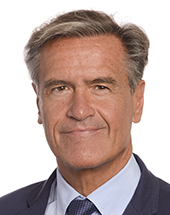
Juan Fernando López Aguilar | Spain ES | Progressive Alliance of Socialists and Democrats (S&D) | 463 |
| 3 |
|
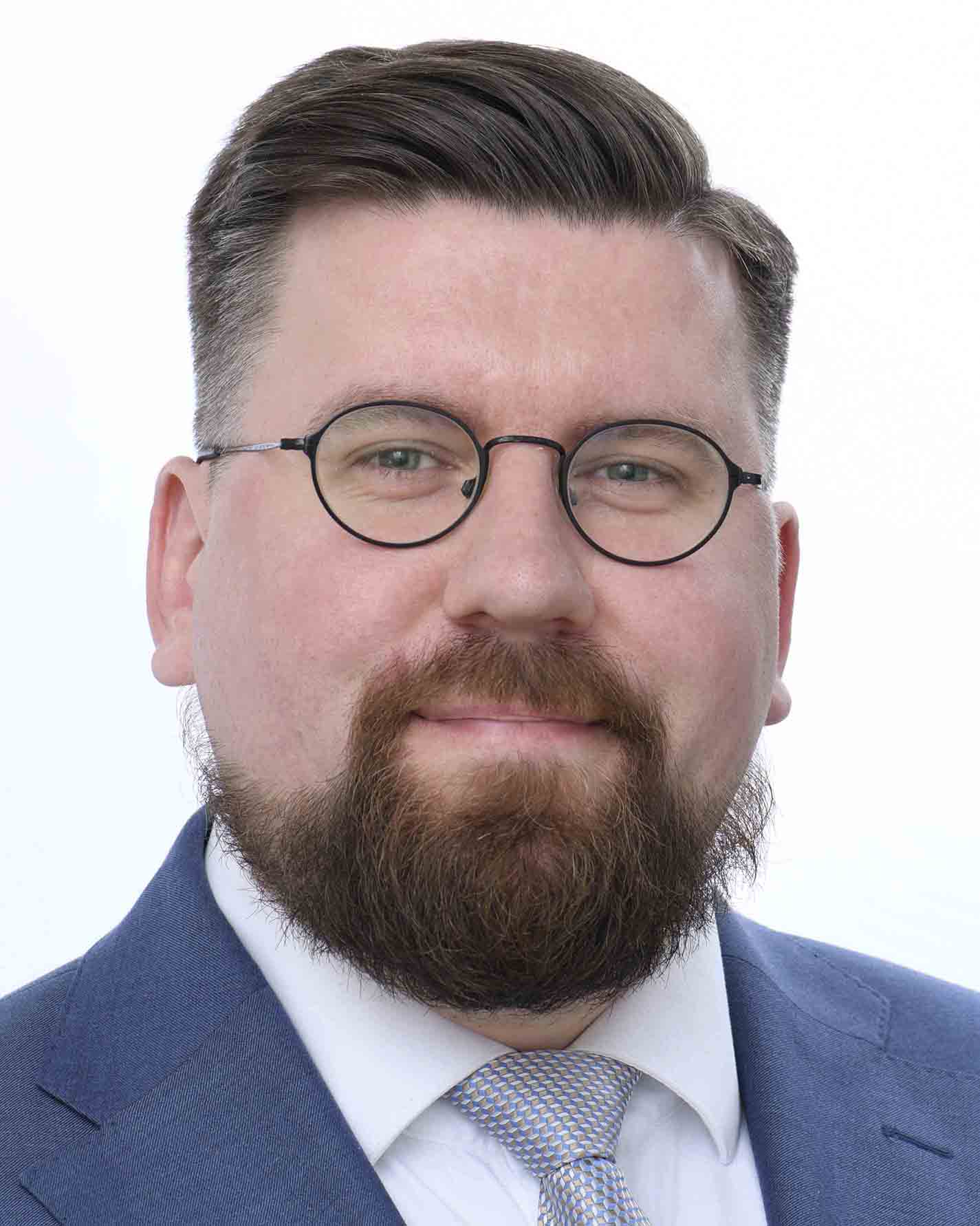
Sebastian Tynkkynen | Finland FI | European Conservatives and Reformists (ECR) | 460 |
| 4 |
|
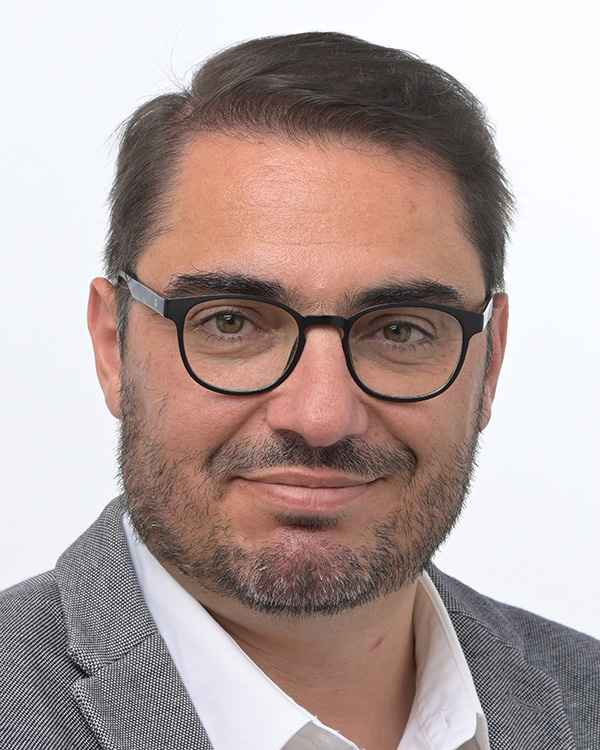
João Oliveira | Portugal PT | The Left in the European Parliament (GUE/NGL) | 288 |
| 5 |

|
Vytenis Povilas Andriukaitis | Lithuania LT | Progressive Alliance of Socialists and Democrats (S&D) | 276 |
All Speeches (56)
Decent working and employment conditions in the aviation sector - Impact of the COVID-19 crisis on aviation (debate)
Date:
08.07.2021 16:10
| Language: EN
Speeches
– Mr President, I would like to thank the honourable Members for their interest and passion in tackling aviation issues. They were not only the ones reflected by the two questions, but we had a whole array of issues around aviation. As Commissioner for Transport, I have learned that everyone is very interested in transport generally, and everyone has an opinion on transport. Of all the sectors and interconnection in transport, I would say that aviation creates more interest for everyone. Some love it, some do not love aviation that much but, for sure, nearly everyone has used, or is using either the services of aviation – meaning flying – or at least products that were transported by air. The importance of the sector overall in our lives is something we cannot deny. This is a sector of highly—skilled people and high—end technologies, so it is a success of our European story, and it is here to stay, as much as the others. Of course, we had the crisis, which brought particularly significant challenges to the aviation sector, to the people who work there and all horizontal industry working for aviation. I recall that we were all so shocked at the beginning, and were concerned about what we could do to help. Now, opinions have nuanced a bit, and some are asking if the help was good enough and if it is creating fair competition or not. Should we change the rules? Some are saying we should bring in further regulation or try to steer things from Brussels. There are some things that are true. Aviation is required, as are other sectors, to decarbonise itself. It is required to have high standards in social matters, and we are on a good path towards this end. It is still true that it has to exist first in order to improve. The whole COVID crisis made us think and introduce the resilience factor into our own policies. I’m saying all this because we are, of course, now seeing the strategy that we are going to put forward – the revision of Air Services Regulation – with the aims which we discussed, and I agree with you that we have to tackle this. All the reports are showing that we have to look at it. As I said, for example, in my initial statement, the fact is that we have to define the notion of operational base and other issues around the subjects covered by the Air Services Regulation. But before doing that, we have to have an evaluation on the crisis situation and on the effects of the crisis. That’s why we ordered a study, which is going to be conducted this year. Someone here asked me to give an exact timeline, so I’m telling you that the Commission proposal can be expected in the first quarter of 2022. According to our better regulation standards, we will have this separate study. The work on the study and the impact assessment will be held in parallel. The two will go together so that, by the end of next year, we can propose something which would be honestly helpful. This is on the Service Regulation. Some of you mentioned the topic of the decarbonisation of aviation. You can expect the ‘Fit for 55’ package, which would include – at least from our transport perspective – the issue of EU aviation, with the aim of helping the decarbonisation of the fuels used. Then, of course, there are other pricing measures, probably proposed by other DGs. In the end, there is no silver bullet for the decarbonisation of aviation. There is a basket of measures, but we have to be reasonable and smart, because we want to keep the competitiveness of the sector, we want to keep the highly—skilled jobs, and we have to take all these actions together with the industry. It cannot be done in an office in Brussels. We have a high responsibility towards the industry, and it is to help them to have the competitiveness and the economic viability to make the changes and the investments needed for the future of this transport sector. Talking about the socially more-responsible sector, it should be recalled that achieving this is not something the Commission can do on its own. This requires the active participation and contribution of all parties concerned. Member States, the Commission, the other institutions, airlines, employers, workers’ organisations – everyone should act together towards achieving this goal. It’s not something which can be produced in a laboratory and then slotted into the system. Again, I’m pleased by the strong interest of the European Parliament in this matter. I’m looking forward to working with you in the years to come for a successful review of the Service Regulation, which would help support the recovery and resilience of the industry in the short, medium and long term. Thank you very much. I’m looking forward to our next debate.
Decent working and employment conditions in the aviation sector - Impact of the COVID-19 crisis on aviation (debate)
Date:
08.07.2021 15:22
| Language: EN
Speeches
– Mr President, honourable Members, the COVID-19 pandemic has been a major shock for the aviation industry. Demand for air travel, in particular for passengers, collapsed in a matter of weeks and the recovery has been slow and fluctuating until recently. The aviation sector is not expected to fully recover before 2024-2026. On the short-term air traffic recovery, the Commission is giving its priority to the best use of airport capacity and traffic increase. As you are aware, the slot regulation has been amended to decrease the slot usage threshold. The Commission is currently working on a delegated act to extend the slot relief rules for the winter 2021-2022 scheduling season. The Commission has also proposed a number of measures aiming at facilitating free movement in the EU, including the introduction of the new digital covid certificate. On 28 June this year, the services issued guidance for Member States to facilitate a smooth rollout of the EU digital covid certificate and to harmonise the different national regimes, notably in aviation. In addition, the state aid temporary framework, adopted in March last year, enables Member States to give support also to the aviation sector. We have extended the temporary framework to enable Member States to use the full flexibility foreseen under the state aid rules to support the economy, including the aviation sector, until the end of this year. Member States can also compensate undertakings for damages suffered directly as a result of government restrictions put in place to contain the spread of COVD-19, based on Article 107 of the Treaty on the Functioning of the European Union. In addition, Member States may also provide rescue or restructuring support to specific airlines or airports, just as they do with other sectors impacted by the crisis. Furthermore, additional financial support to the sector, including the support of the employees, can be provided from the Recovery Assistance for Cohesion and Territories of Europe, the European Social Fund Plus, or from the European Globalisation Adjustment Fund for Displaced Workers. To give you an example, the latter has already supported 1 200 displaced workers from the aviation sector in the Netherlands, 500 displaced workers from the aviation sector in Finland, and 1 500 displaced workers in ground handling in Belgium. As you know, this the Commission is determined to deliver a strong EU special agenda in air transport. Airline practices which constitute abuse of circumvention of applicable law, have no place in the EU’s single market for aviation. The Commission made its position very clear already in the report from March 2019, called Aviation Strategy for Europe: maintaining and promoting high social standards for air crews, the so-called social report. The conclusions of this report remain valid. Substantial EU and national legislation already protects air crews. However, effective enforcement of these rules, which would avoid abusive practices and ensure a level playing field, depends primarily on the Member States. To support Member States in appropriately enforcing rules, the Commission established an expert group working on social matters related to the air crews. The expert group has already yielded concrete and important results by delivering three papers. Two of these are published and available in the Commission’s expert group registry website, and the third one will soon be made available as well. It was a reference to that. In the sustainable and smart mobility strategy adopted in December last year, we have reaffirmed the strong commitment towards promoting high social standards in the aviation sector. The strategy stipulates that we will propose a revision of the air service regulation in 2021-2022. Within this revision, the Commission may propose legislative measures to further clarify or strengthen the effective enforcement by the Member States of relevant national labour law rules in relation to air crews, for instance defining the notion of ‘operational base’, as called for by the expert group on social matters related to air crews. The aim of the proposal will be to support the functioning of the market, not only in normal times but also during sudden and unexpected shocks. So we are committed to deliver a proposal as soon as possible and in line with the Commission’s better regulation standards. But before we present a proposal, it is therefore crucial to assess the structural impacts of the COVID-19 crisis on the sector and how we can help support the recovery and resilience of aviation in the medium and long term. For that purpose, the Commission services will shortly launch a study to that effect. It will be based on a wide sectoral consultation. And in addition, and in light of the EU’s sustainable, smart mobility strategy, we also need to assess how we can further promote social responsibility as well as environmental sustainability. Suboptimal rules may result in loss of connectivity, competitiveness in the global aviation market and jobs. So, as I said, we also need to assess how we can further promote social responsibility as well as environmental sustainability while avoiding suboptimal rules.
Plans and actions to accelerate a transition to innovation without the use of animals in research, regulatory testing and education (debate)
Date:
08.07.2021 15:09
| Language: EN
Speeches
– Mr President, as I have said from the beginning, the message my colleagues wanted to bring to you today is that we are strongly committed to animal welfare, while mindful of our responsibility to ensure the protection of health and the environment. The Commission chose for the regulation a stepwise approach to this directive with the ultimate goal of replacing all animals in science. The directive ensures that other EU initiatives, such as for research programmes, are aligned with the aims established by the directive, and this horizontal approach makes additional strategy documents and actions redundant. For example, we are gathering right now more details on how the specific sectors plan to reduce their dependence on the use of animals. These sectors are human and veterinary medicines, medical devices, food and feed safety, biocides, pesticides, chemicals and possibly others. They are covered by DGs SANTE, Environment and GROW. In accordance with the directive, I will give you a couple of examples of how some of the abovementioned sectors are working on replacing or reducing animal tests. Concerning veterinary medicines, we have a regulation from 2019, which becomes applicable on 28 January 2022. It calls for assessing the feasibility of an active, substance—based review system for the environmental risk assessment of veterinary medicinal products. In fact a system could involve applicants joining efforts to generate the required data, thereby reducing necessary testing on vertebrates. We have an ongoing feasibility study and we are going to submit a report to the European Parliament and the Council by the date of the application of this regulation. Regarding animal feed additives, the preparatory work for the revision of the regulation on additives for use in animal nutrition, includes the objective of reducing animal testing by imposing mandatory data sharing between applicants for feed additives authorisation as regards the toxological tests on vertebrate animals. This would prevent duplication of tests in view of the authorisation process. In the domain of food safety, specifically marine biotoxin testing, the Commission has proposed to discontinue most bioassays. The proposal received the support of the Member States at the end of 2020 and will be published in mid—August this year. In addition, we have other initiatives, like the Chemical Strategy for Sustainability, which will include a strong commitment to promote alternative methods and the use of digital technologies and advanced methods to move away from unnecessary animal testing in both the EU and beyond. As I said, my colleagues are very committed to this subject. We believe that this directive will ensure the gradual replacement of animals in testing and science and, where replacement is not yet possible, the legislation ensures that fewer animals are used over time and that the procedures they undergo are constantly being refined to lessen the effects on their well—being. We look forward to the continued and close cooperation with the Parliament on such a sensitive and important matter.
Plans and actions to accelerate a transition to innovation without the use of animals in research, regulatory testing and education (debate)
Date:
08.07.2021 14:37
| Language: EN
Speeches
– Mr President, honourable Members, the European Union is committed to supporting animal welfare, to improving public health and protecting the environment. We recognise that animals have intrinsic value and the Commission is convinced that animal testing should be phased out in Europe. We are working towards this goal in particular by means of the directive on the protection animals in science, which, as I will explain, is a strategic approach. At the global level this directive is unique as its ultimate goal is the full replacement of animal use in science. The directive is also among the most stringent legislation in the world for protecting the welfare of animals that are still needed for use in scientific research. In the European Union all living animals used in science are protected by this very strict legislation. It applies to the use of animals in all disciplines, from basic research to applied research, the development of medicines, and the safety testing of chemicals. The directive is overarching. All Member States have enacted it in their national legislation. All sector-specific pieces of legislation such as on pharmaceuticals, food or chemicals, must be in line with the objectives of the directive. That means in practice that the use of animals is only allowed if there are no suitable alternatives. Any new initiatives that the Commission is taking, such as the chemical strategy for sustainability, must fully respect the directive’s ultimate goal of phasing out all animals used in science. And let me recall that the use of animals is already forbidden if there are alternative methods available and that the EU already has a ban on using animal testing for cosmetics. As part of our commitment to the eventual replacement of all animals in science, the Commission actively supports the development of alternatives by funding research. This amounts to some EUR 800 million over the past 20 years. We also host the European Union Reference Laboratory for alternatives to animal testing. This way we make tangible contributions to the development and validation of non-animal alternatives. The laboratory has some 50 staff at the Commission’s Joint Research Centre in Ispra. In addition, the Commission is actively involved in, finances and co-chairs the European Partnership for Alternative Approaches to Animal Testing. This is a public-private partnership that includes five directorates-general of the European Commission, 37 companies and 8 European industry federations, each representing a separate industrial area. The partnership aims at replacing animal testing by innovative non-animal testing methods, to reduce the number of animals used, and to refine procedures where no alternatives exist or are not sufficient to ensure the safety of substances. The directive on the protection of animals in science obliges the Member States and the Commission to be fully transparent on the use of animals in science and we recently launched ALURES, a database of statistics that is publicly available. The level of transparency is unique in the world. It helps determine which disciplines use the most animals and use the most severe tests and hence it helps us to better focus the research into alternative methods in these areas. This transparency is a tool showing how many animals are being used in science in the EU and helping us to focus the research. Another tool is knowledge-sharing, showcasing alternatives that are already available and others that are being developed. By shining a light on this progress on alternatives and engaging in the debate, we want to stimulate more change. Recent examples include two very well-attended scientific conferences, including one in February this year. Scientists showed, for example, 3D human kidney tubules for drug-efficacy testing and stem cell models that mimic the function of human organs. We also aim to stimulate trust in those new methods. As I said at the outset, our ultimate goal is to replace the use of animals for scientific purposes. That goal is reflected in EU legislation. We are working towards this goal with all the means we have – research policy, legislation and funding. While science is making progress, we are always looking for ways to accelerate the move towards this goal and reduce the use of animals in science. The different sectors for which we have European legislation, such as human and veterinary medicine, chemicals, food and feed, are all bound to the objectives of this directive to replace the use of animals. We are making targeted efforts. We are pursuing a collaborative and gradual approach, but more scientific knowledge is needed for phasing out animal testing and research completely. So thank you very much for your attention. I’m looking forward to your comments to take to my colleague in charge of this dossier.
Connecting Europe Facility - Streamlining measures for the realisation of the TEN-T - Railway safety and signalling: Assessing the state of play of the ERTMS deployment (debate)
Date:
06.07.2021 12:29
| Language: EN
Speeches
– Mr President, honourable Members, thank you all for your support for the new CEF regulation and the streamlining directive and for further pushing the deployment of the ERTMS on the European network. As I mentioned earlier, with the adoption of CEF II regulation, we will now finalise all preparatory steps with our Agency CINEA to be able to launch the first call for proposals in September. As regard TEN-T, you know that we plan to come forward with a package on sustainable mobility in the Autumn and that will also focus on the TEN-T. The overarching goal of the revision of the TEN-T Regulation will be to contribute to the European Green Deal objectives and the realisation of the sustainable mobility strategy. Indeed, since the adoption of the TEN-T Regulation in 2013, the policy context has changed substantially. The ongoing revision is thus the opportunity to modernise the legal framework and to step up our efforts in aligning the TEN-T with the new priorities. As a result, the guiding principle of the revision is to complete the infrastructure backbone of the single European transport area and to make transport greener, more efficient and resilient. Since there were some worries about the link between CEF and the Union’s climate objectives, let me say a few words on that. So again, the CEF will contribute at least 60% of its funding to the climate objectives and thus support sustainable and green transition. In the transport part it is expected that at least 70% of the budget allocated to measures under the CEF will contribute to climate objectives, in particular support of the construction and upgrade of railway infrastructure, including its electrification. Focus on the alternative fuels infrastructure will be the backbone of the investments. Specifically, we will set up an alternative fuel facility to dedicate more than EUR 1 billion over three years to electricity and hydrogen recharging and refuelling stations. In addition, significant support will be provided to the inland waterways infrastructure, short sea shipping, telematic applications and multimodal transport. Also to contribute to the climate objectives we will include synergies with the energy sector. For instance, the possibility to support the development of port capacities and facilities in relation with offshore wind farms. The support to grid connections in relation to electro mobility and onshore power supply, or the integration of onsite renewable energy generation in the supported projects. So these are just a few words to convince you that indeed CEF and the Union’s climate objectives are very much aligned. And just a small word on the gas worries you have. As regards the financing from CEF energy, since 2014, CEF energy has provided almost 65% of its total budget of EUR 4.7 billion to electricity and smart grid projects, mirroring the increased focus on the electrification of our energy system. The PCI status is a precondition for applying for CEF under the TEN-E window, but no guarantee for financing. And in its proposal for a revision of the TEN-E regulation, the Commission excludes natural gas infrastructure from the scope of TEN-E and makes sustainability assessment of all projects mandatory, thus ensuring the full alignment of the TEN-E policy with the European Green Deal objectives and climate neutrality. Therefore, based on the Commission proposal and if agreement with the co—legislators will be reached now, gas natural gas infrastructure would receive PCI status under the six PCI list, which is expected to be adopted in 2023. So these are some of the thoughts we, myself and colleagues, have as regards energy to align our investment with the objectives of our climate pact. In the end, I very much look forward to continuing our discussions on connecting Europe and the TEN-T revision and the interinstitutional debate that we will organise in September as part of our TEN-T days meet European Year of Rail Event. You are of course invited. Thank you very much for the debate today and your support.
Connecting Europe Facility - Streamlining measures for the realisation of the TEN-T - Railway safety and signalling: Assessing the state of play of the ERTMS deployment (debate)
Date:
06.07.2021 11:43
| Language: EN
Speeches
– Mr President, it’s wonderful for me to be back here with you, especially on a discussion on Connecting Europe. As Transport Commissioner, I see strengthening the connection between countries, regions and people as being my main mission. Of course, we need to do this sustainably, safely and intelligently and align with the goals of the European Green Deal. The priority remains connecting Europe in line with these principles. The trans—European networks represent the physical connections between our countries – the transport, energy and digital connections. Where we have physical links, economic, social and emotional links always follow. This makes the trans—European networks vital for our single market, but also the integration at the heart of the European project. With the Connecting Europe Facility (CEF) we have a tool to future—proof our trans—European networks for transport, energy and digital. CEF II, which you are endorsing today, will support the goals of the European Green Deal and our sustainable and smart mobility strategy with at least 60% of funding allocated to actions supporting the EU’s climate objectives. For transport, the focus is on completing the TEN—T core network by 2030 and the wider network by 2050, but CEF is also supporting the large—scale deployment of the infrastructure for alternative fuels. We will also be making the network fit for the digital revolution, crisis—proof and resilient to climate change. Safe and secure parking areas, and improvements on road safety in cohesion countries will also be supported. Last but not least, we will back projects that facilitate civilian defence, dual use of our TEN—T infrastructure. For energy, CEF supports the development of priority cross—border energy infrastructure projects as part of the TEN—E networks, further integration of the internal energy market and interoperability between networks across borders. It also includes a new window for cross—border projects in the field of renewable energy to support renewable projects, and for digital CEF supports the deployment of state—of—the art digital networks and 5G systems. The pandemic and the accompanying demand for secure internet connections and higher capacity has underlined the importance of continued network investment. I would like to thank the European Parliament, and in particular the rapporteurs Mr Marinescu, Mr Riquet and Ms Virkkunen for their constructive and dedicated work throughout the legislative process and their continued support for the CEF Programme. Once we have agreement on CEF II Regulation we will be able to start work first by approving work programmes for each sector, then by publishing the first call for proposals in September. About the TEN—T streamlining, today you will also adopt our proposal on streamlining the processes involved in advancing the TEN—T. The smoother the process, the faster we will have the full network in place, the earlier the citizens will benefit from investment, including those coming from the CEF. Investing in TEN—T infrastructure projects involves environmental assessments, land—use approvals, public procurement, state aid procedures and other authorisations and permits. The complexity involved, the different procedures across Member States, often cause delays to TEN—T projects, in particular of transboundary nature. This in turn means cost overruns which is off—putting for private investments. Simply, shortening permit procedures could have an impact, including ultimately on how efficiently public money is spent. This is the aim of our proposal. As we move steadily out of the COVID—19 pandemic, it is no exaggeration to say that the adoption of this legislation will also aid economic recovery in Europe. With faster and clearer permit procedures we will make better use of the time and money invested in the TEN—T network. It is also essential that the investment of public money benefits all EU citizens’ health, the importance being to ensure accessibility for persons with disabilities and older persons in transport infrastructures, infrastructure projects. Transport infrastructure projects will always be subject to contingencies. However, the Streamlining Directive, which is the first of its kind in the transport sector, sets the framework for the future, and I thank the rapporteur Mr Riquet for his work on the file. I would like also to say a few words on ERTMS as I know that you will also be discussing Ms Bilbao Barandica’s report on this today. My thanks to Ms Bilbao Barandica for the initiative. It really must remain a central pillar in Europe’s transport mix. If more people choose rail we will be on track to meet our emissions targets. But to win over passengers and freight, rail must do better. Improving rail performance is what ERTMS, and more broadly the digitalisation of rail, is all about. High—level ERTMS is the fastest and cheapest way to add capacity to the network. To address some of the points raised in the report, in the short term I would hope that Member States live up to their deployment commitments but it is both deployment of ERTMS at level two or above and the removal of class B systems that will take us beyond this complex expensive transition phase to a simpler, cheaper more uniform system. The Commission has tools to influence this and will use them, but delivery trackside and on board trains is the key to success. On funding, the responsibility is shared. The EU has funded ERTMS with around 4 billion since 2007, and more will certainly follow, but the deployment for just the core network corridors and vehicles costing around 15 billion between now and 2030, EU funding alone will not be enough. We will also need Member States, the European Investment Bank and other support. As we move forward I’m confident that having the European Railway Agency, as the ERTMS System Authority, will mean improvements in ERTMS deployment. Next year we will present a revision package for technical specification for interoperability, setting out the regulatory framework for further improvements. In the longer term I look forward to the migration to radio—based L2 or L3 ERTMS for greater technical and operational harmonisation. I hope to see Europe’s rail joint undertaking coordinating this, taking us towards a genuine European rail traffic management system. To summarise, the Commission shares the goals set out in Ms Bilbao Barandica’s report and broadly the same diagnosis of how to support ERTMS deployment. So ladies and gentlemen, thank you for your time. I’m looking forward to further comments coming from you and to continuous cooperation on this topic.