

| Rank | Name | Country | Group | Speeches | |
|---|---|---|---|---|---|
| 1 |
|
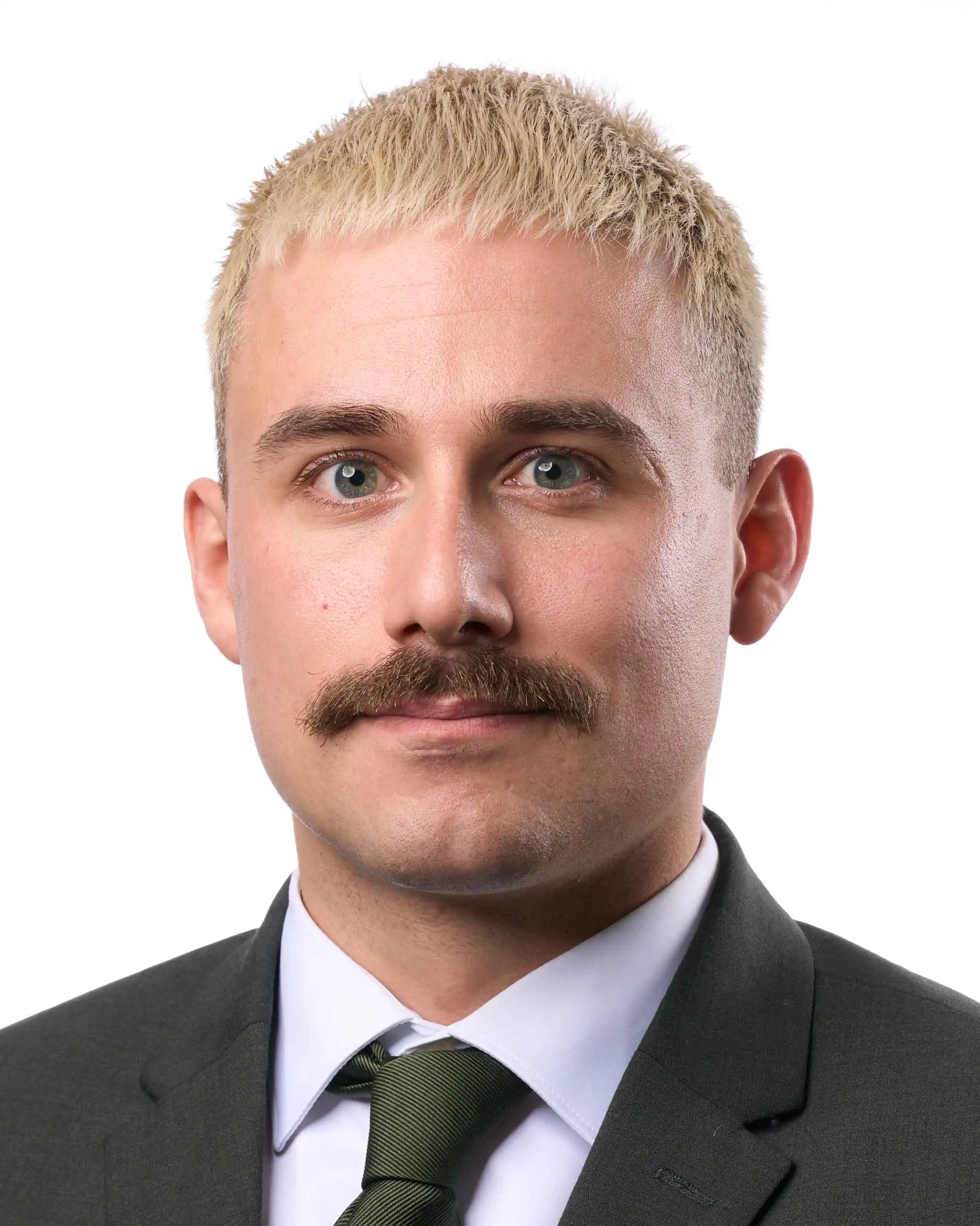
Lukas Sieper | Germany DE | Renew Europe (Renew) | 494 |
| 2 |
|
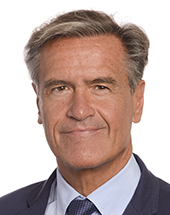
Juan Fernando López Aguilar | Spain ES | Progressive Alliance of Socialists and Democrats (S&D) | 463 |
| 3 |
|
Sebastian Tynkkynen | Finland FI | European Conservatives and Reformists (ECR) | 460 |
| 4 |
|
João Oliveira | Portugal PT | The Left in the European Parliament (GUE/NGL) | 288 |
| 5 |
|
Vytenis Povilas Andriukaitis | Lithuania LT | Progressive Alliance of Socialists and Democrats (S&D) | 276 |
All Speeches (27)
Single Market Strategy (debate)
Date: N/A | Language: EN Written StatementsThe European Single Market Strategy is fundamental to our common prosperity and unity. The Single Market is one of the greatest achievements of the European Union, providing unique opportunities for growth and innovation to our citizens and businesses. However, significant barriers still exist that hinder the free movement of goods, services, capital, and people. It is essential to accelerate efforts to harmonize regulations, simplify administrative procedures and remove unjustified obstacles. Moreover, addressing digital fragmentation and fostering digital transformation represent the most significant challenges and solutions for enhancing future competitiveness. Additionally, addressing sustainability and climate change through green innovation, as well as improving the resilience of supply chains to prevent future disruptions, are critical challenges we must tackle. We must ensure that the Single Market Strategy genuinely supports SMEs, the backbone of the European economy, by facilitating their access to finance, digitalization and new markets. At the same time, we need efficient mechanisms to protect consumers and ensure fair competition. Dear colleagues, strengthening the Single Market is not just an economic opportunity but also a political commitment to a more integrated and stronger Europe.
The future of European competitiveness (debate)
Date: N/A | Language: RO Written StatementsThe Draghi report highlights the decline in the European Union's economic and symbolic power in recent decades, highlighting in particular vulnerabilities related to defence and security. Europe has focused excessively on profit and cost optimisation, to the detriment of investment in research and innovation. Dependence on cheap imports from Asia and a lack of investment in technology and industry affect the EU’s competitiveness. The problem is aggravated by excessive gold-plating and political fragmentation, which hinder the formulation of long-term strategies. The report underlines the need to reduce dependence on third countries, considered a geopolitical vulnerability. Attention is also drawn to the inefficiency in the defence industry, with multiple equipment models compared to US standardisation. A common vision at European level is needed to invest in defence and stimulate innovation. Unless corrections are implemented in areas such as education and investment in skills, the EU risks losing its attractiveness and eroding its global position. Deeper reforms are needed to reduce economic inequalities, strengthen social protection systems and ensure that all citizens, especially vulnerable people, benefit from economic growth. We can look at the Draghi report as a potential basis for a long-term plan, essential for the future of Europe.
The need to combat antisemitism and protect Jewish life in Europe, following the recent attacks against the Jewish community in the Netherlands and Belgium (debate)
Date:
29.04.2026 17:19
| Language: RO
Speeches
Madam President, ladies and gentlemen, we strongly condemn the attacks against Jewish communities in the Netherlands, Belgium and beyond. These facts show a serious rise in antisemitism in Europe. For the Group of the Progressive Alliance of Socialists and Democrats, protecting the lives of Jewish communities is a clear obligation. There is no compromise here. But what we are seeing are not isolated attacks, they are hybrid attacks, coordinated attacks, disinformation, online incitement, networks that amplify hatred. Beyond speeches, we need concrete measures: European cooperation to identify and stop these networks, strong action against anti-Semitic disinformation, strict rules for digital platforms, real protection for Jewish communities, law enforcement without exception. And one important thing – education about the Holocaust. Security is not enough without prevention. We must act before hatred turns into violence. No matter how we value the actions of the State of Israel, anti-Semitism does not take place here.
Tackling barriers to the single market for defence - Flagship European defence projects of common interest
Date:
10.03.2026 22:21
| Language: RO
Speeches
Madam President, Commissioner, ladies and gentlemen, these reports are very important for the future of European security. They start from a clear reality: Europe has a strong industry, but it is fragmented - too many systems, administrative barriers and too little real cooperation. The reports propose concrete solutions: single market, joint procurement, safer supply chains, support for innovation and SMEs, joint production. Analyses show a clear potential: defence costs would fall by 30% if the European investment increases. But this report also sends an important political message: we need to change Europe's strategic logic. For a long time I thought according to the principle of proximity to the threat - who is closer to risk invests more. Today this model no longer works. The threat is coming not only from the East, but from everywhere, from cyberspace and other areas. Geography no longer protects anyone.
Building a stronger European defence in light of an increasingly volatile international environment (debate)
Date:
10.02.2026 11:58
| Language: RO
Speeches
No text available
Drones and new systems of warfare – the EU’s need to adapt to be fit for today’s security challenges (debate)
Date:
22.01.2026 09:46
| Language: RO
Speeches
Mr President, Madam Vice-President, ladies and gentlemen, the war has changed. The drone has become a mass weapon, has low cost and great efficiency. Europe, however, is not sufficiently prepared. We have fragmented acquisitions, we have critical dependencies on external suppliers for chips, sensors, batteries. We have rules that go slower than technology. In the European Parliament we have to do three things: a common framework for drones and counter-drones, fast, interoperable joint European procurement, and clear rules for military artificial intelligence. Europe's security no longer depends on size, it depends on speed, it depends on coordination, our ability to act together, because delay costs. We have two concepts born in these years in Europe and even promoted by the European Commission: European Drone Defence Initiative part of Defence Readiness Roadmap 2030 and Eastern Flank Watch, cintegrated anti-drone apacity. These are, unfortunately, under construction. They're under construction, we need to put them in operation.
Online piracy of sports and other live events: urgent need to address unsolved issues (debate)
Date:
21.01.2026 20:04
| Language: RO
Speeches
Mr President, Commissioner, online piracy of sporting events is no longer a marginal problem, it is an illegal, fast and well-organised economy. Data show losses of more than EUR 10 billion annually in the European Union. Last year, a network of 22 million illegal users around the world was dismantled in Spain. This value is very high. If the reaction is delayed, any right, any legislation becomes useless. That is why our response at this time is fragmented. Blocking takes too long, rules differ from country to country, platforms do not react and the message must be very clear to the Commission: we need fast lock-in, clear responsibility for platforms and standardised cross-border cooperation. If dynamic injunctions do not work, perhaps common operational guidelines are needed, and if they do not work either, I think we need a new regulatory framework, much more adapted to this type of illegal manifestation.
Mr President, High Representative, Central and Eastern Europe does not discuss the subject of defence and security in abstract terms, it discusses from direct experience. The Eastern border means military pressure, hybrid attacks, disinformation, economic insecurity. You understand these things very well. For our region, European foreign policy is not a diplomatic exercise, it is concrete protection. Three things are necessary. Real political unity ‐ any veto right for a nation weakens and costs us safe. Secondly, a credible defence capability ‐ our colleagues' report suggests some interesting things. Also, European foreign policy does not suffer from a lack of values, it suffers from a lack of joint decision. While threats are quick, our response is procedural. While the eastern flank seeks protection, the Union negotiates formulations. Eastern Europe is not asking for privileges, it is asking for an acting Union, and I think it is time to refuse to vassalize Europe.
European Democracy Shield – very large online platform algorithms, foreign interference and the spread of disinformation (debate)
Date:
18.12.2025 11:08
| Language: RO
Answers
No text available
European Democracy Shield – very large online platform algorithms, foreign interference and the spread of disinformation (debate)
Date:
18.12.2025 11:06
| Language: RO
Speeches
No text available
Mr President, European Democracy Shield enters the last stage: that of action. I think that for us, especially those who lived during the communist period in the countries of the East, we must mention that this project should keep its transparency and maintain dialogue even with the opponents of democracy. There are a few other important conditions. First, the European Centre for Democratic Resilience: It needs to be set up quickly, to know the structure, the transparency, the people who deal with it. Then there is the transparency of the instruments: I was just saying incident protocol, network of fact-finders. We also need public guidelines and procedures that are publicly recognised. Finally, the third element: I think it is very important how countries apply the obligations. It must be monitored and also subject to transparency. The fourth element is related to independent media. There is no democracy without independent media, and here we have to monitor very precisely what will happen.
European Defence Industry Programme and a framework of measures to ensure the timely availability and supply of defence products (‘EDIP’) (debate)
Date:
25.11.2025 10:27
| Language: RO
Speeches
Madam President, Commissioner, congratulations! EDIP changes the rules in Europe, puts the defence industry at the centre and transforms procurement from national decisions into joint processes. That is, we are finally giving birth to the common defence ecosystem in Europe. For our countries, the stakes are clear: If you join European networks, you gain access to contracts and technologies, if you stay on the sidelines, you continue to depend on imports. The rules are tough, demanding supply chains, ownership without external influences and real production capacities. This strikes directly at the weaknesses of the local industry. There's one more thing: This program requires speed, and that's a very good thing, because we don't have time. However, we have windows of opportunity and we can build partnerships, modernize factories and reposition our companies in European consortia. True, EDIP does not offer long time, but it provides a very clear framework, and Europe is gaining from this project. Congratulations!
Institutional consequences of the EU enlargement negotiations (debate)
Date:
21.10.2025 13:34
| Language: RO
Speeches
Mr President, ladies and gentlemen, Mr Sandro Gozi's report is an example of a rational and courageous project at the same time. The European Union is really facing a decisive moment. Enlargement has been seen as a political promise, but it is a test of our institutional capacity. If we want a bigger Union, we need a more efficient Union. Our report makes it clear: without reforms, enlargement risks blocking decision-making mechanisms and weakening citizens’ trust. We need to adjust the vote in the Council, strengthen the role of Parliament and prepare a Commission fit for a Union of more than 30 states. An enlarged Union must remain able to decide quickly, protect democratic values and act united on the global stage. Enlargement and reform must go together. Only then will we have a stronger and more credible Europe.
Need for a strong European Democracy Shield to enhance democracy, protect the EU from foreign interference and hybrid threats, and protect electoral processes in the EU (debate)
Date:
10.09.2025 18:58
| Language: RO
Answers
I don't usually give interviews, I don't remember and I didn't give interviews at Antena 3. Maybe someone else said that. Dear Madam, of course we have some situations in which the institutions may not have communicated exactly as they should have in the case of democracy and this vision of yours is one, certain, ideological and partisan.
Need for a strong European Democracy Shield to enhance democracy, protect the EU from foreign interference and hybrid threats, and protect electoral processes in the EU (debate)
Date:
10.09.2025 18:56
| Language: RO
Speeches
Madam President, Commissioner, one European Democracy Shield It is not an institutional luxury, but a strategic necessity. Today, democracies are no longer attacked only with weapons, but by manipulating information, distorting electoral processes and undermining citizens' trust. We need urgent and swift action. I propose three urgent directions. First, I was happy to hear it from the Commissioner, a European centre for democratic resilience, connected to national services, able to monitor and react to real-time hybrid interference and attacks. The second would be a common framework for the protection of electoral processes, minimum standards for the security of databases, transparency in campaign financing and control over microtargeting-the electoral system. Third, an early warning and counter-narrative mechanism for citizens to receive verified information before propaganda fills the entire public space. Dear colleagues, if we do not build these mechanisms, the next elections will become the target for hostile actors and I hope, Commissioner, that ReArm and SAFE, our mechanisms will...
Strengthening Moldova’s resilience against Russian hybrid threats and malign interference (debate)
Date:
09.09.2025 19:59
| Language: RO
Speeches
Mr President, Commissioner, the Republic of Moldova is today one of the countries most exposed to Russia's hybrid aggressions: disinformation campaigns, energy pressures, attempts at economic and political destabilisation. In the face of this permanent attack, our gesture of solidarity is very beautiful and this touches us, the Romanians, as well as our Moldovan brothers, but we have to do some concrete things. There were appreciated here, mentioned some concrete things, our aids for Moldova, but I specify a few more things. Firstly, we need to help them strengthen energy security through joint digital defence programmes and by connecting to our rapid response mechanisms. Secondly, energy interconnection must be accelerated so that Chisinau is no longer a prisoner of multiple energy dependencies, even if progress has been made lately. Last but not least, it is about democratic resilience, support for independent media, fighting disinformation and supporting local public administration in particular. By supporting Moldova, we also protect ourselves, strengthen the eastern flank, strengthen citizens' trust in our project and show one thing: Europe does not abandon its neighbours, it supports them in resisting and prospering in the face of this aggression.
Mr President, Commissioner, the revision of the Association Agreement is a hard decision, but the weight of this decision must not cause us to lose our balance. Yes, it seems like a confrontation of perceptions, one between David and Goliath, but in this struggle of perception, let's not forget that on October 7 there was a brutal attack, with over 100 civilian deaths, with hundreds of hostages. Sanctioning Israel without nuances in this context risks being perceived as a blank check for organised terrorism. At the same time, we cannot ignore the reality in Gaza, as you said, the obligations assumed under the Association Agreement, so our decision must be one of balance. More than 60% of the residents of the kibbutz have left their homes, dozens of families are waiting for the hostages to return. The government sends humanitarian aid to Gaza, but does not advertise so as not to lose its coalition partners. So, the revision of the agreement must be a tool of dialogue, not of rupture, our position must be clear: two states in peace and security. But until then we must remain just, not partisans, not radicals, but Europeans faithful to our values - humanity, justice and balance.
Mr President, dear colleagues, dear young people who are in the stands, we mark a day of memory and truth, we commemorate the Armenian Genocide, a historical tragedy in which over one and a half million Armenians were exterminated in the Ottoman Empire. This act was not only a profound humanitarian suffering, but also a historic precedent. The silence of the world at that time paved the way for crimes in the 20th century. "Who remembers the Armenians?" asked Adolf Hitler rhetorically and cynically. Today we have a moral duty not to close our eyes, because this means justice and is a sign of our commitment to humanity and democratic values. Turkey today does not inherit the guilt for the acts committed a century ago, but the guilt begins when you choose to hide a crime, not when you choose to admit it. Assuming the past is not a weakness, but a sign of strength. It is a sign of political courage and dignity. Denying genocide is not an opinion, it is a form of complicity. Today we express our solidarity with the Armenian people and reaffirm our commitment to a world where historical truth no longer needs to be negotiated politically.
Unlawful detention and sham trials of Armenian hostages, including high-ranking political representatives from Nagorno-Karabakh, by Azerbaijan
Date:
12.03.2025 21:46
| Language: RO
Speeches
Mr President, dear colleagues, the situation of Armenian political prisoners in Nagorno-Karabakh raises fundamental questions about justice, stability and the future of peace in the South Caucasus. Of course, the Caucasus region, as James Forsyth describes it, is one of the most colorful and vivid in the world, and the diversity of local interests complicates any diplomatic situation and any diplomatic action. However, when it comes to peace and stability in the Caucasus, the European Parliament has not deviated at all from its principles and values. Armenia’s sovereignty, territorial integrity and independence animated resolutions such as that of 13 March or 24 October 2024. Unfortunately, Azerbaijani authorities persist in human rights violations, promoting aggressive rhetoric against Armenia, persecuting Armenian officials in Nagorno-Karabakh. Against this background, we propose that the Union and the Member States watch over trials and visit Armenian hostages. We went even further, advocating sanctions against Azerbaijani officials responsible for judicial abuses. The EU's sanctioning regimes allow us to take strict action against officials as a first step to deter future abuses. The prospects are not positive, therefore, given the military movements in the area, I think we must not wait for a great tragedy to happen in order to adopt concrete measures. This is kind of a question for the Commission at the moment. Dear colleagues, as I said before, the South Caucasus is a particularly complex region. We must therefore act diplomatically, intelligently, but firmly, to protect our values and human rights. Prisoners are not just a number, they are someone's brothers, parents and children, they deserve freedom. The release of political prisoners should be part of a broader effort to build a future based on mutual trust and cooperation, but above all on respect for the global order and rules. We must fight to keep this vision alive.
White paper on the future of European defence (debate)
Date:
11.03.2025 19:31
| Language: RO
Speeches
Mr President, Commissioner Kubilius, we have heard today that the time for illusions has passed, so we must say that the time for paper strategies has also passed. We now need a roadmap for a European army. We need an action plan to strengthen the European Union's strategic autonomy and reduce its dependence on NATO at this time. We need three pillars for that. There was a lot of talk about the first two: creating first of all its own military capability, then an integrated defence industry and above all, I would say, its own deterrence strategy. I will insist on this third element. We need a European military and economic deterrence mechanism capable of countering external threats without depending on NATO, and here are a few things. First, it would require the construction of a doctrine of its own, a military response scenario in the event of an attack, and the operationalisation of Article 42 of the Treaty on European Union, similar to Article 5 of NATO. We need a European defence shield for cyber-attacks, for example, but perhaps also a missile shield and also a clear definition of when and under what circumstances the European Union intervenes militarily, both internally and externally. It is an investment of intelligence that is absolutely necessary. We would also need a defence governance structure, because it is now fragmented.
Establishing the Reform and Growth Facility for the Republic of Moldova (debate)
Date:
10.03.2025 20:43
| Language: RO
Speeches
Madam President, ladies and gentlemen, the Republic of Moldova is in a process of rapid transformation. It's amazing what's going on. It is approaching the European Union step by step. These changes, in order to be sustainable, need to increase the capacity to withstand shocks, to increase societal resilience. Moldova is in a fragile geopolitical context, marked by many risks and threats. That is why three elements are very important here: democratic and institutional resilience. Here we see a lot of progress in the fight against corruption and institutional transparency. Economic resilience – Moldova also needs to diversify its economy, boost investment and reduce its dependence on external sources. The strategy of independence and energy efficiency made with the help of the European Union is very important. And also societal resilience and community cohesion – here, we must support social protection, access to education and health and vulnerable groups. This is why societal resilience is important and an investment. Congratulations to the rapporteurs! Congratulations, Commissioner, on your work!
Collaboration between conservatives and far right as a threat for competitiveness in the EU (topical debate)
Date:
12.02.2025 13:35
| Language: RO
Speeches
Mr President, dear colleagues, sometimes there is a temptation to take on the narratives of the far right or to make concessions for the sake of the popularity of topics that are populist. It is a trap and a great danger to Europe's competitiveness. The well-being and prosperity of EU citizens depends on its competitiveness in this global economy. Maintaining the European Union's competitive advantage requires international scientific and technological collaboration. Restricting the free movement of labour and capital reduces the ability of European companies to attract talent and investment. Isolationist trends put at risk innovation and research, which are drivers of competitiveness. For Europe's security we need interoperability, the single market, the banking union and what we might call cultural interoperability. So, let's avoid this trap! Europe, in order to remain competitive in the world, must also combat extremist tendencies, among other dangers.
Misinformation and disinformation on social media platforms, such as TikTok, and related risks to the integrity of elections in Europe (debate)
Date:
17.12.2024 16:25
| Language: RO
Speeches
Mr President, democracy operates on the basis of rules and responsibility, otherwise it is chaos. Therefore, I believe that the discussion about TikTok and networks is not only a Romanian business, as it tends to become, but it is a problem of the entire European Union. I would like to say one thing, it is true that TikTok oversimplifies and polarizes political communication, but let's not just blame the platforms for what is happening, for political attitudes or behaviors, because we in politics simplify a lot. And I'll give you an example: We are also divided in Romania, and here in Parliament, into pro-Europeans and sovereignists or patriots. Leaving the label of pro-Europeans means that others are not with Europe or that Europe would have something that is against national interests. Both statements are false, so this is a simplification. That's why I think we need to move to regulation without censorship and without banning networks. Meta, for example, did not comply with EU law. For example, an independent study in Romania showed that there were 25 Facebook pages that were viewed 160 million times and made propaganda for a particular candidate, for candidate Georgescu. I also believe that legislation is really important. We should create a crisis cell at European Union level, from Cybersecurity Agency, working with other countries to see what we have to do in the future. Of course, there must be other regulations, but they will surely come.
Full accession of Bulgaria and Romania to the Schengen Area: the urgent need to lift controls at internal land borders (debate)
Date:
26.11.2024 19:23
| Language: RO
Speeches
No text available
Strengthening Moldova's resilience against Russian interference ahead of the upcoming presidential elections and a constitutional referendum on EU integration (debate)
Date:
08.10.2024 16:47
| Language: RO
Speeches
Mr President, dear colleagues, in 1940, the Republic of Moldova came under Russian occupation, as did Latvia, Estonia or Lithuania. Today's vulnerabilities of this country are the consequence of this history and of this unfortunate geostrategic position. But today Moldova is on the front line of the war with Russia, along with Ukraine, and we are still behind the front. Social problems, migration, underdevelopment, complicate the situation a lot. However, under the courageous leadership of Maia Sandu and a team of Moldovan politicians, this heroic nation is accelerating reforms and modernization, making remarkable progress. Partnership with the European Union is necessary because it raises living standards, helps modernise and strengthens security. October 20 is very important for the European route of the Republic of Moldova, and today's document represents a gesture of solidarity for a courageous nation that seeks to regain its place in Europe. Moldova is looking to return home, that is, to Europe. Our message is very clear: Dear Moldovans, you are not alone!