

| Rank | Name | Country | Group | Speeches | |
|---|---|---|---|---|---|
| 1 |
|
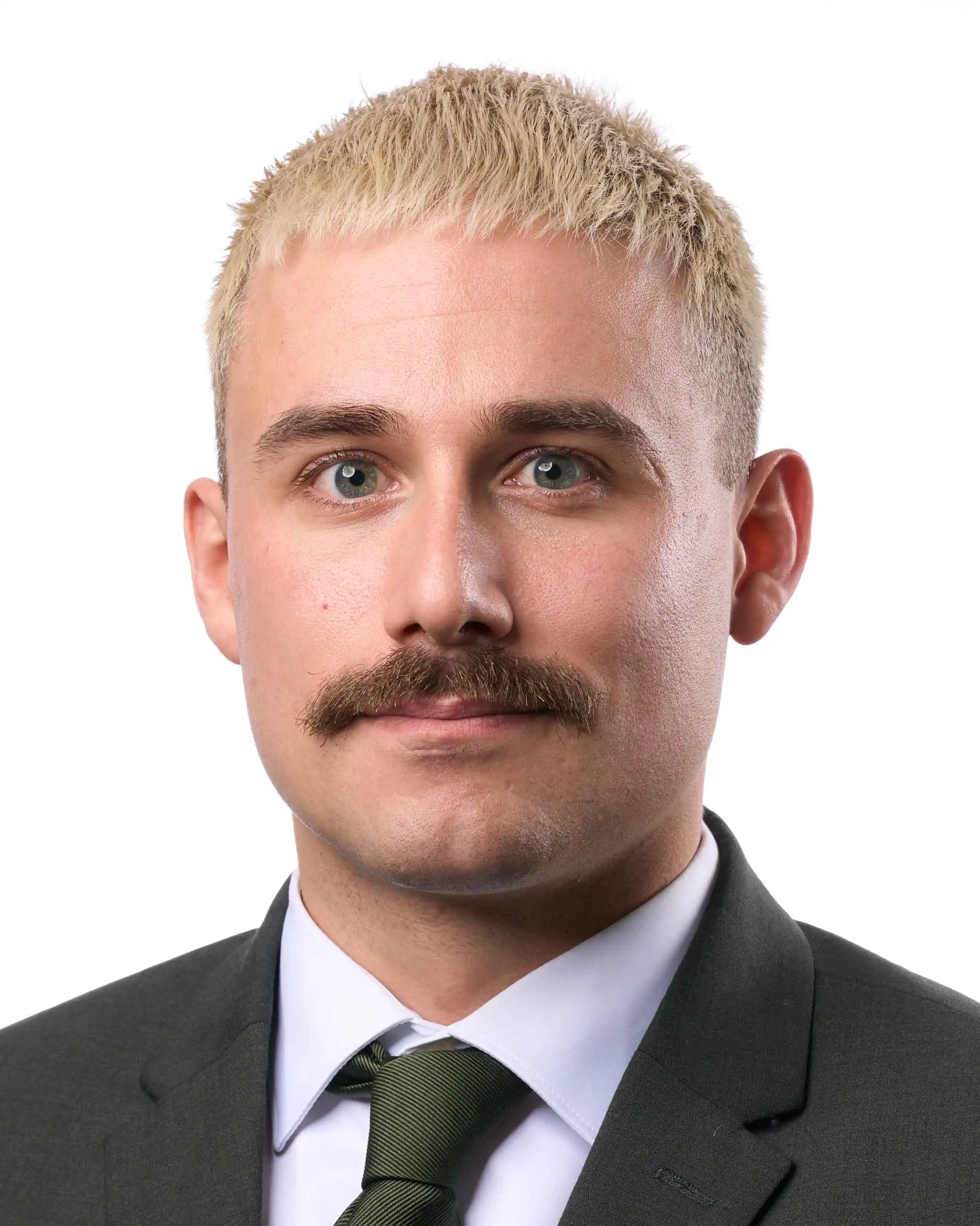
Lukas Sieper | Germany DE | Renew Europe (Renew) | 487 |
| 2 |
|
Juan Fernando López Aguilar | Spain ES | Progressive Alliance of Socialists and Democrats (S&D) | 454 |
| 3 |
|
Sebastian Tynkkynen | Finland FI | European Conservatives and Reformists (ECR) | 451 |
| 4 |
|
João Oliveira | Portugal PT | The Left in the European Parliament (GUE/NGL) | 284 |
| 5 |
|
Vytenis Povilas Andriukaitis | Lithuania LT | Progressive Alliance of Socialists and Democrats (S&D) | 273 |
All Speeches (28)
Topical debate requested by a political group (PfE) (Rule 169) - Commission interference in democratic process and elections (topical debate)
Date:
29.04.2026 14:54
| Language: IT
Speeches
Mr President, ladies and gentlemen, to say that Europe interfered in the defeat of Orbán is a fairy tale to cover up the failure of its policies. The real point is another: We live in an age of digital oligarchies, where few platforms vaguely decide what we see, who speaks and who disappears. Between '21 and '25 Meta drastically reduced the visibility of political content and in Italy the channels of parliamentarians have lost about 72% of their reach. Meanwhile, during the campaign for Europeans, a handful of extremist pages reached more citizens than all the elected ones combined. We cannot accept a system in which billionaires decide the boundary of public debate. We cannot accept a democracy filtered by invisible algorithms. This is not a free market: It is concentrated power that distorts democracy. Well, therefore, transparency and well the Europe that investigates and controls, because what is at stake is not only the market or communication; What is at stake is democracy itself.
Single Market: how to move from an incomplete single market to one market for one Europe (debate)
Date:
10.03.2026 11:48
| Language: IT
Speeches
No text available
State violence in Minneapolis and the rule of law in the United States (topical debate)
Date:
11.02.2026 13:33
| Language: IT
Speeches
Madam President, ladies and gentlemen, the ICE crimes in Minneapolis are not only against the United States of America, but a very unliberal and very liberticidal extreme right is growing all over the world. It is a threat, therefore, that affects everyone, because this right, even in our cities, speaks of security, but produces repression. It uses loneliness and anger to promise order, but it produces fear. We are something else. The democracy on which Europe is founded is a defence of the last, a movement towards equality, a commitment and hope for a better future. This is why the technoligarchies of the world are afraid of Europe. But America, fortunately, is a great and strong democracy. It is reacting with massive demonstrations, with democratic victories, with the revolt of the world of culture, sport, civil society, as we have seen, with the incredible popular support of the artist Bad Bunny, in front of tens of millions of Americans. From this place of democracy, therefore, the same commitment: No to the order that kills the future, no to the hatred that kills the future, no to the hope that creates it with democracy.
No text available
Madam President, ladies and gentlemen, artificial intelligence and the digital revolution are the true geopolitical infrastructures of the century. Those who govern them establish not only economic flows, but also the forms of thought. New policies are therefore welcome, because the delay must be recovered and a contradiction must be overcome: We Europeans regulate what we have not built. And the development of technology is neutral only in rhetoric. In practice, it incorporates choices, value, hierarchies, starting with ownership and access. Who owns the models, the data center, influences choices, preferences and ultimately also democracy. We therefore need public policies, common investments, creating an internal market, promoting state partnerships, businesses and universities to build an ecosystem of digital sovereignty. We must do this first and foremost for young people. We have inherited a system of freedom and democracy and we cannot leave them a future of new and modern oppression. Let's move on, then: We are investing for the future of Europe and the new generations.
Mr President, ladies and gentlemen, we have always known this: They are afraid of the European Union for its values and for its unity and for this reason they attack it and it must be saved. But it is not only saved with words or standing still. Saving it means taking a leap forward in integration, investment, strategic autonomy, energy, digital, innovation and common European defence. It means common political will in foreign policy, relaunching social cohesion, which is important for the dignity of the person and for competitiveness. We are living in the most dramatic period since the end of the Second World War because they want to replace an even imperfect order with the law of the strongest. People need a democratic Europe for justice and the world needs a strong Europe for peace. So let governments move now, let them act together to resume the path of a free and united Europe. We must live up to history, because the problem is not the European Union, but its enemies.
Preparation of the European Council meeting of 18-19 December 2025, in particular the need to support Ukraine, transatlantic relations and the EU’s strategic autonomy (debate)
Date:
17.12.2025 10:11
| Language: IT
Answers
We defend the Europe of freedom, by Alcide De Gasperi, by Adenauer, by Spinelli, by Delors, by Romano Prodi. It is you, when you allied with the nationalist right, who betrayed your own heritage, changed you and respected those who remained in the European Parliament who defended Europe's founding values.
Preparation of the European Council meeting of 18-19 December 2025, in particular the need to support Ukraine, transatlantic relations and the EU’s strategic autonomy (debate)
Date:
17.12.2025 10:09
| Language: IT
Speeches
Madam President, ladies and gentlemen, Europe's strategic autonomy is indispensable, but hypocrisy is enough: Autonomy is unity, sharing common policies and investments, it is not national shyness of this time. Thanks to the European Union, we have guaranteed our citizens peace, prosperity, solidarity and, within Euro-Atlantic balances, security and sovereignty for decades. Today, everything is under discussion and the Union that exists is no longer enough, only a more integrated, federal Europe will be able to face the future. Therefore, it is necessary to have courage, to make clear choices and to strengthen Community policies, the opposite of what the current governments conditioned by the nationalist right, which have proposed a renunciatory and inadequate budget, are doing in these hours. There is another kind of future compared to the fears, divisions and selfishness that lead to war and it is the united, federal, strong, supportive and peaceful Europe that we have inherited, it is the possible Europe that we want and for which we will continue to fight.
Mr President, ladies and gentlemen, in the time of the digital revolution, we say yes to simplifying in order to make the lives of citizens and businesses easier and fairer, but no to deregulate by weakening the rights and protection of people. But we also say, and above all, that we need to invest. Our digital norms are the result of a human vision of the economy, and large external platforms and powers openly challenge our rules; It would be irresponsible to back off. But, I repeat, we need a strategy that is not only normative but also industrial, scientific, and therefore we need to invest, which right-wing governments do not want to do. Digital is the true infrastructure of this century: It changes jobs, education, the economy, democracy itself and Europe is too weak. We regulate what we have not built and what we do not possess. In Parliament, therefore, we will make ourselves heard in order to guarantee to the new generations the future they deserve and that only a united and courageous Europe can guarantee to the new generations.
The new 2028-2034 Multiannual Financial Framework: architecture and governance (debate)
Date:
12.11.2025 18:21
| Language: IT
Speeches
Mr President, ladies and gentlemen, quite bluntly, the truth is that the budget proposal has no courage. It freezes Europe just as the US and China race. As competition in the world increases, the budget is actually smaller and renationalizes common policies. It is the wrong choice of the right-wing governments that are now hegemonic in Europe. We are losing competitiveness on every front but, instead of opening a new season, nationalism indicates a wrong and renunciatory path. As Draghi pointed out, we would need 800 billion euros of investment per year for businesses, innovation and universities. The social pillar should be renewed, which is not poetry but security and hope in the future, how to really invest in the right to housing. The renationalisation of regional funds is also a mistake and excludes territories. Dismantling the agricultural and fisheries policy puts a historical heritage at risk. To be protagonists of the world - this is the problem - the budget should be doubled, but the nationalist right does not want and condemns us all at risk of decline. We need to change with a braver Europe.
Preparation of the European Council meeting of 23 October 2025 (debate)
Date:
22.10.2025 10:46
| Language: IT
Speeches
Madam President, Commissioner, ladies and gentlemen, looking at the Middle East, Ukraine, the Balkans and other tensions side by side, it is clear that the logic of the strongest has now returned to the world. While the international institutions guaranteeing peace are humiliated, rights are cornered and in the face of fears nationalism re-emerges, which divides and ultimately produces only war. Moreover, the digital revolution shows us a paradox: Private giants matter much more than democracies, they influence opinions, wealth but defend their interests, not those of citizens and freedoms. And I could give hundreds more examples of changes, like energy. But the conclusion in all scenarios is always the same: No single European country can face these challenges alone. Therefore, we must rebuild hope and for this we need more Europe, united, political and democratic protagonist that invests in its future. And we ask governments for more courage: We have come this far together, but today's Europe, as it is, is no longer enough.
This is Europe - Debate with the Prime Minister of Luxembourg, Luc Frieden (debate)
Date:
07.10.2025 11:51
| Language: IT
Speeches
Madam President, ladies and gentlemen, Mr Prime Minister, thank you for your words, this building was built not by chance, but for the foresight of the post-war generations. Today, European governments must have more courage and open a season of change, because the Europe we have known so far has served to guarantee peace, development and democracy, but it is no longer enough because the danger is decline. The nationalism that feeds on the malaise of people who see for them a future worse than the present has returned. Nationalism, however, we know that it is not the solution, it is an outlet for anger, and anger can only be offered an alternative by another courageous Europe, which comes out of paralysis, gets back on its way, invests in innovation, refounds its social model, bets on a common foreign policy and finally thinks of being a protagonist, not with national rearmament, which will lead us all to war between us, but with common European defence. To act therefore with federalism, that is, with peace, against nationalism, that is, war, because the worst thing to do at a time like this in history is also to transform Europe into a rhetorical word for doing nothing. This is not our destiny.
Madam President, ladies and gentlemen, Europe's enemy has returned and is among us, and it is nationalism. The Union was born to unite Europe, but the policies of governments influenced by nationalism want to divide it. This is the truth, they want to dismantle the pillars of the integration process. The reduction of the budget, the lack of courage on investment and the common debt, the divisions and subalternity on foreign and trade policy are all signs of a dramatic turnaround. And when this happened in Europe, the outcome in history has always been one: the war. And then we must react with unity, not in words, but by building social cohesion with the territories, common and federal policies, investment, integration, political unity. You, President von der Leyen, represent more of a synthesis between a Council conditioned by nationalist drives and a Parliament with a pro-European majority. This commitment, until now, has been weak and History asks it to change, because defending democracy and defending freedom means rebuilding hope in this wonderful project.
The EU’s post-2027 long-term budget: Parliament’s expectations ahead of the Commission’s proposal (debate)
Date:
09.07.2025 11:20
| Language: IT
Speeches
Madam President, ladies and gentlemen, the MFF draws the minimum possible Europe when the opposite would be needed: the maximum necessary. Because the challenges we face are not faced by closing in on national borders, but are faced together. Everyone applauds Draghi, but then they do the opposite: No strategic investments, no common fund, no cuts to social cohesion and the CAP and no common debt. But without common investments there is no future. Without cohesion there is no competitiveness. Without inclusion there is no freedom. With the European budget standing at 1% of GDP, we are not going far and if we do not create new common resources now it will be the end of the European dream. Other than Union: It will be a divided Europe, small and frightened as nationalism likes it and as Russia, Donald Trump and China like it, which will crush us and, therefore, what sovereignty. But we don't give up. We don't give up like we did in 1957. We know that there are times when you have to choose between hard courage and easy compromise. We choose courage and we will fight for a whole other Europe.
Conclusions of the European Council meeting of 26 June 2025 (debate)
Date:
09.07.2025 09:46
| Language: IT
Speeches
Dear Presidents, at this moment in history you have a mission: Do not weaken the unitary process in favour of an intergovernmental Europe. I say this because we are so accustomed to civilisation, law and peace that we have forgotten that, in fact, Europeans for hundreds of years have waged war, killed themselves, and only for a short period of their history have they lived in peace: after the Rome pacts, when the Europeans decided not to rearm, not even simply to coordinate or organize debates, but began to integrate, to establish common values and to share interests. It was then understood that only by uniting and integrating resources and economies would the common destiny prevail over tensions and wars. Especially the new, young democracies could have resisted globalization. This and nothing else has allowed Europe to be an actor of peace and to promote well-being. Someone now wants to destroy this history and the European Union, under the dramatic pressure of the new nationalisms, risks turning into a reduced version of the United Nations: Yes, a meeting place, a place of confrontation where resolutions are voted on, but unfortunately not a subject and a political force capable of affecting the theatres of war. This is the story that united European reformisms: united to be together an actor of strength. Let's defend this beautiful story together, because the world needs it, reversing the course.
Institutional and political implications of the EU enlargement process and global challenges (debate)
Date:
19.06.2025 10:40
| Language: IT
Speeches
Mr President, ladies and gentlemen, Europe is the only process in history that has united 450 million people, not because they are forced, but because they are convinced, against wars, without violence, but by proposing the strength of democracy. Going from 6 to 27 states was an extraordinary process that guaranteed peace, prosperity and well-being. Europe has therefore served us to get here, but its growth without reforms and a leap forward in integration poses a risk to its very existence. So it is good to continue to open up, but it is essential to relaunch its values, a common European identity and to give itself new rules to be more effective: veto reform, genuinely common foreign and defence policy, new own resources earmarked for investment in our productive system and social model, and therefore reforms towards the United States of Europe. Europe is not a hood, as the nationalists say, it is the shield that has allowed us to exist as free people. But now, in order not to betray his story, he must change and move on. And if we do not want to move forward in 27, with strengthened cooperation, let us begin with those who are changing this Europe.
Situation of European academics and researchers in the US and the impact on academic freedom (debate)
Date:
31.03.2025 20:14
| Language: IT
Speeches
Madam President, ladies and gentlemen, it is very good to fight as Europeans, at last, for the freedom of science, which is vulnerable everywhere and at any time. Donald Trump has made severe cuts in education, sacked half of the department's officials and cut funding to universities. We know that the United States has been a pillar of world research, which has ensured progress for everyone and everything. This is why Trump's attack concerns us: It is an attack on education, research and also an attack on intellectual freedom. It is a risk to the progress of the world. The European Union and the United States account for almost 50% of global research and innovation funds and we Europeans now have a key responsibility: We need to act now to support our universities in creating a boom in attractiveness. Let us therefore turn on Europe's strength to attract young people, scientists, researchers and teachers and to defend our future together.
European Council meetings and European security (joint debate)
Date:
11.03.2025 11:09
| Language: IT
Speeches
Madam President, ladies and gentlemen, I think that Europe must increase its security, but the way to do this is to open the construction site for common European defence. And it must be said clearly: The mere increase in military spending for 27 national armies does not make us safer. Deterrence is either European or non-deterrence and we must therefore finance joint projects, jointly promote purchases in favour of European industry, strengthen the coordination of systems and controls, invest heavily in research in the aerospace industry. Security is about reviving Europe's political and unitary role, its leading role as a major global player in trade, industry and culture, and strengthening its foreign policy. Against more nationalism we need more federalism and this season we can and must open without affecting spending and social cohesion but with common investment policies. Because we have returned to the substance of Ventotene's extraordinary intuition: Europe will be free if it is more united.
US withdrawal from the Paris Climate Agreement, the World Health Organisation and the suspension of US development and humanitarian aid (debate)
Date:
12.02.2025 18:10
| Language: IT
Speeches
Madam President, ladies and gentlemen, many international institutions must certainly be changed and made more effective, but destroying them by reintroducing nationalism means imposing on the world the law of the strongest, increasing tensions and injustices. The agreements, the UN, the WHO and the Criminal Court are opportunities to create protection, justice, address problems in the interest of all. For example, after COVID, hundreds of millions of people were saved thanks to the network that unites the world. Weakening that network is a danger to everyone, even the strongest. That's why Trump is wrong. The world without rules is not the solution, it is the problem. And among the objectives of this policy there are also us, this democratic place. And we won't allow it, just by telling the truth: It is the united Europe that has guaranteed us peace and freedom, it is nationalism that has imposed war and subjection on us. And we say: Never again! You're with the oligarchs, we're with the people.
Presentation of the programme of activities of the Polish Presidency (debate)
Date:
22.01.2025 12:17
| Language: IT
Speeches
Madam President, ladies and gentlemen, Mr Tusk, if we want to defend our European project, we must renew our development model and courageously relaunch the process of federal integration and build new and strong paths towards political Europe. The unity achieved has guaranteed, yes, peace, prosperity and freedom, but it no longer guarantees real protagonism. New global powers and oligarchies undermine the foundations of Western democracies. Alone, no European democracy will succeed – it is true – but then we need common investments, to close the innovation gap for our production system and to identify new policies to protect citizens for their security, which is home, health and the fight against inequalities. We invest, yes, in common defence, but with common procurement, projects such as the one voted by Parliament on the Defence Union, and we rationalise spending to strengthen together the European pillar of NATO. As Romano Prodi said: "Europe is a bicycle: If it stops, it falls. We do not need, Mr President, the minimum necessary Europe, we need the maximum possible Europe.
Mr President, ladies and gentlemen, just to say that these are not obscure practices: It's called anti-fascism.
Preparation of the European Council of 19-20 December 2024 (debate)
Date:
18.12.2024 10:03
| Language: IT
Speeches
Madam President, ladies and gentlemen, in the next Council you will be talking about Syria, Ukraine, the role of the Union in the world, the Middle East and immigration, but the question we can no longer avoid is: Is there a European foreign policy? Is the process towards political and federal Europe moving forward or is there an intergovernmental dimension? What should be done is in the words of Spinelli and Rossi del Ventotene Manifesto: The problem that must be solved in the first place and failing which any other progress is but appearance is the definitive abolition of the division of Europe into sovereign nation-states. And at the very moment when it seems most difficult, when nationalisms have raised their heads, we must integrate Europe with courageous reforms towards political Europe, because this is the only way to strengthen the European countries. A united Europe is a hope, nationalism is a condemnation. The history of European popularism has also taught us this. Remember this simple truth to the Council, it will help everyone! Let us move forward for a stronger and more humane Europe, but towards the United States of Europe.
Presentation by the President-elect of the Commission of the College of Commissioners and its programme (debate)
Date:
27.11.2024 10:21
| Language: IT
Speeches
Madam President, ladies and gentlemen, we are looking at European citizens who are afraid of the future and are losing hope and are asking for protection. And individual countries alone will not be able to guarantee this future and only Europe can be a solution, but it must change: It is not an intergovernmental Europe of nations, but a Europe which, in the midst of world disorder, is returning to the path of federal integration. We need to come together, invest in stronger common policies at work, competitiveness, industry innovation, technological research, train new adequate human resources, tackle the ecological and digital transition, think about new models of innovation. welfare and health to protect people. We must unite around bold reforms that make us a global actor for a common foreign and security policy and defend peace, relaunch enhanced cooperation, re-discuss the unanimity criterion, think about common tax reforms that bring justice. President von der Leyen, we voted on your programme in July for these reasons. Now, if you have changed your mind and are looking for other ways, it would be correct to say it without cunning, because now that program must be implemented with facts. And beware: Nationalists do not have a different idea of Europe. They do not want a united Europe and are allied in the world with Europe's enemies. We will vote 'yes' because we have to leave. We will not give gifts to Donald Trump and Putin, but from now on no discount. We will monitor the respect of the program and we will fight in every parliamentary space to advance the project of a new Europeanism, knowing, as Altiero Spinelli said, "that the way forward is not easy, it is not safe but it must be traveled and it will be". That is why we will vote 'yes' with this clarity towards a new Europe, stronger and more humane.
General budget of the European Union for the financial year 2025 – all sections (debate)
Date:
22.10.2024 14:07
| Language: IT
Speeches
Madam President, ladies and gentlemen, if there were a youth rights court, it would condemn the cuts to the European budget. In this place, Parliament, we have a duty to bring our values, our ideas, also to defend the interests of our people, which coincide with a stronger and more humane Europe. Because people are afraid, they ask for security, hope and – alone – no European country will ever be able to guarantee them, because it would not resist the violence of global competition. That is why the cuts planned by governments, largely on the right, are wrong and are cuts to hope. It is wrong to cut back on research, health or Erasmus, as it has been proposed. They are not savings: They are renunciations that will particularly affect girls and boys. We denounce it today and will continue to do so whenever necessary.
Urgent need for a ceasefire in Lebanon and for safeguarding the UNIFIL mission in light of the recent attacks (debate)
Date:
22.10.2024 11:03
| Language: IT
Speeches
Madam President, ladies and gentlemen, there is Europe in Lebanon: What is lacking is the coherence and unity of governments. Yet what we have done good in our history we have done when we have overcome national selfishness to look further. We are trying to do this because of Putin's war on Ukraine, but not, unfortunately, in the face of the wars in the Levant, particularly in Gaza and Lebanon, where there is an ongoing conflict.escalation It threatens the very foundations – including legal foundations – of the current international system. The attack on the UNIFIL mission in Lebanon, wanted by the Netanyahu government to unilaterally redefine the face of the Middle East, contains this risk and must also be condemned for this. European governments must change pace, put aside nationalisms and all seek to strengthen the common foreign policy in order to exist and have an impact. It is time to launch a European Peace Initiative with a direct and high-level commitment: Immediate release of Israeli hostages, ceasefires in Gaza and Lebanon to protect the people, to open a diplomatic process and build a political solution, the only guarantee for a lasting peace.