
| Rank | Name | Country | Group | Speeches | |
|---|---|---|---|---|---|
| 1 |
|
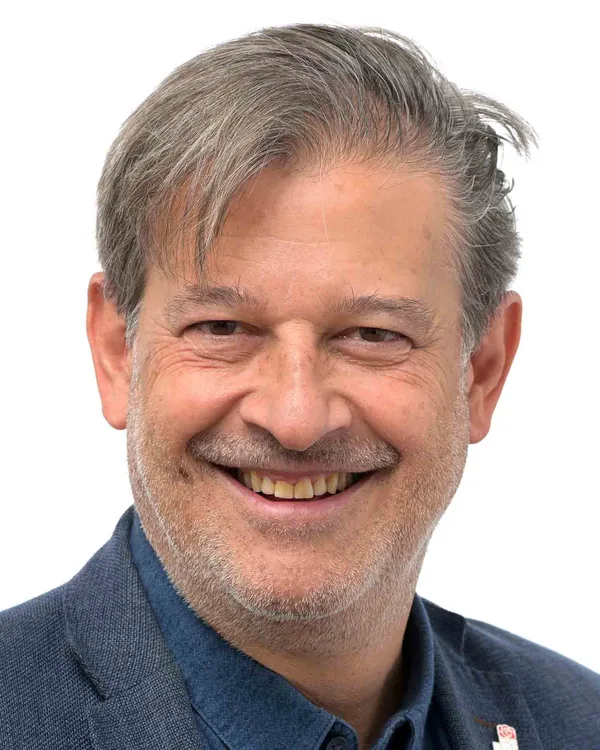
Lukas Sieper | Germany DEU | Non-attached Members (NI) | 390 |
| 2 |
|
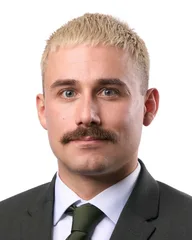
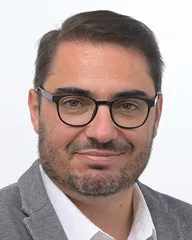
Juan Fernando López Aguilar | Spain ESP | Progressive Alliance of Socialists and Democrats (S&D) | 354 |
| 3 |
|
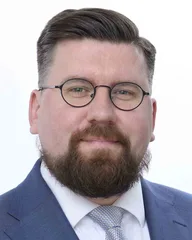
Sebastian Tynkkynen | Finland FIN | European Conservatives and Reformists (ECR) | 331 |
| 4 |
|
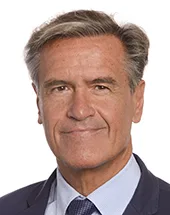
João Oliveira | Portugal PRT | The Left in the European Parliament (GUE/NGL) | 232 |
| 5 |
|
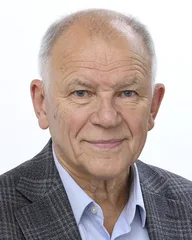
Vytenis Povilas Andriukaitis | Lithuania LTU | Progressive Alliance of Socialists and Democrats (S&D) | 227 |
All Contributions (60)
Strengthening children’s rights in the EU - 35th anniversary of the adoption of the United Nations Convention on the Rights of the Child (debate)
Mr President, Commissioner, the best way to celebrate this important anniversary is to act and invest. The most urgent thing is to invest in the fight against child poverty: almost 20 million children in the European Union – one in four – are at risk of poverty or social exclusion. In addition to the material aspects, we must consider the lack of opportunities for educational, physical and socio-emotional development. We also have to deal with situations of mental fragility that, after the pandemic, have become even more worrying among young people. Ladies and gentlemen, a few weeks ago we enthusiastically welcomed the Draghi report to invest in the competitiveness of the European Union. Even more important is to invest in people, especially children and young people, and lift them out of poverty; also invest in education and training to develop their skills, talents and aspirations. Let us move forward on this path to ensure a hopeful future for children and, ultimately, for our European Union.
Presentation by the President-elect of the Commission of the College of Commissioners and its programme (debate)
Madam President, Madam President von der Leyen, the Spanish Socialist delegation will vote in favour of the College of Commissioners following the agreement reached between the pro-European forces in this House. I am glad that the European People's Party has returned to the pro-European fold with the joint political declaration and I hope that it will not surrender again to the siren songs of the far right in this House. I am also glad that the European People's Party has supported its first vice-president, Teresa Ribera, and has abandoned the Spanish People's Party in the coldest solitude with its noise, its hoaxes and its failure. Mr. Weber, you're on the right track. Ladies and gentlemen, the new European Commission must start now. In a turbulent geopolitical context, in the face of a rising extreme right, we must fulfil our commitments to European citizens, to guarantee peace, democracy and social well-being and also to turn the European Union into a competitive world leader that protects the planet. In this work, Madam President, you have a world reference: First Vice-President Teresa Ribera.
Preparation of the European Council of 17-18 October 2024 (debate)
Mr President, Mr Vice-President, we start this legislature with two wars at our doorstep and in a turbulent geopolitical and geo-economic context. The European Union is at a crossroads. The 800 billion euros proposed in the Draghi report and also initiatives such as the European Competitiveness Laboratory proposed yesterday by the Spanish Minister of Economy, Carlos Cuerpo, are needed to reactivate its economic potential, be competitive and put it back as a power on the world map. However, we need to advocate for social and sustainable competitiveness. We have to invest in people, in their health and well-being. If it's okay for us to invest in artificial intelligence, more important still is human intelligence. Invest in education and training to create quality jobs and ensure social inclusion and cohesion. In short, invest in equality and, especially, in gender equality. Ladies and gentlemen, let us also advocate sustainable competitiveness, investment in clean energy and technologies. The Green Deal is not a brake, but an opportunity for innovation and sustainable economic development. European competitiveness without human beings and without a planet would be of little use.
A single application procedure for a single permit for third-country nationals to reside and work in the territory of a Member State and on a common set of rights for third-country workers legally residing in a Member State (recast) (debate)
Madam President, I speak very briefly to thank all the speakers for their interventions and I would like to say that the success of the review of the single permit is the success of the entire negotiating team. The shadow rapporteurs have undoubtedly improved my initial proposals. We have given a European and pro-European response to a European challenge. The far right has shone through its absence in the negotiation process. At least it has not hindered the negotiations, which is to be welcomed. But, Commissioner, we need to further develop the instruments of regular migration, above all by ensuring consistency between them. And, on the other hand - as I said in my first speech - we need to give it visibility so that these instruments are attractive and useful for both our businesses and migrants. I want to thank you for my birthday, but I'm going to ask you for a gift and that gift is not for me, but for migrants and for our companies: tomorrow we will have broad support for this revision of the directive.
A single application procedure for a single permit for third-country nationals to reside and work in the territory of a Member State and on a common set of rights for third-country workers legally residing in a Member State (recast) (debate)
Madam President, Commissioner, ladies and gentlemen, the common migration policy remains an unfinished business of the Union. But we're moving forward. We will soon vote on the agreement reached after several years of negotiations between the Council and this House on the Pact on Migration and Asylum. This is certainly a necessary step, but it is not enough because we need a comprehensive approach that covers all dimensions. A holistic approach that manages not only irregular migration flows while preserving the lives of migrants with a European Maritime Rescue Mechanism, in particular by respecting their fundamental rights, but also promotes coherence between the different instruments of regular migration and the full integration of foreign workers into our societies. And all this in cooperation with countries of origin and transit, promoting circular migration. Ladies and gentlemen, it is only in this way that we will get through this unfinished business. Because, let us not forget, conflicts, humanitarian crises and the consequences of climate change will continue to push people to seek a better future and no wall or fence will be able to stop them. In this regard, I want to be very clear with those – especially from the far right – who feed fear and hatred with and towards migrants and corner progress on regular migration. While acknowledging this, regular migration is the best tool to combat irregular immigration and human smugglers and is therefore necessary and positive. It is necessary because demographic trends clearly show that the population of the European Union is declining and aging rapidly. And as we saw during the pandemic in health, agri-food and transport, many employment sectors depend on the presence and availability of migrant workers. And it is positive because migrants are a clear economic, social and cultural enrichment for our societies. Ladies and gentlemen, in the face of this reality, the European Union must be able to offer a common harmonised European framework on regular migration based on trust between the Member States and to become, as Commissioner Johansson says, a normal Union policy. In this legislature we have moved in the right direction with the reform of the Blue Card, the still pending revision of the Long-Term Stay Directive and the project called Talent Pool and, of course, the proposal for a Directive that we are debating here today in this House: the achievement of a more effective single work and residence permit. The first objective and achievement of the reform of this Directive has been precisely to improve it. It seems obvious, but in these times, with an extreme right that does not recognize reality and shoots the balls out, it is not easy to join efforts to encourage a more orderly, regular and safe migration. That is why I thank the shadow rapporteurs for their commitment and work, and the Commission for its constructive vision in the trilogues. Also to the Spanish Presidency for its efforts to take forward this legislative file, and to all the technical teams of the three institutions for their work and dedication during these intense months. The second achievement has been to obtain a simpler and faster procedure to acquire this unique permit. We have imposed, as we did with the blue card, a maximum specific period of ninety days to complete the procedure compared to the current 120 days. This reduces costs for administrations and employers, who will be able to count and hire with clear and determined times. In short, the Directive is more attractive to all. Moreover, we have ensured equal treatment of these migrants vis-à-vis workers in the European Union by strengthening their rights, improving their protection against abuse or facilitating access to private housing. In this way we not only avoid and prevent labour exploitation, but also combat the risk of social dumping. In addition, workers will be able to change employers and sectors of work through a quick and simple procedure. And this novelty is important because it will help speed up the labor market and considerably reduce the risks of exploitation and abuse. We have also managed to recognise the possibility of applying for this single permit both in EU countries and from countries of origin. On the other hand, we have extended the period of stay in case of unemployment to six months to give them a better chance of finding a new job, especially in case of abusive working conditions. And finally, ladies and gentlemen, it is important to give visibility to both the single permit and the other legal migration instruments. And that is why I call on the Commission and the Member States to launch information campaigns both in the Union and in the countries of origin, because only then will we have a win-win situation: workers, who will be able to reach Europe regularly, and our companies, who will be able to find the labour they need.
Multilateral negotiations in view of the 13th WTO Ministerial Conference in Abu Dhabi, 26-29 February 2024 (debate)
Mr President, Commissioner, you said it, Jörgen said it, Bernd said it: in such a complex and turbulent geopolitical context, there is a need to focus more than ever on strengthening multilateralism and international organisations, including the WTO. Many considered her dead, but she responded successfully two years ago to the two major crises: the pandemic and Putin’s invasion of Ukraine, ensuring access to vaccines through patent liberalisation, on the one hand, and securing the supply chain and food security, on the other. In addition, it is developing a key role for the sustainability of the seas with the Fisheries Subsidies Agreement. It is now time to proceed with the pending institutional reform, streamlining the decision-making system and establishing a binding dispute resolution mechanism. We need to promote sustainable trade that integrates the gender dimension and development of all countries, and especially the most vulnerable, by completing the Doha Agenda. Finally, it is essential to give it a genuine parliamentary dimension. In Abu Dhabi we have a lot of work ahead of us.
Conclusions of the European Council meeting of 14-15 December 2023 and preparation of the Special European Council meeting of 1 February 2024 - Situation in Hungary and frozen EU funds (joint debate - European Council meetings)
Mr President, Mr Vice-President, Madam Minister, in December the European Council concluded the successful Spanish Presidency of the Union. We closed more than 70 legislative files, which allowed for such important reforms as the electricity market, the Green New Deal, the New Pact on Migration and Asylum and the first Regulation on artificial intelligence. We also opened the door to enlargement and resumed and restructured our relations with Latin America. Ladies and gentlemen, European citizens are calling for more Europe and less nationalism. We belong to a club called the European Union in which we share rules and values but, above all, a common destiny. And whether the far right likes it or not, we will remain committed to the pro-European path of progress, social justice and equality. And they will not stop us in our efforts or frighten us with their provocations, insults and threats. We know where involution, denialism and nationalism take us: to war, as President Mitterrand said a few decades ago before this House.
Implementation of the EU-Canada Comprehensive Economic and Trade Agreement (CETA) (short presentation)
Mr President, Commissioner, ladies and gentlemen, Canada is a natural and essential partner of Europe, especially in the geopolitical context of recent years. Not only because we share values, culture and history, but also because we value their tolerant and negotiating spirit, their strong democratic tradition and their defense of the welfare state. In short, Canadians are the most European outside Europe. Ladies and gentlemen, if we do not conclude an agreement with them, with whom would we do it? The CETA Agreement has been provisionally applied since 21 September 2017. It was signed at a time when there was a lot of controversy around trade agreements. But CETA has far outgrown the initial fears and negative prophecies. It has turned out to be a positive agreement that goes far beyond mere trade and has even fuelled reflection on the modernisation of subsequent EU trade agreements. First, by incorporating other dimensions, such as cooperation on trade-related environmental issues, the adoption of recommendations on gender equality and the incorporation of other topical issues, such as artificial intelligence or cybersecurity. Secondly, it is an inclusive cooperation agreement with its 19 specialised committees, its regulatory cooperation forum and its civil society forum, bringing together hundreds of representatives from across the EU and Canada. In addition, CETA promotes a safer, more predictable and stable economic environment, with full respect for the principles of sustainable development, human rights and labour and environmental standards. The agreement has brought substantial economic benefits, with a considerable increase in trade in goods, services and investments, as well as in public procurement, making the EU Canada’s third largest trading partner after the US and China, including throughout the pandemic and also following the difficult situation created by Putin’s war of aggression against Ukraine. Therefore, the agreement is very important in the context of current geopolitical uncertainty to also ensure the supply of critical raw materials and food security. Ladies and gentlemen, between 2017 and 2022 EU-Canada trade has increased by 66% and our exports have increased by 47%. 700,000 jobs depend on our trade with Canada, and since its entry into force, CETA has helped create 75,000 jobs. Ladies and gentlemen, it is clear that there are still some outstanding challenges and we make a number of recommendations in the report. First of all, the agreement must be given visibility, promoting actions that show the advantages and opportunities it offers, with information campaigns in both regions. But we also need to support businesses, especially SMEs, with the necessary tools so that they can take advantage of the benefits of CETA. In addition, we need to boost labour mobility with instruments such as the recently signed agreement for architects or the European Union Blue Card. It is also necessary to ensure the most effective application of the protection of geographical indications. Finally, and perhaps most importantly, we need to work through parliamentary diplomacy so that the ten Member States that have not yet done so ratify the CETA agreement. This will make it possible to apply all the provisions, in particular as regards investment protection. The agreement will also offer us the possibility of working together on the reconstruction of Ukraine once the war is over. And finally, Mr President, a few seconds to thank all the actors involved in the preparation of the report, especially the shadow rapporteurs, who have undoubtedly improved my initial proposal, and also – of course – our Canadian friends for their collaboration and their welcome when I was on mission there. I hope that this House will support this report with a large majority tomorrow.
Frontex, building on the fact-finding investigation of the LIBE Working Group for Frontex Scrutiny (debate)
Mr President, Mr Secretary of State, Commissioner, since its inception, the Socialist Group has always supported the development of the work of the Frontex Agency, while ensuring that it fully respects fundamental rights. That is why in 2021 we supported the creation of the Monitoring Group to structure the dialogue and closely monitor the Agency’s performance and functioning. This has borne fruit with the implementation of the recommendations we made, in particular with the recruitment of 46 fundamental rights monitors and increased transparency in decision-making. We have to continue down that path. However, Frontex is a great agency, but the responsibility lies with the Member States, which must act with solidarity and dignity, giving a European response to a European challenge. I hope that with the adoption of the migration pact we will be on the right track, put aside solutions such as the path of the agreement with Tunisia and achieve a European maritime rescue mechanism.
Review of the Spanish Presidency of the Council (debate)
Madam President, Mr President, first of all, as the son of emigrants, I would like to thank you for the words you have dedicated to the Spaniards who had to leave Spain under the Franco dictatorship; My parents were some of them. Having said that, I welcome you on behalf of the Spanish Socialist delegation. I congratulate him on his re-election as President of the Government of Spain and his excellent work at the helm of the Spanish Presidency. Because, Mr. Weber, whether you like it or not, Mr. Feijoo is not here. Here we have President Sanchez, who will also sit down tomorrow with Chancellor Olaf Scholz to pursue a diverse and united Europe, and a Union that is more social, more tolerant, more feminist and greener. Since the Spanish Presidency, a progressive and ambitious agenda has been successfully promoted to improve the lives of our citizens, as shown, for example, by the Directives on digital platforms or the fight against gender-based violence, but also to respond to future challenges with the Artificial Intelligence Act and the Nature Restoration Act. Ladies and gentlemen of the People's Party, stop selling your soul to the devil in installments, with your pacts with the extreme right, which only serve to propagate hatred and insults, which incite violence and endanger democracy. As you said, Mr Weber, go back to the pro-European fold and support the Spanish Presidency... (The Chair took the floor from the speaker).
Preparation of the European Council meeting of 26-27 October 2023 (debate)
Mr President, Mr Vice-President, Mr Secretary of State, if there is anyone in this House who could help Mrs Montserrat, because she is still misguided and confuses this House with the Congress of Deputies. Having said that, the debate on the external dimension of emigration in the European Council and political action are pressing because closing the migration pact is a necessary but not sufficient step, as I said at the last plenary session. As the Vice-President said, we need a holistic approach that encompasses broad cooperation with countries of origin and transit, the organisation of humanitarian and legal and circular migration channels, and the fight against human traffickers. And I would add, Mr Vice-President, the adoption of a European maritime rescue mechanism. Ladies and gentlemen, agreements such as the last one concluded with Tunisia do not lead us in the right direction. We must look back and reactivate initiatives such as regional cooperation and migration dialogue processes and rescue missions such as SOPHIA, as well as strengthen diplomatic presence and recruitment at source. Policies that paid off in Spain with Zapatero's socialist government. Once again, we have the solutions; We need the political will to deliver a comprehensive European response to the challenge of migration.
Need for a speedy adoption of the asylum and migration package (debate)
Mr President, Mr Vice-President, Mr Secretary of State, Mrs Montserrat is coming here to talk about amnesty. I see, Mrs Montserrat, that you pass through the European Parliament, but the European Parliament does not pass through you. Have some dignity, please: the subject of this debate is very important. Having said that, ladies and gentlemen, Lampedusa is Europe and Europe is Lampedusa. And, therefore, the management of migration flows needs a European response that is supportive and respectful of human rights. And let's not fool ourselves: neither walls nor migration agreements – such as Tunisia’s – are the solution. Zero immigration is a lie of the far right. It is neither feasible nor desirable. Ladies and gentlemen, to successfully tackle the migration challenge we must act with the same determination and political will with which we have managed the pandemic and Putin's war and its economic and social consequences. The imminent adoption of the Pact on Migration and Asylum is a necessary but not sufficient step. We must go further by opening humanitarian channels, strengthening the instruments of regular migration – which are the best antidote to mafias – and stepping up cooperation with countries of origin and transit. Finally, I would ask the Spanish Presidency, please, to promote a European maritime rescue mechanism. We need it now. Please act in that direction.
State of the Union (debate)
Madam President, Madam President of the Commission, Mrs Montserrat, Mr Vázquez, in this House we are in the debate on the state of the Union, not in the debate on the disastrous state of their respective parties and leaders. Please respect this House. Having said that, ladies and gentlemen, in this legislature we have overcome two major crises with unity and solidarity and the European Union has strengthened itself. Despite what the far right is shouting, European citizens have felt protected and are calling for more Europe and less nationalism. We have moved towards the Health Union and we have overcome the taboo of common debt to rebuild our societies. In the face of Putin's war, we have also moved towards energy union and open strategic autonomy. Now, hand in hand with the ambitious Spanish Presidency, we must close a migration pact that also includes the regular migration we need, we must strengthen the social pillar, achieve gender equality and, above all, protect the planet, especially with the Regulation on the restoration of nature. Dear President, I hope that you will get the European People's Party to release the hand of the far right and return to the traditional pro-European path. President Jacques Delors said that when Parliament and the Commission go hand in hand, European integration progresses. Now, moreover, we have the firm hand and the intervention of the Spanish Presidency. Go ahead!
The need for EU action on search and rescue in the Mediterranean (debate)
Madam President, dear Commissioner, dear Secretary of State, welcome to this house. Ladies and gentlemen, year after year we repeat this debate in this House. Day after day, tragedies are repeated in the Mediterranean and in the Atlantic. More than 27,000 dead in the last ten years. More than 600 people disappeared in the last shipwreck off the Greek coast. How far do we have to go to act and save lives and definitively close sea cemeteries? Ladies and gentlemen, we know the solutions, and when we have the political will, we apply them. These years have saved many lives, especially thanks to operations such as Mare Nostrum or SOPHIA. That is why I call once again for humanitarian corridors to be opened and for Frontex’s mandate to be amended to put in place a mandatory European maritime rescue mechanism – mandatory – with adequate financial, material and human means in which the Member States and Frontex fully exercise their role. Ladies and gentlemen, human life and dignity are at stake, but also the dignity of our European institutions. Mr Navarro, we are counting on the Spanish Presidency to move forward.
Conclusions of the European Council meeting of 29-30 June 2023, in particular the recent developments in the war against Ukraine and in Russia (debate)
Mr President, dear Vice-President, ladies and gentlemen, we remain united in this House, as in the Council and the Commission, to condemn once again Putin's war of aggression and to continue to support the people of Ukraine in their struggle for independence and freedom. At the same time, it is necessary to end this war in order to rebuild Ukraine as soon as possible. Ladies and gentlemen, this war has also kicked the global geopolitical board and forced us to rethink, particularly in the face of the threat of supply chains. That is why, in the area of open strategic autonomy, we have to develop relations with reliable partners such as the United States or Canada, but also with Latin America. The EU-CELAC Summit, to be held next week under the Spanish Presidency, is the starting point for a new stage in which we will strengthen relations, address together the common challenges we have and, above all, seize opportunities both at the level of trade and investment. Latin America is an essential partner for the European Union and, in this regard, I hope that the Spanish Presidency will go ahead and push forward the agreements with Mercosur, Mexico and Chile.
The need for European solidarity in saving lives in the Mediterranean, in particular in Italy (debate)
Mr President, Madam Minister, Commissioner, you said so. The key ideas of this debate are in the title itself: solidarity and rescue. We in the S&D Group have been calling for a mandatory European maritime rescue mechanism for years. I repeat: mandatory. 26,000 dead in the Mediterranean since 2013, according to IOM, many of them minors. This reflects the failure of European migration policy. That is why human dignity must be added to solidarity and rescue. From here I ask both the Italian Government and the rest of the governments not to forget that migrants are people, regardless of their creed or skin colour. Therefore, they must be cared for with humanity and respect. Ladies and gentlemen, from words to deeds. There is no need to invent anything, because we have already taken steps in the right direction in the past: Operation SOPHIA, the Malta Declaration or the 20 measures proposed by Commissioner Johansson. But we have to go further. We must conclude the New Pact on Migration and Asylum, and strengthen the instruments of regular migration and cooperation with the neighbours of the southern shore of the Mediterranean.
Deaths at sea: a common EU response to save lives and action to ensure safe and legal pathways (debate)
Mr President, Commissioner, Minister, ladies and gentlemen, thirty dead on Sunday, eighty-five in Calabria a few days ago, and I could go on like this to the 1,300 who disappeared last year. They're not figures, they're truncated lives. And, as President Metsola stressed in her opening statement on Monday, we cannot tolerate it. I wonder how many more migrants must die in order for Member States to fulfil their obligations and save people before they drown. How long do we have to wait for a mandatory rescue mechanism, in the spirit of EUNAVFOR MED operation SOPHIA, which saved more than 50,000 lives in three years while fighting migrant smugglers? To do this, we must overcome the narrative of the extreme right based on racism, hatred and fear, which are its breeding ground for elections. Ladies and gentlemen of the right, if you have any respect left for human dignity, bet with us on cooperation with countries of origin and transit, the fight against mafias, maritime rescue and the opening of humanitarian and legal immigration channels. They have it easy.
Conclusions of the Special European Council meeting of 9 February and preparation of the European Council meeting of 23-24 March 2023 (debate)
Madam President, dear Vice-President, Mr President of the European Council, Mrs Montserrat, I already know that it is very cold in the opposition, but I do not think that lies contribute much to today's debate. Having said that, ladies and gentlemen, although we are approaching the end of winter, many families and businesses, and especially SMEs, continue to suffer the consequences of the crisis caused by Putin's war. Although we have been able to avoid energy shortages this winter, poverty and energy precariousness remain a reality that we have to overcome. To do this, we already need a medium- and long-term European energy policy that is committed to geopolitical diversification of the supply of clean and affordable energy. One of the keys to this lies in the reform of the European electricity market. I therefore hope that the proposals of Spanish Vice-President Teresa Ribera will come to fruition under the Spanish Presidency, and I have the support of the European People's Party. On the other hand, the deployment of renewables and green hydrogen is necessary, key elements to achieve a just green transition that both humanity and the planet need. Ladies and gentlemen, good times are coming. Let us take the opportunity to consolidate a genuine common energy policy.
EUCO conclusions: the need for the speedy finalisation of the Road Map (debate)
Madam President, Commissioner, Minister, ladies and gentlemen, ladies and gentlemen of the right, what does not fit into any migration roadmap is the construction of new border walls, let alone with European funds. Mr Rangel, President Sanchez has not built any walls. You may have a mason's soul, but he doesn't. History has also shown us that walls are a failure. To reclaim a "fortress Europe" is to show that they have understood nothing. If they really want to put an end to the irregular flows handled by mafias, trafficking and trafficking in human beings, they must demand more channels of legal migration – which we need – and greater cooperation with countries of origin and transit, with the right political and financial means, especially remembering that we will only close the Pact on Migration and Asylum if we strike a balance between responsibility and solidarity. Finally, Madam Minister, I welcome the efforts of the European Contact Group on Search and Rescue and hope that it will materialise as soon as possible into a binding, clear and effective European mechanism. Because, unfortunately, migrants continue to die every day at sea.
Preparation of the Special European Council meeting of February, in particular the need to develop sustainable solutions in the area of asylum and migration (debate)
Mr President, Madam Minister, Commissioner, ladies and gentlemen, if we really want to adopt sustainable solutions at this summit, we must change the paradigm. Dear Manfred, we must change the paradigm. We must understand that the solution to the migration challenge cannot focus only on trying to contain irregular migration. We must develop legal migration channels to attract the workforce Europe needs, and humanitarian channels to protect people fleeing war and poverty. Only in this way will we be able to take control of the mafias and tackle trafficking in human beings, so that a common migration policy is finally put in place, based on the principles of respect for human dignity and solidarity, in cooperation with third countries. And finally, Madam Minister, I understand that Sweden may be far from the Mediterranean and the Atlantic. However, we ask that the Presidency push for the creation of a common maritime rescue mechanism, because, with the arrival of spring, thousands of people will put their lives at risk when trying to reach our shores.
Presentation of the programme of activities of the Swedish Presidency (debate)
Madam President, dear Vice-President, dear Prime Minister, obviously your Presidency must continue to develop policies relating to the priorities of our societies, such as the fight against inflation or climate change. But I would like to focus today on a pending issue that, if not resolved, will have negative consequences in the medium and long term: migration policy and, in particular, ways to promote legal migration. All studies show that Europe needs additional labour. With political will, we have moved towards health union and energy union. Let us also do this with the common immigration policy. It is therefore necessary to adopt the Pact on Migration and Asylum already, but above all to develop the channels of legal migration and, in particular, the directives on the single permit and the status of long-term residents. We in Parliament are working fast to achieve this and we have the impetus of the Swedish Presidency to start political negotiations with the Council and the Commission as soon as possible. Dear President, dear Vice-President, dear Prime Minister, may you have a safe, healthy and sustainable year.
Preparation of the European Council meeting of 15 December 2022 (debate)
Mr President, ladies and gentlemen, these are turbulent times for the European Parliament, but they are, above all, difficult times for citizens. Inflation is bringing hunger and cold to many European households. Many SMEs are unable to pay the energy bill and have to close. At the same time, energy companies continue to speculate to enrich themselves in outrageous ways. More than ever, our governments must govern for the people and put the economy at the service of the citizens, and not the other way around, with direct policies to protect them. The European Union must learn from its past mistakes and, in the face of the austerity that failed in the financial crisis, the defence of solidarity and social cohesion must prevail. That is why energy prices must be lowered, citizens must be protected with an increase in the minimum wage and a minimum income must be guaranteed for the most disadvantaged. This week's European Council will need to take urgent action and adequate financial resources to help those most in need. The cold doesn't wait.
The need for a European solution on asylum and migration including search and rescue (debate)
Mr President, I wanted to tell Mrs Monserrat, but she is gone, that using the tragedy of Nador to attack the Spanish Government from this House seems to me pathetic and regrettable - pathetic and regrettable - and I hope she will pass it on to you. Having said that, ladies and gentlemen, a few months ago we activated in record time a European directive that had been sleeping for 20 years to welcome and protect citizens fleeing Putin's war, something we did not do either in 2015 with the war in Syria, or in 2021 with the Afghan crisis. I mean by this that when there is political will and courage we are able to give effective European responses to the great challenges. If we have been able to welcome four and a half million people in a few months, why are we not able to manage with dignity the 200,000 migrants who try to arrive by sea and by land every year? That is why we need the political will, solidarity and trust between the Member States to finally implement the Pact on Migration and Asylum with mandatory relocation, humanitarian channels and a European maritime rescue mechanism that we have been demanding for years and that European right-wing forces reject. And at the same time we need, Commissioner, Commissioner, to develop all the legal immigration instruments.
Conclusions of the European Council meeting of 20-21 October 2022 (debate)
Mr President, dear Vice-President, after the last meeting of the European Council we are moving in the right direction to overcome the energy crisis, along the lines that we have been marking and in accordance with what the Spanish Government is demanding. But now we need to speed up and put into practice measures around social protection. Our citizens cannot be forced to go hungry or cold and our companies cannot go into debt or have to close because of the increase in expenses. That is why the burdens of this crisis must be shared fairly. We cannot demand more sacrifice from workers when some large companies are making exorbitant profits. We have to tax them. We are already doing it in Spain and we ask that it be done also in Europe. On the other hand, we have to put a limit on the price of gas and undertake the reform of the energy market, decoupling gas prices from electricity prices and promoting joint purchasing, energy interconnections and green energy corridors, such as the one that will link the Iberian Peninsula with France.
Russia’s escalation of its war of aggression against Ukraine (debate)
Mr. President, Putin is losing the war in moral and political terms. To his warlike insanity his own brave young men say "no" and flee the country. To his pantomime of referendum the international community says "no". He has the economic asset, with energy as a weapon of war, and the nuclear threat as a psychological weapon. Faced with this blackmail, the European Union must continue with the same firmness, unity and solidarity shown so far. Ladies and gentlemen, this obviously comes at a cost to citizens, who must be protected from the energy crisis and food insecurity. Let's continue to diversify our sources of supply, joint gas purchases and strategic reserves. Let us bet on green energy and implement the agreement on food security reached at the WTO last June. By allusions, I would say to Mrs Montserrat that taxes serve to guarantee the public services that her party wants to privatize. I remind you that this summer the fires have not been put out by private companies.