
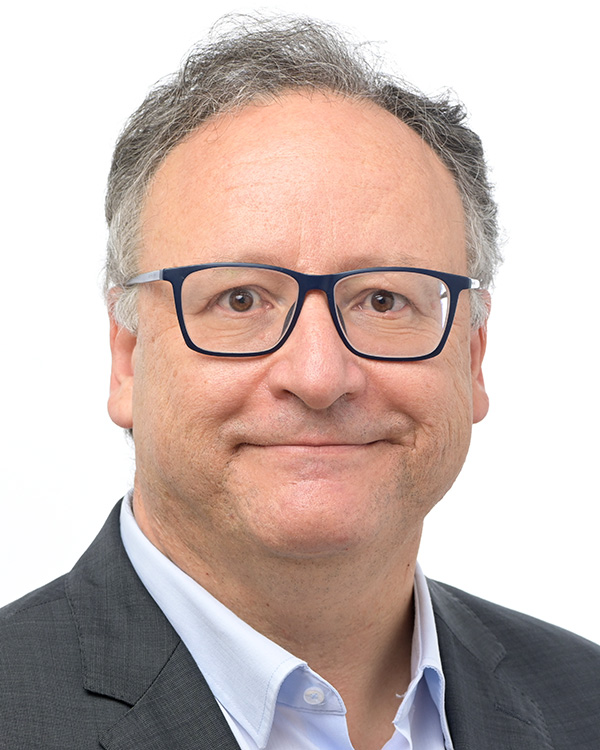






| Rank | Name | Country | Group | Speeches | |
|---|---|---|---|---|---|
| 1 |
|
Lukas Sieper | Germany DEU | Non-attached Members (NI) | 390 |
| 2 |
|
Juan Fernando López Aguilar | Spain ESP | Progressive Alliance of Socialists and Democrats (S&D) | 354 |
| 3 |
|
Sebastian Tynkkynen | Finland FIN | European Conservatives and Reformists (ECR) | 331 |
| 4 |
|
João Oliveira | Portugal PRT | The Left in the European Parliament (GUE/NGL) | 232 |
| 5 |
|
Vytenis Povilas Andriukaitis | Lithuania LTU | Progressive Alliance of Socialists and Democrats (S&D) | 227 |
All Contributions (124)
Rise in violence and the deepening humanitarian crisis in South Sudan (debate)
Madam President, Commissioner, ladies and gentlemen, while we are rightly mobilising and indignant at the suffering of other peoples, we continue to despise the suffering of the Sudanese people. Indiscriminate bombings, systematic use of sexual violence and restrictions on humanitarian aid. There are at least 100 000 dead and 11 million displaced. There is currently no sign from the European Union of consistent diplomatic efforts to resolve this problem. There is no accountability for regional actors fuelling the conflict – starting with the United Arab Emirates, the main support of paramilitary militias trying to take control of the country. The European Union has not yet even been able to impose sanctions against those principally responsible for the cycle of violence in Sudan and those principally responsible also for the supply and acquisition of weapons, despite the various recommendations issued by this Parliament to that effect. There will perhaps be a place in future history books to highlight the international community's indifference to this horrendous war, the deadliest of our time.
Safeguarding the rule of law in Spain, ensuring an independent and autonomous prosecutor's office to fight crime and corruption (debate)
Mr President, Commissioner, a few years ago, when a referendum was held in Catalonia, a number of voices were raised here in the European Parliament, calling Spanish democracy into question. And I stood up at the time and made a speech saying that we could agree or disagree with the way Mariano Rajoy's government was dealing with the Catalan issue, but that under no circumstances did we have the legitimacy to call into question the democratic character of Spain. And I praised even the process of democratic transition in Spain. And today I come here to say exactly the same thing; Spain is a great democratic country, Spain is one of the great democracies of Europe. There is a plan of political confrontation between parties that is normal and natural and takes place in all countries. It also happens in my country. It is part of democracy. Now, the problem with our democracies is when the center parties start behaving like radical parties. I'm not surprised by what the far right says. Nothing surprises me. For the far right, the great criminal offence in Spain is simple: The left is in government. The left to govern is for the far right, already in itself, a criminal offense, because if they really did, the left was not governing, it was in jail, as it has always been in the period of Francoism, and as it has been in many countries of Europe whenever the far right has ruled. That's the difference. But the People's Party is another party. The Popular Party is a founding party, with the PSOE, of Spanish democracy. The People's Party has ruled for many years and, therefore, I do not come here to make any reference to the situations of corruption of this or that. When there is corruption, it has to be tackled. When there is corruption, it must of course be dealt with properly. But are you saying that the democratic rule of law is at stake in Spain? I read the Spanish press every day and see many newspapers that are highly critical of the government. Anyone who looks at the Spanish press every day sees brutal attacks on Prime Minister Pedro Sanchez, as is not the case in my country. I must say that in my country this does not happen on the same terms as it does in Spain. The political debate in Spain is a more polarized debate than it is in Portugal. Maybe one day will be different. We go to social media and we see the same thing. There is an ongoing process of changing the judicial system that is in line with what is happening across Europe. Therefore, it is absolutely (“...”)
Stopping the genocide in Gaza: time for EU sanctions (topical debate)
Madam President, it is with double sadness that I address this House today; Sadness for the suffering of the Palestinian people and sadness for what Israel has become. In its theoretical foundations, there was a time when early Zionism was a form of humanism, and today Israel is the absolute negation of that same humanism. The Israeli government's plan for the total seizure of Gaza territory is a blatant violation of international law and amounts to pure and harsh ethnic cleansing. Israel responded with barbarism to the barbarism and thereby lost all sense of reason following the heinous attack of 7 October 2024. The European Union's response to the ongoing killing in the Gaza Strip cannot be limited to suspending the Association Agreement, but must clearly go further. In view of the extreme gravity of the situation, it is imperative for the European Union to move swiftly with individual sanctions on Israeli political and military leaders, including asset freezes. It must also move forward with a full embargo on arms supplies to Israel and a ban on trade with illegal settlements. These measures are essential to protect the Palestinian people.
Upcoming NATO summit on 24-26 June 2025 (debate)
Mr President, Madam High Commissioner, history does not teach us everything, but it does teach us some things. The pacifists of the 1930s became, for the most part, supporters of Nazism in the 1940s and supporters of the Soviet totalitarian system in the 1950s and 1960s. That's how they ended up. They have stopped defending democratic regimes. NATO has played a key role in recent decades in defending precisely a set of values and principles that are exactly the same as those that inspire the European Union and that underpin the model of the liberal democracies that make up our alliance of countries. We are at a particularly difficult time. There are tensions within NATO itself; there is erratic behaviour on the part of the United States; there is certainty that Europe needs to do more for its own defence and that we need to increase the volume of investment in this sector. I am not one of those who thinks that we should have certain absolutely pre-established numbers, such as 4% or 5%. We will have to act according to our needs and also according to our possibilities. Under no circumstances should we call into question other aspects and other absolutely essential commitments. But the truth is only one: there is no national sovereignty, no European sovereignty, if we do not have the capacity to defend ourselves against our enemies. We are not the ones who choose our enemies. It is our enemies who choose us as their enemies.
80 years after the end of World War II - freedom, democracy and security as the heritage of Europe (debate)
Mr Bugalho and my dear friend, I believe that there are certain circumstances in which we must know how to transcend our political positions. There are times for the most banal and everyday political dispute, and there are other times when we have to be above it. And if there is an example in Europe – and in the last century there have been several – one of them was and is arguably that of General De Gaulle. Being here today in Strasbourg, being here today in France, it would seem to me an enormous injustice that no one in this Parliament refers to that absolutely extraordinary figure of the 20th century in Europe who was General Charles de Gaulle. De Gaulle represents everything, it represents the most important thing a man of state can represent, the struggle for freedom, courage, the willingness to take the risk of life in the name of higher values.
80 years after the end of World War II - freedom, democracy and security as the heritage of Europe (debate)
Madam President, on 18 June of the already distant summer of 1940, a French army general, in absentia from the established power, issued a challenge to his compatriots: Charles de Gaulle is one of the most suggestive manifestations of the role of the individual in history and of the importance of free action in the course of human events. Hannah Arendt, after attending Adolf Eichmann's trial in Israel, developed the idea of the banality of evil. The man who accepts to be an uncritical piece in a monstrous institutional mechanism becomes irrevocably an agent of evil. There is no innocence in the peaceful acceptance of perfidy. Eichmann, in his dreadful normality, represents the human being bureaucratized and reduced to a non-moral condition. De Gaulle represents the opposite of all this. He knew the risks he was taking. In a conversation with friends, he said, "They're going to take me for an adventurer, and yet I've never been an adventurer. They will say that I am a rebel because I refuse to obey certain orders. But the true rebels are those who do not obey the most sacred duty: defend his country to the last possibility, alongside his last ally. Maybe they'll put me to death. Until now, the generals had condemned to death the simple soldiers who were going to leave the battlefield. This time they will condemn a general who refused to flee that same battlefield. This is the great lesson of Charles de Gaulle. We, in certain circumstances, cannot escape the battlefield.
Resilience and the need to improve the interconnection of energy grid infrastructure in the EU: the first lessons from the blackout in the Iberian Peninsula (debate)
Madam President, Commissioner, ladies and gentlemen, I must say that I am not going to enter into any debate here on the merits and demerits of the action of the Portuguese Government for a very simple reason: I respect the principle of subsidiarity in this matter and do not transpose to the European Parliament matters that can and should be dealt with in national parliaments, in particular in the Portuguese Parliament. Portugal and Spain are leading the way in converting their energy savings, valuing renewable energy sources, which puts them in a very advantageous position to achieve the objectives of the European Green Deal. This is due, of course, to some geoclimatic features of the Iberian Peninsula. In Portugal, more than two thirds of all electricity consumed today comes from renewable sources. This is a huge step towards energy autonomy. I should also remind you that in 2021, the Portuguese government shut down two power plants that were still burning coal, which unambiguously delivered the environmental benefit and is also an important political signal of Portugal’s commitment to the green transition. The key word in this issue, for the assessment of the impact of the blackout, is the word ‘transition’. A transition entails challenges and often means having to deal with unexpected situations. And, therefore, where we have to bet is on the modernization of networks, on the digitization of networks. The debate cannot be between renewables and (...)
EU support for a just, sustainable and comprehensive peace in Ukraine (debate)
Madam President, we live in strange times. Never has the European Union been so isolated, and never has the European Union been so necessary to the world. No, this is not a paradox; this is a finding – and it is a finding that imposes political and moral obligations on us. Of course, we didn't always do everything right. And those who warn of some inconsistencies in European foreign policy and in the various European countries are right. But we cannot fail to recognise that, in spite of everything, it is the European Union that has contributed in the world so that values are progressively superimposed on force and so that international law can supersede mere checks and balances. And the case of Ukraine is a paradigmatic case. We are facing an illegal and unacceptable war, a war that must be condemned, without any doubt, morally and politically. And we have an obligation to the Ukrainians. Our obligation to the Ukrainians is an obligation to ourselves, to the values that inspire us and that we constantly proclaim. And, therefore, any peace process in relation to Ukraine must rely, first of all, on the principle of respect for the sovereign will of the Ukrainian people, which has expressed itself in blood in recent years.
An urgent assessment of the applicability of the Political Dialogue and Cooperation Agreement (PDCA) with Cuba (debate)
Madam President, Madam High Commissioner, let us be serious and clear. The nature of the Cuban regime is absolutely indisputable: a one-party regime that criminalises all forms of political dissent and social protest; a regime whose new penal code is even more restrictive in relation to the promotion of civil rights; a regime that undermines all fundamental freedoms and constantly monitors what is known as ‘civil society’. This is the portrait of a dictatorship, as indeed all Marxist-Leninist regimes have been throughout history. I understand, however, the argument of those who believe that keeping open a channel of dialogue on human rights is, nevertheless, maintaining a possibility, even if sometimes tenuous, of putting pressure on the regime and positively influencing the direction of the country. But it must also be remembered that, even now, the regime has chosen to revoke the parole it had granted to José Daniel Ferrer and Félix Navarro in response to a request from Pope Francis to release political prisoners. This, I believe, is a clear sign that the regime has no intention of alleviating repression and exploring a different path for Cuba, quite the contrary – it is a shocking display of cynicism.
A unified EU response to unjustified US trade measures and global trade opportunities for the EU (debate)
Mr President, Commissioner, the new American leadership presents itself with a clear purpose - to destroy the global order based on international law and replace it with a transactional vision of the relationship between states where, inevitably, the strongest dominate and impose. We must make it clear that protectionist mercantilism has never been and will not be the solution, and that the tariffs imposed by the United States represent a penalizing setback for the global economy of consumers, especially the poorest and businesses. In this context, Europe must assert itself as the region of free trade and must strengthen ties with partners closest to us. The EU-Mercosur agreement has therefore gained vital importance, not only because of its economic potential, but above all because of its geostrategic dimension and the affirmation of common values such as democracy, the rule of law and human rights. There is, however, one essential element that we must not lose sight of at the moment: while Donald Trump and his administration are circumstantial, the transatlantic alliance is long-lasting and essential. Europe must react resolutely, but also with intelligence and consideration, to a wrong and erratic policy which, incidentally, first and foremost harms the American population itself.
Execution spree in Iran and the confirmation of the death sentences of activists Behrouz Ehsani and Mehdi Hassani (debate)
Mr President, Commissioner, here we are again today, unfortunately, to talk about one of the most atrocious and violent regimes in the contemporary world: The Iranian theocratic regime. And to talk about people who have been sentenced to death and who have been sentenced to death for one reason only: because they dare to fight, with limitless heroics, this barbaric regime, this regime that oppresses women and men in their own country. There are several cases. We refer here to two in particular, but there are many more. In the prisons of Tehran and other cities of Iran there are hundreds and hundreds of people waiting for death. It is the response that the regime finds for all those who insist on continuing to fight against arrogance, against authoritarianism, against total disregard for the most elementary human rights. Let's not have any illusions. This is one of the most atrocious regimes we are facing today. And there's only one way we can go: it is the way of denouncing the regime and the way of solidarity with its victims and with these men and women who heroically continue to resist. That is our duty and that is our responsibility.
Delivering on the EU Roma Strategy and the fight against discrimination in the EU (debate)
Mr Oliveira, I fully agree with you and it is clear that this contributes to this hate speech against the Roma. I just want to remind you of something very important: in the penultimate Portuguese Government, a minister, who is now a Member of Parliament, our colleague here in the European Parliament, Ana Catarina Mendes, led a process with a view to carrying out a very extensive study on the situation of the Roma community in Portugal. Unfortunately, it appears that this study has not yet been carried out. It is a serious shortcoming and I believe it is a commitment that we must make to the country. It is a shame, in fact, that we are in this situation, because Roma communities are communities that accompany, have been part of Portuguese history for hundreds and hundreds of years. They are Portuguese just like the others and as such they have to be treated.
Delivering on the EU Roma Strategy and the fight against discrimination in the EU (debate)
Mr President, Commissioner, the Roma communities unfortunately continue to suffer from structural discrimination throughout Europe. They are denied access to fundamental rights such as education, health, housing and justice. Despite a number of EU strategies, including the Rome 2011 Strategy, the risks of exclusion remain very high. These communities are often victims of forced evictions and face a constant violation of their basic rights. While the European Commission has a key role in ensuring anti-discrimination legislation, such as the Racial Equality Directive, the lack of political will and insufficient responsibility of Member States are still very significant obstacles to the necessary changes. The Commission's recent assessment confirms that while some processes have been initiated, the promises have in most cases not translated into concrete and effective action on the ground. But beyond that, these communities are now the victims of a special attack by some far-right forces across Europe. This is the case in my country, Portugal, where the far right has clearly chosen this community, the Roma community, as a prime target of its racist and xenophobic attacks. And in the face of this, we must respond in the strongest possible terms, seeking to ensure conditions of dignity for this community that is part of European history.
Targeted attacks against Christians in the Democratic Republic of the Congo – defending religious freedom and security (debate)
Madam President, Commissioner, the atrocities committed against the Congolese indiscriminately must have consequences for those responsible. These atrocities are unequivocally war crimes and crimes against humanity. And one of the biggest culprits in the escalation of violence, which is particularly cruel to women, is Rwanda – about which no one has the slightest doubt – which, moreover, is playing a double game in the region. It is committed to peace, but will arm and cover the M23 rebels, who have recently taken Goma and Bukavu. The European Union has the power to call the Rwandan Government to account and many appeals have already been made to this effect, to which I naturally join, suspending the cooperation projects it has with the country, until it puts an end to any collaboration with the armed groups on the ground today and makes a contribution so that these groups and the Government of the Democratic Republic of Congo commit themselves to the Nairobi process and engage in a genuine national dialogue. Of course, since the overwhelming majority of Congolese are Christians, it follows, of course, that the majority of the victims of the atrocities are also Christians. But to make such distinctions is something ignominious and barbaric.
Safeguarding the access to democratic media, such as Radio Free Europe/Radio Liberty (debate)
Mr President, Commissioner, the European Union is not just about policies, plans, strategies, agreements, regulations and directives. A union between peoples, such as ours, also needs symbols and the symbolic dimension of Europe has been sidelined for the benefit of other priorities. Radio Free Europe is one of the symbols of European identity and memory, because it was created in the post-war period to give voice to European values, to be a light for the peoples in the East who were suffocated by totalitarian communist regimes, crushed by false symbols and false idols. In the dark times we are living in again, the European Union cannot let that light, that symbol, go out. The winds blowing from the East – from Russia in particular – are, again, winds contrary to Western freedom and democracies. Radio Free Europe is not a Cold War relic. It is a symbol of free Europe in its own right and the European Union should take over its funding where appropriate.
Human rights and democracy in the world and the European Union’s policy on the matter – annual report 2024 (debate)
Madam President, Madam Vice-President of the Commission, this is a particularly important moment in the life of this Parliament. We cannot ignore the fact that human rights, viewed as universal rights, had their origin precisely here in Europe, in the year 1789, at the time of the great French Revolution. This was the first time that we defined that human rights, although applied to a country, had a true universal dimension. Since then, they have come a long way, but the truth is that in the last year we have seen a very serious setback in human rights practically all over the world. Looking at what has happened, we can mention, we can enunciate several serious problems. Democracies are retreating. There are far more autocracies than democracies around the world today and, above all, the value of democracy is widely questioned in various parts of the world. Executions have increased. The number of those sentenced to death has increased. Violence against women in some parts of the world has increased alarmingly and I must mention in particular that extreme form of violence which is sexual violence against women. Around the race for critical raw materials, which are fundamental to our own technological development, to the digital and climate transitions we are engaged in, new situations that undermine human rights are also being created around it. Big tech companies operating all over the world create new problems of disrespect for human rights in the digital world. The International Criminal Court, as has just been rightly mentioned, is today the subject of an unprecedented challenge and attack that could call into question its very viability. So we have no reason to be optimistic. We have an obligation to be attentive and to continue to support all those who, in the most diverse parts of the world, fight heroically for the affirmation of human rights.
Frozen Russian assets (debate)
Mr President, Commissioner, the times are very demanding for the European Union. All the answers and all the solutions to the world's serious problems are expected of her today. It is expected that she will act with immediate readiness, that she will replace overnight those who, as is the case with the United States, have backtracked on their commitments to security, to humanitarian aid. And many of those who were just pro-Europeans are hastening, at first, to portray the EU as weak or failed. But the truth is clearly different. Since the pandemic crisis, and still with the same legal armour as the Treaty of Lisbon, the European Union has lived up to difficult circumstances. He has acted, he has responded, he has reinvented himself. Just now, in the face of security threats on the horizon, the European Union has devised a plan of EUR 800 billion to re-arm. Even now, the European Union is preparing to respond to the tariff hostility of its old ally with a package of heavy tariffs. The news of a 30-day ceasefire in Ukraine is a small relief, but nothing is guaranteed when there is a wordless interlocutor on the other side: Vladimir Putin. Therefore, the European Union cannot let its guard down. Ukraine is weakened and we must have the courage to use the 200 billion Russian assets frozen on our territories to keep afloat the ability of Ukrainians to guarantee their independence and the democratic values they share with us.
EU-Mercosur Trade Agreement (debate)
Thank you very much for the question. The agreement, in essence, as I have already said, is an agreement that guarantees and protects the various European economic sectors. Particularly in the field of agriculture, we have to have this debate. Let's see who wins and eventually who loses. If there are some European agricultural sectors that are going to lose, of course we have to find compensation mechanisms at European level, and that is what we have done over the years. If there is one sector in the European Union that has benefited greatly from European support, it is precisely the agricultural sector. It is probably the economic sector that has benefited most from the support over the years, over the several decades of existence of the European Union. Now, what is also not acceptable is the discourse that is being made about the state of agriculture in those countries. I know all these countries, I have visited them several times. In these countries, the law of the jungle does not apply. They are democracies, they are democracies with the rule of law and they are democracies increasingly concerned with keeping up with the big agendas on the issues of combating climate change, deforestation, etc. Let us also not make such a bad judgment of countries ...
EU-Mercosur Trade Agreement (debate)
Mr Oliveira, do not underestimate the democratic importance of this European Parliament. The agreement will be discussed and voted on here in the European Parliament; and this Parliament is also the expression of the will of the various countries, of the various peoples, of the various European states. The agreement is, in my view, a good agreement, it is an agreement that protects, in essence, European interests. There will be some sectors that may lose. In all agreements there is always that risk. Then we have to find mechanisms, safeguard clauses, support funds and that is what is planned. So this speech, which is a speech that aims to create fear in European society, with certain sectors of European society, is a speech that does not serve the interests of those you are supposed to represent and defend.
EU-Mercosur Trade Agreement (debate)
Madam President, Commissioner, this agreement is good for the European Union politically, economically and commercially. The European Union has every interest in strengthening its links with the Mercosur countries. We have deep historical, cultural and political affinities with this region. We are talking about a set of democracies. We must deepen these relations and nothing better than moving forward with the treaty. At a time when protectionism and mercantilism are returning in force, we must show signs of openness, a free trade agreement and an agreement aimed at properly regulating relations with another region of the world. We do not want a Europe closed in on itself. We want an open Europe. Europe needs to connect with other regions of the world. We need to source raw materials that we do not have on our continent. We need to establish trade relations that will boost our economies and, therefore, it is essential to finally ensure the implementation of this agreement. But there's something I want to say here. It is legitimate, of course, to be against this agreement, but what I have noticed, unfortunately, I think that on some left and many right, is that there is a real Trumpist discourse against this agreement, because it is a discourse based on the falsification of reality and a discourse based on the attempt to produce fear among the populations. Let us have a serious debate, a debate on the basis of the facts, a debate on the basis of what is actually in the agreement and not what some want to make believe is in the agreement, but is actually not there. This agreement is an agreement that should, can and should be discussed. We are starting this democratic discussion here. We are an open and democratic space, but we have an obligation to do so rigorously.
Repression by the Ortega-Murillo regime in Nicaragua, targeting human rights defenders, political opponents and religious communities in particular
Commissioner, like so many here perhaps, I was a young man in Portugal, a teenager, when I followed the fall of dictator Somoza and the victory of the Sandinistas, and I remember well the great hope that this created in all of us. But we quickly realized that we were facing an authoritarian system. Unfortunately, in the name of socialism, a dictatorship was in fact being established, and we cannot look differently at left-wing dictatorships or right-wing dictatorships. Dictatorships are always dictatorships and must be clearly condemned. The situation has worsened in recent years and, in particular, in recent months. The most recent constitutional reform was to strengthen the autocratic power of this real matrimonial dictatorship, which is in fact something specific in the world, to call into question the principle of separation of powers. This has already had consequences: more political prisoners, more people persecuted for doctrinal reasons, for religious reasons, for reasons of willingness to participate in civic life. Nicaragua is increasingly a country detached from the fundamental principles of freedom and democracy. This is a dictatorship in all its splendour. And we Europeans have an obligation, all of us, to express unequivocally our solidarity with the Nicaraguan opposition, the Nicaraguan resistance and the entire Nicaraguan people who are suffering the hardships of a violent dictatorship.
Protecting the system of international justice and its institutions, in particular the International Criminal Court and the International Court of Justice (debate)
Madam President, Commissioner and Minister, the sanctions ordered by President Trump against judges and officials of the International Criminal Court may mean, in practice, the end of this court, which was created to enforce the Rome Statute and to try the most atrocious crimes of which human beings are capable. The end of the International Criminal Court would represent an unacceptable civilisational setback and would be a boon to the genocidal people of this world. It would also be an unacceptable blow to the millions of victims who see the ICC as their only chance for justice and reparation. However, there is no body other than the European Union that can come to the aid of the ICC and keep the international justice system afloat. The European Union has a single tool for this: blocking status, which allows circumvention of the extraterritorial effects of laws adopted by third countries. Here, triggering the blocking statute has become a categorical imperative. The European Union has a choice to make between justice and impunity, and cannot delay that choice any longer. What is at stake is nothing less than the survival of the international criminal justice system.
Escalation of violence in the eastern Democratic Republic of the Congo (debate)
Mr President, Commissioner, what is happening in the Democratic Republic of Congo today is yet another tragic chapter in the history of violence suffered by Africans. The report of the atrocities that come to us from the region is especially cruel, because they have as one of the main targets women and girls subject to rape, as a systematic weapon of war and affirmation about opponents. We must ensure that those responsible for these heinous crimes are brought to justice and that, as far as is humanly possible, reparations are made to the victims. We cannot ignore that Rwanda is one of those responsible for this escalation of violence. This country has played a double game in the region. On the one hand, it is committed to peace, on the other, it is arming and providing cover for the military forces advancing on Goma. The European Union has the capacity to hold the Rwandan government to account by suspending its partnership and cooperation projects with that country until it clarifies very clearly its participation in the clashes and puts an end to any collaboration with the armed groups on the ground today.
Wider comprehensive EU-Middle East Strategy (debate)
Madam President, Commissioner, the European Union has historically shown great difficulty in dealing with the problems of the Middle East, which is understandable given the very nature of the European Union, which consists of several states with different and, in some cases, conflicting foreign policies. But never, as today, has a more active presence of the European Union in the Middle East been so necessary. What have we seen in the last few weeks, and in particular in the last few days? Absolutely demeaning and even obscene statements by the President of the United States when he refers to Gaza and the Palestinians, on terms that we all heard a few days ago and a few hours ago. A behavior of the government of Israel that is completely unacceptable. Israel now has the most extreme right-wing government in its history, and its behaviour even calls into question some of the fundamental tenets of Zionism. Because, no matter what position we have towards Zionism, this behaviour of Israel, of this government of Israel, completely departs from the generous principles, of some of them, that were at the basis of that movement. And, on the other hand, we also have Iran as a source of permanent instability in the region. In view of all this, the European Union must assume its responsibilities. Only we, I believe, will be in a position today, given recent developments in the world, to take a more active part in contributing to the recognition of the two States, to the viability of the two States. That means, I believe, first of all, and until recently this was not a clear thing, the recognition by the national states of the legitimacy of the State of Palestine. And I appeal, even in the case of my own country, which is Portugal, to move towards the recognition of the State of Palestine, because it seems to me to be a step forward towards resolving this problem. But the subject is complex and we cannot have Manichean views.
Systematic repression of human rights in Iran, notably the cases of Pakhshan Azizi and Wrisha Moradi, and the taking of EU citizens as hostages
Madam President, Commissioner, I rise in this debate to refer specifically to the situation of the members of the mujahedeen organisation of the Iranian people. As you will know, several members of this organization are being held in Tehran's Evin prison. Many of them are survivors and witnesses of the mass executions that took place in the late 1980s in Iran by the infamous death commissions. Members of the mujahedeen have consistently denounced human rights violations, torture and unfounded accusations against the regime's dissidents. Even from prison, they always express their solidarity with all prisoners on death row and call for an end to capital punishment, including through hunger strikes. Now, on January 7, two members of the mujahedeen had their death sentences reconfirmed by the Supreme Court: Behrouz Ehsani, 69, and Mehdi Hassani, 48. Both were subjected to physical and psychological torture of extreme violence. Amnesty International has called on the Iranian authorities to halt the execution of the two dissidents. This Parliament cannot but make the same appeal.